
Review · BEIJING HISTORY TOURS
Beijing Culture: Tea Ceremony, Heritage Instrument & Calligraphy
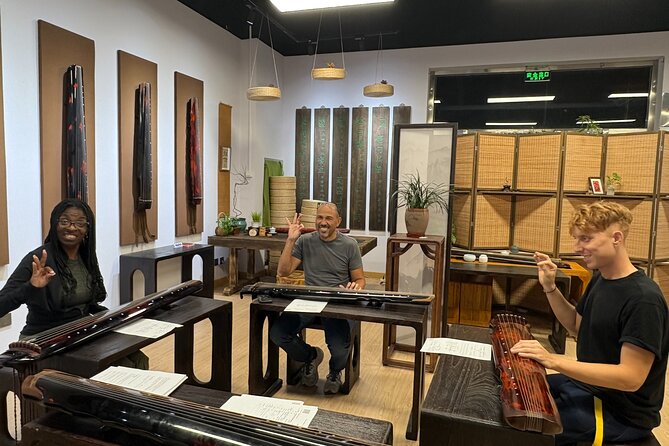
The most unusual part of this Beijing experience is that you do not just watch Chinese traditions from a distance. You brew tea with a national-level tea master, guide your fingers across the strings of a Guqin, and write Chinese characters with a brush. Hands-on culture is the point here.
I like the small group, limited to eight people, and the quiet private venue at 813 Creative Park. I also like the balance: tea offers a calm start, Guqin music adds a rare musical encounter, and calligraphy gives you something tangible to take home. The main consideration is price. At $78.60 per person for two and a half hours, this costs more than a standard sightseeing stop, and transportation is not included.
Key points
- Play a complete Guqin melody: Receive hands-on instruction on China’s classical seven-string instrument.
- Learn tea from a national-level master: Brew, taste, and discuss traditional tea with tea snacks included.
- Take home your own calligraphy: Write meaningful Chinese characters, including your Chinese name if you choose.
- Keep the group personal: The experience accepts a maximum of eight people.
- Use traditional clothing for photos: Rental attire is included for the ritual and group pictures.
- Meet at 813 Creative Park: You arrange your own transportation to and from the Chaoyang venue.
Three Chinese traditions in 150 quiet minutes
Beijing can be loud, crowded, and visually overwhelming. This workshop offers a sharp change of pace. For about two and a half hours, you stay in an air-conditioned cultural venue set apart from the usual sightseeing circuit.
The setting is private and closed to the public. That matters because the session is built around attention, not spectacle. You are not being moved from one stage to the next or asked to watch a large performance before boarding a bus. You sit close to the instructors and take part.
The three sections have different moods. Tea is slow and deliberate. Guqin music is quiet and highly focused. Calligraphy is more active, with the brush demanding control from your hand. Together, they give you three ways to approach Chinese culture: through ritual, sound, and writing.
A bilingual guide with an M.A. in History and Sociology explains the customs and ideas behind each activity in English. The guide’s role is important. Without context, a tea pour can look like a series of graceful movements, and a Chinese character can seem like a decorative symbol. The explanations connect the actions to their older roots and meaning.
More Local Culture and Traditions Tours in the world:
- Amsterdam Food and Cultural Tour with Tastings
★ 5.0 · 4,315 reviews - Sevilla Food Tour: Tapas, Wine, History & Traditions
★ 5.0 · 3,468 reviews - Tromsø: Reindeer Camp and Sami Cultural Tour with Lunch
★ 4.7 · 3,326 reviews
Tea ceremony with a national-level tea master
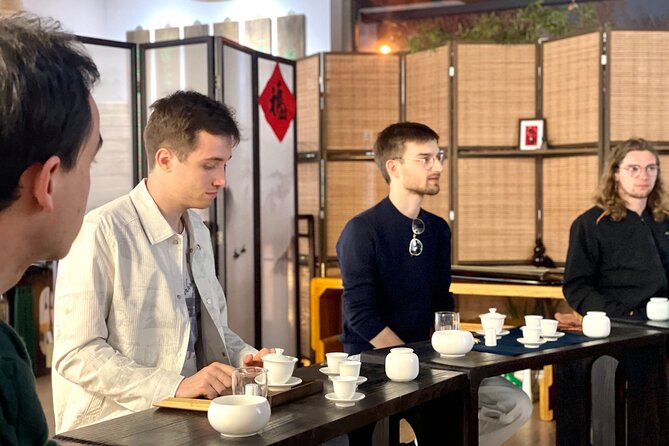
The tea portion is likely the gentlest way to begin. You receive a traditional tea ceremony and tasting led by a certified, national-level tea master. You do not simply receive a cup. You learn to brew the tea and taste it, with tea snacks included.
That difference is worth noting. A tea tasting can easily become a quick drink served beside a souvenir shop. Here, the preparation itself is part of the lesson. You watch the sequence, follow the guidance, and pay attention to the small choices that shape the ritual.
You can expect the pace to be unhurried. The tea ceremony is designed as a pause from Beijing’s crowded streets, and the setting supports that mood. Several people have found the tea portion almost meditative, especially when paired with live Guqin music.
Do not book this section expecting a full meal. Tea snacks are included, but meals outside the provided snacks are not. If you need lunch or dinner, plan it separately before or after the session.
The tea segment also sets a useful tone for the rest of the workshop. It asks you to slow down before moving to the more demanding tasks. I like that structure. You begin by observing and tasting, then gradually take over the work yourself.
Hearing the Guqin before touching it
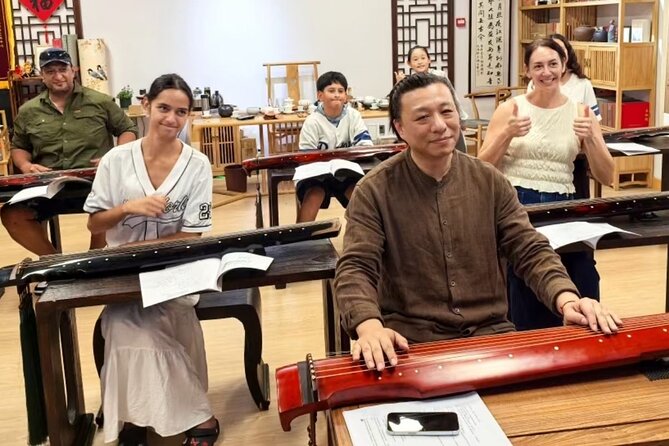
The Guqin is one of China’s most classical instruments, and the program includes a live performance by a national-level heritage artist. This is not background music while you fill out a worksheet. The performance gives you a chance to hear the instrument’s soft, restrained sound before you try it yourself.
The Guqin can be a surprising choice for visitors who expect a large, dramatic Chinese musical performance. Its appeal is more intimate. The sound works best in a quiet room, where you can notice the individual notes and the space between them.
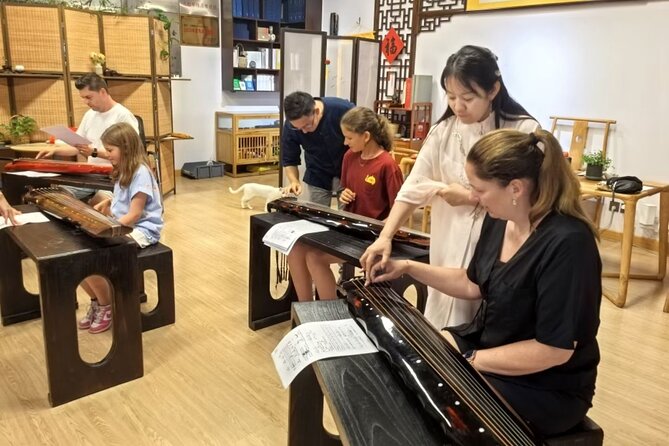
After the performance, you take part in a hands-on Guqin lesson. The stated goal is ambitious for a short workshop: you learn to play a full melody. You should not expect to leave as a trained musician, but you can expect a guided introduction that lets you produce the music yourself.
This is the part that may stay with you longest. Playing an ancient instrument is different from taking a photograph beside one. You feel the strings, follow the teacher’s hand position, and discover how much control even a simple melody requires.
The lesson is suitable for beginners because no prior musical experience is required in the supplied information. Still, the instrument may feel difficult at first. If your goal is a polished performance, this is not the right activity. If your goal is to try something rare and personal, it makes good use of the time.
Calligraphy that becomes a personal souvenir
The calligraphy workshop gives you a practical way to engage with Chinese writing. Under expert guidance, you write real Chinese characters and learn something about their ancient roots.
The physical act is harder than it looks. Holding the brush, managing the ink, and keeping each stroke in the right order all require care. That is part of the fun. The workshop is not about producing perfect art on the first attempt. It is about understanding that Chinese characters are built from deliberate strokes, not drawn casually like a picture.
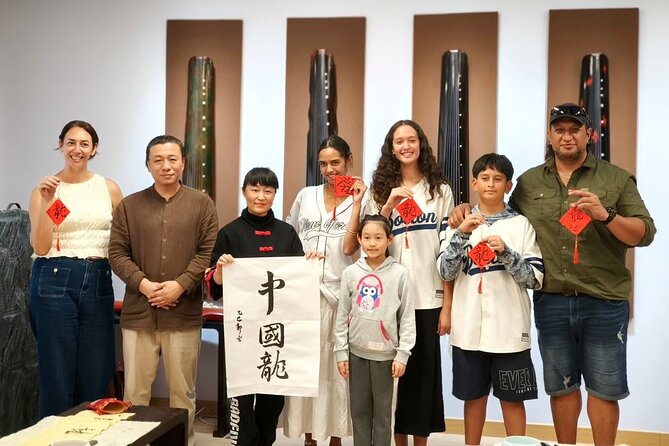
A useful personal touch is the chance to write your Chinese name. The experience can leave you with a sheet of your own work to take home, which gives this portion more value than a generic souvenir. You might frame it, as one participant did, or simply keep it with your travel papers.
Calligraphy is also the most accessible part for families and first-time visitors. You can see progress immediately, even if the final character is uneven. The instructor’s guidance helps turn a potentially intimidating art form into a manageable task.
The drawback is that brush writing takes patience. If you prefer fast-moving activities, this section may feel slow. I would treat that slowness as the point, not a flaw. The workshop asks you to concentrate in a way that most city sightseeing does not.
More History Tours in the world:
- New York City: American Museum of Natural History Ticket
★ 4.5 · 15,447 reviews - History and Hauntings of Salem Guided Walking Tour
★ 5.0 · 14,564 reviews - Colosseum: Underground and Ancient Rome Tour
★ 4.7 · 12,691 reviews - Lisbon: History, Stories and Lifestyle Walking Tour
★ 4.8 · 10,902 reviews
Traditional clothing and the private venue
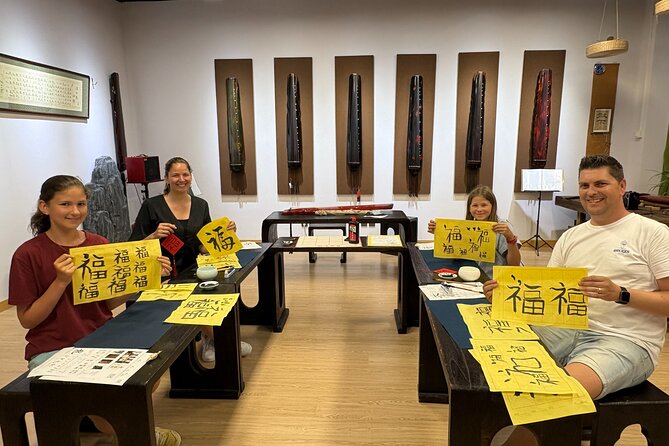
Traditional outfit rental is included for the ritual and photographs. The clothing adds atmosphere and gives you a visual record of the session, especially for a group picture at the end.
Keep your expectations practical. The supplied details do not specify the exact clothing styles, sizes, or changing arrangements. If traditional dress is a major reason for booking, you may want to confirm those details before paying.
The venue is at 813 Creative Park in Chaoyang, Beijing. It is described as an air-conditioned heritage setting, quiet and decorated for the activities. Its location in a creative park may appeal to you if you prefer an arts setting to a large commercial attraction, but you must make your own way there.
The activity begins and ends at the same meeting point. Transportation to and from the venue is not included, so allow time to reach the address, especially if you are coming from another part of Beijing. The experience is near public transportation, which helps, though the available information does not specify a station or travel time.
Why the group size changes the experience
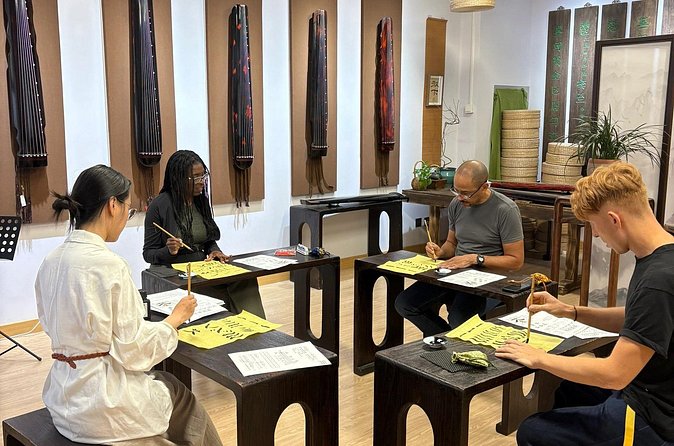
The maximum group size is eight people. That is a useful limit for activities that depend on individual instruction.
In a large class, the Guqin lesson could become a demonstration with a few people near the front. Here, the small format should give you a better chance to receive direct help with your hands and posture. It also makes the tea ritual easier to follow and keeps the calligraphy instruction personal.
A small group does not guarantee a private booking. You may still share the session with other people. But eight is small enough for the workshop to feel more focused than a standard sightseeing tour.
The format also suits solo visitors. You do not need to arrive with a group to get something from the experience. Couples and families with older children may also appreciate the variety, though the supplied information does not give a minimum age.
The value of $78.60
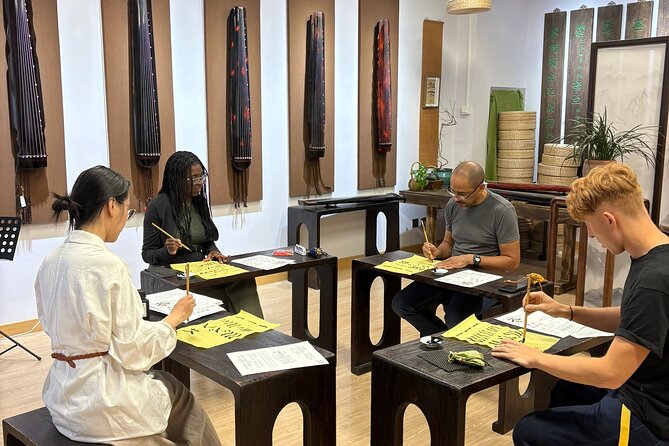
At $78.60 per person, this is not a bargain activity in the usual Beijing sense. You can find cheaper tea tastings, calligraphy demonstrations, and music shows. The question is what you want your money to buy.
The fee covers a tea ceremony and tasting with a certified tea master, a live Guqin performance by a national-level heritage artist, a hands-on Guqin lesson, calligraphy instruction, traditional clothing rental, tea snacks, and a bilingual guide. You are paying for several guided activities in one small-group session rather than one short demonstration.
I think the value is strongest if you are interested in participation and explanation. You get to brew, play, write, and ask questions. If you only want to see a performance, cheaper options may serve you better.
The experience is also useful when your Beijing schedule is full. In 150 minutes, you sample three traditions without spending a full day at a museum or traveling between several attractions. That compact format makes the price easier to justify for a short visit.
Still, the cost may feel high if you are traveling on a strict budget or already have several cultural shows booked. You should also remember that food beyond the tea snacks and transportation are extra.
Who will appreciate this most
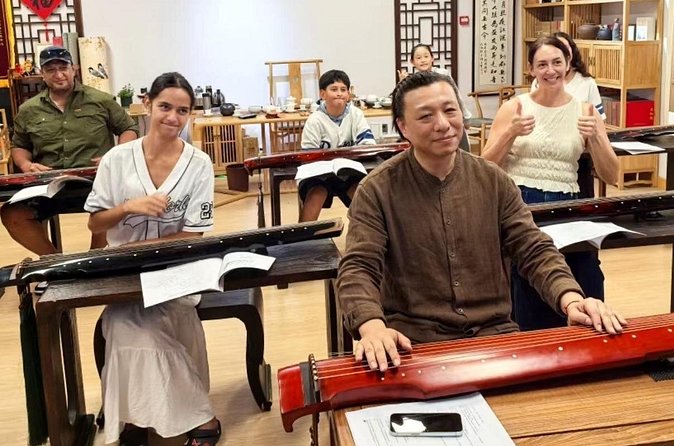
I would recommend this workshop to you if you want more than photographs and quick explanations. It works especially well for:
- First-time visitors who want a gentle introduction to Chinese culture
- People interested in traditional music, writing, or ritual
- Couples looking for a quiet activity away from major sights
- Solo visitors who value a small group and direct instruction
- Anyone who wants a physical souvenir made during the trip
- Visitors who find large shows too staged or impersonal
It may be less suitable if you want a fast-paced itinerary, a full meal, or a major historical site. The venue is a cultural workshop, not a palace, temple, or museum. You should book it for the quality of the encounter, not for famous architecture.
The experience is also not limited to specialists. You do not need to know Chinese, understand music, or have practiced calligraphy. The English-speaking guide and instructors are there to make the activities approachable.
Booking timing, access, and cancellation
The experience is booked an average of 51 days ahead, so you should reserve early if your Beijing dates are fixed. Confirmation is provided within 48 hours, subject to availability.
Most people can participate, and service animals are allowed. The venue is near public transportation. No additional accessibility details are provided, so contact the provider if you need specific information about seating, movement, or facilities.
Free cancellation is available up to 24 hours before the local start time for a full refund. Changes or cancellations inside that window are not accepted and are not refunded. The experience may also be canceled if the minimum number is not met or if poor weather affects the activity. In those cases, you are offered another date or experience, or a full refund.
The weather condition is worth noting even though much of the program takes place indoors. Keep your schedule flexible if possible.
My verdict: book it for participation, not spectacle
You should book this if you want a calm, personal way to meet Chinese traditions through your hands. The combination of tea, Guqin music, calligraphy, a traditional outfit, and a group capped at eight makes the session more distinctive than a standard cultural show.
I especially like the chance to play a full Guqin melody and leave with your own calligraphy. Those details turn the experience into something you do, not just something you watch.
Skip it if $78.60 feels too steep for a short workshop, or if you would rather spend your time at Beijing’s major landmarks. For everyone else, this is a thoughtful two and a half hours that can add texture to a busy Beijing itinerary.
FAQ
How long does the Beijing culture experience last?
The experience lasts approximately 2 hours and 30 minutes.
What activities are included?
You take part in a traditional tea ceremony and tasting, a hands-on Guqin lesson, a live Guqin performance, and a Chinese calligraphy workshop. Traditional clothing rental is also included.
Is the experience conducted in English?
Yes. A bilingual guide with an M.A. in History and Sociology provides guidance in English.
Where does the activity begin and end?
It begins and ends at 813 Creative Park, VGP3+CCX, Chaoyang, China, 100124.
Is transportation included?
No. Transportation to and from the venue is not included. The venue is near public transportation.
How many people can join the activity?
The experience has a maximum of eight participants.
Are food and drinks included?
Tea, tea tasting, and tea snacks are included. Meals outside the provided tea snacks are not included.
Can I cancel for a full refund?
Yes. You can cancel at least 24 hours before the local start time for a full refund. Cancellations or changes made less than 24 hours before the start time are not accepted or refunded.
Newest history tours we have reviewed in the world
- Bilbao Historical Tour in small group★ 4.7 · 52 reviews
- Bologna: Street Food Tour in the Historic Center★ 4.8 · 125 reviews
- CEBU: Cebu City Heritage and Uphill Guided Tour★ 4.2 · 31 reviews
- Bishkek : City Tour (History, Architects, Statues & Culture)★ 4.9 · 54 reviews
- Blenheim: Omaka Aviation Heritage Centre Admission Ticket★ 4.9 · 31 reviews
- Berlin: Nazi History Walking Tour★ 4.8 · 33 reviews
- Best of Baku: 4-Hour City Tour Historic and Modern Landmarks★ 4.7 · 63 reviews
- Belfast: Best of Belfast History, Culture & Art Walking Tour★ 4.9 · 158 reviews
Local Culture & Traditions Tours, compared.

Amsterdam Food and Cultural Tour with Tastings
Read our review →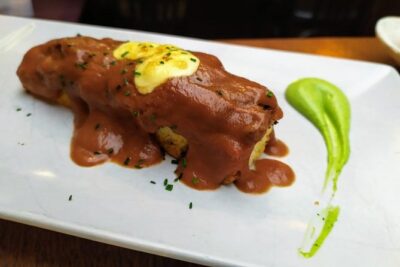
Sevilla Food Tour: Tapas, Wine, History & Traditions
Read our review →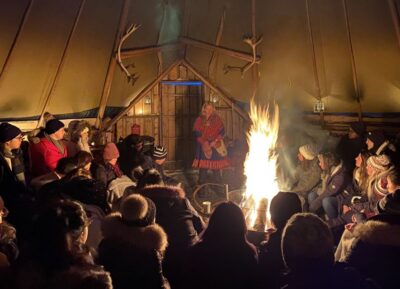
Tromsø: Reindeer Camp and Sami Cultural Tour with Lunch
Read our review →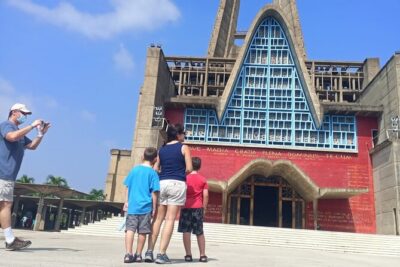
Half Day Dominican Republic Cultural Tour : Small Group
Read our review →
Ultimate Melbourne Walking Tour: History, Laneways & Culture
Read our review →
Tromsø: Sámi Reindeer Sledding and Sami Cultural Tour
Read our review →
Kyoto Gion: 2-Hour Geisha Culture & History Walking Tour
Read our review →
Marrakech Historical and Cultural Tour – Half Day City Tour
Read our review →Browse the lists this tour appears in