
Review · FRANCE HISTORY TOURS
Historic Bayeux Daily Group City Tour In English 2 hrs (Apr-Sept)
Bayeux is easy to admire and surprisingly easy to misunderstand. Its handsome cathedral and famous 11th-century embroidery draw most of the attention, but this two-hour walking tour follows the smaller clues: old dyeing lanes, Roman walls, religious foundations, local architecture, and the wartime story of a town liberated on June 7, 1944. The guide links these pieces into one clear story.
I like the way the tour gets beyond the postcard sights, especially on Rue des Teinturiers and around the Roman castrum. I also like the use of old photographs, which helps you picture streets and buildings as they once were. The main drawback is simple: you stay outside. Museums and the inside of Notre-Dame Cathedral are not included, and the many standing stops may be tiring.
Key points at a glance
- More than 20 stops in two hours: You move through Bayeux’s major sights and quieter corners without spending the whole morning inside one attraction.
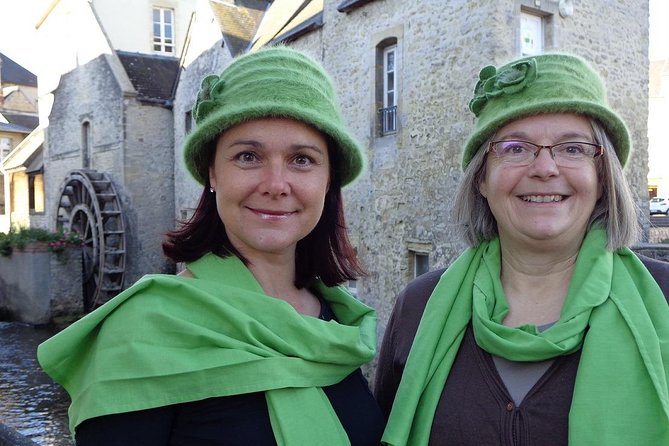
- A guide-led history lesson: Christèle and Marie-Noëlle are among the named guides, both praised for clear storytelling, humor, and strong knowledge of local and English history.
- A close look at daily life: Rue des Teinturiers explains tanning, dyeing, and the role of the River Aure in medieval work.
- Useful first-day orientation: The tour ends near the cathedral and several museums, making it easy to plan the rest of your time.
- Small-group scale: The maximum group size is 20, so this is more personal than a large coach excursion.
- Plan for standing: Wear good shoes, bring an umbrella if the forecast is uncertain, and use the restroom before starting.
Why Bayeux makes a good walking tour
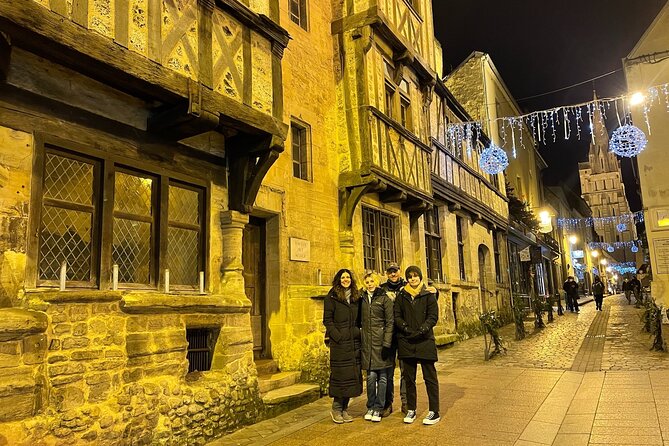
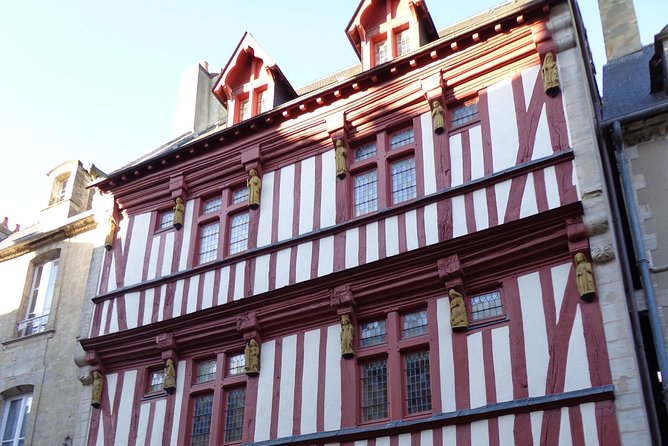
Bayeux rewards slow looking. The town is compact, but its buildings and streets carry traces of several very different periods. A short walk can move from Celtic origins to Roman defenses, medieval industry, religious power, the French Revolution, and the liberation of Normandy in 1944.
That range is the real value here. You are not simply being led from one famous building to another. You are shown how the town functioned: where water powered work, how religious communities shaped local life, how architecture reveals age, and why Bayeux mattered during and after the Second World War.
I especially like this kind of introduction at the start of a visit. A guide can point out details you would probably pass without noticing, then give you enough context to return later on your own. One useful example from the tour is a local cider and brandy maker with a 14th-century cellar. You may not spend time there, but knowing such places exist can change how you explore afterward.
The tour begins at 9:30 a.m. and lasts about two hours. That leaves much of the day free for museums, the cathedral interior, shopping, lunch, or a separate Normandy excursion.
More WWII and D-Day Tours in France:
- Private Walking Guided Tour of Historic Bayeux English or French
★ 5.0 · 36 reviews - Vienna: World War II Historical Walking Tour
★ 4.8 · 1,772 reviews - Zagreb: City & History Walking Tour & WW2 Tunnels
★ 4.9 · 1,202 reviews
Starting at the tourist office
The meeting point is at 3 Rue Saint-Jean, by the Bayeux tourist office. This is a practical place to begin because it puts you close to the old center and gives the guide a natural launch point for the town’s story.
Expect an active introduction rather than a long opening speech. The tour includes more than 20 stops, and the commentary covers local expressions, old customs, notable figures, architecture, and major events. The tone is intended to be lively, with humor and anecdotes rather than a dry list of dates.
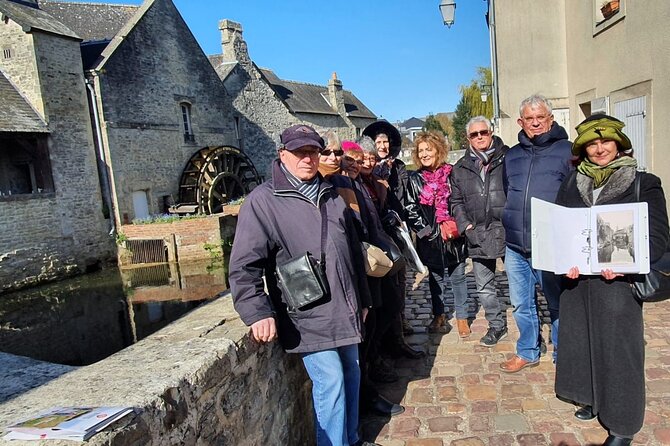
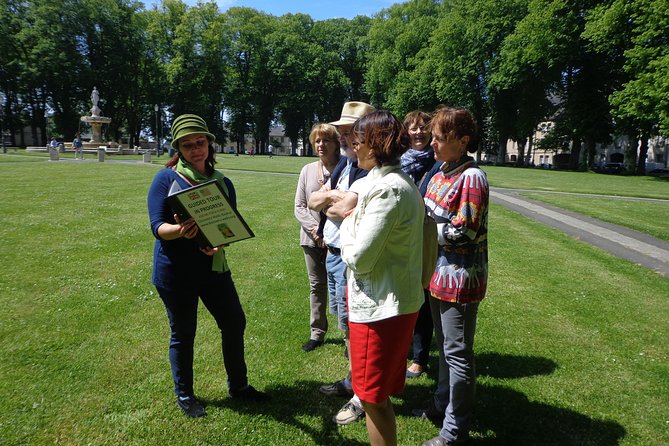
The guides named in the tour information include Christèle and Marie-Noëlle. Christèle is noted for using a binder of old photographs to support her explanations. That is a small but useful touch. A photograph can show how a street changed, what a building once looked like, or how much of the town survived a particular period.
The group is limited to 20 people. That is still large enough to feel like a group walk, but small enough for the guide to be heard more easily than on a big city tour. The tour is offered in English only, and simultaneous translation is not allowed, so you should be comfortable following a spoken English explanation for two hours.
Rue des Teinturiers and the River Aure
One of the tour’s most worthwhile sections is Rue des Teinturiers. This is where the walk shifts from famous monuments to the work that kept an old town alive.
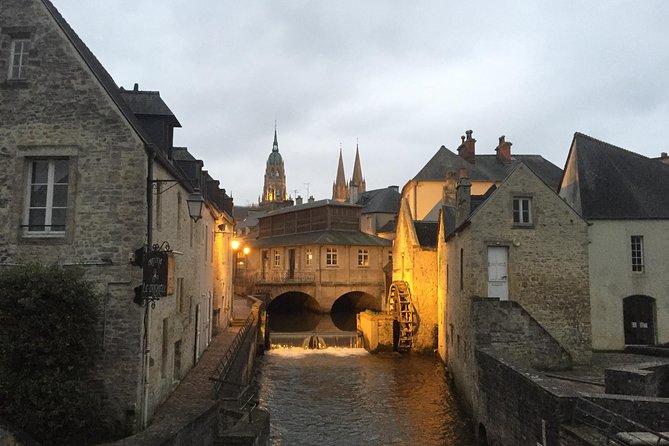
The guide explains medieval tanning and dyeing, along with the role of the River Aure. Water was not just a pleasant feature of Bayeux. It was part of the local economy, supplying the activity and movement that supported these trades.
I find this sort of stop more revealing than another quick look at a grand facade. It shows how ordinary work shaped the town’s streets. You begin to read the river as infrastructure, not decoration.
This portion also suits anyone who wants more than a military-history introduction to Normandy. Bayeux is often used as a base for D-Day sites, but its story began many centuries earlier. The river and its trades help make that clear.
Allée des Augustines and the famous embroidery
At Allée des Augustines, the focus turns to the Augustine sisters and their effect on the Bayeux community. The guide also tells the story of one sister whose influence reached a country now called Canada. This is the kind of personal connection that makes institutional history easier to remember.
The walk then pauses outside the museum that displays Bayeux’s famous 11th-century embroidery. The museum is closed until October 2027, according to the supplied information, so this outdoor explanation is particularly useful if your visit falls during that closure.
You will hear about the Battle of Hastings, William the Conqueror’s rise to the English throne, and the embroidery’s place in medieval history. The guide also covers how it was made, along with facts and figures surrounding the work.
This is a good example of what the tour does well. You do not see the object itself, so the stop cannot replace museum time when the museum reopens. Still, a clear explanation outside the building gives you a framework for appreciating it later, or for understanding why it matters even when the doors are closed.
Do not expect a long museum-style lecture. The tour has many stops, so the guide has to keep each explanation moving. That pace is useful for an overview, but anyone wanting a detailed study of the embroidery should reserve separate time for the museum once it is available.
More History Tours in France:
- Paris: Louvre Museum Entry with History of Mona Lisa
★ 3.9 · 2,823 reviews - Paris: Dark History and Ghostly Guided Walking Tour
★ 4.7 · 1,000 reviews - Vieux Lyon Cultural & Historical Walking Guided Tour (English)
★ 5.0 · 942 reviews - Bordeaux: Historic Center & Chartrons District Bike Tour
★ 4.8 · 709 reviews
The Liberty Tree and revolutionary France
The Arbre de la Liberté is a 200-plus-year-old sycamore associated with the French Revolution. The guide explains why it carries the name Liberty Tree and places it within the political changes of the period.
This stop works because it connects a living object with a major event. Instead of seeing the Revolution only as a distant chapter in a textbook, you get a physical marker in the town.
It is also a welcome change of scale. After medieval trades and royal history, the tree brings the story back to a familiar public space. You will hear how political ideas were expressed in towns and how a tree could become a symbol.
Notre-Dame Cathedral from the outside
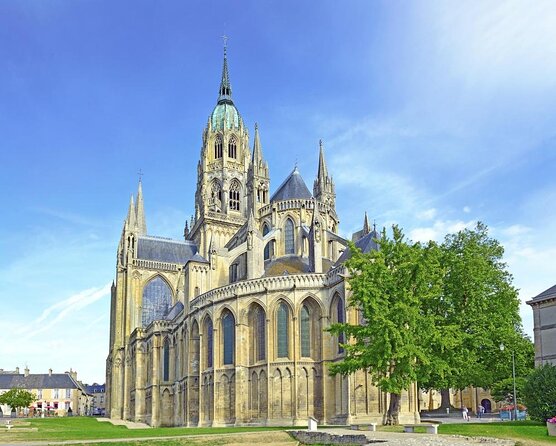
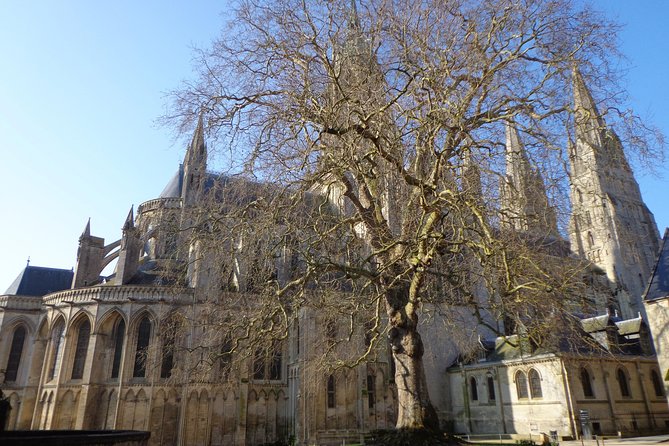
The cathedral stop lasts about 20 minutes, making it one of the longer pauses. The guide explains the different stages of construction and points out architectural features on the exterior.
That time matters because Bayeux Cathedral is not a single-period building in the simple sense. Looking closely at its form helps you see how large churches developed and changed over time. The guide’s role is to give you a way to notice those changes rather than merely photograph the front.
The limitation is clear: entry inside the cathedral is not included. If you want to study the interior, stained glass, chapels, or other details, you will need to return independently. That is not a serious problem for most people, since the tour ends in the center and leaves you well placed to continue exploring.
For me, the best approach is to treat this stop as an introduction. Listen for the construction stages and architectural clues, then make your own visit later if the building interests you.
Celtic origins and the Roman castrum
On Rue Léonard Lambert Leforestier, the guide takes the story back to Bayeux’s Celtic beginnings and the Roman castrum. You will see ruins connected with the town’s Roman period and hear how the settlement developed before the medieval streets took shape.
This is one of the stops most likely to be missed on a self-guided walk. Ruins are not always dramatic, and without explanation you may not understand what you are looking at. The guide supplies the basic orientation and connects the fragments to the older history of the town.
The sequence is well chosen. By this point, you have heard about medieval work, religious communities, and the cathedral. The Roman remains remind you that Bayeux’s story did not begin in the Middle Ages, even if that is the period most visible in the center.
Liberation at Place Charles de Gaulle
The final listed stop is Place Charles de Gaulle, where the guide explains Bayeux’s liberation on June 7 and General de Gaulle’s first visit to the square.
This section gives the town’s Second World War story a local setting. Bayeux is a key base for Normandy battlefields, but the war is not only about beaches and military cemeteries. The events in this square show what liberation meant for the town itself.
I like ending with this period because it brings the long sequence into the modern age. You move from Celtic settlement and Roman defenses to medieval industry, revolution, and the return of French political leadership after the invasion.
The tour ends at Au Comptoir des Saveurs, 45 Rue Saint-Martin. That puts you near the cathedral and the Tapestry, Art and History, and Lace museums. It is a useful finish if you want to continue sightseeing, find lunch, or retrace one of the stops at your own pace.
What the $24.20 price buys you
At $24.20 per person, the tour is reasonably priced for a two-hour guided introduction, especially if you are new to Bayeux. You are paying for an English-speaking guide, a planned route, historical interpretation, old photographs, and the chance to notice places you could easily miss alone.
The value is strongest if you plan to use the tour as a first orientation. One guide can point out museums, restaurants, architectural details, and less obvious corners, helping you decide where to spend the rest of your day.
It is less valuable if you mainly want interior access. No museum admission is included, and the cathedral is viewed from outside. You are buying explanation and direction, not tickets to attractions.
The tour is also more useful for independent visitors than for anyone already booked on a full guided itinerary of Bayeux. If another tour already covers the cathedral, embroidery, Roman remains, and liberation story, the overlap may not justify the cost.
Practical advice before you go
Wear comfortable shoes. This is an easy city walk rather than a strenuous hike, but you will stop often and remain on your feet for much of the two hours.
Bring an umbrella if rain is possible. The tour takes place outdoors, and there is no promise of shelter at every stop. The guide may use public benches when available, but standing remains part of the format.
If you have back trouble, are pregnant, or find long periods on your feet difficult, consider bringing a foldable stool. The organizers specifically advise this because the many standing stops can become tiring.
Plan ahead for a restroom break. There are no scheduled nature-call stops during the two-hour walk.
Only backpacks can be brought, and the tourist office does not offer luggage storage. Service animals are allowed, and the tour is near public transportation. Most people can take part, but the walking and standing requirements are worth considering before booking.
The tour is seasonal. The supplied details describe operation from March through September, while the title refers to April through September, so check the exact operating dates for your visit before paying.
Free cancellation is available up to 24 hours before the start time. Cancellations or changes made inside that window are not accepted for a refund.
Who should book this Bayeux walk?
I would choose this tour on my first morning in Bayeux, especially if I had two or more days in town. It gives you a working map of the center, a useful historical timeline, and ideas for what to revisit.
It suits you best if you enjoy local stories, architecture, and historical context as much as major sights. It is also a good fit if you want an English-only group with a maximum of 20 people and prefer a friendly guide who uses anecdotes rather than a formal lecture.
You may want to skip it if you need frequent seats, want to go inside every major building, or already know Bayeux well. The tour is not designed as a museum visit, and its many short stops require attention and patience.
Should you book it?
Yes, if you want a well-paced introduction to Bayeux that goes beyond the cathedral and famous embroidery. The strongest reasons are the smaller historical details, the old photographs, and the guides’ personal storytelling style, particularly the approach associated with Christèle and Marie-Noëlle.
Book it early if the timing suits you, since it is often reserved well ahead of the visit. Just arrive ready to walk, listen in English, and spend most of the two hours outdoors. For $24.20, it is a sensible way to get your bearings before exploring Bayeux on your own.
FAQ
How long does the Historic Bayeux Daily Group City Tour last?
The tour lasts approximately two hours.
What time does the tour begin?
The stated start time is 9:30 a.m.
Where does the tour begin?
It begins at 3 Rue Saint-Jean, 14400 Bayeux, France, near the Bayeux tourist office.
Where does the tour end?
It ends at Au Comptoir des Saveurs, 45 Rue Saint-Martin, 14400 Bayeux, France. The finish is near the cathedral and the Tapestry, Art and History, and Lace museums.
Is the tour offered in English?
Yes. It is an English-only guided walk, and simultaneous translation is not permitted. Each participant should have a good level of English.
Are museum entries or cathedral entry included?
No. The tour does not include any museums or entry inside Notre-Dame Cathedral.
What happens if I need to cancel?
You can cancel for a full refund up to 24 hours before the experience starts. Cancellations or changes made less than 24 hours before the start time are not accepted for a refund.
Newest history tours we have reviewed in France
- Small-Group Full-Day Tour of Côte de Nuits, Côte de Beaune Vineyards and Beaune Historical District★ 5.0 · 364 reviews
- Private Bordeaux History Tour with a glass of Bordeaux wine.★ 5.0 · 28 reviews
- Bordeaux Historic and Gourmet Food Walking Tour★ 4.5 · 82 reviews
- Bordeaux’ Best Boulangeries & History Tour★ 5.0 · 126 reviews
- Historical Center, Bordeaux Food Tour★ 5.0 · 33 reviews
- 2-Hour Walking Tour of the City’s Iconic Sights and History★ 4.0 · 207 reviews
- Private Walking Guided Tour of Historic Bayeux English or French★ 5.0 · 36 reviews
- Enchanting Historical Walking Tour in Avignon★ 5.0 · 53 reviews
WWII & D-Day Tours, compared.
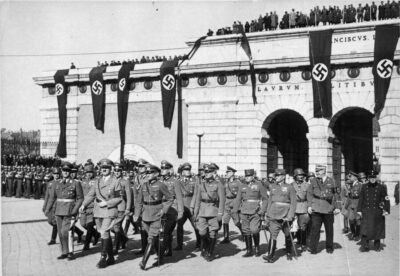
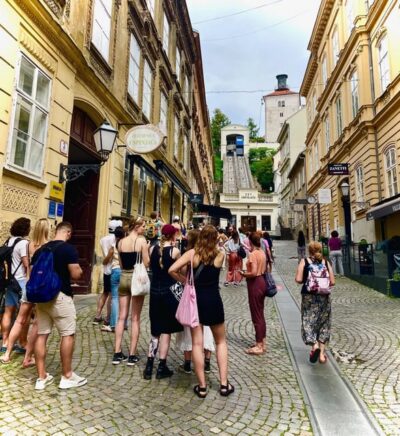
Zagreb: City & History Walking Tour & WW2 Tunnels
Read our review →
Pearl Harbor History Remembered Tour from Ko Olina
Read our review →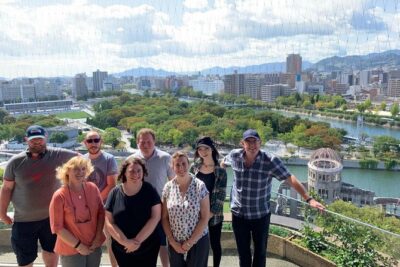
Hiroshima Peace (Heiwa) Walking Tour at World Heritage Sites
Read our review →

Pearl Harbor & USS Arizona Small-Group Tour [Early Access]
Read our review →
Anne Frank and the Jewish History of Amsterdam Private Tour
Read our review →
Browse the lists this tour appears in