Review · AMSTERDAM HISTORY TOURS
Guided Walking Tour Amsterdam – Legends, History & Ghost Stories
Amsterdam’s spooky side is less about monsters than old city secrets backed by documents, maps, and eyewitness accounts. This 90-minute walk links ghost sightings, a witchcraft accusation, sailors’ taverns, gallows fields, and streets where Amsterdam’s darker business once took place.
I like the small maximum group of 12, which should make it easier to hear the guide on crowded streets. I also like the research-first approach associated with guide Luuk and the tour team, who use archival records and original sources rather than repeating every old rumor as fact. The main drawback is clear: this is more history and urban legend than horror show, so you may want something else if you expect actors, props, or frequent scares.
Key points to know before you book
- Documented stories instead of simple ghost tales: The guides separate evidence, rumor, trickery, and mass imagination.
- A compact route through central Amsterdam: You walk from Blauwbrug to Prins Hendrikkade, ending near Central Station.
- A small group of no more than 12 people: That matters when the guide is telling a quiet story on an active city street.
- Several unusual stops: Expect Waterloo Square, Nieuwmarkt, Zeedijk, Warmoesstraat, old landmarks, and the former gallows fields.
- A useful night activity for history lovers: The tour gives familiar streets a darker meaning without turning Amsterdam’s past into pure fiction.
- Plan for walking and outdoor weather: You need moderate physical fitness, and poor weather can lead to a new date or a refund.
What this Amsterdam ghost walk is really about
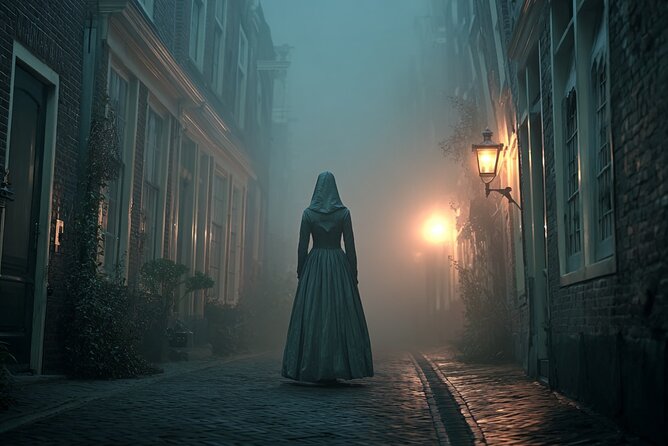
The title may suggest a classic haunted-city stroll, but the experience sounds more like a walking seminar with a few chills. You move through central Amsterdam while the guide explains how strange events were recorded, passed along, distorted, or sometimes staged.
That distinction matters. The stories are not presented as proven supernatural fact. At Waterloo Square, for example, the guide asks what crowds really saw during ghost appearances in 1833. Were they watching a clever trick? Did rumor grow with every retelling? Did large groups convince themselves they had witnessed the same thing?
I like that approach. A guide who can say we do not know is usually more useful than one who treats every dark tale as settled truth. The experience gives you a way to read Amsterdam’s streets, not just a set of spooky anecdotes.
The tour is offered in English and uses a mobile ticket. With a maximum of 12 people, it should feel more personal than a large group trailing behind a flag. Still, this is a public-city walk, not a private museum visit. You will be outdoors, moving through active streets, and listening while the city carries on around you.
More History Walking Tours in Amsterdam
- Amsterdam: Haunted History and Ghost Walking Tour
★ 4.5 · 488 reviews - Amsterdam History Walking Tour
★ 5.0 · 281 reviews - Amsterdam: Highlights & History Walking Tour
★ 4.8 · 266 reviews
Starting at Blauwbrug and entering Waterloo Square
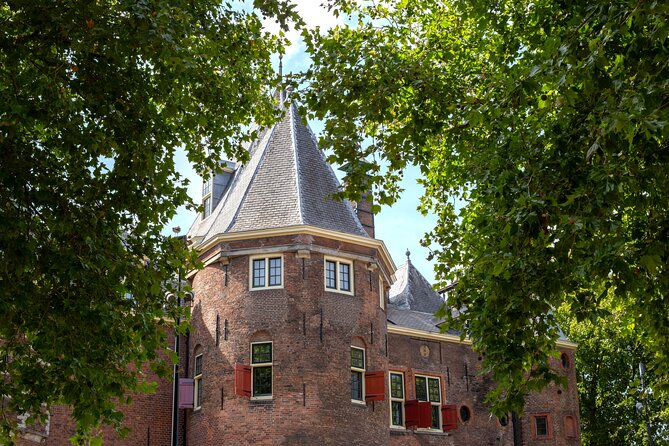
The walk begins at Blauwbrug, near Waterloo Square. This is a practical starting point because the first stories are set around the square, allowing the tour to begin with atmosphere and context instead of a long transfer to the main route.
Waterloo Square has a useful contrast built into it. Today, you may think of the area as part of central Amsterdam’s ordinary city fabric. The tour turns your attention toward the unsettling events attached to it, beginning with the first eerie tales before moving to the 1833 ghost appearances.
The 1833 episode sounds like one of the tour’s most interesting sections because it leaves room for several explanations. Crowds gathered for days to see ghostly appearances, and the guide examines what they may actually have witnessed.
For you, the value is not simply hearing that a crowd saw a ghost. It is learning how public fear worked in an earlier Amsterdam, how rumors drew people into one place, and how shared expectation can affect what a group thinks it sees.
Do not expect this stop to deliver a sudden scare. It is better suited to you if you enjoy the question behind the story: how does a strange event become a city legend?
Nieuwmarkt, witchcraft, and the meaning of Blood Street
At Nieuwmarkt, the tour turns to a woman accused of witchcraft in 1624. That story brings Amsterdam’s old fears into sharper focus. Witchcraft accusations were not only about supernatural beliefs. They could also reveal social pressure, suspicion, punishment, and the dangers faced by anyone marked as different.
The guide also explains the history behind the nearby name Blood Street. A name like that can sound theatrical when seen on a modern map, but the point of the stop is to connect the name with the city’s earlier practices and conflicts.
I find this kind of stop more useful than a generic spooky alley. You get a local story tied to a real place, then learn what the place name tells you about Amsterdam’s past. The city’s old streets become evidence rather than decoration.
This part may be heavier than some people expect. Witchcraft accusations and references to blood are not light entertainment, and the guide’s historical approach may give the material more weight than a standard ghost walk. If you prefer a purely playful evening, keep that in mind.
One of Amsterdam’s oldest streets and its surviving landmarks
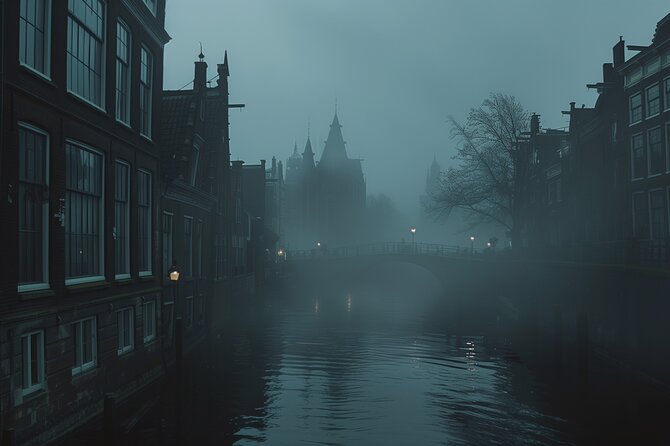
The route then takes you along one of the city’s oldest streets. The exact appeal here is not a special effect, but the sense of time built into the street itself and the landmarks connected with it.
You hear about the Spinhuis and the Trippenhuis, two names that help place Amsterdam’s civic and social past into view. The tour uses these sites to show how the city once dealt with work, power, punishment, and public life.
This is where the experience can reward repeat visitors. You may have walked through central Amsterdam before and noticed only the canals, shopfronts, or crowds. A guide who points out the older institutions gives you a second reading of the same streets.
The stop also helps balance the supernatural material. Instead of piling one ghost story on top of another, the walk pauses to explain the city’s physical past. That makes the later legends easier to understand because you can connect them with the people and institutions that shaped Amsterdam.
More History Walking Tours in the Netherlands
- Anne Frank and Amsterdam Jewish History Walking Tour
★ 5.0 · 259 reviews - Amsterdam: Ghost Walking Tour and Dark History
★ 4.8 · 118 reviews - Amsterdam: Iconic Canals & Historic Sights Walking Tour
★ 4.5 · 90 reviews - Amsterdam: Anna Frank and World War II History Walking Tour
★ 4.8 · 86 reviews
Zeedijk’s three tales of sailors and sorrow
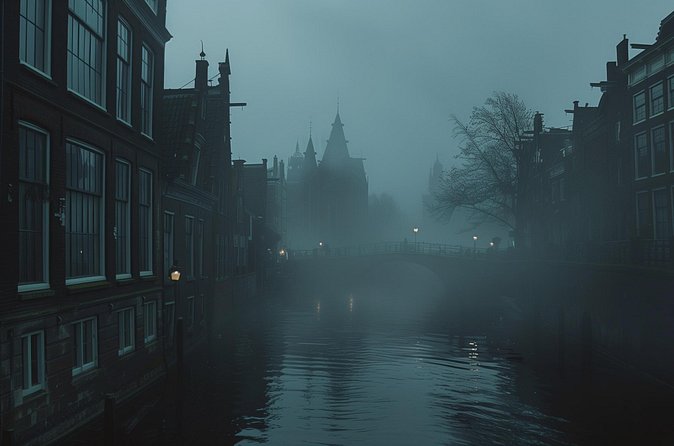
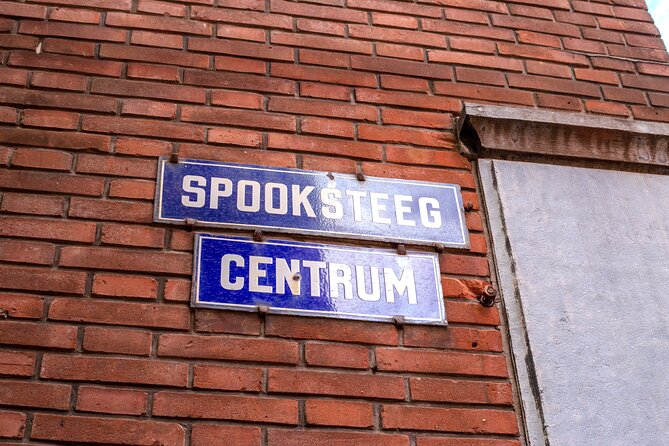
Zeedijk brings three separate stories into a short section of the route. You encounter Ghost Alley, the sailors’ café In ’t Aepjen, and the Weeping Tower.
Each name offers a different kind of mystery. Ghost Alley supplies the obvious haunted angle. In ’t Aepjen brings in sailors and the rougher side of port-city life. The Weeping Tower suggests loss, separation, or grief, giving this stretch a more human mood than a simple scare story.
The café’s name is especially useful because it connects the legend walk with Amsterdam’s maritime past. Zeedijk was shaped by people arriving and leaving by sea, and a sailors’ café gives the guide a place to explain the social world around the old street.
You should expect atmosphere from the setting, but not a staged haunted attraction. The stories work because the locations are real and remain part of the city. They also show why local legends last: a narrow street, an old building, and a memorable name can keep a tale alive for generations.
This is likely one of the more colorful stretches of the walk, but do not confuse colorful with cheerful. The stories concern sailors, ghosts, and sorrow, and the guide’s job is to explain their place in Amsterdam’s past.
Near Central Station, a hotel and a mysterious gallows figure
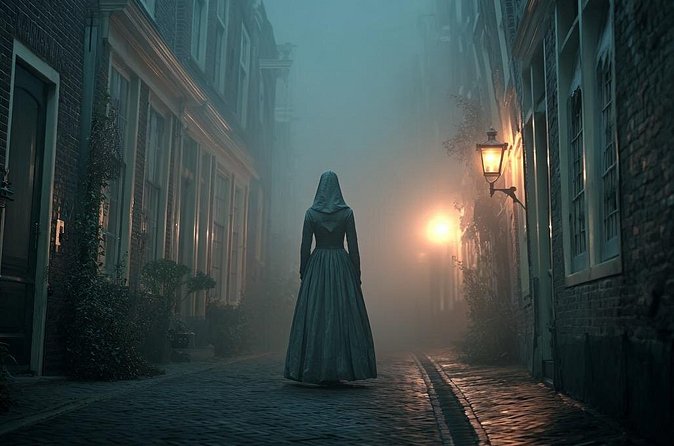
As the route approaches Central Station, the tour takes an unexpected turn toward a historic hotel with an odd grandeur. The information provided does not specify the hotel’s name, so you should think of this as a story stop rather than a building visit.
The setting then shifts into the world of Rembrandt. The guide places you inside one of his drawings, where a mysterious woman appears on the gallows fields. Her identity has remained unknown for centuries.
That detail gives the tour a strong visual moment. You are not only hearing about a ghost or a crime. You are considering how an artist recorded a disturbing scene and how a person in the image could disappear from the historical record.
I like this part because it joins art, crime, public punishment, and uncertainty. It also shows the range of the walk. The experience is not locked into one theme. It moves from popular ghost stories to a witchcraft case, old streets, sailors, architecture, and an image by one of Amsterdam’s best-known artists.
Again, the mystery is not necessarily solved. The unidentified woman is part of the appeal, and a guide who keeps the uncertainty intact gives you something to think about after the walk.
Warmoesstraat and Amsterdam’s less respectable side
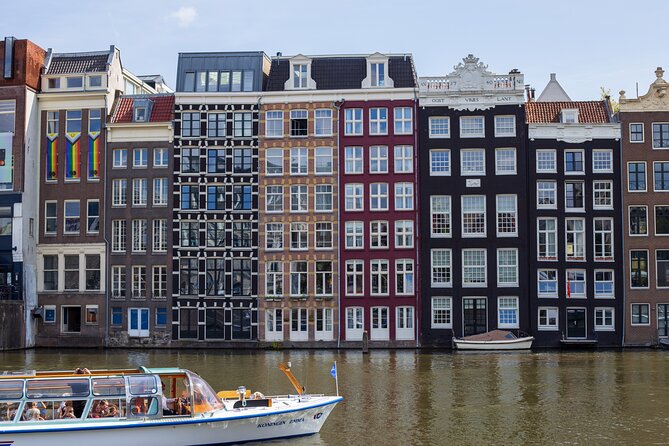
Warmoesstraat closes the route. This street has seen markets, trade, questionable deals, and the less respectable side of city life. The guide uses it to explain how Amsterdam could be prosperous and unruly at the same time.
I appreciate this ending because it brings the tour back to ordinary human behavior. Ghost stories may draw you in, but streets shaped by trade, temptation, and shady business often tell you more about a city than a supernatural tale does.
Warmoesstraat also fits the wider pattern of the walk. The route keeps asking you to look beyond the postcard version of Amsterdam. Behind the handsome canals and famous buildings were working people, sailors, accused witches, crowds chasing rumors, and businesses that did not always operate in the open.
The tour ends at Prins Hendrikkade 38K, only a short walk from Central Station. That is convenient if you want to catch transport, continue your evening, or simply find your way back without crossing the whole city.
Why the research-first approach matters
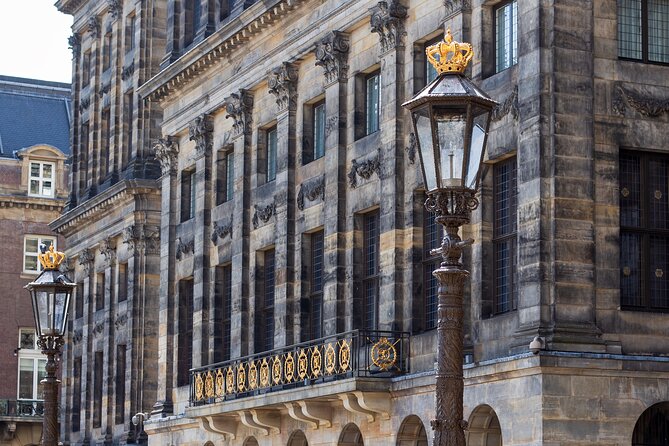
The strongest feature here is the use of historical evidence. Guide Luuk is specifically praised for using archival documents, historical records, and original sources, and the tour team is described as doing extensive research.
That does not mean every story has a neat answer. In fact, the opposite is often more interesting. A source may show that a crowd gathered, while leaving open what it saw. A drawing may preserve a mysterious figure, while failing to identify her. A street name may survive long after the original event has become unclear.
You get more from a ghost story when the guide explains its limits. The result is less theatrical, but more trustworthy. It also gives you useful context for other parts of Amsterdam, since you learn to ask which details are documented and which were added later.
The tone is also worth noting. The guide is expected to be friendly and funny, but the experience leans toward history and urban legends rather than pure spookiness. That balance should suit you if you like an engaging guide but do not need constant jokes or jump scares.
Price, group size, and practical value
At $24.04 per person, the tour is priced as an affordable city activity. For 90 minutes, you are paying mainly for the guide’s research, storytelling, and route design, not for entry to a museum or a major attraction.
That can be good value if you want a focused introduction to central Amsterdam’s darker stories. You visit several areas and hear material that would be difficult to assemble on your own in one evening. The small group limit of 12 also adds value because the guide can keep the walk together and answer questions more easily than on a large coach-style outing.
It is less compelling if you judge tours by the number of buildings you enter or the amount of physical sightseeing included. The route is outdoors, and the experience depends on listening. You will not receive a long list of major attractions with interior visits.
The activity is booked about 31 days ahead on average. That suggests you should not treat it as a guaranteed last-minute filler, especially if your dates are fixed. It is sensible to reserve around a month ahead, then keep the free cancellation option in mind.
You can cancel up to 24 hours before the start time for a full refund. Changes made within 24 hours are not accepted, and late cancellations are not refunded. Poor weather can also lead to a new date or a full refund, while a cancellation caused by the minimum group size brings the same choice of another option or a refund.
Who should take this walk?
I would choose this tour for you if you enjoy:
- Historical mysteries with no forced answer
- Local legends tied to actual streets
- Art, old buildings, and social history
- Small walking groups
- A guide who separates evidence from rumor
- An evening activity that finishes near Central Station
You may want another type of tour if you are looking for actors, costumes, theatrical scares, or a strong haunted-house mood. The material can be eerie, but the main pleasure comes from learning how stories formed and survived.
You also need moderate physical fitness. The route is a walking experience through central Amsterdam, and the tour requires good weather. Service animals are allowed, and the meeting area is near public transportation.
Should you book Guided Walking Tour Amsterdam?
Book it if you want Amsterdam’s old streets to make more sense, not just look attractive. The best parts are the 1833 ghost crowds, the 1624 witchcraft accusation, the strange names around Zeedijk, and the unidentified woman in Rembrandt’s drawing.
I would especially recommend it to first-time visitors who want a different introduction to the city, and to repeat visitors who have already seen the main sights. The research-led style gives the walk substance, while the small group and short duration keep it manageable.
Skip it if you need guaranteed scares or prefer indoor attractions. But if you like your legends served with records, questions, and a little dry humor, $24.04 is a fair price for a compact evening walk that ends in a useful location near Central Station.
FAQ
Where does the tour begin?
The tour begins at Blauwbrug, 1011 PT Amsterdam, Netherlands.
Where does the tour end?
It ends at Prins Hendrikkade 38K, 1012 AB Amsterdam, Netherlands, a short walk from Central Station.
How long does the walking tour last?
The tour lasts approximately 1 hour and 30 minutes.
What language is the tour offered in?
The tour is offered in English.
How much does the experience cost?
The listed price is $24.04 per person.
How many people can join the tour?
The maximum group size is 12 travelers.
Is the tour suitable for someone with limited mobility?
The activity requires a moderate level of physical fitness. No other accessibility details are provided.
Can I bring a service animal?
Yes. Service animals are allowed.
What happens if I need to cancel?
You can cancel at least 24 hours before the start time for a full refund. Cancellations or changes made less than 24 hours before the start time are not accepted for a refund. If poor weather or insufficient numbers cause the tour to be canceled, you will be offered another date or experience, or a full refund.
More Dark History and Haunted Tours in Amsterdam
- Amsterdam Haunted History and Ghost Walking Tour
★ 5.0 · 47 reviews - Ghost Walking Tour and Dark History in Amsterdam
★ 5.0 · 32 reviews - Amsterdam: Ghastly Grachten: ghost stories&dark history tour
★ 4.9 · 21 reviews - Savannah History and Haunts Candlelit Ghost Walking Tour
★ 5.0 · 3,235 reviews
Newest history tours we have reviewed in Amsterdam
- Amsterdam: Luxury Canal Cruise with Historic VR Experience★ 5.0 · 305 reviews
- Amsterdam Walking Tour: Urban Legends & History with local guide★ 5.0 · 39 reviews
- LGBTQI+ History Tour of Amsterdam★ 5.0 · 123 reviews
- Historical Walking Tour, private with local Dutch guide★ 5.0 · 23 reviews
- Anne Frank’s Amsterdam Jewish History WWII Exclusive Guided Tour★ 5.0 · 18 reviews
- Amsterdam Haunted History and Ghost Walking Tour★ 5.0 · 47 reviews
- Private Guided Historic Amsterdam Canal Cruise in a Salon Boat★ 5.0 · 21 reviews
- Amsterdam Highlights and History Walking Tour (MUST DO)★ 5.0 · 29 reviews
Dark History & Haunted Tours, compared.

Savannah History and Haunts Candlelit Ghost Walking Tour
Read our review →

New Orleans Small-Group Haunted History Carriage Tour
Read our review →

Genteel and Bard’s Savannah Dark History and Ghost Encounter Walking Tour
Read our review →