
Review · SAN ANTONIO HISTORY TOURS
San Antonio: UNESCO World Heritage Missions Tour
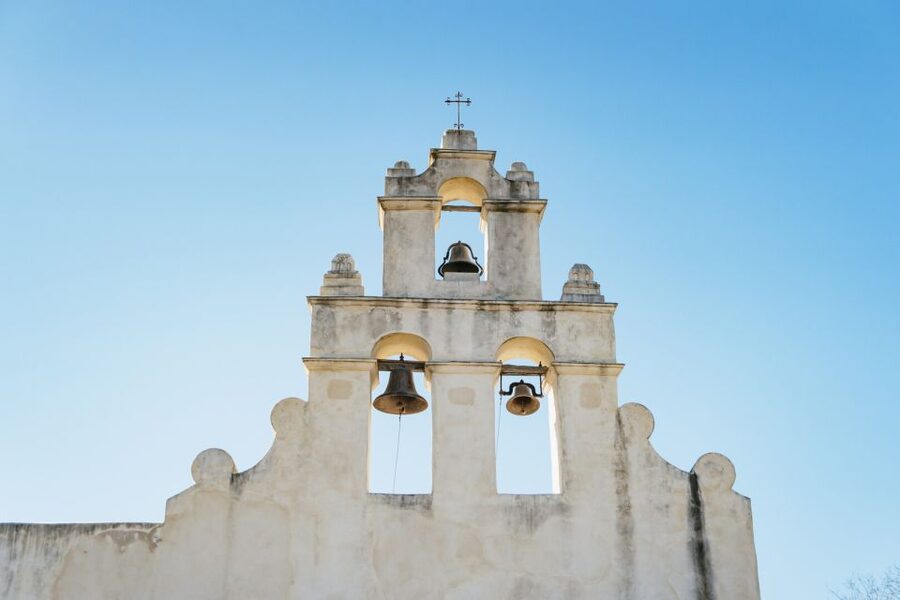
San Antonio’s four Spanish missions give you the city’s oldest surviving story in a single half-day. You’ll see Mission San José, Concepción, San Juan, and Espada, then follow the old irrigation system that helped make settlement possible. The buildings mix Spanish forms with Moorish touches, while Mission Concepción preserves original frescoes and the famous Rose Window.
I like the way the guides explain the setting before you explore, rather than rushing you from doorway to doorway. I also like the practical hotel pickup, comfortable van, and free time at each mission. Guides including Domingo and Alex have been praised for clear communication, good humor, and strong command of the subject.
The main tradeoff is time. Three and a half hours lets you see all four missions, but larger sites such as San José and Concepción can reward a slower visit. You’ll need comfortable shoes, and on a hot afternoon, bring water unless your guide provides it.
Key points to know before booking
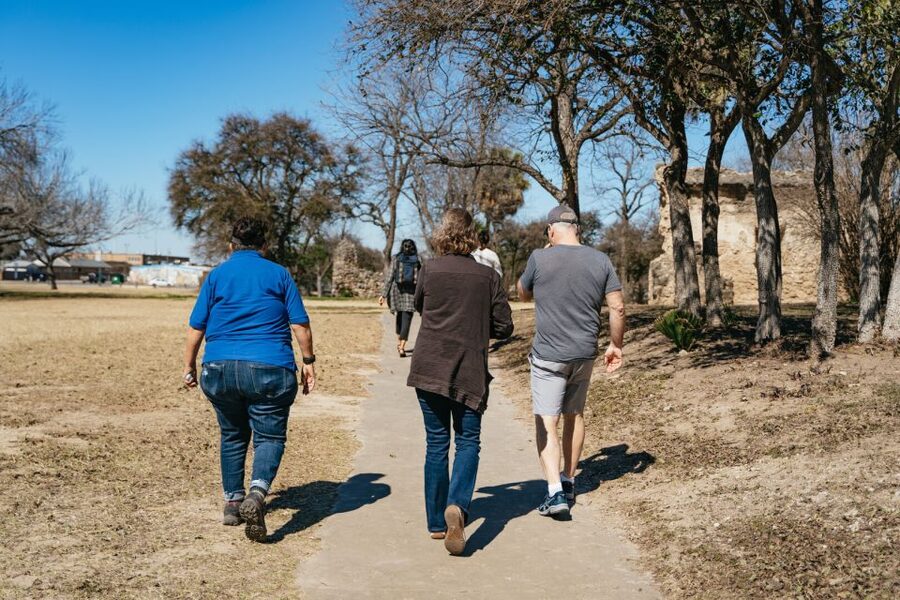
- Four missions in one afternoon: Visit San José, Concepción, San Juan, and San Francisco de Espada without arranging separate transportation.
- The Rose Window: See one of the finest surviving examples of baroque design in the San Antonio mission group.
- A working colonial water system: Espada Aqueduct and Acequia are still in use, giving the tour a practical side beyond church architecture.
- Helpful guides: Domingo, Alex, Eric, Loretta, and other Gray Line guides have led tours praised for strong storytelling and personal attention.
- Time to explore alone: Your guide explains each site, then gives you room to read displays and look around.
- Good value for short stays: At $65 per person, the tour covers four major sites, transport, guiding, and the visitor-center film.
Why the missions matter beyond the church walls
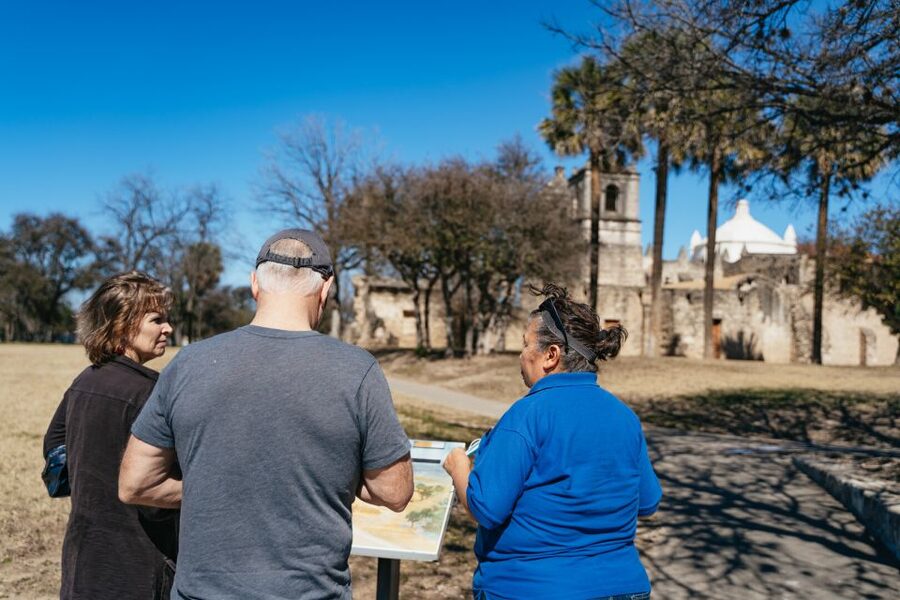
The San Antonio missions are not simply four old churches lined up along a route. They were working communities, with religious, domestic, agricultural, and defensive functions tied to the river and its water supply.
That is why the tour works best when you pay attention to more than the façades. Look for the relationship between the mission buildings, the surrounding grounds, the river corridor, and the acequia system. The architecture may catch your eye first, but the waterworks help explain how daily life could continue in this part of South Texas.
The missions also show a blend of Spanish and Moorish-influenced design. Their silhouettes against the South Texas sky are especially appealing, but the smaller details matter too: wall paintings, carved decoration, old irrigation structures, and the layout of the mission compounds.
Your guide supplies the connecting story as you drive. That matters because the individual sites can otherwise feel like separate stops. With context, you begin to see how the missions fit into San Antonio’s growth and why the buildings survived.
More UNESCO World Heritage Tours in the USA:
- San Antonio Missions UNESCO World Heritage Sites Tour
★ 4.5 · 918 reviews - Small-Group World Heritage San Antonio Missions Guided Tour
★ 5.0 · 237 reviews - World Heritage Shirakawa-go and Experience Tours from Kanazawa
★ 5.0 · 4,049 reviews
Starting with Mission San José and the visitor center
Mission San José is usually the most substantial stop, and it is a sensible place to begin. The site gives you a strong sense of mission life, not just a quick look inside a church.
Before you wander, your guide explains what you are looking at and points out details worth noticing. This approach has been one of the strongest parts of the tour for me because you are not left to guess which doorway, carving, or wall feature matters.
The San Antonio Missions National Historical Park Visitor Center adds useful background. It also provides the chance to watch Gente de Razon, an award-winning film about the missions. The film gives you a more settled introduction than a few minutes of narration in a vehicle can provide.
The visitor center is particularly useful if you want a clearer sense of the people and institutions connected with the missions. One practical note: the schedule at the center matters. A guide may adjust the timing so you can catch the film, but the 210-minute tour still has to cover four sites. You may need to choose between lingering at one display and keeping the full route moving.
Mission San José is also where the limited time may be most noticeable. It is a larger and more visually rewarding stop, so you may wish you had another half-hour to explore. If you care about architecture or church decoration, stay focused and use your free time carefully.
Mission Concepción and the Rose Window
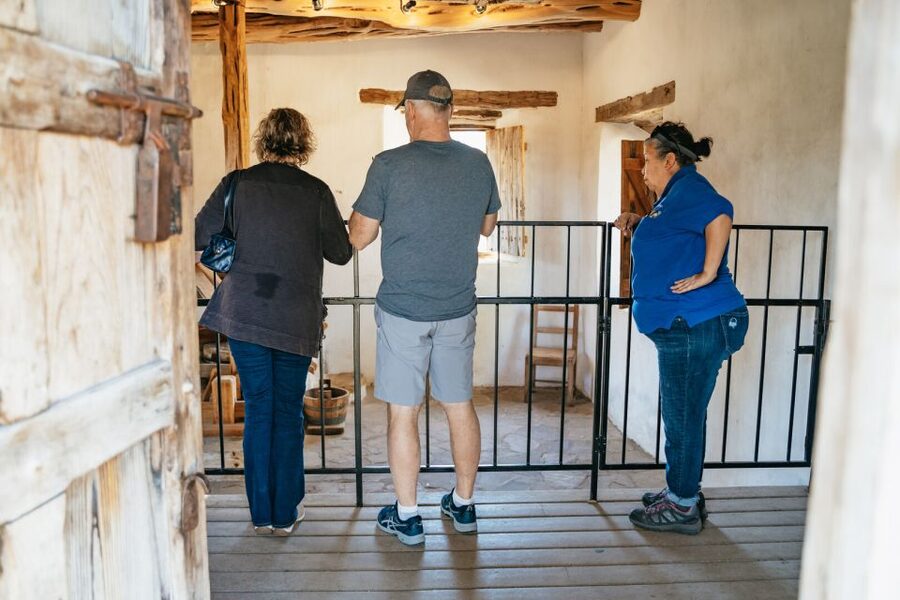
Mission Concepción offers a different kind of reward. The church is known for its Rose Window, a graceful baroque feature that deserves a close look rather than a quick photograph.
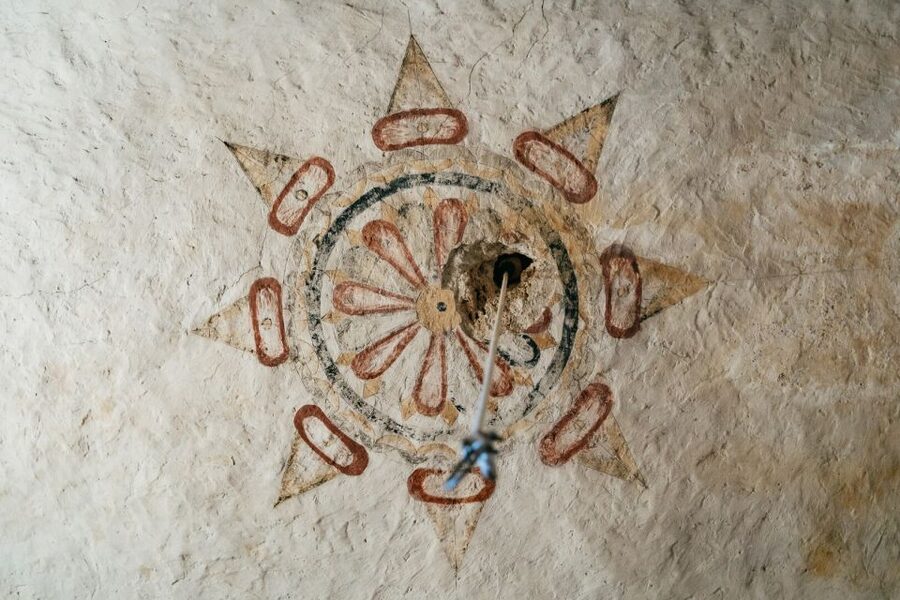
You will also see original frescoes at Concepción. Their survival is one of the tour’s most striking details. The paintings help you imagine how much color and visual instruction once shaped the interior, instead of picturing the missions only as pale stone buildings.
Your guide introduces the site, then allows time to explore on your own. That balance works well here. You can listen for the main story, then pause over the frescoes and architectural details without having a guide talk continuously beside you.
Concepción may be another stop where you want more time. The church and its decoration invite careful looking, and the tour’s schedule cannot give every visitor a long period for quiet study. If this is the mission you most want to savor, stay aware of the departure time and ask your guide when you need to return to the van.
Mission San Juan and a quieter side of the route
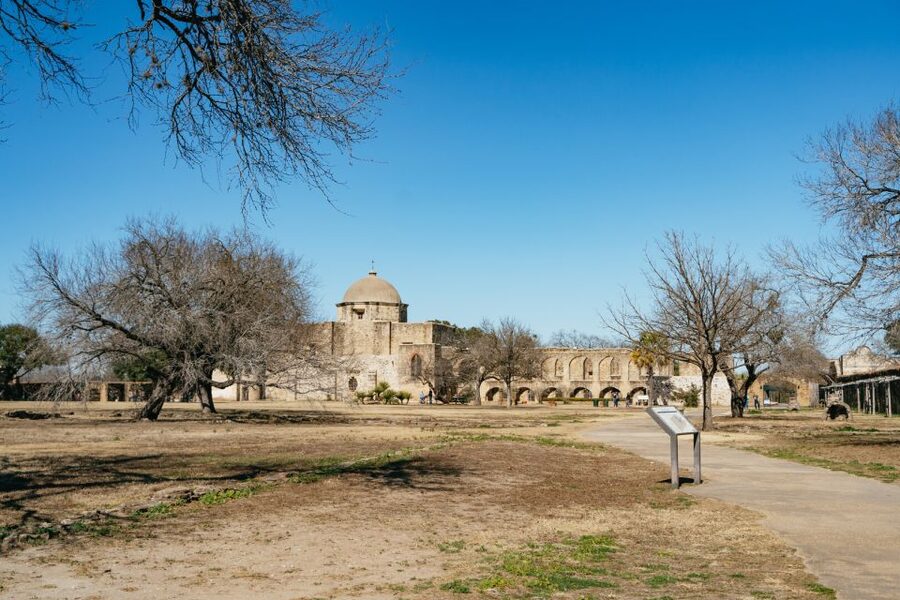
Mission San Juan gives the tour another view of the mission network. It may not have the same immediate visual impact as San José or the Rose Window at Concepción, but it helps complete the picture.
This is where the route feels less like a greatest-hits visit and more like a lesson in how the missions worked together. You are seeing several sites with different features, not four copies of the same church.
The guides have been praised for giving background during the drives between stops. That is useful at San Juan because the story continues even when you are not standing in front of a dramatic façade. Ask questions as you go. Guides such as Domingo and Alex have been singled out for answering questions and adjusting their explanations to the group.
The tour is conducted in English, and the included narration combines live guiding with recorded information. If you prefer a completely private, unhurried visit, this format may feel structured. If you want a clear route with someone handling the transportation and sequence, it is a good fit.
More History Tours in the USA:
- New York City: American Museum of Natural History Ticket
★ 4.5 · 15,447 reviews - History and Hauntings of Salem Guided Walking Tour
★ 5.0 · 14,564 reviews - Charleston’s Old South Carriage Historic Horse & Carriage Tour
★ 5.0 · 10,023 reviews - Beneath The Streets Underground History Tour
★ 4.5 · 8,006 reviews
Espada Aqueduct and Acequia
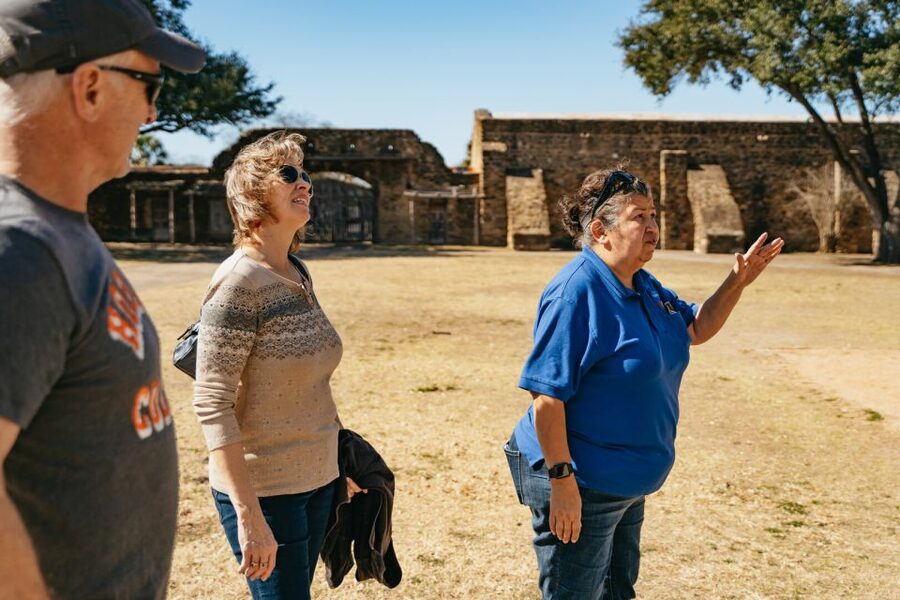
Mission San Francisco de Espada brings the route to one of its most practical features: the old Espada Acequia and Aqueduct.
An acequia is an irrigation channel, and the system here is still in use. The dam and aqueduct show how water was moved to support the mission community. This stop adds a welcome change from church interiors and painted walls. You are looking at infrastructure, not just ceremony and design.
The irrigation system is one of the details that makes this tour more meaningful. It reminds you that the missions depended on work, farming, engineering, and careful use of water. The buildings survived, but the water system helps explain how the communities functioned in the first place.
You might find Espada especially appealing if you enjoy old engineering or prefer a tour with different types of sights. The stop may be less immediately dramatic than San José, but it gives the route practical depth.
The Mission Riverwalk trail and the ride between stops
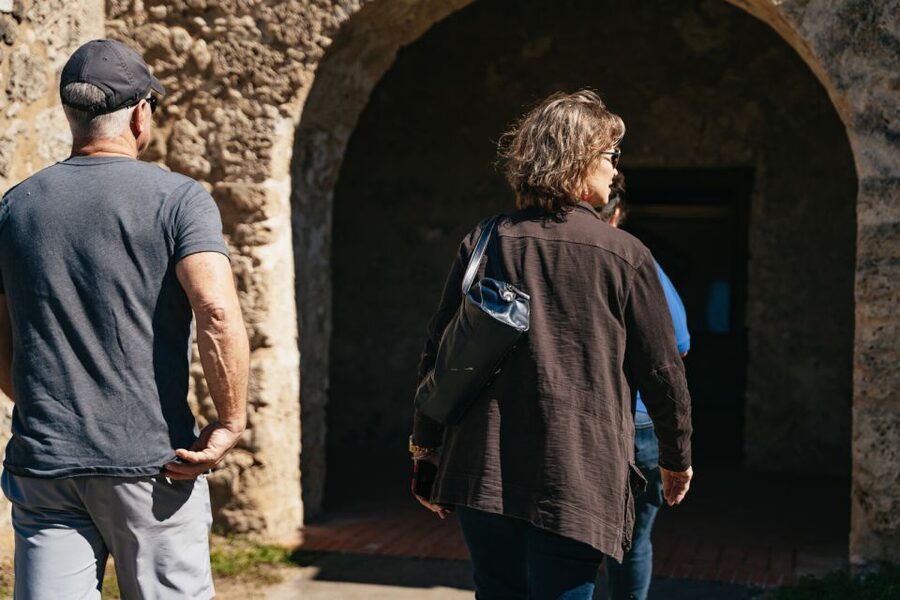
The tour also includes views along the newer Mission Riverwalk Hike and Bike Trail. You may see birds and other wildlife along the river corridor, adding a quieter side to the day.
Do not expect a long hike. This is primarily a guided sightseeing trip by vehicle, with short visits at the missions. The trail is part of the setting and story rather than a separate walking excursion.
The ride between sites is useful time. Your guide can point out places of interest, explain how the missions began, and connect one stop to the next. Several guides have also been praised for safe, smooth driving, which matters when the vehicle is doing much of the day’s work.
Hotel pickup and drop-off are included for downtown San Antonio hotels. Gray Line asks you to call 24 to 48 hours before departure to confirm your booking. Pickup begins about 30 minutes before the departure time, so keep your phone available and watch for the agreed meeting details.
Road closures, construction, or city events can affect pickup points. One guide, Alex, contacted a small group ahead of time to arrange a different meeting place during a busy period. That kind of flexibility is useful, but you should still confirm the details before you leave your hotel.
What the $65 price really covers
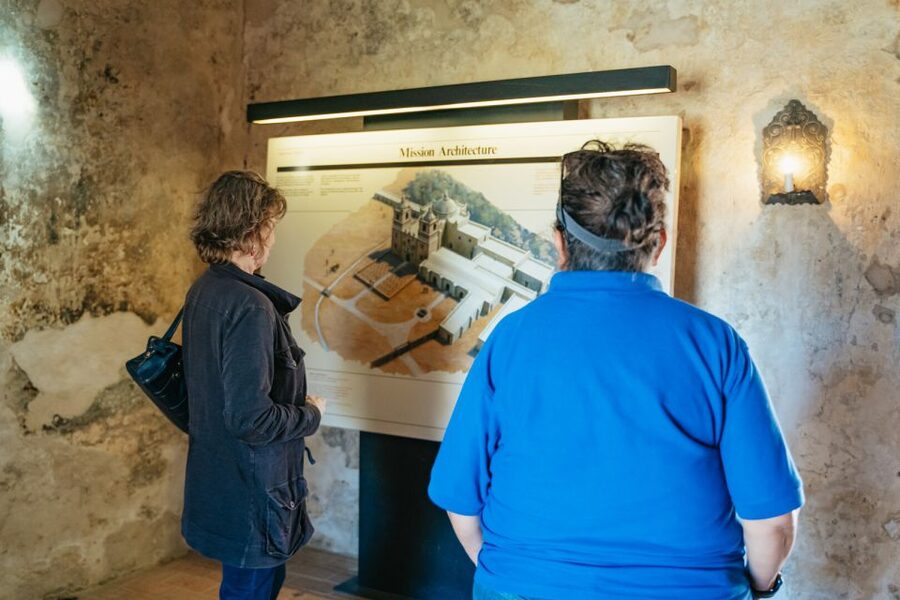
At $65 per person, this is a strong value if you want to see all four missions in one outing. The price includes downtown hotel pickup and drop-off, transportation, a live English-speaking guide, guided visits to the four missions, recorded narration, and the visitor-center film.
You are paying for convenience as much as admission or sightseeing. A self-guided visit would require you to organize transportation between the sites and manage the timing yourself. The tour removes that work and gives you a guide to explain what you are seeing.
The value is best for a first visit or a short stay in San Antonio. If you have several days and enjoy slow museum visits, you might prefer to return independently to the missions that interest you most.
Food and drinks are not included. Bring your own water, especially during summer. Some guides have offered cold bottled water, but you should not rely on that. Comfortable clothes and shoes are also important because you will get out at several locations and walk around each one.
The guide can shape the whole experience
The strongest praise has gone to the guides. Domingo is repeatedly described as prompt, clear, friendly, and full of useful information. He has also been noted for giving visitors time to explore rather than filling every minute with commentary.
Alex has received similar praise for mixing facts with humor and handling small groups well. Other guides named in feedback include Eric, Loretta, Perry, and Leo. The exact guide depends on the departure, but the pattern is clear: a good guide makes the route feel connected and helps you notice details you might otherwise pass.
The best guide style here is not a nonstop lecture. You get background in the vehicle, a short introduction at each mission, and time to look around. That structure suits you if you want information but also like to take your own photographs and read signs.
Small groups can make the experience more personal. One tour operated with only two people and became almost a private visit. You should not assume every departure will be that small, but a limited group can give you more room for questions and conversation.
Who should book this mission tour?
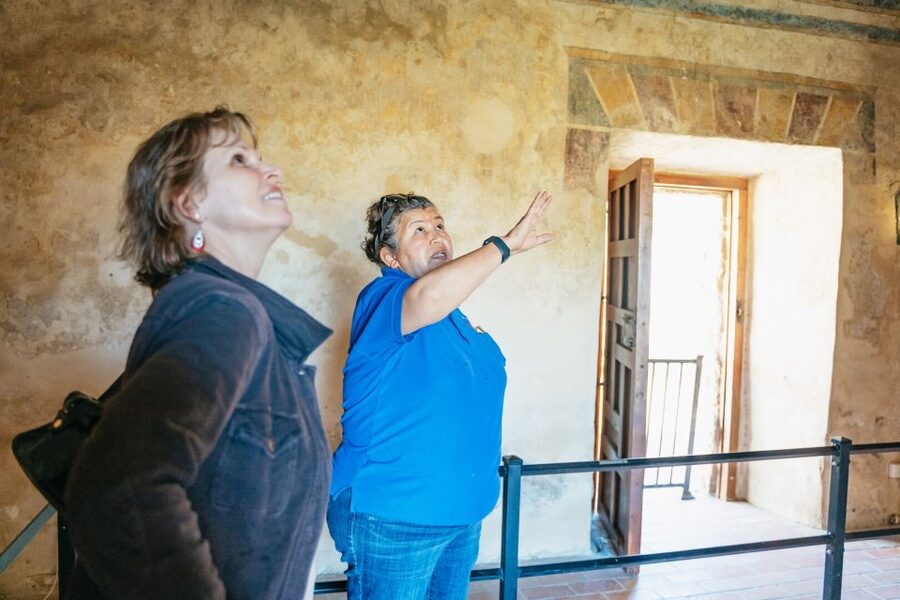
I would choose this tour if you are visiting San Antonio for the first time, have limited time, or do not want to drive between the missions. It is also a good choice if you prefer learning the setting before exploring each site on your own.
Families, older visitors, and anyone who values hotel pickup may appreciate the simple logistics. The activity is listed as wheelchair accessible, though you should still confirm any specific mobility needs before departure.
History and architecture fans will find plenty to notice, especially at San José and Concepción. People interested in water systems should pay close attention at Espada. The route also suits anyone who wants something beyond downtown attractions and the Alamo area.
I would hesitate only if you want long, quiet periods at each mission. Three and a half hours is efficient, not leisurely. The tour gives you a broad look at the full group, but you may want to return on your own to your favorite site later.
Should you book the UNESCO Missions Tour?
Book it if you want the best overview in the least complicated format. Four missions, the Rose Window, original frescoes, the Espada waterworks, the river trail, and Gente de Razon make $65 a fair price for a half-day outing.
Choose another approach if your main goal is slow photography, extended church interiors, or a full day focused on one or two sites. For most first-time visitors, though, the combination of transport, clear guiding, and free time makes this a practical introduction to San Antonio’s mission corridor.
FAQ
How long is the San Antonio UNESCO World Heritage Missions Tour?
The tour lasts 210 minutes, or three and a half hours.
What missions are included?
The tour includes Mission San José, Mission Concepción, Mission San Juan, and Mission San Francisco de Espada.
Is hotel pickup included?
Yes. Pickup and drop-off are included at downtown San Antonio hotels. Pickup begins about 30 minutes before departure.
What language is the tour conducted in?
The live tour guide and recorded narration are in English.
Does the tour include food or drinks?
No. Food and drinks are not included, so bring water and any snacks you need.
What should I wear?
Wear comfortable clothes and comfortable shoes. You will get out at several mission sites and explore on foot.
Is the tour wheelchair accessible?
Yes, the activity is listed as wheelchair accessible.
Does the tour include the Rose Window?
Yes. Mission Concepción includes the Rose Window, a notable example of baroque architecture.
Can I see the Espada Aqueduct and Acequia?
Yes. The route includes the Espada Acequia, dam, and aqueduct, an irrigation system that is still in use.
Is the film Gente de Razon included?
Yes. Viewing the award-winning film at the San Antonio Missions National Historical Park Visitor Center is included.
Can I cancel for a refund?
You can cancel up to 24 hours in advance for a full refund. You can also reserve now and pay later.
Newest history tours we have reviewed in the USA
- Self Guided Detroit’s Spirit and History Solo Walking Tour★ 4.5 · 41 reviews
- Best Downtown Detroit Historical Walking Tour★ 5.0 · 56 reviews
- Detroit’s Hidden History Guided Walking Tour★ 5.0 · 48 reviews
- Private Nightlife Tour in Denver: Culture, History, and Cocktails★ 5.0 · 48 reviews
- Historical Walking Tour Of Denver With A Haunting Twist★ 5.0 · 19 reviews
- Tip Based: Capitol Hill History & Ghost Tour★ 5.0 · 34 reviews
- Denver – Capitol Hill Guided Walking Ghost / History Tour★ 4.5 · 75 reviews
- JFK Historical Tour★ 5.0 · 22 reviews
UNESCO World Heritage Tours, compared.
World Heritage Shirakawa-go and Experience Tours from Kanazawa
Read our review →

Bali: Tanah Lot UNESCO World Heritage Sites Full-Day Tour
Read our review →
World Heritage Kyoto & Nara Uji Authentic Matcha Experience
Read our review →
UNESCO’s Ayutthaya Historical Park: Full-Day Tour from Bangkok
Read our review →
Rotterdam: Kinderdijk UNESCO World Heritage Entry Ticket
Read our review →
From Busan: Gyeongju UNESCO World Heritage Guided Day Tour
Read our review →Browse the lists this tour appears in