
Review · FRANCE HISTORY TOURS
Rouen: Historic Guided Tour of the Old Town
Rouen’s old town is more than timber-framed houses and a grand cathedral. With guide Justin Meigné, you follow the city from its Roman beginnings through the rise of Normandy, the age of Joan of Arc, and the changes that shaped modern Rouen. The tour also turns up places you might walk past alone, including the Roman Fountain and lesser-known city strongholds.
I like the small group of up to nine, which gives Justin room to answer questions and adjust the pace to your interests. I also like the way the tour joins big events to visible places: the Treaty of Saint-Clair-sur-Epte, Viking rule, Joan of Arc, and the city’s wartime and modern story all connect to the streets beneath your feet.
The main drawback is the length and walking load. You cover just over 3 kilometers in 150 minutes, with many historical explanations along the way. This suits you best if you enjoy a serious walking tour and can stay focused through a lot of dates, names, and anecdotes.
Key points about the Rouen walking tour
- Three eras in one route: Roman Rouen, medieval Rouen, and the modern city form the tour’s main structure.
- Major interiors included: You go inside Notre-Dame de Normandie Cathedral and Saint-Maclou Abbey, not just past their façades.
- Roman remains on the route: The Roman Fountain offers a glimpse of Rouen’s earliest urban period.
- Joan of Arc gets a local treatment: The tour includes the city’s Joan of Arc sites and a tasting of chocolates called her tears.
- A Norman food touch: You sample cider from Normandy during the visit.
- Personal guiding: Justin leads in English or French, with a maximum of nine people.
Starting beside Napoleon and entering old Rouen
The meeting point is directly in front of the Napoleon statue. That gives you a clear place to begin, though you should still arrive with enough time to spot the statue and gather before the group sets off.
From there, Justin frames Rouen as a city built in layers. The route covers more than two thousand years, beginning in the 3rd century BC and moving toward the present day. You are not simply collecting monument photos. The point is to see how each period altered the city’s streets, defenses, buildings, and place in Normandy.
That broad timeline is one of the tour’s best features. Many city walks focus only on the Middle Ages, while this one gives Roman Rouen a proper opening and continues through modern changes. If you like to understand how a city developed, rather than memorize isolated facts, the structure should work well for you.
Justin’s approach also appears suited to questions. He is described as a young historian with a particular passion for Rouen and Normandy, and his style is friendly rather than formal. That matters in a small group. You can ask about a building, a local custom, or a historical detail without having to shout across a crowd.
More Old Town and Historic Centre Walks in France
- Bordeaux: Historic Center & Chartrons District Bike Tour
★ 4.8 · 709 reviews - Strasbourg on Foot: Historic Center and Petite France with a Local Guide
★ 4.7 · 223 reviews - Rouen: Guided Tour of the Historic Center
★ 4.8 · 145 reviews
Roman Rouen and the first fortifications
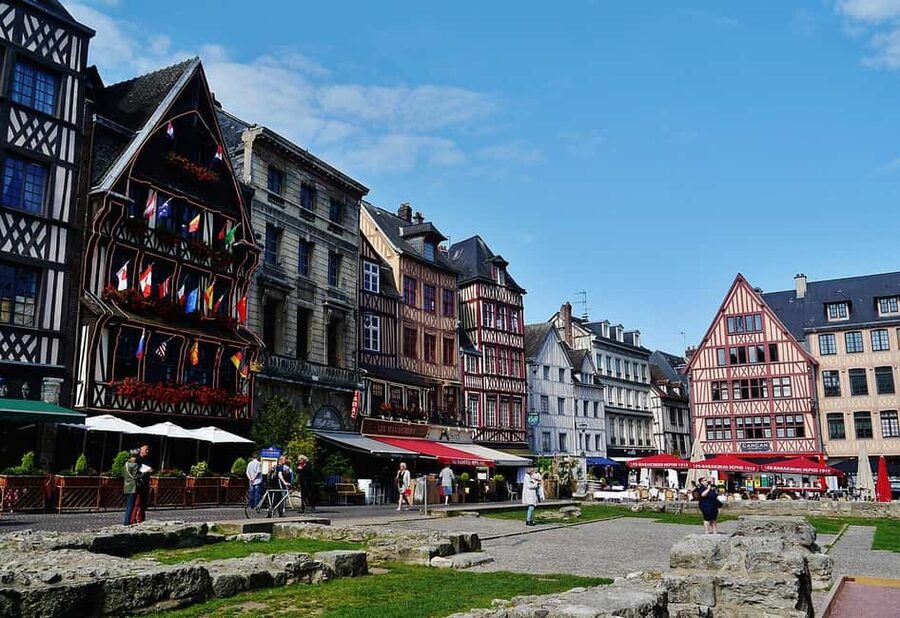
The Roman section takes you to the Roman Fountain and introduces Rouen’s earliest urban foundations. This is a useful reminder that the city’s story did not begin with Viking rulers, medieval churches, or Joan of Arc.
The Roman ruins are not presented as a separate archaeological outing. They form part of the walking narrative, showing how the city’s first defenses and urban shape developed. You get a sense of Rouen as a strategic settlement long before it became the capital of a duchy.
This stop will appeal most to visitors who like context. The ruins may not take a long time to see, but their value comes from what Justin explains around them. He connects the physical remains to the city’s later importance, helping you understand why Rouen became such a central place in Normandy.
You should expect an outdoor walking experience, not a museum visit. The route includes monuments and ruins in the city, with the cathedral and Saint-Maclou Abbey providing interior stops. Comfortable shoes are a practical choice, and the tour is easier if you are happy walking for well over three kilometers.
The birth of Normandy and the Viking connection
A central part of the tour explains the Treaty of Saint-Clair-sur-Epte, the agreement that marked the birth of Normandy when Vikings and Franks established a new duchy. This is the point where Rouen’s local story widens into the story of the region.
Justin uses Rouen to explain how Normandy developed its identity and political importance. The city became the capital of the duchy, so the streets and monuments take on a larger meaning. You are not only hearing about rulers and battles. You are seeing the place where Norman power took shape.
This section should suit you if you want more than a quick medieval snapshot. It brings together the Roman foundations, Viking settlement, Frankish politics, and the growth of the duchy. The chronology can be dense, though. If you prefer a light stroll with only a few facts, this tour may feel more academic than expected.
The route’s small size helps here. With no more than nine participants, Justin can pause when a point needs explaining and respond to individual interests. Several people who took the tour found his enthusiasm and detail a major strength, especially when the weather was poor. That suggests the storytelling carries much of the experience, even when the sky does not cooperate.
Medieval Rouen, Saint-Maclou, and the city’s strongholds
Medieval Rouen is the heart of the tour. As capital of Normandy, the city gathered power, trade, religion, and conflict in a compact area. Justin explains how that period shaped the buildings and street plan you see today.
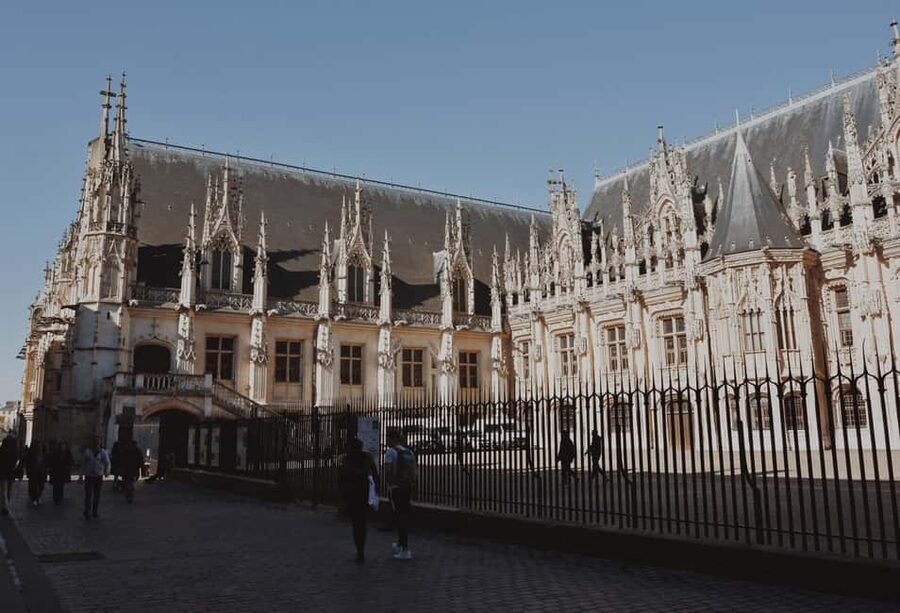
Saint-Maclou Abbey is one of the important interior visits. Going inside gives you a closer look at Rouen’s religious heritage than a quick exterior stop would allow. The abbey is paired with Notre-Dame Cathedral, creating a useful contrast between two major sacred sites.
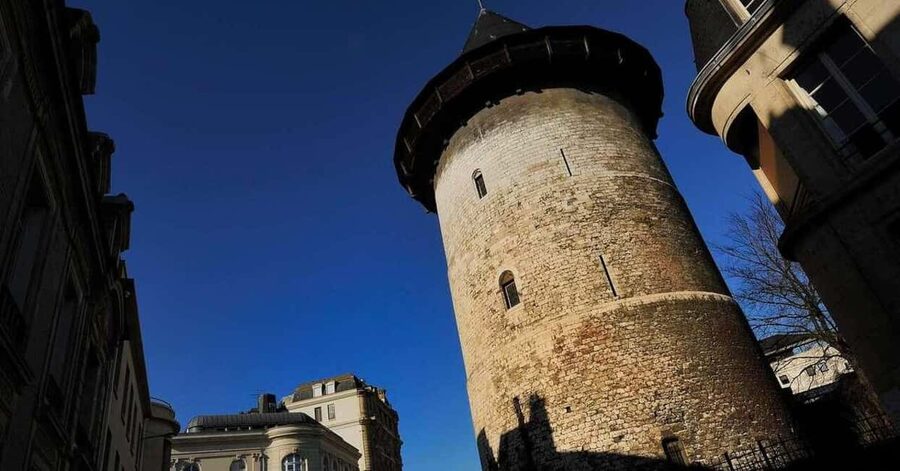
The tour also explores the secrets of Rouen’s strongholds. The supplied information does not specify every defensive site or reveal the full route, so you should expect historical interpretation rather than a dedicated fortress visit. Justin’s focus is on how the city was protected and how its defenses fit into Rouen’s wider political role.
This is also the part of the walk where lesser-known corners become valuable. You may pass places that are easy to miss without local guidance. The benefit is not simply seeing more stops. It is learning why a modest-looking wall, street, or fragment matters.
Same streets, a different century:
- Paris: Louvre Museum Entry with History of Mona Lisa
★ 3.9 · 2,823 reviews - Paris: Dark History and Ghostly Guided Walking Tour
★ 4.7 · 1,000 reviews - Vieux Lyon Cultural & Historical Walking Guided Tour (English)
★ 5.0 · 942 reviews - From Strasbourg: Best Of Alsace Historical Day Trip
★ 4.7 · 633 reviews
Notre-Dame Cathedral, the tour’s major interior stop
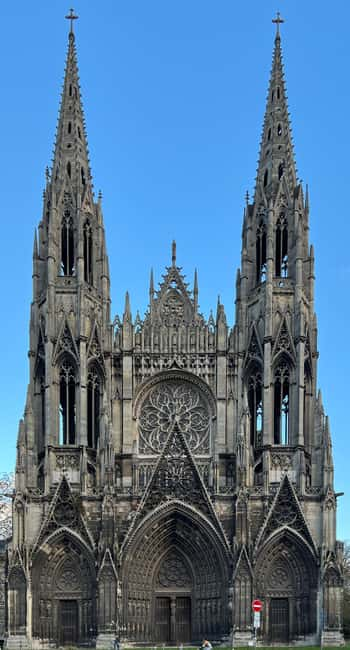
Notre-Dame de Normandie Cathedral is the tour’s most obvious landmark and one of its key highlights. You tour the interior rather than viewing it only from the square, which gives the visit more substance.
The cathedral represents several parts of Rouen’s story at once: religious authority, civic identity, artistic change, and the city’s place in Normandy. Justin’s historical approach should help you read the building as part of the city’s development, rather than treating it as a beautiful but separate attraction.
The visit is especially useful if you are seeing Rouen for the first time. A large cathedral can be hard to understand without guidance. You may notice a grand façade, tall interior, and famous details, but a guide can connect those features to the city’s long development.
Keep in mind that this remains a walking tour, not a specialist cathedral study. The time is shared among Roman sites, medieval streets, the abbey, the cathedral, Joan of Arc, and modern Rouen. If your main goal is detailed architectural analysis of Notre-Dame, you may want extra time at the cathedral after the tour.
Joan of Arc, the Gros Horloge, and a sweet finish
Joan of Arc is one of Rouen’s defining historical figures, and the tour places her within the city’s medieval story. Rather than discussing her as a distant national symbol, Justin connects her to the streets and monuments of Rouen.
The route includes a tasting of Joan of Arc’s tears, a chocolate associated with the Gros Horloge clock face. This is a small but memorable local touch. It adds flavor to a subject that can otherwise become a string of dates and political events.
The Gros Horloge itself helps link civic life, timekeeping, and the old city. The information provided does not specify how long you spend at the clock or exactly how the chocolate tasting is arranged, so treat it as part of the walking narrative rather than a full food workshop.
I like this balance. The chocolate does not replace the historical explanation, but it gives the tour a lighter moment. It also makes the Joan of Arc section easier to remember, especially if you are touring with family or simply appreciate a good local snack.
Norman cider and practical food advice
Norman cider is another tasting included in the visit. It gives you a small connection to the region’s food culture, and Justin also points out places to eat in Rouen.
That restaurant guidance can be useful after a history-heavy walk. You leave with more than a list of monuments. You also get suggestions for trying local cuisine, based on the guide’s familiarity with the city. The supplied details do not name particular restaurants or dishes, so you should ask Justin directly for recommendations that match your budget and appetite.
The tasting is modest rather than a full culinary tour. The experience is fundamentally a historical walk with food touches. If you want several courses, market visits, or extensive tastings, choose a dedicated food tour instead. If you want a little cider and chocolate folded into a city tour, this is a good middle ground.
What the 150 minutes and $33 price really provide
At $33 per person, the tour offers two and a half hours with a live guide, access to the interiors of Notre-Dame Cathedral and Saint-Maclou Abbey, the Roman Fountain, historical sites, and two small tastings. The value is strongest if you want interpretation rather than a self-guided route.
Rouen’s old town is walkable, but walking alone can leave you with a collection of attractive buildings and no clear sequence. Justin supplies that sequence, moving from Roman origins to the duchy, medieval Rouen, Joan of Arc, and the modern city.
The price is less compelling if you only want to photograph the cathedral and clock tower. You can see parts of the old town without paying for a guide. You are paying for the chronology, the explanations, the less obvious corners, and the chance to ask questions in a small group.
Flexible booking adds some practical value. You can cancel up to 24 hours before the start for a full refund, and you can reserve now and pay later. The tour is wheelchair accessible, but the route is more than three kilometers and includes extensive walking, so check whether that distance works for your needs.
Who should book this Rouen tour
I would choose this tour if you want Rouen’s story explained in one sitting. It suits first-time visitors, history fans, Normandy explorers, and anyone who prefers a small group to a large flag-following crowd.
It is also a good choice if you want a guide who can move between major sights and less familiar places. Justin’s knowledge of Rouen and Normandy is the central reason to book. He brings enthusiasm, answers questions, and can adapt to your interests within the limits of a 150-minute route.
You should think twice if you dislike long explanations, have difficulty walking more than three kilometers, or want a relaxed photo stop at every monument. The route covers a lot of ground in a short time, and the historical content is a major part of the experience.
The tour operates in English and French. Some content is presented in its original language, which may appeal to visitors who enjoy hearing local terms and historical names as they are used in France.
Should you book the Historic Guided Tour of Rouen?
Book it if you want the city to make sense. The combination of Roman remains, Norman origins, medieval power, Joan of Arc, cathedral interiors, local cider, and chocolate gives you a rounded introduction to Rouen without turning the visit into a dry lecture.
The strongest reason to go is Justin Meigné. His personal, enthusiastic style suits a small group, and his recommendations can help you plan what to eat and see after the walk. Just bring good shoes, allow for a steady pace, and expect plenty of history.
At $33, this is a fair buy for a two-and-a-half-hour guided introduction. It is less about checking off sights and more about learning how Rouen became the city you see today.
FAQ
How long does the Rouen historic tour last?
The tour lasts 150 minutes, or two and a half hours.
How far do you walk?
The route covers just over 3 kilometers and includes many historical explanations and city monuments.
Where does the tour meet?
You meet directly in front of the Napoleon statue in Rouen.
Which languages are available?
The live tour is available in English and French. Some content is shown in its original language.
What sites are visited inside?
The tour includes an interior visit to Notre-Dame de Normandie Cathedral and Saint-Maclou Abbey.
Is food or drink included?
Yes. The tour includes Norman cider and a tasting of Joan of Arc’s tears, a chocolate linked to the Gros Horloge clock face.
Is the tour suitable for wheelchair users?
The activity is listed as wheelchair accessible. The route still covers more than 3 kilometers, so consider the walking distance when deciding if it suits your needs.
Newest history tours we have reviewed in France
- Small-Group Full-Day Tour of Côte de Nuits, Côte de Beaune Vineyards and Beaune Historical District★ 5.0 · 364 reviews
- Private Bordeaux History Tour with a glass of Bordeaux wine.★ 5.0 · 28 reviews
- Bordeaux Historic and Gourmet Food Walking Tour★ 4.5 · 82 reviews
- Bordeaux’ Best Boulangeries & History Tour★ 5.0 · 126 reviews
- Historical Center, Bordeaux Food Tour★ 5.0 · 33 reviews
- 2-Hour Walking Tour of the City’s Iconic Sights and History★ 4.0 · 207 reviews
- Private Walking Guided Tour of Historic Bayeux English or French★ 5.0 · 36 reviews
- Historic Bayeux Daily Group City Tour In English 2 hrs (Apr-Sept)★ 5.0 · 220 reviews
Old Town & Historic Centre Walks, compared.
Madrid Essential: Historic Center, Plaza Mayor & Royal Palace
Read our review →
Live Fado Show with Port Wine in Historic Center
Read our review →
Valencia Old Town Tour with Wine & Tapas in 11th Century Historic Monument
Read our review →
Prague Old Town, Medieval Underground and Dungeon Historical Tour
Read our review →
Cartagena: Historic Center and Getsemaní Shared Walking Tour
Read our review →
Old Town Walking Tour History and Tales in Edinburgh
Read our review →
Philadelphia Old City Historic Walking Tour with 10+ Top Sites
Read our review →Browse the lists this tour appears in