
Review · ROME HISTORY TOURS
Rome: Introduction to the Colosseum and Ancient City Tour
The best part of this Rome Colosseum tour is the way it links three major ancient sites in one outing. You learn how the Colosseum worked, then walk through the Forum and Palatine Hill, where Rome’s political life, imperial palaces, and oldest legends come together. The tour ends near Trajan’s Column, a fitting final look at Roman power.
I like the live guide and headset system, which makes it easier to follow explanations in a large, noisy archaeological area. I also like the balance between guided storytelling and time to look around the ruins at your own pace. The main drawback is practical: the meeting office can be crowded, and you must bring valid ID with the full names of everyone in the booking.
Key points to know before booking
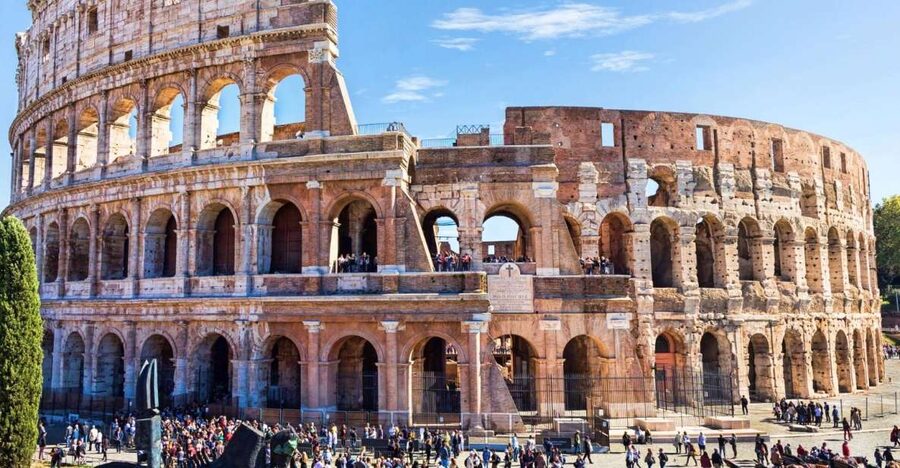
- Three ancient sites in one visit: See the Colosseum, Roman Forum, and Palatine Hill during a 2.5-hour guided outing.
- A guide-led Colosseum visit: Learn about gladiatorial games, Roman engineering, and the Flavian dynasty’s political aims.
- The Forum and Palatine Hill receive real attention: This is more than a quick photo stop outside the Colosseum.
- Trajan’s Column marks the finish: The route ends with one of Rome’s best-known monuments celebrating imperial victory.
- Bring ID for every participant: Adults and children need a passport or ID card, and incomplete names can cause entrance trouble.
- Plan light: Oversize luggage, food, drinks, pets, and electric wheelchairs are not permitted.
What this 2.5-hour Rome tour covers
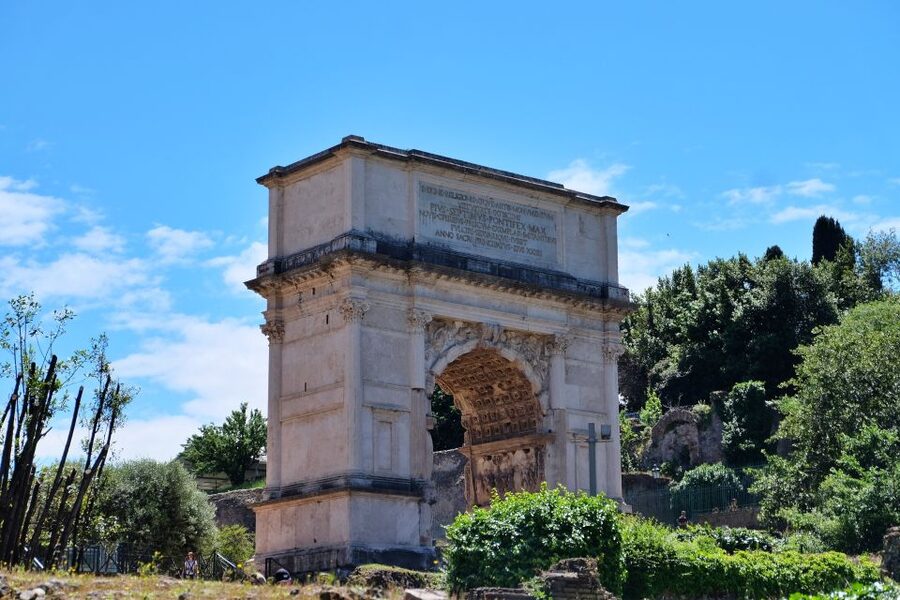
This tour gives you a guided introduction to the heart of Ancient Rome. The route includes entrance to the Colosseum, followed by Palatine Hill and the Roman Forum, with the experience ending at Trajan’s Column.
The order and meeting point can vary by the option you choose, so check your booking details closely. The activity is offered in English, French, German, Italian, and Spanish. July and August visits are shortened to two hours, which matters when you are comparing time slots or planning another major sight afterward.
You should think of this as an orientation tour with substance. It is not designed to cover every corner of the archaeological park. Instead, it gives you a clear framework for understanding the monuments, then leaves room to pause, take photographs, and absorb the scale of the ruins.
More Ancient History Tours in Italy
- Colosseum: Underground and Ancient Rome Tour
★ 4.7 · 12,691 reviews - Colosseum & Ancient Rome with Arena Floor Option I Max 6 People
★ 5.0 · 3,306 reviews - Rome: Colosseum, Ancient Rome Tour or AudioGuided Tour
★ 4.4 · 2,879 reviews
Entering the Colosseum and understanding its purpose
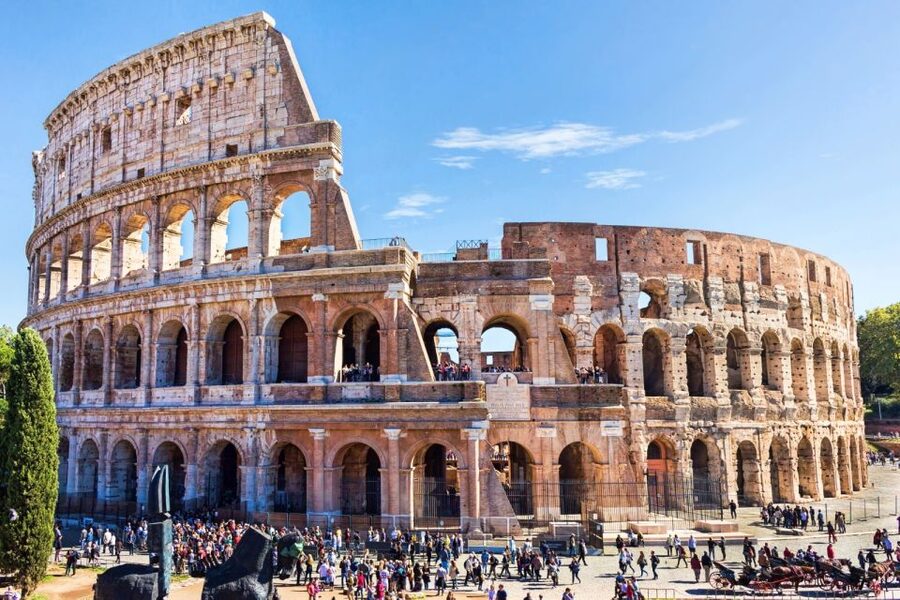
The Colosseum is not merely a giant old arena. It was a public statement by the Flavian emperors, built partly as a gift to Roman citizens after the unpopular rule of Nero. The building gave the new dynasty a way to gain public support, provide mass entertainment, and show off Roman construction skill.
Your guide explains these motives while taking you through the monument. That context helps you read the building as both an arena and a piece of political theater.
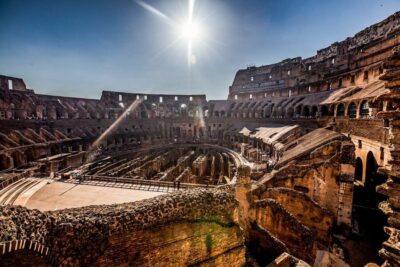
The Colosseum had more than 80 entrances and could hold roughly 50,000 spectators. That number is easier to appreciate when you consider the need to move huge crowds in and out efficiently. The design was not accidental. Roman engineers planned circulation, seating, and public access on a scale that still feels startling.
The games could last as long as 100 days. Festivals included gladiatorial contests and other forms of entertainment, and the building was meant to keep a vast audience engaged. The guide also brings in the stories and legends surrounding the gladiators, helping you picture the people behind the spectacle.
The supplied headsets are useful here. The Colosseum can be a noisy place, and the group may spread out as people look at walls, arches, and views. A radio system lets you keep listening without standing shoulder to shoulder with the guide.
The tour includes entrance to the Colosseum and skip-the-ticket-line access. That does not mean every step will be instant, since security and crowd control still affect the pace, but it removes the need to wait in the standard ticket line.
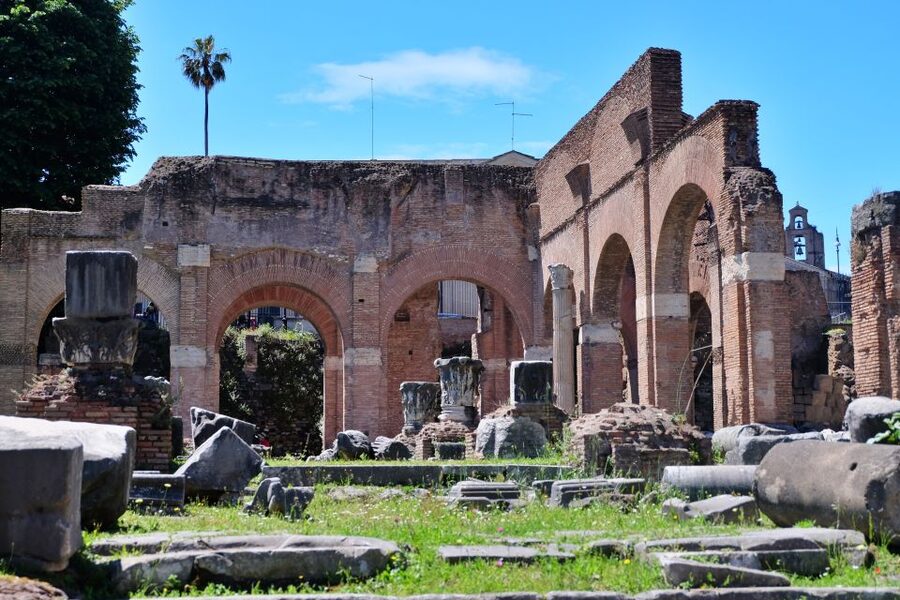
Walking the Roman Forum, Ancient Rome’s public center
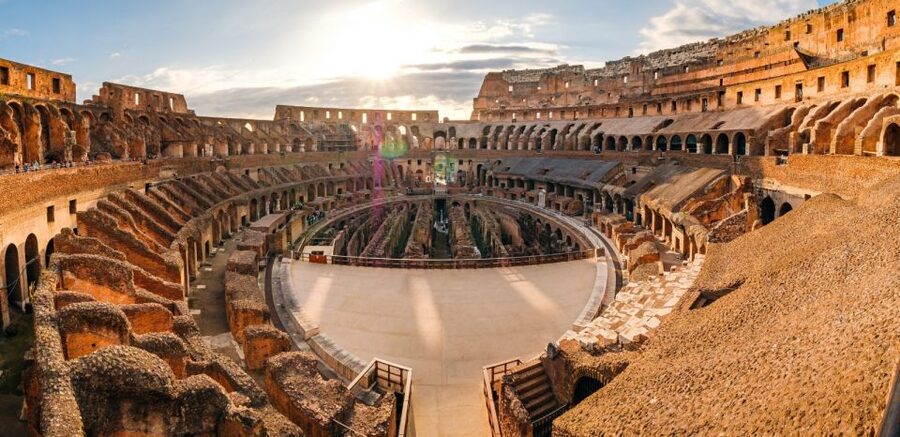
After the Colosseum, the route continues into the Roman Forum. This is where the tour moves from one famous building to a whole urban world.
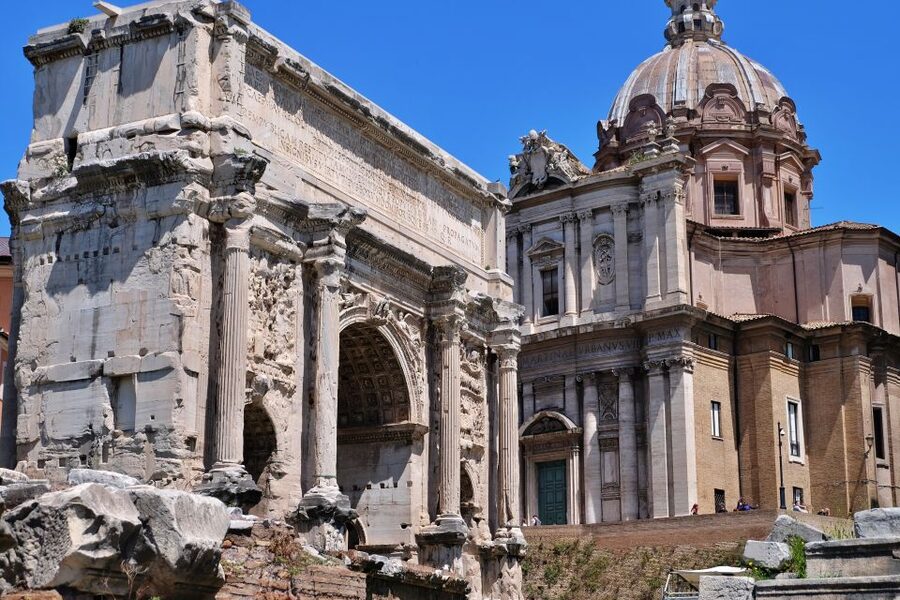
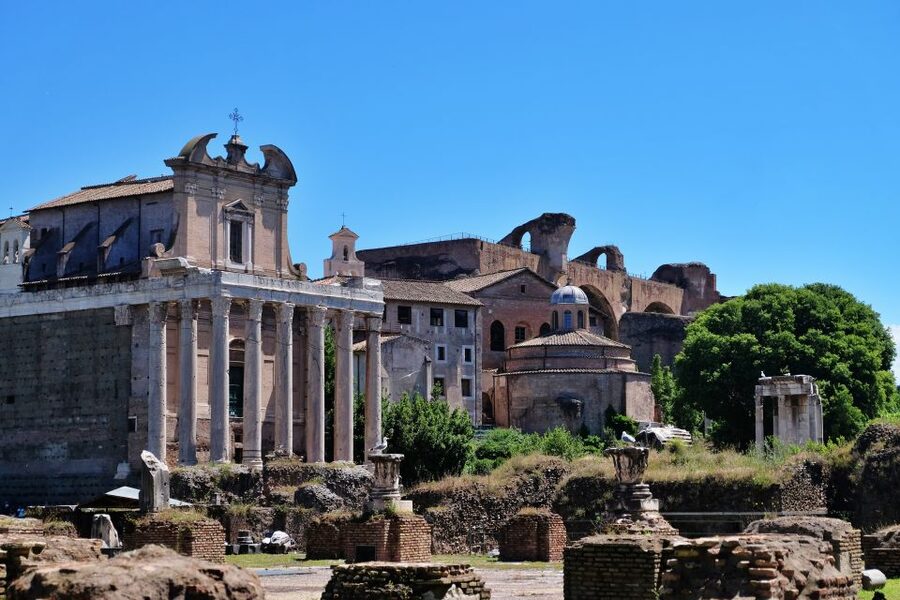
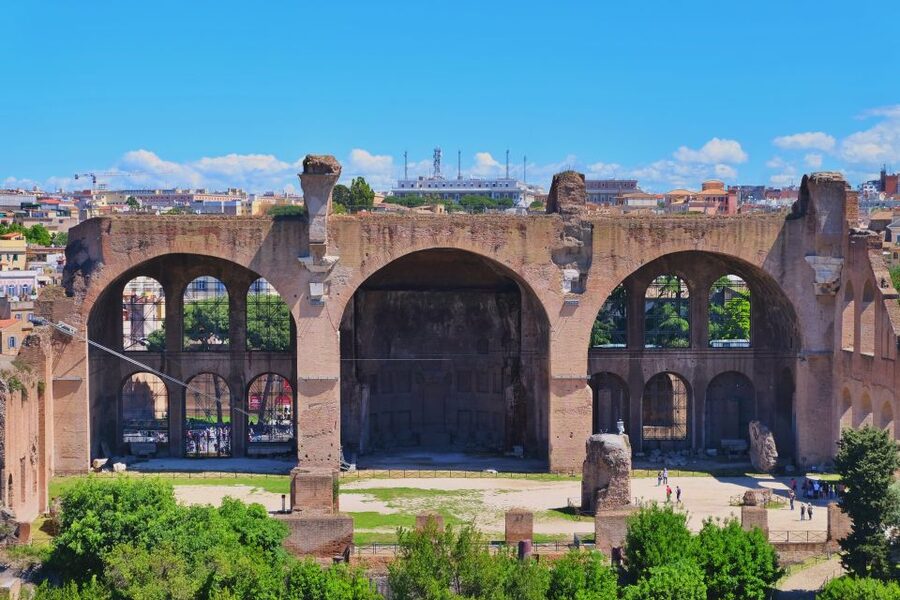
The Forum was the social, political, religious, and financial center of Roman life. Senators, merchants, office seekers, religious officials, poor residents, and people without homes could all pass through the same civic zone. The ruins can look like a jumble of columns and broken walls if you visit without context. A guide helps connect those fragments to the daily business of the city.
I value this part of the route because it explains how Rome actually functioned. The Colosseum is the spectacular symbol, but the Forum shows the machinery of public life. Politics, religion, money, and reputation all met here.
Expect uneven ground and a lot of walking. The Forum is an open archaeological area, so comfortable shoes are a sensible choice. The information provided does not promise a fully accessible route, and electric wheelchairs are not permitted on the activity.
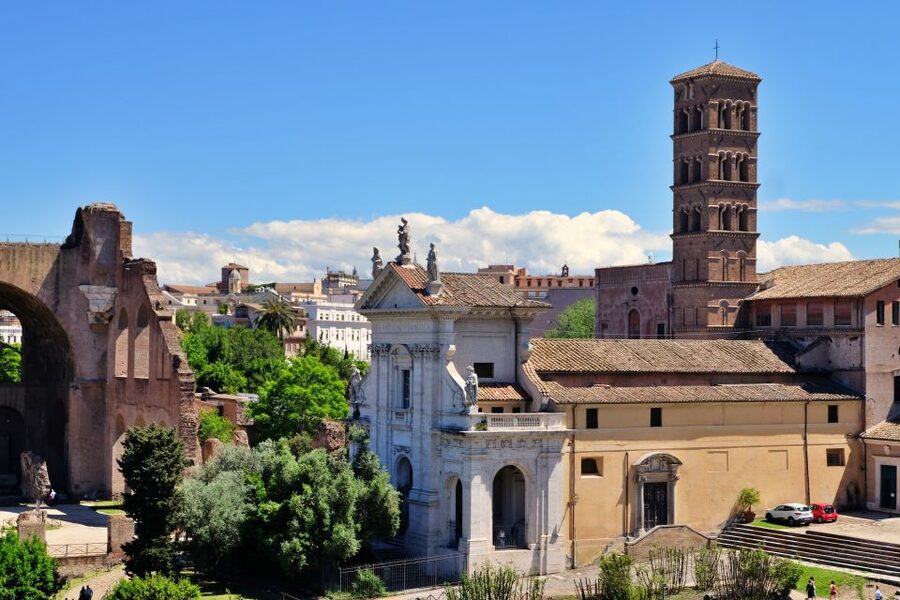
Your guide discusses the structures that remain and the role they played in Roman society. You may also have time to stop for photographs and look across the ruins toward the Colosseum. The views help you understand that these monuments were part of one connected city, not isolated attractions.
Palatine Hill and the many layers of Rome
Palatine Hill gives the tour another angle on Rome. It is tied to the foundation story of the city and to the traditional legends of Rome’s earliest days. According to the historical layers presented here, ruins from the seventh century BCE remain alongside evidence from the Roman Republic and the later imperial period.
The hill also reveals the wealth of the emperors. The palace of Emperor Domitian shows how the center of power moved from public spaces to grand private and ceremonial residences. You are not just looking at stones from one period. You are seeing several versions of Rome placed on the same hill.
The site also carries traces from much later eras. The Farnese family used the area during the Renaissance, and Mussolini’s presence forms part of its twentieth-century story. That long sequence makes Palatine Hill especially useful for anyone who wants more than the standard gladiator tale.
The hill offers panoramic views of the Colosseum and the archaeological area. Bring a camera, but do not rush this part. The view helps you grasp the relationship between the Forum, Palatine Hill, and the arena.
The tradeoff is that the hill adds walking and some uphill movement. If you want only a quick Colosseum visit, this tour may feel more demanding than necessary. If you want a broader picture of Rome’s growth from early kingdom to empire and beyond, Palatine Hill is one of the strongest parts of the route.
More Ancient History Tours in Rome
- Colosseum Underground & Ancient Rome Guided Tour
★ 4.5 · 2,590 reviews - Pantheon Elite Guided Tour – Rome’s Iconic Ancient Temple
★ 5.0 · 1,447 reviews - Ancient Rome: Colosseum Underground Group Tour
★ 4.5 · 1,059 reviews - Colosseum Express Guided Tour and Ancient Rome Admission Included
★ 4.0 · 1,008 reviews
Finishing at Trajan’s Column
The tour ends at Trajan’s Column, a famous monument to Roman victory and imperial authority. The column is covered with a spiraling relief that records the emperor’s campaigns, turning military success into a permanent public message.
Ending here gives the outing a useful final chapter. You begin with the Colosseum and its public entertainment, move through the civic heart of Rome, and finish with a monument celebrating conquest. Together, the stops show three different ways Roman rulers shaped public life: through gifts and games, government and religion, and military glory.
The ending point also matters for planning. Since the tour finishes at Trajan’s Column rather than returning you to the starting point, check where you need to go next. The meeting point can vary by the option booked, so do not rely on a generic map pin alone.
The guides and the style of explanation
The experience uses live guides rather than a recorded commentary. That gives you a chance to ask questions and hear the material presented in your chosen language.
Several guides have been singled out by name in past bookings. Alessandro Palma led one Italian-language visit with detailed explanations, curious facts, and an attentive manner. Catherine led a French-language small group of eight. Those names do not guarantee who will lead your departure, but they show the kind of guide-led format you can encounter.
The guide’s role is particularly important at the Forum and Palatine Hill. The Colosseum is easy to recognize, but the surrounding ruins need interpretation. A good explanation can turn a broken arch into part of a political or religious story.
The tour is available in English, French, German, Italian, and Spanish. When you select a language, confirm that it matches your booking option. Language availability can depend on the departure time.
The headsets are included. I consider that a practical benefit, not a luxury. At a major site with groups moving nearby, clear audio saves you from missing key points or crowding around the guide.
Is the $58 price good value?
At $58 per person, this is not the cheapest way to enter the Colosseum, but the price includes more than admission. The adult archaeological entrance fee is listed as €16, plus a €2 reservation fee. Children under 18 enter free, while the tour price also covers the licensed guide, audio equipment, reservation arrangements, and other tour services.
That makes the value depend on what you want. If you already understand Ancient Rome and prefer to walk silently with your own guidebook, you may find the added cost hard to justify. If you want the three major areas explained in one visit, the guide can save you from piecing together the site on your own.
The tour also saves time by offering skip-the-ticket-line access. Rome’s biggest sights can consume a morning before you even enter. A timed guided visit gives your day a clearer shape, though security checks and crowds can still affect the pace.
The price is easier to justify for a first visit, for families who need history presented in a lively way, or for anyone with limited time in Rome. It is less compelling for repeat visitors who want underground areas, upper levels, or a highly specialized archaeology tour, since those features are not listed here.
Practical details that can make or break the visit
Bring a passport or ID card for every person in the booking, including children. Entrance can be refused if someone arrives without identification, and the full names of all participants must be provided when booking.
Travel light. No suitcase storage is available, and oversize luggage is not allowed. The site also prohibits pets, weapons, sharp objects, smoking, food, drinks, alcohol, drugs, sprays, aerosols, and glass objects.
Unaccompanied minors cannot take part. Electric wheelchairs are also not allowed. The supplied information does not give a broader accessibility description, so contact the provider before booking if mobility support is important to you.
Arrive with enough time to find the correct meeting point. One practical warning is that the tour office can be crowded, making it difficult to identify the right group. Read the instructions carefully and keep the provider name, Crown Tours, easy to find on your phone.
The activity is non-refundable, so double-check the date, language, participant names, and ID requirements before paying. That is especially important for families, since every child needs identification too.
Who should book this Colosseum experience?
I would choose this tour if you want the major ancient sights handled in one organized visit. It suits first-time visitors, families, and anyone who wants a guide to explain the myths, political motives, engineering, and everyday life behind the ruins.
It is also a good match if you prefer a live explanation to reading signs. The headset system, multilingual departures, and guide-led route make the information easier to follow across a large site.
I would hesitate if you need a wheelchair-friendly outing, want to bring a large bag, or dislike fixed schedules. I would also look elsewhere if you want access to special areas not listed here, such as underground passages or upper seating levels.
FAQ
How long does the Colosseum tour last?
The listed duration is 2.5 hours. In July and August, the visit lasts two hours.
What sites are included?
The tour includes the Colosseum, Palatine Hill, and Roman Forum. It ends at Trajan’s Column.
Is entrance to the Colosseum included?
Yes. Entrance to the Colosseum, Palatine Hill, and Roman Forum is included.
Is skip-the-ticket-line access available?
Yes. The activity includes skip-the-ticket-line access.
Which languages are offered?
Live guides are available in English, French, German, Italian, and Spanish.
Do I need to bring identification?
Yes. Every participant, including each child, must bring a passport or ID card. The full names of all participants must also be included in the booking.
Can I bring luggage?
No suitcase compartment is available, and oversize luggage is not allowed. Plan to visit with a small amount of belongings.
Are children allowed on the tour?
Children under 18 have free archaeological admission, but they still need identification. Unaccompanied minors cannot take part.
Should you book this tour?
Book it if you want a well-organized introduction to Rome’s ancient center, with the Colosseum as the headline and the Forum and Palatine Hill given enough time to matter. The mix of expert storytelling, headsets, skip-the-ticket-line access, and a finish at Trajan’s Column makes the $58 price reasonable for a first visit.
Before booking, confirm the meeting point, language, participant names, and ID rules. If you can travel light and manage uneven archaeological ground, this is a practical way to understand Rome’s biggest ancient sights without wandering through the ruins wondering what you are looking at.
More Ancient Rome and Colosseum Tours in Rome
- Rome: Colosseum with Arena, Roman Forum and Palatine Guided Tour
★ 4.0 · 5,598 reviews - Colosseum with Arena, Roman Forum and Palatine Hill Guided Tour
★ 4.5 · 3,526 reviews - Rome: Colosseum Arena, Roman Forum & Palatine Hill Tour
★ 4.5 · 1,874 reviews - Colosseum, Roman Forum & Palatine Hill Guided Tour
★ 4.5 · 1,568 reviews
Newest history tours we have reviewed in Rome
- Rome: Colosseum and Ancient Rome Guided Walking Tour★ 4.5 · 95 reviews
- Secrets of Rome: Historical True Crime Small Group Tour★ 4.9 · 85 reviews
- Rome: Private Colosseum Experience and Ancient Ruins Tour★ 4.6 · 25 reviews
- Rome Secrets: Dark History & Tasty Bites Tour★ 5.0 · 37 reviews
- Rome: Guided Tour of Colosseum and Ancient Rome★ 4.9 · 74 reviews
- Rome: Rome at Night Evening Historical Walking Tour★ 4.9 · 24 reviews
- Rome: Guided Group Colosseum & Ancient City Tour★ 4.8 · 62 reviews
- Rome: Food Tour of the Historic Center with Rooftop Spritz★ 4.7 · 43 reviews
Ancient Rome & Colosseum Tours, compared.
Colosseum: Underground and Ancient Rome Tour
Read our review →
Colosseum with Arena, Roman Forum and Palatine Guided Tour
Read our review →
Colosseum with Arena, Roman Forum and Palatine Hill Guided Tour
Read our review →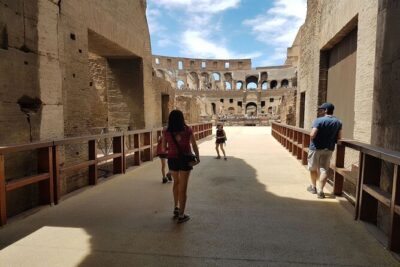
Colosseum & Ancient Rome with Arena Floor Option I Max 6 People
Read our review →
Colosseum, Ancient Rome Tour or AudioGuided Tour
Read our review →
Colosseum Underground & Ancient Rome Guided Tour
Read our review →
Colosseum Arena, Roman Forum & Palatine Hill Tour
Read our review →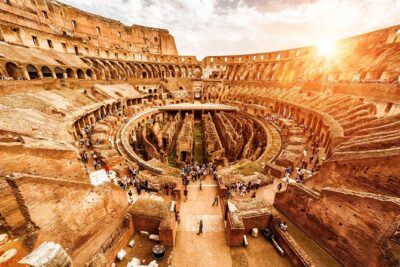
Colosseum, Roman Forum & Palatine Hill Guided Tour
Read our review →Browse the lists this tour appears in