
Review · WASHINGTON DC HISTORY TOURS
Washington DC: National Museum of Natural History Tour
The best reason to book this tour is simple: the National Museum of Natural History is enormous, and a good guide helps you reach its biggest sights before your attention, and your feet, give out. In 2.5 hours, you can see the 46-karat Hope Diamond, real mummies, the Ocean Hall, and Phoenix, a 45-ton whale replica.
I like the choice between a small group of no more than eight and a private tour, and I like that the guide can shape the visit around your interests. Guides such as Leigh, Tim, Brenda, Tony, and Richard have been praised for storytelling, clear explanations, and answering questions. The main caution is that 2.5 hours goes quickly, and the museum’s occasional closures or changing collections can affect the route.
Key points to know before you book
- See famous objects without wandering for hours: Your guide leads you to the Hope Diamond, Dom Pedro Aquamarine, Star of Asia Sapphire, mummies, fossils, and major animal displays.
- A maximum of eight people keeps the tour personal: A private booking gives you the most control, while a semi-private tour offers a lower-cost shared option.
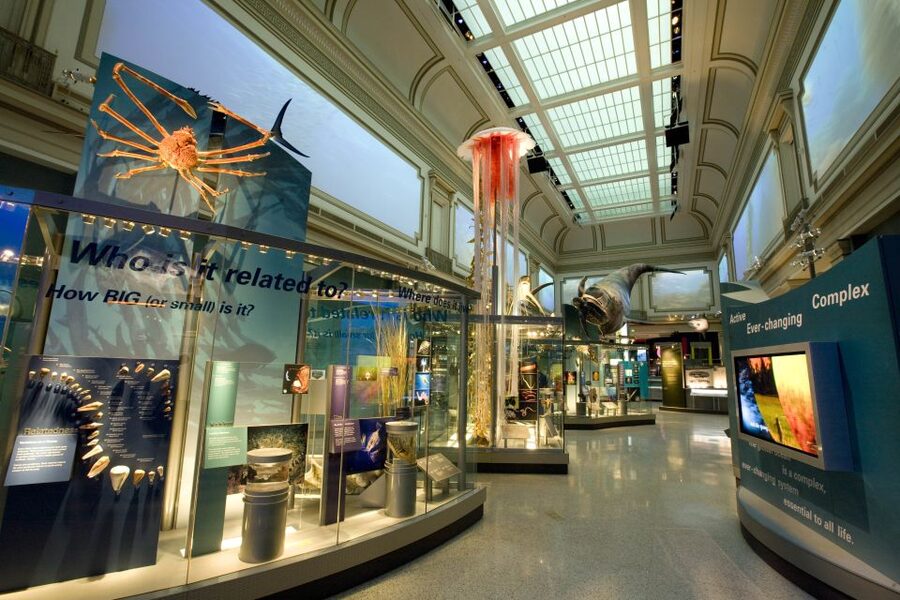
- The Ocean Hall brings the sea indoors: You will see a real-life coral reef exhibit, the Arctic Narwhal, and the story of Phoenix, the museum’s 45-ton whale.
- Guides add the human touch: Leigh, Tim, Brenda, Tony, and Richard have all been singled out for lively explanations and thoughtful answers.
- Bring photo ID and pack light: Only handbags or small, thin backpacks are allowed through security, and large bags or luggage are not permitted.
- Expect a brisk highlights tour: The museum holds more than 126 million artifacts, so this visit is an introduction, not a complete look at every room.
Why a guide helps in an 18-football-field museum
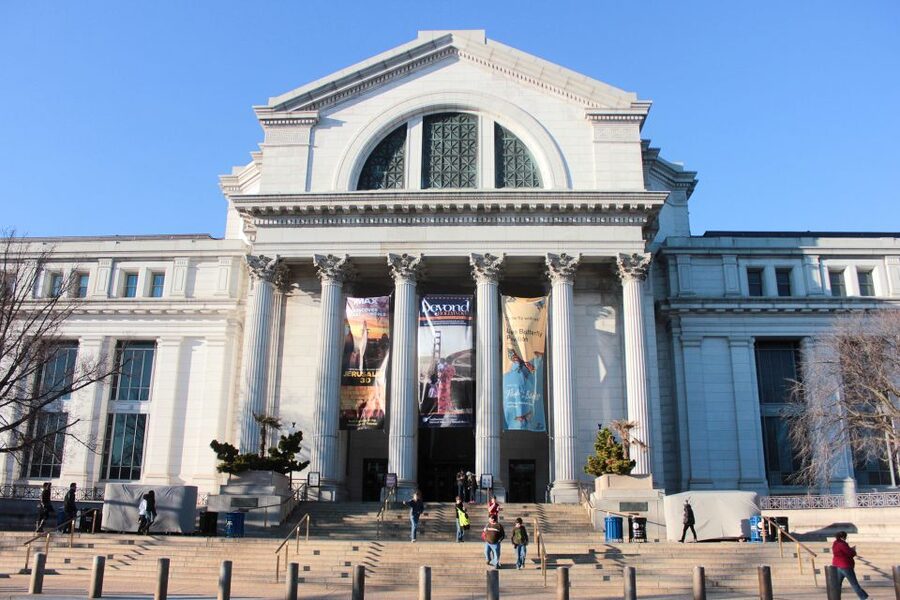
The National Museum of Natural History occupies a purpose-built building covering an area compared with 18 football fields. That size sounds impressive, but it also creates a problem: without a plan, you can spend much of your visit walking between rooms and still miss the displays you came to see.
This tour gives you a route through the museum’s headline attractions. Your English-speaking guide explains what you are looking at, adds scientific and historical background, and points out details that are easy to miss when you are moving from case to case.
I find this especially useful for a first visit. The museum is not just a collection of big animals and shiny stones. The displays connect geology, oceans, ancient cultures, fossils, and current scientific work. A guide helps you see those connections instead of treating each room as a separate stop.
The group limit matters here. With no more than eight people, you should be able to hear the guide and ask questions without the feel of a large coach group. A private tour gives you still more freedom. Tim, for example, was praised for asking about interests and spending more time where the group wanted it. That flexibility can make a major difference if your family cares more about fossils than gemstones, or more about oceans than mummies.
More Museum and Gallery History Tours in the USA
- New York City: American Museum of Natural History Ticket
★ 4.5 · 15,447 reviews - American Museum of Natural History Admission Ticket
★ 4.0 · 1,931 reviews - Guided African American History Tour with Reserved Museum Entry
★ 4.5 · 1,180 reviews
The Hope Diamond and Washington’s famous jewels
The Hope Diamond is the museum’s headline object, and for good reason. The 46-karat blue diamond draws attention even before the guide explains its story. This is the sort of display that works well with a guide because the object itself takes only a moment to see, while its background gives the stop more weight.
You will also see the Dom Pedro Aquamarine, described as the world’s largest gem of its type, along with the Star of Asia Sapphire. The Dom Pedro is known for its glowing blue color and unusual size. These are quick stops, but they are among the most memorable parts of the route.
A guide can give you context without leaving you to read every panel. That is useful when the museum is busy or when you are touring with children who have limited patience for long labels. Brenda was praised for engaging an entire family and adjusting the explanations to its interests, a useful quality in a room where different ages may want very different information.
There is one practical limit: temporary exhibits are not included. The route focuses on the permanent highlights listed for the tour, so do not book this expecting a visit to every special exhibition in the building.
Mummies, fossils, and the science behind the displays
The mummy displays add a change of pace from the mineral collection. Seeing real mummies is more direct than reading about ancient burial practices in a book, and your guide can explain the cultural and scientific background while keeping the visit respectful.
The Fossil Lab is another strong stop. It gives you a look at the work behind a natural history museum, not just the finished displays. The value here is the sense that fossils do not simply appear in glass cases. They require careful study, preparation, and interpretation.
Collections can vary, and some specific rooms have rules about quiet or restricted speaking. Your guide will provide information before you enter those areas. That is worth knowing if you expect a constant stream of commentary. In a few rooms, the best guiding may happen just outside the door.
This part of the tour suits curious adults as well as families. Tony, one of the named guides, was praised for answering questions and offering suggestions for other things to see around Washington. That sort of local knowledge can make the museum visit feel connected to the rest of your day rather than sealed off from it.
Ocean Hall, Phoenix, and the Arctic Narwhal
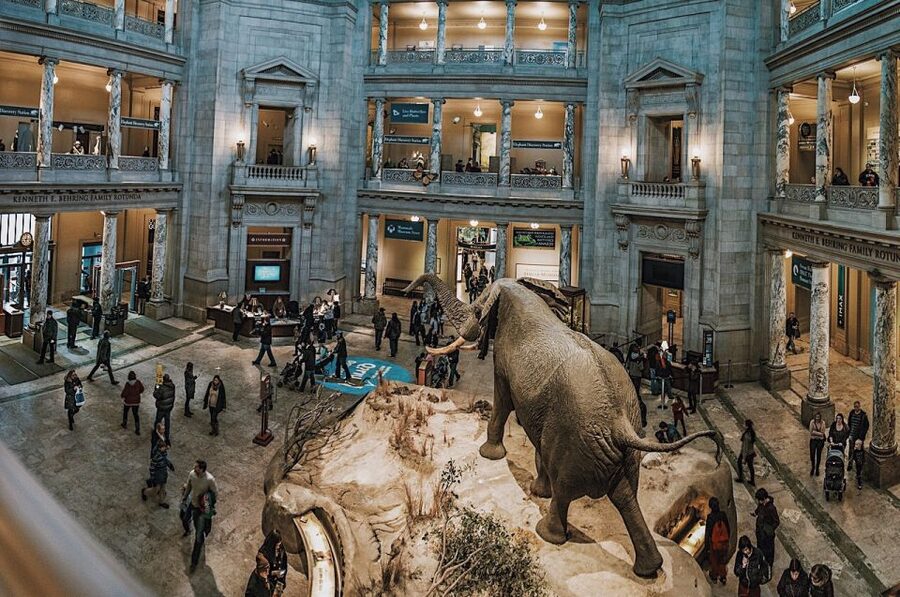
Ocean Hall gives the tour its broadest sense of scale. The real-life coral reef exhibit brings an underwater setting into the museum, letting you consider marine life as a living system rather than a series of isolated specimens.
The story of Phoenix adds a personal thread. Phoenix is represented by a replica of a 45-ton whale that the museum has followed in the wild. The scale alone makes this a memorable stop, but the story of tracking an individual whale gives the display a stronger connection to actual field research.
The Arctic Narwhal is another distinctive sight. It is the kind of object that can easily become a quick photograph unless someone explains why it matters. Your guide can tie it to the museum’s wider work with ocean and Arctic collections.
These rooms are good for mixed-age groups because they offer large visual displays and clear talking points. If your children are especially interested in animals, you may want to tell the guide early in the tour. The route can then give more time to the Ocean Hall and animal displays, subject to the museum’s opening conditions and the group’s schedule.
Same streets, a different century:
- History and Hauntings of Salem Guided Walking Tour
★ 5.0 · 14,564 reviews - Charleston’s Old South Carriage Historic Horse & Carriage Tour
★ 5.0 · 10,023 reviews - Beneath The Streets Underground History Tour
★ 4.5 · 8,006 reviews - Big Island in a Day: Volcanoes Waterfalls Sightseeing and History
★ 5.0 · 6,569 reviews
Giraffes, elephants, polar bears, and other giants
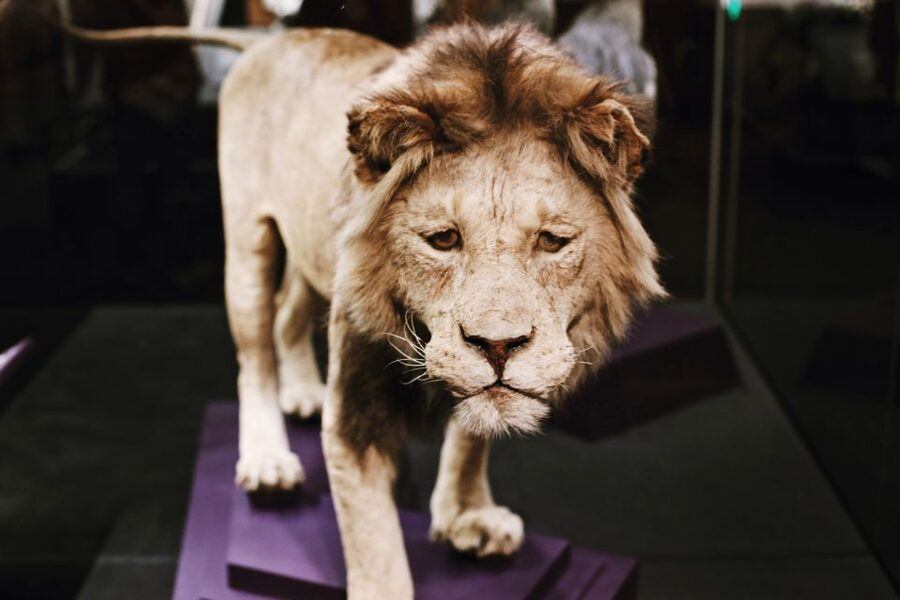
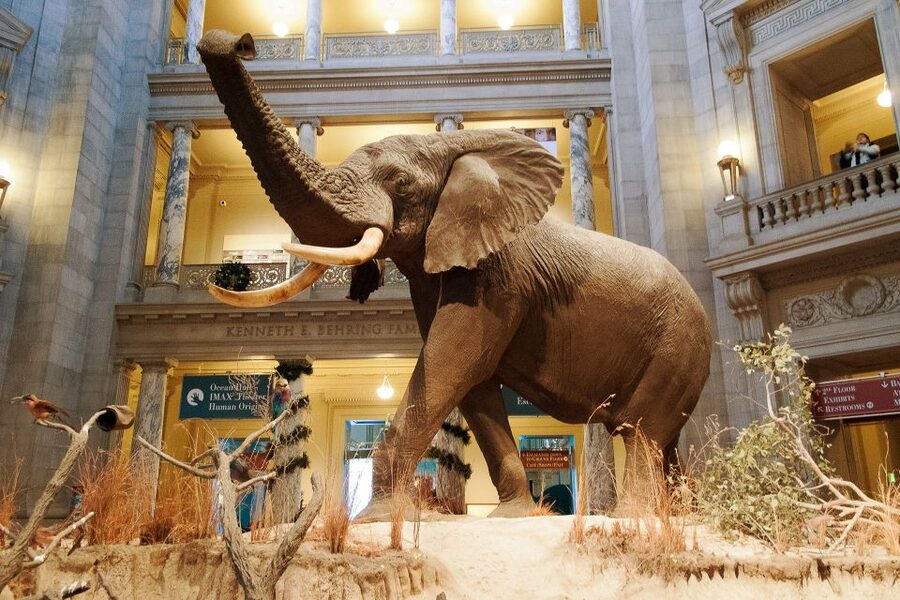
The land-animal displays provide some of the museum’s most immediate moments. Giraffes, elephants, polar bears, and other large animals are hard to overlook, even in a building filled with unusual objects.
I like this section because it gives you a chance to compare animals rather than view only one famous specimen. It also works well after the smaller, more detailed gemstone and fossil rooms. The change in scale keeps the 2.5-hour visit moving.
A guide’s role here is less about helping you find the animals and more about telling you what to notice. The details can be scientific, historical, or simply surprising. Brenda was praised for keeping a whole family engaged in each area, and that is exactly the skill you want in a room where children may rush ahead while adults stop to read.
Still, the route will not give you unlimited time at every display. If you want a slow, label-by-label study of the animal halls, plan to return on your own after the tour, if time and museum access allow. The guided visit is designed to show you the strongest points first.
How the guides shape the experience
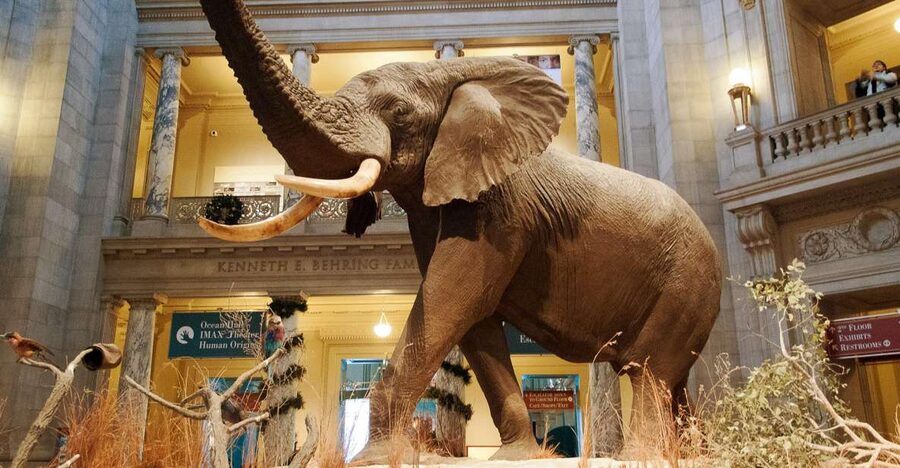
The named guides in the feedback give you a useful sense of the style to expect. Leigh was praised for storytelling that held the attention of a 16-year-old. Tim was described as a strong conversationalist who adjusted the route to the group’s interests and discussed new discoveries, theories, and the future of science.
Richard led a semi-private visit that focused on clear, detailed explanations. Tony combined museum information with suggestions for other places around Washington. Brenda’s strength was family engagement, bringing different age groups into the same conversation.
These examples point to the main advantage of a small guided tour: you are not receiving one fixed speech with no room for questions. You can tell the guide what matters to you. If one member of your group loves geology and another wants animals, say so at the beginning.
The quality of the experience will still depend on the guide assigned to your date. The tour is conducted in English, and the guide is described as a local museum expert who provides scientific and historical background. The strongest match for you will be a guide who listens, not one who simply rushes through a memorized route.
Small group or private tour?
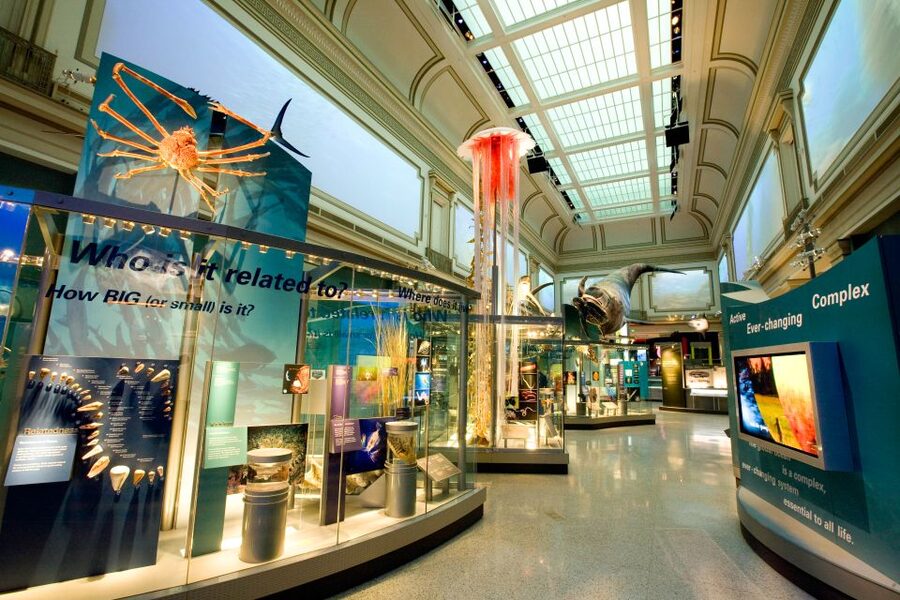
A small group is the sensible choice if you want guidance without paying for a fully private visit. The cap of eight people keeps the group relatively intimate, and a shared tour can work well for solo visitors, couples, and families who are comfortable with a set route.
A private tour is better if your group has clear priorities. You can ask for more time with fossils, animals, ocean displays, or gemstones, although the total duration remains 2.5 hours. It also makes conversation easier if you have many questions.
The tour requires at least two participants for semi-private bookings. If that minimum is not met, an alternative date or refund will be offered. Check the meeting point carefully because it can vary according to the option you select, and the tour ends back at the meeting point.
There is no hotel pickup or drop-off. Food and drinks are also not included, so plan your museum visit as one part of your Washington day.
Is $86 a fair price?
At $86 per person, this is not the cheapest way to enter a museum, especially since the museum itself is a major public attraction. The value comes from the guide, the focused route, the small group size, and the time saved.
I would consider the price reasonable if this is your first visit, your Washington schedule is tight, or you want someone to explain the displays rather than simply point them out. The skip-the-ticket-line feature also matters on a busy day, though security rules still apply.
The value is weaker if you enjoy wandering alone, reading every label, or returning for several hours. In that case, you may prefer to explore independently and spend your money elsewhere.
Free cancellation up to 24 hours before the tour and the reserve-now, pay-later option make planning less risky. Still, check the starting time and meeting point before booking. Museum management can occasionally close the museum without warning. If opening is delayed by more than an hour, an alternative is provided, but the supplier does not offer refunds or discounts for that situation.
Practical details that can save you trouble
Bring valid photo ID or a passport. Security allows only handbags or small, thin backpacks, so do not arrive with luggage or a large day bag.
Wear appropriate clothing for entry into the museum. The tour involves walking, and there is no food or drink included, so consider eating before or after the visit rather than trying to build a meal into the route.
Wheelchair arrangements need special care. The included information says wheelchair tours are available by request, but the additional conditions also mark the activity as not suitable for wheelchair users. Contact the provider before booking and receive clear confirmation for your needs.
The activity is offered in English only. The group returns to its meeting point at the end, and the exact starting location can vary depending on the booking option.
Who should book this museum tour?
I would recommend it most strongly to first-time visitors, families, and anyone with only a few hours in Washington. It is also a good fit if you like asking questions and want the museum’s major sights placed in a clear order.
The tour suits a teenager better than a long, unstructured museum visit because the guide can adjust the pace and connect the objects to science, discovery, and current research. Tim’s ability to discuss new theories and future scientific work is a good example of how the visit can go beyond basic labels.
You may want to skip it if you have already visited the museum several times or if you prefer total freedom. The 2.5-hour format is focused, not leisurely. You will see many highlights, but you will not cover a collection of more than 126 million artifacts in one morning or afternoon.
Should you book it?
Book this tour if you want the Hope Diamond, mummies, Phoenix, fossils, and major animal halls in one organized visit, with a guide who can answer questions and adjust the route. The small group limit and strong guide feedback make it a practical way to get your bearings in a huge museum.
Skip it if your priority is a slow, independent study of every gallery or a temporary exhibit. For most first visits, though, $86 buys more than entry logistics. It buys structure, explanation, and a better chance of leaving with a clear sense of what you saw.
FAQ
How long is the National Museum of Natural History tour?
The guided walking tour lasts 2.5 hours. Starting times vary, so check availability when you book.
What language is the tour conducted in?
The live tour guide speaks English.
How many people can join the tour?
A maximum of eight people is permitted on each tour. You can choose a private tour or a small shared group option.
What are the main exhibits included?
The route can include the Hope Diamond, Dom Pedro Aquamarine, Star of Asia Sapphire, real mummies, Ocean Hall, Phoenix the whale, the Fossil Lab, the Arctic Narwhal, and large animal displays such as giraffes, elephants, and polar bears.
Is museum admission included?
The provided tour details include a professional guide, a 2.5-hour walking tour, and skip-the-ticket-line access. Temporary exhibits are not included.
What should I bring?
Bring a valid passport or photo ID. Only handbags or small, thin backpacks are allowed through security.
Is hotel pickup included?
No. Hotel pickup and drop-off are not included. The meeting point can vary according to the option booked, and the tour ends at the meeting point.
Can I cancel the booking?
You can cancel up to 24 hours in advance for a full refund. A reserve-now, pay-later option is also available.
Newest history tours we have reviewed in the USA
- Self Guided Detroit’s Spirit and History Solo Walking Tour★ 4.5 · 41 reviews
- Best Downtown Detroit Historical Walking Tour★ 5.0 · 56 reviews
- Detroit’s Hidden History Guided Walking Tour★ 5.0 · 48 reviews
- Private Nightlife Tour in Denver: Culture, History, and Cocktails★ 5.0 · 48 reviews
- Historical Walking Tour Of Denver With A Haunting Twist★ 5.0 · 19 reviews
- Tip Based: Capitol Hill History & Ghost Tour★ 5.0 · 34 reviews
- Denver – Capitol Hill Guided Walking Ghost / History Tour★ 4.5 · 75 reviews
- JFK Historical Tour★ 5.0 · 22 reviews
Museum & Gallery History Tours, compared.
Louvre Museum Entry with History of Mona Lisa
Read our review →
Venice’s Best: Basilica, Doge’s Palace, Gondola & History Gallery
Read our review →
American Museum of Natural History Admission Ticket
Read our review →
Guided African American History Tour with Reserved Museum Entry
Read our review →
POLIN Museum of the History of Polish Jews Ticket
Read our review →
Bell Tower & St Mark’s Square History Gallery Ticket
Read our review →
Field Museum of Natural History Ticket or VIP Tour
Read our review →Browse the lists this tour appears in