
Review · LONDON HISTORY TOURS
London: 2-Hour Guided Tour of the British Museum and History
The British Museum holds more human stories than you can sensibly see in one visit. This 2-hour guided tour tackles the big names first: Egyptian relics, the Rosetta Stone, Parthenon sculptures, Roman art, Sutton Hoo, and a striking Moai from Easter Island. It is a useful way to get your bearings in a museum that can otherwise feel like a small city.
I like the tour’s clear focus and its sweep across several cultures. I also like the chance to hear context from a guide such as Daniel or Filomena, rather than simply walk past famous objects with no idea why they matter. The main caution is crowded galleries and uneven audio. One poor experience involved a guide who was hard to understand and spent too long at less important objects, so your enjoyment may depend heavily on the guide, group, and crowd level.
Key points before you book
- Rosetta Stone and Egyptian galleries: Begin with the object that helped scholars read Egyptian hieroglyphics, alongside pharaoh-era artifacts.
- Parthenon sculptures: See major Greek works connected with the Acropolis and consider the continuing debate over their removal to London.
- Roman mosaics and statues: Look for the art, religion, and engineering achievements of imperial Rome.
- Sutton Hoo treasures: Get a compact introduction to early Anglo-Saxon England through finely made burial objects.
- Hoa Hakananai’a Moai: Encounter a monumental stone figure from Easter Island and discuss its spiritual meaning.
- Two hours, three languages: Tours are offered in English, French, and Italian, with entry included and free cancellation up to 24 hours ahead.
Why a guided first look helps at the British Museum
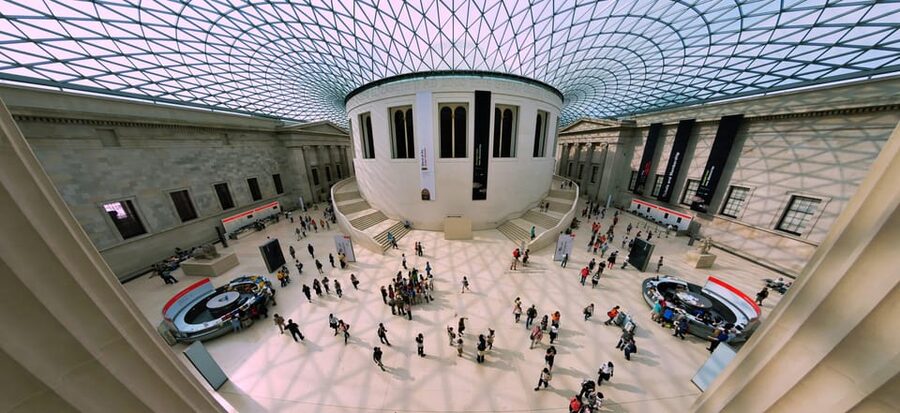
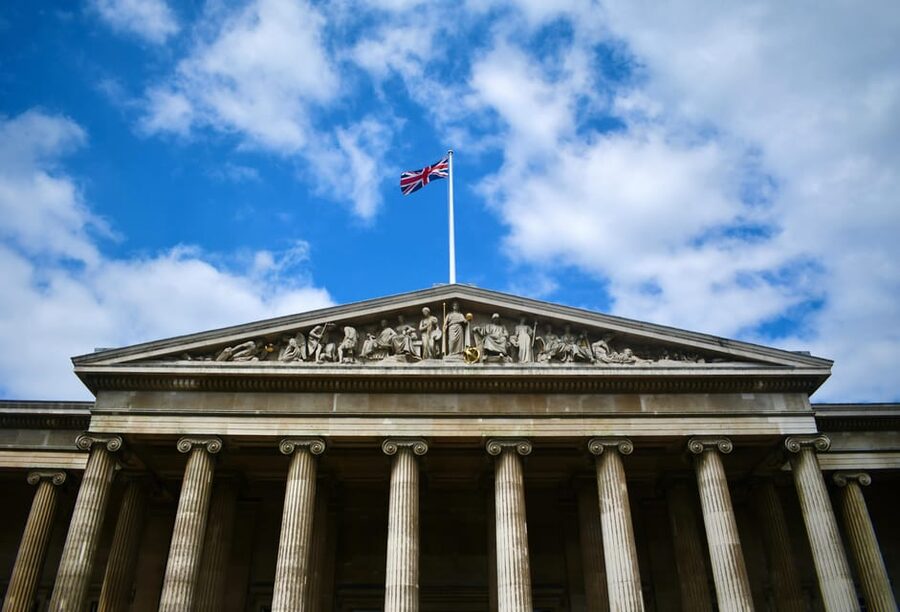
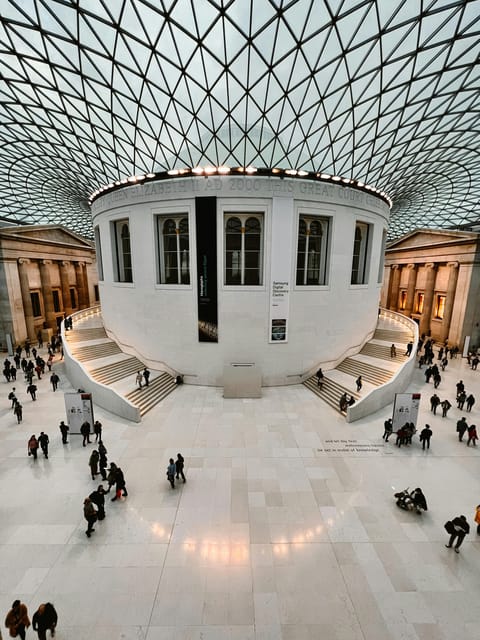
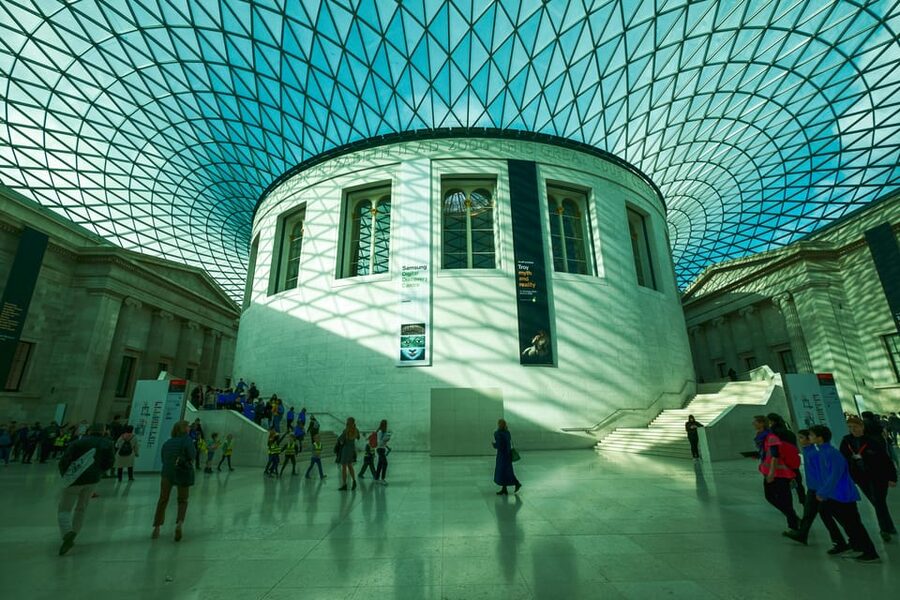
The British Museum is free to enter as a public museum, but that does not make it easy to understand. Its famous objects are spread through large galleries, and the building contains far more material than you can absorb in a single afternoon.
A guide gives you a route and a story. Instead of drifting from one case to the next, you move from ancient Egypt to Greece, Rome, early England, and the Pacific. That broad path lets you compare how different societies recorded power, religion, daily life, and death.
I find this approach especially useful if it is your first visit. You get a working map of the museum and can return to the galleries that interest you most after the tour. One guest described the experience as a good first impression before continuing alone, which is exactly how I would use it.
The tour is not designed for a slow, specialist study of every object. Two hours goes quickly, especially when the museum is busy. Think of it as a guided introduction to the museum’s major themes, not a complete survey.
More Museum and Gallery History Tours in London:
- New York City: American Museum of Natural History Ticket
★ 4.5 · 15,447 reviews - Paris: Louvre Museum Entry with History of Mona Lisa
★ 3.9 · 2,823 reviews - Venice’s Best: Basilica, Doge’s Palace, Gondola & History Gallery
★ 4.5 · 2,478 reviews
Meeting your guide inside the museum
The meeting point requires care. After passing through security, go inside and meet your guide in front of the museum portals, on the stairs near the pillars. Do not wait outside the gates.
Your entry tickets are sent by WhatsApp one to two hours before the tour. If you do not use WhatsApp, contact the provider by email so the tickets can be sent another way. Since the meeting instructions depend on getting through security first, allow enough time to reach the interior meeting point before the start.
The tour includes an entry ticket and a guided visit. The booking information also lists entry tickets as included, so you should not need to buy a separate museum admission for this activity. Keep the digital ticket easy to find on your phone.
The experience lasts two hours. Starting times vary, so check availability for your date. Tours are available in English, French, and Italian. The guide’s language matters here because several stops involve names, dates, and cultural context that are easy to miss when you cannot hear clearly.
Ancient Egypt and the Rosetta Stone
Egypt is the natural opening for a tour about human culture. The galleries contain objects connected with pharaohs, religion, writing, burial, and daily life. Your guide can help connect these pieces instead of treating each case as an isolated display.
The Rosetta Stone is the star stop. Its importance comes from the same message being written in different scripts, allowing scholars to compare them and make progress with Egyptian hieroglyphics. You do not need to be an Egypt specialist to appreciate the basic idea: the stone helped turn a mysterious writing system into something scholars could read.
This is one of the points where a guide adds real value. A quick explanation of what the inscriptions say and why comparison mattered can make the object far more memorable than a photograph alone.
Pay attention to exactly which display you are seeing. The tour description presents the Rosetta Stone as a featured object, but the crowded museum setting and related displays can cause confusion. If the guide pauses at a replica or nearby object, ask for clarification about whether you are looking at the original stone, a reproduction, or an associated exhibit.
A major weakness reported from one tour was that the guide spent more than 30 minutes on objects that the guest did not consider key highlights, including what the guest understood to be a non-original Rosetta Stone display. That is a useful warning. If your priority is the main collection, politely ask the guide to keep the route moving.
Greece, the Parthenon, and a difficult museum debate
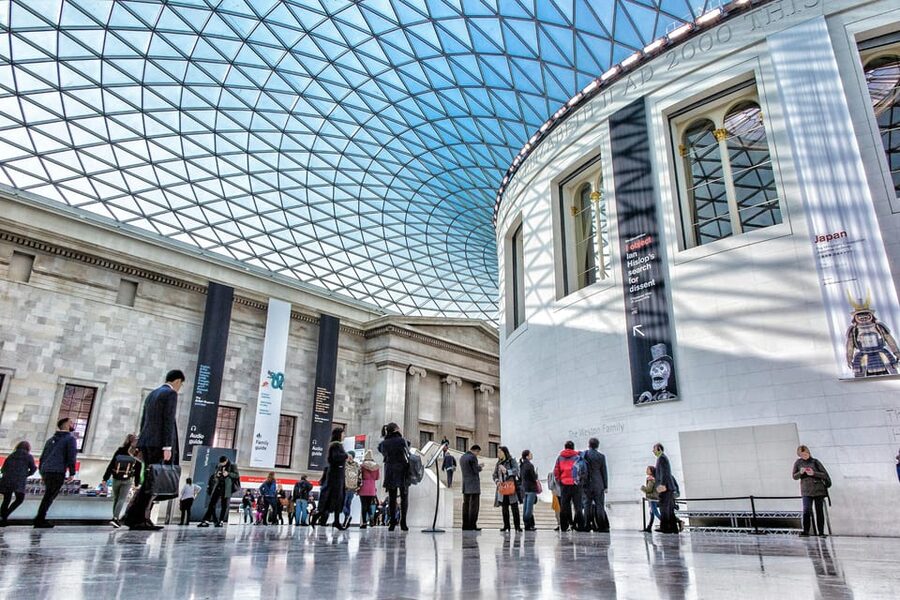
The Greek galleries bring you to some of the museum’s most famous sculptures. The Parthenon works are linked to the temple on the Acropolis in Athens and show the skill of ancient Greek sculptors in representing gods, people, movement, and ceremony.
The objects are impressive on their own, but their full importance comes from the question of ownership. The sculptures were removed from Athens and brought to Britain, and Greece has long called for their return. A good guide should give you enough background to understand why these works are admired and why their presence in London remains controversial.
You may also see marble inscriptions connected with Greek thought and civic life. The point is not only the beauty of the stone. These objects show how public buildings, religion, political identity, and artistic achievement could all meet in one place.
The gallery can be busy. Stand close enough to hear, but not so close that you block the view for others. If your guide is speaking while the group is spread around a sculpture, move toward the guide rather than staying at the edge of the crowd.
This section works best when the guide keeps the explanation tight. The Parthenon material can easily fill the whole tour, so listen for the main ideas and save detailed questions for the end if the group is running behind.
More Two-Hour Tours in London:
- London: 2-Hour Historic Pub Tour
★ 4.9 · 133 reviews - 2-Hour Gettysburg Battlefield Guided History Bus Tour with a National Park Guide
★ 4.5 · 2,201 reviews - Kyoto Gion: 2-Hour Geisha Culture & History Walking Tour
★ 5.0 · 1,186 reviews - 2 Hour LoDo Historic Walking Tour in Denver
★ 5.0 · 1,106 reviews
Roman mosaics, statues, and imperial power
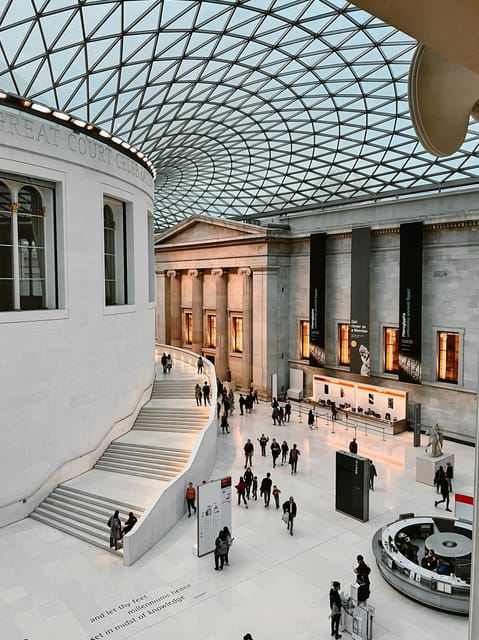
The Roman section changes the mood. Here the museum’s collections show a society that combined military control, engineering, religion, trade, and a taste for display.
Look for mosaics with detailed patterns and scenes, along with statues of gods, rulers, and heroes. These objects help explain how Roman art carried messages about status and belief. A statue was not merely decoration. It could show who held power, which gods were honored, or which ideals a community wanted to present.
Roman objects also make a useful link between the Greek and later European worlds. Roman artists borrowed heavily from Greek models, while Roman builders and administrators spread their systems across a huge territory. Your guide may connect the sculpture styles, religious imagery, and practical achievements as the group moves through the galleries.
The drawback is time. A two-hour route cannot offer a full account of Roman civilization. You are likely to get a few representative objects rather than an orderly tour of every Roman gallery. That is a fair trade if you want variety, but less useful if ancient Rome is your main reason for visiting.
Sutton Hoo and the beginnings of English history
Sutton Hoo provides a welcome shift from the Mediterranean world. The objects come from an Anglo-Saxon burial site in England and offer a glimpse into early English life, belief, craftsmanship, and social rank.
The finely made treasures are valuable because they show connections between local traditions and a wider world. Burial goods can reveal what a society valued, how its leaders were honored, and how trade or contact carried styles across regions.
This stop also gives the tour a stronger British connection. After Egypt, Greece, and Rome, you see material tied to the history of England itself. It helps prevent the museum from feeling like a parade of famous objects from faraway civilizations with no link to the country you are visiting.
Sutton Hoo is a good example of why context matters. A case of metalwork and personal objects may not immediately explain itself. With a short account of the burial and the society behind it, the display becomes easier to read.
Do not expect a long archaeological lecture. The guide needs to keep moving through the museum, so this is likely a concise introduction rather than a detailed study of the site.
Hoa Hakananai’a, the Moai from Easter Island
The Hoa Hakananai’a Moai is one of the tour’s most memorable changes of scale. This large stone figure comes from Easter Island, also known as Rapa Nui, and represents the spiritual traditions of a distant Pacific culture.
The Moai can be easy to reduce to a photograph or a single word, but its power comes from the culture that made and used it. Your guide can help explain its role and the meaning attached to these figures. The object also raises questions about how museums acquire and display sacred or culturally important works.
This stop is valuable because it widens the tour beyond the usual European and Mediterranean highlights. You see that the museum’s story is not only about empires familiar from schoolbooks. It also includes Pacific societies with their own beliefs, artistic systems, and ways of honoring ancestors.
As with the Parthenon sculptures, the object’s presence in London can invite questions about ownership and cultural responsibility. The tour’s short format may not settle those issues, but it gives you a reason to think about them while looking at the Moai.
What the two-hour pace feels like
The route is designed for breadth. You cover several major collections in one sitting, and the guide chooses what to explain in detail. That is the main benefit of the tour, but it is also the main limitation.
A well-paced guide can make two hours feel efficient. Daniel has been praised for navigating the huge number of exhibits and crowds while giving a flowing explanation. Filomena has also been praised for sharing unusual historical details and bringing energy to the subject. Those qualities matter more here than a rigid script.
A less successful tour can feel rushed in the wrong places or slow at objects you did not come to see. One group member left after about 15 minutes because of difficulty hearing and frustration with the route. That does not mean every tour has the same problem, but it shows why you should stay near the guide and speak up early if you cannot follow.
Ask for a repeat if you miss an important point. It is better to interrupt politely than lose half the tour. If the group is large or the galleries are noisy, position yourself where you can see the guide’s face and hear the explanation.
Price, value, and who should book
At $37 per person, the tour is priced as a modest introduction rather than a luxury private visit. You are paying for the guide’s route, commentary, and entry arrangement. The value is strongest if you want to see the museum’s major names but do not know where to begin.
I would book it if you have only a few hours in London, are visiting the British Museum for the first time, or want a clear starting point before exploring alone. It also suits families with school-age children if they enjoy history and can keep up with the walking and changing galleries.
It may be less suitable if you already know the museum well, want long periods at individual objects, or prefer to read labels at your own pace. An independent visit gives you more control and avoids the risk of a guide whose accent, volume, or choice of stops does not fit your needs.
The free cancellation period gives you some flexibility. You can cancel up to 24 hours before the tour for a full refund, and the reserve now, pay later option means you do not have to pay at once. The museum is wheelchair accessible, which makes the tour an option for visitors who need an accessible public venue, though the guide’s exact route should still be confirmed if you have specific mobility needs.
Should you book this British Museum tour?
Book it if you want a fast, guided orientation to the British Museum and care most about the Rosetta Stone, Parthenon sculptures, Roman collections, Sutton Hoo, and the Hoa Hakananai’a Moai. The route gives you a useful overview and leaves time to return to your favorite galleries afterward.
Choose another format if you need guaranteed quiet commentary, detailed study of one culture, or complete control over the pace. If you do book, arrive inside after security, keep your ticket ready, stay close to the guide, and ask questions when a display is unclear.
The experience can be excellent with a strong guide. Daniel and Filomena are names associated with especially lively, informative tours. The safest expectation is not a perfect museum survey, but a focused introduction that helps you understand what you are looking at and where to go next.
FAQ
How long is the British Museum guided tour?
The tour lasts two hours.
What does the tour include?
It includes the British Museum entry ticket and a guided museum tour.
Which languages are available?
The live guide is available in English, French, and Italian.
Where do I meet the guide?
After passing security, meet in front of the British Museum portals on the stairs near the pillars. The meeting point is inside, not outside the gates.
How will I receive my entry ticket?
The ticket is sent by WhatsApp one to two hours before the tour. If you do not have WhatsApp, contact the provider by email to receive the ticket another way.
Can I cancel the booking?
Yes. You can cancel up to 24 hours before the tour for a full refund.
Is the British Museum wheelchair accessible?
Yes, the museum is wheelchair accessible.
Newest history tours we have reviewed in London
- London: Witches and History Bankside Walking Tour★ 4.8 · 223 reviews
- London: Hot Tub Boat Guided Historical Docklands Cruise★ 4.6 · 62 reviews
- London: Historic Pubs, British Ales & Classic Dishes★ 4.9 · 36 reviews
- London: Jack the Ripper Tour with Historic Pub Stops★ 4.8 · 360 reviews
- London: Self-Guided History City Tour with an App★ 4.3 · 21 reviews
- London: Brutalist Architecture & History Walking Tour★ 4.8 · 42 reviews
- London: Historic London Pub Walking Tour★ 4.8 · 94 reviews
- London: 2-Hour Historic Pub Tour★ 4.9 · 133 reviews
Museum & Gallery History Tours, compared.

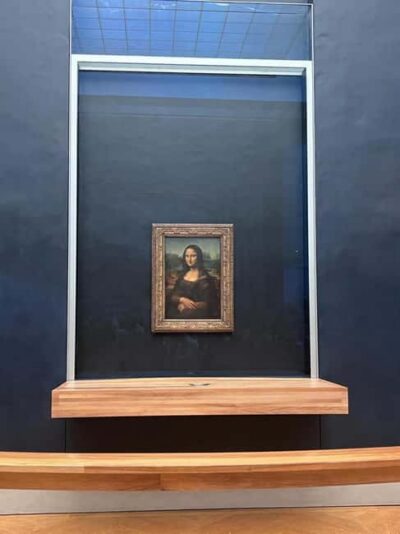
Louvre Museum Entry with History of Mona Lisa
Read our review →
Venice’s Best: Basilica, Doge’s Palace, Gondola & History Gallery
Read our review →
American Museum of Natural History Admission Ticket
Read our review →
Guided African American History Tour with Reserved Museum Entry
Read our review →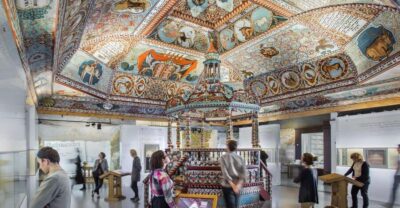
POLIN Museum of the History of Polish Jews Ticket
Read our review →
Bell Tower & St Mark’s Square History Gallery Ticket
Read our review →
Field Museum of Natural History Ticket or VIP Tour
Read our review →Browse the lists this tour appears in