
Review · LONDON HISTORY TOURS
London: Brutalist Architecture & History Walking Tour
London’s Brutalist buildings are hard to ignore. Their heavy concrete forms, deep shadows, and fortress-like shapes can look severe, even hostile, but they also tell the story of a city rebuilding after war. This 2.5-hour walk uses buildings such as the National Theatre and Institute of Education to explain why London embraced this bold style.
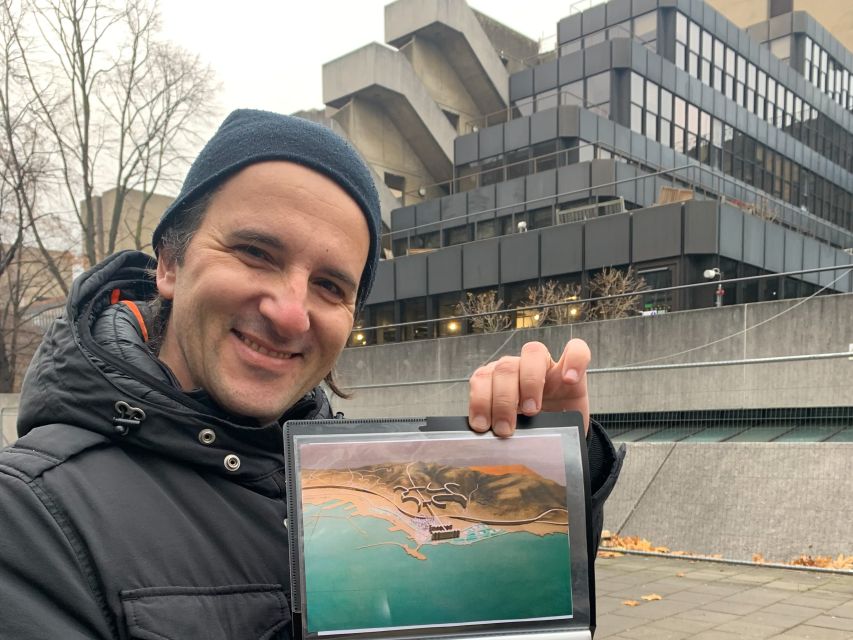
I like the small group, limited to six people, and the way guide Evan connects architecture with politics, economics, and daily life. I also like that the tour does not ask you to admire every building. You can admire, dislike, or argue with Brutalism while learning why these places were built.
The main drawback is that this is an outdoor tour with no interior visits. You also use the Tube once, need a Zone 1 fare, and should be ready for a fair amount of walking. Some architecture fans may want more detail on construction methods and individual buildings than the tour always provides.
Key points to know before you book
- Meet at Russell Square Underground Station: The tour begins outside the Piccadilly Line station, making it easy to reach from central London.
- Guide Evan leads the walk: He focuses on architecture, social change, politics, and the forces behind post-war construction.
- See major Brutalist landmarks: The National Theatre and Institute of Education are among the featured buildings.
- Expect one short Tube journey: Bring enough credit or a valid public transport ticket for one Zone 1 trip.
- Small groups make discussion easier: The tour is limited to six participants and is conducted in English.
- Best for adults with a serious interest: Children under 16 are not permitted, and the walk is not suitable for people with mobility impairments.
Why Brutalism makes a good London walking tour
Most visitors meet London through older stone churches, royal palaces, Georgian squares, and Victorian stations. Brutalism offers a different city. Here, concrete is the main event, and the buildings reflect the pressures of the decades after the Second World War.
The tour helps you see Brutalism as more than a visual style. You’ll consider how governments, architects, universities, cultural institutions, and local authorities used concrete to respond to housing needs, education, public services, and cultural ambition.
That wider setting matters. A slab of concrete can look cold when viewed alone. Once you hear about post-war rebuilding, Modernist ideas, and the social hopes attached to public buildings, its shape begins to make more sense. You do not have to like the result, but you will have better reasons for your reaction.
I particularly like this approach because Brutalism has always divided opinion. Some people see strong, honest forms and inventive engineering. Others see neglected public buildings, poor maintenance, and streets that feel unfriendly. A useful tour should leave room for both views, and this one is designed around that tension.
More History Walking Tours in London
- London: Historic Pubs of Central London Walking Tour
★ 4.9 · 1,065 reviews - London: Soho Music and Historic Pubs Walking Tour
★ 4.9 · 836 reviews - Royal Historic Pubs Walking Guided Tour in London
★ 5.0 · 803 reviews
Starting at Russell Square with Evan
You meet outside Russell Square Underground Station on the Piccadilly Line. This is a practical starting point in central London, and you should arrive with your public transport arrangements already sorted.
Evan leads the tour in English. His strongest quality is his enthusiasm for the built environment, paired with an informal way of explaining difficult subjects. You can expect discussion of Modernism, European architectural figures, concrete engineering, and the international events that helped shape London after the war.
The small group size is important here. With no more than six participants, the walk can feel more like a guided conversation than a lecture delivered to a crowd. Evan has adapted explanations to suit different levels of experience, so you do not need a degree in architecture to follow the tour.
At the same time, architecture enthusiasts should set their expectations carefully. One participant wanted more discussion of building materials, construction choices, and practical compromises. The tour gives you a strong introduction, but it may not satisfy someone seeking a technical study of reinforced concrete or detailed architectural drawings.
From Modernism to Brutalism
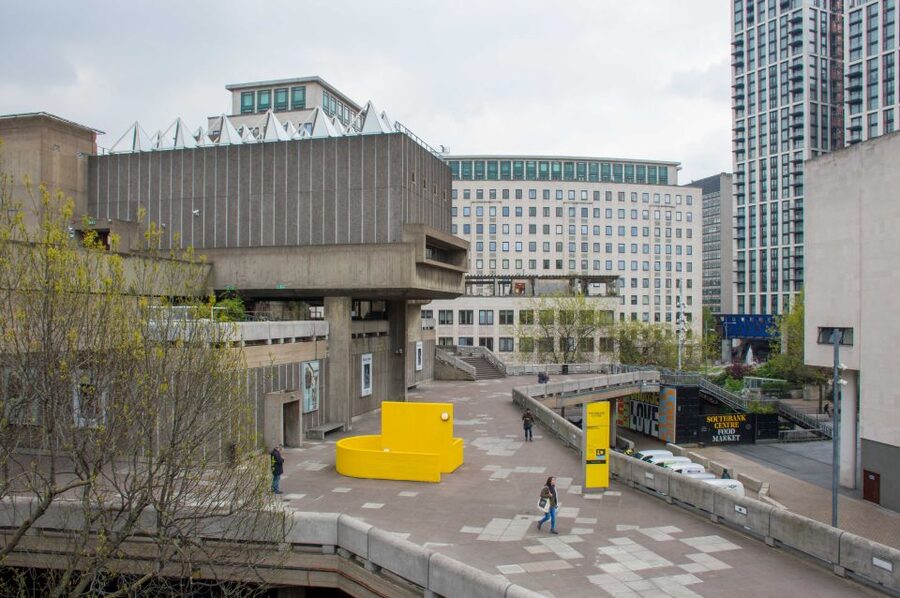
Early in the walk, you explore the ideas behind Modernist monumental architecture. The focus is not simply on buildings that look unusual. You’ll hear how architects and civic leaders thought about function, public life, materials, and the role of large institutions.
Concrete receives special attention. It allowed architects to create broad spans, weighty structures, exposed surfaces, and shapes that would have been difficult or costly in older materials. It could also be produced at a large scale, which suited a period when London needed new schools, offices, housing, cultural buildings, and public facilities.
But concrete was never a magic answer. Its appearance depends on design, workmanship, maintenance, weather, and the setting around it. A striking building can age badly if water reaches the steel reinforcement or if repairs are poorly handled. These practical issues help explain why some Brutalist buildings have gained respect while others face demolition or major alteration.
The discussion also reaches beyond London. Global events influenced post-war architecture, and the tour places London’s buildings within that wider setting. This is useful because Brutalism did not develop in isolation. It was part of an international movement shaped by war, rebuilding, public spending, changing ideas about society, and new confidence in modern engineering.
The Institute of Education and the close look at detail
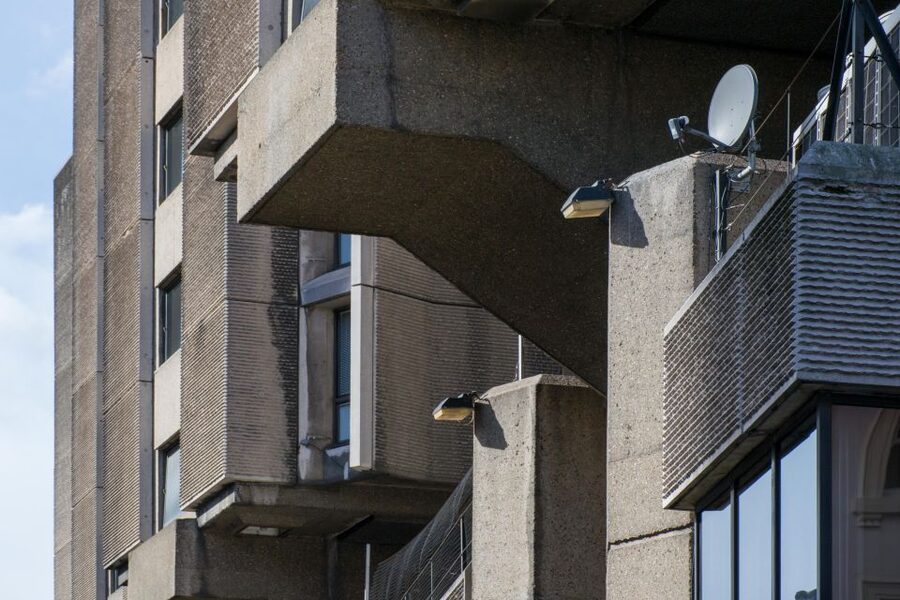
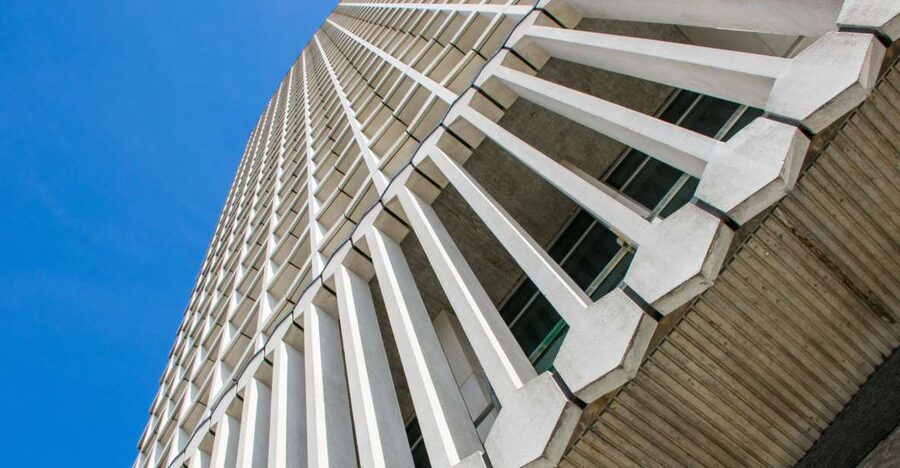
The Institute of Education is one of the notable buildings on the route. It gives you a chance to consider how a major educational institution presented itself through architecture.
This stop is especially useful if you enjoy details rather than only postcard views. Look closely at the building’s mass, surfaces, openings, and relationship to the street. Evan is good at drawing attention to features that you might otherwise walk past without noticing.
The tour also uses the Institute of Education to raise broader questions. What should a university or public institution look like? Should it appear open and welcoming, or serious and authoritative? How do monumental forms affect the people who work and study inside them?
Remember that the tour does not enter the buildings. You’ll examine them from the public realm, so the value comes from close observation, explanation, and conversation rather than interior decoration or room layouts.
This stop may feel more rewarding if you already enjoy urban photography. Brutalist buildings often offer strong angles, repeating windows, dramatic shadows, and sharp contrasts between concrete and sky. Bring a camera or phone, but keep your attention on the guide too. The architectural meaning is not always obvious from a photograph.
More History Walking Tours in the UK
- Private Group: Historical Pub Walking Tour of London
★ 5.0 · 660 reviews - London: Royal Historic Pubs Walking Tour
★ 5.0 · 536 reviews - Historic Pub Walking Tour of London
★ 5.0 · 484 reviews - London: Medieval History Walking Tour from The Tower
★ 4.9 · 318 reviews
The National Theatre and London’s boldest public face
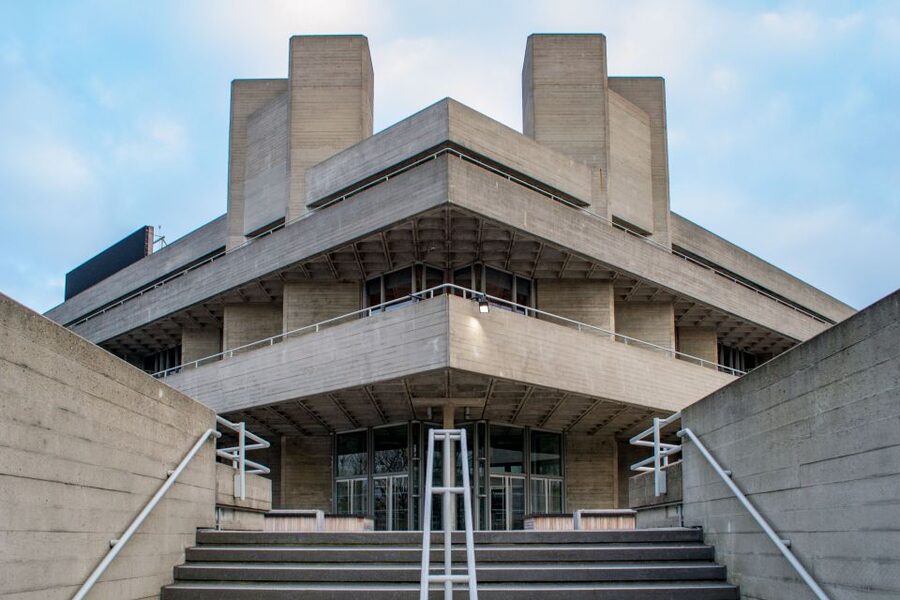
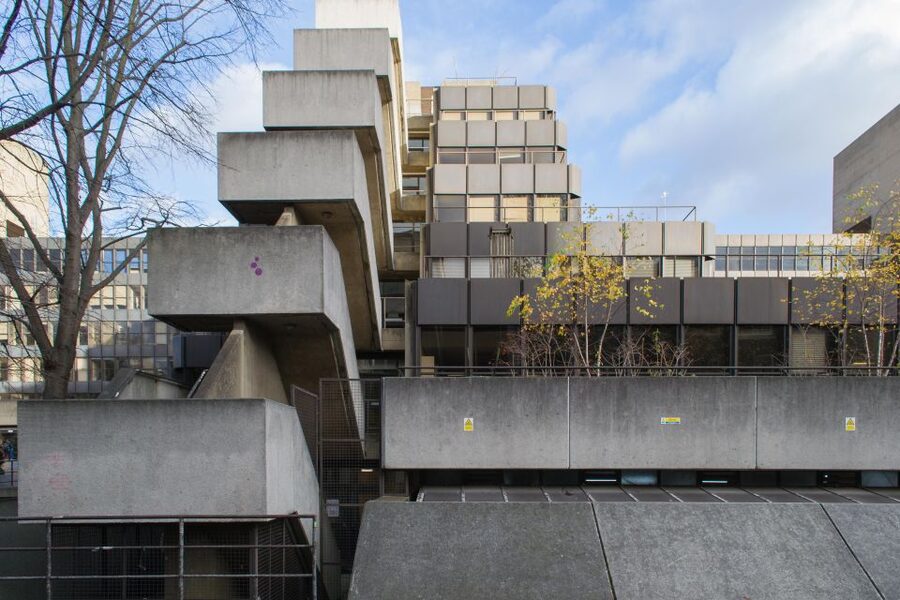
The National Theatre is likely to be the visual high point of the walk. It is one of London’s best-known Brutalist buildings and an excellent example of architecture that provokes a reaction before you know anything about it.
Its large concrete terraces and layered forms give the building a powerful public presence. You can photograph it from several viewpoints and then consider how it meets the surrounding city. The building was meant for public culture, yet its scale and rough surfaces can feel imposing.
Evan uses the National Theatre to explain the social, political, and economic circumstances that allowed such a building to be created. That context turns the stop into more than a photo opportunity. You’ll think about who supported the project, what a national cultural institution was expected to do, and why a building of this size and character seemed appropriate at the time.
This is also where the question of public opinion becomes unavoidable. One generation may see an important work of architecture. Another may see an oversized concrete block that needs alteration. The discussion of preservation, local authority decisions, and resident opinion gives the tour a current edge without reducing the building to a simple argument about taste.
What the Tube journey adds
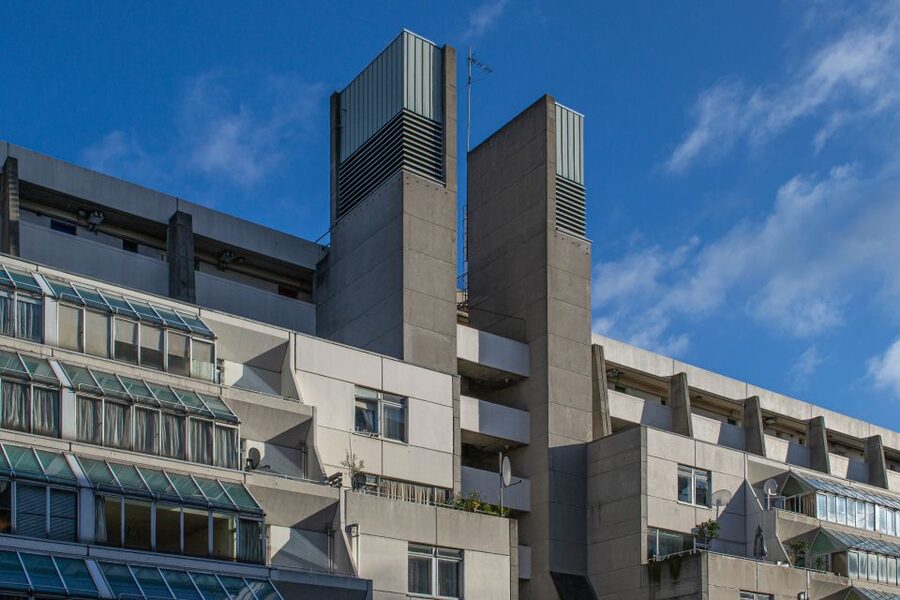
The tour uses the Tube once for a short journey within Zone 1. The fare is not included, so bring a valid ticket or enough credit for one trip.
This is a small practical point, but it matters. You are not simply walking a single compact street. The Tube connection helps link parts of central London that would otherwise take longer to reach on foot, allowing the tour to cover a broader selection of buildings within two and a half hours.
The trip also fits the subject. London’s transport system is part of the city’s modern infrastructure, and moving through the city helps you see how these buildings sit within everyday urban life. Still, you should allow a little spare time before the start so you are not rushing to Russell Square or searching for transport credit at the last minute.
The social and political side of concrete
The most useful part of the experience is the connection between architecture and public life. You’ll hear about the forces that pushed London toward large-scale post-war construction, along with the changing reputation of Brutalist buildings.
The style was not created only for visual shock. It reflected ideals about public access, collective life, education, culture, and efficient construction. Some buildings were intended to make public institutions feel important and permanent. Others were shaped by tight budgets, difficult sites, and the demands of modern urban planning.
The tour also considers what happens later. Buildings once welcomed as progressive can become unpopular as maintenance costs rise or their surroundings change. Preservation groups may argue that they deserve protection, while authorities and residents may want more practical or attractive spaces.
That debate gives you a better way to judge Brutalism. Instead of asking only if a building is beautiful, you can ask what it was meant to achieve, who used it, how it has aged, and what replacing it would mean.
One caution: Evan’s explanations are strongest as a broad introduction, but you should listen critically if you already have specialist knowledge. A participant noted a few historical simplifications, including claims about window tax and Isaac Hayward’s politics. Those points do not cancel out the value of the walk, but they are a reminder that this is an accessible tour rather than an academic seminar.
Timing, walking conditions, and who should join
The tour lasts 2.5 hours. That is long enough to cover several important buildings without taking up an entire day, but you should still wear comfortable shoes and expect to remain outdoors for much of the experience.
The activity may be postponed or canceled in poor weather. London’s rain and wind can make a concrete-focused walking tour far less pleasant, so check the forecast and dress for changeable conditions.
The tour is not suitable for people with mobility impairments, and children under 16 cannot join. The information provided does not give a detailed accessibility assessment, so anyone with specific mobility needs should confirm suitability before booking.
This is a strong choice for architecture students, photographers, urban planners, history fans, and repeat visitors who want to see a side of London beyond the usual landmarks. It also suits anyone who has wondered why people argue so fiercely about concrete buildings.
It is less suitable if you want to enter famous buildings, avoid public transport, or spend most of the time on general London sightseeing. The route has a clear architectural focus.
Is $47 good value?
At $47 per person, the tour is not the cheapest way to look at buildings from the street. You could walk past many London landmarks for free. The price makes sense because you are paying for interpretation, structure, and access to a guide who can connect separate buildings into one larger story.
The small group improves the value. A six-person limit gives you a better chance to ask questions and receive explanations suited to your interests. Evan’s enthusiasm and personal interest in Brutalism are central to the experience, so the tour works best when you want conversation rather than a recorded audio guide.
The value is also stronger for first-time students of Brutalism. If you already know the major architects, construction methods, and preservation debates, you may want a more technical tour. In that case, the broad historical approach could feel limited.
Free cancellation up to 24 hours before the start and the reserve-now, pay-later option reduce the financial risk. They do not change the central question: are you curious enough about architecture to spend a morning or afternoon looking closely at concrete? If yes, the price is fair.
Should you book the Brutalist Architecture and History Walking Tour?
Book it if you want to understand why London contains such forceful modern buildings and you enjoy learning through direct observation. Evan’s informal style, the six-person limit, and the mix of architecture with politics and social change make this more useful than simply collecting photographs.
Go in expecting an outdoor introduction, not access inside the buildings or a specialist construction course. You may love the National Theatre, dislike another stop, and still come away with a better understanding of both the buildings and the arguments around their future.
For curious adults, repeat London visitors, and anyone interested in Modernism, this is a focused and fairly priced way to see the city from a fresh angle.
FAQ
Where does the tour meet?
The tour meets outside Russell Square Underground Station on the Piccadilly Line.
How long does the tour last?
The walking tour lasts 2.5 hours.
What language is the tour in?
The live tour is conducted in English.
Who guides the tour?
The guide is Evan, who leads the discussion about Brutalist architecture, Modernism, post-war London, and related social and political issues.
How many people can join the group?
The group is limited to six participants.
Does the price include public transport?
No. You need to pay for one short Tube journey yourself and should bring enough credit for one trip within Zone 1.
Which buildings will I see?
The tour includes notable Brutalist buildings such as the National Theatre and the Institute of Education. The supplied information does not provide a complete stop-by-stop list.
Can I go inside the buildings?
No. The tour visits the buildings from the outside, and interiors are not included.
Is the tour suitable for children?
No. Children under 16 are not permitted to join.
Can the tour be canceled because of weather?
Yes. The walk may be postponed or canceled if weather conditions are unfavorable. You can also cancel your booking up to 24 hours in advance for a full refund.
More Architecture and Landmark Tours in London
- Venice: St. Mark’s Basilica Guided Tour & VR History Intro
★ 3.9 · 4,880 reviews - Venice’s Best: Basilica, Doge’s Palace, Gondola & History Gallery
★ 4.5 · 2,478 reviews - Córdoba: Skip-the-Line Great Mosque-Cathedral History Tour
★ 4.7 · 1,690 reviews - Pantheon Elite Guided Tour – Rome’s Iconic Ancient Temple
★ 5.0 · 1,447 reviews
Newest history tours we have reviewed in London
- London: Witches and History Bankside Walking Tour★ 4.8 · 223 reviews
- London: Hot Tub Boat Guided Historical Docklands Cruise★ 4.6 · 62 reviews
- London: Self-Guided History City Tour with an App★ 4.3 · 21 reviews
- London: Historic Pubs, British Ales & Classic Dishes★ 4.9 · 36 reviews
- London: Jack the Ripper Tour with Historic Pub Stops★ 4.8 · 360 reviews
- London: Historic London Pub Walking Tour★ 4.8 · 94 reviews
- London: 2-Hour Guided Tour of the British Museum and History★ 4.3 · 22 reviews
- London: 2-Hour Historic Pub Tour★ 4.9 · 133 reviews
Architecture & Landmark Tours, compared.
St. Mark’s Basilica Guided Tour & VR History Intro
Read our review →
Venice’s Best: Basilica, Doge’s Palace, Gondola & History Gallery
Read our review →
Córdoba: Skip-the-Line Great Mosque-Cathedral History Tour
Read our review →
Pantheon Elite Guided Tour – Rome’s Iconic Ancient Temple
Read our review →
Abu Dhabi Grand Mosque, Palace, and Heritage Village
Read our review →
Chicago in a Day: Food, History & Architecture Walking Tour
Read our review →

Colosseum Special Access Tour, with Ancient Temples & Tombs
Read our review →Browse the lists this tour appears in