
Review · PORTUGAL HISTORY TOURS
Lisbon: Fátima & Holy Eucaristy Miracle Relic, Spiritual Day
Santarém’s 1247 Eucharistic Miracle gives this day trip its unusual edge. Fátima is Portugal’s famous pilgrimage center, but Santarém adds a quieter, older religious story, a cathedral visit, and broad views from Porta do Sol Garden. I like that the two places offer different kinds of sacred experience.
I also like the generous time at Fátima, where you can attend Mass if the schedule works, walk between the main sites, shop, or sit quietly. Guides such as Diogo, Pedro, Hugo, and Rui are praised for warmth, clear explanations, and helping families manage the day. The main drawback is pace: nine hours must cover two cities, so Santarém receives a short visit and lunch is not included.
Key points to know before booking
- The 1247 miracle is the tour’s special feature: Santarém adds a focused religious story that many standard Fátima outings leave out.
- Fátima gets the longest stop: Plan on about two hours at the Sanctuary, plus time at the Basilica of Our Lady of the Rosary and the Chapel of the Apparitions.
- Your guide shapes the day: Diogo, Pedro, Hugo, Rui, Paulo, Valerio, and other guides are praised for warmth, language skills, history, and family-friendly help.
- Lunch is your responsibility: You get free time to eat in Fátima, but the meal and any monument admission fees cost extra.
- The ride is simple and practical: An air-conditioned van, guide commentary, and optional Lisbon pickup make this easier than arranging both towns alone.
- It suits a faith-focused visit: You can attend Mass, buy religious items, and spend time in prayer, but the tour also includes views, architecture, and Portuguese history.
Why Santarém makes this more than a standard Fátima trip
Many day trips from Lisbon head straight to Fátima. This one begins in Santarém, a city with a strong connection to Portuguese religious history and a fine setting above the Tagus region.
The central stop is the church connected with the Eucharistic Miracle of Santarém, traditionally dated to 1247. Your guide explains the story and the meaning attached to the relic. The visit lasts about 30 minutes, so it is not a long museum-style examination. Instead, it is a compact stop for prayer, questions, and context.
That short visit can feel especially meaningful if you are Catholic or have a personal reason for coming. If you are mainly interested in art, architecture, or general Portuguese history, the stop may feel more specialized. I would read about the miracle beforehand if the subject matters to you, since the guide’s explanation will make more sense when you already know the basic outline.
You also visit the Cathedral of Our Lady of the Conception. The cathedral gives the morning a broader architectural and historical frame, rather than making the whole Santarém portion about one relic. The exact balance between cathedral time and the miracle sanctuary depends on the guide and the day’s timing.
At Porta do Sol Garden, you get a change of mood. The garden provides panoramic views across the surrounding area and a chance to stretch your legs after the drive. It is one of the tour’s best nonreligious pauses, especially if you want photographs and a quick sense of Santarém’s position above the region.
Other history walks and heritage tours readers book in Portugal:
- Lisbon: History, Stories and Lifestyle Walking Tour
★ 4.8 · 10,902 reviews - Douro Valley: Historical Sites, Wine Experience, Lunch & Cruise
★ 5.0 · 5,133 reviews - Lisbon: Live Fado Show with Port Wine in Historic Center
★ 4.7 · 4,166 reviews
The morning ride from Lisbon
The drive from Lisbon to Santarém takes about one hour. You travel in an air-conditioned van, with explanations from a certified guide along the way. That commentary matters here because the day includes several sites whose meaning is not obvious from their façades.
Pickup depends on the option you choose. The vehicles are marked with a Vision Tours Portugal sign, and the return includes Lisbon and the HF Fénix Lisboa area as listed drop-off points.
The van format is more personal than a large coach, but space can still feel limited if you bring bulky luggage. Oversize luggage is not allowed, and non-folding wheelchairs cannot be carried. Smoking, food, drinks, and alcohol are not allowed in the vehicle.
The guides receive especially strong praise for their people skills. Diogo is noted for his passion for Portugal and Catholic faith, while Pedro is praised for helping with complicated arrangements and speaking English, Spanish, and Portuguese with ease. Hugo is described as friendly, positive, and fluent in five languages. Rui is singled out for pleasant, clear guiding.
That does not guarantee a particular guide, but it tells you what kind of service to expect: a guide who may do more than point out buildings. The best guides adjust time for children, older family members, Mass schedules, and questions.
Santarém Cathedral and the Eucharistic Miracle
Santarém works well as the first stop because it is quieter and more focused than Fátima. You are not immediately dropped into a large pilgrimage complex. Instead, you begin with a city visit, a church, and a viewpoint.
The Cathedral of Our Lady of the Conception is the architectural anchor. You receive a guided introduction to its history and design, though the scheduled city visit is only about an hour. This is enough for orientation and a look inside, but not enough for a slow study of every detail.
The Eucharistic Miracle sanctuary follows, with roughly 30 minutes devoted to the visit. The time is brief, so keep your expectations in check. This is not an extended religious retreat or a full-day Santarém program. It is a meaningful addition that works because the guide connects the place, the relic, and the story.
Some guests have received extra help reaching or viewing the miraculous Eucharist when schedules or group numbers changed. That kind of flexibility is useful, but it should not be treated as a guaranteed special arrangement. The published program is the reliable guide: a short, guided visit.
The Santarém section is best for you if you want more than the usual Fátima route. It gives your day historical variety and a second sacred site. If you want a slow cathedral visit, long prayer time, or extensive time in the old city, you will need a separate Santarém visit.
Reaching Fátima and finding your rhythm
After Santarém, the van continues toward Fátima. The drive is listed at about 45 minutes, followed by the main sanctuary visit and free time.
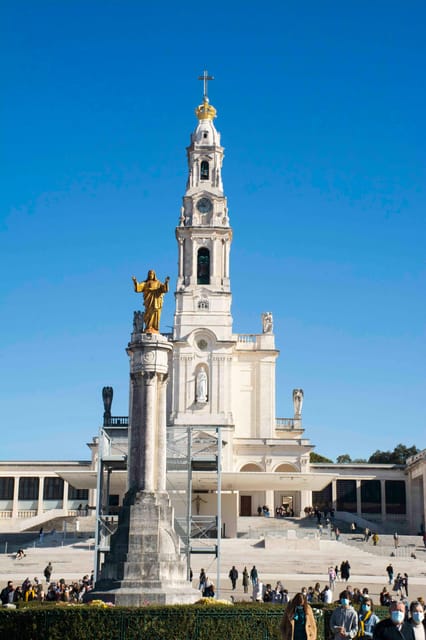
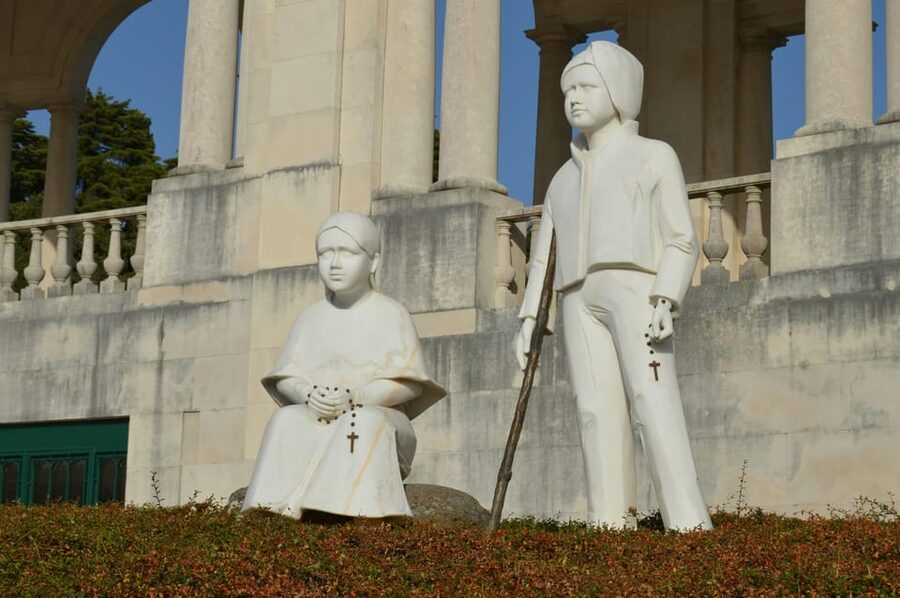
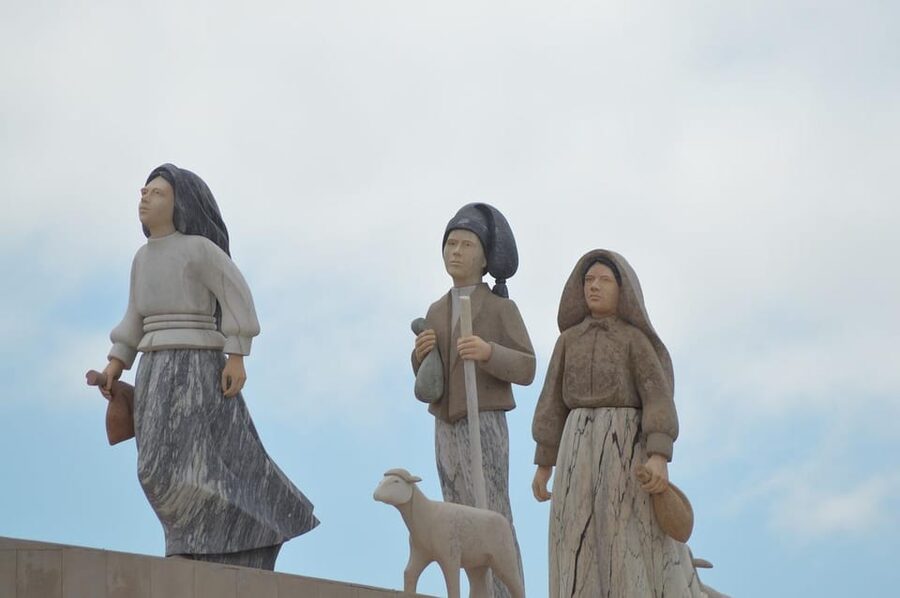
Fátima became one of the world’s major pilgrimage destinations after the reported apparitions of Our Lady to Francisco, Jacinta, and Lúcia in 1917. The tour takes you to the places most closely tied to that story, beginning with the Chapel of the Apparitions.
The chapel marks the reported site of the apparitions. It is a place for prayer, photographs, and quiet observation. The schedule allows about 30 minutes for this part, although your actual time can shift around Masses and the group’s pace.
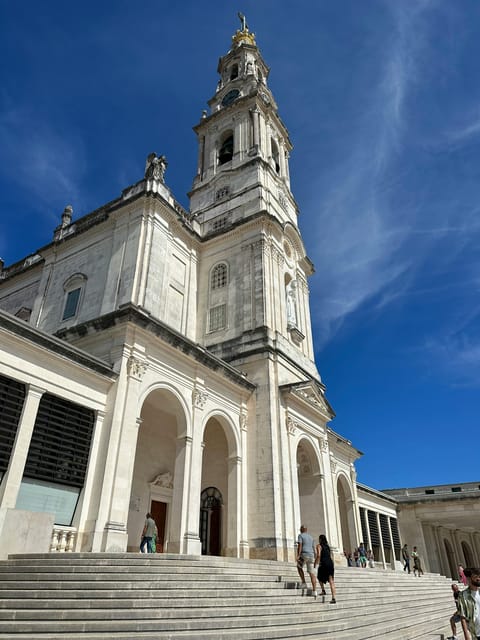
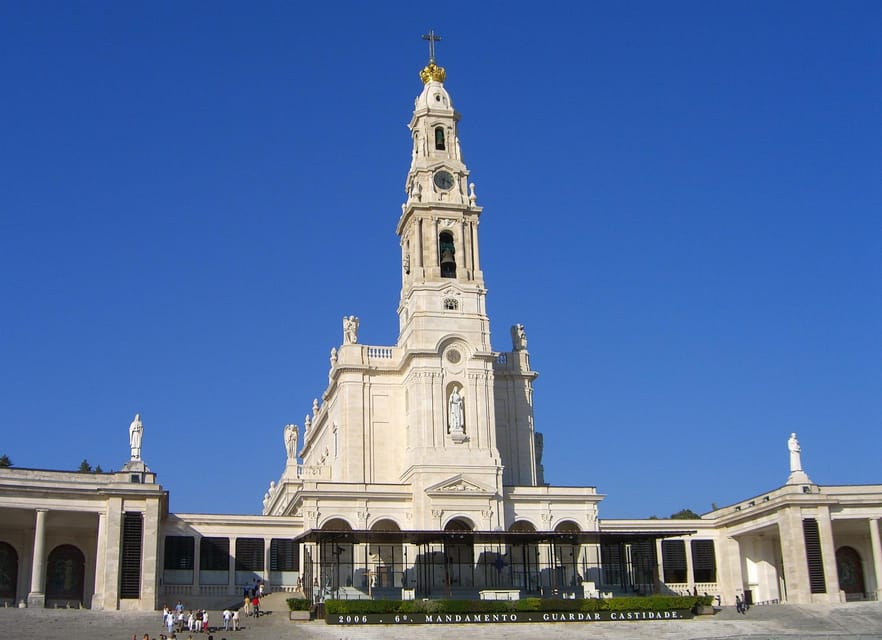
You then see the Basilica of Our Lady of the Rosary, where Francisco, Jacinta, and Lúcia are buried. The basilica gives the site its traditional devotional focus. Take time to notice the contrast between the solemn interior and the broad open area around the sanctuary.
The Basilica of the Holy Trinity adds a very different note. Inaugurated in 2007, it uses contemporary architecture and offers a modern counterpart to the older basilica. I like that the tour includes both. Fátima is not frozen in 1917, and the newer church shows how the pilgrimage site continues to serve large numbers of people today.
Same streets, a different century:
- Porto: An Intimate Fado Show in a Historical Tavern
★ 4.8 · 2,055 reviews - Lisbon: Fado Show with Wine in a Historic Venue
★ 4.8 · 1,294 reviews - Porto: Historic City Center Walking Tour
★ 4.7 · 1,172 reviews - Lisbon: Daytime or Sunset Boat Cruise with History and Wine
★ 5.0 · 1,053 reviews
Two hours at the Sanctuary of Fátima
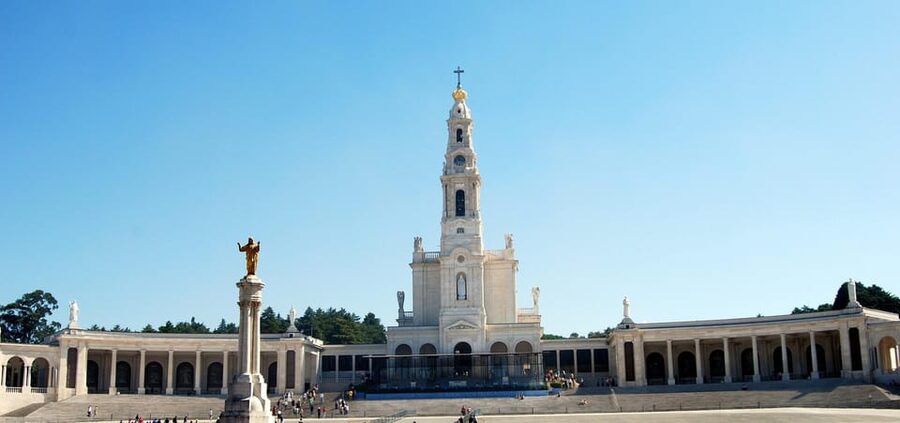
The main sanctuary period lasts about two hours, which is the right amount for a first visit if you want to see the essential sites without turning the day into a full pilgrimage retreat.
Use the time with a plan. You might begin at the Chapel of the Apparitions, walk to the Basilica of Our Lady of the Rosary, visit the tombs, and then give yourself time at the Basilica of the Holy Trinity. You can also attend Mass if one fits the schedule. Participation is optional.
The open spaces make it possible to separate sightseeing from prayer. You can walk, sit, light a candle if permitted at the time, or simply take in the scale of the complex. The tour also leaves room for religious shopping, so you can buy medals, rosaries, or other souvenirs without giving up the whole sanctuary visit.
Do not assume you will see every corner of Fátima. The sanctuary is large, and the day also includes Santarém, lunch, and the return drive. Families with children or older relatives may want to agree on a meeting point and a simple plan before splitting up.
One useful advantage of a guide is timing. Diogo has helped groups arrive in time for Sunday Mass, and Pedro and Valerio are praised for adjusting the day for families. Still, Mass times and access can change, so treat attendance as a possibility rather than a promise.
Lunch, shopping, and the real cost
Lunch is not included. You receive free time to eat in Fátima, and a regional meal is part of the suggested experience, but you pay the restaurant bill yourself. You should also budget for personal purchases and any entrance fees charged at monuments.
At $53 per person, the tour offers solid value if you want transport, a certified guide, and two destinations in one day. Booking separate transport to Santarém and Fátima would take more planning, and you would lose the guide’s explanations during the drives.
The price is less attractive if you want a slow, private pilgrimage with long periods inside each church. The schedule is efficient rather than leisurely. You are paying for coverage and convenience, not a deep study of either city.
Shopping is available at Fátima, and some groups also stop at a factory shop. One practical tip is to compare prices before buying. A factory store may offer more choice, but common religious items can cost less at shops around the sanctuary. Keep purchases small because oversize luggage is not allowed in the van.
Who will enjoy this day most
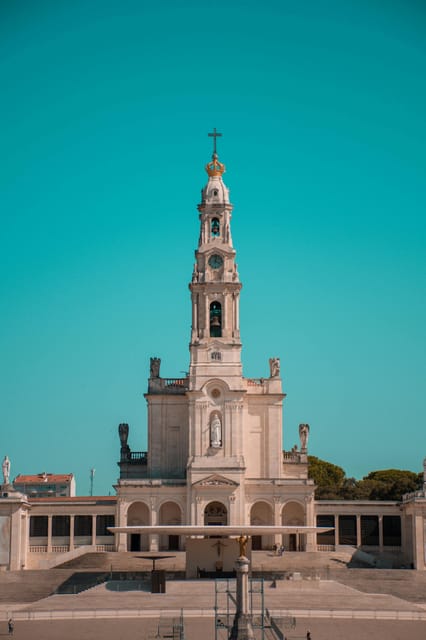
I would recommend this tour to Catholic visitors, families, first-time visitors to Fátima, and anyone who wants a guided religious day without arranging several transfers. It also suits people who value context. A guide can explain why the sites matter instead of leaving you to read signs on your own.
The tour can work well for mixed-age groups. Guides have adjusted timing for children and older people, and the air-conditioned van limits the need to manage long intercity connections. Wheelchair access is available, though the wheelchair must be foldable, and you should confirm the practical details when booking.
It is less suited to a person who wants a quiet, unstructured day. You spend much of the day in transit, and the schedule keeps moving. It is also not the best match for someone interested only in secular sights, since the religious focus is present from morning to afternoon.
The multilingual setup is another strength. The tour is offered in English, Spanish, Portuguese, Italian, and German. Clear communication matters when you are coordinating free time, Mass, lunch, and meeting points.
Timing, weather, and practical limits
The full experience lasts about nine hours, with morning departure from Lisbon and arrival back in the early evening. The return drive is listed at about 75 minutes, though traffic and weather can affect the timing.
Bring comfortable shoes for walking between the Fátima sites. You should also dress respectfully for churches and remember that this is an active religious setting, not only a sightseeing stop. Noise, touching exhibits, smoking indoors, and food or drinks in the vehicle are not permitted.
Weather does not automatically ruin the day. One group had difficult conditions, yet the guide adapted and kept the visit worthwhile. Still, Santarém’s viewpoint is more enjoyable in clear weather, and rain can make walking between Fátima’s buildings less pleasant.
The schedule includes several short guided segments, so listen carefully at the start of each stop. If you wander off without noting the meeting point, you can lose time. The van cannot wait indefinitely, especially on a nine-hour route.
Free cancellation is available up to 24 hours before departure, and you can reserve now and pay later. Pickup is optional, and private groups are available. These options help if your Lisbon plans are still shifting, but the key decision is still pace: this is a full day with a lot packed into it.
Should you book the Fátima and Santarém day trip?
Book it if you want Fátima plus a less common religious site, rather than another direct pilgrimage transfer. Santarém’s miracle sanctuary, cathedral, and viewpoint give the day more range, while Fátima supplies the major devotional sights.
The tour is also a good choice if you want a guide who can handle history, language, family needs, and changing plans. The strongest pattern in the guiding is personal care: Diogo, Pedro, Hugo, Rui, Paulo, and Valerio are praised for making the day clear and manageable.
Skip it if your priority is extended prayer time, a long lunch, or detailed exploration of Santarém. In that case, visit one destination slowly instead of combining both.
For most first-time visitors with one open day from Lisbon, the $53 price is fair. You get transport, guiding, two important religious centers, and enough free time to make Fátima feel personal rather than rushed.
FAQ
How long does the Fátima and Santarém tour last?
The tour lasts about nine hours. It leaves Lisbon in the morning and is expected to return in the early evening.
What sites do I visit in Santarém?
You visit the Cathedral of Our Lady of the Conception, the church connected with the Eucharistic Miracle of Santarém from 1247, and Porta do Sol Garden for panoramic views.
How much time is available at Fátima?
The main visit to the Sanctuary of Our Lady of Fátima lasts about two hours. The schedule also includes separate stops at the Chapel of the Apparitions and the Basilica of Our Lady of the Rosary.
Can I attend Mass during the tour?
Yes. You may attend a Mass if the timing allows, but participation is optional.
Is lunch included?
No. You receive free time for lunch in Fátima, but the meal is not included in the tour price.
Are monument entrance fees included?
No. Any entrance fees at monuments are paid separately, along with personal expenses.
What languages are available?
The live tour guide may provide the tour in English, Spanish, Portuguese, Italian, or German.
Is the tour wheelchair accessible?
The tour is wheelchair accessible, but non-folding wheelchairs are not allowed in the vehicle.
Newest history tours we have reviewed in Portugal
- Coimbra’s Historical Highlights: A Self-Guided Audio Tour★ 5.0 · 22 reviews
- In the Heart of the City: Get to know the history of Tomar and taste local Tapas!★ 5.0 · 22 reviews
- All of Tomar’s history and loads of fun.★ 5.0 · 39 reviews
- Albufeira Wine Tasting: Boutique Winery Tour & Historic Silves★ 5.0 · 380 reviews
- Arrábida: Beach, Nature & History★ 5.0 · 89 reviews
- Albufeira Wine Tour: 2 Vineyards, 6 Tastings & Historic Silves★ 5.0 · 123 reviews
- Albufeira History Walking Tour with Wine and Tapas★ 5.0 · 47 reviews
- Historical Algarve – Full-Day Trip★ 4.5 · 150 reviews
Portugal History Tours, compared.


Douro Valley: Historical Sites, Wine Experience, Lunch & Cruise
Read our review →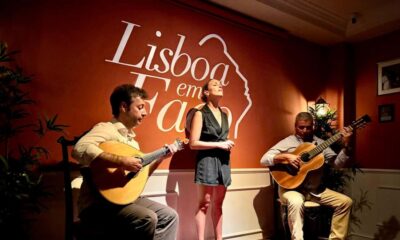
Live Fado Show with Port Wine in Historic Center
Read our review →

Daytime or Sunset Boat Cruise with History and Wine
Read our review →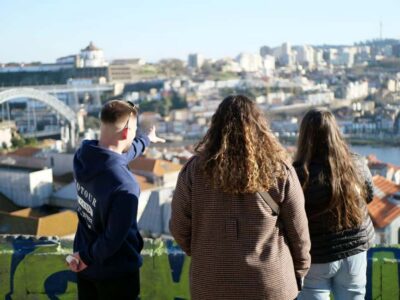
Private Tour of the Historic City in a Ford T Car
Read our review →Browse the lists this tour appears in