Review · USA HISTORY TOURS
Houston: Buffalo Bayou Park Cistern History Tour
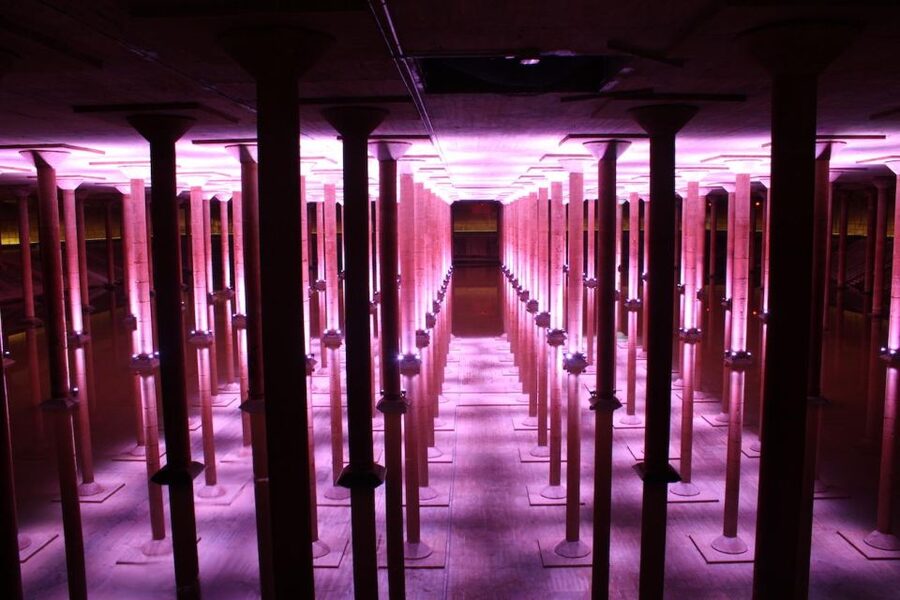
The Buffalo Bayou Park Cistern is the sort of Houston sight you would never guess was waiting below a city park. Built in 1926 as a drinking-water reservoir, it now offers a short guided walk through a vast forest of concrete columns, where your voice can hang in the air for 17 seconds.
I like two things right away: the tour gives you a clear piece of Houston history, and it takes you into a space that feels unlike any ordinary museum. The $15 price is fair for a 30-minute guided visit, though the short length means you should see it as one memorable stop, not a full morning outing.
The echo can make speech hard to follow. One visitor found that a guide spoke too quickly and was difficult to understand inside the cavern, so stay close and listen carefully. The unusual acoustics are part of the fun, but they can also make the explanation less clear.
Key points to know before you go
- A 1926 water reservoir: The Cistern once supplied Houston with drinking water and held up to 15 million gallons.
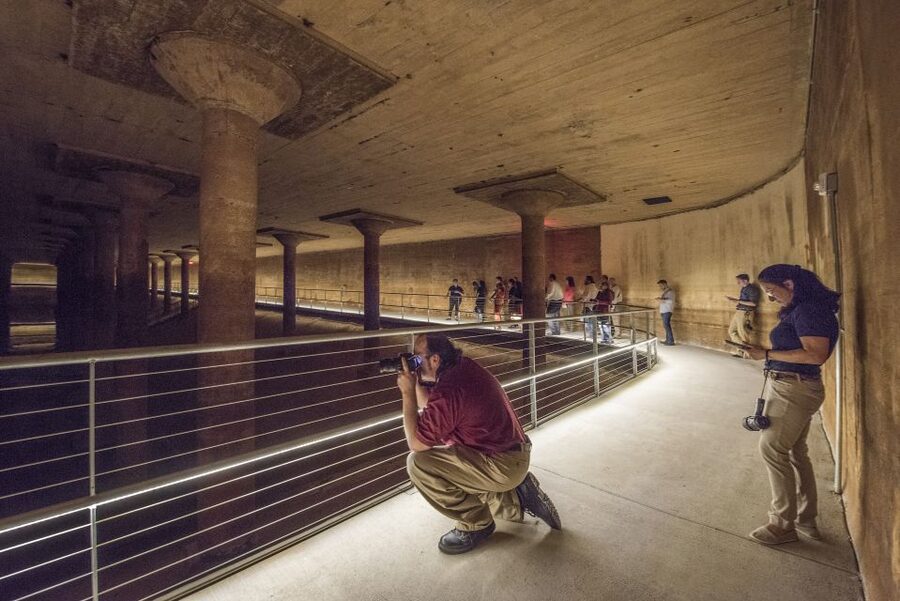
- A giant underground room: The interior covers an area about the size of 1.5 football fields.
- A 17-second echo: Calling out across the columns gives you an easy, memorable way to experience the acoustics.
- A guide-led history walk: Your English-speaking guide explains how the Cistern was built and used.
- A $15, 30-minute visit: It is an easy addition to a day in Houston, especially if you are already near Buffalo Bayou Park.
- A space for older children and adults: Children under 9 are not permitted, and the underground setting may not suit everyone.
Why this old reservoir makes a good Houston stop
Houston is often introduced through its big-name attractions, but the Cistern offers a more local slice of the city. You are not looking at a replica or a themed exhibit. You are walking through a real piece of public infrastructure that once played a practical role in Houston’s water system.
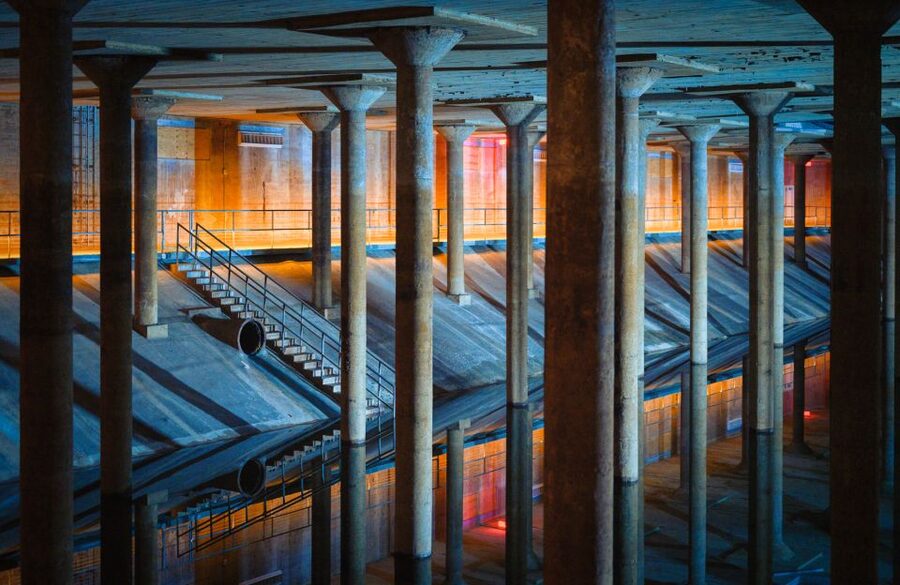
The structure dates to 1926, when it was built as the city’s original drinking-water reservoir. At full capacity, it held 15 million gallons. That number is difficult to picture until you enter the chamber and see the long rows of heavy concrete columns stretching into the dim distance.
I like the way the tour connects basic engineering with atmosphere. The Cistern is not decorated like a traditional attraction. Its scale, bare surfaces, lighting, and sound do the work. You get the history, then you get a chance to experience the building with your own ears and eyes.
The tour lasts about 30 minutes. That is enough time to hear the main story, look around, and test the echo without making the visit feel like a major commitment. If you have only a short window in Houston, this is an easier fit than a large museum or a half-day attraction.
More History Tours in the USA:
- New York City: American Museum of Natural History Ticket
★ 4.5 · 15,447 reviews - History and Hauntings of Salem Guided Walking Tour
★ 5.0 · 14,564 reviews - Charleston’s Old South Carriage Historic Horse & Carriage Tour
★ 5.0 · 10,023 reviews
Checking in beside Buffalo Bayou Park
You check in inside the Buffalo Bayou Park Visitor Center, next to the Cistern. This matters because the park is your starting point, not the underground chamber itself. Give yourself enough time to reach the visitor center and get organized before the scheduled tour.
Overfill parking is available in City Lot H at 1643 Memorial Drive, east of Fonde Recreation Center. The parking information is useful, but do not leave valuables in your vehicle. If you are building a full day around Buffalo Bayou Park, the Cistern works well as a focused indoor stop within a larger visit.
The activity is wheelchair accessible. It takes place underground, so you should be comfortable entering and spending time in an enclosed subterranean space. Pets are not allowed, although assistance dogs are permitted. Tripods are also prohibited, so bring a handheld camera or phone if you want pictures.
The tour is offered in English. The guide leads the group into the Cistern and explains the structure as you walk. Since sound behaves strangely inside, staying near the guide is a practical move, especially if you want to catch the historical details.
Entering the 1.5-football-field chamber
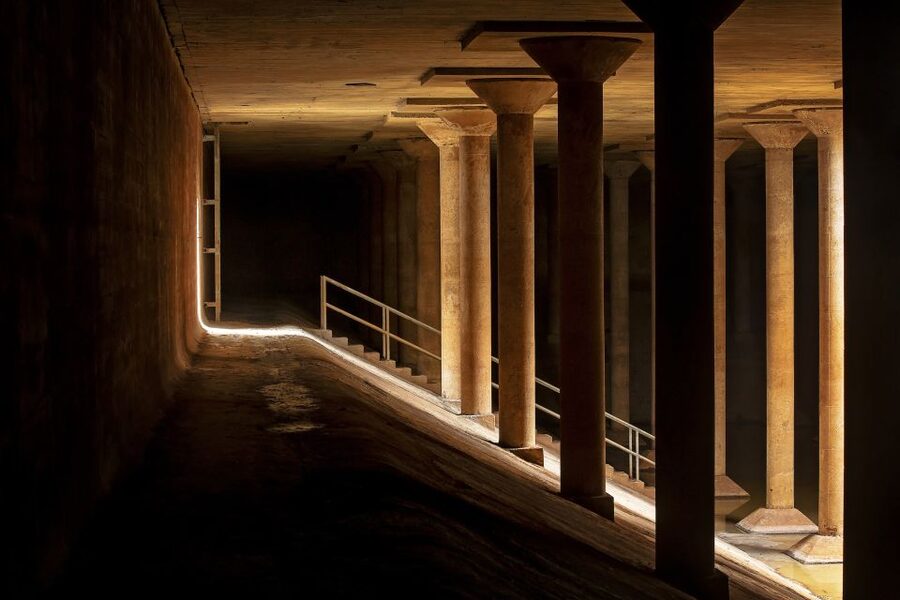
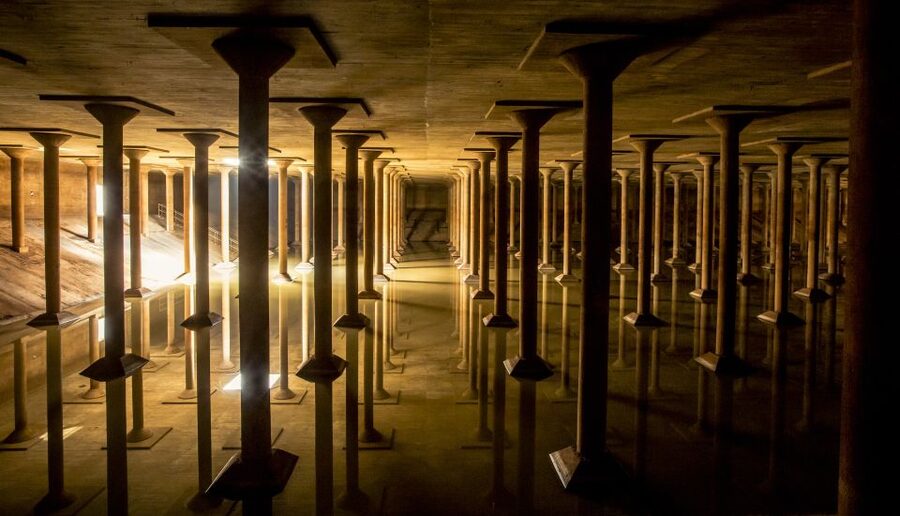
The first strong impression is size. The Cistern’s interior is about as large as 1.5 football fields, and its concrete columns make the room feel even longer. The design is repetitive and imposing, with rows of monolithic supports holding up the ceiling.
This is not a room you understand from a quick photograph. The scale becomes clearer as you move through it. The columns create changing sight lines, and the dim setting gives the space a quiet, almost unreal quality. You are still in the middle of Houston, yet the city feels far away once you are below ground.
Your guide explains how the reservoir was built and why it mattered. The most useful part of the history is its practical purpose. The Cistern was not created as an art space or a public attraction. It was built to store drinking water, and its vast interior reflects the needs of a growing city.
The tour does not require a long walk or a complicated schedule. You move through the chamber with the group while the guide points out the architecture and shares the background. That makes it a good choice for anyone who likes history in small, manageable portions.
Testing the famous 17-second echo
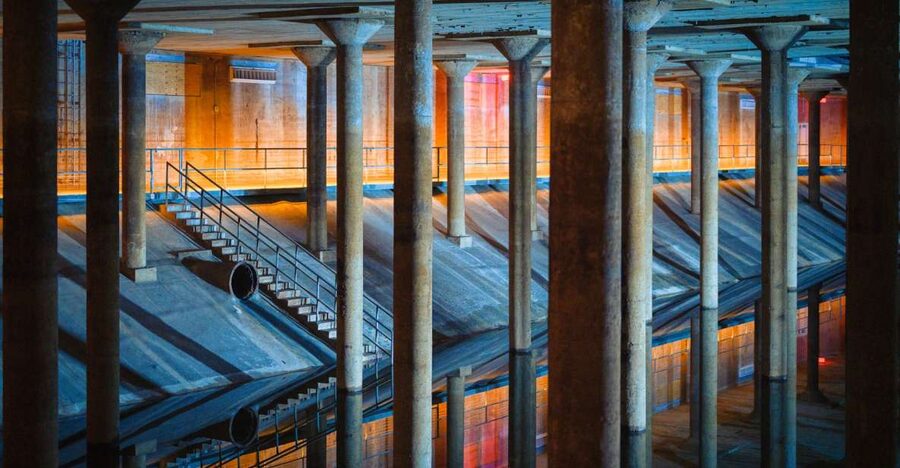
The echo is the Cistern’s most playful feature. At one point, you can call out and listen as your voice bounces around the concrete walls and ceiling. The sound lingers for about 17 seconds, turning a simple shout into a long, fading trail.
I like this part because it makes the building’s design understandable without a technical lecture. You do not need to know anything about acoustics. Say a few words, sing a note, or listen to someone else in the group, and the room explains itself.
The echo also creates the tour’s main drawback. Concrete and hard surfaces reflect sound in every direction. A guide who speaks too fast or fails to enunciate can become difficult to understand. The effect is especially noticeable when several people are close together.
Your best strategy is simple: stand near the guide, keep quiet during the explanation, and save your own echo experiment for the moment you are invited to try it. The unusual sound is worth experiencing, but you will get more from the tour if you treat the historical talk as the main event and the echo as the bonus.
Same streets, a different century:
- Beneath The Streets Underground History Tour
★ 4.5 · 8,006 reviews - Big Island in a Day: Volcanoes Waterfalls Sightseeing and History
★ 5.0 · 6,569 reviews - Boston: Freedom Trail History Small Group Walking Tour
★ 5.0 · 6,450 reviews - Historic Charleston Guided Sightseeing Walking Tour
★ 5.0 · 6,216 reviews
When the guide adds a song
The guide’s personality can shape this short experience. Several tours have included a guide singing inside the Cistern, sometimes with an a cappella song. One guide reportedly performed a song she had composed, while another used a beautiful song to show the group how the acoustics work.
This is not listed as a guaranteed part of every departure, so you should not book solely for a musical performance. Still, it explains why the tour can feel more personal than a standard scripted walk. A song in that setting gives you an immediate sense of the room’s long reverberation and makes the architecture easier to remember.
The singing can also work better than ordinary speech. Notes stretch through the chamber, while spoken words may blur. If your guide performs, listen for how the sound changes as it travels among the columns.
The strongest guide moments combine entertainment with context. A good guide keeps the history moving, explains the structure in plain terms, and uses the room itself as part of the lesson. Since the tour is short, a lively presentation makes a real difference.
What the history adds to the experience
The Cistern is more than a dramatic underground photo stop. Its past shows how a city’s basic systems can become historic places. Water storage is not usually the first thing you put on a sightseeing list, but the size and age of this reservoir give it a strong connection to Houston’s growth.
The 15-million-gallon capacity gives you a useful sense of its former purpose. This was working infrastructure on a huge scale. The concrete columns were not installed for visual effect, yet they now create one of the most memorable interiors in the city.
I find that this kind of history works best when you have a guide. On your own, you might notice the darkness, the columns, and the echo, but you could miss why the structure exists. The tour gives the room a timeline and turns an impressive space into a place with a reason for being.
Lighting may add another layer to the visit. Some tour experiences have featured the Cistern lit in ways that make the columns and reflections more striking. The exact visual treatment may vary, but you can expect the architecture and low-light setting to be central to the experience.
Is $15 a fair price?
At $15 per person, this is a good-value short attraction. You are paying for admission and a live guide, not just access to an empty room. The guide supplies the historical context, keeps the group moving, and helps you understand the sound and structure.
The limitation is duration. Thirty minutes is brief, so the Cistern will not fill an afternoon. That is not a problem if you think of it as a compact stop before or after other Houston plans. It is less satisfying if you expect a long museum-style visit with several separate exhibits.
The price also compares well with the experience’s uniqueness. Houston has larger attractions, including the Space Center and citywide sightseeing options, but the Cistern offers something those visits do not: a short walk through a real underground reservoir with a 17-second reverberation.
Reserve now and pay later is available, and you can cancel up to 24 hours in advance for a full refund. Those terms help if your Houston schedule is still shifting, though the main value decision remains simple: pay $15 for a distinctive half-hour, not for an all-day attraction.
Who will enjoy the Cistern most
I would recommend this tour to adults, older children, architecture fans, and anyone who likes unusual city history. It works particularly well for people who prefer a focused attraction over a long bus tour or a large indoor complex.
The age rule is clear: children under 9 are not suitable for this activity. Older children may enjoy the echo, but the historical explanation and underground setting will appeal most to those who can stay quiet while the guide speaks.
The Cistern is also a good pick for repeat visitors to Houston. If you have already seen the main attractions, this gives you a different view of the city. It is not a broad overview of Houston, but it tells one useful story through a place you can physically enter.
You should think twice if enclosed underground spaces make you uneasy or if you need every word of a tour to be easy to hear. The hard surfaces create strong reverberation, and the room’s atmosphere is part of the experience. This is a place for curiosity, not comfort in the usual sense.
Practical tips for a smoother visit
Arrive at the Buffalo Bayou Park Visitor Center next to the Cistern for check-in. If you are driving, use the stated overflow option at City Lot H, 1643 Memorial Drive, east of Fonde Recreation Center, and remove valuables from your vehicle.
Keep your camera setup simple. Tripods are not allowed, but handheld photos are permitted under the stated rules. Pets cannot join you, apart from assistance dogs.
Stay close to the guide once you enter. The Cistern’s echo is fun when you are testing it, but it can swallow speech during the history talk. If you have trouble hearing, move nearer rather than trying to follow from the back.
Plan another activity around the tour. The 30-minute visit leaves plenty of time for other Houston sights, and the attraction works best as one part of a larger day. You might find the underground setting especially refreshing during a hot Texas afternoon, though no specific temperature is promised by the tour details.
Should you book the Buffalo Bayou Cistern tour?
Book it if you want a short, affordable Houston experience with real history, striking architecture, and a hands-on sound effect. The combination of a 1926 reservoir, 15 million gallons of former capacity, towering columns, and a 17-second echo is hard to duplicate elsewhere.
I would not choose it as your only Houston activity. The tour is too brief for that, and the echo can make some guide commentary difficult to catch. But as a focused stop near Buffalo Bayou Park, it offers strong value and a memorable look at the city’s past.
If you enjoy unusual buildings, practical history, or atmospheric photography, I would put this on your list. The chance of hearing a guide sing adds a charming extra, but the real reason to go is the Cistern itself: a working reservoir transformed into an extraordinary public space.
FAQ
How long is the Buffalo Bayou Park Cistern history tour?
The tour lasts 30 minutes.
How much does the tour cost?
The price is $15 per person.
Where do I check in?
Check in inside the Buffalo Bayou Park Visitor Center next to the Cistern.
Is parking available?
Overflow parking is available in City Lot H at 1643 Memorial Drive, east of Fonde Recreation Center. You should not leave valuables in your vehicle.
What language is the tour offered in?
The live tour guide speaks English.
Is the Cistern wheelchair accessible?
Yes, the activity is wheelchair accessible.
Are children allowed on the tour?
Children under 9 are not suitable for this tour.
Can I bring pets or a tripod?
Pets are not allowed, except for assistance dogs. Tripods are also not allowed.
Newest history tours we have reviewed in the USA
- 700 Year Tour – Half Day Mesa Verde Cultural Tour★ 4.5 · 109 reviews
- Self Guided Detroit’s Spirit and History Solo Walking Tour★ 4.5 · 41 reviews
- Best Downtown Detroit Historical Walking Tour★ 5.0 · 56 reviews
- Detroit’s Hidden History Guided Walking Tour★ 5.0 · 48 reviews
- Private Nightlife Tour in Denver: Culture, History, and Cocktails★ 5.0 · 48 reviews
- Historical Walking Tour Of Denver With A Haunting Twist★ 5.0 · 19 reviews
- Tip Based: Capitol Hill History & Ghost Tour★ 5.0 · 34 reviews
- Denver – Capitol Hill Guided Walking Ghost / History Tour★ 4.5 · 75 reviews
USA History Tours, compared.


History and Hauntings of Salem Guided Walking Tour
Read our review →
Charleston’s Old South Carriage Historic Horse & Carriage Tour
Read our review →

Big Island in a Day: Volcanoes Waterfalls Sightseeing and History
Read our review →
Freedom Trail History Small Group Walking Tour
Read our review →
Historic Charleston Guided Sightseeing Walking Tour
Read our review →