

Review · HOI AN HISTORY TOURS
Hoi An: Ancient Town Guided Walking Tour
Hoi An’s best introduction is on foot, where a short lane can reveal more than a grand monument. This three-hour walk links the Japanese Covered Bridge, old houses, assembly halls, and market with stories about daily life in a former trading port. Guides such as Karla, Kun, June, Minh, Tom, and Vinh are known for clear English, humor, and a warm personal touch.
I like the useful PDF of local food, drink, spa, tailor, and craft-beer suggestions, and I like that the walk includes both major sights and quieter lanes. The main drawback is the heat. Indoor pauses help, but three hours outside in Hoi An still calls for water, loose clothing, and sensible timing.
Key points at a glance
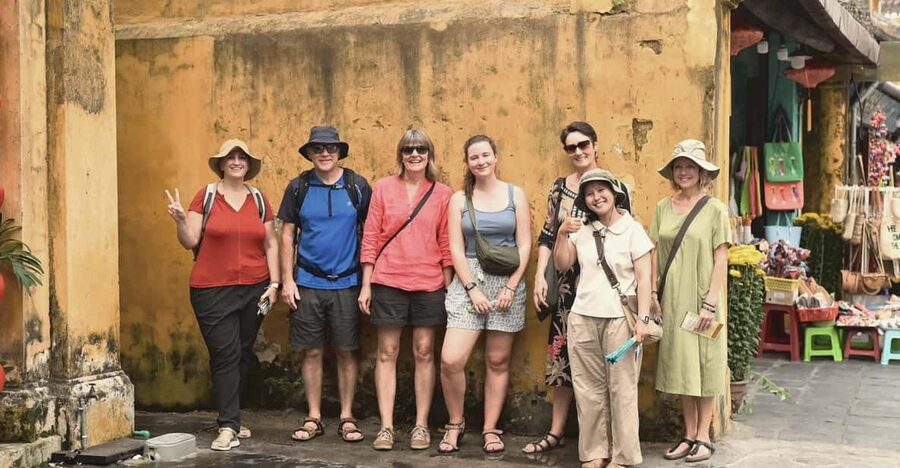
- Start with a local guide: Look for the Momo team member carrying a blue paper fan at the Red Seal Ship Model on 79 Nguyen Thi Minh Khai Street.
- See Hoi An’s main historic sights: The route includes the Japanese Culture Gallery, Japanese Covered Bridge, Quan Thang Ancient House, Fujian Assembly Hall, Kazik Park, and Central Market.
- Expect a people-focused tour: Guides share personal stories, present-day observations, and practical advice rather than only dates and monuments.
- Plan for the heat: The walk includes indoor breaks and shaded stops, but comfortable shoes, water, and sun protection still matter.
- Pay attention to value: The booking fee is only $2.01 per person, while the 120,000 VND UNESCO entrance ticket is separate.
- Use the tour early in your stay: The PDF recommendations can help you choose restaurants, bars, spas, tailors, and other activities afterward.
Why this is a smart first morning in Hoi An

Hoi An rewards slow looking. Its old center is compact, but the details can blur together if you wander without context: a wooden house here, a Chinese assembly hall there, a bridge crowded with photographs, and a market lane full of unfamiliar food.
This walk gives those details a frame. You move through the Old Town while an English-speaking local explains how Hoi An grew from a trading port into one of Vietnam’s best-known historic towns. The focus is not only on the past. Guides also explain current customs, local life, and the changes visitors can see in town today.
I would book this early in your stay. You get a basic map of the historic center, learn which places deserve a second visit, and receive a PDF with suggestions for food, drinks, activities, spas, massages, tailors, and craft beer. That follow-up advice may be worth as much as the formal sightseeing.
The tour is especially useful if you want a human introduction rather than a self-guided checklist. Karla has been praised for adding personal stories and making every member of the group feel included. Kun is described as lively and good at keeping the group involved. June is known for remembering names and explaining things clearly, while Minh and Vinh bring strong local knowledge with plenty of humor.
The assigned guide changes, so you should not book on the assumption that you will get one particular person. Still, the repeated pattern is clear: expect an upbeat guide who wants to answer questions and connect the history to modern Vietnam.
More Ancient History Tours in Vietnam
- Marble Mountains – Hoi An Ancient Town Sunset Daily Ingroup Tour
★ 5.0 · 690 reviews - Hoi An Ancient Town Walking Tour with a Local
★ 5.0 · 517 reviews - Hoi An Ancient Town – Walking Tour with Local Guide
★ 4.9 · 385 reviews
Meeting the blue paper fan at Nguyen Thi Minh Khai Street
The meeting point is the Red Seal Ship Model at 79 Nguyen Thi Minh Khai Street. Look for a member of the Momo team with a blue paper fan. That detail matters in a crowded historic district, where several walking groups may gather near similar landmarks.
The tour is conducted in English. It lasts three hours and is offered at several possible starting times, depending on availability. A morning departure may make the heat easier, while an afternoon departure lets you see the Old Town as the light changes. Since exact start times vary, check the available slot before booking.
The walk is listed as wheelchair accessible. Even so, Hoi An’s historic streets and old buildings can have uneven surfaces or tight spaces, so it is sensible to ask the operator about the specific route if access is important for you.
The group size can vary. One group described a dozen people as a comfortable number, with larger numbers split into smaller groups. That is useful because a guide can explain details more easily when everyone can hear and see.
Hoi An Old Town and the Japanese Culture Gallery
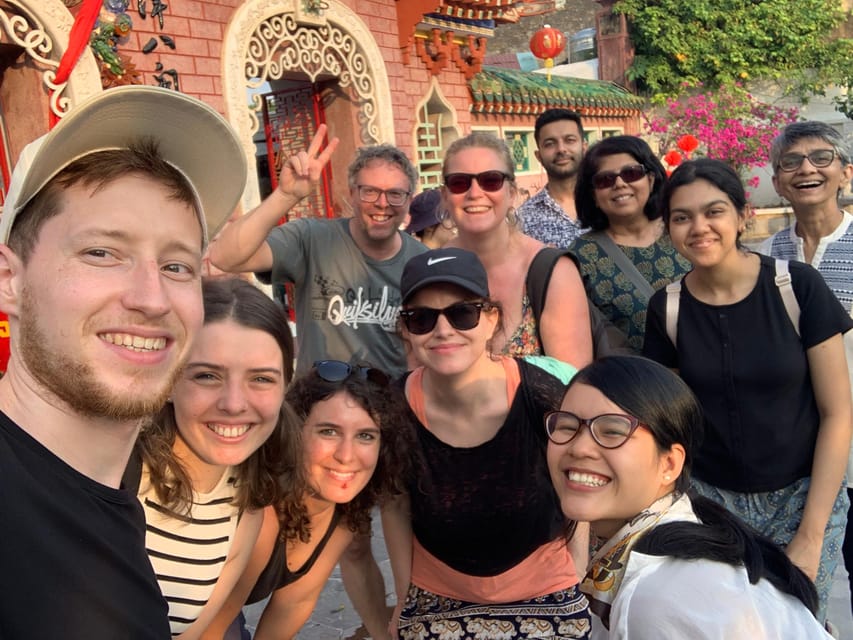
The first formal stop is Hoi An Ancient Town, with about ten minutes of guided explanation. This opening helps you understand why the center looks different from many other Vietnamese cities.
Hoi An grew as an international trading port from the 16th century. Vietnamese, Japanese, Chinese, and other foreign influences shaped the buildings, religious sites, food, and commercial life. The guide’s job here is to connect those broad ideas to the street in front of you.
Next comes the Japanese Culture Gallery, listed as Nhà trưng bày Văn hóa Nhật Bản. You spend about fifteen minutes here. It is a useful stop because the Japanese influence in Hoi An can otherwise be reduced to one famous bridge.
The gallery gives the tour a cultural starting point before you move into the bridge and older buildings. Listen for the guide’s explanation of how the different communities lived, traded, and left their mark on the town. This is also one of the indoor pauses that makes the route easier during hot weather.
The Japanese Covered Bridge and its careful details
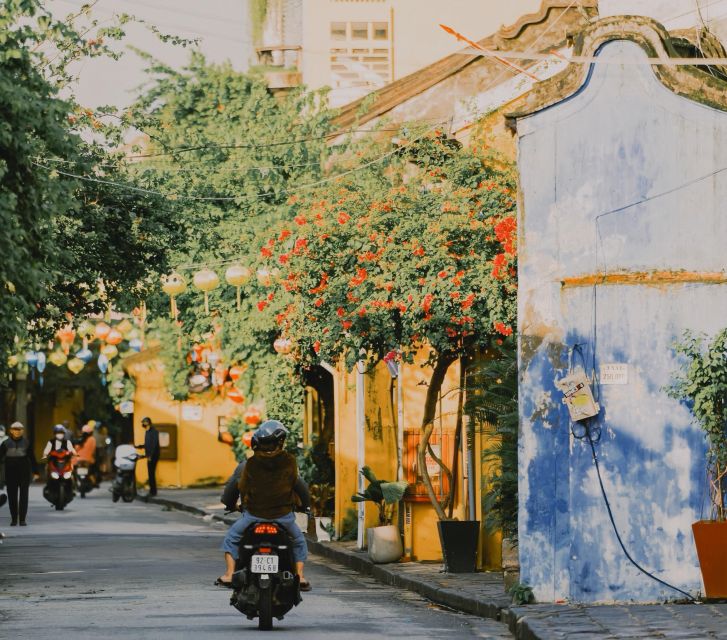
The Japanese Covered Bridge receives about twenty minutes, giving you more time than a quick photo stop. It is one of Hoi An’s clearest symbols, but it can be hard to appreciate when you only see it through a camera screen.
Your guide can help you notice the bridge’s covered structure, its connection to Japanese residents, and the nearby religious elements. The stop is compact but important because it shows how trade and cultural exchange shaped the Old Town.
Expect this area to be popular and active. You may need to wait for a clear view, especially during busy periods. The benefit of joining a guide is that you can hear the explanation while moving around, rather than spending your entire visit trying to find the perfect photograph.
The bridge also marks the point where Hoi An’s history becomes very physical. You are not simply hearing about foreign merchants and local communities. You are standing in a structure built to connect parts of the old commercial quarter.
More History Walking Tours in Vietnam
- Explore Hanoi Old Quarter ’s Rich History and Culture By Walking
★ 4.5 · 72 reviews - Hoi An Ancient Town Walking Street Food Tours with Night Market
★ 4.5 · 50 reviews - Hoi An Ancient Town – Night Market Street Food Walking Tours
★ 4.5 · 22 reviews
Kazik Park and a quieter view of the town
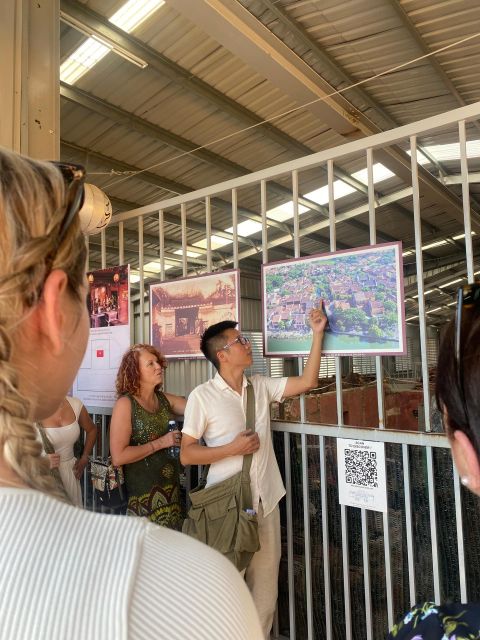
Kazik Park follows, with roughly fifteen minutes of guided time. This stop adds a modern layer to the Old Town experience and gives the group a pause between major historic buildings.
The park is associated with Kazimierz Kwiatkowski, often known as Kazik, a Polish architect and conservation expert who helped draw attention to Hoi An’s historic value. The supplied tour information does not promise a long technical lecture, so expect a concise explanation tied to the town’s preservation story.
This is the kind of stop that can be easy to miss when you explore alone. You may walk past it without understanding why it matters. A local guide helps turn a small public space into part of the larger story of how Hoi An’s old center was protected and presented to the world.
It is also a useful point for questions. The guides are encouraged to share personal views and current observations, so you can ask how the Old Town works today, not only how it looked centuries ago.
Quan Thang Ancient House and life behind the facade

The tour then enters Quan Thang Ancient House for about fifteen minutes. Old merchant houses are among Hoi An’s most revealing places because they show how trade, family life, storage, and worship once occupied the same narrow building.
From the street, many of Hoi An’s houses look similar. Inside, the arrangement tells a more specific story. You can expect your guide to point out the character of the building and explain how the house fits the commercial life of the old quarter.
The stop is not a long architectural lecture, which suits this walking tour. You get enough context to understand what you are seeing, then continue before the details become tiring.
If you enjoy architecture, pay close attention here and ask questions. If you prefer food and street life, this is still worthwhile because it explains why the Old Town feels so compact. Hoi An’s historic character comes from the way homes, shops, worship spaces, and trade routes were packed together.
Fujian Assembly Hall and Hoi An’s shared cultures
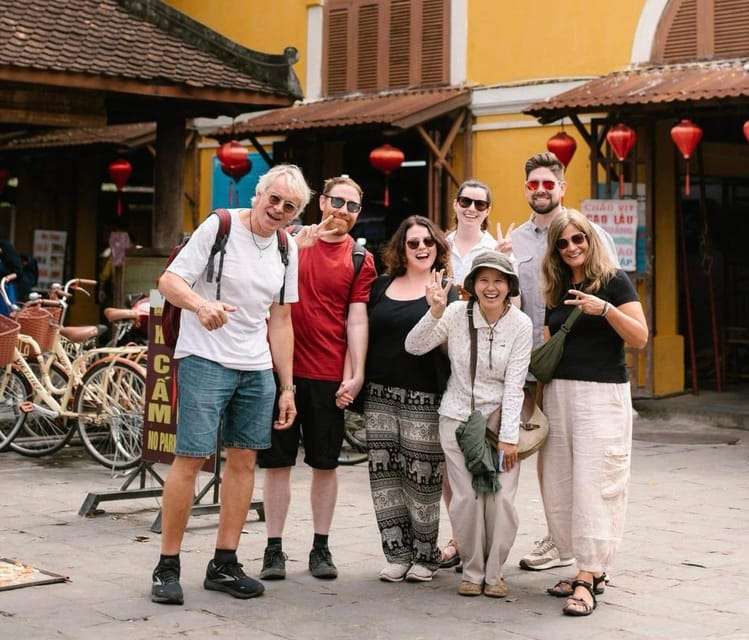
The Fujian Assembly Hall receives about twenty minutes. It is one of the route’s major cultural stops and a good place to understand the role of Chinese communities in Hoi An.
Assembly halls served religious, social, and community purposes. The Fujian hall is known for its ornate design and connection to Fujianese residents and merchants. Your guide can explain the symbols and customs without leaving you to guess which detail matters.
This stop helps balance the Japanese focus of the earlier bridge and gallery. Hoi An’s identity did not come from one outside influence. It developed through contact among local Vietnamese people and traders from several parts of Asia.
The hall can be visually busy, so a short guided visit is useful. You do not need to study every ornament. Instead, listen for the human story: who used the building, why it was built, and how community life worked in a port town.
The dumpling stop and local food advice
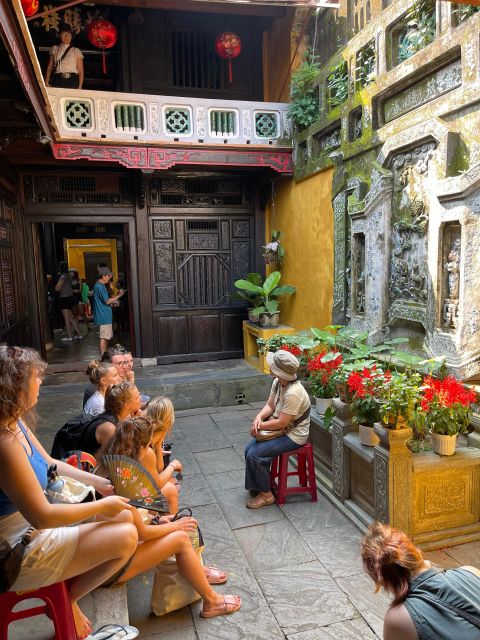
The itinerary includes about fifteen minutes focused on dumplings. The information does not specify a full meal or a cooking class, so treat this as a brief food-related stop rather than a major tasting session.
That still adds value. Hoi An’s food is one of the reasons people enjoy staying in town, and a local guide can explain what to look for when you order later. The PDF recommendations extend this part of the experience with suggestions for restaurants, drinks, craft beer, and other places to try.
Food advice is most useful when it is specific. You can ask your guide what to order, how a local dish differs from a tourist version, and which areas suit your budget or mood. The guides are also happy to answer questions about everyday life, so do not be shy about asking.
Keep your expectations measured. This is a walking tour with a short dumpling-related stop, not a dedicated street-food tour. If eating is your main goal, you may want to pair this walk with a separate food experience.
Finishing at Hoi An Central Market
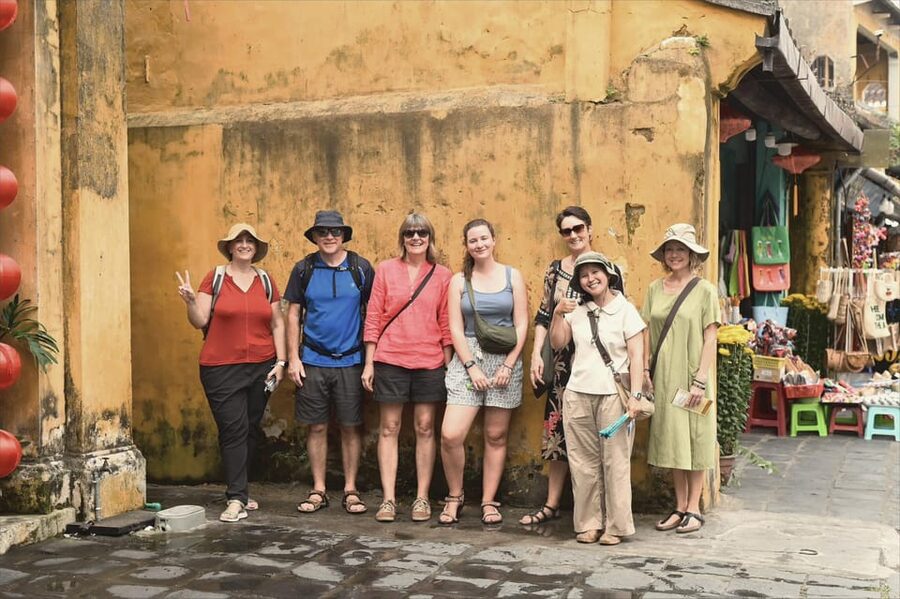
The listed route ends at Hoi An Central Market. This is a practical finish because you are left near food stalls, produce, souvenirs, and everyday shopping rather than at a distant transport stop.
The market gives the tour a strong final note. After hearing about Hoi An as a trading town, you can see commerce in action. The atmosphere changes from historic buildings and formal halls to vendors, shoppers, ingredients, and local routines.
You may want to stay after the guide finishes. Use the PDF suggestions to decide where to eat or what to visit next. If you have already made dinner plans, the market is still a useful location for getting your bearings.
There is one detail worth checking before you set off. The stop list says the walk finishes at Hoi An Market, while the meeting information also says the activity ends back at the meeting point. Confirm the exact endpoint when you meet the guide, especially if you need to reach a hotel or another timed booking.
What the $2.01 price really gives you
At $2.01 per person, this is an unusually inexpensive way to get a structured introduction to Hoi An. The booking fee is small, and you can choose to give the guide an additional amount at the end to show your appreciation.
The value is not in transport or admission. You are paying for an English-speaking guide, a planned route, local explanations, and practical recommendations. The PDF can also save you time when choosing restaurants, spas, tailors, bars, and activities.
The 120,000 VND UNESCO entrance ticket is not included. You should budget for that separate charge. The activity says you can skip the ticket line, which is useful when the Old Town is busy, but skipping the line does not mean the entrance ticket is free.
This price works best for people who want orientation and conversation. It is less useful if you already know Hoi An well or prefer to explore alone with a guidebook. For a first visit, though, the cost is low enough that the risk is modest.
Free cancellation up to 24 hours before the tour adds flexibility, and the reserve-now, pay-later option means you do not have to pay at the time of booking.
Heat, comfort, and the right expectations
Hoi An can be hot, and the tour does not pretend otherwise. Indoor breaks are built into the experience, and shaded stops or occasional breezes can make the walk more manageable, but you will still spend much of three hours on foot.
Wear comfortable shoes and light clothing. Bring water, sun protection, and a hat if you use one. A small bag is easier than heavy luggage, especially in narrow lanes and crowded areas.
The pace is described as unhurried. Guides such as Ahn, Vy, Anh, and June are praised for making people comfortable, answering questions, and keeping the walk enjoyable across different ages and interests. That suggests a social tour rather than a fast march from one photo stop to the next.
The group may include people with different levels of interest. If you want long architectural detail at every building, three hours may feel brief. If you want a clear overview with room for questions and local tips, the format should suit you well.
Who should book this Hoi An walk
I would recommend it to first-time visitors, couples, solo visitors, and friends who want to understand the Old Town before choosing what to do next. It is also a good fit if you like learning through conversation rather than reading every plaque.
Families and mixed-age groups may appreciate the humor and flexible explanations. Guides are praised for remembering names, welcoming questions, and making the group feel included. English ability is a key strength of the experience.
You should think twice if you dislike walking in heat, want a private tour, or are looking for a full food tour. The experience is also not a substitute for spending several hours inside each historic building. It gives you a strong introduction, not an exhaustive study.
For photographers, the route offers plenty of subjects, but the guide’s main purpose is explanation. You may need to take photographs quickly and return later for a quieter look.
Should you book it?
Book this tour if you are arriving in Hoi An and want a friendly, low-cost way to understand the Old Town on day one. The combination of major sights, personal stories, indoor pauses, and a useful local recommendation PDF gives you more than a simple walk between monuments.
The separate UNESCO ticket and hot weather are the main considerations. If you prepare for both, the $2.01 booking fee offers excellent value. I would choose an early or cooler starting time when possible, confirm the endpoint, and keep the rest of the day open for food or shopping suggestions from your guide.
FAQ
How long is the Hoi An Ancient Town walking tour?
The tour lasts three hours. Starting times vary, so check availability for the date you want.
Where does the tour begin?
Meet at the Red Seal Ship Model at 79 Nguyen Thi Minh Khai Street in Hoi An.
How do I find the guide?
Look for the Momo team member carrying a blue paper fan.
What language is the tour conducted in?
The tour is conducted in English with a live English-speaking guide.
Is the UNESCO entrance ticket included?
No. The Hoi An UNESCO entrance ticket costs 120,000 VND per person and is not included in the tour price.
What sights are included?
The route includes Hoi An Ancient Town, the Japanese Culture Gallery, Japanese Covered Bridge, Kazik Park, Quan Thang Ancient House, Fujian Assembly Hall, a dumpling stop, and Hoi An Central Market.
Is the tour suitable for wheelchair users?
The activity is listed as wheelchair accessible. Ask the operator about the current route if you need specific access information for individual buildings.
What is included in the price?
The price includes the walking tour, an English-speaking guide, and a PDF of local recommendations with discounts for places such as spas, massage services, craft beer venues, and tailors.
Can I cancel or pay later?
You can cancel up to 24 hours in advance for a full refund. Reserve-now, pay-later booking is also available.
Newest history tours we have reviewed in Vietnam
- 6 Hours Historical Tour in Cu Chi Tunnel with Free Snack★ 5.0 · 312 reviews
- Marble Mountain – Hoi An Ancient Town Sunset Private Tour★ 5.0 · 36 reviews
- Hanoi Full Day A Private Tour With Mix of History and Activities★ 5.0 · 51 reviews
- Private Cu Chi Tunnels Tour – Explore History & Off-the-path Local Sites★ 5.0 · 93 reviews
- Heritage Adventure Private Tour by Electric Car★ 5.0 · 96 reviews
- Hue Half-Day Motorbike Tour – Authentic Countryside of Vietnam, History, Culture★ 5.0 · 143 reviews
- From Ho Chi Minh City: Heritage & Culture Half-Day Tour★ 4.7 · 37 reviews
- Ho Chi Minh City: Half-day History And Culture Tour★ 4.5 · 33 reviews
Ancient History Tours, compared.

Colosseum: Underground and Ancient Rome Tour
Read our review →
Colosseum & Ancient Rome with Arena Floor Option I Max 6 People
Read our review →
Colosseum, Ancient Rome Tour or AudioGuided Tour
Read our review →
Colosseum Underground & Ancient Rome Guided Tour
Read our review →

Taormina: Ancient Theater Skip-the-Line Ticket & Audio Guide
Read our review →
Discover the Ancient Ruins of Pompeii: Day Trip from Rome
Read our review →
Discover Matera, the ancient city – English tour
Read our review →Browse the lists this tour appears in