
Review · ITALY HISTORY TOURS
Taormina: Ancient Theater Entry Ticket and Guided Tour
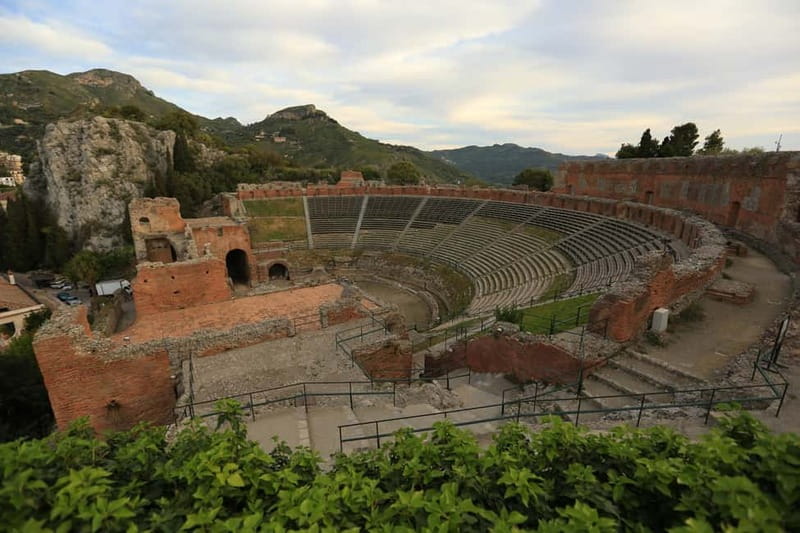
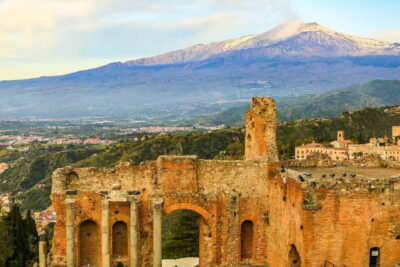
Taormina’s Ancient Theater is not just a place to look at old stones. Its huge stone seating, open stage, and views toward the sea explain why this was such a powerful setting for public shows. The Greek theater began in the 3rd or 2nd century BCE, then changed under Roman rule into a venue with a very different purpose.
I like the skip-the-line entry, which matters at one of Taormina’s busiest sights. I also like the short guided format: in 50 minutes, you get the main story from a live guide rather than wandering past ruins without context. Guides including Serena, Saro, Grazie, and Irena have been especially praised for their clear, lively presentations.
The main drawbacks are practical. The meeting point at the entrance can be confusing, bilingual commentary may feel slow if you speak only one language, and temporary event seating can block parts of the arena. At $37 per person, this is best for visitors who want the story, not just admission.
Key points to know before you go

- A theater built in layers: The site began as a Greek theater, then was altered by Roman emperors including Trajan and Hadrian.
- A 50-minute guided visit: The tour covers the key ruins without taking up half your day.
- Skip-the-line access: You bypass the ticket queue, but still pass through a security check.
- Excellent sea and town views: The upper parts of the theater give you broad views over Taormina and the coast.
- Strong guides: Serena, Saro, Grazie, Irena, and other guides have been praised for clear storytelling and humor.
- Some planning required: Meet at the main entrance, wear comfortable shoes, and allow extra time to reach the theater through Taormina.
Why Taormina’s Ancient Theater deserves your time
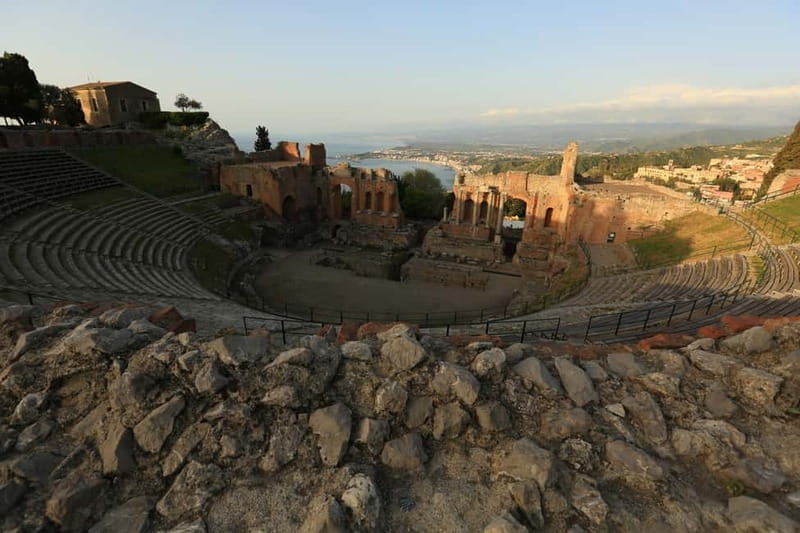
The Ancient Theater is one of the largest buildings for shows in the Italian Peninsula, surpassed in size in Sicily by the theater at Syracuse. Its scale is the first thing you notice. Even with missing sections and later changes, the site gives you a good sense of how much space ancient performances required.
The setting adds much of the magic. From the theater, you can look across the surrounding countryside and toward the sea. The view is not a minor bonus. It helps you understand the site’s appeal as a public venue, where the setting itself formed part of the experience.
I find the theater most rewarding when you connect its physical design with its long use. The stone seating, orchestra, stage area, and surrounding walls are not all from one period. They reflect centuries of repairs, rebuilding, and changing ideas about entertainment.
That is where the guide earns the $37 price. You can enter the theater without a guide, but the ruins do not explain themselves. A good guide shows you which sections belong to the Greek period, which were altered by the Romans, and how the building’s function changed over time.
More Ancient History Tours in Italy
- Colosseum: Underground and Ancient Rome Tour
★ 4.7 · 12,691 reviews - Colosseum & Ancient Rome with Arena Floor Option I Max 6 People
★ 5.0 · 3,306 reviews - Rome: Colosseum, Ancient Rome Tour or AudioGuided Tour
★ 4.4 · 2,879 reviews
Entering through the main entrance
You meet your guide at the main entrance to the archaeological site. This sounds simple, but allow a few extra minutes to identify the right person. The entrance area has two palm trees, and the meeting point has caused confusion for some people. One palm has a seat beneath it, while another is near the marked starting area.
Arrive about 10 minutes early. That gives you time to find the guide, show your booking details if needed, and get through the security check without cutting things close. The activity includes a single entry to the theater, so you do not want to miss the group.
The ticket lets you skip the ticket line, not the security process. You still need to pass through the site’s check before entering. Bring a passport or identity card, and wear shoes that are comfortable for walking over ancient stone surfaces.
The approach through Taormina can also take longer than expected. One booking described a long walk before reaching the theater, with no theater parking and difficult street parking. If you are arriving by car, do not assume you can stop directly outside the entrance.
The Greek theater and its first purpose
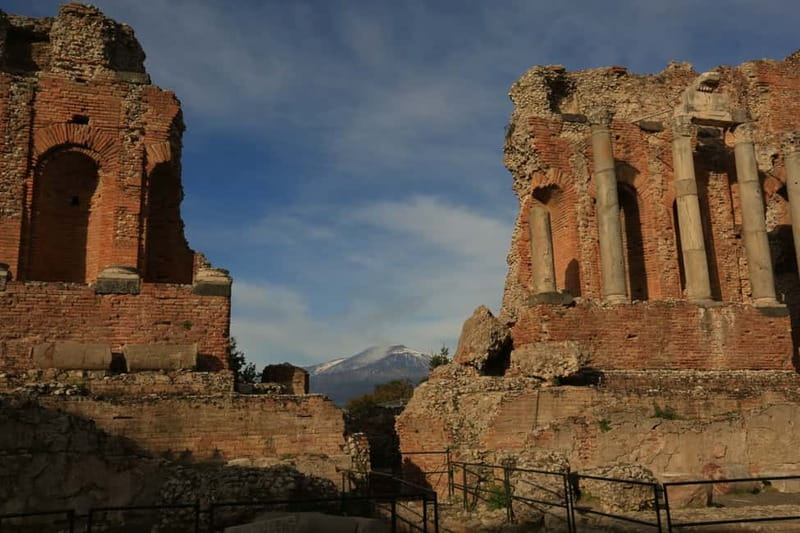
The tour begins by placing the building in its Greek setting. The original theater dates from the 3rd or 2nd century BCE, when Taormina was part of the Greek world. The building was designed for performances, with the audience arranged around the central performance area.
The surviving structure is not perfectly intact, so your guide’s explanation matters. Look closely at the seating, the orchestra, and the stage zone as you listen. The theater’s form tells you how ancient audiences gathered, watched, and shared public events.
This part of the visit tends to work best with a guide who can keep the story moving. Several guides have been praised for explaining the layers of the site in a lively way, rather than delivering a dry list of dates. Irena, Serena, Grazie, and Saro are among the names singled out for energetic and clear talks.
The tour is offered in English and Italian. If both languages are used during the same visit, you may spend longer in each area while the guide repeats the explanation. That is useful for mixed-language groups, but it can feel tiring if you need only English or only Italian.
Roman changes under Trajan and Hadrian
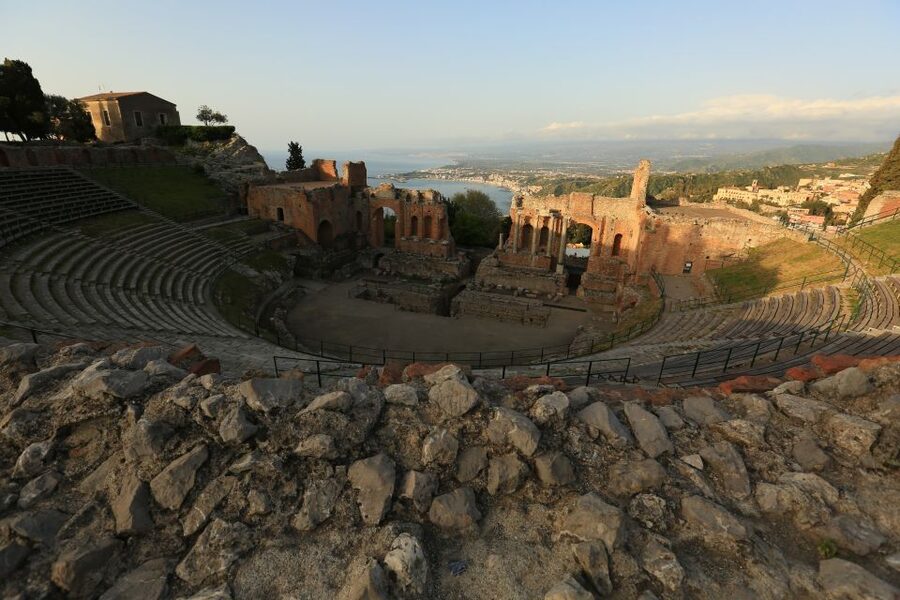
The theater did not remain a Greek performance space unchanged. Under the Roman emperors Trajan and Hadrian, the monument was modified. Your guide explains how Roman builders adapted the older Greek structure and how the building’s role shifted.
This is one of the most useful parts of the tour because it prevents you from treating every stone as belonging to the same era. The site is a physical record of different rulers and changing public tastes. You see Greek planning alongside Roman rebuilding.
The Roman period also brings the theater closer to the image many people have before visiting: crowds, spectacles, and contests. The guide helps separate what can be seen in the surviving structure from the stories connected with later use.
The history is presented as a walk through the ruins, not as a lecture in one fixed spot. That keeps the 50-minute visit active. You move from one section to another, stopping for explanations and views along the way.
Same streets, a different century:
- Rome: Colosseum with Arena, Roman Forum and Palatine Guided Tour
★ 4.0 · 5,598 reviews - Venice: St. Mark’s Basilica Guided Tour & VR History Intro
★ 3.9 · 4,880 reviews - Colosseum with Arena, Roman Forum and Palatine Hill Guided Tour
★ 4.5 · 3,526 reviews - Colosseum Underground & Ancient Rome Guided Tour
★ 4.5 · 2,590 reviews
The orchestra, arena, and gladiator stories
One of the most interesting changes involved the amphitheater and orchestra. Under Emperor Caracalla, parts of the monument were converted, giving the building a more arena-like role. The tour connects this change with tales of gladiator fights during the Roman period.
You should treat the gladiator stories as part of the site’s later Roman identity, while also paying attention to the actual layout under your feet. The orchestra and arena areas help you see how the space could be adapted for different kinds of shows.
A temporary stage may sometimes be set up for an event. When that happens, sections beneath the stage can be difficult or impossible to see. This is worth checking when you book or arrive, especially if you are paying mainly to inspect the full arena.
The site may also contain modern event equipment or plastic seats reserved for VIPs. That can be visually awkward in such an old monument. It does not erase the theater’s appeal, but it can reduce the sense of seeing the space exactly as it is usually presented.
What you see after the guided talk
The guided portion lasts 50 minutes, but you can stay in the complex for the rest of the day after the talk. That changes the value of the ticket. You are not forced to leave when the guide finishes.
Use the remaining time to revisit the seating, take in the views, and look more closely at areas that passed quickly during the explanation. The tour gives you a framework. Your extra time lets you explore at your own pace.
The site also has a bar with cliff-top views, according to the practical details from past visits. That makes the theater a useful stop in a full day in Taormina. You can take the guided walk first, then pause for a drink and return to the views rather than rushing straight into the next attraction.
For the best atmosphere, consider a later starting time if one is available. A 6 p.m. entry was specifically recommended for cooler conditions and sunset views. Times vary, so check the available schedule before making plans around it.
Is $37 a fair price?
At $37 per person, this is not the cheapest way to enter the theater. The value depends on what you want from the visit.
If you mainly want photographs and a quick look at the ruins, admission without a guide may be enough. The theater is not enormous, and one person described the tour as fairly basic. You can also spend additional time inside after the talk, so the ticket is not limited to the 50-minute commentary.
If you want to understand the Greek and Roman layers, the guided option makes more sense. A short explanation can clarify why the structure looks the way it does, how Roman emperors changed it, and why the arena and orchestra matter. Without that context, you may see a beautiful ruin but miss the building’s long sequence of uses.
The price also buys convenience through skip-the-line entry. In busy Taormina, avoiding the ticket queue can protect a tight sightseeing schedule. It does not eliminate security screening, and it does not solve every entrance issue, but it removes one common delay.
I consider the price reasonable for a first visit if history interests you and a live guide is important. It is less compelling if you prefer to explore alone, dislike bilingual talks, or arrive when an event blocks part of the theater.
The guide makes or breaks the visit
The strongest feature of this experience is the quality of the individual guide. Serena has been described as an archaeologist who knew the site well and explained it with enthusiasm. Saro received praise for connecting Greek, Roman, and later history with stories about the surrounding area.
Grazie has been noted for fluent English and Italian, humor, and a clear sense of passion. Irena was remembered for explaining the different historical layers in an engaging way. Other guides, including Maria, Julia, Freda, and Gratzia, have also been praised for making the theater easier to understand.
That does not mean every visit will feel identical. A guide may be excellent, but the group can affect how well you hear. One four-star experience was weakened because other people talked through the tour. This activity does not state that headphones are provided, and larger or noisy groups may make it harder to catch every word.
If hearing every detail matters to you, stand close to the guide and avoid lingering at the back. The tour is short enough that staying near the speaker should be practical.
Who should book this Taormina tour?
I would recommend it to first-time visitors, history fans, and anyone who wants more than a photo stop. Families can also find it manageable because the tour is short, and one guide was praised for accommodating a child.
It suits people with a half-day Taormina plan because the talk takes less than an hour, followed by free time inside the complex. It also works well for cruise passengers, provided you allow enough time to reach the theater and return to your ship.
You may want to skip the guided version if you have already studied the site, prefer silence, or want to spend the entire visit photographing the views. You should also check for event setups if seeing the whole arena is essential.
Book early if your schedule is fixed, but keep the flexible cancellation terms in mind. You can cancel up to 24 hours before the activity for a full refund, and the reserve-now, pay-later option lets you hold a place without paying immediately.
Should you book it?
Book this tour if you want the Ancient Theater to make sense, not simply appear in your camera roll. The combination of skip-the-line entry, a 50-minute explanation, Roman and Greek context, and time to remain inside afterward gives you a useful balance of structure and freedom.
Choose a later time for cooler weather and possible sunset views, arrive early to solve the meeting-point problem, and wear comfortable shoes. If the theater is partly blocked by a stage, or if bilingual commentary does not suit you, the value drops. For most first visits, though, a strong guide can turn Taormina’s most famous ruin into a much clearer and more memorable stop.
FAQ
How long does the Taormina Ancient Theater tour last?
The guided tour lasts 50 minutes. You can remain inside the complex for the rest of the day after the guided talk.
How much does the experience cost?
The listed price is $37 per person.
Is skip-the-line entry included?
Yes. The activity includes a skip-the-line entrance ticket, although you still need to pass through a security check.
Where do I meet the guide?
Meet the guide at the main entrance of the Ancient Theater of Taormina. The exact meeting area can be confusing because there are two palm trees, so arrive early.
Which languages are available?
The live tour guide is available in English or Italian. Some visits use both languages during the same tour.
Do I need identification?
Yes. Bring a passport or identity card for entry.
What should I wear?
Wear comfortable shoes because the visit involves walking through the archaeological site.
Can I enter the theater more than once?
No. The ticket allows a single entry into the Ancient Theater of Taormina.
Can I cancel for a refund?
Yes. You can cancel up to 24 hours in advance for a full refund.
Does the tour operate on August 1, 2, and 3?
The attraction closes at 5:30 p.m. on August 1, 2, and 3. The last guided tour begins at 4 p.m.
Newest history tours we have reviewed in Italy
- Guided Cultural Tour of the Godfather Film in Messina★ 5.0 · 31 reviews
- SU NURAXI BARUMINI Unesco World Heritage Site★ 5.0 · 129 reviews
- Picnic aperitif in the vineyard of an ancient trullo in Martina Franca★ 5.0 · 21 reviews
- Brescia the Unexpected: History, Local Stories & a drink★ 5.0 · 31 reviews
- Bologna historical art walking tour with hidden gems and tastings★ 5.0 · 108 reviews
- Bolognese Cooking Class with Margherita in the Historic Center★ 5.0 · 26 reviews
- Best of Bologna in one day : Food, architecture, art and history★ 5.0 · 27 reviews
- Private or semi-private tour of the historic center of Bologna★ 5.0 · 34 reviews
Ancient History Tours, compared.
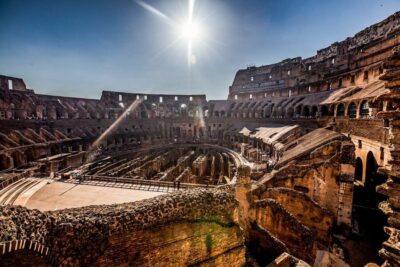
Colosseum: Underground and Ancient Rome Tour
Read our review →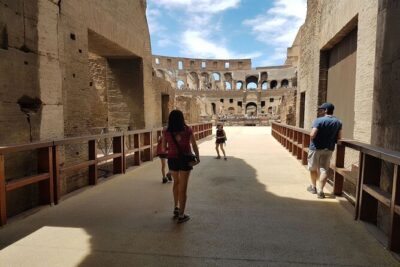
Colosseum & Ancient Rome with Arena Floor Option I Max 6 People
Read our review →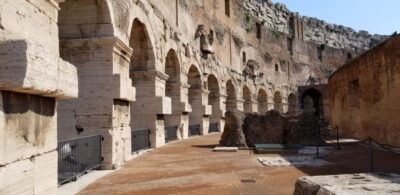
Colosseum, Ancient Rome Tour or AudioGuided Tour
Read our review →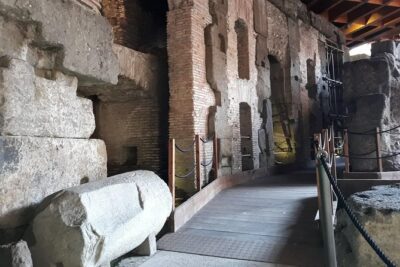
Colosseum Underground & Ancient Rome Guided Tour
Read our review →
Taormina: Ancient Theater Skip-the-Line Ticket & Audio Guide
Read our review →
Discover the Ancient Ruins of Pompeii: Day Trip from Rome
Read our review →
Discover Matera, the ancient city – English tour
Read our review →Browse the lists this tour appears in