Review · HISTORY TOURS
Old Riga in Italian: History&Legends
Riga’s Old Town is best understood as a collection of stories, not just a row of handsome buildings. This two-hour Italian-language walk links the House of Blackheads, Bremen musicians, House of the Black Cats, medieval churches, Swedish Gate, and the Freedom Monument with tales of merchants, rulers, musicians, and a ghost said to haunt a narrow street.
I like the small group of no more than 10, which gives the guide room to answer questions, and I like the unusual mix of dates and legends. You move from medieval Hanseatic Riga to the Polish, Swedish, imperial, Soviet, and independent periods without turning the walk into a dry history lecture. Children under 14 join free, a real plus for families.
The main consideration is scope. Two hours gives you a useful Old Town introduction, but not a full survey of Riga. One recent assessment specifically noted that Riga Castle was nearby but not mentioned, so you should book this for the central Old Town story rather than a route that promises every major sight.
Key points to know before booking
- Italian-language storytelling: Nelli Saraceno leads a walk built around history, legends, and local curiosities.
- Seven Old Riga symbols: You look at important Vecriga landmarks and decide which one best represents the city.
- A compact central route: The walk begins at Town Hall Square and finishes at the Freedom Monument.
- Small-group format: The group is limited to 10 people, keeping the walk personal and easy to follow.
- Good family value: Children under 14 are free, while the listed adult price is $24.
- Flexible booking: You can cancel up to 24 hours ahead for a full refund and reserve without paying immediately.
Starting at Town Hall Square, the heart of Vecriga
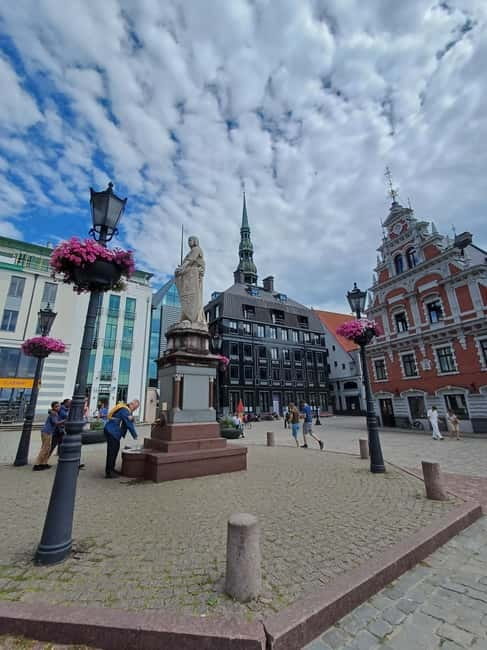
Your meeting point is easy to identify once you reach the House of Blackheads: look for the small metal Christmas tree nearby. The walk begins in Piazza del Municipio, or Town Hall Square, a fitting place to start because it puts Riga’s civic and merchant life at the center of the story.
From here, the guide sets out the broad timeline. You hear about Riga as a German-founded trading town, then about the Polish and Swedish periods, the imperial years, the Soviet era, and the return to independence. That framework matters. Without it, Old Riga can look like a pretty collection of façades. With it, the same streets become evidence of changing rulers, trade, faith, and national identity.
I like this approach for a first visit because it gives you a mental map before the details pile up. The guide is not simply pointing out old buildings. She is showing you how Riga changed hands and how those changes shaped the town you see today.
More History Tours in the world:
- New York City: American Museum of Natural History Ticket
★ 4.5 · 15,447 reviews - History and Hauntings of Salem Guided Walking Tour
★ 5.0 · 14,564 reviews - Colosseum: Underground and Ancient Rome Tour
★ 4.7 · 12,691 reviews
The House of Blackheads and Riga’s merchant world
The House of Blackheads is one of the natural stars of the route. Its name refers to the Brotherhood of Blackheads, a guild associated with unmarried merchants and shipowners. The building is closely tied to the commercial life of Riga and helps explain why the city became important within the Hanseatic trading network.
The stop also gives you a chance to think about the difference between a city’s appearance and its age. The House of Blackheads looks strikingly polished, but Riga’s buildings have passed through war, political change, and rebuilding. Your guide can place the building within that larger story instead of treating it as an isolated photo stop.
This is also where you meet the group, so arrive with a little time to find the meeting marker. The square can feel confusing if you are scanning for a large tour flag or a coach. The small metal Christmas tree is the detail to remember.
Bremen musicians and the first taste of legend
The Bremen musicians bring a lighter note to the walk. The sculpture refers to the famous animal characters from the Brothers Grimm tale and has become one of Old Riga’s most recognizable symbols. It is a quick stop, but it works well in a tour built around legends and curious details.
The sculpture also helps break up the political timeline. After hearing about rulers and trading powers, you get a local story that is more playful and visual. This is one reason the tour can work well for families. Younger children may not follow every change from Swedish rule to imperial rule, but they can connect with a group of stone animals stacked one on top of another.
The guide’s task here is to keep the story connected to the city rather than simply reciting the fairy tale. Nelli Saraceno is repeatedly described as warm, prepared, and passionate in the feedback provided, qualities that matter on a walk where the small details carry much of the fun.
The House of the Black Cats and Riga’s visual symbols
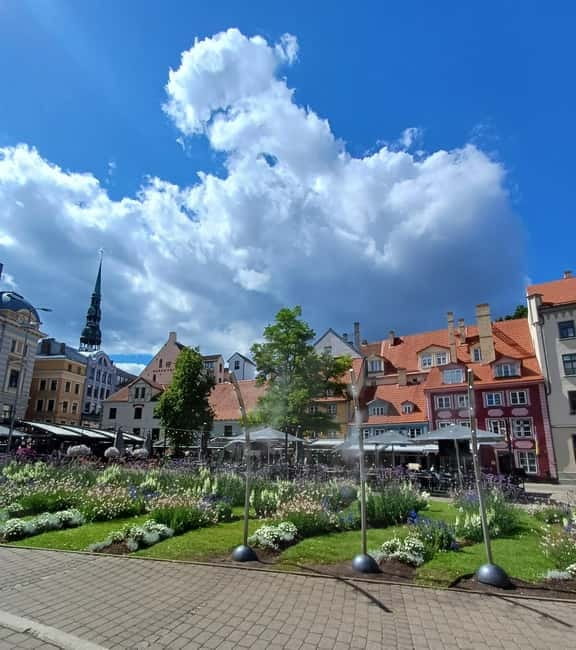
The House of the Black Cats adds another memorable image to the route. Its rooftop cats are among the Old Town’s best-known architectural details, and they give the guide an opening to discuss the stories and symbols attached to Riga’s buildings.
The activity asks you to find seven symbols of Vecriga and choose the one you like best. That small challenge gives you something to look for as you walk. Instead of passively following a guide from monument to monument, you can compare the buildings and decide which image best captures Riga for you.
There is no single correct choice. You might favor the House of Blackheads for its merchant past, the Bremen musicians for their sense of humor, or the cats for their odd and instantly recognizable shape. The point is to make the Old Town feel personal by the end of the walk.
Same streets, a different century:
- Lisbon: History, Stories and Lifestyle Walking Tour
★ 4.8 · 10,902 reviews - London Small Group Tour of Historical Pubs
★ 5.0 · 10,422 reviews - Prague: Oldtown, Medieval Underground & Dungeon History Tour
★ 4.3 · 10,277 reviews - Charleston’s Old South Carriage Historic Horse & Carriage Tour
★ 5.0 · 10,023 reviews
Medieval Riga at the cathedral and Three Brothers
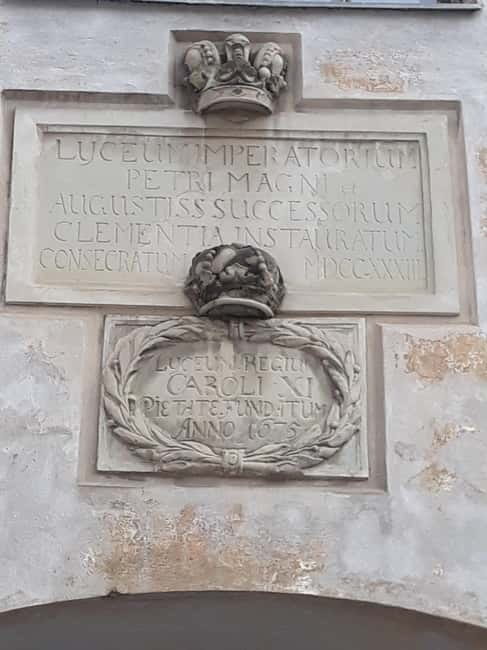
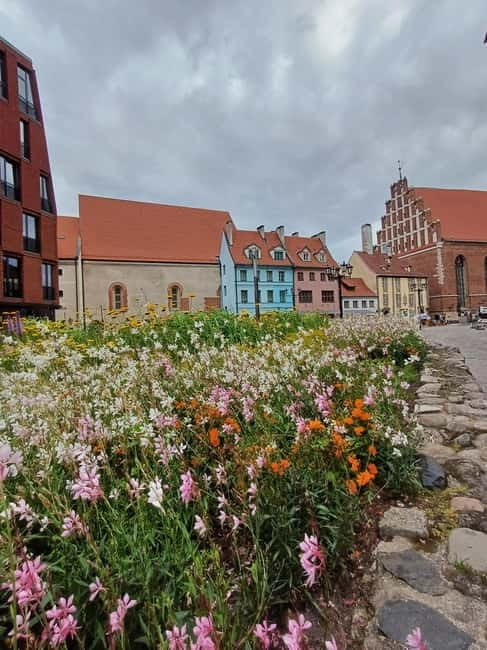
The cathedral and the Three Brothers shift the focus back to Riga’s medieval architecture. The route presents monuments dating from the 13th through the 20th centuries, so you get a sense of how the town developed over a long period rather than seeing one frozen historical moment.
The cathedral is important not only as a religious building but also as a marker of Riga’s place in the medieval Baltic world. Its presence helps explain how faith, power, and city life were closely linked. Your guide can also help you notice scale and setting, details that are easy to miss when you are walking independently and mainly looking for photographs.
The Three Brothers are especially useful for understanding everyday architecture. The group of historic houses shows how domestic buildings changed across time. Their close arrangement makes a good comparison point, and the name gives children another simple detail to remember.
I would not expect an interior-focused cathedral visit from this activity. The description centers on a walking tour and exterior landmarks, so plan to return on your own if you want a longer look inside any building.
Swedish Gate and the town’s medieval edges
Swedish Gate recalls the period when Riga was under Swedish rule. The gate is a compact reminder that Old Riga was once a fortified town with controlled entrances and tight streets. It helps you picture the city as a defended settlement rather than the open pedestrian center you see today.
This is where the route’s attention to different political periods becomes useful. The Swedish chapter is not just a name in a timeline. It is connected to a physical feature that still survives in the street plan.
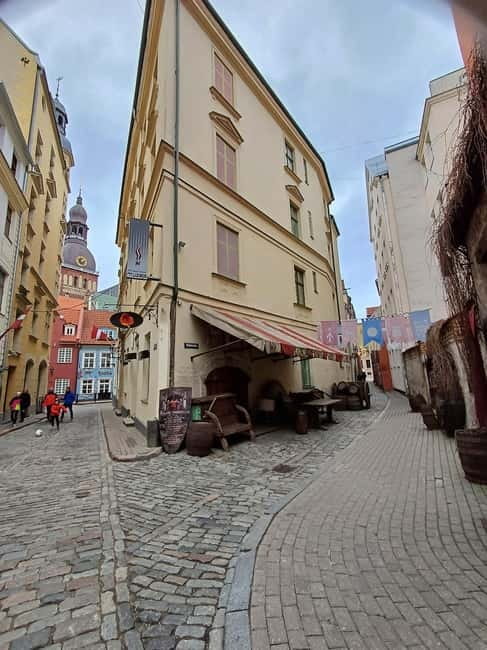
The route’s narrow paved streets are part of the experience, too. They can feel atmospheric and slightly uneven, which is why comfortable shoes are the one item specifically recommended. If you use a wheelchair, the activity is listed as accessible, but Old Town paving can still make any walking tour more demanding, so it is sensible to ask about the exact route before booking.
Legends, a ghost, and the quieter side of Old Riga
At some point, the tour turns from dates and buildings toward the mysterious side of the city. A noisy, narrow paved street is linked with the ghost of Riga, creating the urban kaleidoscope promised by the experience.
That shift is valuable because legends reveal how people imagine their city. A ghost story does not replace history, but it gives the stone streets a human mood. It also keeps the walk from becoming a sequence of formal facts. You get the Hanseatic merchant town, the medieval monuments, and the stories that grew around them.
I especially like this part for visitors who have already seen a few churches and squares and want a more local-feeling way into the city. The legends give you details to remember after the tour. At the same time, you should treat them as folklore, not verified historical events. A good guide makes that difference clear while still letting the story do its work.
Finishing at the Freedom Monument
The walk ends at the Freedom Monument, which gives the two-hour route a clear modern finish. Beginning with Riga’s medieval civic center and ending with a symbol of independence creates a useful arc through the city’s past.
The final stop also brings the earlier political timeline into focus. Riga’s history includes German, Polish, Swedish, imperial, and Soviet periods, but the Freedom Monument points toward Latvian national identity and independence. It is a fitting place to pause and consider how the city’s older streets fit into the modern nation.
Because the tour ends here, you can continue exploring after the guide says goodbye. The walk does not return you to the House of Blackheads, so keep that in mind if you have luggage, a reservation, or a strict schedule immediately afterward.
What the $24 price gives you
At $24 per person, the tour is priced as a compact guided introduction rather than a full-day sightseeing package. You are paying for two hours with an Italian-speaking guide, a small group, and a route that connects Riga’s best-known Old Town symbols with stories from several eras.
That is good value if you want context. A self-guided walk can show you the same streets, but it may not explain why the Swedish Gate matters, how the merchant city developed, or why a sculpture or rooftop cat has become part of Riga’s identity. The guide also gives you a chance to ask questions as the story unfolds.
The value is less clear if you already know Old Riga well or want extensive access to interiors. The route is built around outdoor sights and storytelling. It gives you a foundation, then leaves time for you to revisit the buildings that interest you most.
Families should do the arithmetic before booking. Children under 14 go free, which can make the total cost much lower than a standard adult-only walking tour. The two-hour length is also manageable for children, though the paved streets and history-heavy sections may test younger attention spans.
Group size, guide style, and language
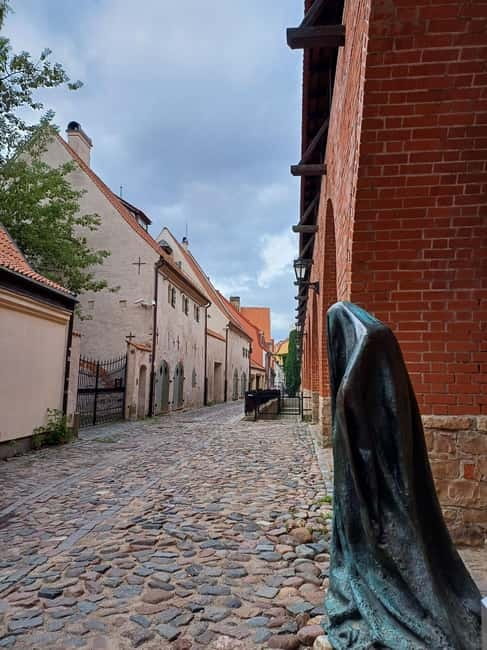
The group limit of 10 is one of the strongest practical features. A small group makes it easier to hear the guide on narrow streets and easier to stop without blocking the whole pavement. It also leaves more room for questions than a large coach group.
The tour is conducted in Italian, with no other language listed. That makes it a clear choice for Italian-speaking visitors who want history and legends explained naturally rather than through an audio guide or a translated script.
Nelli Saraceno is the named guide for the experience. The feedback supplied about her repeatedly points to preparation, kindness, enthusiasm, and attention to comfort in cold weather. One particularly useful detail is that she kept a very small group engaged even when only two people attended, rather than treating the walk as an afterthought.
Winter visitors should take note. The tour runs for two hours outdoors, and January and February in Riga can be cold. Warm clothing is not listed among the required items, but it is practical common sense. The guide may adjust the pace or avoid long exposed pauses, yet you still need to dress for the weather.
The main limitation: a selective Old Town route
The route covers many of the classic sights, but it is selective. You see the central Old Town, not every major building in Riga. One assessment specifically pointed out that Riga Castle was close by but left out and not mentioned.
That does not make the tour poor. It simply tells you how to use it. Choose this walk if your priority is a coherent introduction to Vecriga, with legends mixed into the main historical story. If Riga Castle is high on your list, plan to visit it separately or ask before the tour whether the route can include it.
The tour also does not promise museum entry, meals, transport, or hotel pickup. It is a walking experience from Town Hall Square to the Freedom Monument. You should wear comfortable shoes and be ready to spend the full two hours outside.
Booking flexibility and accessibility
You can cancel up to 24 hours before the activity for a full refund. The reserve-now, pay-later option lets you hold a place without paying immediately, which is useful when weather or a wider Riga schedule is still uncertain.
The activity is listed as wheelchair accessible. Since the route uses historic paved streets, I would still confirm the exact path if you need a particularly smooth surface or have mobility concerns. The supplied information supports accessibility, but it does not give a street-by-street description of slopes or paving.
Who should choose this Riga walk?
I would choose it for an Italian-speaking first-time visitor who wants the basics of Old Riga delivered through stories rather than a list of dates. It also suits couples, families with children under 14, and anyone who prefers a group small enough for real conversation.
It is a good match if you enjoy unusual details: rooftop cats, a fairy-tale sculpture, a possible ghost, and the challenge of picking your favorite Old Riga symbol. It is less suitable if you want a museum-heavy visit, a private guide, or a complete tour of every major sight in the historic center.
Should you book Old Riga in Italian?
Book this tour if you want a focused two-hour introduction in Italian, especially if the House of Blackheads, medieval streets, Swedish Gate, and local legends appeal to you. The $24 price is reasonable for a live guide and a group capped at 10, and the free admission for children under 14 improves the family value.
I would keep one expectation in check: this is a beginning, not the whole Riga story. Use it to get your bearings, understand the city’s changing rulers, and collect a few memorable legends. Then spend the rest of your day returning to the buildings that caught your eye, including Riga Castle if it is important to you.
FAQ
How long does the Old Riga in Italian tour last?
The walking tour lasts two hours.
What language is the tour conducted in?
The tour is conducted in Italian with a live Italian-speaking guide.
Where does the tour meet?
Meet near the House of Blackheads at the small metal Christmas tree.
Where does the tour finish?
The route ends at the Freedom Monument.
How many people can join the group?
The tour is limited to 10 participants.
Are children under 14 free?
Yes, children under 14 can join free of charge.
Can I cancel the booking for a refund?
Yes, you can cancel up to 24 hours in advance for a full refund.
Newest history tours we have reviewed in the world
- Chocolate history workshop Ghent★ 5.0 · 34 reviews
- Bicycle tour in historic Ghent★ 5.0 · 87 reviews
- Gettysburg Historic Downtown Food Tour By Junket★ 4.5 · 36 reviews
- Skip the Line: Gettysburg Heritage Center and Museum Admission Ticket★ 4.5 · 203 reviews
- The Historic Welty House Ghost Hunt with Equipment★ 4.5 · 91 reviews
- Genoa Food, Wine Tasting & History Walking Tour★ 5.0 · 212 reviews
- Genoa Day Tour: 4 hours of History with Focaccia , Prosecco & Joy★ 5.0 · 41 reviews
- 2 Hours Private Historical Tour in Genoa★ 5.0 · 248 reviews
History Tours, compared.

History and Hauntings of Salem Guided Walking Tour
Read our review →
Colosseum: Underground and Ancient Rome Tour
Read our review →
Oldtown, Medieval Underground & Dungeon History Tour
Read our review →
Charleston’s Old South Carriage Historic Horse & Carriage Tour
Read our review →