
Review · KOREA HISTORY TOURS
Old Korea Thousand History Tour of Gyeongju from Busan
Gyeongju is Korea’s ancient capital, and this long day gives you a fast but meaningful look at the old Silla kingdom. You’ll move from Bulguksa Temple and royal burial mounds to palace ruins lit beside a pond, all without arranging trains, buses, and local taxis yourself.
I like the simple round-trip transport from Busan and the way the schedule mixes major historic sites with Gyochon Village and Hwangridan-gil. I also like the guides’ lively style. Bada, Erica, Kayla, Hyony, Katrina, and Eva are repeatedly praised for clear explanations, humor, patience, and taking photos for solo visitors.
The catch is the length. This is roughly a 12-hour outing, often running from about 10 in the morning to 10 at night, with more than 18,000 steps possible on a hot day. You’ll see a lot, but some stops can feel rushed.
Key points to know before booking
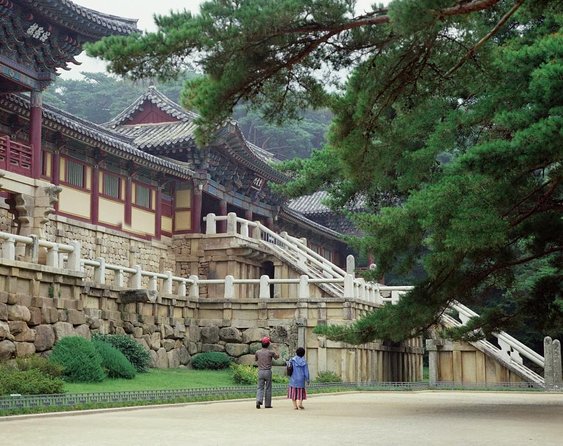
- Bulguksa Temple anchors the day: The UNESCO-listed temple is the tour’s strongest historic stop and a fine introduction to Silla-era art and architecture.
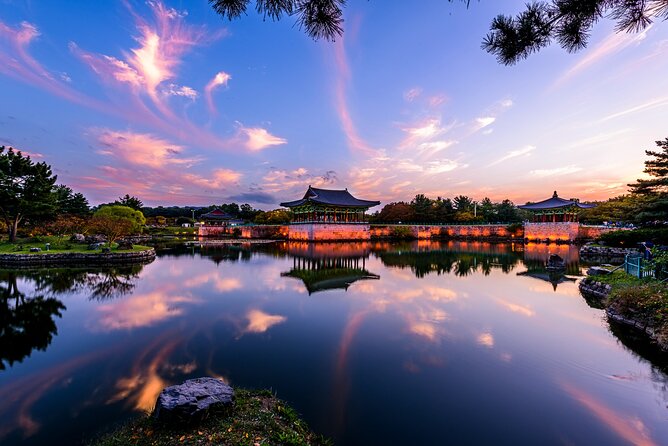
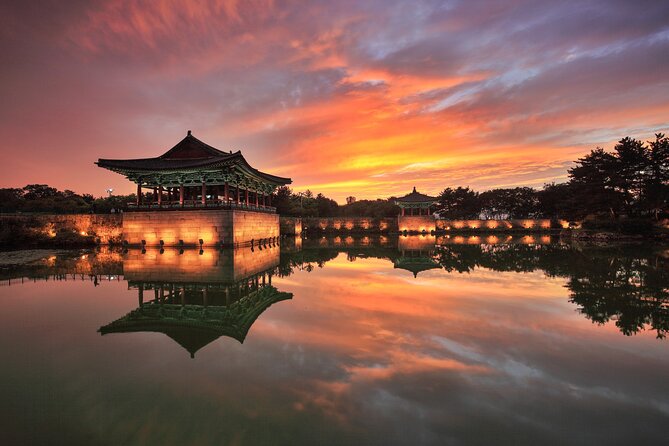
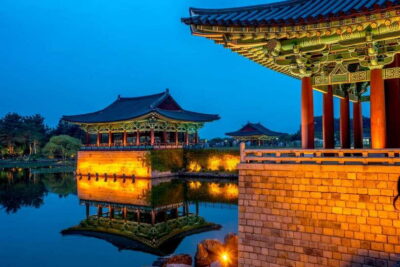
- The evening finale is the visual high point: Donggung Palace and Wolji Pond, followed by Woljeonggyo Bridge, are especially attractive after dark.
- The guides make a real difference: Bada, Erica, Kayla, Hyony, Katrina, and Eva are praised for humor, clear history talks, photo help, and good group management.
- The pace is active: Expect substantial walking, heat, humidity, stairs or uneven surfaces, and limited time to linger at each site.
- Lunch costs extra: Meals are not included, though food may be available during the day.
- The $64 price covers the basics that matter: Transport, guide service, and admission fees are included, making this a practical way to see Gyeongju in one day.
Why Gyeongju is worth the long ride from Busan
Busan is a modern port city. Gyeongju feels like a different chapter of Korea, shaped by the Silla kingdom and its later Unified Silla period. The city’s historic places are spread across a broad area, so reaching the main sights in one day takes planning.
That is the main value of this tour. You are not simply paying for a guide at one monument. You are paying for a full day of transport between several sites, admission to the listed attractions, and a guide who connects temples, tombs, village life, and royal architecture.
The trip is also useful if your Busan stay is short. Instead of spending time working out regional buses or trying to fit Gyeongju into a complicated independent day, you can leave the driving and route planning to someone else.
The price is $64 per person. Since transport, attraction tickets, and professional guiding are included, that is a fair rate for a day this long. You still need to budget for lunch and personal purchases, and the value drops if you dislike group schedules or prefer to spend an hour or two at each site.
More History Tours in the world:
- New York City: American Museum of Natural History Ticket
★ 4.5 · 15,447 reviews - History and Hauntings of Salem Guided Walking Tour
★ 5.0 · 14,564 reviews - Colosseum: Underground and Ancient Rome Tour
★ 4.7 · 12,691 reviews
Leaving Busan and settling into the day
Pickup begins at Busan Station, with additional pickup at Seomyeon Station and Haeundae Station. The summer schedule lists Busan Station at 10:00, Seomyeon Station at 10:20, and a later Haeundae pickup, though you should check your confirmed time carefully because meeting details can vary.
Round-trip transport is a major practical advantage. Gyeongju is not a quick hop across town, and the return ride gives you a chance to rest after the evening sights. Several people found the air-conditioned bus welcome, especially during hot and humid weather.
The group can be sizeable. The stated maximum is 400 people, although the English-speaking portion may sometimes be much smaller. You should still expect a group-tour rhythm: meet the guide, hear an explanation, explore within a fixed time, and return to the meeting point.
Bring water, sunscreen, a hat or parasol, and good walking shoes. One account measured more than 18,000 steps, which gives you a better idea of the physical demand than the 12-hour duration alone.
Bulguksa Temple: the strongest historic stop
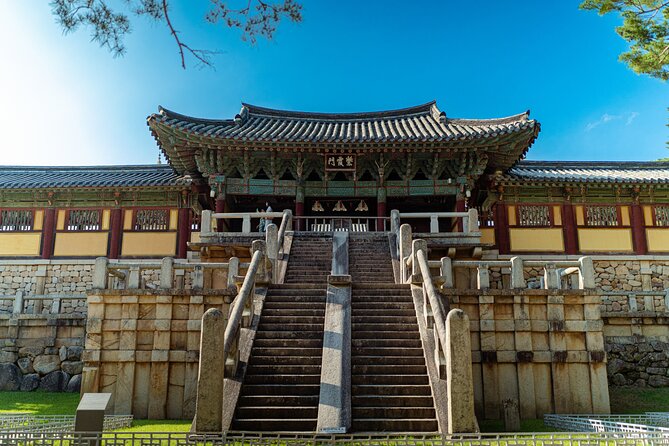
Bulguksa Temple is the first major stop and receives about an hour. It is a UNESCO World Heritage Site and one of Korea’s best-known Buddhist temples, with roots in the Silla period.
The temple works well as an opening stop because it gives you the grandest architectural setting of the day. The buildings sit among wooded hills and stone features, and the design blends with the surrounding scenery rather than feeling like a single isolated monument.
Your guide’s explanation is important here. Without context, you might simply see courtyards, stairs, wooden buildings, and stone details. With a good guide, you begin to understand how the temple reflects Silla religious life and artistic skill.
An hour is enough for the main areas, but not enough for a slow study of every detail. If temple architecture is your main interest, you may wish for more time. Still, this is the stop that most clearly justifies the trip from Busan.
Gyochon Village and Woljeonggyo: old streets with a modern edge
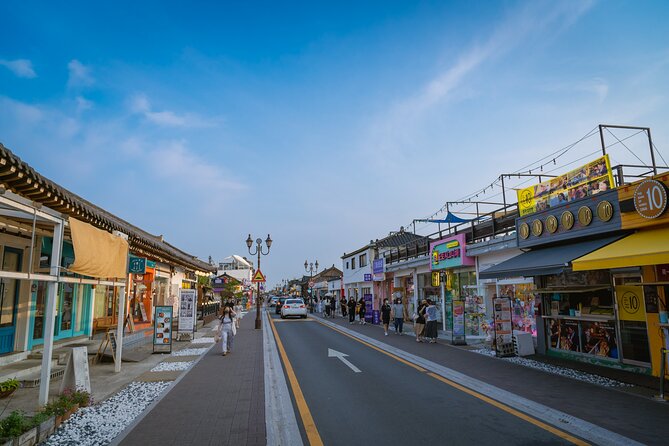
Next comes Gyeongju Gyochon Traditional Village, with roughly an hour. The area includes hanok houses, Gyeongju Hyanggyo, restaurants, stone-wall lanes, and views toward Woljeonggyo Bridge.
This stop gives the day a change of pace. Instead of monumental religious and royal sites, you walk through a built environment connected to traditional Korean homes and local streets. It is a good place for photos and a little breathing room after Bulguksa.
The time can feel brief. The route may focus on one traditional house and selected points rather than giving you a full tour of every lane. If you want to sit down for a long meal or explore the village in detail, this schedule will not allow it.
That limitation is worth knowing in advance. Think of Gyochon as a compact introduction, not a half-day village visit.
Same streets, a different century:
- Lisbon: History, Stories and Lifestyle Walking Tour
★ 4.8 · 10,902 reviews - London Small Group Tour of Historical Pubs
★ 5.0 · 10,422 reviews - Prague: Oldtown, Medieval Underground & Dungeon History Tour
★ 4.3 · 10,277 reviews - Charleston’s Old South Carriage Historic Horse & Carriage Tour
★ 5.0 · 10,023 reviews
Daereungwon Tomb Complex: large mounds, little interior access
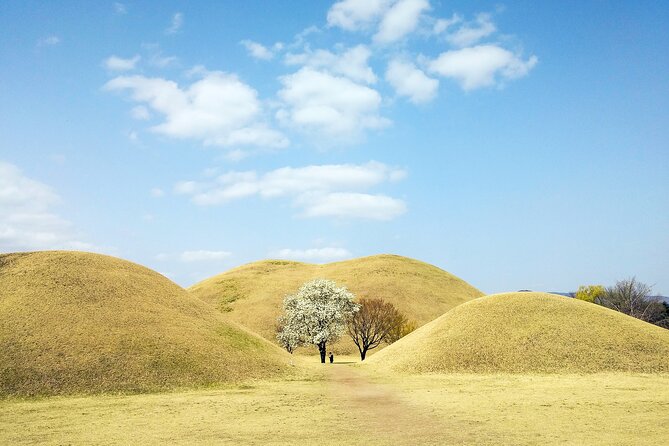
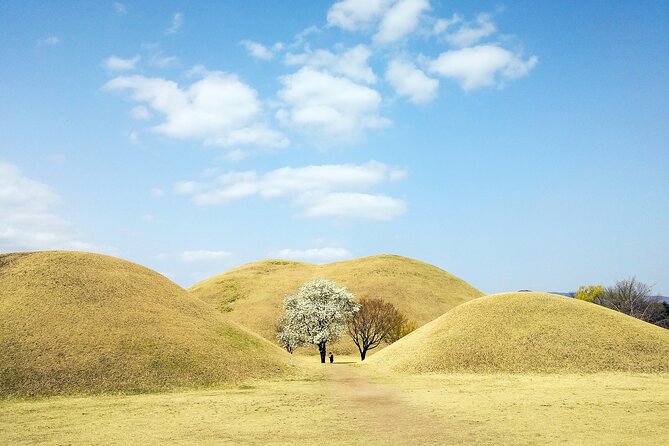
Daereungwon is a major Gyeongju site, with about an hour allotted. The grounds contain large grassy burial mounds associated with kings, queens, and aristocrats of the Silla era.
These rounded tombs are striking because they appear as hills scattered through the city. Their size hints at the power of the people buried inside, even when there is no dramatic building to enter.
Some people find this stop fascinating. Others find it underwhelming because the tombs look like simple mounds from the outside. That reaction is understandable. You are seeing the burial landscape and its scale, not walking through a royal underground complex.
Listen closely to the guide here. The explanation gives the mounds meaning and helps you picture the Silla court and its social order. Without that background, Daereungwon can seem like a pleasant park with grassy hills.
Hwangridan-gil: two hours for food, shops, and a breather
The longest free period comes at Hwangridan-gil, where you have about two hours. This street preserves older buildings from the 1960s while mixing them with shops, cafés, and places to eat.
It is not an ancient ruin. That is precisely why it helps balance the day. After temples and burial grounds, you get a look at a more recent layer of Gyeongju and time to choose food or browse at your own pace.
Lunch is not included, so this is the natural point to buy a meal. One account described lunch as available at an extra cost and tasty, but you should treat food as your own expense.
Two hours sounds generous, though the time also absorbs group movement and meal decisions. If you want a quiet lunch, keep an eye on the meeting time. The tour cannot wait for a long café stop.
Donggung Palace and Wolji Pond after dark
Donggung Palace and Wolji Pond is the evening highlight. The site belonged to the Unified Silla period and served as a royal palace area. Today, the palace buildings are mostly gone, with reconstructed structures and the pond providing the main visual focus.
The pond is especially attractive when the lights reflect on the water. This is one reason the tour runs late. A daytime Gyeongju visit would miss the atmosphere that comes with the illuminated buildings and reflections.
Do not expect a complete palace complex. The surviving site is archaeological, and only a few structures have been reconstructed. The appeal comes from the water, the night lighting, the remaining foundations, and the sense of how the royal grounds were arranged.
The schedule allows about an hour. That gives you time to walk around and take photos, but busy conditions or a large group may make the visit feel hurried. Keep your camera ready and stay aware of the meeting point.
Woljeonggyo Bridge: a short final photo stop
The final listed stop is Woljeonggyo Bridge, with about 30 minutes. Its traditional design and evening lighting create a strong closing scene, especially when the illuminated bridge reflects in the water.
Half an hour is enough for a walk and photos, but not a detailed visit. The stop works because it comes after dark, when the bridge looks most dramatic. It also gives you one last look at Gyeongju’s mix of old forms and modern presentation.
After this, you return to Busan. Expect a late arrival, often around 10 at night based on the stated schedule. Do not plan a tight evening reservation or an early morning activity the next day unless you are comfortable with a long day.
The guides shape the experience
The best feature of this tour may be the guiding. Bada is praised for clear speech, humor, practical reminders in the heat, and taking good photos. Erica is described as energetic, positive, helpful, and strong at keeping the day moving while still allowing independent exploring.
Kayla brings a funny, high-energy style that helps during a tiring day. Hyony combines cultural explanations with photo help, a useful touch if you are traveling alone. Katrina and Eva are also praised for clear talks, care with the group, and useful explanations of Silla history.
Guide quality can vary on any scheduled group outing, but these names give you a sense of the style to expect: lively, social, and information-heavy rather than silent transport between monuments.
One caution is worth noting. A complaint described a guide moving too quickly, leaving too little time for photos, and asking for tips and specific review scores. Tipping is optional in Korea, and you should never feel pressured to tip or give a particular rating. The guide’s job is to keep the group on schedule, but you should still have reasonable time to look around.
Heat, walking, and group-tour compromises
Gyeongju can feel warmer and more humid than Busan, particularly in summer. Several accounts stress hydration, sun protection, and comfortable shoes. An umbrella or parasol is practical, not just fashionable.
The tour is suitable for people with moderate physical fitness. You will walk through temple grounds, village streets, historic grounds, and palace areas. The day also includes frequent transitions, standing explanations, and outdoor exposure.
Families can manage it, but the late finish matters. If you are traveling with young children, the 10 a.m. to 10 p.m. day may be too much. Solo visitors may appreciate the photo help offered by guides such as Hyony, Erica, or Bada, but you still need to stay with the group.
The tour includes service animals and is near public transportation for pickup, but the supplied information does not promise full mobility access at every historic site. Anyone with mobility concerns should confirm the practical details before booking.
Who should book this Gyeongju day trip
I would choose this tour if you have limited time in Busan and want the main Gyeongju sights without managing regional transport. It suits first-time visitors, history fans, solo visitors who appreciate help with photos, and anyone who prefers a guide to explain the Silla period.
I would hesitate if you want long, quiet visits or dislike fixed schedules. The tomb complex may seem too plain, Gyochon Village may feel too short, and the evening sites can be rushed if the day runs behind.
The cancellation policy is forgiving up to 24 hours before the start time, with a full refund. Changes made inside that period are not accepted, and poor weather can lead to a different date or a full refund.
Should you book it?
Book this tour if your goal is to see a broad selection of Gyeongju in one demanding day. The $64 cost is sensible because it covers the bus, guide, and admissions, while the route includes the places most visitors want to reach.
Skip it if your ideal day means lingering at Bulguksa, studying tombs at length, or eating slowly along Hwangridan-gil. For everyone else, the combination of Silla monuments, local streets, evening water reflections, and capable guides makes this a practical introduction to Korea’s old capital. Just bring water, wear good shoes, and accept that the day ends late.
FAQ
How long is the Gyeongju tour from Busan?
The tour lasts approximately 12 hours. The stated summer schedule begins around 10:00 in Busan and returns around 10:00 at night.
Where does pickup take place?
Pickup begins at Busan Station, with additional pickup at Seomyeon Station and Haeundae Station. Exact times should be checked in your booking confirmation.
What is included in the $64 price?
Round-trip transfers, admission to the listed attractions, and a professional tour guide are included.
Are meals included?
No. Meals are not included. Lunch may be available during the Hwangridan-gil portion, but you pay for food separately.
How much walking should I expect?
You should expect a substantial amount of walking and need moderate physical fitness. One account recorded more than 18,000 steps, and hot, humid weather can make the day feel harder.
Can I cancel for a full refund?
Yes. You can cancel at least 24 hours before the experience starts for a full refund. Cancellations or changes made less than 24 hours before the start time are not accepted, and poor weather may result in another date or a full refund.
Newest history tours we have reviewed in the world
- Bilbao Historical Tour in small group★ 4.7 · 52 reviews
- Bologna: Street Food Tour in the Historic Center★ 4.8 · 125 reviews
- Blenheim: Omaka Aviation Heritage Centre Admission Ticket★ 4.9 · 31 reviews
- CEBU: Cebu City Heritage and Uphill Guided Tour★ 4.2 · 31 reviews
- Bishkek : City Tour (History, Architects, Statues & Culture)★ 4.9 · 54 reviews
- Berlin: Nazi History Walking Tour★ 4.8 · 33 reviews
- Best of Baku: 4-Hour City Tour Historic and Modern Landmarks★ 4.7 · 63 reviews
- Belfast: Best of Belfast History, Culture & Art Walking Tour★ 4.9 · 158 reviews
Korea History Tours, compared.
From Busan: Gyeongju UNESCO World Heritage Guided Day Tour
Read our review →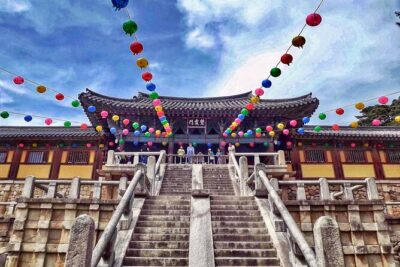
Gyeongju UNESCO World Heritage Guided Day Tour from Busan
Read our review →
Evening Dark History, Folklore & Ghost Story Walking Tour
Read our review →
Hanbok Photoshoot and History Tour at Gyeongbokgung Palace
Read our review →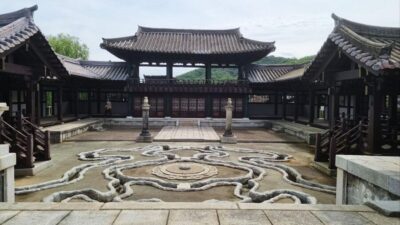
City Highlights and Historical Experience No Shopping
Read our review →Browse the lists this tour appears in