
Review · FRANCE HISTORY TOURS
Nîmes – Spend a day like an ancient Roman
Nîmes packs an extraordinary amount of Roman history into a compact city center. This 90-minute walk links the Tour Magne, Maison Carrée, and Arènes de Nîmes, while placing those famous monuments in the daily life of a first-century resident.
I like the route for two clear reasons: it moves between major sights without wasting time, and the guide brings personality to the history. Cassidy is repeatedly praised for her humor, clear explanations, and lively way of telling stories. The main consideration is the French-only format, plus the heat and walking involved on a sunny day.
Key Points to Know Before Booking
- The route connects five major Roman and historic stops: Tour Magne, Jardins de la Fontaine, Temple of Diana, Maison Carrée, and the Arènes de Nîmes.
- The tour lasts 90 minutes: It offers a focused introduction rather than a full day of museum visits or detailed monument interiors.
- Cassidy leads with stories and humor: Her style suits you if you prefer a human guide over a dry list of dates.
- The tour is conducted in French: Some material is presented in its original language.
- You finish at the Roman amphitheater: The Arènes is a strong final stop, especially if you want to continue exploring on your own.
- Bring water: Nîmes can be very hot, and the route includes open-air walking.
Why This Short Roman Route Works
Nîmes was known in Roman times as Nemausus, and the city still gives you a rare chance to see Roman buildings woven into an ordinary modern town. You are not visiting one isolated monument and then moving on. Instead, the walk connects a hilltop tower, sacred spring gardens, a puzzling ruin, a temple, and an amphitheater.
That order gives the tour a natural rhythm. You begin high above the city, move through a calm garden, pause at an uncertain archaeological site, admire one of the best-preserved Roman temples in the world, and finish among the massive curves of the arena.
At $17 per person, I see this as a good-value orientation walk. You get a live guide, a planned route, and several of Nîmes’ key sights for less than the cost of many standalone monument visits. The tradeoff is simple: 90 minutes goes quickly. You will get a clear overview and memorable stories, but not a long examination of every stone or a leisurely stop at each site.
The tour is also a useful first activity in Nîmes. It helps you understand the city before deciding where you want to spend more time. If the Arènes or Maison Carrée catches your interest, you can return later with a better sense of what you are looking at.
More Ancient History Tours in France:
- Paris: Khéops VR Experience – Explore Ancient Egypt
★ 4.9 · 39 reviews - Lyon: Kheops VR Experience – Immersion in Ancient Egypt
★ 4.7 · 26 reviews - Nimes: Ancient Roman Arena Ticket & Old Town Audio Tour
★ 3.8 · 19 reviews
Starting at the Tour Magne
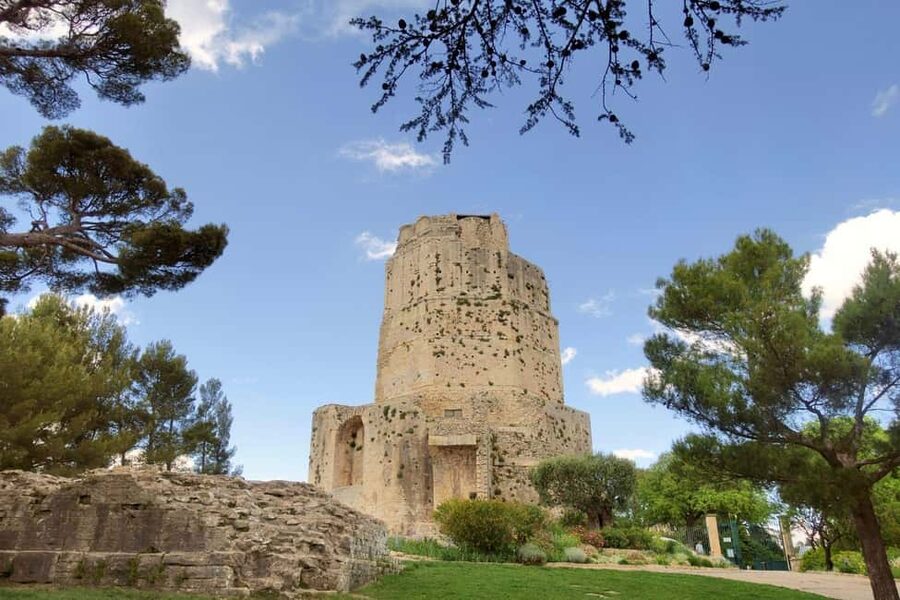
Meet the guide at the foot of the Tour Magne. This ancient watchtower has looked over Nîmes for more than 2,000 years, and it gives the opening stop a strong sense of place.
The tower is more than a photo backdrop. Its high position helps you think about how the Romans watched and organized the city. The tour uses the site to set up the story of Nemausus and the people who lived here in the first century.
You should allow a little extra energy for the opening section. The route begins at the foot of the tower, and one person specifically pointed out the effort involved in reaching Tour Magne. The exact access details are not given, so ask when booking if you have concerns about the approach.
This first stop also makes the weather important. Much of the experience takes place outdoors, and the sun in Nîmes can be strong. A water bottle is not an optional extra on a summer afternoon. It can make the difference between enjoying the guide’s stories and simply looking for shade.
A Quiet Turn Through the Jardins de la Fontaine
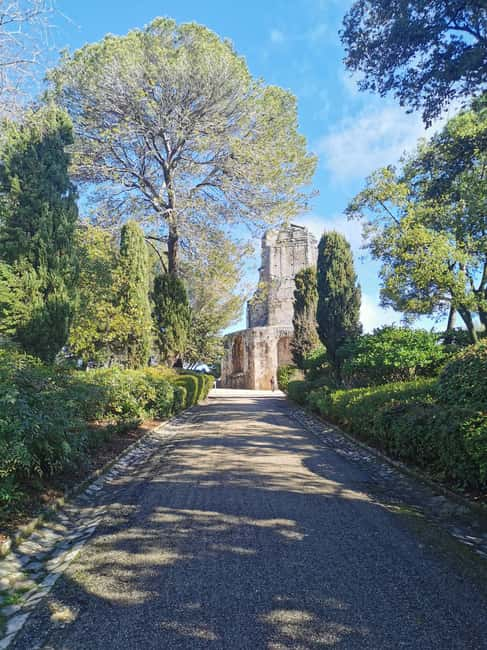
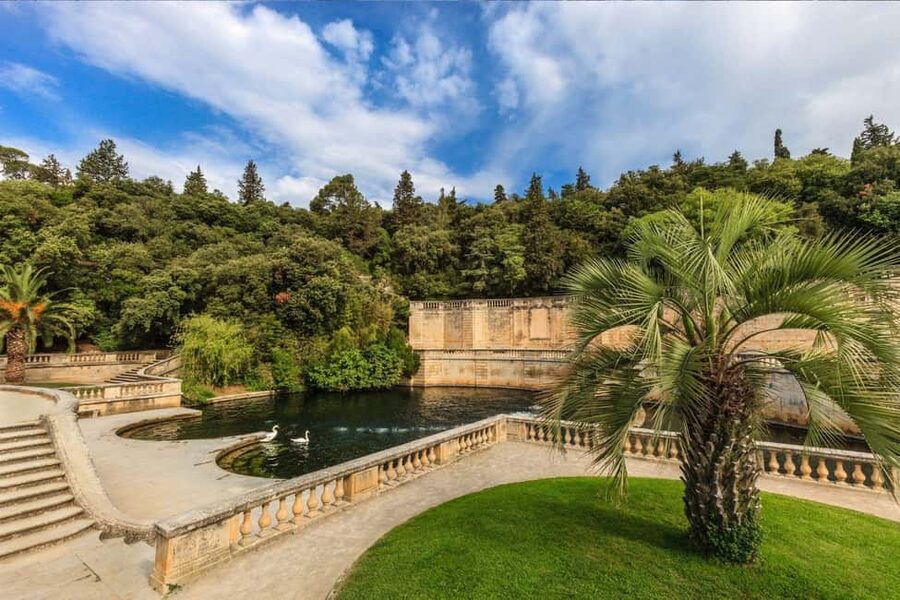
From the tower, the walk heads down toward the Jardins de la Fontaine. This change of mood is one of the best parts of the route. After the height and hard stone of Tour Magne, the gardens offer a calmer setting with water, greenery, and space to pause.
The gardens also connect modern Nîmes with its ancient religious life. Local people once came here to honor Nemausus, the god associated with the spring. Your guide explains how this sacred setting fit into Roman life, when springs and natural water sources could hold religious meaning.
The tour presents the ancient rituals in a readable way. Animal sacrifices are part of the old story, but the visit keeps the focus on atmosphere and belief rather than turning the stop into a dry archaeology lesson. You may even be invited to make a wish, a small modern touch that makes the site feel less remote.
I like this stop because it shows that Roman history was not only about emperors, armies, and grand buildings. It was also about water, prayer, local customs, and the places people returned to in ordinary life.
The Temple of Diana and Its Unanswered Question
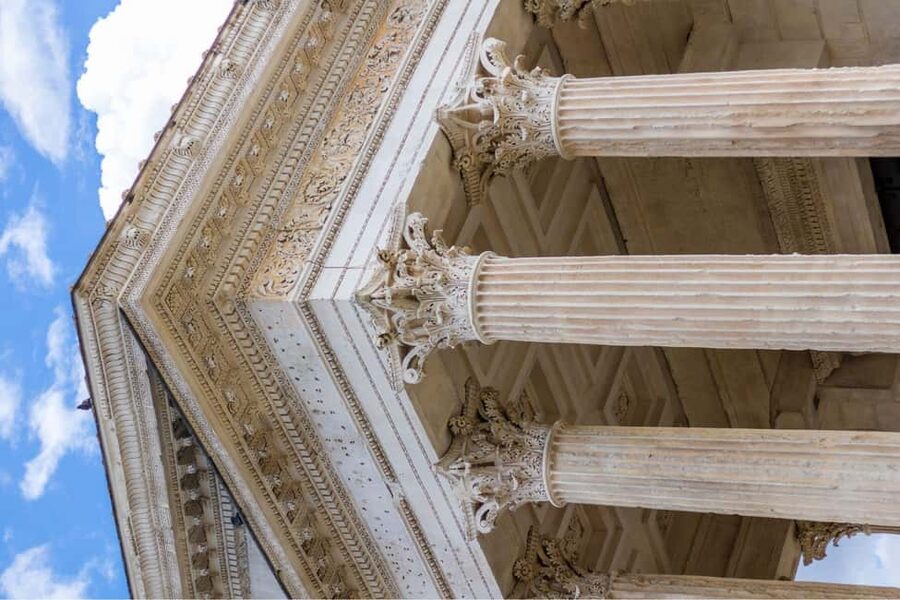
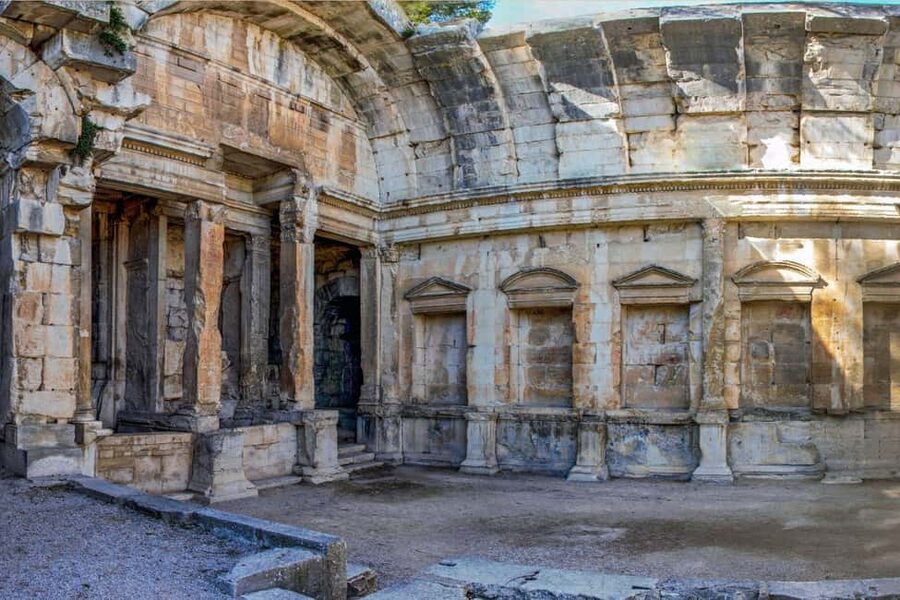
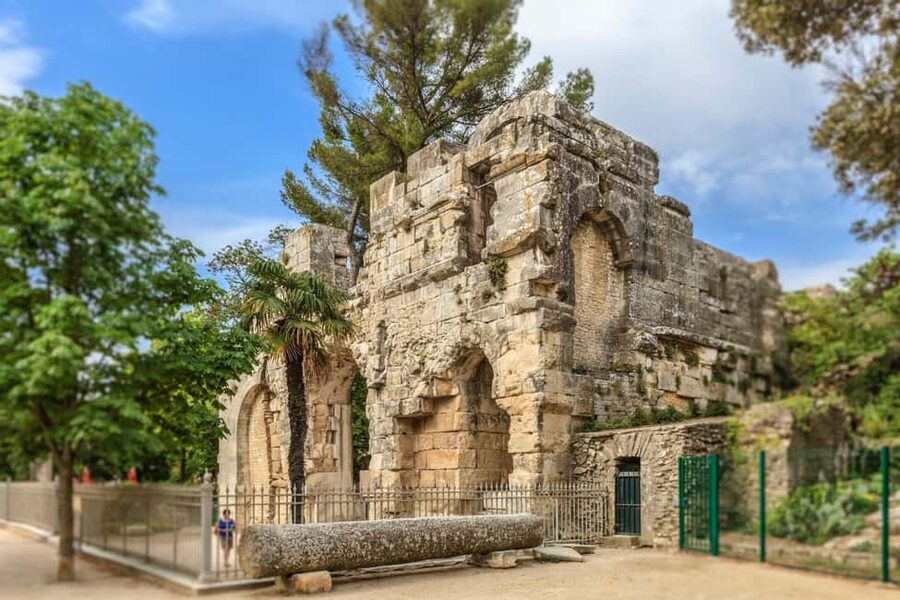
The next stop is the Temple of Diana, a ruined structure with an identity that remains uncertain. Was it truly a temple? A library? Another kind of public building? Historians have not reached a firm agreement.
That uncertainty gives the stop its appeal. Instead of presenting a polished answer, the guide can show you how archaeologists read clues and why some ancient buildings refuse to fit neatly into one label.
You will not get the same visual impact here as at the Maison Carrée or the amphitheater. The Temple of Diana is a ruin, and its meaning requires more imagination. That is also why a guide matters. Without context, you might walk past it and see only weathered masonry. With an explanation, the unanswered questions become part of the experience.
The stop is especially useful if you like history that leaves room for debate. You are not simply handed a date and a name. You are shown a place that has continued to puzzle experts.
More History Tours in France:
- Paris: Louvre Museum Entry with History of Mona Lisa
★ 3.9 · 2,823 reviews - Paris: Dark History and Ghostly Guided Walking Tour
★ 4.7 · 1,000 reviews - Vieux Lyon Cultural & Historical Walking Guided Tour (English)
★ 5.0 · 942 reviews - Bordeaux: Historic Center & Chartrons District Bike Tour
★ 4.8 · 709 reviews
Maison Carrée, Nîmes’ Roman Showpiece
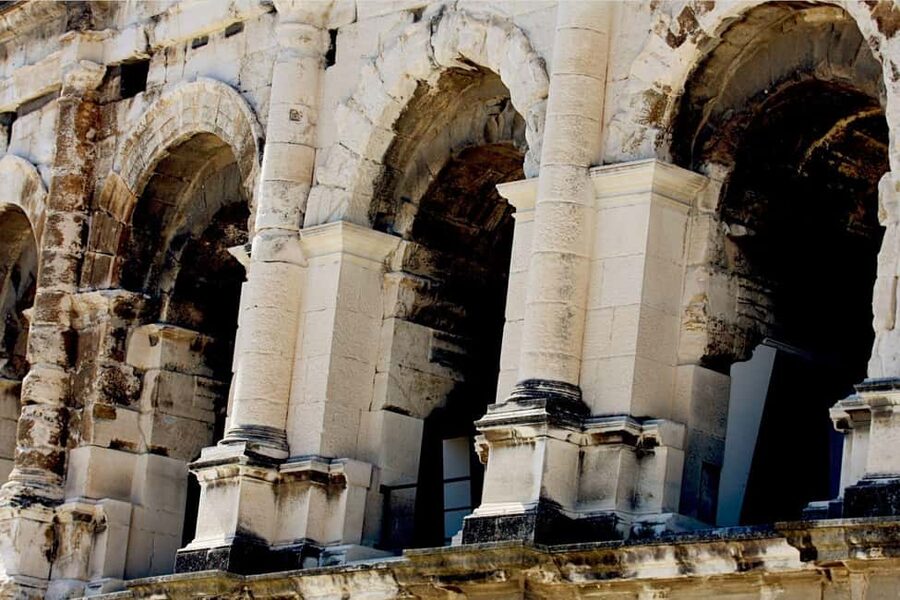
Maison Carrée gives the walk its most polished Roman monument. Built in honor of the sons of Augustus, it is one of the best-preserved Roman temples in the world.
The building is famous for its clean proportions and classical design. Even if you know little about Roman architecture, you can see why this monument has such force. It has survived in a form that lets you read the basic idea immediately: raised platform, formal columns, and a strong front-facing design intended to impress.
Your guide helps move the building beyond the usual photo stop. The story of its original dedication places it within the politics of the early Roman Empire, while the present-day setting shows how an ancient monument can remain part of city life.
There is also a lighter side to the visit. The temple now attracts plenty of modern selfies, and the tour does not pretend otherwise. That humor fits the experience well. You can admire the architecture, learn why it was built, and still take the classic photo.
Because this tour is only 90 minutes, you should not expect an extended interior visit or a detailed architectural lecture. The value comes from seeing Maison Carrée as one piece of a larger route. The earlier garden and ruin give you context, and the final amphitheater completes the picture.
Finishing Inside the Arènes de Nîmes
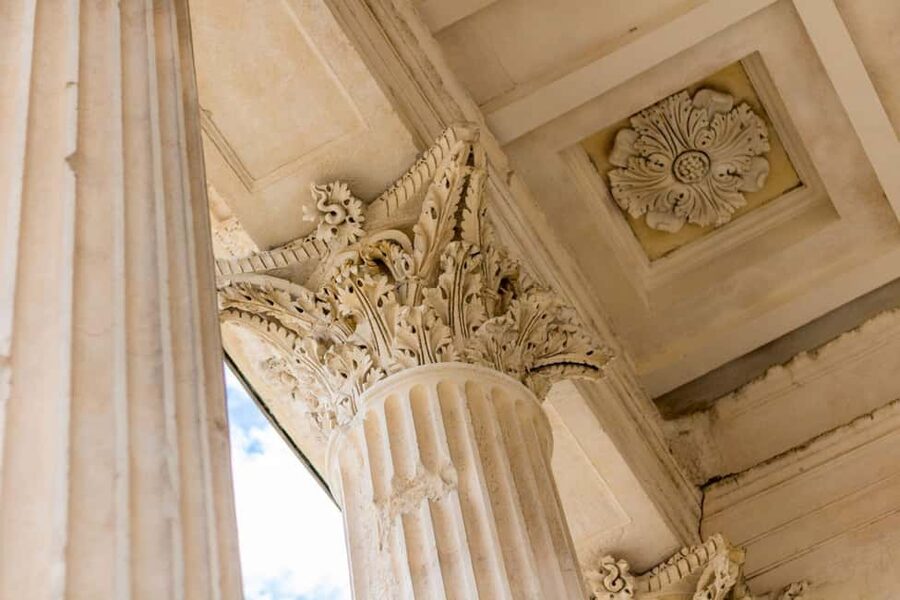
The tour ends at the Arènes de Nîmes, the city’s Roman amphitheater. This is a powerful place to finish because its scale is immediately clear. The arena has seen combat, markets, and later domestic life, including families living in sections of the structure.
That long afterlife is worth remembering. Roman buildings were not always treated as untouchable monuments. People adapted them, used them, altered them, and sometimes settled inside them. The Arènes therefore tells more than a story about gladiators and wild animals. It also shows how one building can keep serving a city across many centuries.
The tour does not promise gladiators or lions, thankfully. Instead, the guide places the amphitheater within the changing life of Nîmes. Every stone carries a different layer of use, and the final stop gives you time to consider how unusual it is to encounter such a large Roman structure in the middle of a living city.
Ending here is practical, too. If you want a longer visit, the amphitheater is the obvious place to continue. You can explore at your own pace after the guided portion, though the activity information does not specify whether admission inside the arena is included. Confirm that point if you want a separate interior visit.
Cassidy’s Storytelling Style
Cassidy is the guide most clearly associated with this experience. Her approach is warm, personal, and energetic. She uses anecdotes, historical explanation, and humor rather than delivering a string of dates.
That style matters in Nîmes because the sights are close together but not always self-explanatory. A tower, garden, ruined building, temple, and arena can feel like separate attractions. A good guide turns them into one story about a Roman city and the people who used it.
You can expect clear explanations and room for interaction. Cassidy has been described as attentive and willing to adapt the visit, including guiding a very small group during the low season. That suggests the experience can feel conversational rather than like a large crowd being moved from stop to stop, though the official information does not give a maximum group size.
The biggest limitation is language. The live tour is in French, and some content is presented in its original language. If you are comfortable following spoken French, this can be a lively way to learn. If you are not, you should think carefully before booking, since the guide’s explanations are central to the experience.
How Much Time and Energy You Need
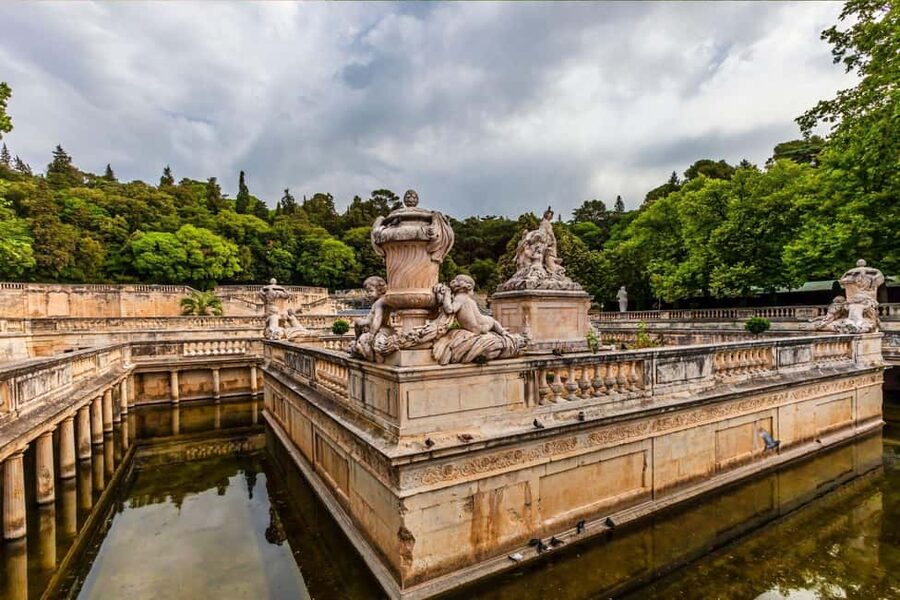
Ninety minutes is enough to get a strong first look at Nîmes’ Roman core. It is short enough to fit into a busy day and long enough to cover five meaningful locations.
You should expect a walking tour, not a seated presentation. The route includes the approach around Tour Magne, movement through the Jardins de la Fontaine, and continued walking to the city’s central monuments. Comfortable footwear is sensible, although the only item specifically requested is water.
The sun deserves special attention. The advice to bring water is repeated for good reason. Nîmes can be generous with heat in summer, and a fast-paced outdoor route can feel harder than the 90-minute duration suggests.
If you are planning your day around the tour, avoid placing it at the hottest part of the afternoon if you have a choice. Starting times depend on availability, so check the schedule before you build the rest of your plans.
Who Will Get the Most from This Tour?
I would choose this experience if you want a focused introduction to Roman Nîmes rather than a full-day archaeological program. It suits first-time visitors who want the main sights explained in a sensible order.
It is also a good fit for you if you enjoy a guide with personality. Cassidy’s humor and enthusiasm are a major part of the experience, and the tour seems designed to make ancient history feel approachable.
Families may appreciate the short duration and the mix of visual sights. The tower, garden, mysterious ruin, temple, and arena each offer a different setting, which helps keep the walk from feeling repetitive.
French speakers will get the most from the tour because the live guiding is in French. If you need an English-language explanation, this is not the right choice based on the information provided.
You might choose something longer if you want detailed monument interiors, extended archaeology, or time to linger at each site. This activity gives you the city’s Roman highlights in a compact package, not a full study of every period in Nîmes.
Price, Flexibility, and Overall Value
At $17 per person, the price is modest for a live walking tour covering several major sights. You are paying for a guide who organizes the route and adds meaning to places you could otherwise see on your own.
The value is strongest if you are new to Nîmes. Instead of spending time figuring out how the sites connect, you get a ready-made path from Tour Magne to the Arènes. That saves planning time and gives you a useful framework for later independent visits.
The activity also allows cancellation up to 24 hours before the start for a full refund, and you can reserve now and pay later. Those terms help if your South of France plans are still shifting.
Keep in mind what the $17 does not promise. The activity includes the walking tour and passionate guide, but the provided details do not state that monument admission fees are included. Ask before booking if you want access inside the sites rather than an exterior guided route.
Should You Book It?
Book this tour if you want a short, lively introduction to Nîmes’ Roman identity, especially if you speak French and enjoy stories more than formal lectures. The route is efficient, the price is fair, and the finish at the Arènes gives you a strong sense of the city’s scale and long use.
Think twice if you need an English guide, dislike walking in the sun, or want extensive time inside each monument. For everyone else, this is a smart first look at Nîmes, with enough history to make the city’s stones speak and enough free time afterward to continue exploring on your own.
FAQ
How long does the Nîmes Roman walking tour last?
The tour lasts 90 minutes.
Where does the tour begin?
Meet your guide at the foot of the Tour Magne.
Where does the tour finish?
The tour finishes at the Arènes de Nîmes.
Which places are included on the route?
The route includes Tour Magne, the Jardins de la Fontaine, the Temple of Diana, Maison Carrée, and the Arènes de Nîmes.
Is the tour conducted in English?
No. The live tour guide language is French, and some content is shown in its original language.
Who leads the tour?
Cassidy is the guide named in the available experience information and customer comments.
What is included in the price?
The activity includes a walking tour and a passionate guide.
How much does the tour cost?
The listed price is $17 per person.
Do I need to bring anything?
Bring water. The tour is outdoors, and Nîmes can be especially hot in summer.
Newest history tours we have reviewed in France
- Small-Group Full-Day Tour of Côte de Nuits, Côte de Beaune Vineyards and Beaune Historical District★ 5.0 · 364 reviews
- Private Bordeaux History Tour with a glass of Bordeaux wine.★ 5.0 · 28 reviews
- Bordeaux Historic and Gourmet Food Walking Tour★ 4.5 · 82 reviews
- Bordeaux’ Best Boulangeries & History Tour★ 5.0 · 126 reviews
- Historical Center, Bordeaux Food Tour★ 5.0 · 33 reviews
- 2-Hour Walking Tour of the City’s Iconic Sights and History★ 4.0 · 207 reviews
- Private Walking Guided Tour of Historic Bayeux English or French★ 5.0 · 36 reviews
- Historic Bayeux Daily Group City Tour In English 2 hrs (Apr-Sept)★ 5.0 · 220 reviews
Ancient History Tours, compared.
Colosseum: Underground and Ancient Rome Tour
Read our review →
Colosseum & Ancient Rome with Arena Floor Option I Max 6 People
Read our review →
Colosseum, Ancient Rome Tour or AudioGuided Tour
Read our review →
Colosseum Underground & Ancient Rome Guided Tour
Read our review →

Taormina: Ancient Theater Skip-the-Line Ticket & Audio Guide
Read our review →
Discover the Ancient Ruins of Pompeii: Day Trip from Rome
Read our review →
Discover Matera, the ancient city – English tour
Read our review →Browse the lists this tour appears in