Review · TOURS
Explore & Ride the history of anuradhapura with Vogel Tours
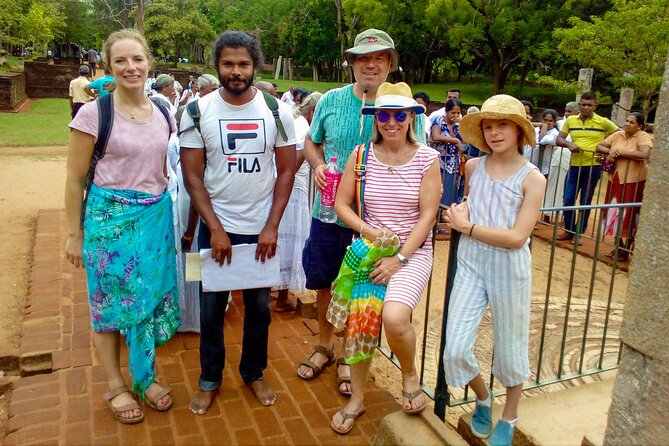
Anuradhapura is far too spread out for a satisfying walk between its major sights. This private tour with Ajee Vogel gives you a practical way to move from the sacred Jaya Sri Maha Bodhi to huge stupas, old bathing ponds, monastery ruins, and carved moonstones in a few hours. I like the private format, which lets you ask questions about Buddhism and Sri Lankan culture as you go. I also like the simple local touch of snacks with coffee or tea.
The main catch is cost clarity. The tour price is $40 per group of up to three, but the UNESCO area entrance fee is listed separately at $30 per person. The advertised duration ranges from one to five hours, so confirm your start time, route, group size, and total cost before setting out.
Key points at a glance
- Jaya Sri Maha Bodhi begins the visit with a living sacred tree, one of Anuradhapura’s most important religious sites.
- Ruwanwelisaya and Jetavanaramaya show two very different kinds of stupa scale, from a polished pilgrimage center to a massive monastery monument.
- Abhayagiri offers more than a single shrine, with a refectory, moonstone, guardstones, and the enormous Eth Pokuna nearby.
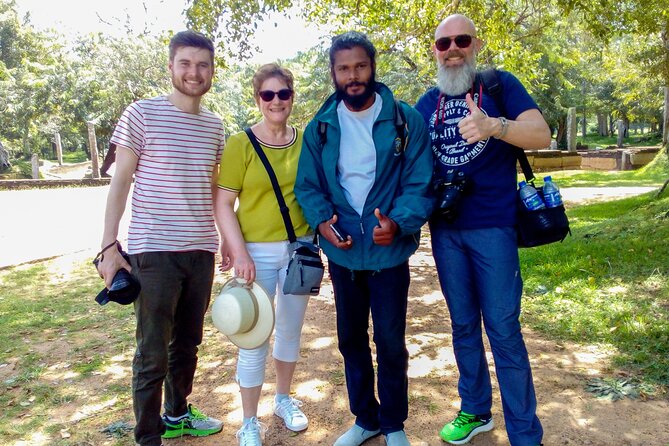
- Ajee Vogel is the guide to request by name, especially if you want explanations about Buddhist practice, architecture, and local history.
- Private transportation keeps the route practical, since the ancient city covers a large area and the listed stops are spread out.
- The $40 group price is only part of the budget, because entry to the UNESCO area costs $30 per person.
Why a private guide helps in Anuradhapura
Anuradhapura is not one compact ruin you can understand in a single square. It is a wide archaeological and religious zone, with active places of worship mixed among monastery remains, ponds, museums, and enormous stupas. Without context, the stone steps, broken walls, and carved slabs can begin to blur together.
Ajee Vogel’s role is most useful here. He takes you between the major sites and explains what you are seeing, rather than leaving you to read a sign and move on. The strongest part of this approach is the chance to ask questions as they arise. If you want to understand why a bodhi tree matters, how a stupa functions, or what a monastery complex once did, a private guide gives you room to set the pace.
The experience is listed for one to five hours. The full sequence of stops adds up to about three hours and 45 minutes before driving time, so the longer version is the realistic choice if you want to see everything without rushing. A shorter visit may focus on the main sacred sites, but you should confirm the plan before booking.
The group size needs a little attention. The price and private transport are specified for up to three people, while the tour description says the guide can accommodate up to ten. Ask which vehicle and price apply to your party if you have more than three people.
More History Tours in the world:
- New York City: American Museum of Natural History Ticket
★ 4.5 · 15,447 reviews - History and Hauntings of Salem Guided Walking Tour
★ 5.0 · 14,564 reviews - Colosseum: Underground and Ancient Rome Tour
★ 4.7 · 12,691 reviews
Starting at Jaya Sri Maha Bodhi
The tour opens at Jaya Sri Maha Bodhi in Mahamewuna Garden. This is a living sacred bodhi tree, a species of fig known as Ficus religiosa, and it is one of the most meaningful places on the route.
You should expect this stop to feel different from an archaeological ruin. People come here to pray and pay respect, so the site has a devotional purpose as well as historical importance. Keep your clothing and behavior respectful, and be ready to remove your shoes at sacred places. That small practical detail matters, especially on hot ground.
The planned visit is about 30 minutes, which gives you time to see the setting and listen to Ajee’s explanation without turning the stop into a rushed photo break. Admission is listed as free, though the wider UNESCO archaeological area has a separate entrance charge.
Lovamahapaya and the royal scale of the old city
Lovamahapaya sits between Ruwanwelisaya and Sri Maha Bodhi. It is also known as the Brazen Palace or Lohaprasadaya. The building you see today is not an intact palace, so this is a stop where historical explanation adds real value.
The site helps you picture how large and organized Anuradhapura’s religious center once was. Its position between two major sacred places also makes it a useful link in the route. You get about 15 minutes here, enough for a concise explanation and a look at the remains.
Admission is listed as not included for this stop. Since the broader entry fee is substantial, confirm exactly which ticket covers each site rather than assuming every separate line item means another payment.
Ruwanwelisaya, the great stupa
Ruwanwelisaya, also called Ruwanweli Maha Seya or Swarnamali Maha Seya, is likely to be one of the visual high points of your visit. Its large white stupa has the rounded form associated with Buddhist relic monuments, and the scale makes it easier to understand why stupas dominate Anuradhapura’s religious center.
The planned stop lasts about 30 minutes. That is enough to take in the monument, observe the surrounding religious activity, and hear the story behind its relic tradition. Ajee can also help explain the difference between a stupa as an architectural form and a temple as a place used for worship and teaching.
This is an active sacred site, not only a ruin. Dress modestly, follow local instructions, and remove your shoes where required. Free admission is listed for the stop, but again, the separate $30 UNESCO area fee must be considered.
Same streets, a different century:
- Lisbon: History, Stories and Lifestyle Walking Tour
★ 4.8 · 10,902 reviews - London Small Group Tour of Historical Pubs
★ 5.0 · 10,422 reviews - Prague: Oldtown, Medieval Underground & Dungeon History Tour
★ 4.3 · 10,277 reviews - Charleston’s Old South Carriage Historic Horse & Carriage Tour
★ 5.0 · 10,023 reviews
Kuttam Pokuna and the engineering of daily life
The Twin Baths, or Kuttam Pokuna, are among the best-preserved ancient bathing tanks in Sri Lanka. Their clean geometry gives you a welcome change from the towering stupas and scattered monastery remains.
You get about 15 minutes here. That may sound brief, but the point is easy to grasp once you see the paired pools and their careful construction. The site shows that Anuradhapura was not only a place of worship. It also needed systems for water, bathing, food, and daily monastic life.
Admission is listed as not included. The short stop works well as part of a vehicle-based route, though you may want extra time if you enjoy ancient engineering or architectural details.
The Samadhi Statue and Buddhist meditation
The Samadhi Buddha is a famous seated image in Mahamevnawa Park. It shows the Buddha in a meditation posture associated with his first enlightenment. The statue is about 7 feet 3 inches high and carved in stone.
The planned stop is 15 minutes. Ajee’s explanations are particularly useful here because the pose, expression, and hand position carry meaning that is easy to miss if you only take a photograph. This is a quiet pause in the route and a chance to connect the art with Buddhist practice.
The statue itself is listed with no included admission charge. Treat the setting as a religious place, even if your visit is brief.
Abhayagiri and the monastery complex
Abhayagiri Dagaba introduces a different side of Anuradhapura. Abhayagiri Vihara was a major monastery site connected with Theravada, Mahayana, and Vajrayana Buddhism. That detail alone makes it worth slowing down for, since it shows that Buddhist life in the ancient city was not limited to one narrow tradition.
The planned visit is 15 minutes, but the wider complex contains several related stops. If you want to understand how a monastery functioned, this is one of the most useful sections of the route. You are not seeing only a ceremonial monument. You are moving through the remains of a place that supported religious study, food service, ritual, and daily community life.
The amount of time here may feel short if you enjoy ruins. You can ask Ajee to explain which parts are most important and how the various structures fit together.
The Abhayagiri refectory and the moonstone
The Main Refectory of Abhayagiri Monastery is a square building measuring about 42.7 meters on one side. It was an alms-giving place near Uttara Mula and went through four stages of construction.
This is the kind of stop that can be easy to overlook without a guide. A broken stone building may not immediately tell you whether it was a shrine, hall, kitchen, or residence. Here, the function gives the ruins a human scale. You can picture the monastery as a working institution that had to feed a large religious community.
The tour allows about 10 minutes at the refectory. That is brief, but it fits neatly into a larger route. Admission is listed as not included.
The nearby Sandakada Pahana, or moonstone, deserves about 15 minutes. This carved semicircular slab usually appears at the bottom of a staircase or entrance. Its patterned bands are a distinctive feature of ancient Sri Lankan architecture.
Look closely at the carving rather than treating it as a decorative step. Ajee can explain how the moonstone relates to the entrance and why these stones are important in reading the design of old religious buildings. This is one of the places where a short explanation can make a small object more memorable than a much larger ruin.
Eth Pokuna, the elephant pond
Eth Pokuna means Elephant Pond. This enormous man-made pool near Lankaramaya measures about 159 meters long, 52.7 meters across, and 9.5 meters deep.
The scale is the point. After seeing bathing pools such as Kuttam Pokuna, you can compare a more intimate water structure with a huge reservoir built to serve a major monastic center. The planned visit lasts about 10 minutes, which is enough to appreciate its size but may feel quick if you want to study the construction.
This stop also helps correct a common misunderstanding about ancient cities. Anuradhapura was not only about statues and stupas. Water management was central to how its religious and urban communities worked.
Rathna Prasadaya and ancient guardstones
Rathna Prasadaya is paired with a carved guardstone, described as one of the finest ancient examples in Sri Lanka. The stop lasts about 10 minutes.
Guardstones were placed near entrances and helped mark the transition into an important space. They are easy to pass without noticing, especially when a much larger monument is nearby. Take a moment to inspect the figure, posture, and carving details. This is another stop where Ajee’s interpretation can turn a small architectural feature into a clear part of the site’s design.
Admission is listed as not included, so keep your main archaeological area ticket available.
Jetavanaramaya and its museum
Jetavanaramaya is another major monastery complex, built by King Mahasena in the fourth century. Its large stupa gives the final part of the outdoor route a strong finish, but the surrounding monastic remains are just as important.
The planned visit lasts 30 minutes. You can use that time to compare Jetavanaramaya with Ruwanwelisaya and Abhayagiri. The three places do not simply repeat the same story. Together, they show the size of Anuradhapura’s religious institutions and the range of structures needed to support them.
The Jetavanaramaya Museum occupies a 1937 British colonial building. It displays objects found at the site and offers a more focused way to understand what archaeologists have recovered. The museum visit also gives you an indoor change of pace after several outdoor stops.
Admission to the museum is listed as free, while the wider archaeological area has the separate entrance charge. The museum is scheduled for about 30 minutes, so the full tour can easily fill most of the advertised five-hour maximum.
Food, transport, and the practical value
The tour includes snacks and coffee or tea. This is a modest feature, but it matters in a hot archaeological zone where you are moving between sites. It gives you a short pause without requiring you to leave the route in search of refreshments.
Private transportation is offered for up to three people when requested. I like this because the route covers too much ground to treat as one continuous stroll. A private vehicle also means you are not tied to the interests or pace of a larger group.
The base price is $40 per group, not per person, for up to three people. That can be good value for a small party, particularly if you want a private guide and transport. But the $30 per person UNESCO area entrance fee changes the final calculation. For three people, the listed entrance charges alone would total $90, before the $40 tour price.
The safest approach is to ask for a final price breakdown. Confirm the number of people covered, whether transport is included for your group, which entrance tickets you need, and how long your route will be.
Who will get the most from this tour
I would choose this experience if you have only a few hours in Anuradhapura and want the main religious and archaeological sights explained in plain language. It suits first-time visitors who do not want to plan a large spread-out route on their own.
It is also a strong choice if Buddhism is one of your main interests. The guide can answer questions about Buddhist beliefs, sacred trees, stupas, meditation images, and monastic life. The private format makes that conversation easier than it would be in a large group.
You may want something else if you prefer to spend a full day at each complex, take long photographs, or explore every archaeological detail on foot. The schedule covers a lot of ground, and several stops are set at 10 or 15 minutes. Tell Ajee which places matter most so the pace matches your interests.
The tour is listed as suitable for most people and near public transportation. It requires good weather, and cancellation for poor weather results in either another date or a full refund. You can cancel for a full refund up to 24 hours before the start time.
Should you book with Vogel Tours?
Book this tour if you want a private overview of Anuradhapura, especially with Ajee Vogel explaining the Buddhist and historical meaning behind the monuments. The route includes the essential sacred sites along with less obvious places such as the refectory, Eth Pokuna, guardstone, and museum.
Before paying, clarify the group-size discrepancy and the entrance charges. If you understand that the $40 price does not include the $30 per person UNESCO area fee, the tour can be a useful and fairly priced introduction. If you want a slower archaeological study, book the longest available version and ask to give extra attention to Abhayagiri and Jetavanaramaya.
FAQ
How much does the Anuradhapura tour cost?
The tour price is $40 per group of up to three people. An additional UNESCO area entrance fee of $30 per person is listed separately.
How long does the experience last?
The experience is advertised as lasting approximately one to five hours. The listed sightseeing stops total about three hours and 45 minutes before transport time.
Who is the guide?
The guide is Ajee Vogel, the person behind Vogel Tours Srilanka.
Is transportation included?
Private transportation can be supplied for up to three people if requested. Confirm the transport arrangement if your group is larger than three.
What places are included in the route?
The route includes Jaya Sri Maha Bodhi, Lovamahapaya, Ruwanwelisaya, Kuttam Pokuna, the Samadhi Statue, Abhayagiri Dagaba, the Main Refectory of Abhayagiri Monastery, the Sandakada Pahana, Eth Pokuna, Rathna Prasadaya, Jetavanaramaya, and the Jetavanaramaya Museum.
Are food and drinks included?
Snacks and coffee or tea are included.
Do I need to remove my shoes?
You have to remove your shoes when entering sacred places where this is required.
Can I cancel the booking?
You can cancel up to 24 hours before the experience for a full refund. Changes or cancellations made less than 24 hours before the start time are not accepted, and poor weather may lead to a different date or a full refund.
Newest history tours we have reviewed in the world
- Chocolate history workshop Ghent★ 5.0 · 34 reviews
- Bicycle tour in historic Ghent★ 5.0 · 87 reviews
- Gettysburg Historic Downtown Food Tour By Junket★ 4.5 · 36 reviews
- Skip the Line: Gettysburg Heritage Center and Museum Admission Ticket★ 4.5 · 203 reviews
- The Historic Welty House Ghost Hunt with Equipment★ 4.5 · 91 reviews
- Genoa Food, Wine Tasting & History Walking Tour★ 5.0 · 212 reviews
- Genoa Day Tour: 4 hours of History with Focaccia , Prosecco & Joy★ 5.0 · 41 reviews
- 2 Hours Private Historical Tour in Genoa★ 5.0 · 248 reviews
Tours, compared.

History and Hauntings of Salem Guided Walking Tour
Read our review →
Colosseum: Underground and Ancient Rome Tour
Read our review →
Oldtown, Medieval Underground & Dungeon History Tour
Read our review →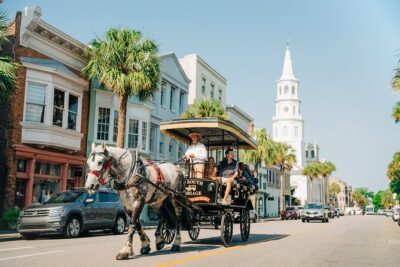
Charleston’s Old South Carriage Historic Horse & Carriage Tour
Read our review →
Edinburgh Castle Guided History Tour with Tickets
Read our review →