
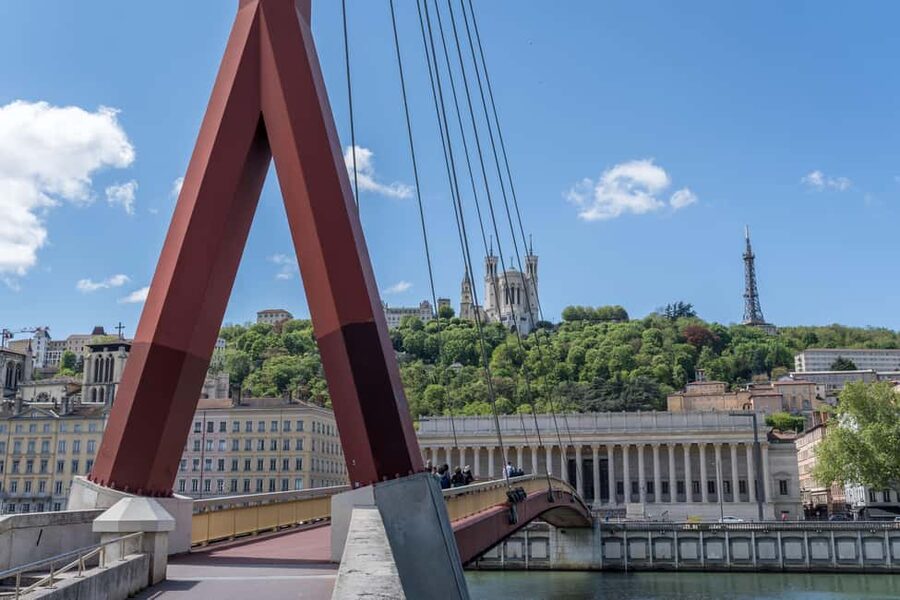
Review · FRANCE HISTORY TOURS
Culture History & Secrets: Lyon with a local artist -english
Lyon’s old town is more than pretty streets and cathedral towers. With Bertrand, a Lyon-born actor and visual artist, you follow the city’s Roman beginnings, silk-making past, wartime stories, and secret passageways in one compact walk. I especially like the small group limit of 10 and the way the tour uses storytelling, old documents, and local recommendations rather than a dry list of dates.
I also like the $24 price, which is fair for two hours with a professional guide in Lyon’s UNESCO-protected center. The main point to consider is language: the tour is advertised in English, but Bertrand sometimes gives explanations in more than one language when the group calls for it. That can be helpful, though a mixed-language group may make the pace less even.
Key points to know before you book
- Bertrand brings a performer’s touch: His background as an actor and visual artist shapes a tour built around stories, characters, and visual material.
- The walk covers Lyon’s main historic layers: Roman origins, medieval streets, the silk trade, WWII, food traditions, and local architecture all appear.
- You visit the traboules: These famous passageways are one of the most distinctive features of Vieux Lyon.
- The group stays small: A maximum of 10 people makes it easier to hear, ask questions, and move through narrow streets.
- You finish at Place Sathonay: The ending puts you in a pleasant part of Lyon with easy access to restaurants, cafés, and further exploring.
- Bring practical walking gear: Comfortable shoes, water, an umbrella, and a camera are sensible choices.
Starting beneath Saint-Jean Cathedral
Meet at the Vieux-Lyon metro station, then walk to Place Saint-Jean, the square in front of Cathédrale Saint-Jean-Baptiste. Bertrand identifies himself with a white T-shirt on a wire hanger, an unusual but useful meeting signal in a busy square.
That detail matters. The cathedral and surrounding square can attract plenty of people, and a clear marker saves you from scanning every face. I would still arrive a little early, especially if you are unfamiliar with Lyon’s metro system or are carrying luggage.
The cathedral is the natural first stop. You spend about 10 minutes here, getting your bearings and hearing how this part of Lyon fits into the city’s long story. The tour presents Lyon as a place with about 2,068 years of history, from its Roman beginnings through its medieval growth and later importance as a center of commerce and culture.
Do not expect a full interior tour or a long architectural lecture. The cathedral visit is one piece of a walking narrative. It sets up the old town before you move into its narrower streets.
More Local Culture and Traditions Tours in France:
- Vieux Lyon Cultural & Historical Walking Guided Tour (English)
★ 5.0 · 942 reviews - Explore the Marais: History, Art & Local Culture
★ 4.6 · 105 reviews - Gourmet & Cultural Tour Aix En Provence English / Espanol
★ 5.0 · 88 reviews
Walking through Vieux Lyon’s medieval lanes
From the cathedral, the tour enters Vieux Lyon, the historic quarter on the west side of the Saône. The streets here are the main stage for the experience. You move through old lanes, courtyards, passageways, and small squares while Bertrand connects buildings and neighborhoods to the people who shaped them.
The planned stops are short, usually about 10 minutes each. That format keeps the walk moving and gives you several different views of Lyon rather than planting you in one spot for half an hour. It also means you should expect a brisk introduction to many subjects, not a specialist lecture on one building.
Bertrand’s style is a good match for this setting. As an actor and visual artist, he can use anecdotes and selected documents to make the past easier to picture. One of his useful touches is a small notebook of recommendations and addresses around the city. That can be more useful than a generic list of sights, especially if you want help choosing a restaurant or deciding where to continue after the tour.
The historic center is protected by UNESCO, but the tour is not limited to postcard views. Bertrand’s approach brings out the less obvious details, including how ordinary streets connect to trade, work, religion, and wartime life.
Roman beginnings and Lyon’s early importance
Lyon’s story starts long before the silk merchants and Renaissance façades. The walk introduces its Roman origins and explains how the settlement developed into a major cultural and financial center in Europe.
The information provided does not promise a full archaeological tour, so you should not book this expecting extended time at every Roman site. Instead, Roman Lyon forms the first layer of a wider story. It gives context to the city you see today and helps explain why Lyon became such an important meeting point between regions.
This broad time span is one of the tour’s strengths. You are not simply told that a building is old. You get a sense of how Lyon changed from a Roman foundation into a medieval trading city and then into a place known for silk, cuisine, and political importance.
If you enjoy historical characters and anecdotes, this part should suit you well. Bertrand’s use of visual documents adds another layer, giving you something concrete to look at while he talks.
The silk tradition in Vieux Lyon
Lyon’s silk industry is central to its identity, and the tour introduces the roots of that trade while you walk the old town. The subject works especially well in Vieux Lyon, where the narrow streets and historic buildings make it easier to imagine a city shaped by workshops, merchants, and international trade.
You will not spend the entire two hours on textiles. The silk story is one of several historical threads, alongside Roman Lyon, wartime events, and local food. That balance suits a first visit because you learn why silk matters without losing the wider sense of place.
I would pay close attention here if you plan to visit other Lyon museums or historic districts later. The tour gives you a useful base for understanding how commerce helped shape the city. It also explains why Lyon’s old center feels connected to work and trade, not just aristocratic residences and religious buildings.
The short stop format has a tradeoff. You get variety, but anyone with a strong interest in textile production may want a separate museum visit afterward.
More History Tours in France:
- Paris: Louvre Museum Entry with History of Mona Lisa
★ 3.9 · 2,823 reviews - Paris: Dark History and Ghostly Guided Walking Tour
★ 4.7 · 1,000 reviews - Bordeaux: Historic Center & Chartrons District Bike Tour
★ 4.8 · 709 reviews - From Strasbourg: Best Of Alsace Historical Day Trip
★ 4.7 · 633 reviews
Food, markets, and useful local advice
One stop takes you through a food market in Vieux Lyon. Food is not included in the price, so think of this as a look at local specialties and addresses rather than a tasting tour.
That distinction is important. If you want a meal, you will pay separately. Still, food advice can be one of the most practical parts of a city walk. Bertrand’s small recommendation notebook gives you places to consider after the tour, and his route ends in an area where you can keep eating and exploring.
The food element also helps connect Lyon’s past to its present. The city is famous for its cuisine, but a good introduction should do more than list dishes. Here, food appears as part of the local character, alongside old streets, neighborhood life, and French humor.
You may want to schedule lunch or dinner after the walk rather than before it. The tour lasts two hours, and the market stop may leave you ready to try something on your own. Since no food or drinks are included, bring water and budget separately for any meal.
Riverside views and the WWII story
The route includes a viewpoint with broad riverside views. This is a welcome change from the enclosed lanes of Vieux Lyon. You get a chance to look outward, understand the city’s geography, and take photographs.
The exact viewpoint is not specified, so you should not book this expecting a guaranteed famous panorama from a particular terrace. The value is the contrast. After walking through tight historic streets, a river view helps you see how Lyon’s districts relate to one another.
The tour also uses these views to discuss WWII chronicles. Lyon’s wartime story adds a more serious note to the walk and shows that the city’s past is not limited to medieval charm and food.
This is one of the places where Bertrand’s storytelling background can help. Historical events are easier to follow when they are tied to streets, buildings, and visible surroundings. The subject may not be treated with the depth of a dedicated WWII tour, but it gives you an important layer of modern history.
The Palais de Justice and the secret passageways
The Palais de Justice is another planned stop. This gives the tour a chance to move beyond the most picturesque lanes and bring in Lyon’s civic and legal history.
The route also includes secret passageways, known in Lyon as traboules. These covered routes through buildings and courtyards are among the city’s most memorable features. They helped people move between streets, and they are closely tied to the layout and working life of Vieux Lyon.
Access to individual passageways can vary, so the route may not enter every famous traboule you have seen in guidebooks. Even so, including them is valuable because they make Lyon feel different from other French historic centers. You are not simply walking along façades. You are passing through the spaces behind them.
Be considerate when entering residential areas. Some passageways remain part of everyday life, not just attractions. Keep your voice down, follow Bertrand’s instructions, and remember that people may live or work nearby.
A final stretch toward Place Sathonay
The tour finishes at Place Sathonay, away from the starting point in front of Saint-Jean Cathedral. That means you should plan for a point-to-point walk rather than expecting to return to the metro station where you began.
Ending at Place Sathonay is useful. You are left in a part of Lyon where you can continue on foot, find food, or make your own way onward. The finish also gives the tour a sense of movement through the city instead of circling back to the first square.
The route includes several 10-minute stops, but the total experience is listed as two hours. A past group received a longer visit, around three and a half hours, when Bertrand expanded his explanations. You should not count on that extra time, but it suggests that the exact length can depend on questions, group interest, and the day’s pace.
What Bertrand adds to the experience
The guide is the main reason to choose this walk over a standard audio guide. Bertrand is described as a proudly French actor, visual artist, and Lyon native, and the experience is designed around his personal way of presenting the city.
His strongest qualities are energy, courtesy, and storytelling. He brings historical documents, responds to questions, and offers local addresses. He has also handled groups with French, English, and German speakers, switching languages when needed. Since the activity is sold as an English tour, you should expect English to be the main language, but a mixed group may affect the rhythm.
The format suits people who prefer a guide with personality. If you want a silent, tightly timed walk with only dates and architectural facts, this may feel conversational. If you like anecdotes, characters, and a guide who can make connections between places, it should be a better fit.
The small group helps. With no more than 10 people, you can hear in narrow streets and ask about restaurants, museums, or neighborhoods. It also makes the tour less likely to feel like a large procession through the old town.
Is two hours enough for Lyon?
Two hours is enough for a strong orientation, but not enough to cover every major sight in Lyon. That is not a flaw if you use the tour as a first look.
You will cover the cathedral, Vieux Lyon, a market, a viewpoint, the Palais de Justice, traboules, and a final neighborhood. You will hear about Roman Lyon, silk, WWII, cuisine, and famous figures. The route gives you a useful mental map for the rest of your stay.
You will not receive long interior visits at every monument, and entrance fees are not included. The activity is primarily a guided walk through public streets and historic areas. Plan separate visits if you want museums, extended cathedral time, or a detailed study of Lyon’s silk industry.
The walking surface is another practical point. Comfortable shoes are essential. Bring water, an umbrella, and a camera, and be ready for changing weather. The tour is not suitable for wheelchair users, and the old town’s narrow streets and passageways may be difficult for anyone with limited mobility.
Is $24 a fair price?
At $24 per person, this is a good-value introduction to central Lyon. The fee covers a professional guide, a two-hour walk, historical monuments, and lesser-known passageways. You are paying for interpretation and local context, not tickets or meals.
The value is strongest if you are new to Lyon and want someone to explain how the pieces fit together. Bertrand’s local food advice and personal recommendations add practical value beyond the walk itself.
The price is less compelling if you already know Vieux Lyon well or prefer to explore independently. You can walk through many of these streets without paying, though you will miss the organized story, the historical links, and the chance to ask a local guide questions.
Free cancellation up to 24 hours before the start gives you useful flexibility, and the reserve-now, pay-later option helps if your plans are still changing. Those terms do not change the quality of the tour, but they reduce the risk of booking it early.
Who should book this Lyon walk?
I would choose this tour if you want a friendly introduction to Lyon that mixes major themes with local details. It is especially suitable for:
- First-time visitors who want to understand Vieux Lyon quickly
- People who enjoy history presented through stories and characters
- Couples and small groups who prefer a personal walking experience
- Food-minded visitors looking for local addresses after the tour
- Anyone who wants to see traboules, riverside views, and historic streets in one route
- English speakers who are comfortable with a lively, conversational guide
I would look elsewhere if you need wheelchair access, want a dedicated food tasting, or expect lengthy visits inside monuments. It is also worth checking the language setup if you need every minute to be delivered only in English.
Should you book Culture History & Secrets: Lyon with a Local Artist?
Book it if you want a compact, human introduction to Lyon led by someone with a strong connection to the city. Bertrand’s mix of acting, visual material, local recommendations, and historical storytelling gives the walk more character than a basic sightseeing circuit.
The best reason to go is the balance: Roman beginnings, silk, WWII, food, architecture, and traboules all appear in two hours. The main caution is that the pace and language mix may vary, and the tour is not designed for wheelchair users or for deep study of one single subject.
At $24, it is a sensible first-day choice. You finish at Place Sathonay with enough context to decide what deserves more of your time, and with a few practical ideas for where to eat and what to explore next.
FAQ
How long does the tour last?
The scheduled duration is two hours. The exact pace can vary depending on questions and the group.
What language is the tour conducted in?
The activity is offered in English with a live English-speaking guide. Bertrand has also answered questions in French and German when groups included speakers of those languages.
Where does the tour begin?
Meet at the Vieux-Lyon metro station, then go to Place Saint-Jean in front of Cathédrale Saint-Jean-Baptiste. Bertrand will be by the fountain with a white T-shirt on a wire hanger.
Where does the tour finish?
The walk ends at Place Sathonay.
What is included in the price?
The price includes a professional guide, a walking tour of Lyon’s UNESCO-protected area, and visits to historical monuments and lesser-known places.
Are food, drinks, or attraction tickets included?
No. Food, drinks, hotel pickup, hotel drop-off, and entrance fees are not included.
What should I bring?
Wear comfortable walking shoes and bring water, an umbrella, and a camera. Photography is allowed, and you should be ready for changing weather.
Newest history tours we have reviewed in France
- Small-Group Full-Day Tour of Côte de Nuits, Côte de Beaune Vineyards and Beaune Historical District★ 5.0 · 364 reviews
- Private Bordeaux History Tour with a glass of Bordeaux wine.★ 5.0 · 28 reviews
- Bordeaux Historic and Gourmet Food Walking Tour★ 4.5 · 82 reviews
- Bordeaux’ Best Boulangeries & History Tour★ 5.0 · 126 reviews
- Historical Center, Bordeaux Food Tour★ 5.0 · 33 reviews
- 2-Hour Walking Tour of the City’s Iconic Sights and History★ 4.0 · 207 reviews
- Private Walking Guided Tour of Historic Bayeux English or French★ 5.0 · 36 reviews
- Historic Bayeux Daily Group City Tour In English 2 hrs (Apr-Sept)★ 5.0 · 220 reviews
Local Culture & Traditions Tours, compared.

Amsterdam Food and Cultural Tour with Tastings
Read our review →
Sevilla Food Tour: Tapas, Wine, History & Traditions
Read our review →
Tromsø: Reindeer Camp and Sami Cultural Tour with Lunch
Read our review →
Half Day Dominican Republic Cultural Tour : Small Group
Read our review →
Ultimate Melbourne Walking Tour: History, Laneways & Culture
Read our review →
Tromsø: Sámi Reindeer Sledding and Sami Cultural Tour
Read our review →
Kyoto Gion: 2-Hour Geisha Culture & History Walking Tour
Read our review →
Marrakech Historical and Cultural Tour – Half Day City Tour
Read our review →Browse the lists this tour appears in