
Review · BOSTON HISTORY TOURS
Boston: Underground Railroad History Tour of Beacon Hill
Boston’s Beacon Hill can look like a tidy parade of brick row houses and polished doorways. This tour shows you the harder story behind those streets: the free Black community that lived here, organized here, fought for equal schooling here, and helped people escaping slavery. You follow the Black Heritage Trail from Boston Common to the African Meeting House and finish at the 54th Massachusetts Regiment Memorial.
I like the tour’s clear route and small-group format. You cover about two miles in 150 minutes, with time to stop at homes, schools, churches, and memorials rather than simply marching past them. I also like the guides’ personal approach. Will, Dana, Joe, and William are praised for strong storytelling, visual aids, thoughtful answers, and a real command of African American history. The main consideration is that this is an outdoor walking tour, with steep hills and uneven, non-ADA-compliant sidewalks.
Key points to know before you book

- The route follows Black Boston’s story: Begin at the Soldiers and Sailors Monument, walk through Beacon Hill, and finish at the Shaw and 54th Regiment Memorial.
- The African Meeting House is the centerpiece: Allow 20 minutes here for one of the tour’s fullest stops.
- Expect overlooked history: The focus includes education, integration, abolitionist politics, slavery, and the road to the Civil War.
- The walk covers about two miles: A reasonable pace helps, but hills and old sidewalks still require comfortable shoes.
- Guides bring different strengths: Will, Dana, Joe, and William have all led this experience, with storytelling and questions encouraged.
- The $35 fee is fair for a 150-minute history walk: You pay for a local historian’s interpretation, not museum admission.
Why Beacon Hill tells a bigger Boston story
Beacon Hill is often sold through its pretty streets. That is only the first layer. On this walk, you learn how a free African American community lived just blocks from Boston’s wealthiest residents during the decades before the Civil War.
The tour focuses on the turbulent 30 years when the United States kept trying to postpone the question of slavery. Boston was far from the plantations of the South, but the city was tied to the national argument through politics, business, religion, education, activism, and the movement of people seeking freedom.
That setting makes the tour useful. You are not studying slavery as a distant subject in a museum gallery. You are standing outside homes, schools, churches, and meeting places connected to people who faced unequal treatment and still built organized campaigns for change.
The experience also corrects a common shortcut. Boston’s abolitionist story was not only about famous white reformers. The Black residents of Beacon Hill created institutions, supported one another, challenged school segregation, and helped shape the city’s antislavery movement.
More History Tours in Boston:
- Boston: Freedom Trail History Small Group Walking Tour
★ 5.0 · 6,450 reviews - Tour of Historic Fenway Park, America’s Most Beloved Ballpark
★ 4.5 · 3,013 reviews - Boston Food & History: Pizza, North End & Freedom Trail
★ 5.0 · 1,772 reviews
Starting on Boston Common
Meet at the Soldiers and Sailors Monument in the center of Boston Common, close to the Boston Common Visitors Center at 139 Tremont Street. Look for the white granite column topped by a female figure holding a flag, with four bronze figures around its base.
This is a sensible meeting point because it is easy to identify and sits at the beginning and end of the route. The guide first sets the stage on Boston Common, then leads you toward Beacon Hill and the Black Heritage Trail.
The opening stop lasts about 10 minutes. It gives you a useful frame for the walk: Boston’s place in the national conflict over slavery, the growth of abolitionist politics, and the lives of Black and white residents who had very different levels of power.
The route later returns to Boston Common, so you do not need to arrange a separate ride back from Beacon Hill. The final stop is the Robert Gould Shaw and 54th Massachusetts Regiment Memorial, just up Beacon Street from the starting area.
Mount Vernon Street, Acorn Street, and Louisburg Square
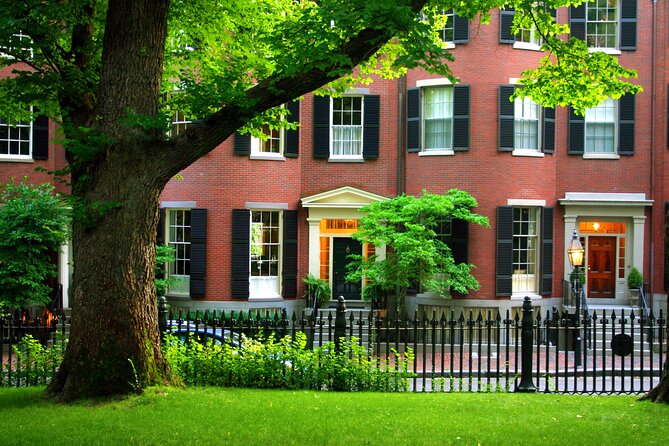
The first Beacon Hill streets make an immediate visual change from the broad Common. Mount Vernon Street, Acorn Street, and Louisburg Square bring you into the neighborhood’s narrow lanes and formal residential blocks.
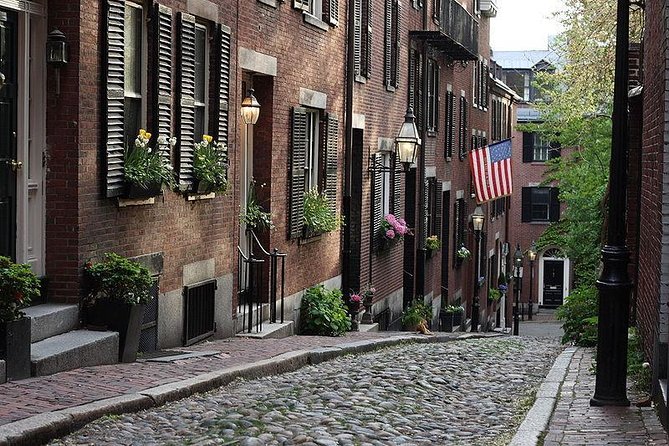
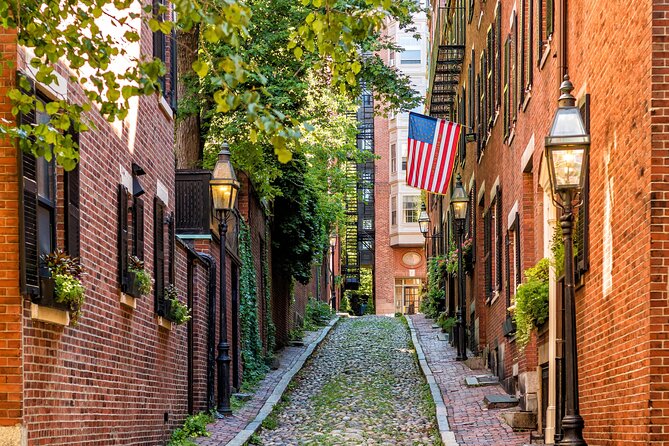
Acorn Street is one of the most recognizable corners in Beacon Hill, with its old paving and close-set houses. It is attractive, but the tour does not treat it as a photo stop alone. The guide uses these streets to show the physical setting of the community and the sharp contrast between Beacon Hill’s elegance and the unequal society that surrounded it.
Louisburg Square receives about 10 minutes. Here, the polished homes make an important point: Black Bostonians lived near some of the city’s richest white families, yet proximity did not mean equality. The walk keeps returning to that tension, which is one reason the history feels immediate instead of abstract.
Sidewalks can be steep and crowded in this part of Beacon Hill. Stay close to the group and wear shoes with good grip. Large bags and luggage are not allowed, and video recording is not permitted.
Phillips School and the fight over education
The Phillips School is one of the tour’s most important stops, with about 15 minutes set aside for it. Here the subject shifts from streets and homes to the fight over public education.
You learn about Black Bostonians’ struggle for equal schooling and the debates over racial integration. This is a crucial part of the story because education was not a side issue. Access to a good school shaped work, status, opportunity, and a child’s place in the city.
The stop also helps explain how organized the local Black community was. This was not simply a story of discrimination imposed from above. It was also a story of petitions, public pressure, community leadership, and demands for full citizenship.
If your interest in Boston’s past begins with the American Revolution, this section gives you a needed second chapter. The city’s political ideals did not automatically produce equal treatment. People had to argue, organize, and push institutions to live up to their promises.
Same streets, a different century:
- Boston: Freedom Trail History Small Group Walking Tour
★ 4.9 · 1,590 reviews - City Cruises Boston Historic Sightseeing Harbor Cruise
★ 4.5 · 1,388 reviews - Boston Pizza Lovers Food and History Walking Food Tour
★ 4.5 · 1,082 reviews - Boston Freedom Trail History Pub Crawl Small-Group Tour
★ 5.0 · 996 reviews
Homes connected to resistance and escape
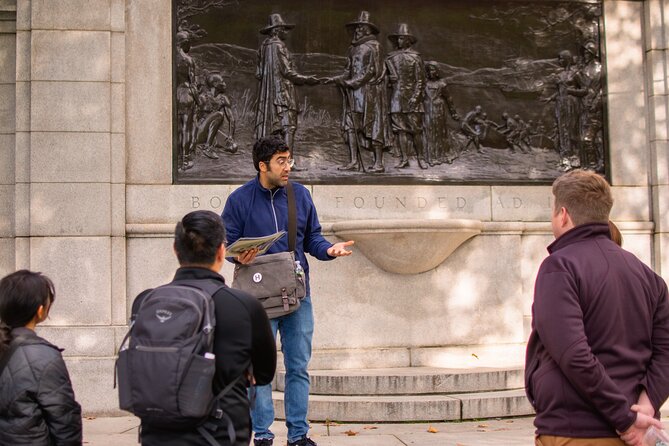
The walking route then links several homes tied to Black community life and the Underground Railroad. You pass or stop at the John J. Smith House, the John Coburn House, and the Lewis and Harriet Hayden House.
The Hayden house receives about 15 minutes and is one of the more substantial stops. You hear about the people connected with the home and the risks faced by those seeking freedom. The word Underground Railroad can sometimes make this subject sound like a neat, formal transport system. In practice, the story involved secrecy, courage, trusted contacts, and serious danger.
The homes are valuable because they make the subject local. You are looking at ordinary residential buildings rather than a battlefield or a national monument. The houses remind you that resistance could take place behind a front door, through a meeting, a message, a meal, or a safe place to stay.
One practical note: do not expect every home to be open for interior visits. The walk is conducted outdoors, and museum admission is not included. The value comes from the guide explaining who lived there, what happened in the area, and how each site fits into the larger story.
You also pass the Otis House Museum and Old West Church. These are brief exterior moments rather than full museum visits, so they add setting without changing the tour into an indoor attraction.
Charles Street Meeting House and Charles Sumner House
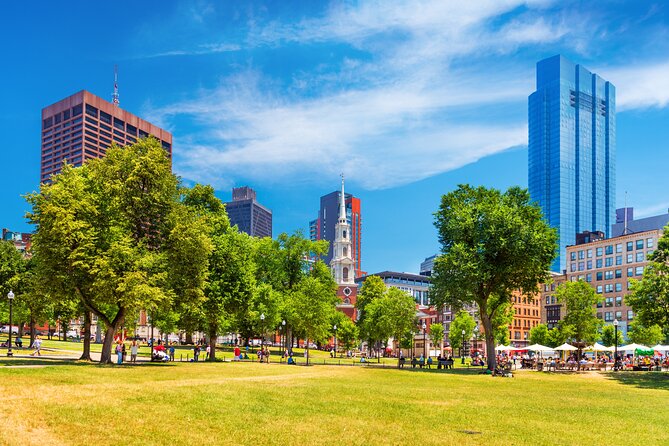
The Charles Street Meeting House receives about 15 minutes. Its place on the route lets the guide discuss religion, abolitionism, and the public debates that shaped Boston before the Civil War.
Churches and meeting houses mattered because they were places where people gathered, spoke, organized, and heard arguments about slavery and equality. This stop broadens the story beyond private homes. You begin to see Beacon Hill as a network of institutions, not merely a collection of historic addresses.
The route also takes you along Charles Street, then to the Charles Sumner House. Sumner was a major antislavery political figure, and the stop helps connect local activism with national politics.
The tour’s larger theme comes into focus here. The conflict over slavery did not suddenly begin with the firing on Fort Sumter. It grew through years of speeches, legislation, protests, violence, court battles, and arguments over what freedom meant. Boston residents were part of that national struggle, even while living far from the plantations where slavery was practiced.
Smith Court, Abiel Smith School, and the African Meeting House
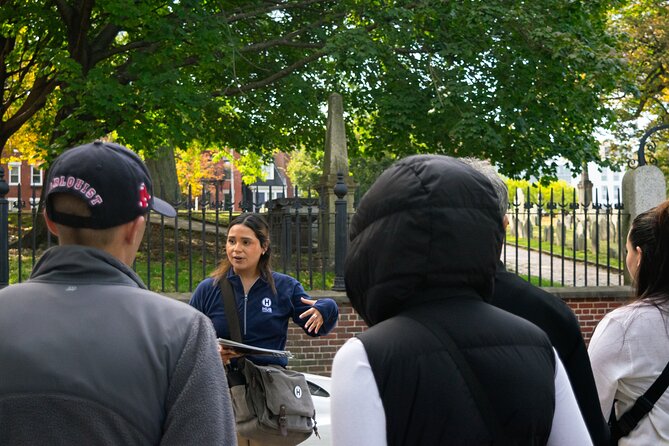
Smith Court and the Abiel Smith School form the heart of the Black Heritage Trail portion of the route. The guide shows how homes, schools, and community institutions worked together.
The Abiel Smith School is especially important because it ties the education struggle to a specific place. The issue was not only where children studied, but also whether Black children would be treated as equal members of Boston’s public school system.
The African Meeting House is the longest and most substantial scheduled stop, with about 20 minutes. This is the point where the tour’s subjects connect: worship, education, abolition, community organization, and the wider fight against slavery.
You should not assume that admission inside a museum is included. The activity is described as entirely outdoors, and any museum admission is separate. Even so, the exterior stop carries weight because the guide supplies the context that a quick independent walk would miss.
This is also a good place to ask questions. The guides are expected to handle discussion rather than deliver a fixed speech and send you on your way. Will is praised for answering many questions with care, while Joe has used visual aids to make the people and events easier to follow. The exact guide depends on the date, but the available guides include Will, Dana, Joe, and William.
George Middleton House and the final memorial
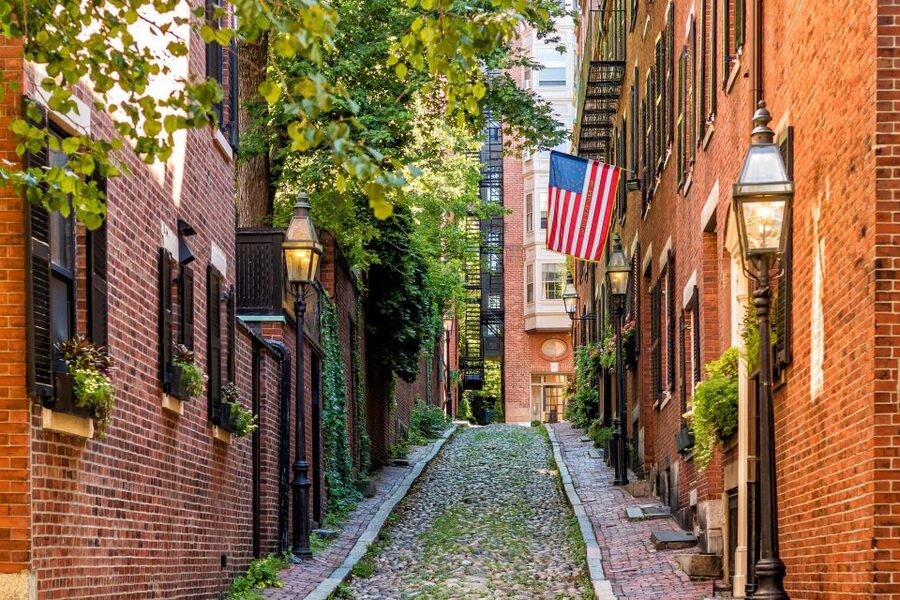
The George Middleton House gets about 15 minutes. This stop continues the focus on Black leadership and community life before the Civil War.
By this stage, the addresses no longer feel like isolated points. The homes, school, meeting house, and churches form a picture of a community that developed its own centers of support while facing laws and customs designed to limit its freedom.
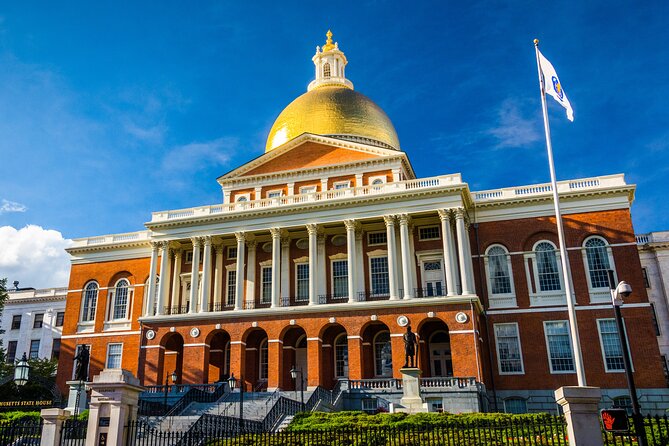
The route then moves back toward Boston Common, with views of Park Street Church and a pass by the Massachusetts State House. These are scenic and contextual moments rather than full guided visits, so keep your expectations clear. You will see important buildings along the way, but the tour’s subject remains Black history and the abolitionist movement.
The final stop is the Robert Gould Shaw and 54th Massachusetts Regiment Memorial, scheduled for about 20 minutes. The monument honors the Black soldiers of the 54th Massachusetts Regiment and the white officer who led them during the Civil War.
Ending here gives the walk a strong chronological shape. You begin with the decades of argument and activism before the war, then finish with Black military service during the conflict itself. The memorial also raises the question of how Black Americans fought for a nation that had failed to treat them as equal citizens.
The guides and the feel of the walk
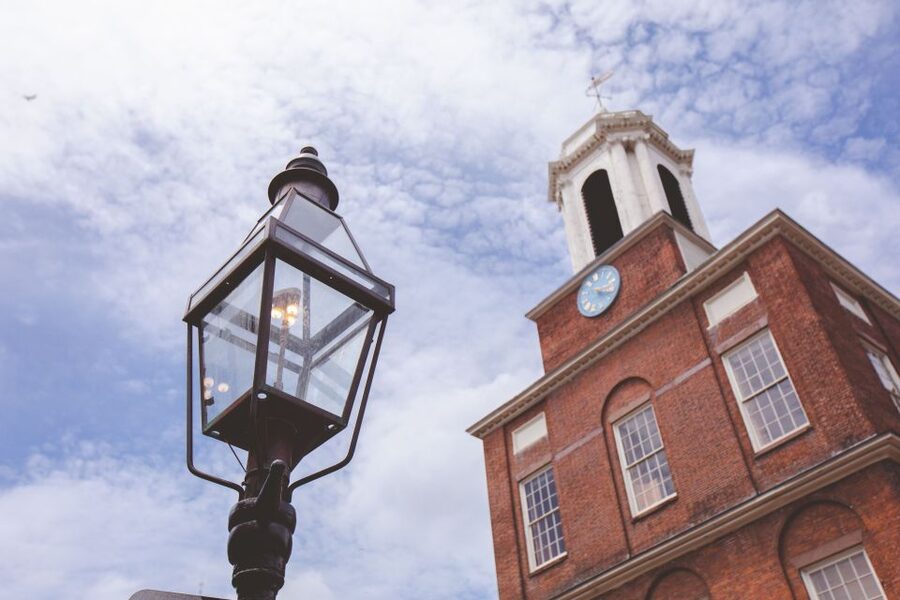
The strongest feature of this experience is the guide-led storytelling. You are not simply handed dates and names. The guides use scenes, personal stories, visual aids, and questions to make the material easier to picture.
Will is described as especially passionate and willing to spend time on questions. Dana is praised for bringing lesser-known parts of the past to the front. Joe has led small groups with visual materials and careful movement through the streets. William has also guided the tour with clear, energetic presentations.
Because the experience uses different guides, the style may vary. That is worth knowing if you prefer a scripted tour with the same presentation every time. Here, the common thread is a strong focus on African American history and the people behind the landmarks.
The pace is generally reasonable, but the tour still asks for two miles of walking and can last as long as three hours, even though the stated duration is 150 minutes. It operates rain or shine. Bring weather-appropriate clothing, and do not count on shelter during the route.
One limitation is that the Underground Railroad receives less detail than some people expect. If that topic is your main interest, you will hear about homes, escape, and local networks, but the tour gives equal attention to education, abolitionist politics, religion, and the lead-up to the Civil War.
Is $35 a good value?
At $35 per person, I consider this a fair price for a 150-minute walking tour led by a local historian. You are paying for interpretation and structure, not admission to a museum or transportation.
A self-guided walk can show you many of the same buildings, but it will not easily explain the connection between the Phillips School, the Hayden house, the African Meeting House, and the Shaw Memorial. The guide turns separate addresses into one historical argument.
The value is strongest if you want context and are willing to listen for two and a half hours. It is less useful if you prefer a quick photo walk or want to spend most of your time inside museums.
You can cancel up to 24 hours before the start for a full refund, and the reserve-now, pay-later option helps if your Boston schedule is still changing. The tour is in English only.
Who should book this Beacon Hill walk?
I recommend it to adults, older children, students, and anyone who wants Boston history beyond the Freedom Trail’s best-known stops. Children under six are not permitted, and the hills make it a poor choice for anyone with low fitness or mobility limitations.
Bring comfortable shoes and a light bag. Leave luggage and large bags elsewhere. Since video recording is not allowed, plan to listen and take brief written notes if needed.
This is also a good first activity in Boston if you want a strong sense of place. You finish knowing not only where Beacon Hill’s landmarks are, but why their stories matter.
Should you book it?
Book this tour if you want a focused, thoughtful walk through Black Boston, with strong attention to the decades before the Civil War. The African Meeting House, Abiel Smith School, Lewis and Harriet Hayden House, and final 54th Regiment Memorial give the route a clear shape, while the guides add the human detail that signs alone cannot provide.
Skip it if you need an accessible route, dislike outdoor walks in bad weather, or want a tour devoted only to the Underground Railroad. For most history-minded visitors who can manage two miles of hills, $35 is a sensible price for a serious look at Boston’s overlooked past.
FAQ
Where does the tour begin?
It begins at the Soldiers and Sailors Monument in the center of Boston Common, near the Boston Common Visitors Center at 139 Tremont Street.
How do I identify the meeting point?
Look for a white granite column topped by a female figure holding a flag. Four bronze statues surround the base.
How long does the tour last?
The stated duration is 150 minutes. The tour can vary in length but will not last more than three hours.
How far do you walk?
The route covers approximately two miles, or 3.2 kilometers.
Where does the tour finish?
It finishes at the Robert Gould Shaw and 54th Massachusetts Regiment Memorial on Boston Common.
Is the tour conducted in English?
Yes. The live guide speaks English.
Is museum admission included?
No. Admission inside museums is not included. The tour itself is conducted outdoors.
Is the tour accessible for wheelchair users?
No. The route includes steep hills and sidewalks that do not meet ADA standards. It is not suitable for wheelchair users or people with mobility impairments.
What should I bring?
Bring comfortable shoes and clothing suited to the weather. The tour operates rain or shine. Large bags and luggage are not allowed, and video recording is prohibited.
Newest history tours we have reviewed in Boston
- Boston: Seafood Tasting & Historical Walking Tour★ 5.0 · 28 reviews
- Boston: Ultimate Historic Food & Drink Tour★ 4.7 · 20 reviews
- Boston: History & Haunts Guided Ghost Tour★ 4.3 · 154 reviews
- Boston: Historic Pubs Walking & Ferry, Food & Drink Tour★ 4.9 · 56 reviews
- Boston History & Highlights Tour: From Revolution to Today★ 4.8 · 178 reviews
- Boston: Haunted Pub Crawl of Historic Pubs and Taverns★ 4.6 · 127 reviews
- Boston: Freedom Trail History and Architecture Walking Tour★ 4.8 · 18 reviews
- Boston: Tour of The Freedom Trail with Historic North End★ 4.5 · 154 reviews
Boston History Tours, compared.
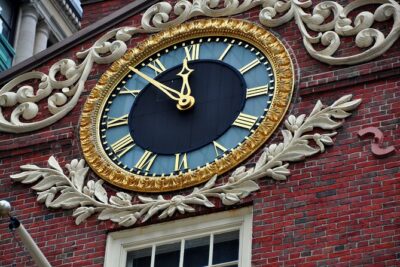
Freedom Trail History Small Group Walking Tour
Read our review →
Tour of Historic Fenway Park, America’s Most Beloved Ballpark
Read our review →
Boston Food & History: Pizza, North End & Freedom Trail
Read our review →Freedom Trail History Small Group Walking Tour
Read our review →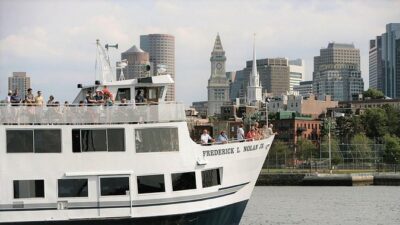
City Cruises Boston Historic Sightseeing Harbor Cruise
Read our review →
Boston Pizza Lovers Food and History Walking Food Tour
Read our review →
Boston Freedom Trail History Pub Crawl Small-Group Tour
Read our review →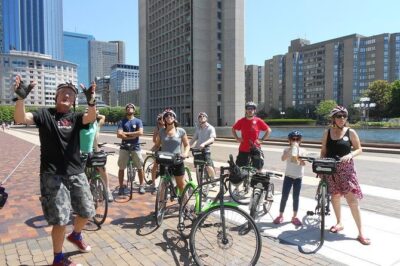
Boston City View Bicycle Tour: History and Landmarks
Read our review →Browse the lists this tour appears in