
Review · BOSTON HISTORY TOURS
Boston: Tour of The Freedom Trail with Historic North End
Boston’s Freedom Trail is easy to follow, but much harder to understand on your own. This 105-minute walking tour gives the red-brick route a human voice, then carries you beyond the usual downtown sights into the North End, where Paul Revere’s House and the Old North Church area connect the Revolution to a real neighborhood.
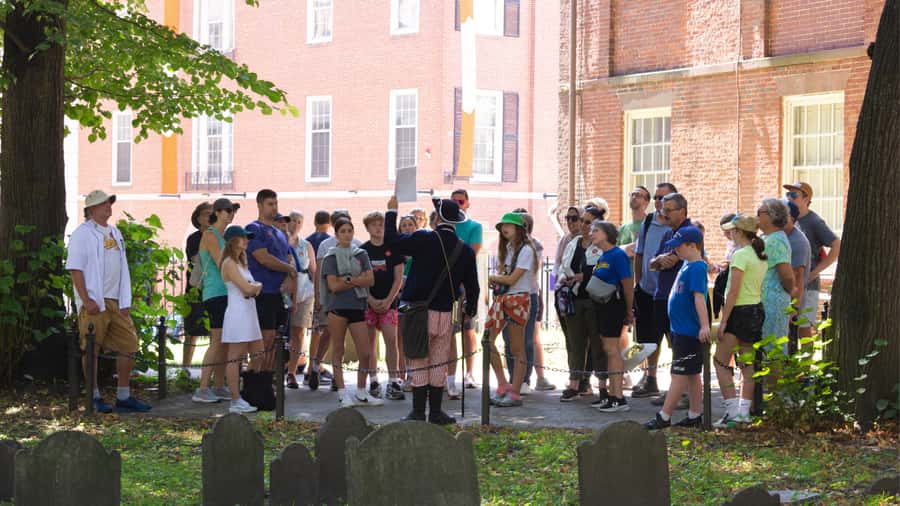
I like the costumed guides, who make the past feel less like a list of dates. I also like the route’s range: you see burial grounds, churches, protest sites, Faneuil Hall, and the North End in one outing for $26 per person.
The main drawback is pace. You cover only about 1.3 miles, but you stop often to listen, and the tour may last close to two hours. If you have trouble standing, or want to reach every site quickly, this can feel slow.
Key points to know before you book
- The route reaches the North End: This is more than the basic Boston Common to Faneuil Hall walk, with Paul Revere’s House and Paul Revere Mall included.
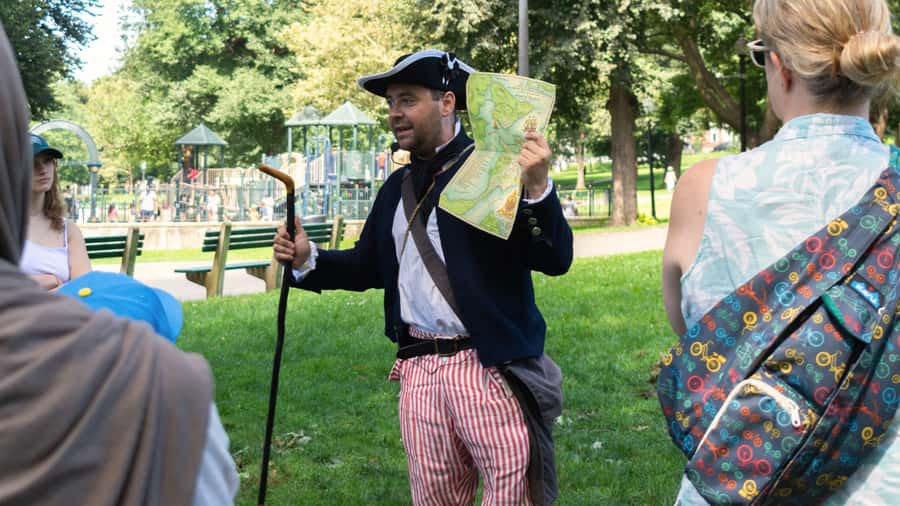
- Costumed guides lead the way: Guides such as Elena, known as Mother Goose, Steve, Ben, Catherine, and Jeremiah use character, stories, and humor to explain the past.
- You see major Revolutionary-era sites: The route includes the Boston Massacre Site, Old State House, Old South Meeting House, burial grounds, and Faneuil Hall.
- It is a walking and standing tour: Comfortable shoes matter, and you may stand in one place while the guide tells a longer story.
- Attractions are viewed from outside: Admission to museums and historic buildings is not included.
- The tour is English-only: It is wheelchair accessible, but the amount of standing is worth considering.
Why this Freedom Trail route is worth your time
The Freedom Trail can look simple on a map: follow the marked path and stop at the red-brick sites. The trouble is that the buildings do not explain themselves. A burial ground can seem like a quiet patch of old stones, and a meeting house can look like another handsome brick building.
A strong guide changes that. You hear why a place mattered, who used it, and how ordinary arguments over taxes, trade, religion, and power helped push Boston toward revolution. The best guides on this tour, including Elena, Steve, and Jeremiah, mix facts with jokes and theatrical timing. That helps families and first-time visitors stay with the story.
The route is also a good compromise for a short visit. You get the central Freedom Trail sights without spending half a day on foot. Then you continue into the North End, which gives the walk a stronger finish than tours that stop at Faneuil Hall.
You should know what this is not. It does not cover Charlestown, the USS Constitution, or the Bunker Hill area. It also does not include entry into the museums or historic buildings along the way. Think of it as a guided outdoor introduction, not a full museum visit.
More History Tours in Boston:
- Boston: Freedom Trail History Small Group Walking Tour
★ 5.0 · 6,450 reviews - Tour of Historic Fenway Park, America’s Most Beloved Ballpark
★ 4.5 · 3,013 reviews - Boston Food & History: Pizza, North End & Freedom Trail
★ 5.0 · 1,772 reviews
Starting at Boston Common and the Massachusetts State House
Meet at the Boston Common Visitor Center at 139 Tremont Street. Arrive 15 minutes early. The group leaves on time, and finding the correct entrance in a busy area is easier when you are not rushing.
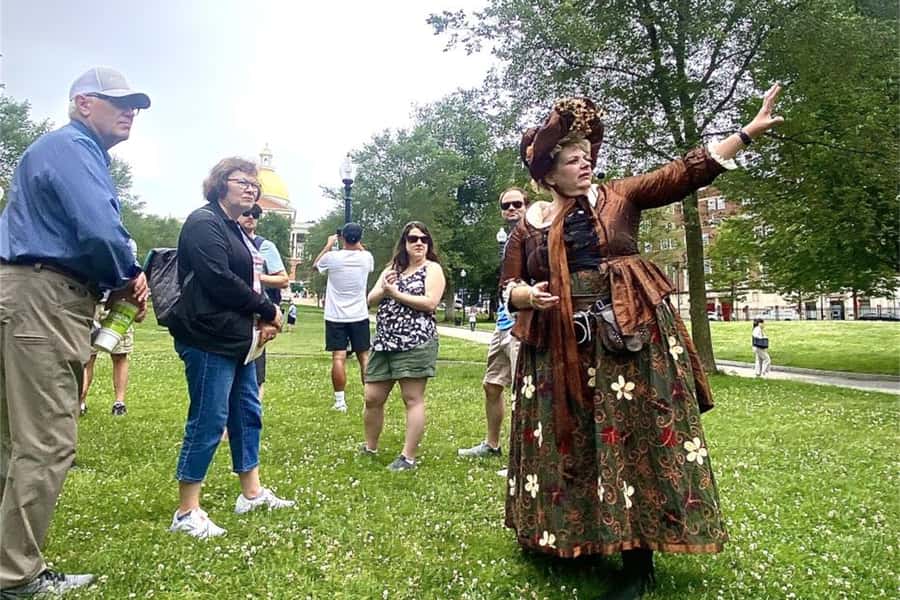
Boston Common gives the tour a fitting beginning. It was America’s first public park, and it places you right in the center of Boston’s old civic life. From here, you see the Massachusetts State House and begin following the Freedom Trail through streets shaped by the colonial city.
The State House is a photo stop and a reminder that Boston’s political story did not end with the Revolution. You will not tour the interior on this activity, so use the stop to get your bearings and listen for the guide’s explanation of how public power was organized.
The walking is not strenuous in distance. The challenge is the city itself, with crowds, traffic, and periods of standing. Wear comfortable shoes and bring clothing suited to the weather. The tour runs in rain, according to the experience described by past participants, so do not assume light weather will cancel the walk.
Park Street Church and Boston’s early public life
Park Street Church comes next. It is one of the most recognizable buildings on the route, and the guide uses it to explain Boston’s religious and civic setting.
The Freedom Trail works best when you connect one site to the next. A church, burial ground, school, and meeting house were not isolated attractions in colonial Boston. They were part of daily life, public debate, education, and government.
This is where the guide’s storytelling style matters most. Guides such as Ben and Catherine have been praised for turning basic sightseeing into a lively walk. You are not just stopping for a photograph. You are listening for the personalities and disputes behind the buildings.
Granary and King’s Chapel burial grounds
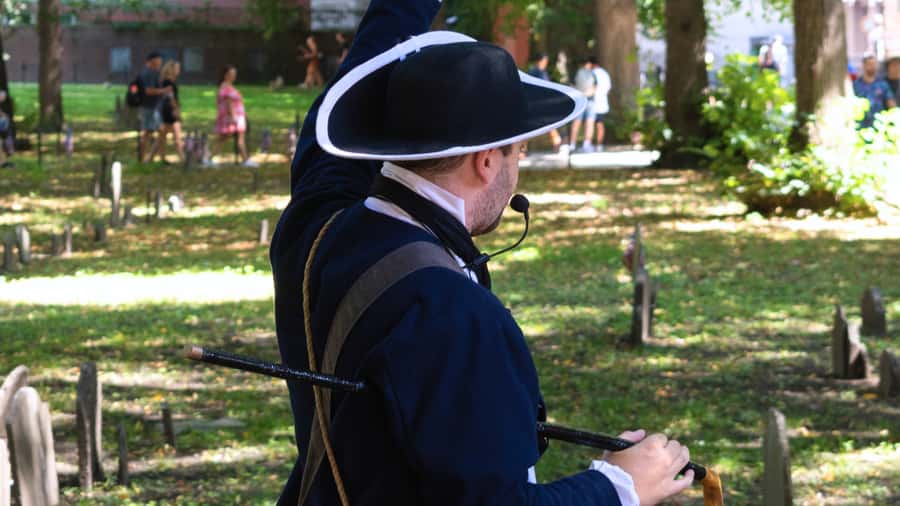
The Granary Burying Ground is one of the most important stops. It is the burial place of several major figures from America’s founding era, including Samuel Adams, John Hancock, and Paul Revere. The tour focuses on the people connected to the site rather than treating it as a quick cemetery stop.
King’s Chapel Burying Ground follows as a pass-by and guided sightseeing stop. Together, these burial grounds show how small colonial Boston was and how closely its leading families, politicians, soldiers, and religious figures were connected.
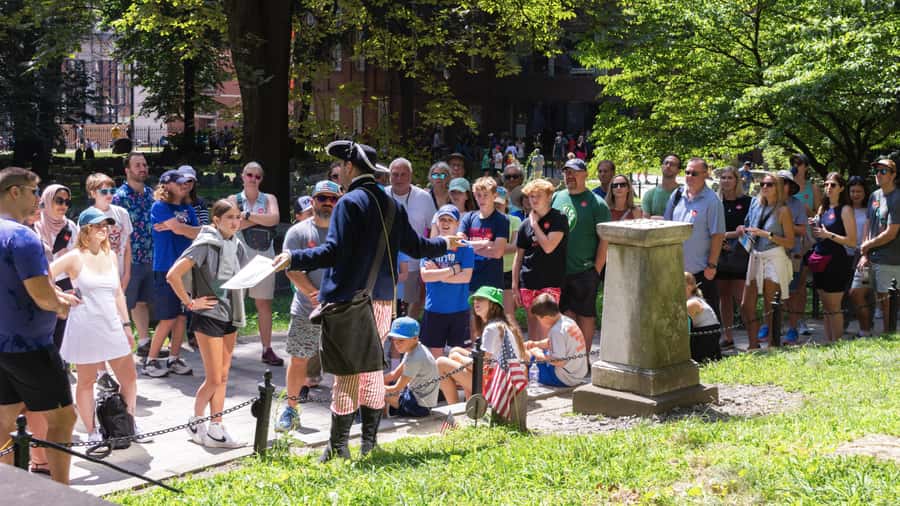
You should expect to spend time standing while the guide speaks. One participant found the amount of standing more demanding than the distance walked. That is useful to know if you have mobility concerns. The activity is listed as wheelchair accessible, but accessible does not always mean comfortable for a long outdoor explanation with limited seating.
Same streets, a different century:
- Boston: Freedom Trail History Small Group Walking Tour
★ 4.9 · 1,590 reviews - City Cruises Boston Historic Sightseeing Harbor Cruise
★ 4.5 · 1,388 reviews - Boston Pizza Lovers Food and History Walking Food Tour
★ 4.5 · 1,082 reviews - Boston Freedom Trail History Pub Crawl Small-Group Tour
★ 5.0 · 996 reviews
Boston Latin School and Benjamin Franklin
The next stretch brings you to the Boston Latin School site and the statue of Benjamin Franklin. This is an easy place to rush past, but it adds an important piece to the story: education.
Boston Latin School is associated with America’s first public school, while Franklin’s statue recalls one of the city’s most famous sons. The stop helps widen the tour beyond battles and political speeches. You see how ideas, schooling, printing, and public debate helped shape the revolutionary period.
This is also a good moment to ask your guide a question. The walk is designed around live narration, not an audio recording, and the guides often add extra stories when time and group size allow. Elena, called Mother Goose during the tour, is especially noted for her theatrical delivery and extra historical details.
Old Corner Book Store and Old South Meeting House
The Old Corner Book Store is a small but visually appealing stop. Its value is less about entering the building and more about seeing how old Boston’s commercial streets have been folded into the modern city.
The Old South Meeting House carries more direct Revolutionary meaning. It was a major gathering place, and the Boston Tea Party story is tied to the public anger and debate that took place there. The guide helps connect the building to the larger dispute over taxation and colonial control.
You will see the site from the outside because attraction admission is not included. If you want to go inside, plan a separate visit and allow extra time. The benefit of this walking tour is that you get the broad story first, which can help you choose which interiors deserve your attention later.
Old State House and the Boston Massacre Site
The Old State House is one of the central landmarks on the Freedom Trail. Its position and appearance make clear how close the colonial government was to the streets where public anger grew.
Nearby, the Boston Massacre Site marks one of the most charged moments in the city’s pre-Revolution story. The guide explains how the event was remembered and used in political argument. This is a good example of why a live guide helps: the importance is not only what happened at the spot, but how the story shaped public opinion.
The stop can become crowded, and city noise may make it harder to hear every word. Stay close enough to the guide and avoid drifting behind the group. One useful strength of this experience is that guides such as Jeremiah have worked to keep large groups engaged and audible, but no outdoor tour can remove every street-side distraction.
Faneuil Hall and the change into the North End
Faneuil Hall is the natural midpoint and one of Boston’s most visited attractions. It is tied to speeches, public meetings, commerce, and the city’s long tradition of political argument.
Many basic Freedom Trail tours end around here. This one continues, which is its clearest advantage over a shorter downtown route. After Faneuil Hall, the setting changes as you head toward the North End.
That change matters. The first part of the walk focuses on public institutions and Revolutionary protest. The North End adds houses, lanes, churches, and personal stories. You get a better sense of the people who lived in the city, not just the buildings where famous events took place.
Faneuil Hall can also be crowded. Keep your expectations practical: this is a sightseeing stop and guided explanation, not an extended indoor visit.
Paul Revere’s House and the North End finish
The North End is the most distinctive part of this version of the Freedom Trail. The route includes Paul Revere’s House, one of Boston’s best-known surviving colonial homes, along with Paul Revere Mall.
The house gives the Revolution a domestic setting. Instead of hearing only about assemblies and military decisions, you are brought into the neighborhood connected with Revere’s family and working life. The experience does not include admission inside, so you should plan another visit if you want to explore the interior.
The route also takes you into the Old North Church area. The church is closely tied to the famous lantern signal story, and its setting helps explain how the North End fit into Boston’s Revolutionary network.
The tour finishes at Paul Revere Mall according to the route description, while the meeting details also state that the activity ends back at the meeting point. Because those details do not perfectly match, confirm the exact end point when booking. Either way, the North End is the part that gives this walk extra value.
Guide style and group experience
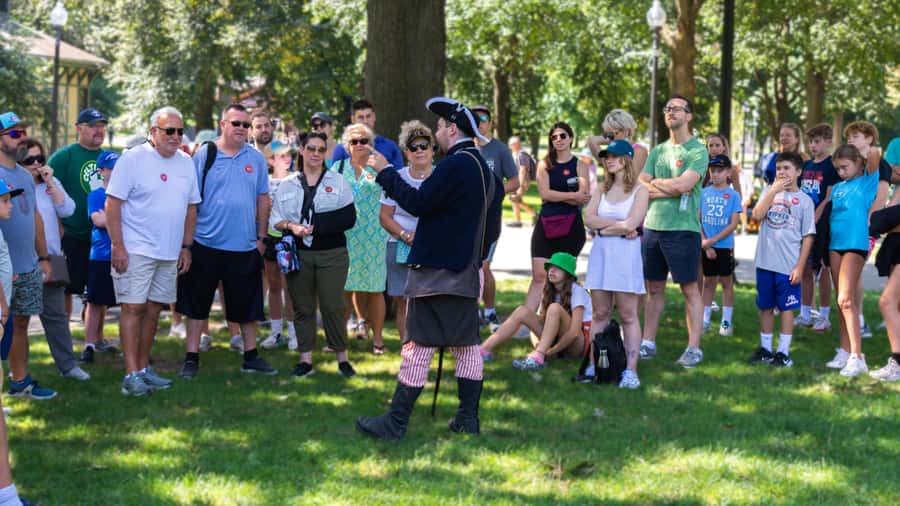
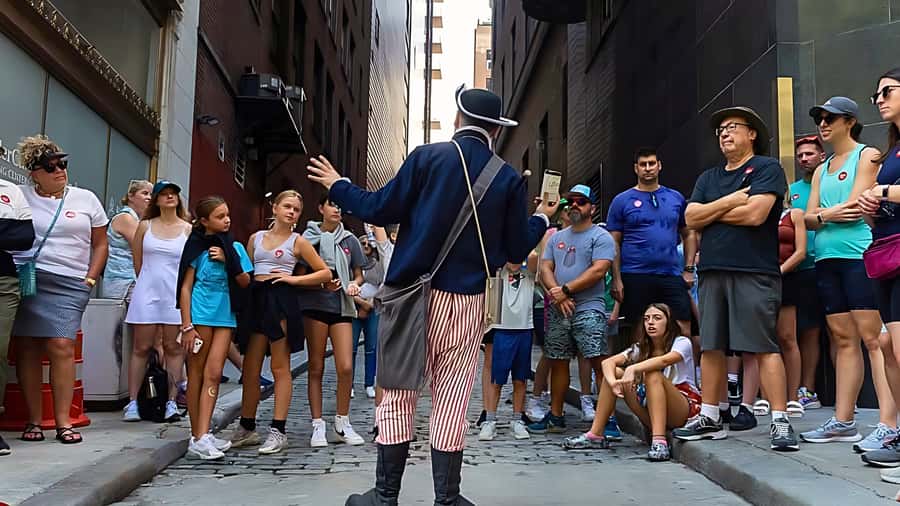
The costumed format is not just decoration. Period clothing helps mark the tour as a performance as well as a history walk, and the guides use character names and theatrical energy to keep the group moving.
Steve has been praised for staying in character even on a cold day and for mixing humor with clear explanations. Elena, or Mother Goose, is known for an engaging style that keeps details memorable. Jeremiah has handled larger groups while keeping the presentation light and audible. Catherine has led a more personal experience when attendance was very small.
Your guide will shape the day. Some are more theatrical, while others may focus on facts and local stories. The consistent theme is live narration, not a dry recitation. A participant who had previously walked the trail alone found the guided version far more informative because the guide supplied context that the painted bricks and plaques cannot provide.
Group size can affect the experience. A group of about 50 people is possible, and a smaller group will naturally make it easier to hear and ask questions. If you prefer a private or quiet walk, this may not be the right format.
Is $26 a good value?
At $26, this is a fair price for a guided history walk lasting about 105 minutes, with planning for up to two hours. You are paying for the guide’s narration, route knowledge, and storytelling rather than transport or admission tickets.
The value is strongest if you are visiting Boston for the first time, have limited time, or want a clear introduction before exploring on your own. It is also a good choice for families, since humor and character can make the Revolutionary period easier to follow.
The value is weaker if you already know the Freedom Trail well or want to spend long periods inside historic buildings. You will need to pay separately for admissions, and the walk does not cover Charlestown.
Free cancellation up to 24 hours before the start and the reserve-now, pay-later option make it easier to fit into a changing schedule. The tour is offered in English, and wheelchair access is listed, but you should still consider the standing time and uneven pace of a city walking tour.
Who should book this walk?
Book it if you want the main downtown sights plus the North End in one outing. It suits first-time visitors, families, history fans, and anyone who prefers stories to reading plaques.
It is less suitable if you dislike group tours, have difficulty standing, or want a fast march from one landmark to the next. It also will not satisfy you if Charlestown and the full Freedom Trail are priorities.
Should you book the Freedom Trail and North End tour?
I would book this tour for a first day in Boston, especially if you have roughly two hours and want the city’s Revolutionary story explained in plain language. The North End extension, Paul Revere’s House, and the costumed guides give it more personality than a basic route walk.
Keep your expectations clear: you will view attractions from outside, stand while listening, and may be part of a large group. If that suits you, $26 buys a useful orientation, a lively history lesson, and a practical route through Boston’s most important colonial sights.
FAQ
Where does the tour start?
The tour starts at 139 Tremont Street, Boston, at the Boston Common Visitor Center.
How early should I arrive?
Arrive 15 minutes before the activity begins. The tour leaves on time.
How long does the tour last?
The listed duration is 105 minutes, but you should plan for the activity to last up to two hours.
Does the tour include Charlestown?
No. It covers the standard Freedom Trail section and continues into the Historic North End, but it does not cover Charlestown.
Does the tour enter the museums and historic buildings?
No. Admission inside museums and attractions is not included.
Does the route visit Paul Revere’s House?
Yes. The route includes a guided sightseeing stop at Paul Revere’s House and continues to Paul Revere Mall.
What language is the tour offered in?
The live tour guide and narration are in English.
Is the tour wheelchair accessible?
Yes, the activity is listed as wheelchair accessible. It is still a walking tour with periods of standing, so consider your comfort with standing outdoors before booking.
Newest history tours we have reviewed in Boston
- Boston: Seafood Tasting & Historical Walking Tour★ 5.0 · 28 reviews
- Boston: Underground Railroad History Tour of Beacon Hill★ 4.9 · 38 reviews
- Boston: Ultimate Historic Food & Drink Tour★ 4.7 · 20 reviews
- Boston: Historic Pubs Walking & Ferry, Food & Drink Tour★ 4.9 · 56 reviews
- Boston History & Highlights Tour: From Revolution to Today★ 4.8 · 178 reviews
- Boston: History & Haunts Guided Ghost Tour★ 4.3 · 154 reviews
- Boston: Freedom Trail History and Architecture Walking Tour★ 4.8 · 18 reviews
- Boston: Haunted Pub Crawl of Historic Pubs and Taverns★ 4.6 · 127 reviews
Boston History Tours, compared.
Freedom Trail History Small Group Walking Tour
Read our review →
Tour of Historic Fenway Park, America’s Most Beloved Ballpark
Read our review →
Boston Food & History: Pizza, North End & Freedom Trail
Read our review →Freedom Trail History Small Group Walking Tour
Read our review →
City Cruises Boston Historic Sightseeing Harbor Cruise
Read our review →
Boston Pizza Lovers Food and History Walking Food Tour
Read our review →
Boston Freedom Trail History Pub Crawl Small-Group Tour
Read our review →
Boston City View Bicycle Tour: History and Landmarks
Read our review →Browse the lists this tour appears in