
Review · BARCELONA HISTORY TOURS
Barcelona: 3-Hour Esoteric, Spiritual & Historical Tour
Barcelona’s Gothic Quarter has more than medieval lanes and handsome churches. This three-hour walk looks for the city’s symbolic underside: Templar and Masonic signs, Jewish scholarship, Kabbalah, alchemy, and the spiritual ideas tied to Barcelona’s buildings. Guide Sandra Burela connects those subjects to 2,000 years of city history without turning the walk into a standard sightseeing circuit.
I like the small group, limited to eight, and the way the tour encourages questions rather than rushing from one sight to the next. I also like its unusual focus on the old Jewish quarter and Catalan Kabbalah, subjects that many city tours barely touch. The main consideration is clear: if you want Gaudí interiors, museum visits, or a fast list of major sights, this is not your tour. It is a slow, talk-centered walk, and three hours may feel short if you want to ask about every symbol.
Key points to know before booking
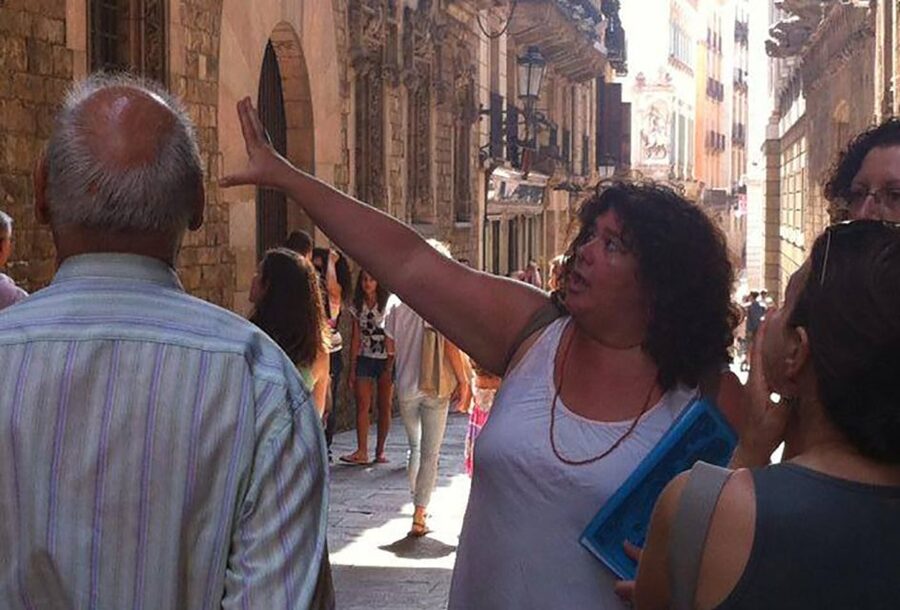
- Look for Sandra Burela at Plaça Catalunya: Meet in front of Zurich Cafe, beside the newsstand between the two metro entrances.
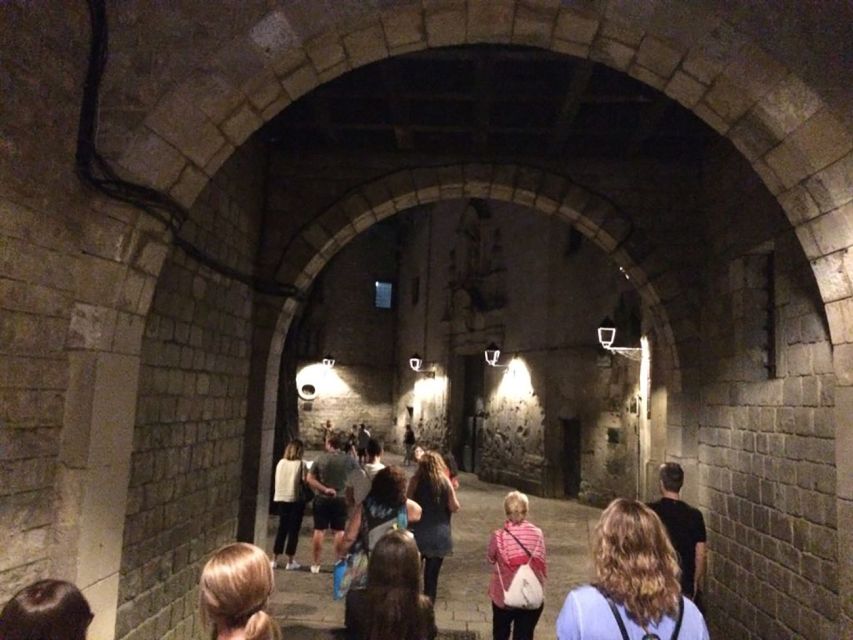
- The Gothic Quarter is the main setting: The route connects Roman Barcino, medieval Barcelona, the old Jewish call, churches, and later architecture.
- Expect interpretation, not just sightseeing: Templars, Freemasons, Kabbalists, alchemy, dragons, and hermetic symbols shape the tour’s central themes.
- The group stays small: A maximum of eight people gives you a better chance to ask questions and follow a detailed discussion.
- Bring practical walking gear: Comfortable shoes, water in summer, and a secure way to carry your belongings will make the three hours easier.
- The price is $88 per person: That is a fair fee if you want a specialist-led discussion, but less appealing if you prefer a conventional landmark tour.
Seeing Barcelona through its symbols
Most first-time walks through Barcelona’s old center focus on Roman walls, narrow lanes, churches, and pretty squares. This experience asks you to look again. A carved figure, a geometric detail, or a dragon on a building may carry a symbolic meaning that is easy to miss when you are simply trying to keep up with the crowd.
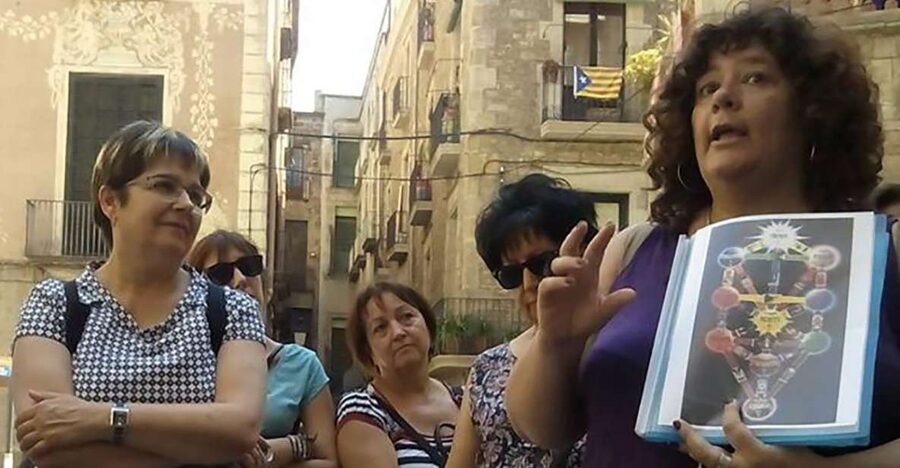
Sandra Burela frames the city through Western esoteric traditions. That means the tour is not limited to one belief system. It moves among Christian symbolism, Jewish mysticism, Kabbalah, Hermetic thought, alchemy, Freemasonry, and the legends surrounding the Knights Templar.
You do not need a background in astrology, Kabbalah, or esoteric studies. The walk is designed to explain the ideas as it goes. At the same time, it has enough depth for someone who already studies astrology or related subjects. The right attitude is curiosity. You are being invited to consider how beliefs, symbols, and power shaped the city, not handed a simple list of proven secrets.
More Three-Hour Tours in Barcelona:
- Barcelona Historical 3-Hour Bike Tour
★ 4.7 · 222 reviews - Barcelona: 3-Hour Sips, Sites & Bites Food & History Tour
★ 4.8 · 33 reviews - Berlin: 3-Hour World Heritage Cruise to Potsdam
★ 4.5 · 1,569 reviews
Plaça Catalunya and the first layer of Barcelona
The meeting point at Zurich Cafe, on Plaça Catalunya, is practical but busy. Look for the guide near the newsstand between the two metro entrances. Give yourself a little time to find the exact spot, since a large city square and several entrances can make a first meeting harder than expected.
From there, the subject shifts quickly from modern Barcelona to its older foundations. Roman Barcino provides the starting point for the city’s long sequence of cultures. Romans, Visigoths, Jewish communities, counts, sailors, merchants, and people from across the Mediterranean all left their mark on these streets.
That long sequence matters because the tour treats Barcelona as a city built in layers. A medieval church is not discussed in isolation. Its setting, symbols, patrons, and later interpretations become part of a larger story. You begin to see the Gothic Quarter not as a collection of picturesque lanes, but as a place where religious, political, and intellectual traditions met.
Roman Barcino and the city beneath the city
The Roman chapter gives the walk a useful anchor. Barcelona’s symbolic story is not presented as something that began in the Middle Ages. It reaches back to Roman times and even to a temple dedicated to Jupiter.
The important point is not simply that ancient Rome existed here. It is that old sacred places can influence how later generations understand a city. The walk considers how religious ideas, civic power, and physical space changed over time.
Do not expect an archaeological excavation or a museum-style presentation. This is a walking conversation, with the streets and architecture providing the setting. Some stops are likely to be appreciated best by paying close attention to what Sandra points out rather than waiting for a large monument to announce itself.
The old Jewish call and Catalan Kabbalah
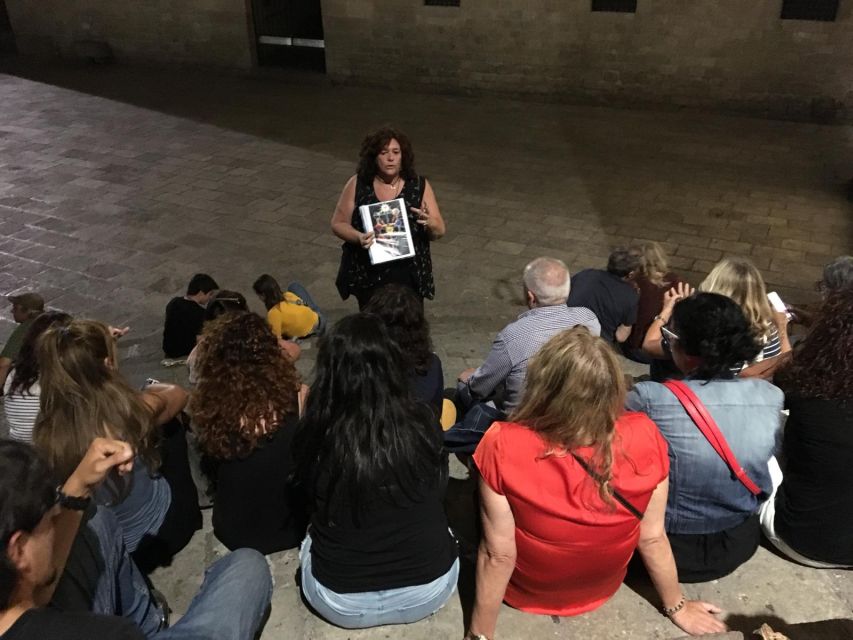
One of the strongest parts of the experience is its attention to Barcelona’s medieval Jewish community. The old Jewish quarter, known in Catalan as the call, becomes a way to understand the city’s intellectual and spiritual life during the Middle Ages.
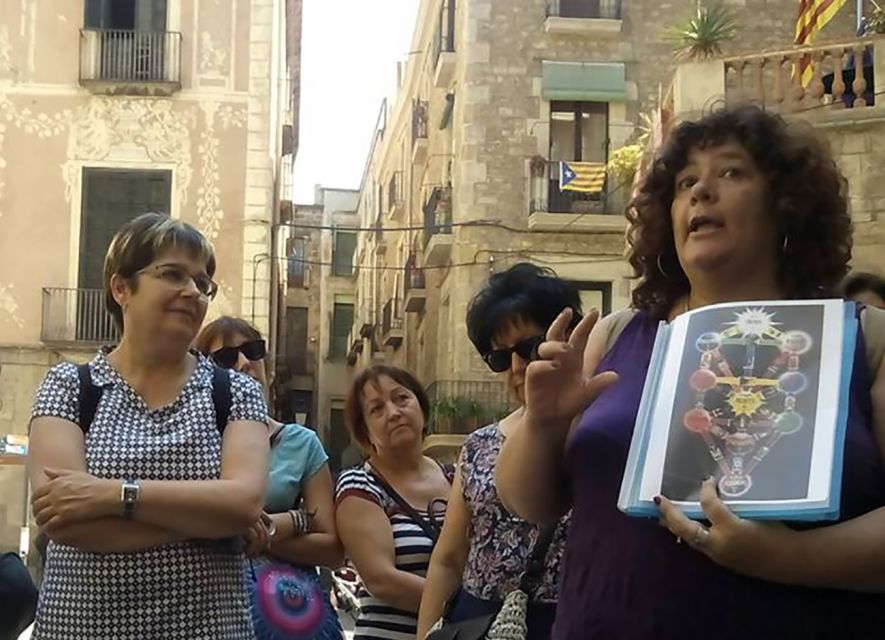
The tour also introduces famous rabbis and the growth of Kabbalah in Catalonia. This gives the Jewish story more substance than a passing mention on a timeline. You hear about schools of thought, religious scholarship, and the place of mystical study in medieval Barcelona.
For me, this is a good reason to choose the tour even if Templars and Masons are not your main interest. Standard Gothic Quarter walks often mention the Jewish quarter, then move on. Here, it receives careful attention and is tied to the wider Western esoteric tradition.
Keep in mind that the subject can be dense. Kabbalah involves ideas that take time to absorb, and the walk covers many other periods and traditions as well. If a particular point catches your attention, ask about it. Sandra’s teaching style leaves room for questions, and several hours can pass quickly when the discussion opens up.
More History Tours in Barcelona:
- Barcelona: Tapas Walking Tour with Food, Wine, and History
★ 4.8 · 4,261 reviews - Barcelona Tapas Walking Tour: Food, Wine & History
★ 4.5 · 1,928 reviews - Barcelona: 2.5-Hour Bike or E-Bike Historical Tour
★ 4.5 · 1,262 reviews - Barcelona Erotic Museum – Explore Art, History & Fun
★ 4.4 · 450 reviews
Templar traces and cathedral symbols
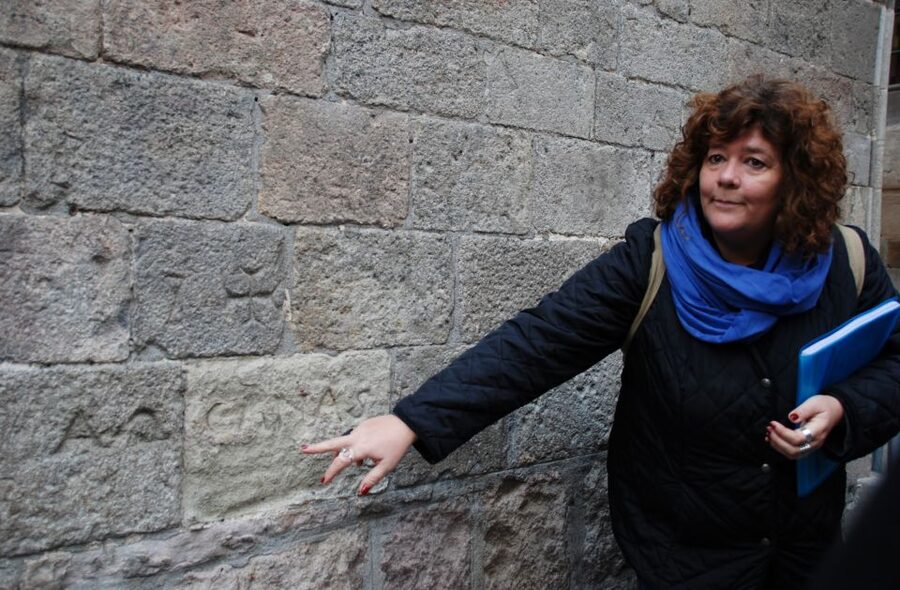
The Knights Templar are among the most familiar names in European esoteric storytelling, so it is useful that this tour places them in a specific Barcelona setting. You look for remains connected with the Templars and examine Templar and Masonic symbols associated with the Gothic cathedral.
The value here is learning to observe. Instead of treating the cathedral as a grand exterior and an impressive interior, you are encouraged to study its details and ask why certain images or forms appear where they do.
A careful distinction is important. The tour explores symbols, associations, and interpretations. It should not be approached as a promise that every mysterious mark proves a secret organization controlled the city. If you enjoy historical questions and symbolic readings, that open-ended approach can be rewarding. If you prefer every claim to be presented only as settled academic fact, some parts may feel speculative.
The cathedral also helps connect sacred and secular power. Barcelona’s religious buildings were shaped by the people and institutions that funded, used, and interpreted them. That social context keeps the discussion from becoming a simple hunt for hidden signs.
A basilica, alchemy, and Western esoteric thought
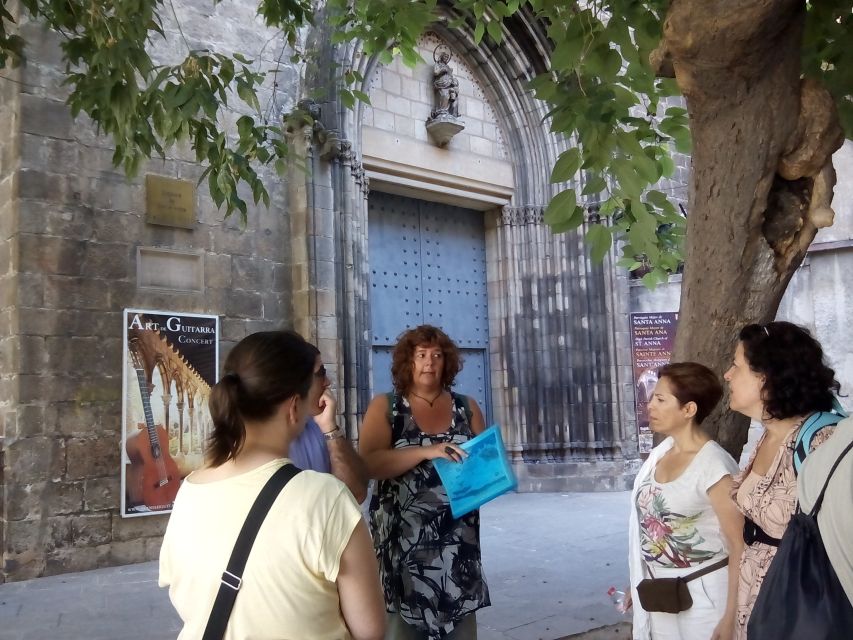
Another part of the walk focuses on an esoteric basilica with a touch of alchemy. The description does not promise a special entry or private access, so you should think of this as an architectural and interpretive stop rather than a guaranteed interior visit.
Alchemy gives the tour another way to discuss transformation. It links material images, spiritual ideas, and the human search for knowledge. Sandra uses these traditions to show how Western esotericism is not one single doctrine. It is a broad stream of symbols and teachings that developed across different eras.
This is where the guide’s specialist focus matters most. You are not simply told that a building looks mysterious. You are given a vocabulary for thinking about the mystery: symbolism, spiritual practice, hidden meaning, and the relationship between visible form and invisible belief.
The subject will appeal most to people who enjoy connecting architecture with ideas. It may be less satisfying if you want long stops devoted to photographs or a detailed account of construction dates.
Freemasonry, dragons, and Barcelona’s later buildings
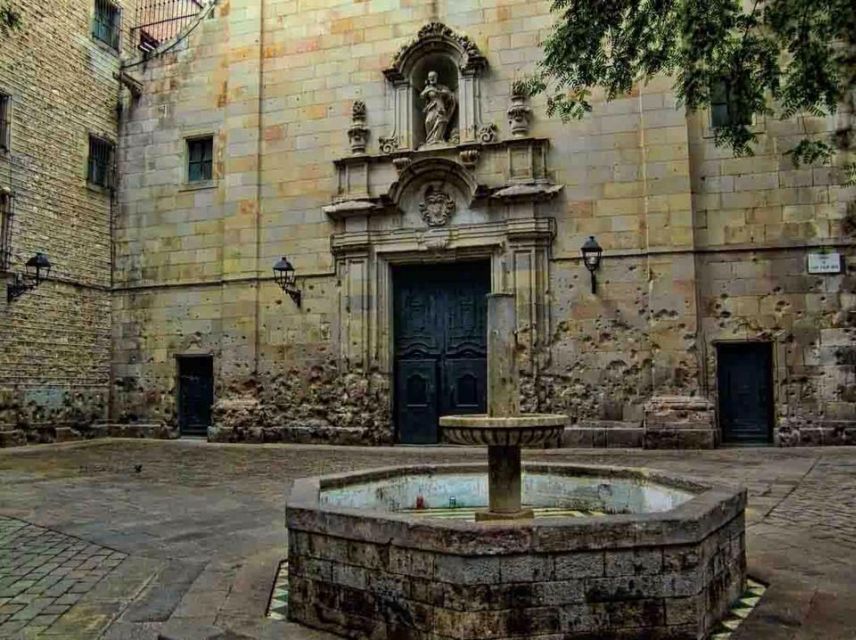
The tour then moves toward the splendor of 19th-century Freemasonry and the symbolic character of modern Barcelona. One of its central questions is whether the city’s modern design was shaped by a Freemason, and whether Gaudí himself was a Freemason.
Those questions are useful because they encourage you to examine Barcelona’s architecture rather than simply admire it. Dragons, hermetic imagery, geometric forms, and other decorative details become part of the conversation.
You should not book this walk expecting a definite answer to every Gaudí mystery. The attraction is the inquiry itself and the chance to consider how spiritual or symbolic ideas may be read in the city’s buildings. The route connects older traditions with modern homes and mystery schools, showing how the city’s symbolic language continued to interest people beyond the medieval period.
This section may be especially helpful if you have already seen Barcelona’s famous architecture and want a different way to think about it. It adds context without pretending that one interpretation explains every detail.
Why the small group changes the experience
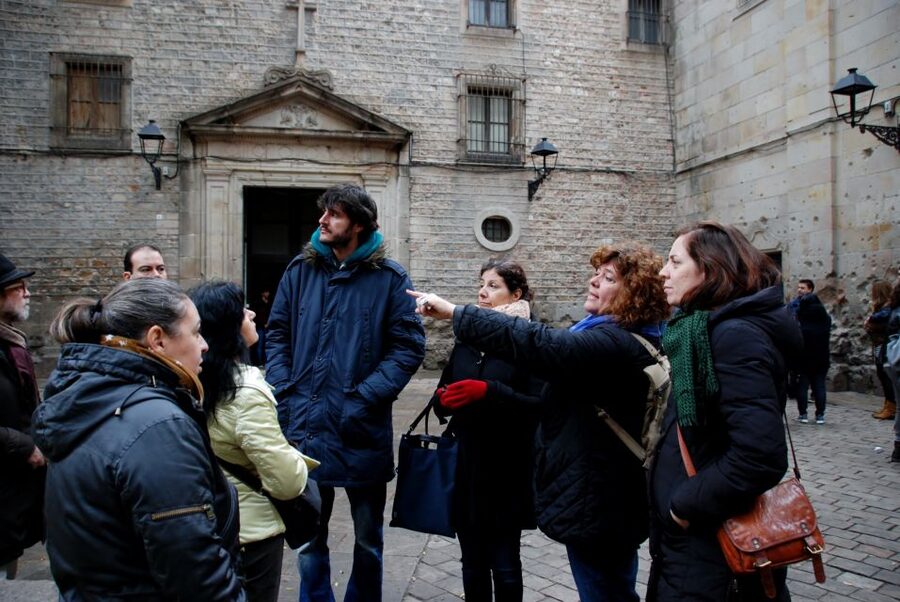
With a limit of eight participants, this is much closer to a guided discussion than to a large walking procession. That matters when the subject is detailed. You can ask Sandra to explain a symbol, clarify a historical connection, or return to an idea that moved too quickly.
The small group also suits the tone. Several hours of specialized material can feel heavy when delivered to a large crowd. In a compact group, the conversation can respond to the interests of the people present.
Sandra’s style appears to be one of the tour’s greatest strengths. She is described as warm, witty, passionate, and clear in her explanations. The experience can be tailored to the group’s expectations, including people who know little about esotericism and those who already study astrology or related subjects.
You should still expect a lot of information. One person who enjoyed the tour wished it lasted longer, and that makes sense. Roman history, medieval Judaism, Kabbalah, Templars, Freemasonry, alchemy, and modern architecture are enough for several separate walks.
Is $88 a fair price for three hours?
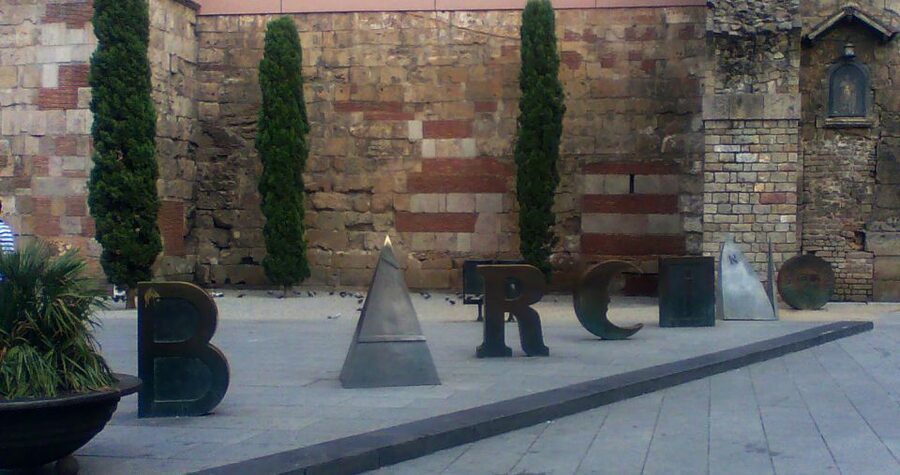
At $88 per person, this is not a bargain walking tour. You are paying for a specialist guide, a small group, and a focused subject rather than a standard introduction to Barcelona.
The value depends on what you want from your time in the city. If you are looking for a broad overview of the Gothic Quarter, other tours may cover more conventional sights for less money. If you want to understand the symbolic and spiritual traditions tied to Barcelona, the price is easier to justify.
The group size is important to the calculation. Eight people or fewer allows more conversation than a large, low-cost tour. Sandra’s subject expertise also matters because the experience depends on interpretation and connections, not just directions between landmarks.
I would see this as a specialty tour for curious visitors who are willing to spend three hours listening, looking closely, and asking questions. It is less suitable for someone counting every euro or trying to fit a dozen major attractions into one morning.
Timing, comfort, and what to bring
The walk lasts three hours and is offered in English. Starting times vary, so check availability when you book. The tour meets outdoors at Plaça Catalunya and continues on foot through the Gothic Quarter.
Wear comfortable walking shoes. The old center is best explored slowly, but three hours on foot can still be tiring. In summer, bring water. Barcelona’s heat can make a talk-heavy walking tour harder to enjoy if you arrive without a drink.
Use a safe way to carry your belongings. The advice is sensible for any busy European city center, especially when you are concentrating on architecture and conversation.
The experience offers free cancellation up to 24 hours before the start, and you can reserve now while paying later. Those policies are useful if your Barcelona plans are still shifting, but the main booking decision remains the subject itself. You should want the esoteric focus before you reserve.
Who will enjoy this Barcelona walking tour?
This tour suits you if you like:
- Religious and philosophical ideas linked to architecture
- Medieval Jewish history and Kabbalah
- Templar and Masonic symbolism
- Gaudí-era questions and hermetic imagery
- Small groups with plenty of time for questions
- Guides who teach rather than simply recite dates
It is also a good choice after you have taken a conventional Barcelona introduction. The tour can give familiar streets a second meaning and help you notice details you might otherwise pass without a glance.
You may want to skip it if you want interior visits, food tasting, museum time, or a quick overview of Barcelona’s famous sights. The experience is built around walking and explanation, and some claims are best understood as historical interpretation rather than definite proof.
Should you book Sandra Burela’s esoteric Barcelona tour?
Book it if you want a thoughtful, unusual walk through the Gothic Quarter and enjoy asking how symbols, belief, and power shape a city. Sandra Burela’s warmth, humor, and command of Western esoteric traditions make the format especially appealing to curious beginners, while people with prior interest in astrology or mysticism should find plenty to discuss.
I would be most likely to choose it early in a Barcelona stay. It can give you a way to orient yourself within the old city and encourage you to look again at streets you use later. At $88, it is a considered purchase, but the small group and specialist subject give it real value for the right audience.
Skip it if you want a conventional sightseeing route or a firm academic answer to every mystery. Choose it if you want Barcelona’s Roman, Jewish, medieval, Masonic, and spiritual layers placed in one long conversation.
FAQ
Where does the tour meet?
The meeting point is in front of Zurich Cafe at Plaça Catalunya. Look for the guide beside the newsstand between the two metro entrances.
How long is the tour?
The walking tour lasts three hours.
What language is the tour in?
The live tour is conducted in English.
How large is the group?
The group is limited to eight participants.
What subjects does the tour cover?
It covers Roman Barcino, the medieval Gothic Quarter, the old Jewish call, Catalan Kabbalah, Templars, Masonic symbols, alchemy, Freemasonry, dragons, hermetic symbolism, and questions connected with modern Barcelona and Gaudí.
What should I bring?
Wear comfortable walking shoes. In summer, bring a bottle of water and use a safe way to carry your belongings.
Newest history tours we have reviewed in Barcelona
- Barcelona Tapas Tour, Taverns, History & Local Culture★ 5.0 · 25 reviews
- Barcelona Historical 3-Hour Bike Tour★ 4.7 · 222 reviews
- Barcelona: Market, Tasty Tapas/Food and Gothic History Tour★ 4.7 · 48 reviews
- Barcelona: Cemetery Tour – Gothic Graves & Local History★ 4.9 · 33 reviews
- Barcelona & Chocolate Amatller History and Culture + Activity and Tasting★ 4.9 · 173 reviews
- Barcelona: The Spanish Civil War Historical Walking Tour★ 4.9 · 239 reviews
- Barcelona: 3-Hour Sips, Sites & Bites Food & History Tour★ 4.8 · 33 reviews
- Tarragona and Sitges Small Group Tour – Roman History & Culture★ 4.5 · 339 reviews
3-Hour Experiences, compared.

3-Hour Porto Jewish Heritage Walking Tour with Local Guide
Read our review →
3-Hour Atlanta Beltline Food, Street Art and History Tour
Read our review →

Browse the lists this tour appears in