
Review · ATHENS HISTORY TOURS
Athens: Women in Ancient Greece
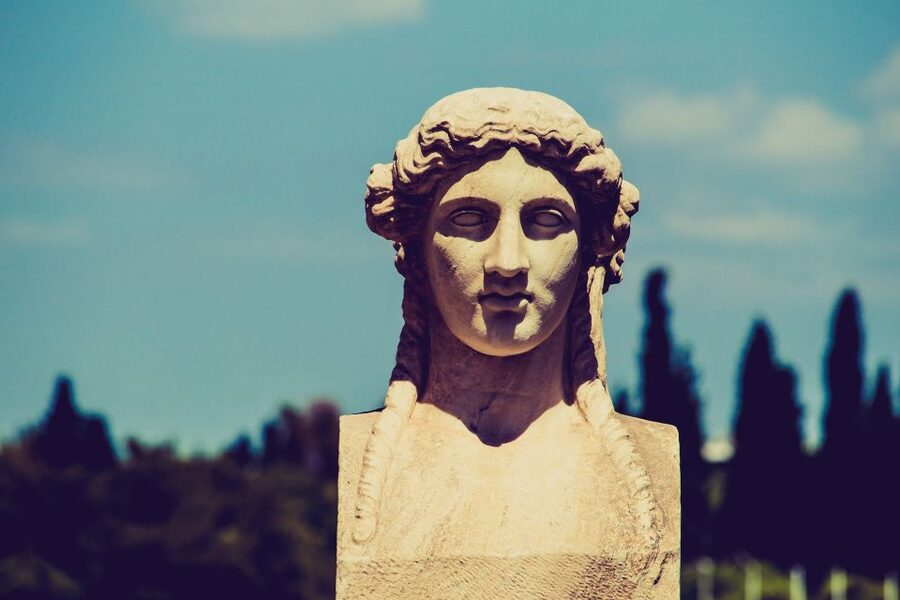
Ancient Athens is usually told through male philosophers, generals, and lawmakers. This walk changes the angle. With guide Maelle, you follow the lives of women from different social classes while looking at familiar places such as the Agora, Pnyx, and Acropolis. Stories of Sappho, Aspasia, and Agnodice give the tour a human face, while Athena, Penelope, Demeter, and Pandora show how myth helped shape ideas about women.
I like two things especially. First, the tour connects grand monuments with ordinary life, so you hear not only about famous women but also about marriage, work, religion, and social limits. Second, Maelle keeps the experience conversational, asking questions and welcoming discussion rather than delivering a fixed speech. The main consideration is practical: this is a two-hour walk with steps and uneven ground, and archaeological sites are viewed from outside rather than entered.
Key points to know before booking
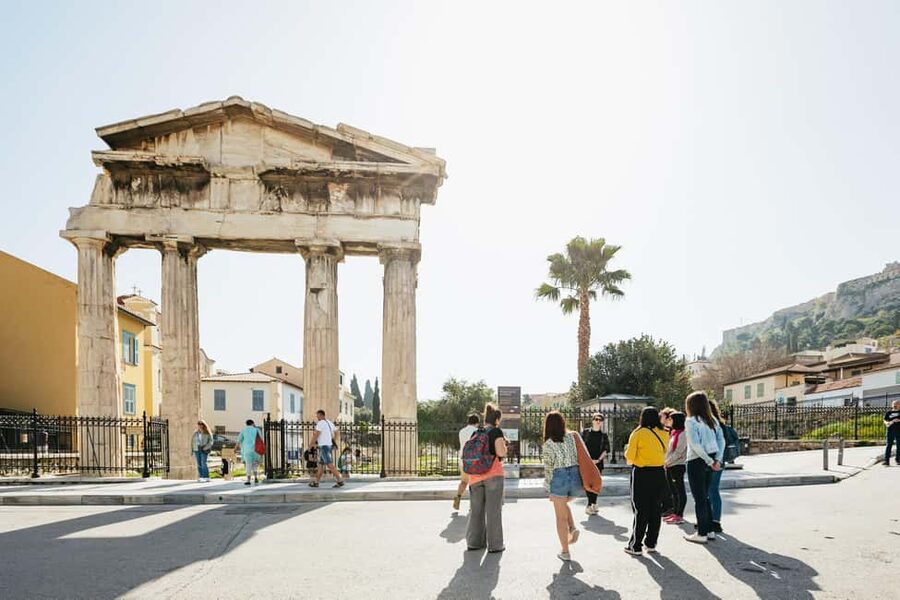
- A female view of famous Athens: See Hadrian’s Library, the Agora, Pnyx, and the Acropolis from a perspective often missing from standard city tours.
- Stories beyond Athens: The discussion includes women connected with Sparta, Thebes, and other parts of ancient Greece, not only the citizens of Athens.
- A strong guide-led experience: Maelle is praised for her clear explanations, humor, warmth, and ability to answer broader questions about Greek history.
- Myth meets daily life: Athena, Pandora, Demeter, and Penelope help explain how stories shaped social expectations.
- A manageable but active walk: The route lasts about two hours, includes steps, and ends at Filopappou Hill with views toward the Acropolis.
- Good value for a focused tour: At $88 per person, the price makes the most sense if you want interpretation and discussion, not just a quick list of monuments.
Why this Athens walk feels different
The subject is the real reason to book this experience. Athens has no shortage of tours about democracy, temples, and male thinkers. Far fewer ask what women were doing, what rights they had, how they spent their days, and how much of the ancient story has been filtered through male writers.
This tour does not pretend that all women in ancient Greece lived the same way. A wealthy Athenian woman, a Spartan woman, a foreign resident, an enslaved woman, and a poet such as Sappho occupied very different worlds. That distinction matters. It keeps the walk from turning ancient women into one broad category.
You also get a useful mix of fact, myth, and interpretation. The tales of Athena, Demeter, Penelope, and Pandora are not presented as simple records of real life. Instead, they help you consider what ancient stories taught people about female intelligence, loyalty, sexuality, motherhood, danger, and power.
The best moments are likely to come through conversation. Maelle’s style, as reflected in the experience, is relaxed and interactive. She asks questions, adjusts to the group, and handles subjects beyond the central theme. That makes the walk work for both dedicated history fans and companions who arrive with only a casual interest in ancient Greece.
More Ancient History Tours in Athens
- Athens: Ancient Greek Theater Performance
★ 4.7 · 2,481 reviews - Historical Delphi One Day Tour with Arachova Stop & Expert Guide
★ 4.5 · 1,247 reviews - From Athens: Ancient Corinth Day Trip with Canal & VR Guide
★ 4.6 · 1,073 reviews
Meeting at Monastiraki Square
The tour begins at the Holy Church of the Virgin Mary Pantanassa, in Monastiraki Square. Look for the guide holding a sign marked Women in Ancient Greece.
This is a useful starting point because Monastiraki places you right in the middle of modern Athens, close to the old city and its archaeological remains. The opening minutes help shift your attention from today’s shops and streets to the people who once moved through this part of Athens.
You will not need to arrange transport between stops. This is a continuous walking route. That is convenient, but it also means you should arrive ready to walk in the sun. Bring water, a sun hat, and sunscreen. Wear shoes that feel secure on steps and uneven paving.
Monastiraki and Hadrian’s Library
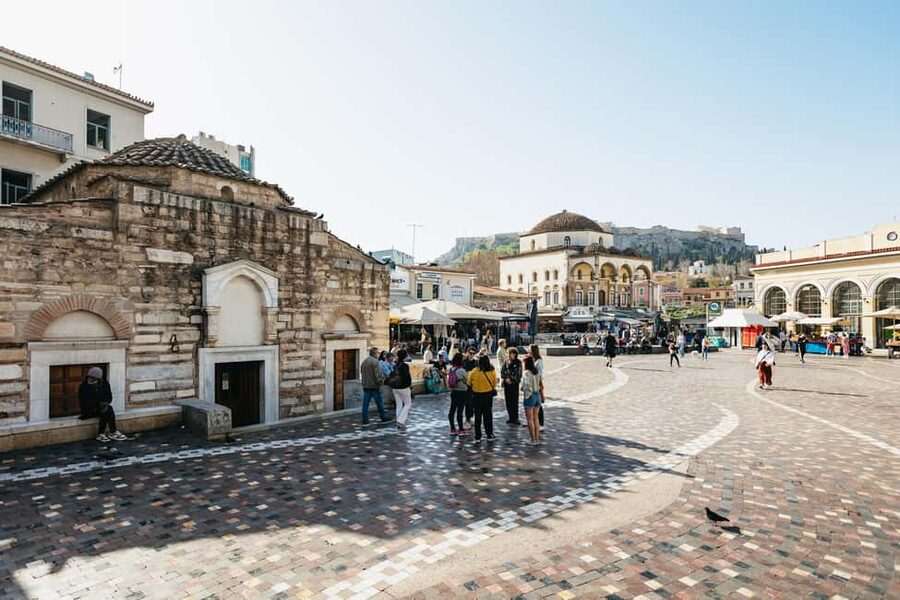
The first short stop in Monastiraki gives you an introduction to the city’s old center. From there, the route continues to Hadrian’s Library, where the focus turns to how public spaces functioned and who could use them.
Hadrian’s Library is a striking place to discuss access to education and public life. The name naturally brings books and scholarship to mind, but the larger question is who was allowed to learn, speak, write, or take part in intellectual culture. These questions lead neatly into the stories of women who did cross the usual boundaries.
The stop is brief, about five minutes, so do not expect a long architectural study. Its value comes from the way Maelle uses the site to frame the wider subject. If you want a detailed visit inside every monument, this walk will feel too quick. If you want a focused story tied to the streets around you, the pace works well.
Plaka and the city’s female stories
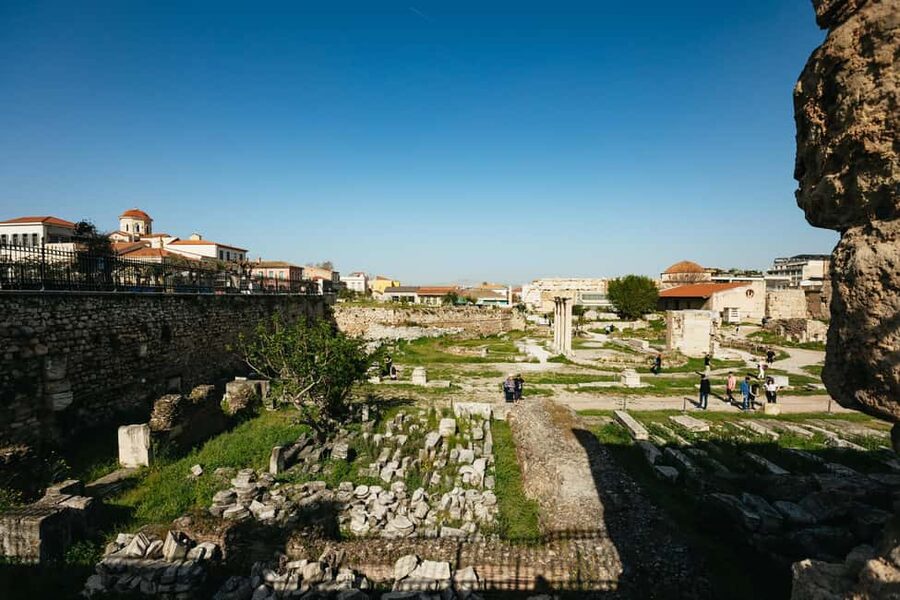
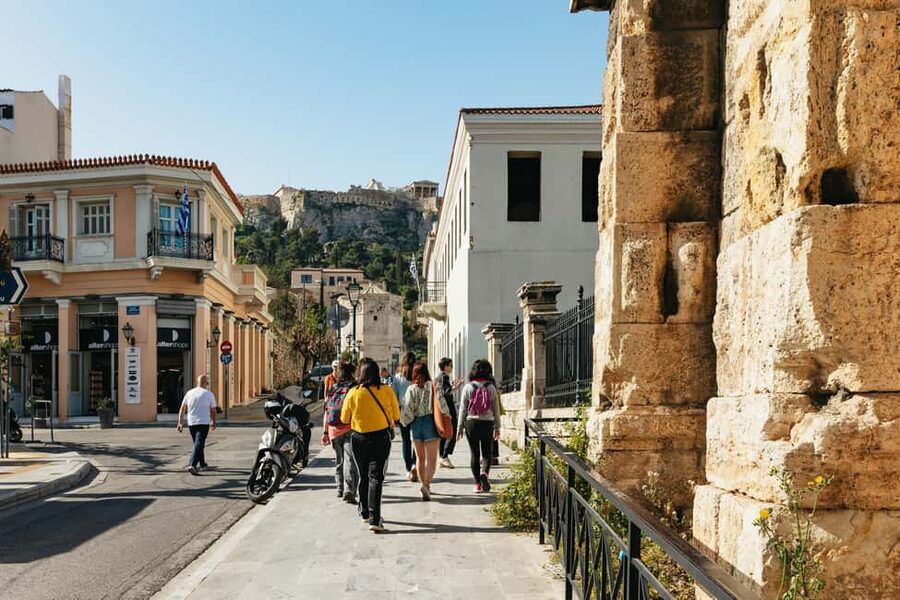
The route then passes through Plaka, with about ten minutes devoted to guided discussion. Plaka is one of the most atmospheric parts of central Athens, but the point here is not simply to admire its lanes.
This section gives the walk room to explore the difference between the Athens people imagine from mythology and the Athens inhabited by real women. Stories of goddesses can make women in ancient Greece appear powerful and free, yet the social position of ordinary women was much more limited. That contrast is one of the tour’s most useful ideas.
You may hear about the story of kidnapped Spartan girls and the mysterious women’s festival in Athens. These tales show how ritual, marriage, sexuality, and social control could overlap. They also make the past easier to grasp than a string of dates and names.
More Ancient History Tours in Greece
- Acropolis, Parthenon & Athens Old City Heritage Walking Tour
★ 4.5 · 876 reviews - Private Biblical Tour Ancient Corinth & Isthmus Canal from Athens
★ 5.0 · 762 reviews - Athens: Ancient Corinth & Nafplio Full Day Trip with Swim
★ 4.8 · 531 reviews - Athens Skip the Line: Open Air Ancient Greek Theatre Performance
★ 4.5 · 520 reviews
The Gate of Athena Archegetis
At the Gate of Athena Archegetis, the tour returns to mythology and civic identity. Athena was associated with wisdom, strategy, and the protection of Athens, yet the city’s political system did not give ordinary women the same public role as male citizens.
That tension is worth pausing over. A city could honor a female deity while restricting the movement, legal authority, and public voice of many living women. The tour uses mythology not as decoration, but as a way to ask what a culture praises in stories and what it permits in daily life.
The stop lasts around ten minutes. It is a good place to listen closely, since the meaning of the monument matters more than a long inspection of the gateway itself.
The secret stop and stories usually left out

A further ten-minute stop is listed as a secret stop, so the exact location is not specified in advance. That small mystery adds variety to the route, but you should not book the tour expecting a major monument at every pause.
The purpose seems to be space for a lesser-known story or a less obvious corner of the old city. This is where the walk’s central promise becomes clearest: you are not simply ticking off Athens sights. You are looking for traces of women in places usually explained through politics, architecture, and male public life.
The tour also brings in figures who challenged expectations. Sappho represents female poetry and intellectual expression. Aspasia raises questions about women, influence, and public conversation. Agnodice is linked with medicine and the struggle to practice a profession reserved for men. Their stories show that ancient society had rules, but individuals did not always fit neatly inside them.
The Ancient Agora from a different angle
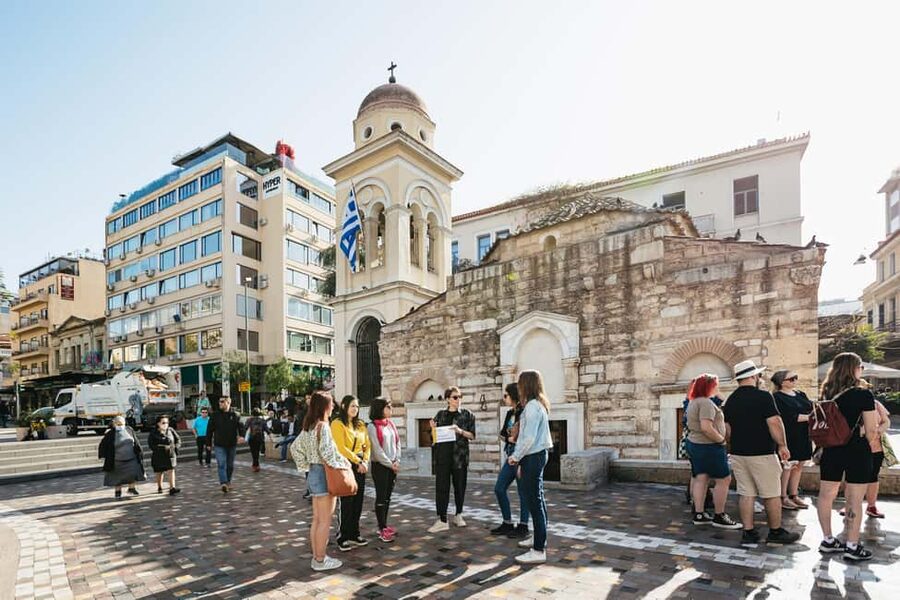
The Ancient Agora receives about ten minutes of guided attention, with the site viewed from outside rather than entered. The Agora is one of the most important places on the route because it was central to civic and commercial life.
Standard explanations often focus on assemblies, courts, philosophy, and male citizens. Here, you consider who supported that public world and who was excluded from it. A discussion of democracy feels different when you ask which people had the right to vote and which people’s labor made public life possible.
That does not mean the tour dismisses the achievements of Athenian democracy. Instead, it adds a needed question: democracy for whom? The Pnyx later makes that issue even sharper.
If entering the Agora is a priority, plan a separate visit. Archaeological admission is not included, and this experience focuses on exterior views. That can be an advantage if you have limited time, since you get historical context without spending hours inside each site.
Pnyx and the limits of democracy
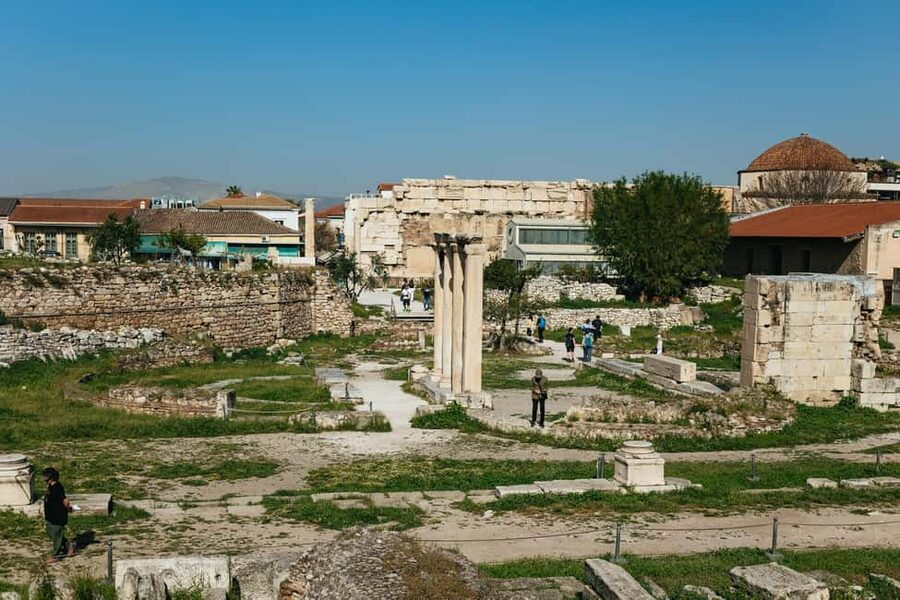
The walk continues to Pnyx, where the first democratic votes were cast. The stop lasts about fifteen minutes, making it one of the longer pauses on the route.
This is an especially strong setting for the tour’s central theme. Pnyx represents public speech and political participation, but women were not part of the voting citizen body in the same way as adult male Athenians. Standing in a place tied to democracy while discussing exclusion gives the idea real weight.
You may also consider how democracy depended on categories. Citizenship, gender, birthplace, and legal status shaped who could speak and who had to remain outside the political circle. The tour helps you see that ancient Athens was both a remarkable experiment in civic participation and a society built on firm exclusions.
For many people, this will be the most thought-provoking part of the route. It links ancient political ideals with questions that still matter today, without requiring the walk to become a modern political lecture.
The Acropolis view and Filopappou Hill

After Pnyx, the route includes a viewpoint and continues toward Filopappou Hill. The view toward the Acropolis gives you the classic Athens scene, but the meaning has changed by this point.
You have spent the walk considering the people who lived around the monuments, not just the monuments themselves. The Acropolis is no longer only a symbol of temples and civic glory. It becomes part of a larger city where women worshipped, worked, raised families, created art, and negotiated strict social rules.
Filopappou Hill is the final guided stop, with about ten minutes for sightseeing and discussion. The hill adds a scenic finish and gives the group a little space to reflect. The route ends at a kiosk at Rovertou Galli 69, with two possible drop-off locations listed for the conclusion.
The final stretch is also where the physical demands matter most. You will encounter steps, and the tour is not suitable for wheelchair users or people with mobility impairments or heart problems. If heat or hills are difficult for you, ask yourself if a two-hour outdoor walk is a sensible match.
What Maelle adds to the experience
The guide can make or break a history walk, and Maelle is the clear strength here. She is repeatedly described as warm, funny, passionate, and able to explain difficult subjects without making the experience feel like a classroom.
That balance is important. Women’s lives in ancient Greece involve legal restrictions, unequal power, violence, marriage customs, and social roles that can be hard to discuss in a light way. Maelle’s conversational approach gives the subject room to be serious without becoming grim.
She also appears comfortable with questions outside the planned subject. That helps if someone in your group wants to ask about a monument, mythology, or another part of Greek history. The walk is structured, but it does not sound rigid.
A small gift is included, and some visitors have received postcards connected with the women discussed during the walk. Treat that as a pleasant extra rather than the reason to book. The real value is the guide’s interpretation and the chance to ask questions in a small private setting.
Is $88 a fair price?
The cost is $88 per person for two hours. That is not a bargain-priced city stroll, so the value depends on what you want from Athens.
You are paying for a specialist subject, a live guide, a planned route through several historic areas, and a private group format. If your group is genuinely interested in women’s history, mythology, and social structures, the focused discussion can justify the price. It is also useful early in a city stay, since Maelle offers suggestions for other places to visit and helps you understand the monuments you will see later.
The price does not include food, drinks, or admission to archaeological sites. Since the stops are exterior views, you should add separate entrance fees if you want to visit the Agora or other sites from inside.
For a first-time visitor who wants a broad introduction to every major Athens sight, another general city tour may cover more ground. For someone who has already seen the Acropolis or wants an alternative to the standard male-centered story, this offers better value.
Who should book this walk?
I would choose this tour if you want history told through daily life, not only rulers and buildings. It suits adults, older children who can handle a serious subject, couples, friends, and families interested in women’s history or mythology.
It is also a good choice for companions with different levels of background knowledge. The stories are specific enough for history fans, while the guide’s explanations make the subject approachable if you are starting from scratch.
The walk is less suitable if you need step-free access, want to enter every archaeological site, or prefer a fast sightseeing tour with little discussion. The route is active but not designed as a fitness outing. Sun, steps, and uneven streets are part of the deal.
FAQ
Where does the tour start?
Meet your guide in Monastiraki Square, in front of the Holy Church of the Virgin Mary Pantanassa. The guide will hold a sign marked Women in Ancient Greece.
How long does the tour last?
The walking tour lasts two hours.
What languages are available?
The live tour guide is available in English or French.
Is this a private tour?
The activity is described as a private group experience. A private tour is included if that option is selected during booking.
Which places are visited?
The route includes Monastiraki, Hadrian’s Library, Plaka, the Gate of Athena Archegetis, a secret stop, the Ancient Agora, Pnyx, a viewpoint, and Filopappou Hill.
Can I enter the archaeological sites?
No. The experience provides exterior views only. Tickets to archaeological sites are not included.
Is food included?
No. Food and drinks are not included.
What should I bring?
Bring water, sunscreen, and a sun hat. Comfortable shoes are also sensible because the route includes steps.
Is the tour suitable for wheelchair users?
No. The tour is not suitable for wheelchair users or people with mobility impairments. It may also be unsuitable for people with heart problems.
Can I cancel for a full refund?
Yes. You can cancel up to 24 hours in advance for a full refund. You can also reserve now and pay later.
Should you book Athens: Women in Ancient Greece?
Book it if you want to understand Athens through the women who lived within its laws, myths, homes, markets, and public spaces. The combination of Sappho, Aspasia, Agnodice, goddesses, ordinary women, and democratic Athens gives you a fuller picture than a standard monument tour.
The strongest reason to go is Maelle’s style. You get a focused subject, clear explanations, lively questions, and room to connect ancient life with larger issues. Just bring water, accept that the archaeological sites are viewed from outside, and be ready for steps.
At $88, this is a specialist walking tour rather than a cheap orientation stroll. For the right audience, especially anyone who wants the female stories usually left out, it is a worthwhile addition to an Athens itinerary.
Newest history tours we have reviewed in Athens
- Athens: The History of Greek Mythology Private Tour★ 4.7 · 53 reviews
- Athens: Ancient Corinth & Nafplion Guided Premium Tour★ 4.7 · 237 reviews
- Athens: Be an Ancient Sculptor: Craft Your Greek Masterpiece★ 5.0 · 26 reviews
- Athens: Roman Agora & Ancient Agora E-ticket & 2 Audio Tours★ 4.1 · 107 reviews
- Athens: Ancient Greek Theatre Murder Mystery Experience★ 4.8 · 298 reviews
- Athens: Corinth Canal and Ancient Olympia Private Trip★ 4.6 · 21 reviews
- Athens: Kotsanas Ancient Greek Technology Museum Guided Tour★ 5.0 · 29 reviews
- Athens: Bike Tour of Athens Historical Centre★ 5.0 · 61 reviews
Ancient History Tours, compared.

Colosseum: Underground and Ancient Rome Tour
Read our review →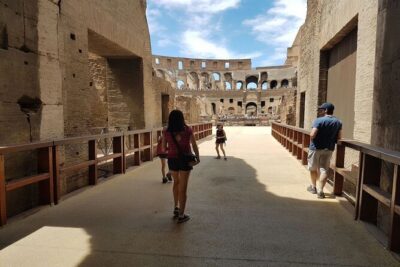
Colosseum & Ancient Rome with Arena Floor Option I Max 6 People
Read our review →
Colosseum, Ancient Rome Tour or AudioGuided Tour
Read our review →
Colosseum Underground & Ancient Rome Guided Tour
Read our review →

Taormina: Ancient Theater Skip-the-Line Ticket & Audio Guide
Read our review →
Discover the Ancient Ruins of Pompeii: Day Trip from Rome
Read our review →
Discover Matera, the ancient city – English tour
Read our review →Browse the lists this tour appears in