
Review · ATHENS HISTORY TOURS
Athens: Be an Ancient Sculptor: Craft Your Greek Masterpiece
The most unusual part of this Athens activity is that ancient Greek culture is not left behind glass. You begin in a room designed like an ancient symposium, study wine vessels and their designs, then sit down with clay and make something yourself. It is a pleasant shift from looking at old objects to working with your hands.
I like the clear three-part flow: ancient wine and social life, then Greek art, then a practical sculpting lesson. I also like the patient teaching style associated with Manos, who explains each step and gives people time to improve their work.
The main consideration is access. The workshop is not suitable for wheelchair users, and you should wear clothes and shoes that can handle a little clay. It is also best for people who enjoy making things, not for anyone seeking only a short museum visit.
Key points at a glance
- Ancient symposium setting: Learn how wine connected with Greek social, religious, artistic, and philosophical life.
- Kraters and kylixes: Examine replicas of the vessels used for mixing and drinking wine.
- Gallery with old and new Greek art: See recreations of ancient statues beside modern works inspired by mythology.
- Patient sculpting instruction: Manos guides you through facial shaping, texture, and small details.
- Take-home artwork: Keep the small clay sculpture you create during the workshop.
- Convenient Kallithea location: Reach Ancient Symposium from central Athens by bus or metro, near Syngrou Avenue and a short distance from the Acropolis Museum.
Why this workshop makes ancient Greece feel more personal
Athens offers plenty of grand monuments, but museums can sometimes leave you in spectator mode. This experience gives you a modest, useful connection to the past: you learn how Greek artists worked, then try a small part of the process yourself.
The workshop takes place at Ancient Symposium in Kallithea, on Doiranis 39. It is just a few minutes from the Acropolis Museum and sits on the first parallel street of Syngrou Avenue, the major road linking central Athens with the coast. The setting is quieter than the busiest central sights, while still being easy to reach.
The experience lasts two hours and is offered in Greek and English. You receive the clay, tools, instruction, gallery tour, and finished artwork for $58 per person. That price is not a bargain-basement craft class, but it covers a guided cultural presentation as well as hands-on instruction and materials. If you want one activity that combines a talk, art display, and making session, the cost is reasonable.
Arrive about 10 minutes early. That gives you time to find the place, settle in, and meet the instructor before the activity begins.
More Ancient History Tours in Athens
- Athens: Ancient Greek Theater Performance
★ 4.7 · 2,481 reviews - Historical Delphi One Day Tour with Arachova Stop & Expert Guide
★ 4.5 · 1,247 reviews - From Athens: Ancient Corinth Day Trip with Canal & VR Guide
★ 4.6 · 1,073 reviews
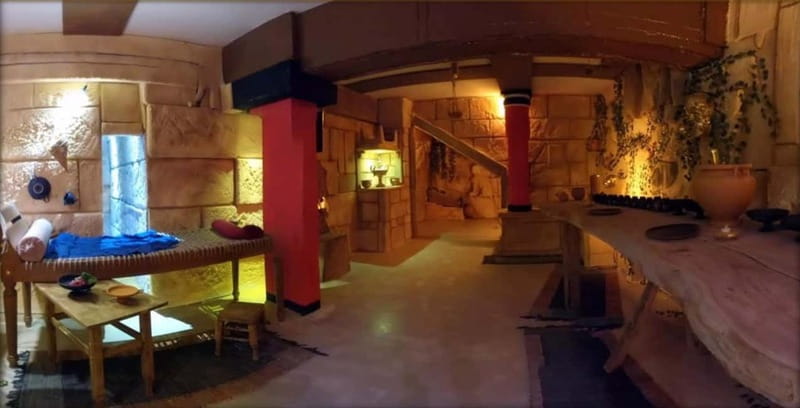
Inside the Ancient Room, where wine was part of social life
The first section takes place in the Ancient Room, a specially designed space that recreates the atmosphere of an ancient Greek symposium. Here, wine is not treated as a modern tasting product. You learn about its production, its place in social gatherings, and its use in religious ceremonies.
This context matters because wine in ancient Greece was tied closely to conversation, ritual, art, and public life. The symposium was a social setting where people drank, talked, listened to music, and discussed ideas. The presentation helps explain why wine vessels were made with such care and why their painted scenes can tell us so much about Greek customs.
You will see replicas of vessels such as kraters, used for mixing wine with water, and kylixes, shallow drinking cups with wide bowls and decorated interiors. Their shapes were practical, but their surfaces also carried scenes and patterns. Looking closely at these objects gives you a useful link between daily life and visual art.
The wine section should appeal even if you are not especially interested in wine itself. The point is not simply what ancient Greeks drank. It is how an ordinary object could carry stories about gods, festivals, music, social behavior, and status.
One helpful feature is the chance to ask questions in a small, direct setting. The presentation is designed to lead into the art and sculpture portions, so it does not feel like a separate lecture placed before the workshop.
From painted vessels to Greek sculpture
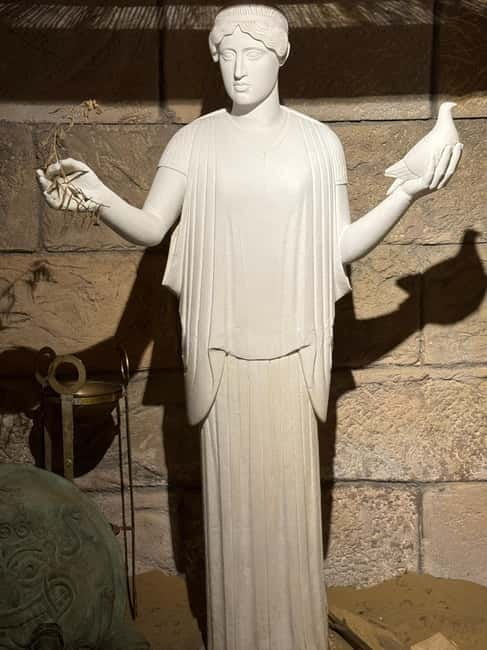
After the Ancient Room, you move into the Ancient Symposium Gallery. This space brings together recreations of ancient statues and contemporary Greek works inspired by mythology.
The combination gives you two ways to look at Greek art. Replicas help you understand the forms associated with antiquity, while modern pieces show how those forms and myths continue to influence artists. You are not simply told that Greek art matters. You can compare older ideas with newer interpretations in the same visit.
The guide explains how ancient Greek artists approached sculpture and how statues served religious, decorative, and historical purposes. That is useful preparation for your own work. Once you understand that a sculpture might honor a god, commemorate a person, or decorate a public place, you can look at its pose and expression with more purpose.
The gallery also gives the workshop a stronger sense of place. You are not making a random clay object after a generic craft lesson. You are working after seeing examples connected to Greek mythology and sculpture. For many people, that link will make the final piece feel more meaningful.
Do not expect a large museum collection or a full survey of Greek art. This is a focused gallery visit attached to a workshop. Its strength is the connection between what you see and what you do next.
Learning to shape a small Greek-inspired sculpture
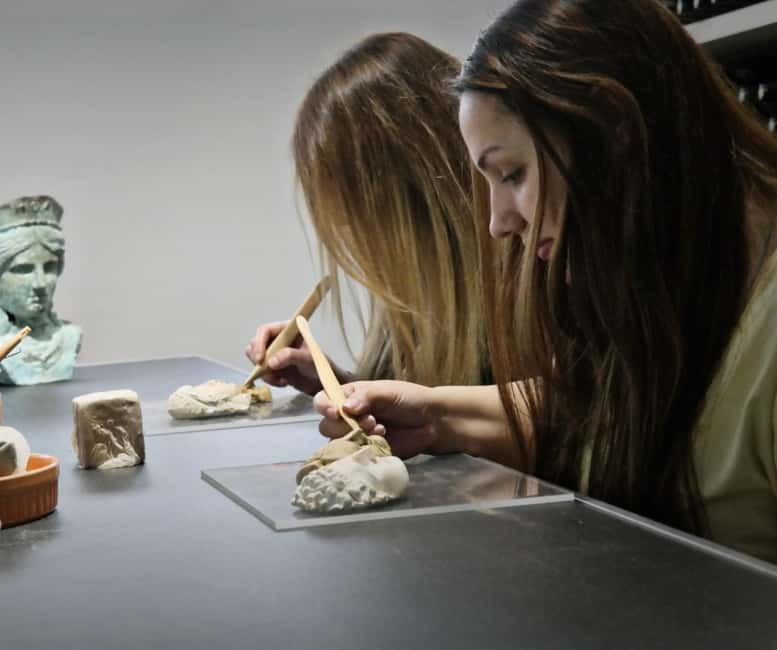
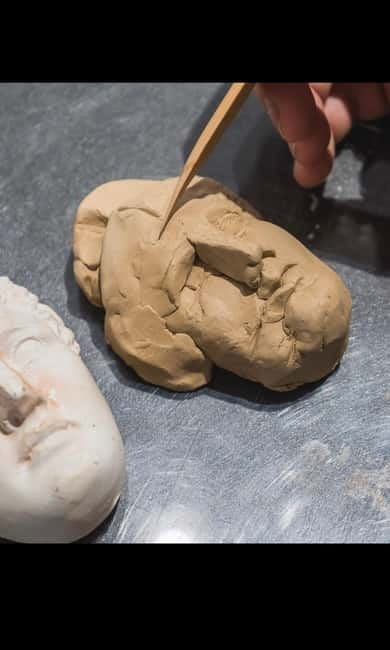
The final part is the most active. You receive clay and professional sculpting tools, then learn basic methods for shaping a small sculpture.
The instruction covers facial shaping, detailing, and texture. Those sound simple, but they are exactly the areas where a beginner can lose control of a piece. A face can become flat, features can shift, and surface marks can make the work look rough rather than intentional. Step-by-step help makes the process less frustrating.
The teaching style is calm and patient. Manos is described as taking time with each stage, explaining carefully, and helping participants improve their pieces rather than rushing them toward a finish. That matters in a two-hour session, especially if this is your first attempt at sculpture.
You should not expect to produce a museum-quality statue in one sitting. The goal is a small personal work inspired by ancient Greek art. The pleasure comes from learning how form develops under your hands and seeing a recognizable object take shape.
The class has a relaxed feel, with an interior decorated in an ancient Greek style. Background music also adds to the atmosphere. Those details are not essential to the craft itself, but they help the activity feel distinct from a standard art lesson.
Wear comfortable clothes and shoes. Clay work is hands-on, and you will have a better time if you are not worried about keeping a smart outfit spotless. Smoking is not allowed.
More Ancient History Tours in Greece
- Acropolis, Parthenon & Athens Old City Heritage Walking Tour
★ 4.5 · 876 reviews - Private Biblical Tour Ancient Corinth & Isthmus Canal from Athens
★ 5.0 · 762 reviews - Athens: Ancient Corinth & Nafplio Full Day Trip with Swim
★ 4.8 · 531 reviews - Athens Skip the Line: Open Air Ancient Greek Theatre Performance
★ 4.5 · 520 reviews
Taking home a sculpture you made yourself
The finished piece is included as part of the experience. You take home the small sculpture you create, giving you something more personal than a shop-bought souvenir.
It may not be perfectly polished, and that is part of the appeal. A handmade object carries the memory of the afternoon, including the parts that took several attempts to get right. The piece can also remind you of the connection between the Ancient Room, the gallery, and your own workbench.
The supplied information does not state whether sculptures are fired or finished later, so do not book this expecting a professionally glazed ceramic object. Think of it as a small clay artwork made during the session and kept as a record of your time there.
This is one reason the activity works well for couples, families with older children, friends, and solo visitors who want a quieter cultural break. You can talk while you work, but you also have enough practical instruction to stay occupied.
Is $58 a fair price in Athens?
At $58 per person, this is more expensive than simply walking through a museum, but it includes much more than admission. You receive a guided Ancient Room presentation, a gallery tour, an instructor-led sculpture class, all materials and tools, and a souvenir artwork.
I would see the value in the experience if you want more than sightseeing photographs. The activity gives you a story about Greek wine, examples of Greek art, and a creative task that helps you remember both. The two-hour length is also manageable in a busy Athens schedule.
The value is less clear if you are mainly looking for a serious pottery course or a long studio session. The workshop is an introduction, not advanced training. You will learn basic techniques and create a small piece, rather than spend a full day developing a complex sculpture.
The strong point is the mix. You are paying for a cultural visit with a making session attached, not just for clay and tools.
Getting to Ancient Symposium in Kallithea
Ancient Symposium is at Doiranis 39 in Kallithea, near the Acropolis Museum and the Syngrou Avenue corridor. The area is connected by bus stops and metro service, making it practical from central Athens.
The location can work well as part of a museum day. You could arrange the workshop around time at the Acropolis Museum, though you should allow enough time for transport and finding the venue. The activity provider describes the neighborhood as quiet and easy to approach.
Many Athens hotels are in the surrounding area, so the venue may be close to where you are staying. Still, check your route before setting out, particularly if your appointment is early or you are carrying luggage. Arriving 10 minutes ahead is sensible.
There is no need to bring equipment. Clay and tools are supplied. Bring only comfortable clothing, suitable shoes, and enough care to transport your finished sculpture afterward.
Who will enjoy this Athens activity most?
I would recommend it to you if you like cultural activities that ask for some participation. It suits people who want to understand ancient Greek art through a direct, practical lesson rather than only through labels and lectures.
It is also a good choice for:
- Couples looking for a shared activity away from the busiest sights
- Families who want a creative cultural experience
- Solo visitors who appreciate patient, guided instruction
- Beginners curious about sculpture
- Anyone who wants a small handmade souvenir
The class may be less suitable if you dislike working with your hands, want a large archaeological collection, or expect polished professional results. It is also not suitable for wheelchair users, according to the activity information.
The language options are Greek and English. If you are booking for a group with different comfort levels, English instruction should make the process easier for English-speaking participants.
What the strong praise tells you about the experience
The most consistent strength is the instructor’s manner. Manos is repeatedly described as patient, calm, friendly, and willing to explain each step. One particularly useful detail is that he took time to help a participant improve a sculpture and even waited briefly for a late-arriving friend.
That suggests the class is not built around a strict production line. You should have room to ask questions and correct your work. In a creative class, that matters more than a flashy setting.
The atmosphere also receives strong approval. The Greek-themed interior and background music help create a setting suited to the subject. Several people describe the activity as fun, relaxing, and different from the usual Athens program.
There is also interest in the venue’s wine offerings. One participant bought a bottle and enjoyed it, while another planned to return for a wine tasting. The sculpture experience itself does not include a wine tasting, so treat that as a possible separate activity rather than part of this booking.
Booking flexibility and practical limits
You can cancel up to 24 hours before the activity for a full refund. The reserve-now-and-pay-later option can help if your Athens schedule is still changing.
Starting times depend on availability, so check the selected date carefully. The session lasts two hours, which makes it easy to fit around other plans, but you should not cut it too close to museum visits or transport connections.
The activity is offered in Greek and English. Smoking is not permitted. Wear clothes and shoes that let you sit, handle clay, and work without worrying about every mark.
Should you book the Ancient Symposium sculpture workshop?
Book it if you want a hands-on link to ancient Greece, especially one that combines wine culture, art, and a beginner sculpture lesson. The patient instruction, calm setting, and take-home piece give the experience more substance than a quick craft stop.
I would be more cautious if your main goal is advanced ceramics, a full archaeological museum, or a wheelchair-accessible activity. You should also arrive ready to make a small, imperfect artwork rather than a finished masterpiece.
For most visitors who have already seen Athens’ major ruins and want to spend two slower hours doing something creative, $58 is a fair price. You leave with a better sense of how art fit into ancient Greek life and a sculpture made by your own hands.
FAQ
Where is the Ancient Symposium sculpture workshop?
It is located at Doiranis 39 in Kallithea, on the first parallel street of Syngrou Avenue. It is a short distance from the Acropolis Museum and can be reached from central Athens by bus or metro.
How long does the experience last?
The activity lasts two hours.
What languages are available?
Instruction is available in Greek and English.
What is included in the price?
The experience includes a guided tour of the Ancient Greek Room, a gallery tour, the interactive sculpture workshop, clay, professional tools, guidance from an experienced sculptor, and the small sculpture you create.
Do I get to keep my sculpture?
Yes. You take home the small sculpture made during the workshop as a souvenir.
Do I need to bring sculpting tools or clay?
No. All materials and tools needed for the activity are provided.
What should I wear?
Wear comfortable clothes and shoes suitable for working with clay. Arriving about 10 minutes early is also recommended.
Is the activity suitable for wheelchair users?
No. The activity is listed as not suitable for wheelchair users.
Can I cancel the booking?
Yes. You can cancel up to 24 hours in advance for a full refund. A reserve-now-and-pay-later option is also available.
Newest history tours we have reviewed in Athens
- Athens: The History of Greek Mythology Private Tour★ 4.7 · 53 reviews
- Athens: Women in Ancient Greece★ 5.0 · 98 reviews
- Athens: Ancient Corinth & Nafplion Guided Premium Tour★ 4.7 · 237 reviews
- Athens: Roman Agora & Ancient Agora E-ticket & 2 Audio Tours★ 4.1 · 107 reviews
- Athens: Ancient Greek Theatre Murder Mystery Experience★ 4.8 · 298 reviews
- Athens: Corinth Canal and Ancient Olympia Private Trip★ 4.6 · 21 reviews
- Athens: Kotsanas Ancient Greek Technology Museum Guided Tour★ 5.0 · 29 reviews
- Athens: Acropolis and Ancient Athens Tour★ 4.8 · 18 reviews
Ancient History Tours, compared.
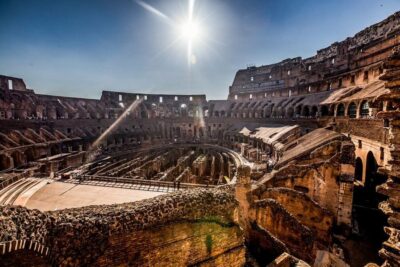
Colosseum: Underground and Ancient Rome Tour
Read our review →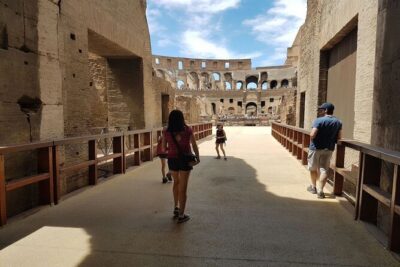
Colosseum & Ancient Rome with Arena Floor Option I Max 6 People
Read our review →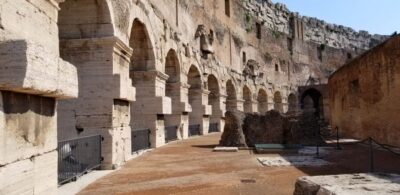
Colosseum, Ancient Rome Tour or AudioGuided Tour
Read our review →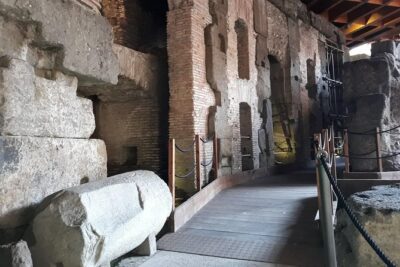
Colosseum Underground & Ancient Rome Guided Tour
Read our review →
Taormina: Ancient Theater Skip-the-Line Ticket & Audio Guide
Read our review →
Discover the Ancient Ruins of Pompeii: Day Trip from Rome
Read our review →
Discover Matera, the ancient city – English tour
Read our review →Browse the lists this tour appears in