
Review · GREECE HISTORY TOURS
Ancient Corinth Self-Guided Tour with 3D & Audio (No Ticket)
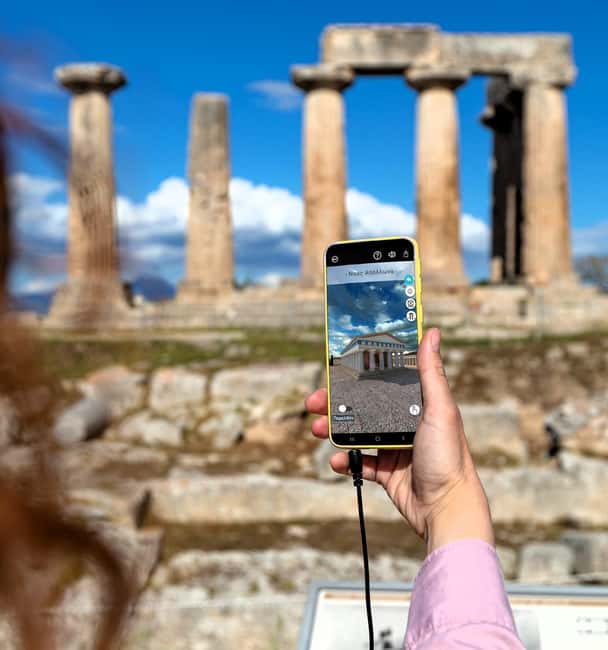
Ancient Corinth is easier to understand when you can see the city rebuilt around you. This $8 smartphone tour adds 3D views, audio stories, short videos, and panoramic scenes to the stones spread across the archaeological site. You control the pace, pause when you like, and avoid the shuffle of a fixed group.
I especially like the offline access, which saves you from worrying about Greek mobile data, and the freedom to match the visit to your own energy. The 3D models of the Temple of Apollo and the Bema are useful additions, since bare foundations do not always explain themselves. The main caution is that the entrance ticket costs extra, and the German audio has drawn sharp criticism for its speaking quality and thin content.
Key points at a glance
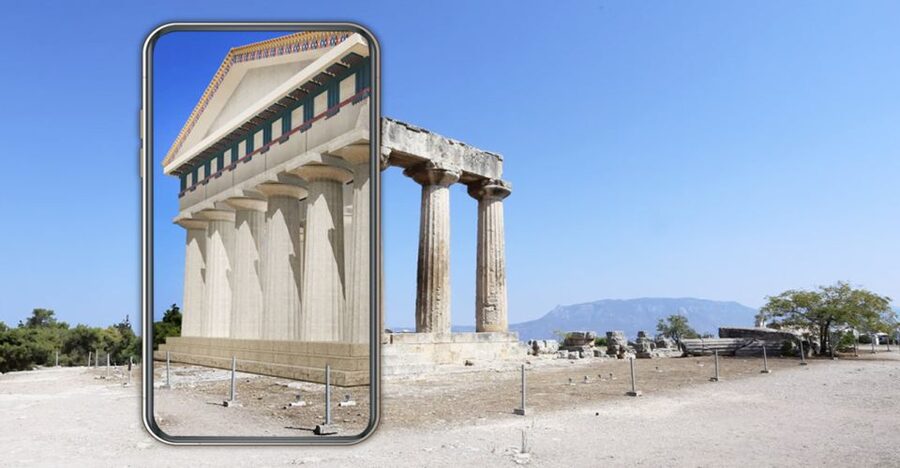
- 3D Corinth in your hand: Explore digital models of the Temple of Apollo and the Bema alongside the actual remains.
- Offline after download: Load the app on Wi-Fi before you arrive, then listen without internet or roaming charges.
- Five days of access: Your tour remains valid for five days from first activation, useful if your plans shift.
- No guide or meeting point: Drive or take a taxi to the site, park nearby, and begin independently.
- Eight audio languages: English, Greek, Spanish, Italian, French, German, Dutch, and Chinese are available.
- A modest price with an extra cost: The app costs $8, but the full archaeological-site ticket is €15, or €8 at the reduced rate.
What the $8 Ancient Corinth tour actually offers

This is not a guided walk with a person waiting at the gate. It is a digital companion for the archaeological site, supplied through the Culture App. After booking, you receive instructions by email for downloading the app and tour material. Check your spam folder if the message does not appear quickly.
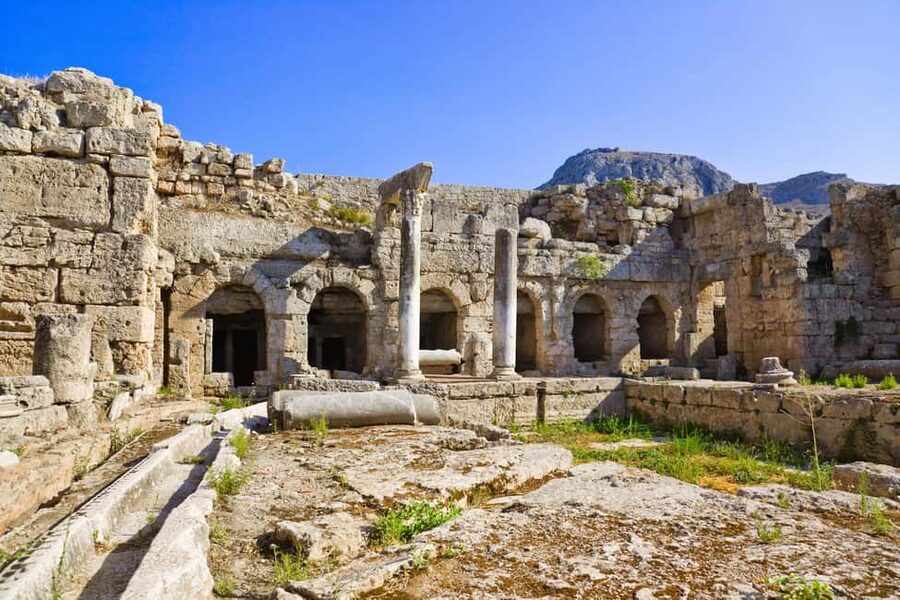
The package combines audio narration and written information with 3D reconstructions, panoramic views, and short videos. That mix matters at Ancient Corinth. You will see columns, foundations, paving, and scattered remains, but the ancient city was far larger and more active than the surviving stone suggests. The digital material helps connect those fragments to a wider picture.
You can follow the cultural routes in the order provided or move around independently. There is no fixed starting time, no group size, and no pressure to keep up. If you want ten minutes at the Temple of Apollo and only a quick look at another area, the app lets you make that choice.
The tour is valid for five days from first activation. This does not mean a five-day guided visit. It means you can use the digital content during that period, which gives you room to plan the site around weather, transport, or a changing Peloponnese itinerary.
More Ancient History Tours in Greece
- Athens: Ancient Greek Theater Performance
★ 4.7 · 2,481 reviews - Historical Delphi One Day Tour with Arachova Stop & Expert Guide
★ 4.5 · 1,247 reviews - From Athens: Ancient Corinth Day Trip with Canal & VR Guide
★ 4.6 · 1,073 reviews
Reaching the archaeological site without a meeting point
You will need to arrange your own transport. The easiest options are a car or taxi. Follow the Ancient Corinth National Highway, Corinth to Patra, toward Patras, then take the Ancient Corinth exit. A parking lot sits next to the archaeological site.
That simple arrival plan is one of the tour’s strengths, but it also creates a responsibility for you. There is no guide to call from the roadside and no pickup service to smooth out a missed turn. Download the tour before setting out, charge your phone, and keep the booking email available.
The site visit works best when you arrive prepared with:
- Comfortable shoes
- Water
- A sun hat
- A fully charged smartphone
- Earphones or headphones
- About 200MB of free phone storage
Ancient Corinth is an outdoor archaeological site. Sun, uneven ground, and long periods on your feet can make a casual visit more tiring than expected. The information specifically recommends comfortable shoes, water, and sun protection, and I would treat all three as essential rather than optional.
Starting with the Temple of Apollo
The Temple of Apollo is the natural star of the experience. It gives you an immediate sense of Corinth’s age and importance, while the 3D model shows more than the surviving remains can provide on their own.
Use the audio before you move on. The narration gives context, and the reconstruction helps you picture the building as part of a working city rather than an isolated set of old columns. You can switch between the physical site and the digital version, checking the lines of the reconstruction against what remains in front of you.
This is where the app earns its modest price. A paper panel can identify a monument, but a 3D model gives you a more direct sense of form and scale. The feature is not a substitute for the original ruins. It is a visual aid that makes them easier to read.
The app also lets you revisit the material. If you miss a detail or want to hear a section again, you do not have to wait for a guide to finish or keep a group moving. That flexibility is particularly useful if one person in your party wants more history and another wants to keep walking.
Seeing the Bema through a digital reconstruction
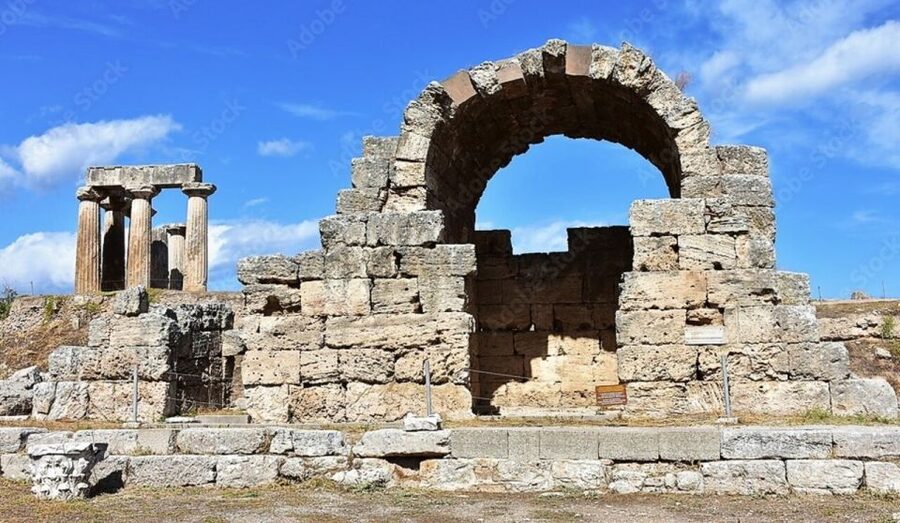
The Bema is another featured stop. The term refers to the raised platform associated with public speaking and civic life, and here the app gives you a 3D model to help explain the remains.
The value of this stop is interpretive. The physical stones can be difficult to read without guidance, but the digital model shows how the structure related to the surrounding city. You can use the narration and visual material together, then look back at the actual remains with a clearer idea of what you are seeing.
The app presents the site through routes that move across time and space. That approach can make the visit feel less like a checklist of monuments and more like a connected walk through Corinth’s public and religious areas. The exact order is still yours to control, so you can follow the suggested path or make your own.
One practical limitation is that your phone becomes part of the visit. Looking down at a screen can distract from the ruins, especially when you are trying to compare a 3D image with the site. I would listen first, look up, and use the screen only when the reconstruction adds something you cannot grasp from the ground.
Same streets, a different century:
- Historic Athens: Small Group Electric Bike Tour
★ 4.9 · 966 reviews - Acropolis, Parthenon & Athens Old City Heritage Walking Tour
★ 4.5 · 876 reviews - Private Biblical Tour Ancient Corinth & Isthmus Canal from Athens
★ 5.0 · 762 reviews - Ancient Olympia: Archaeological Site and Museum Entry Ticket
★ 4.3 · 555 reviews
Using panoramas to understand the city from above

The 360-degree panoramic views offer a wider perspective than you get from standing beside one monument. They help you see how the ancient city fit together and why Corinth’s location mattered at a crossroads of the Mediterranean.
These views are useful after you have seen individual remains. First look at the columns and foundations at ground level, then use the panorama to pull the pieces into a broader picture. It is a small change in viewpoint, but it can make the site feel less scattered.
The panoramic feature also gives you a way to orient yourself. Archaeological sites can blur together after several stops, particularly when labels and walls begin to look alike. A wide digital view helps you place the Temple of Apollo, the Bema, streets, and other areas within the same urban setting.
Do not expect the panorama to replace a physical lookout or an onsite guide. It is a digital view designed to support your understanding. Its value lies in connecting separate points, not in providing transport, a live commentary, or a new viewpoint outside the archaeological site.
Following cultural routes instead of wandering without context

The cultural routes are designed to take you through the site as a journey across time and space. That structure suits visitors who want more than isolated facts but do not want to join a formal tour.
I like this middle ground. You can begin with the suggested route, learn how the stops relate, and then break away when something catches your attention. The experience remains personal without becoming directionless.
The short videos add another format to the audio and text. If you learn better through images, the combination can make the material easier to retain. If you prefer to keep your phone in your pocket, you can rely more heavily on the narration.
The app is also useful for visitors who want to move slowly. One of the strongest benefits of a self-guided format is the lack of group pressure. You can stop for a photograph, replay a section, or take a break without making anyone wait. That freedom was the most consistently praised part of the experience, along with the ability to visit at your own pace.
Audio quality and language choices

The audio guide is offered in English, Greek, Spanish, Italian, French, German, Dutch, and Chinese. That is a strong range for a low-cost digital product, and it lets you choose the language in which you absorb historical detail most easily.
The English option is the safest choice if you are comfortable using it and are concerned about vocal quality. The German version has received especially poor feedback for pronunciation and limited content. One German user found the delivery difficult to tolerate and felt that the onsite information panels offered more value.
There was also a reported problem transferring a second-person license, along with frustration about the third-party setup. I would take a few minutes before visiting to confirm how many devices or users your booking covers. Do not assume that one purchase automatically transfers cleanly between two phones.
This is not a reason to reject the tour outright, but it is a real consideration. The product’s best feature is its visual material and flexibility. Audio quality may vary by language, so you should judge the $8 price partly on whether your chosen language works well for you.
Offline use, phone preparation, and practical limits
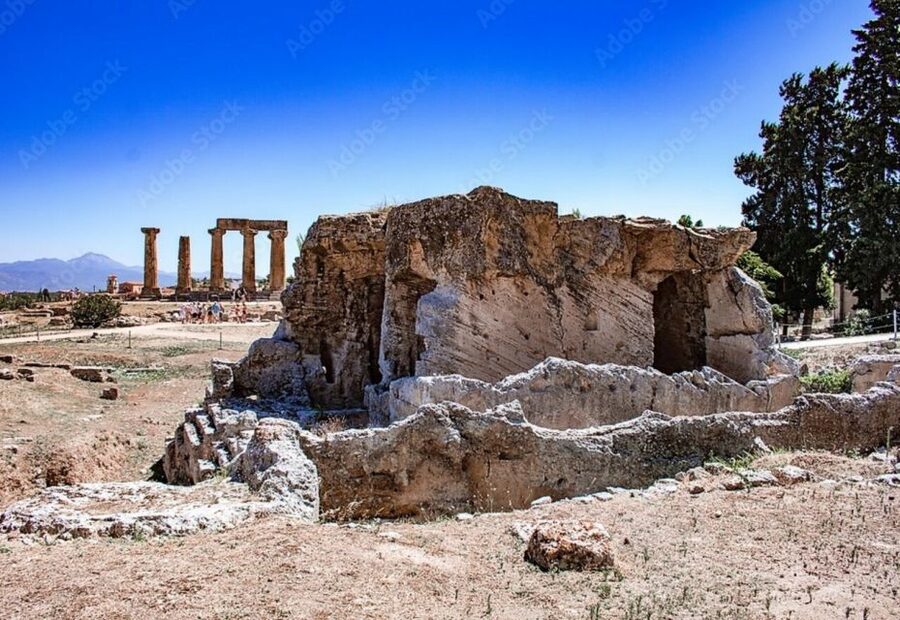
Download everything while connected to Wi-Fi before you leave for Ancient Corinth. The app uses about 200MB of storage, and the content works offline after it has been downloaded. You will not need internet access on site, which is helpful if your phone plan has roaming limits.
Charge your phone fully and bring your own earphones. Neither the smartphone nor headphones are included. A portable charger is not listed as part of the required equipment, so you should not count on one being supplied.
The app requires iOS 11.0 or later or Android 5.1 or later. Check this before booking if you use an older device. You also need enough storage space for the download.
The offline setup is a genuine advantage, but it adds a step that a live tour does not. If you arrive without downloading the content, the experience may be less smooth, and relying on site Wi-Fi or mobile data is not recommended. After the content has been downloaded, the paid price is not refundable, so make sure your phone and language settings work before completing the download.
Is the combined cost good value?

The app costs $8 per person. The full entrance ticket to the archaeological site is €15, with a reduced ticket of €8. Since admission is separate, your actual cost will be higher than the app price alone.
That matters when you compare this with a simple visit using the information panels. If you are content to read signs and walk independently, the extra $8 may not be essential. If you want reconstructions, audio, panoramas, and a route that adds context, the price is reasonable.
The strongest value comes from flexibility. A private guide costs more, and a fixed group cannot match the same freedom to pause or repeat a section. This app gives you a low-cost way to add structure without paying for a full guide service.
Still, do not buy it expecting a detailed live interpretation of every stone. The content is digital, and the quality may depend on the language version. The 3D animations are the clearest reason to book. The audio should be treated as useful support, with the possibility that some language tracks will be less polished than others.
Who will enjoy this self-guided visit most?
I would recommend it to independent visitors arriving by car or taxi who want background information without a fixed schedule. It also suits couples or families with different interests, since each person can move at a comfortable speed.
It is a good match for you if:
- You enjoy using your phone to add context to ruins.
- You want to avoid a group tour.
- You need offline access.
- You like visual reconstructions and panoramic views.
- You can prepare the download before arrival.
- You are comfortable supplying your own phone and headphones.
You might prefer another option if you want a live guide, hotel pickup, or help navigating the site. The experience does not include transportation, guide services, or entrance admission. It also may disappoint you if you expect every audio language to have the same level of polish.
Book at least 24 hours before arrival if you want the full cancellation safety net. You can cancel up to 24 hours in advance for a full refund, and the reserve-now, pay-later option keeps payment flexible. Once you download the content, however, the price is not refundable.
Should you book the Ancient Corinth app?
Book it if you want a low-cost visual guide that lets you explore Ancient Corinth on your own terms. The Temple of Apollo and Bema reconstructions, panoramic views, and offline access add useful layers to a site that can otherwise feel like a spread of disconnected stones.
Skip it if you already plan to hire a guide, dislike phone-based sightseeing, or need a polished audio experience in German. Remember to add the separate entrance ticket to your budget and download the app before arriving.
For most independent visitors, the $8 fee is fair, especially if you use the five-day validity to fit the visit around the rest of your Peloponnese plans. Just prepare your phone, bring water and headphones, and treat the app as a helpful companion rather than a replacement for the place itself.
FAQ
Is the entrance ticket included?
No. The archaeological-site ticket must be purchased separately. The full price is €15, and the reduced price is €8.
How long is the tour valid?
The digital tour is valid for five days from first activation.
Does the app work without internet?
Yes. Download the tour content before arriving, preferably on Wi-Fi. After the download, it works offline on site.
Which languages are available?
Audio narration is available in English, Greek, Spanish, Italian, French, German, Dutch, and Chinese.
Do I need to bring my own phone and headphones?
Yes. A smartphone and headphones are not included. Your phone should be charged, meet the required operating system version, and have about 200MB of free storage.
Is there a meeting point or transportation service?
No. This is a self-guided digital tour, so there is no meeting point, guide, pickup, or drop-off service. The site is easiest to reach by car or taxi, with parking next to the archaeological site.
More Self-Guided History Audio Tours in Greece
- Athens: Ancient Agora E-Ticket and Audio Tour
★ 3.9 · 413 reviews - Katakolo Port: Transfer to Ancient Olympia and VR Audio Tour
★ 4.1 · 403 reviews - Ancient Agora Self-Guided Tour with 3D & Audio (No Ticket)
★ 3.9 · 59 reviews - Ancient Olympia Entry Ticket & Virtual Reality Audio Tour
★ 3.0 · 24 reviews
Newest history tours we have reviewed in Greece
- Athens: The History of Greek Mythology Private Tour★ 4.7 · 53 reviews
- Athens: Women in Ancient Greece★ 5.0 · 98 reviews
- Athens: Kotsanas Museum of Ancient Greek Technology Ticket★ 4.9 · 26 reviews
- Athens: Ancient Corinth & Nafplion Guided Premium Tour★ 4.7 · 237 reviews
- Athens: Be an Ancient Sculptor: Craft Your Greek Masterpiece★ 5.0 · 26 reviews
- Athens: Roman Agora & Ancient Agora E-ticket & 2 Audio Tours★ 4.1 · 107 reviews
- Athens: Ancient Greek Theatre Murder Mystery Experience★ 4.8 · 298 reviews
- Athens: Corinth Canal and Ancient Olympia Private Trip★ 4.6 · 21 reviews
Ancient History Tours, compared.

Colosseum: Underground and Ancient Rome Tour
Read our review →
Colosseum & Ancient Rome with Arena Floor Option I Max 6 People
Read our review →
Colosseum, Ancient Rome Tour or AudioGuided Tour
Read our review →
Colosseum Underground & Ancient Rome Guided Tour
Read our review →

Taormina: Ancient Theater Skip-the-Line Ticket & Audio Guide
Read our review →
Discover the Ancient Ruins of Pompeii: Day Trip from Rome
Read our review →
Discover Matera, the ancient city – English tour
Read our review →Browse the lists this tour appears in