
Review · ATHENS HISTORY TOURS
Acropolis & Ancient Agora Guided tour included all Entrances
The best thing about this four-hour Athens walk is the way it links the Acropolis monuments with the Ancient Agora, where ordinary civic life unfolded below the hill. You get the grand temples, but also the streets, meeting places, workshops, and political spaces that help explain how ancient Athens worked.
I like the South Slopes approach, which gives you fine city views before the main monuments appear, and I like having both entrance tickets included. The guides, including Aphrodite, Anastasia, Artemis, and Yannis, are praised for clear storytelling and a good sense of pace. The main drawback is the heat, crowds, and uneven uphill walking, especially in summer. The Agora can also feel a little long after the Acropolis.
Key points to know before booking
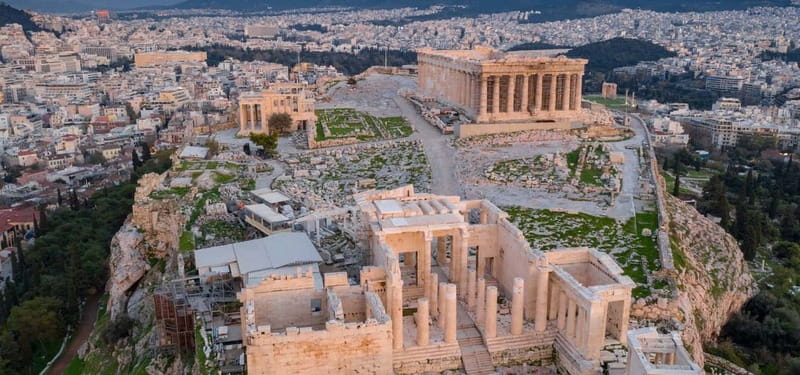
- South Slopes entrance: Reach the Acropolis by a scenic route with archaeological remains and views across Athens.
- The essential monuments: See the Parthenon, Erechtheion, Temple of Athena Nike, Propylaea, Theatre of Dionysus, and Odeon of Herodes Atticus.
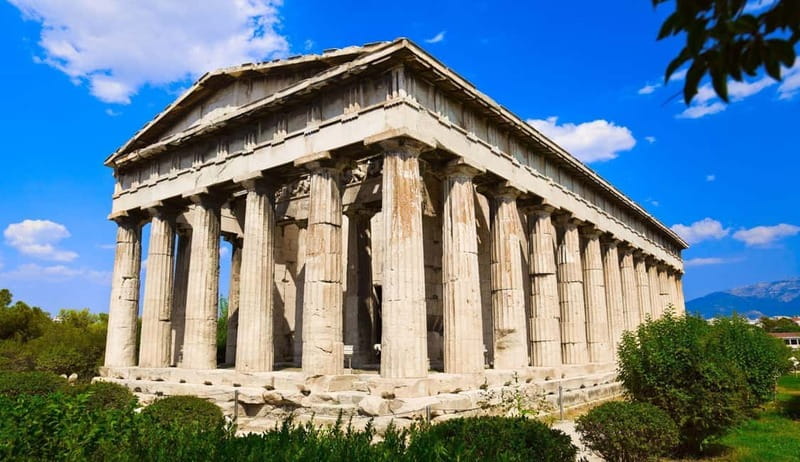
- Ancient Athenian life: Continue to the Agora, including the Temple of Hephaestus and Stoa of Attalos.
- Tickets included: Acropolis and Ancient Agora admission are covered, with separate-entry access intended to save waiting time.
- Clear guiding: Wireless headsets help you follow the licensed guide in crowded spaces.
- Real walking required: Expect stairs, stone paths, sun, and a moderate climb. This is not suitable for wheelchair users or people with mobility impairments.
Why this Acropolis and Agora combination works
Many Athens visits focus only on the Acropolis. That gives you the city’s most famous view and its most famous temple, but it can leave ancient Athens feeling like a collection of beautiful ruins on a hill.
This tour adds the Ancient Agora, and that changes the picture. The Acropolis was the city’s sacred high point. The Agora was where citizens gathered, debated, traded, worshipped, and handled the business of daily life. Moving between the two sites helps you connect religion, politics, architecture, and ordinary routines.
You meet at the Office of Athens Walks at Porinou 5, about a two-minute walk from Acropolis Metro Station. Arrive 15 minutes early. The tour ends at the Ancient Agora, not back at the starting point, so you should plan your next stop from that side of central Athens.
The price is $126 per person. That is not a bargain-basement walking tour, but it covers two major entrance tickets, a licensed English-speaking guide, wireless headsets, and skip-the-line access through a separate entrance. If you would otherwise buy tickets and arrange both sites yourself, the price buys convenience as well as interpretation.
More Ancient History Tours in Athens
- Athens: Ancient Greek Theater Performance
★ 4.7 · 2,481 reviews - Historical Delphi One Day Tour with Arachova Stop & Expert Guide
★ 4.5 · 1,247 reviews - From Athens: Ancient Corinth Day Trip with Canal & VR Guide
★ 4.6 · 1,073 reviews
Starting below the Acropolis at the Theatre of Dionysus
The route begins around the southern side of the Acropolis, with a guided visit to the Theatre of Dionysus. This is an important opening because it places Greek drama in the setting where it developed, rather than treating the Acropolis as an isolated hilltop.
You spend about 15 minutes here. Your guide may connect the theatre with ancient festivals, performance, religion, and public life. This is also where you begin to understand that Athens was not only a city of temples. It was a city of public gatherings and shared civic rituals.
The stone surfaces can be uneven, and the sun may already be strong. Wear shoes with a firm sole rather than smooth city footwear.
Next comes the Odeon of Herodes Atticus, seen on a 15-minute walk. The building remains one of the most striking structures on the southern side of the Acropolis. The route gives your guide time to explain the monuments around you while you move toward the higher ground.
Climbing the South Slopes for city views
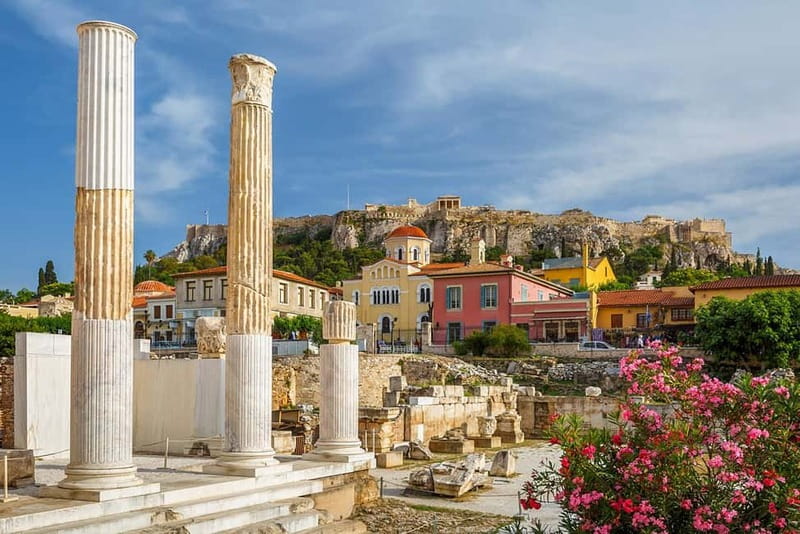
The South Slopes route is one of the tour’s best features. Instead of rushing straight to the Parthenon, you approach through a part of the Acropolis area filled with plants, exposed archaeology, and changing views over Athens.
The climb is moderate, not a technical hike, but it still demands effort. You should expect stairs, stone paving, and an uphill walk. The route is not suitable for wheelchair users or people with mobility impairments, and children under six are not accepted.
Bring water, sunscreen, and a hat. In July and August, the heat can affect your enjoyment as much as the history. Guides such as Helene and Hermes have been praised for watching the group’s pace and looking for shade when possible, but no guide can remove the midday sun.
The views improve as you climb. This is a good place for photographs, but keep your attention on the ground as well as the skyline. The Acropolis surfaces are ancient, worn, and sometimes slick.
Entering through the Propylaea and Temple of Athena Nike
The Temple of Athena Nike is a small monument, but its position and fine detail make it a worthwhile stop. Your guide allows about five minutes here while explaining the temple’s connection with Athena as a goddess of victory.
The Propylaea follows, with about 10 minutes of guided explanation. This monumental gateway once formed the formal entrance to the Acropolis. Passing through it gives the visit a natural sense of arrival, with the great temples opening up beyond.
The separate-entry arrangement is useful at this point. The Acropolis draws large crowds, and getting inside without standing in the longest general queue leaves more time for the site itself. It does not make the hill quiet. In summer, cruise ship groups and other tour parties can still fill the paths.
More Ancient History Tours in Greece
- Acropolis, Parthenon & Athens Old City Heritage Walking Tour
★ 4.5 · 876 reviews - Private Biblical Tour Ancient Corinth & Isthmus Canal from Athens
★ 5.0 · 762 reviews - Athens: Ancient Corinth & Nafplio Full Day Trip with Swim
★ 4.8 · 531 reviews - Athens Skip the Line: Open Air Ancient Greek Theatre Performance
★ 4.5 · 520 reviews
The Erechtheion and its unusual Caryatids
The Erechtheion receives about 15 minutes of guided attention. Its design differs from the simple, balanced form most people associate with Greek temples. The building has several levels and an unusual layout shaped by the sacred traditions tied to the Acropolis.
The Caryatids are the familiar highlight: sculpted female figures used as architectural supports. Your guide can help you look beyond the famous outline and notice how the building’s shape reflects the different religious stories attached to the hill.
This is a spot where a good guide matters. The stones do not explain themselves, and the Erechtheion can be confusing if you only take a photograph and move on. Guides such as Antonia have been praised for tying mythology to historical events, which is especially useful here.
Spending 30 minutes at the Parthenon
The Parthenon gets the longest single stop, about 30 minutes. This is sensible. You need time to take in its scale, understand its dedication to Athena, and hear how its architecture influenced later buildings around the world.
The guide’s role is not simply to point at columns. You learn how the temple fit into Athens’ religious life and why it later became such a powerful symbol of Greek culture and democracy. The tour also helps separate the modern image of the Parthenon from the complicated history of the building and the Acropolis.
You cannot expect an empty viewing area. The Parthenon is Athens’ main draw, and the site can feel crowded and tightly packed, particularly during the high summer season. One July visit was described as especially full of cruise ship groups. A skilled guide can find useful stopping points and keep the group together, but you should allow for people crossing your photographs and limited time at the best viewpoints.
The itinerary includes a 15-minute break at the Acropolis. Treat this as a chance to drink water, regroup, and take photographs, not as a full meal stop. Food and drinks are not included.
Leaving the sacred hill for the Ancient Agora
After the Acropolis, the tour turns toward the Ancient Agora. This shift is the heart of the experience. The Acropolis shows the public face of Athenian religion and power. The Agora gives you a better sense of how citizens met, argued, bought goods, watched political life, and spent time together.
The guided portion lasts about 30 minutes, though the complete Agora visit can feel longer because there is more to see. One part of the route includes the museum in the Stoa of Attalos, and some people may find this section a little stretched after four hours of walking.
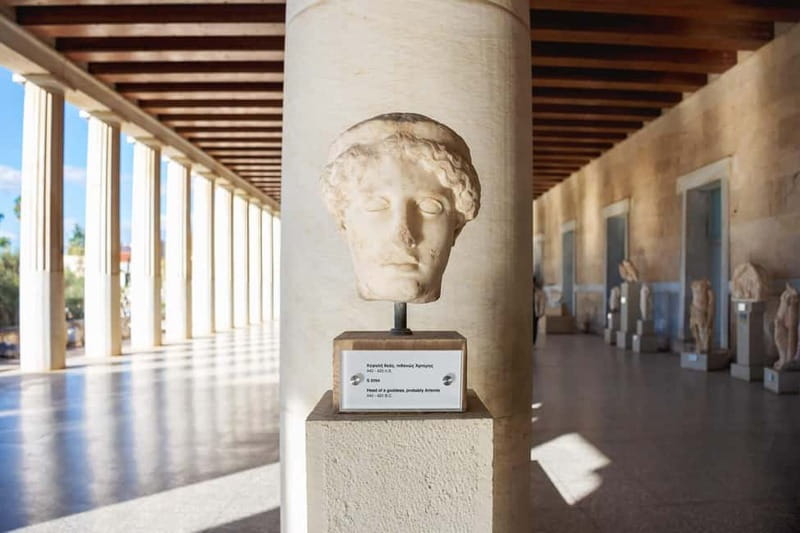
Still, the Stoa is valuable. It has been reconstructed enough to make the ancient commercial and social setting easier to picture, and its museum displays objects from the Agora. The building gives shelter from the sun and helps turn scattered stones into a more understandable place.
Your guide will point out monuments, statues, and traces of the Agora’s political and commercial role. This is where the tour moves beyond famous names and shows you the machinery of the city: the spaces where people gathered, exchanged ideas, and took part in public life.
The Temple of Hephaestus and the final stop
The Temple of Hephaestus is one of the most rewarding buildings in the Agora. You see it on a 10-minute walk through the site, and its unusually good preservation makes it easier to understand than many ruined structures.
The temple was dedicated to Hephaestus, the god associated with craftsmanship. Its connection with skilled work fits the practical character of the Agora, where trade and production formed part of daily life.
The tour finishes at the Ancient Agora entrance. This is convenient if you want to continue exploring central Athens on foot, but it means you should not leave valuables or extra clothing at the starting office. Hotel pickup and drop-off are not included.
What the guides add to the ruins
The strongest part of this tour is the guiding. The guide changes from departure to departure, but the named guides receiving praise include Aphrodite, Anastasia, Lisa, Annie, Artemis, Kostas, Yannis, Demos, Helene, and Alia.
The best descriptions point to a shared style: clear explanations, humor, patience, and enthusiasm without burying you in facts. One guide was appreciated for explaining ancient and modern Athens together. Another made word origins and mythology part of the walk. An archaeology-trained guide was valued for details that would be easy to miss without expert help.
You should still expect different personalities. Some guides may give more time to stories, while others may move briskly through the monuments. The wireless headsets help in either case, especially when the group is spread along a path or surrounded by other tours.
The experience is in English only. It is a good match if you want context as you walk, rather than an audio guide or a silent visit at your own pace.
Who should book this four-hour walk
I would choose this tour for a first visit to Athens, especially if you want the Acropolis but also want to understand the city below it. It suits adults, older children, history fans, and anyone who prefers a guide to do the organizing.
It also works well for a short Athens stay. In four hours, you cover several major sites without spending time figuring out ticket rules, entrances, or the order of the monuments.
I would think twice if you dislike group tours, have trouble with hills and stairs, or want a slow photographic study of each building. The schedule is full, the sites are busy, and the Agora can feel like a lot after the Acropolis.
Families can do well here if children are old enough for a long walking tour. One guide was especially praised for working well with children aged 10 and 13. Children under six are not accepted, and the route is not designed for wheelchairs.
Practical advice for a better visit
Arrive 15 minutes early at Porinou 5. Bring a refillable water bottle, hat, sunscreen, and a camera. Flash photography is not allowed.
Wear comfortable shoes with good grip. Sandals that slide around or thin soles can make the stone paths tiring. Check the forecast and dress for the conditions, since shade is limited on the Acropolis.
If you are visiting in hot weather, an earlier starting time may be easier, if available. The provided schedule can vary, so check the departure options when booking. Do not plan a heavy meal during the tour. Meals and beverages are not included.
Participants under 18 need a photograph of a passport or identity card. Cancellation is free up to 24 hours before the tour, and the reserve-now, pay-later option gives you some flexibility.
Should you book the Acropolis and Ancient Agora tour?
Book it if you want the main Acropolis monuments explained by a licensed guide and you like the idea of adding Athens’ civic center in the same morning or afternoon. The included tickets, separate-entry access, headsets, and strong guiding make $126 a reasonable price for a four-hour introduction.
Skip it if you need step-free access, dislike crowds, or prefer to linger alone. For most first-time visitors who want both the Parthenon and the Ancient Agora without handling the details themselves, this is a well-planned and useful choice. Just bring water, expect a climb, and save some energy for the Agora.
FAQ
Where does the tour meet?
The meeting point is the Office of Athens Walks at Porinou 5, about a two-minute walk from Acropolis Metro Station. You should arrive 15 minutes before departure.
How long does the tour last?
The tour lasts four hours. Starting times vary, so you need to check availability when booking.
What languages are available?
The live tour guide speaks English.
Are the Acropolis and Ancient Agora entrance tickets included?
Yes. The Acropolis entrance ticket and Ancient Agora entrance ticket are included in the booking.
Is the tour suitable for people with mobility impairments?
No. The tour includes a moderate amount of walking, uphill sections, stairs, and uneven surfaces. It is not suitable for wheelchair users or people with mobility impairments.
What should I bring?
Bring comfortable walking shoes, a hat, sunscreen, water, and a camera. Flash photography is not allowed. Participants under 18 should carry a picture of their passport or identity card.
Newest history tours we have reviewed in Athens
- Athens: The History of Greek Mythology Private Tour★ 4.7 · 53 reviews
- Athens: Women in Ancient Greece★ 5.0 · 98 reviews
- Athens: Ancient Corinth & Nafplion Guided Premium Tour★ 4.7 · 237 reviews
- Athens: Be an Ancient Sculptor: Craft Your Greek Masterpiece★ 5.0 · 26 reviews
- Athens: Roman Agora & Ancient Agora E-ticket & 2 Audio Tours★ 4.1 · 107 reviews
- Athens: Ancient Greek Theatre Murder Mystery Experience★ 4.8 · 298 reviews
- Athens: Corinth Canal and Ancient Olympia Private Trip★ 4.6 · 21 reviews
- Athens: Kotsanas Ancient Greek Technology Museum Guided Tour★ 5.0 · 29 reviews
Ancient History Tours, compared.
Colosseum: Underground and Ancient Rome Tour
Read our review →
Colosseum & Ancient Rome with Arena Floor Option I Max 6 People
Read our review →
Colosseum, Ancient Rome Tour or AudioGuided Tour
Read our review →
Colosseum Underground & Ancient Rome Guided Tour
Read our review →

Taormina: Ancient Theater Skip-the-Line Ticket & Audio Guide
Read our review →
Discover the Ancient Ruins of Pompeii: Day Trip from Rome
Read our review →
Discover Matera, the ancient city – English tour
Read our review →Browse the lists this tour appears in