Review · AMSTERDAM HISTORY TOURS
Amsterdam: Haunted History and Ghost Walking Tour
Amsterdam’s ghost stories work best when tied to real streets, buildings, prisons, churches, and old crimes. This two-hour walk begins at Dam Square and moves through places such as the Nieuwe Kerk, Spinhuis, Begijnhof, Blood Street, and the Waag, using spooky tales to explain how the city grew and changed.
I like the way the tour mixes dark folklore with solid city history, rather than treating Amsterdam as a stage for cheap scares. I also like the chance to see quiet courtyards and overlooked corners that are easy to miss on your own. Guides including Sunil, Duncan, Jan, and others bring plenty of personality, humor, and extra background.
The main consideration is simple: this is often more haunted history than ghost-hunting. You will hear unsettling stories, but you should not expect special effects, actors, or a scare around every corner. One guide is even described as a ghost skeptic, which tells you something about the tone.
Key points about the Amsterdam ghost walk
- Dam Square starting point: Meet behind the monument in front of Hotel Krasnopolsky, right in the city center.
- Five atmospheric stops: The route includes the Nieuwe Kerk, Spinhuis, Begijnhof, Blood Street, and the Waag.
- History comes first: Expect stories about prisons, religion, executions, medicine, architecture, and city life alongside the ghost tales.
- Small groups can be a real advantage: Some departures have been private or nearly private, allowing time for questions and extra stories.
- English-speaking guides with character: Sunil, Duncan, Jan, Julia, Lola, and others have led the walk, with humor and strong storytelling skills.
- Good value at $30: Two hours of guided sightseeing in central Amsterdam costs less than many major attractions, though food and drinks are not included.
Starting at Dam Square and the Nieuwe Kerk

Your meeting point is in front of Hotel Krasnopolsky, behind the monument at Dam Square. This is a busy central location, so give yourself enough time to find the exact spot and identify your guide.
Dam Square is a fitting place to begin. It is one of the most familiar parts of Amsterdam, yet the tour uses it to shift your attention from present-day crowds to older stories of power, punishment, ceremony, and death. The setting helps you understand that Amsterdam’s dark past is not tucked away in a distant castle. It is built into the center of everyday city life.
The first major stop is the Nieuwe Kerk. Today, its royal ceremonies and grand interior are the obvious focus, but the tour turns your attention to its crypts and vaults. You hear about the notable figures who were laid to rest there and the way religious buildings once connected public ceremony with private mourning.
This is not a visit inside every building on the route, so you should expect outdoor storytelling rather than a museum tour. Still, the exterior setting gives the guide a useful stage. The surrounding square, the church facade, and the city noise all work against the usual image of a ghost story told in total darkness.
That contrast is part of the appeal. Amsterdam can feel cheerful and open in daylight, but the same streets take on a different mood when a guide explains what happened there centuries ago.
More History Walking Tours in Amsterdam
- Amsterdam History Walking Tour
★ 5.0 · 281 reviews - Amsterdam: Highlights & History Walking Tour
★ 4.8 · 266 reviews - Anne Frank and Amsterdam Jewish History Walking Tour
★ 5.0 · 259 reviews
The Spinhuis and the sorrow of the old women’s prison
The route then turns toward the Spinhuis, a former women’s prison associated with sorrow, punishment, and confinement. Its story is one of the tour’s strongest stops because it connects the supernatural theme to the real hardship faced by inmates.
The focus is not simply on a ghost appearing in a window. You hear about the conditions and emotional weight linked to the prison, including the story of an inmate whose suffering became part of Amsterdam’s darker folklore. The old walls and surrounding streets make the tale feel grounded in a real place rather than invented for entertainment.
I find this kind of storytelling more effective than a series of unrelated apparitions. You get a clearer idea of how Amsterdam treated crime, poverty, and women who broke social rules. The ghost story becomes a way into questions about justice and daily life.
Expect the guide to pause, explain the setting, and build the story rather than rush from point to point. Guides such as Duncan and Sunil have been praised for adding background about how Amsterdam developed, so the Spinhuis stop can become a lesson in social history as well as a spooky episode.
Begijnhof and the silent nun
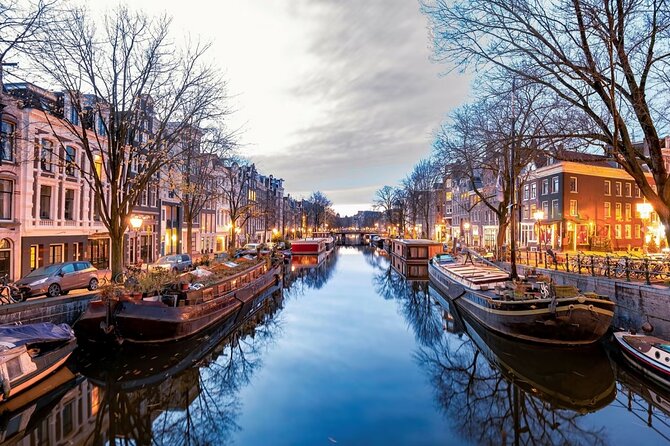
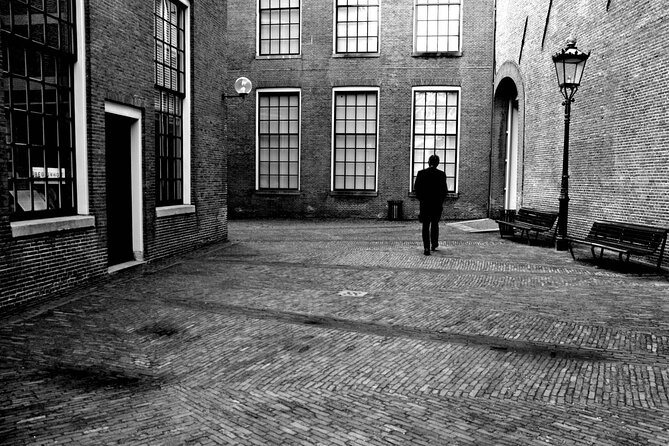
Begijnhof provides one of the sharpest changes in mood. This enclosed courtyard is known for its quiet atmosphere, old houses, and religious connections. It feels removed from the city streets, even though it is close to the center.
Here, the tour tells of a nun condemned to wander in silence after breaking her vows. The story gives the courtyard a sense of unease without needing theatrical props. You are asked to picture footsteps, secrecy, and a life shaped by religious rules.
The stop also shows why this tour can be useful even if you are not especially interested in ghosts. Begijnhof is a place many people might pass without understanding its historical importance. With a guide, the courtyard becomes part of a wider story about belief, discipline, women’s lives, and Amsterdam’s changing identity.
Because Begijnhof is a quiet place, you should be respectful while listening. The setting is not a stage set, and the atmosphere depends partly on keeping voices down and paying attention. The story works best when the guide allows the silence to do some of the work.
Blood Street and Amsterdam’s violent past
The name Blood Street gives this section of the walk an immediate hook. The route takes you through an alley or street associated with centuries of violence, murder, and disorder. The cobblestones are ordinary, but the guide explains the events that gave the place its grim reputation.
This stop should appeal to anyone who likes crime stories with a strong sense of place. Rather than hearing about a vague haunted building, you are shown the location tied to violence and told how the street fit into the life of old Amsterdam.
The mood can change depending on the time of day. A late afternoon departure gives you more visibility and may feel easier if you prefer history with a mild spooky edge. Later departures, including an evening option mentioned by one participant, can provide a darker setting and more atmosphere.
That choice matters. If you want the strongest sense of unease, choose the latest available start. If you want to see the architecture clearly and avoid a more intense nighttime mood, an earlier time may suit you better. Exact starting times depend on availability.
More History Walking Tours in the Netherlands
- Amsterdam: Ghost Walking Tour and Dark History
★ 4.8 · 118 reviews - Amsterdam: Iconic Canals & Historic Sights Walking Tour
★ 4.5 · 90 reviews - Amsterdam: Anna Frank and World War II History Walking Tour
★ 4.8 · 86 reviews - Amsterdam Private Historical Walking Tour
★ 5.0 · 75 reviews
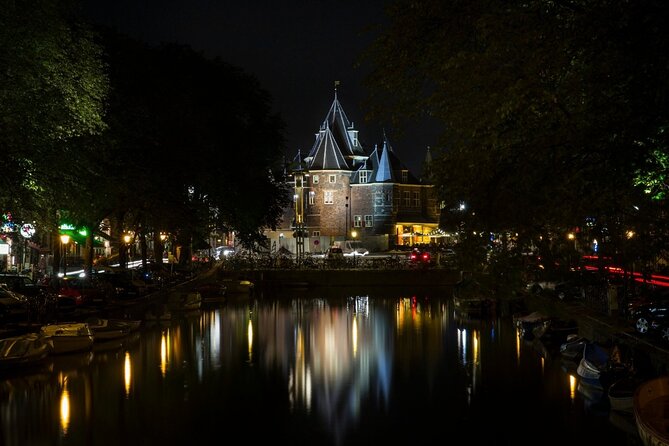
The Waag and the Purgatory of science
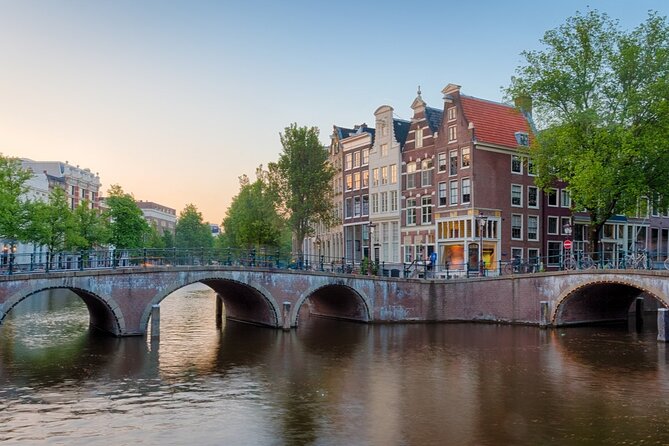
The final major stop is the Waag, presented here as the Purgatory of the Waag. Its story links scientific curiosity with the unsettling practice of dissection during the Age of Enlightenment.
This is a particularly interesting finish because it moves beyond simple tales of murdered souls. You learn about the period when medical study advanced through examinations of human bodies, often under conditions that would feel disturbing today. The building becomes a place where progress, death, and moral unease meet.
The supernatural side comes from the idea that the people dissected there did not leave entirely in peace. The historical side asks harder questions: Who was allowed to study the dead? Who supplied the bodies? How did people understand science before modern medical standards?
For me, this is the sort of story that gives the tour lasting value. You are not just collecting spooky anecdotes. You are learning why certain Amsterdam sites carry such heavy associations and how changing ideas about religion, medicine, and public life shaped the city.
What the guides add to the walk
The guide can make or break a storytelling tour, and this experience has several recurring names. Sunil is often described as animated, friendly, funny, and well prepared. Duncan has a strong interest in Amsterdam’s history and is especially good at answering questions and adding context. Jan uses stories, historical images, paintings, and newspaper material on an iPad during some walks.
Other guides named for this experience include Julia, Lola, Martina, and Jaan. The tone may vary by guide, but the common thread is an emphasis on explaining the city rather than simply delivering a memorized ghost script.
That variation is worth keeping in mind. One guide may lean more heavily into the haunted material, while another may spend more time on architecture, Dutch customs, city planning, or the events that shaped Amsterdam. The result can feel different from one departure to the next.
Some guides have also offered practical advice about places to eat, sights to see, and activities for the rest of your visit. That makes the tour especially useful early in a trip, when you are still deciding how to spend your time.
Group size, walking pace, and weather

The walk lasts two hours. That is long enough to cover several central locations without turning into an exhausting full-day outing. One participant described it as a good walk without feeling tiring, which is a useful guide for anyone concerned about the pace.
Group size can change. Some departures have had only two people, creating something close to a private tour. Smaller groups allow more questions and make it easier for the guide to add side stories. Larger groups may feel less personal, but the central route still keeps the walking manageable.
You should dress for Amsterdam’s weather. Several walks have continued in rain and cold, and the guides have kept going, but that does not make wet cobblestones or chilly streets more comfortable. Wear shoes suitable for walking and bring a waterproof layer if the forecast looks uncertain.
The tour is listed as wheelchair accessible. Since this is an urban walking route with old streets and courtyards, it is sensible to confirm current route details when booking if you have specific mobility needs. The provided information confirms accessibility, but it does not give a precise surface description for every stop.
Food and drinks are not included. Plan a snack or meal before or after the walk, especially if you choose an evening departure.
Is $30 a fair price?
At $30 per person, the tour offers reasonable value if you want both sightseeing and storytelling. You are paying for two hours with a live English-speaking guide, not for entry to several museums or a staged theatrical production.
The value is strongest for first-time visitors. The route introduces central landmarks, quiet passages, religious sites, and old institutions that can be difficult to interpret alone. You also get a useful orientation to Amsterdam’s history while seeing where the city’s darker stories took place.
It is less compelling if your only goal is intense fear. There are no listed special effects, actors, food, or drinks, and the tour is not presented as a paranormal investigation. The best comparison is a guided historical walk with a ghostly theme.
The booking terms are practical. You can cancel up to 24 hours before the tour for a full refund, and you can reserve now and pay later. Those options help if your Amsterdam plans are still shifting.
Who should book this tour?
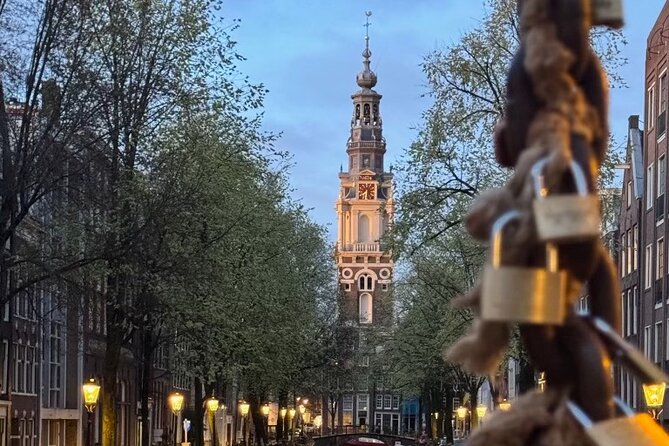
I would recommend it to first-time visitors who want a lively introduction to Amsterdam without sitting in a museum for two hours. It also suits repeat visitors who have seen the main sights but want stories tied to side streets, old courtyards, and overlooked buildings.
Families with older children and teenagers may enjoy the mix of history and suspense, though the stories involve imprisonment, murder, death, and dissection. Adults who prefer factual storytelling over haunted-house theatrics will probably get the most from it.
It is also a good choice for people who enjoy asking questions. Guides have been praised for answering follow-up questions and adding information about Dutch culture, innovation, architecture, and the way Amsterdam developed.
If you want a pure ghost tour with constant scares, you may find the historical focus too strong. If you want a city walk that uses ghost stories to make difficult history easier to remember, this is a better match.
Should you book the Amsterdam Haunted History and Ghost Walking Tour?
Book it if you want a two-hour introduction to Amsterdam’s darker side, with real locations and a guide who can explain more than the ghost story itself. The strongest parts are the Spinhuis, Begijnhof, Blood Street, and Waag, where the setting gives each tale weight.
Choose an earlier start for clearer sightseeing and a gentler mood. Choose the latest available time if you want more darkness and atmosphere. At $30, it is a fair buy for a central walking tour, especially when the group is small and the guide adds extra history and local suggestions.
Skip it only if you are looking for a theatrical scare experience or a fully supernatural investigation. For most curious visitors, the blend of history, architecture, crime, religion, and folklore makes this a useful and entertaining way to see Amsterdam.
FAQ
Where does the tour meet?
Meet in front of Hotel Krasnopolsky, behind the monument at Dam Square. The guide will be waiting there.
How long is the tour?
The walking tour lasts two hours.
What language is the tour conducted in?
The live tour is conducted in English.
How much does the tour cost?
The listed price is $30 per person.
Which places are included?
The route includes Dam Square, the Nieuwe Kerk, the former Spinhuis women’s prison, Begijnhof, Blood Street, and the Waag.
Is the tour mainly about ghosts?
It includes ghost stories and haunted locations, but the focus also covers Amsterdam’s history, architecture, religion, crime, science, and city development. It may feel more like haunted history than a traditional scare tour.
Is the tour wheelchair accessible?
Yes. The activity is listed as wheelchair accessible.
Are food and drinks included?
No. Food and drinks are not included in the price.
Can I cancel the booking?
Yes. You can cancel up to 24 hours in advance for a full refund. You can also reserve now and pay later.
More Dark History and Haunted Tours in Amsterdam
- Amsterdam: Ghastly Grachten: ghost stories&dark history tour
★ 4.9 · 21 reviews - Savannah History and Haunts Candlelit Ghost Walking Tour
★ 5.0 · 3,235 reviews - Stockholm: Ghost Walk and Historical Tour
★ 4.7 · 2,685 reviews - New Orleans Small-Group Haunted History Carriage Tour
★ 4.5 · 2,289 reviews
Newest history tours we have reviewed in Amsterdam
- Amsterdam: Jewish Quarter and History Guided Tour★ 4.7 · 210 reviews
- Skipping Lines & Sipping Beers: A History Tour of Amsterdam★ 5.0 · 22 reviews
- Amsterdam: Iconic Canals & Historic Sights Walking Tour★ 4.5 · 90 reviews
- Amsterdam: Private Pedicab Historical Sightseeing Tour★ 5.0 · 41 reviews
- Amsterdam Walking Tour:Anne Frank, History & Liberal Culture★ 5.0 · 18 reviews
- Amsterdam: Walking Tour of Historic Center★ 4.6 · 24 reviews
- Amsterdam: Luxury Canal Cruise with Historic VR Experience★ 4.7 · 31 reviews
- Amsterdam: Ghost Walking Tour and Dark History★ 4.8 · 118 reviews
Dark History & Haunted Tours, compared.

Savannah History and Haunts Candlelit Ghost Walking Tour
Read our review →

New Orleans Small-Group Haunted History Carriage Tour
Read our review →

Genteel and Bard’s Savannah Dark History and Ghost Encounter Walking Tour
Read our review →