Review · PORTO HISTORY TOURS
Porto Guided Tour to the Historical Center on a Tuk Tuk
Porto’s steep streets and narrow lanes can wear you out fast. This private Tuk Tuk tour gives you a quick look at the city’s old center, then carries you over the river to Serra do Pilar, where the view takes in Porto, Vila Nova de Gaia, the Douro, and the D. Luís I Bridge.
I like two things here: you cover a surprising amount of ground in less than two hours, and the small vehicle can reach lanes that are awkward for a larger tour bus. You also get a glass of Port wine, a fitting pause in a city built on the trade.
The catch is that commentary can be hard to hear while the Tuk Tuk is moving, especially in traffic or wind. The tour also depends on good weather, and the short stops are best for seeing the outside of monuments rather than touring their interiors.
Key points to know before booking
- Serra do Pilar delivers the best view: Allow the viewpoint stop to orient yourself to Porto and Gaia.
- The Tuk Tuk saves your legs: It handles steep streets and narrow cobbled lanes that take effort on foot.
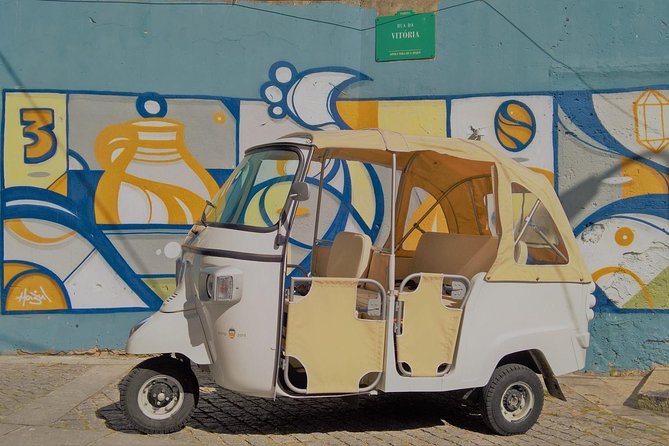
- You get a private vehicle: Only your own group participates, with space for two, three, or four adults per Tuk Tuk.
- The route is broad rather than deep: You see many major sights, but entrance fees and long interior visits are not included.
- A Port tasting is included: The supplied Port wine glass adds a small local touch during the ride.
- Your guide matters: Anna, Ana, Victor, Natalia, Bernardo, Fabian, Gabby, and Gonçalo are among the guides associated with praised tours, but the guide assigned to you can vary.
Why this Tuk Tuk tour works well on a first day in Porto

Porto is compact on a map but tricky underfoot. The center rises sharply from the Douro, and several of its most interesting streets are paved with uneven stone. A Tuk Tuk gives you a quick sense of how the city fits together before you return to explore favorite areas on foot.
The tour starts at Rua de Augusto Rosa 180, close to the cathedral. From there, you move through the old center, cross into Vila Nova de Gaia, and return to the same meeting point. The route links churches, stations, plazas, bridges, markets, and viewpoints rather than focusing on one single monument.
That broad coverage is the main value. At $42.33 per person, the cost is reasonable for a private experience if two or more people share the vehicle and you want a guide, transport, and orientation in one package. It is less attractive if your main goal is to enter several monuments, since entrance tickets are extra and the schedule leaves only short pauses.
The tour requires at least two people per booking. Each Tuk Tuk holds two, three, or four adults of average height, up to 75 kilograms each. Larger parties use multiple vehicles but travel together and stop at the same places.
More History Bike, Segway and Tuk-Tuk Tours in Portugal
- Explore Lisbon by Tuk Tuk: History and Viewpoints
★ 5.0 · 840 reviews - Historic Porto by Private Electric Tuk Tuk to Top Landmarks
★ 4.5 · 735 reviews - Private Tuk Tuk Tour Through Lisbon’s Historical Streets
★ 5.0 · 734 reviews
The cathedral quarter and Porto’s old defenses
The first major stop is Porto Cathedral, known locally as Sé. Its construction began in the 12th or 13th century, and its Romanesque form was altered and renewed over many years. What you see today is partly a medieval building and partly a later reworking intended to present an ideal version of that medieval past.
You have about 10 minutes here, and admission is not included. That is enough for a look at the exterior and the terrace, but not enough for a careful visit inside if the cathedral is open and you want to study its chapels or cloisters.
Nearby, the stone pillory on the cathedral terrace recalls Porto’s old system of local government. The present monument dates from 1945 and reproduces an earlier drawing. The terrace itself was created after buildings around the cathedral were demolished in 1940, so the open setting is not simply an untouched medieval square.
The route also touches the Fernandina Wall, one of Porto’s reminders of its military past. Built between 1368 and 1437, the wall once extended about 3,000 paces. Much of it disappeared as the city grew, which makes the surviving sections easy to miss when walking alone.
This is a good example of what the Tuk Tuk does well. Your guide can point out fragments and explain how the city’s upper quarter was defended, without asking you to search for them on your own.
São Bento Station and the city’s grand public spaces
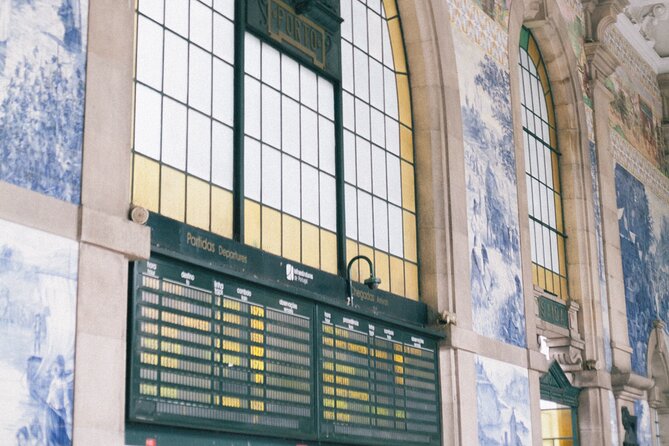
São Bento Station is one of Porto’s most rewarding quick stops. The building opened in the early 20th century, with a glass and iron roof designed by Marques da Silva. Inside, the entrance hall is covered with about 20,000 narrative tiles by Jorge Colaço.
You get around 10 minutes here, and admission is free. That timing is useful because the station is a place you can appreciate without buying a ticket, though a busy arrival hall can make a close look at every tile difficult. If São Bento becomes one of your favorite sights, you can return later for a slower visit.
The Tuk Tuk then passes through central squares with layers of civic and royal history. One square began as an 18th-century urban project known as Praça Nova. Another, now called Praça de Carlos Alberto, was once associated with blacksmiths and later took its name from the exiled Sardinian king who stayed at the Balsemão Palace.
Fonte dos Leões adds a lighter detail. This 19th-century fountain was made by a French company and cast at the Val d’Osne foundry. Its lions are largely copied from a fountain in Leicester’s Town Hall Square. It is a small stop, but it shows how Porto’s public spaces borrowed ideas from beyond Portugal.
Churches, gardens, and Clérigos Tower
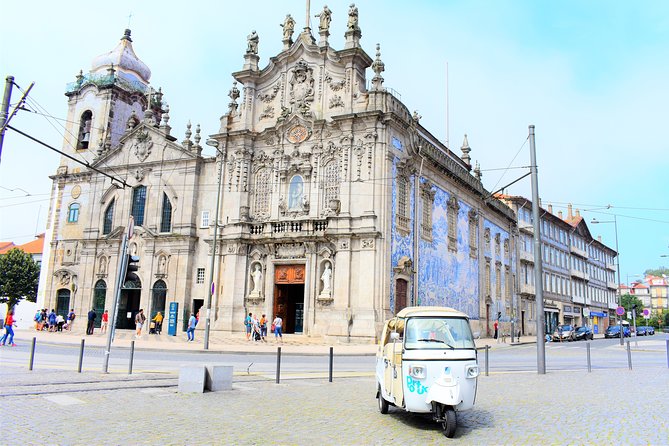
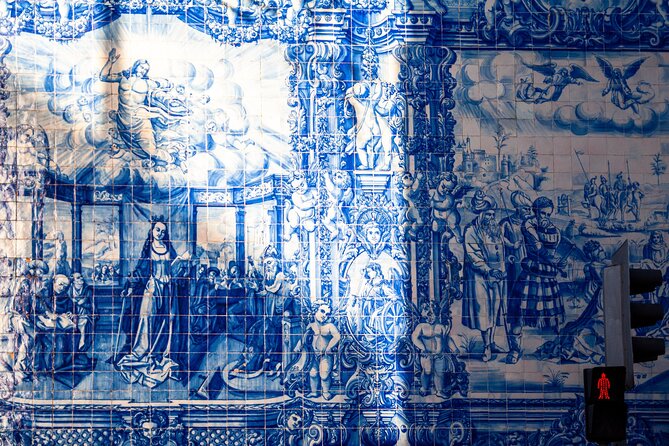
The route continues past several important religious buildings. One is a 17th-century church with a classical façade and a Porto Rococo altarpiece associated with Nicolau Nasoni. Another dates from the second half of the 18th century and is known for its carved interior and later tile-covered side façade.
You may not have time to enter either church. That is worth keeping in mind if ornate interiors are high on your list. The Tuk Tuk gives you a useful first look, then you can return independently when you know which building deserves your time.
The Cordoaria Garden offers a change of pace. Its formal public garden was laid out in the 19th century on an area once used by rope makers. You can spot statues of writers Ramalho Ortigão and António Nobre, along with modern sculpture by Juan Muñoz.
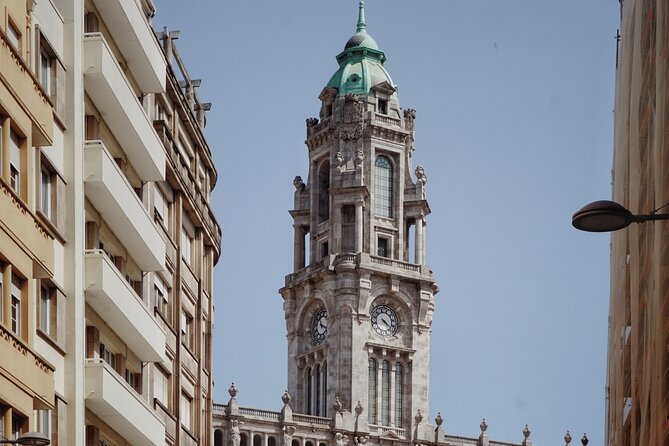
Next comes Clérigos Tower, one of Porto’s most recognizable landmarks. The Baroque church and its tall bell tower can be seen from many parts of town. The stop lasts about five minutes, and admission is not included. If you want to climb the tower, plan a separate visit, since this tour is designed for an outside view rather than a tower visit.
The short timing is not a flaw if you want an overview. It becomes a limitation if you prefer to linger, read plaques, climb towers, and inspect church interiors as you go.
More Old Town and Historic Centre Walks in Portugal
- Lisbon: Live Fado Show with Port Wine in Historic Center
★ 4.7 · 4,166 reviews - Porto: Historical Center Walking Tour
★ 4.8 · 898 reviews - Lisbon’s historic old town in a tuk-tuk in German
★ 4.9 · 319 reviews - Albufeira: Old Town History Walking Tour with Tapas & Wine
★ 4.7 · 96 reviews
From the Stock Exchange Palace to the Douro waterfront
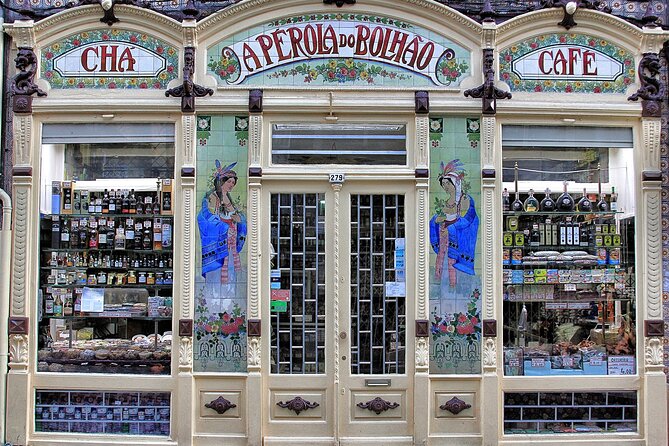
The tour heads toward the former commercial heart of Porto, where several landmarks sit close together. The Palácio da Bolsa, or Stock Exchange Palace, is a 19th-century neoclassical building and the headquarters of Porto’s Commercial Association. Its Arabian Room is the famous interior highlight, but entrance is not part of this experience.
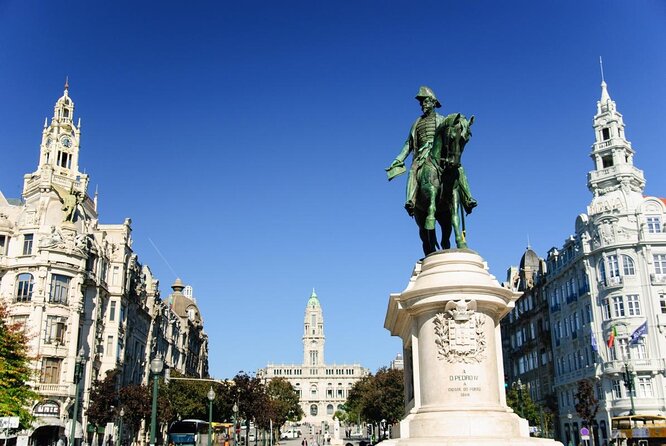
You will also pass the monument to D. Pedro, whose statue represents the constitutional charter being offered to Porto. Nearby is the former Ferreira Borges Market, an iron building from 1885 that has served different purposes over time and now houses Hard Club.
Infante D. Henrique Square links these sights. It includes a small garden, a monument honoring the Portuguese navigator, and the Mercado Ferreira Borges and Palácio da Bolsa on its edges.
São Francisco Church is another major exterior sight. It began in the 14th century and is especially famous for its heavily gilded 17th- and 18th-century interior. The ornate woodwork led to its nickname, the Church of Gold. The church is a UNESCO-listed part of Porto’s historic center, but entrance is not included, so save it for a return visit if you want to see the interior and catacombs.
The former Alfândega Nova customs house completes this section. It is a 19th-century neoclassical building using iron alongside stone, brick, and wood. It now houses the Museum of Transport and Communications and a congress center, though the tour only gives you an outside view.
Crossing to Gaia for Porto’s best city view
The high point of the experience is the crossing toward Vila Nova de Gaia and the stop at Mosteiro da Serra do Pilar. The monastery began in 1538 and took more than a century to complete. Its circular church and circular cloister are unusual, and the terrace gives you a wide view across the Douro.
From here, you can look back toward Porto Cathedral, the historic center, the D. Luís I Bridge, Fontainhas, and the São João Bridge. You also see the riverfront of Gaia and the upper reaches of the city. This is the place where the tour’s geography makes sense.
The view is especially useful early in your visit. Porto and Gaia are separate municipalities facing each other across the river, and the bridges connect areas that can seem confusing from street level. After this stop, you will have a better idea of where Ribeira ends, where the port lodges sit, and how the upper city relates to the river.
The monastery stop lasts about 15 minutes and admission is listed as free. It is the longest stop on the route, so use it for photographs and orientation rather than rushing through a checklist.
The D. Luís I Bridge and the final run through Porto
The D. Luís I Bridge is one of the tour’s signature sights. Planned by Teófilo Seyrig, a disciple of Gustave Eiffel, it opened in 1886 with two iron decks. Its large arch remains one of the most notable forged-iron bridge structures in the world.
The upper deck now carries Porto’s Metro, linking the cathedral area with the Garden of Morro and Avenida da República in Gaia. Seeing the bridge from the viewpoint and then moving near it helps you understand its two-level design.
You also pass the Infante Bridge, opened in 2003 to replace road traffic on the upper deck of D. Luís I Bridge. It has a high arch and links Fontaínhas with Oliveira do Douro. The contrast between the older iron bridge and the newer structure gives the final part of the tour a useful piece of modern engineering.
Traffic can affect this section. A delayed tour has less time for actual sightseeing, and one poor experience involved the final half hour being lost in congestion. Porto’s narrow streets and construction work for new Metro lines can also force route changes or, in unusual cases, cancellation.
Guides, comfort, and what the ride feels like
The guide is the biggest variable. Anna and Ana have been praised for humor, warmth, and clear explanations. Victor has been singled out for good local suggestions, including restaurant advice. Bernardo, Fabian, Natalia, Gabby, and Gonçalo have also led well-received outings, with Gonçalo noted for clear communication and a family-friendly approach.
Those names should not be taken as a promise that you will get a particular person. They do show the kind of guide who makes this format work: someone who explains the city while keeping the ride lively and adjusts the pace when needed.
The Tuk Tuk is open enough that weather matters. Bring a raincoat even if the forecast looks uncertain. A wet and windy day can make the ride uncomfortable, and poor weather may lead to a new date or full refund.
Sound is another practical issue. Several people found it difficult to hear commentary while the vehicle was moving. If you miss a detail, ask the guide to repeat it at the next stop. The private format makes that easier than on a large group bus.
Children must be accompanied by an adult. Service animals are allowed, and the meeting point is near public transportation. Most people can participate, but the vehicle’s small size and weight limit matter for larger adults and bigger groups.
Is the $42.33 price good value?
For a couple or small group, I think the price is fair if you want a fast orientation and do not want to tackle Porto’s hills right away. You are paying for a private driver-guide, transport through difficult streets, a Port wine glass, and access to a route that links Porto with Gaia.
The value drops if you plan to spend the whole day visiting interiors. Cathedral, Clérigos Tower, Palácio da Bolsa, and São Francisco Church all require separate planning and, where applicable, separate admission. This tour helps you choose which ones deserve a return visit, but it does not replace those visits.
Book early if your schedule is tight. The experience is often reserved about 27 days ahead, and the operator requires at least two people. Free cancellation is available until 24 hours before the start time. Changes or cancellations inside that window are not accepted for a refund, except when poor weather causes the operator to cancel.
Who should book this Porto Tuk Tuk ride?
I would choose it for a first morning or afternoon in Porto, especially if you have only a short stay, are traveling with children, or want help with the city’s layout before walking on your own. It is also useful if steep streets are a concern.
I would skip it if you prefer quiet, detailed museum visits or want a long stop at each church. A self-guided walk may suit you better if you already know Porto and would rather set your own pace.
Should you book it?
Book this Tuk Tuk tour if you want to see Porto quickly, gain a clear view of the city’s structure, and enjoy a private ride with a local guide. Make Serra do Pilar your priority, ask questions at the stops, and plan to revisit the monuments that catch your eye.
Do not book it expecting a full guided visit inside Porto’s major buildings. The route is a smart introduction, not a substitute for exploring the cathedral, churches, tower, or Stock Exchange Palace at length.
FAQ
How long does the Porto Tuk Tuk tour last?
The tour lasts approximately 1 hour and 50 minutes.
What is the price of the experience?
The listed price is $42.33 per person.
Is the tour private?
Yes. Only your group participates in the activity.
How many people fit in one Tuk Tuk?
Each Tuk Tuk holds two, three, or four adults of average height, with a listed limit of up to 75 kilograms per adult.
What happens if my group has more than four adults?
Larger groups use multiple Tuk Tuks and travel together, making the same stops at the same time.
Is Port wine included?
Yes. A glass of Port wine is included.
Are monument entrance tickets included?
No. Entrance to monuments is not included in the tour price.
Where does the tour start and finish?
It starts at Rua de Augusto Rosa 180, 4000-528 Porto, Portugal, and finishes back at the meeting point.
Is the tour offered in English?
Yes. English is listed as the offered language.
Can I cancel for a full refund?
You can cancel for a full refund at least 24 hours before the experience start time. If the tour is canceled because of poor weather, you will be offered another date or a full refund.
Newest history tours we have reviewed in Portugal
- Albufeira: Old Town History Walking Tour with Tapas & Wine★ 4.7 · 96 reviews
- “Porto: Fado Show with Guided Tour in a Historic Monastery”★ 4.9 · 164 reviews
- Lisbon Fado History Cultural Walking Tour★ 5.0 · 118 reviews
- Lisbon city tour on history, culture and current topics★ 5.0 · 41 reviews
- Lisbon: Jewish History Tour of Lisbon★ 4.8 · 84 reviews
- Lisbon Jewish Heritage and History – Private Tour Van★ 5.0 · 294 reviews
- Porto: Jewish Heritage Walking Tour★ 4.7 · 266 reviews
- Historic Walking Tour Through Lisbon’s Oldest Neighborhood★ 5.0 · 233 reviews
Old Town & Historic Centre Walks, compared.
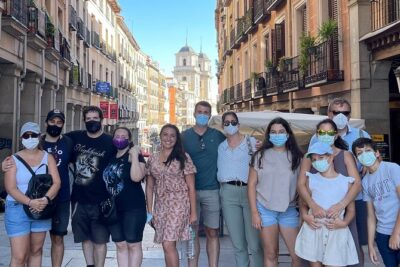
Madrid Essential: Historic Center, Plaza Mayor & Royal Palace
Read our review →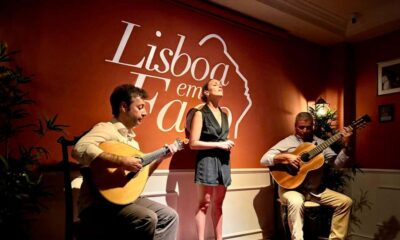
Live Fado Show with Port Wine in Historic Center
Read our review →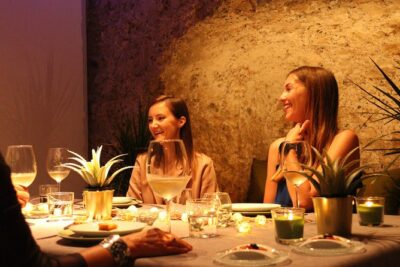
Valencia Old Town Tour with Wine & Tapas in 11th Century Historic Monument
Read our review →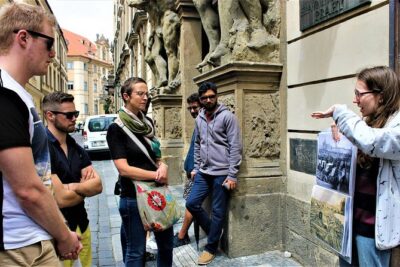
Prague Old Town, Medieval Underground and Dungeon Historical Tour
Read our review →
Cartagena: Historic Center and Getsemaní Shared Walking Tour
Read our review →
Old Town Walking Tour History and Tales in Edinburgh
Read our review →