

Review · CHARLESTON HISTORY TOURS
Charleston walking tour with a Citadel history professor
Charleston’s past comes alive best when you are standing in its old streets, not simply reading dates from a plaque. Eric Lager, a Citadel history professor with nearly two decades in college teaching and public history, leads you through alleys, graveyards, churches, theaters, and civic landmarks with the eye of a working historian. I love the small group limit of 12, which gives you room to hear clearly and ask real questions. I also like the way the walk joins architecture, religion, politics, war, and individual lives instead of treating Charleston as a string of pretty buildings.
The one consideration is time: three hours on foot can feel long in Charleston’s heat, humidity, or rain. The walk runs in poor weather unless conditions become unsafe, and there are no restrooms at the meeting point. Wear comfortable shoes, carry water, and plan ahead.
Key points
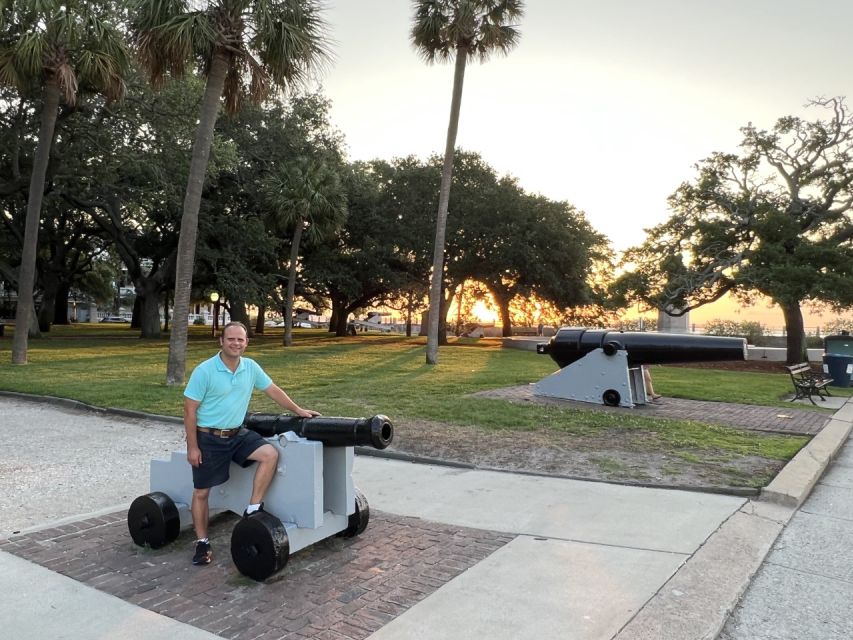
- A professor leads the walk: Eric Lager brings college-level teaching experience and a Ph.D. background in South Carolina history.
- Charleston beyond the main streets: Old alleys and graveyards add quieter, less obvious places to the route.
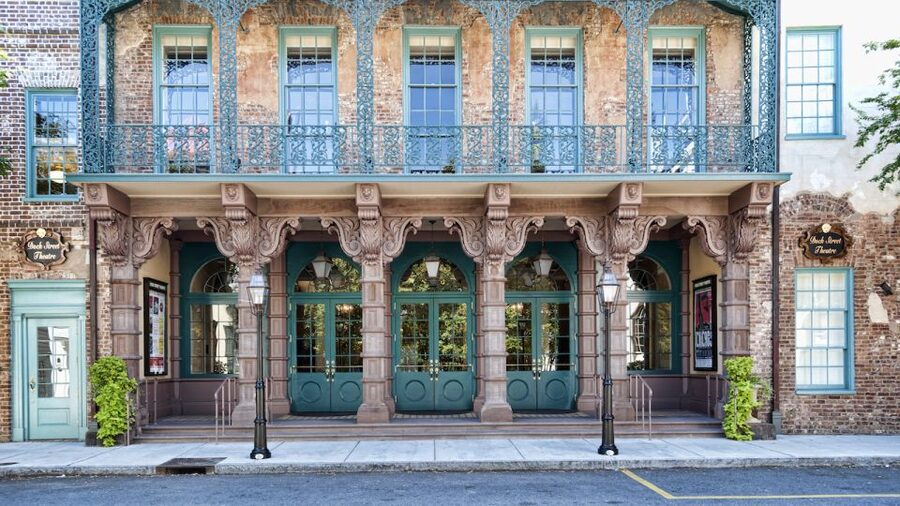
- Major landmarks with context: See the Dock Street Theater, French Huguenot Church, Washington Park, and the Four Corners of Law.
- Small groups matter: The maximum of 12 makes it easier to hear, ask questions, and speak with Eric directly.
- Three hours for $40: The price is strong if you want a serious introduction to Charleston rather than a quick orientation.
- Plan for outdoor conditions: The tour operates rain or shine unless the weather is unsafe, and it is not suitable for wheelchair users.
Why a history professor changes a Charleston walk
Charleston is easy to admire and surprisingly easy to misunderstand. You can stroll past grand homes, church spires, brick walls, and iron gates without knowing what shaped them. Eric’s approach is to connect the visible city to the decisions, conflicts, beliefs, and people behind it.
His focus covers Charleston from its founding in 1670 through the present, with particular attention to the Colonial Era, American Revolution, Antebellum Era, and Civil War. That range gives the tour a useful structure. You are not left with one isolated chapter, such as the Revolution or the Civil War. Instead, you see how earlier choices continued to shape the city.
I especially value the mix of factual detail and storytelling. Eric’s background means you can expect dates, names, and political context, but the walk is not presented as a classroom lecture. The people who shaped Charleston, including its famous and infamous characters, are part of the story. His humor also helps keep a long afternoon of history moving.
Eric has been praised for answering questions directly and making time for each person in a small group. That matters in Charleston, where a single question about a building can lead into architecture, religion, trade, race, law, or military history. You get more than the basic fact that a building is old. You learn why it looks the way it does and what its design tells you about the city.
More History Walking Tours in Charleston
- Historic Charleston Guided Sightseeing Walking Tour
★ 5.0 · 6,216 reviews - Hidden Alleyways and Historic Sites Small-Group Walking Tour
★ 5.0 · 2,335 reviews - Charleston historical walking tour with a Professor of History at The Citadel
★ 5.0 · 1,284 reviews
Starting at 108 Meeting Street
The meeting point is at 108 Meeting Street, beside the brick wall on the sidewalk. Look for the building with four small white Ionic Greek columns. It now serves as a graphic design center for the city and is not open to the public.
The location is directly across from Hibernian Hall and the pink Mills House Hotel. That makes the meeting point fairly easy to identify, but do not count on using the building itself for a restroom. There are restrooms at the Mills House Hotel, while none are available at 108 Meeting Street.
I would arrive a little early. The walk lasts three hours, and dealing with water or a restroom before the start is much easier than trying to manage it once the group is moving. Since you are meeting on a sidewalk, keep your eyes open for the guide and the small group rather than expecting a formal ticket desk.
There is no hotel pickup or drop-off. You make your own way to the starting point, then walk through the historic district with Eric. Food, drinks, and entry into house museums are not included, so think of this as a walking and interpretation experience, not a combination ticket.
Colonial Charleston through alleys and graveyards

The most appealing part of this tour is its attention to places you might pass without noticing. Old alleys and graveyards do not have the visual drama of a major church or theater, but they can reveal how Charleston grew and how earlier residents lived, worshiped, and were remembered.
An alley changes your view of the city. From the main street, Charleston can look carefully arranged and ceremonial. A narrow passage gives you a different sense of scale. You begin to notice how buildings relate to one another and how the historic district contains quieter spaces just beyond the main routes.
Graveyards offer another kind of evidence. They connect names and dates to the people who lived through Charleston’s colonial period, wars, religious changes, and social conflicts. Eric’s role here is important because a cemetery can otherwise become a blur of old stones. With historical context, it becomes part of the city’s story.
You should expect to stand while Eric explains what you are seeing. The tour is not simply a walk from one photo stop to another. It is built around interpretation, so the value comes from listening closely and asking questions.
The Dock Street Theater and French Huguenot Church
The Dock Street Theater and French Huguenot Church give the walk two very different ways to understand Charleston.
The Dock Street Theater points toward the city’s cultural life. A theater is more than an attractive historic façade. It raises questions about who had leisure, who could afford entertainment, how Charleston presented itself, and what kinds of public life developed in the city.
The French Huguenot Church points toward religious identity and migration. Its presence helps explain that Charleston’s early population was not culturally uniform. Religious communities brought their own traditions and connections, and those influences became part of the city’s character.
These stops are useful because Eric does not treat architecture as decoration alone. The buildings become clues. Their design, setting, and purpose can help you understand the people who built them and the society they wanted to create.
The tour does not include entry into house museums, and the supplied details do not promise interior access to every landmark. You should expect to learn from the streets and exterior views rather than assume that this is an indoor museum tour. That is not a weakness, but it is worth knowing when comparing it with a paid house visit.
More History Walking Tours in the USA
- Charleston: Old Walled City Historical Walking Tour
★ 4.7 · 705 reviews - Historic Charleston Walking Tour: Rainbow Row, Churches, and More
★ 5.0 · 691 reviews - Charleston: History and Architecture Guided Walking Tour
★ 4.8 · 349 reviews - Charleston History and Hops Tour: Bar and History Walk
★ 5.0 · 316 reviews
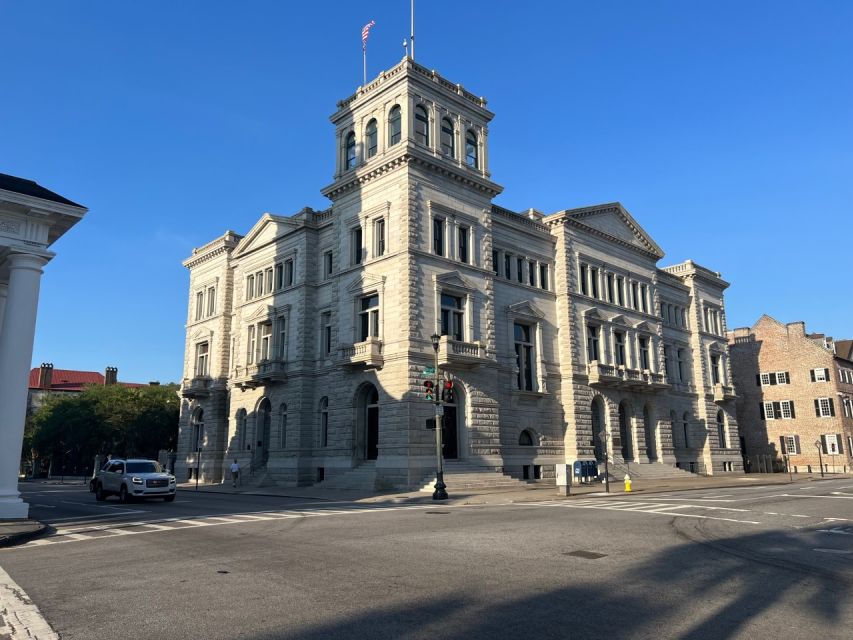
Washington Park and the Four Corners of Law
Washington Park and the Four Corners of Law provide a chance to see Charleston as a civic center, not only as a collection of private homes and churches.
The Four Corners of Law is one of the city’s most recognizable groupings of public authority. Its name refers to the presence of religious, municipal, state, and federal law in the surrounding area. Eric uses this setting to explain how Charleston’s institutions worked and how power was displayed in the city.
That context is more useful than memorizing the name of a famous intersection. You begin to read the area as a statement about government, justice, religion, and public order. The stop also ties together several subjects that can otherwise seem separate, including architecture, politics, and civic life.
Washington Park adds another public space to the walk. Parks are often where a city reveals how it wants people to gather, remember, and see themselves as a community. Eric’s broader method is to use such places as starting points for stories about Charleston’s development and the people connected to it.
The exact time spent at each stop can vary with questions and the group. That is one benefit of a small tour, but it also means the experience may feel less tightly timed than a scripted sightseeing circuit. If you like asking questions, that flexibility is a plus. If you want a rapid checklist of landmarks, it may feel slower.
Architecture that explains how Charleston worked
Several of the strongest impressions from this walk come from learning why Charleston’s buildings look the way they do. The architecture is not only about style. It reflects climate, social customs, available materials, religion, wealth, and practical needs.
Eric explains architectural details alongside the city’s historical development. That combination helps you see features you might otherwise miss. A porch, arrangement of rooms, wall, gate, or façade can point to function and to the people who used the building.
The value is especially clear for first-time visitors. You may already know that Charleston is famous for historic architecture, but a good explanation changes what you see. After the tour, you are more likely to notice the difference between a building that was designed for display and one shaped by daily use.
The tour also works for people who have already visited Charleston. Several participants had local familiarity or previous tour experience, yet still found new architectural and historical details. The city rewards a slower look, and Eric’s explanations give you a reason to pause.
Do not expect every building to be open. House museum admissions are not part of the $40 fee. If you want to tour interiors, you will need to arrange and pay for those separately, but the walking tour can help you decide which places deserve more of your time.
A walk through war, religion, and public life
Charleston’s story cannot be reduced to charming streets and old houses. The city played a major role in the Colonial Era, the American Revolution, the Antebellum Era, and the Civil War. Eric’s teaching background allows him to place local events inside the larger story of South Carolina and the United States.
That wider view is one reason I would choose this walk early in a Charleston visit. If you take it near the beginning of your stay, later visits to churches, museums, parks, and historic houses can make more sense. You will have a framework for the names and events that keep appearing.
The religious material also adds needed depth. The French Huguenot Church is one clear entry point, but religion affects architecture, community life, migration, and public identity across the city. The tour’s mix of religious, political, cultural, and military subjects keeps the story from becoming one-dimensional.
The same is true of the human stories. Famous figures may attract attention, but lesser-known people often explain how a city really worked. Eric’s emphasis on characters, stories, and personal choices gives the walk a human scale.
This is history presented as a chain of lives and decisions, not a list to memorize. You can enjoy it without being a specialist, though anyone who already likes American history will probably get the most from the detail.
How the small group affects the experience
The group limit is advertised as no more than 12, while some earlier arrangements referenced groups of 10 or fewer. Either way, this is much smaller than a 20-person city tour.
The difference is practical. You can usually hear the guide without straining, stand closer to the point being discussed, and ask questions without interrupting a large crowd. Eric also makes an effort to speak with individuals rather than addressing only the most vocal people.
A small group creates a more conversational feel. It also lets Eric adjust his explanation to the interests of the people present. A question about architecture may lead further into building design, while a question about war or religion can shift the emphasis for a few minutes.
There is a tradeoff. A small tour depends more on the people in your group. If several people ask detailed questions, the pace may slow. If the group is quiet, you may hear more of Eric’s prepared material. Neither outcome is bad, but the walk is designed for interaction rather than a fixed audio script.
Pace, weather, and what to bring

The tour lasts three hours and is conducted in English. It is an outdoor walking experience, so comfortable shoes are essential. Bring water, especially during warm or humid weather.
The walk takes place rain or shine unless conditions are unsafe. That policy makes a rain jacket or compact umbrella sensible, though the supplied information does not promise shelter along the route. Check the weather before leaving your hotel and dress for a long period outdoors.
The tour is not suitable for wheelchair users. The details do not describe a specific distance, surface condition, or step-free route, so anyone with mobility concerns should ask the provider before booking rather than assume the route will work for them.
Pets are not allowed, although assistance dogs are permitted. There is no food or drink included, so eat beforehand or plan a meal after the walk. The three-hour length makes that simple to arrange, but you should not expect refreshment stops as part of the tour.
Free cancellation is available up to 24 hours before the start for a full refund. You can also reserve and pay later, which helps if your Charleston plans are still shifting.
Is $40 a fair price?
At $40 per person, this tour offers good value if you want a serious introduction to Charleston’s past. You are paying for three hours with a specialist guide, a small group, and access to interpretation that you would not get from simply walking the same streets alone.
The value is strongest for people who care about context. If your goal is only to take photographs of famous façades, a self-guided walk costs less. But if you want to understand why the city developed as it did, how architecture reflects social life, and how religious and political institutions shaped Charleston, the fee is reasonable.
You are not paying for museum admission, transportation, food, or hotel service. Those omissions keep the price clear, but they also mean you should compare this with the total cost of any other activities you plan to add.
I would treat the tour as a foundation for the rest of your visit. After three hours, you may want to return to a church, house museum, cemetery, or civic site for a closer look. The walk does not replace those visits. It helps you see why they matter.
Who should book this Charleston history walk?
I would recommend it to first-time visitors who want to understand the city rather than simply see it. It suits people who enjoy American history, architecture, religion, politics, and stories about real people.
It is also a good choice for repeat visitors. Charleston changes when you have someone point out details you have passed before. Local residents and people who already know the Civil War or Revolutionary War may still find the architectural and cultural connections worthwhile.
Families with older children may enjoy it if they can manage three hours of walking and listening. The guide’s humor and storytelling help, but this is still a history-focused tour, not a child-centered activity.
I would be more cautious if you dislike long explanations, need frequent indoor breaks, or want guaranteed interior access to historic buildings. You should also avoid booking it if the walking format or lack of wheelchair suitability creates a problem.
Should you book it?
Book this tour if you want Charleston explained by a trained historian rather than presented as a series of photo stops. Eric Lager’s strongest qualities are his command of South Carolina history, clear teaching style, humor, and willingness to answer questions. The small group makes those strengths easier to enjoy.
Book early if your schedule is tight, since the limited group size can fill. Choose a morning or cooler time if available during hot weather, and arrive ready for three hours outdoors.
Skip it only if you prefer a short, highly visual tour with little narration. For everyone else, $40 buys a thoughtful introduction to Charleston’s streets, buildings, institutions, and people, with enough detail to improve the rest of your stay.
FAQ
How long does the Charleston history walk last?
The tour lasts three hours.
Who leads the tour?
Eric Lager leads the walk. He is a Citadel history professor with nearly 20 years of combined experience teaching at the college level and working in public history.
How much does the tour cost?
The price is $40 per person.
How large is the group?
The group is limited to no more than 12 people.
What sights are included?
The walk includes old alleys, graveyards, the Dock Street Theater, French Huguenot Church, Washington Park, and the Four Corners of Law. It also covers Charleston’s history from its founding in 1670 to the present.
Is admission to house museums included?
No. Entry into house museums is not included in the tour price.
Where is the meeting point?
Meet along the brick wall on the sidewalk in front of 108 Meeting Street. The building has four small white Ionic Greek columns and is across from Hibernian Hall and the pink Mills House Hotel.
What should I bring?
Bring comfortable shoes and water.
Is the tour accessible to wheelchair users?
No. The tour is not suitable for wheelchair users. It takes place outdoors and involves walking through the historic district.
More Castle and Palace History Tours in Charleston
- Edinburgh: Edinburgh Castle Guided History Tour with Tickets
★ 4.8 · 9,933 reviews - Madrid Essential: Historic Center, Plaza Mayor & Royal Palace
★ 5.0 · 6,416 reviews - Venice’s Best: Basilica, Doge’s Palace, Gondola & History Gallery
★ 4.5 · 2,478 reviews - Tokyo: Imperial Palace and Shogun Historical Walking Tour
★ 5.0 · 2,251 reviews
Newest history tours we have reviewed in Charleston
- Charleston’s Strong Women of the South History Tour★ 4.5 · 27 reviews
- Charleston’s Historic Pubs, Taverns, and Taprooms Tour★ 4.5 · 33 reviews
- Sip History in The Sun Cabana Covered Cocktail Class★ 5.0 · 332 reviews
- Small-Group Tour: Charleston Old Walled City Historical Walking Tour★ 4.5 · 283 reviews
- Sip History In a Secret Speakeasy Cocktail Class★ 5.0 · 40 reviews
- Private Sunset Sail BYOB Dolphin/History Tours on 43ft Mystique★ 5.0 · 42 reviews
- Private Walking Tour of Historic Charleston★ 5.0 · 38 reviews
- Private Afternoon Sailing/Dolphin & History Tour on 43ft Mystique★ 5.0 · 32 reviews
Castle & Palace History Tours, compared.
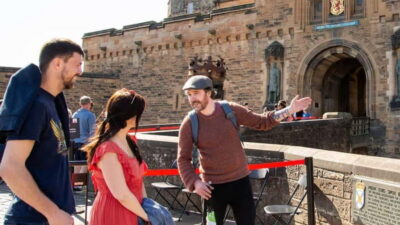
Edinburgh Castle Guided History Tour with Tickets
Read our review →
Madrid Essential: Historic Center, Plaza Mayor & Royal Palace
Read our review →
Venice’s Best: Basilica, Doge’s Palace, Gondola & History Gallery
Read our review →
Imperial Palace and Shogun Historical Walking Tour
Read our review →
Saadian Tombs & Bahia Palace, Medina Guided Tour
Read our review →
Charleston historical walking tour with a Professor of History at The Citadel
Read our review →
Abu Dhabi Grand Mosque, Palace, and Heritage Village
Read our review →
Buda Castle District Dark History, Legends and Vampire Night Tour
Read our review →Browse the lists this tour appears in