
Review · INDIA HISTORY TOURS
Kolkata Heritage Tram Tour
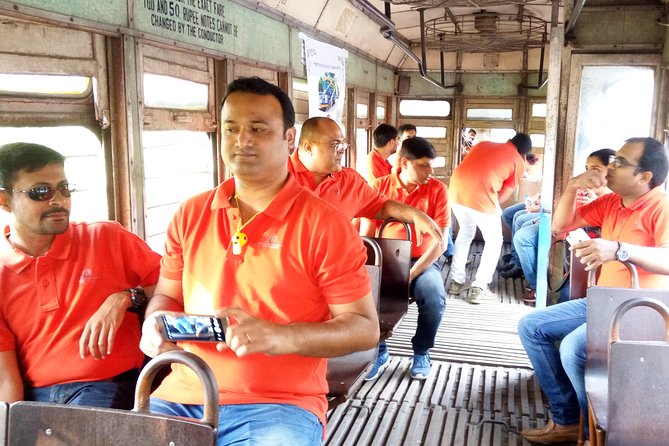
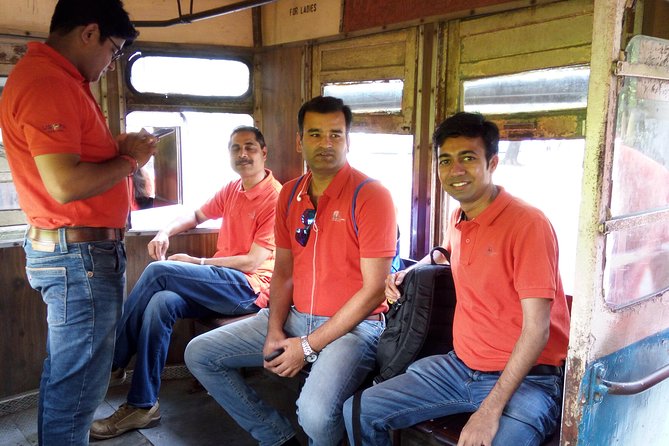
Kolkata’s tram is not just transport. It is the star of this tour, a chance to ride one of India’s last working tram systems while the city wakes around you. The route links religious buildings, colonial-era sites, old neighborhoods, and the Maidan, giving you a useful first look at Kolkata without spending the morning on foot.
I like the early 7:00 am start, when traffic is lighter and the city feels more open. I also like the generous snacks and refreshments, plus the guides’ strong local connection. Arif and Haris have led visitors through central and north Kolkata, while guide and owner Ariff is known for his personal roots in the city.
The main drawback is sound. Tram noise and street traffic can make explanations hard to hear, especially in a group of up to 20 people. The operator has discussed adding headsets, but you should be prepared to move closer to the guide or ask for a repeat.
Key points to know before booking
- Ride one of India’s only surviving tram networks: The heritage tram is both your transport and one of the main sights.
- Start before the city gets crowded: The 7:00 am departure helps you see central Kolkata with less traffic.
- See many sides of Kolkata: Temples, churches, a mosque, cemeteries, colleges, bookshops, and Mother House all appear along the route.
- Get off at meaningful stops: Tipu Sultan Masjid, Nonapukur Tram, and Mother House receive dedicated visits.
- Expect a small-group format: The maximum group size is 20, large enough for conversation but potentially difficult for hearing.
- Bring an appetite: Snacks and refreshments are provided, and the food adds a pleasant local touch to the morning.
Why the heritage tram makes this tour different
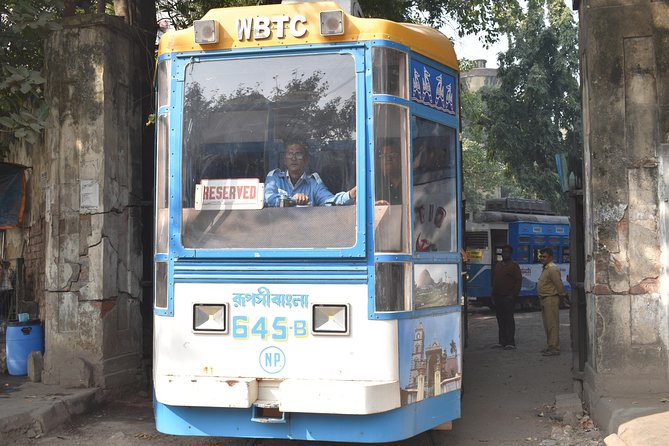
Most city tours use a car, bus, or walking route. This one uses Kolkata’s tram network, India’s only tram system, as the thread holding the morning together. That changes the pace. You are not rushing from one sight to another. You are watching streets, shopfronts, religious buildings, and ordinary city life slide past at a slower speed.
The tram itself is an attraction. One account describes century-old cars with their original mechanical workings, which will appeal to anyone who enjoys historic transport. You get the creak, rumble, and steady movement of an old public vehicle rather than the sealed-off feel of a modern coach.
That slower ride also gives you time to look around. You might see the city before the day reaches full speed, with fewer vehicles crowding the streets. The early start is practical, not merely ceremonial. It helps the tour cover more ground before traffic becomes a bigger problem.
The tour lasts about two to three hours. That is long enough to provide an overview, but not so long that the tram ride becomes tiring. You will still need more time for major sights such as the Victoria Memorial if you want a full visit inside or around them.
More History Tours in India:
- Fontainhas Heritage Walk by Make It Happen
★ 5.0 · 2,834 reviews - The Great Indian Food Tour: Old Delhi Food and Heritage Walk
★ 5.0 · 1,698 reviews - Old Goa Heritage Walk by Make It Happen
★ 5.0 · 797 reviews
A morning route through Kolkata’s many traditions
The route is useful because it does not present Kolkata as one single story. You see Hindu temples, Christian churches, a Muslim mosque, a historic cemetery, educational institutions, and places tied to Mother Teresa. That range gives you a better sense of how the city developed and how different communities shaped it.
The tour passes landmarks including the Maidan and Victoria Memorial. These are among Kolkata’s best-known sights, and seeing them from the tram gives you geographic context. You begin to understand how the open Maidan relates to the older central districts and the grand public buildings nearby.
The route also includes less obvious places. You may pass the Lower Circular Road Cemetery, also known as the General Episcopal Cemetery. Established in 1840, it remains a functioning cemetery with roughly 12,000 graves. It is a reminder that Kolkata’s built history is not limited to monuments and grand facades.
Other points along the route include Maulana Azad College, founded in 1926, and the Muslim Institute, founded in 1902. The West Bengal Urdu Academy and Heritage Book Store add further clues about the city’s literary and cultural life. These may be quick viewing points rather than full visits, but they help fill in the background between the larger stops.
Birla Mandir and the city’s religious architecture
Birla Mandir is one of the major religious landmarks connected with the Birla family. Located on Asutosh Chowdhury Avenue in Ballygunge, the Hindu temple is dedicated to forms of Vishnu, including Rama and Krishna.
The itinerary also refers to another major landmark built by the Birla family. The available details do not identify it clearly, so you should treat this part as a passing introduction rather than expect a full guided visit inside every Birla site.
These temple stops matter because they show a side of Kolkata that can be missed if you focus only on colonial buildings. The city’s religious architecture is part of its daily life, not just a backdrop for sightseeing. Depending on the timing and local conditions, your guide may explain how these places fit into the city’s neighborhoods and traditions.
Churches, cemeteries, and overlooked city stories
Sacred Heart Church receives a dedicated stop of about 20 minutes, with admission listed as free. The church reflects the Portuguese legacy of Bengal, a part of Kolkata’s past that is easy to miss when attention is fixed on the better-known British-era landmarks.
The route also includes Thoburn Memorial Methodist Church, founded in 1873, and the Lord Jesus Church in Taltala. The latter is a Catholic church that was formerly a Church of Scotland Presbyterian place of worship before being handed to the Jesuits in 19th-century Kolkata.
These stops give the tour a strong architectural and social range. You are not simply checking off famous monuments. You are seeing how different religious communities established institutions in the same central city.
The Lower Circular Road Cemetery adds another mood. A cemetery can be a quiet change from the traffic and street noise, but it may not appeal to everyone as a sightseeing stop. If you prefer major monuments, this part may feel less immediate. If you like old burial grounds and the stories held in them, it provides useful historical context.
Same streets, a different century:
- Old Delhi Food, Heritage&Cultural Walk with Rickshaw ride to Masterji Kee Haveli
★ 5.0 · 742 reviews - Blue City Heritage Private Walking Tour With Pickup and Drop-Off
★ 5.0 · 441 reviews - Private Heritage Walking Tour in Jaisalmer Fort and Old Bazaar
★ 5.0 · 306 reviews - Old Delhi Food-Spice Market-Temples Tour Soon Featured on NETFLIX
★ 5.0 · 304 reviews
Tipu Sultan Masjid and Kolkata’s Muslim heritage
Tipu Sultan Masjid receives about 20 minutes, with free admission listed. Named for Tipu Sultan, the ruler of Mysore, the mosque is an important architectural and cultural landmark in Kolkata.
This is one of the strongest stops for understanding the city beyond its colonial image. The mosque is tied to the memory of Mysore’s ruler while also belonging firmly to Kolkata’s urban story. Your guide can help connect the building to the surrounding streets and the wider mix of communities that shaped central Kolkata.
As with any religious site, dress and behavior should be respectful. The tour information does not specify a dress code or interior access, so do not assume that every part of the mosque will be open for a full visit. The listed 20-minute stop suggests a focused introduction rather than an extended religious or architectural tour.
Nonapukur Tram, where the transport story comes alive
Nonapukur Tram receives a dedicated 20-minute stop and is described as the birthplace of Calcutta Tramways. For this tour, it is more than another landmark. It explains why the tram ride matters.
You can connect the old vehicle beneath you with the larger system that once helped organize movement across Kolkata. The stop should be especially rewarding if you enjoy public transport, industrial history, or old machinery. Even if you are not a tram enthusiast, it gives the ride a clear purpose.
This is also where the tour’s unusual format pays off. You are not merely looking at an old tram in a museum. You ride through the city and then visit a place tied to the tramway’s origins. That combination is far more memorable than a standard vehicle display.
Mother House and the final resting place of St. Teresa
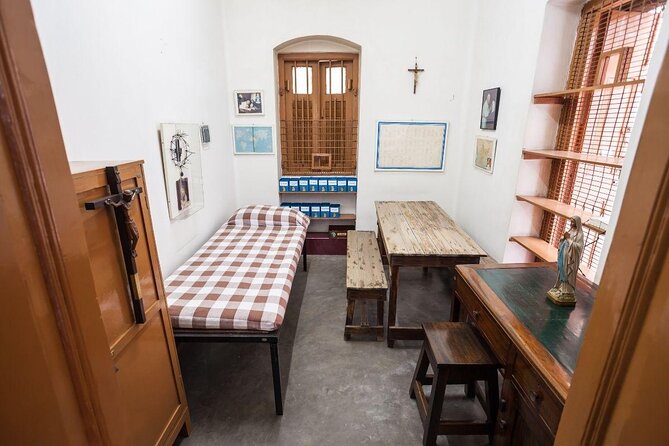
Mother House receives about 30 minutes, the longest clearly stated stop on the route. It is Mother Teresa’s former home and the final resting place of St. Teresa.
The stop offers a quieter, more reflective part of the morning after the movement and noise of the tram. It also introduces a major figure associated with Kolkata’s poor and homeless children. Mother Teresa’s work is a significant part of the city’s modern international identity, and Mother House remains an important place for people interested in that story.
You should keep your expectations measured. Thirty minutes is enough for an introduction and a respectful visit, not a full study of the Missionaries of Charity or Kolkata’s social history. The tour gives you the location and context, then leaves room for a longer return visit if the subject matters to you.
What the guides add to the ride
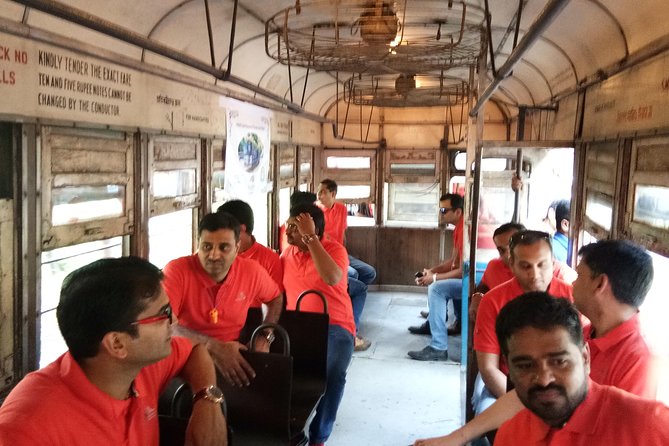
The best version of this tour depends heavily on the guide. Arif and Haris are named as guides who have taken people through central and north Kolkata, including places that are easy to overlook even if you grew up in the city. Ariff, the company owner, has also guided the tour and is described as having deep roots in Kolkata.
That local connection is valuable because the route includes many ordinary institutions, not only famous sights. A guide can explain why a church, college, cemetery, bookshop, or mosque matters instead of leaving you with a list of names.
The guide’s knowledge is a major strength, but you should manage the sound problem. Tram wheels, horns, traffic, and group chatter can swallow spoken explanations. Sit or stand as close to the guide as possible, and ask questions during the stops. If headsets are available by the time you book, they would make a real difference.
Snacks, timing, and the practical side of the morning
Snacks and refreshments are provided. One detailed account describes the snack bag as especially generous, so you should not need to plan the morning around finding breakfast immediately. Still, the exact menu is not specified, so bring any special food or drink you require.
Pickup is offered, and the tour uses a mobile ticket. Confirmation arrives when you book. Public transportation is nearby, though the information does not specify the exact pickup area or hotel coverage, so check those details before payment.
The group can include up to 20 people. That is small enough to feel more personal than a large bus outing, but it is not a private tour. If you want constant one-to-one conversation, ask about a smaller option before booking. If you enjoy meeting other people and want a guided overview, the group size should work well.
The tour requires good weather. If poor weather cancels it, you are offered another date or a full refund. You can cancel for a full refund up to 24 hours before the start time. Changes or cancellations inside that window are not accepted and are not refunded.
Is $60 a fair price?
At $60 per person, this is not the cheapest way to ride Kolkata’s tram. The value comes from the package: a heritage tram ride, a guide, several stops, local interpretation, snacks, refreshments, and pickup availability.
For a first morning in Kolkata, the price can make sense because you cover a wide area without arranging several separate rides. You also get an introduction to places that may be difficult to connect on your own, such as Nonapukur Tram, Tipu Sultan Masjid, the churches, and Mother House.
The value is weaker if you mainly want a long tram ride or a deep visit inside each landmark. Several places are passed rather than explored at length, and the tour’s short duration limits the detail possible at each stop.
I would see it as an orientation tour, not a replacement for a full day of sightseeing. Afterward, you will know which areas deserve a longer visit and how the central districts fit together.
Who should book this Kolkata tour?
I would recommend it to first-time visitors who want a broad introduction without walking Kolkata’s busy streets for several hours. It also suits anyone interested in historic public transport, religious architecture, urban history, and local neighborhoods.
It is a good match for visitors who enjoy variety. In one morning, you move from a Hindu temple to Christian churches, a cemetery, a mosque, a tramway landmark, and Mother House. That range gives you plenty to think about, even when some stops are brief.
I would hesitate if you need a quiet, highly structured tour with every explanation delivered through headphones. The tram can be noisy, and the group may make it harder to hear. I would also choose another format if your main goal is a long interior visit at the Victoria Memorial or any single religious site.
Should you book the Kolkata Heritage Tram Tour?
Book it if you want Kolkata to make sense as a living city, not just a collection of famous buildings. The old tram, early start, broad route, generous snacks, and locally rooted guides make this a distinctive introduction.
Go in knowing that the morning moves quickly and sound may be imperfect. Sit near the guide, use the stops for questions, and treat the tour as a city orientation. For those who value character, transport history, and a wide view of Kolkata, the $60 price is reasonable.
FAQ
How long does the Kolkata Heritage Tram Tour last?
The tour lasts approximately two to three hours.
What time does the tour start?
The stated start time is 7:00 am.
Is pickup available?
Yes, pickup is offered. The exact pickup details should be confirmed when you book.
What landmarks are included?
The route includes or passes Birla Mandir, the Maidan, Victoria Memorial, Sacred Heart Church, Tipu Sultan Masjid, Nonapukur Tram, Mother House, Lower Circular Road Cemetery, and several churches, colleges, and cultural institutions.
Are food and drinks provided?
Yes. Snacks and refreshments are provided during the experience.
What happens if bad weather cancels the tour?
You will be offered another date or a full refund. For your own cancellation, you must cancel at least 24 hours before the start time to receive a full refund.
Newest history tours we have reviewed in India
- Agra Fort: Guided UNESCO Heritage Walking Tour★ 4.9 · 21 reviews
- World heritage Ahmedabad city tour in private car with guide and lunch★ 5.0 · 44 reviews
- Private Elephanta Caves UNESCO World Heritage Site Tour★ 5.0 · 34 reviews
- Mumbai: South Mumbai Heritage Walking Guided Tour★ 4.5 · 69 reviews
- Hill-station & Heritage: Lonavala & Karla Caves Tour from Mumbai★ 5.0 · 60 reviews
- Best South Mumbai Heritage Walk★ 5.0 · 122 reviews
- Heritage Walk: Recommended by Gigi Hadid as a must-do in Mumbai★ 5.0 · 122 reviews
- The Cultural And Historical Walking Tour in Margao★ 5.0 · 280 reviews
India History Tours, compared.
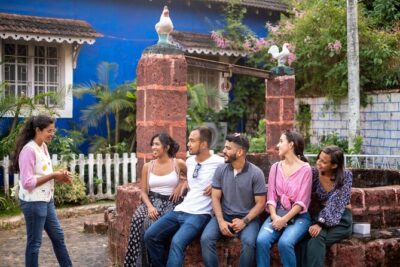


Old Delhi Food, Heritage&Cultural Walk with Rickshaw ride to Masterji Kee Haveli
Read our review →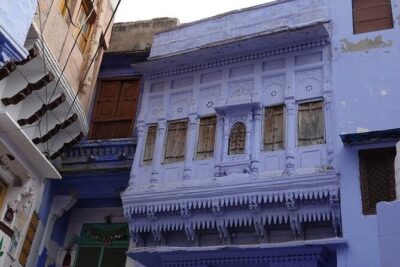
Blue City Heritage Private Walking Tour With Pickup and Drop-Off
Read our review →
Private Heritage Walking Tour in Jaisalmer Fort and Old Bazaar
Read our review →
Old Delhi Food-Spice Market-Temples Tour Soon Featured on NETFLIX
Read our review →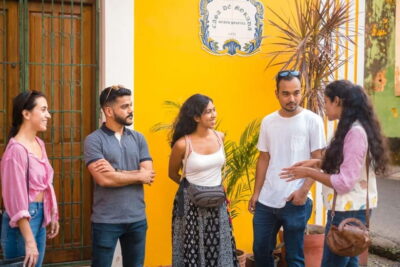
Panaji: Heritage Walk through Goa’s Latin Quarter
Read our review →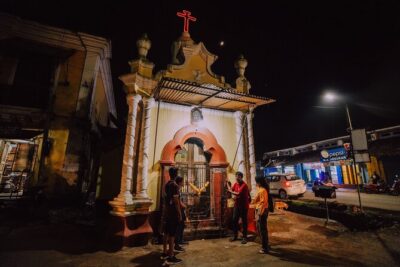
The Cultural And Historical Walking Tour in Margao
Read our review →Browse the lists this tour appears in