
Review · CHARLESTON HISTORY TOURS
Charleston’s Old South Carriage Historic Horse & Carriage Tour
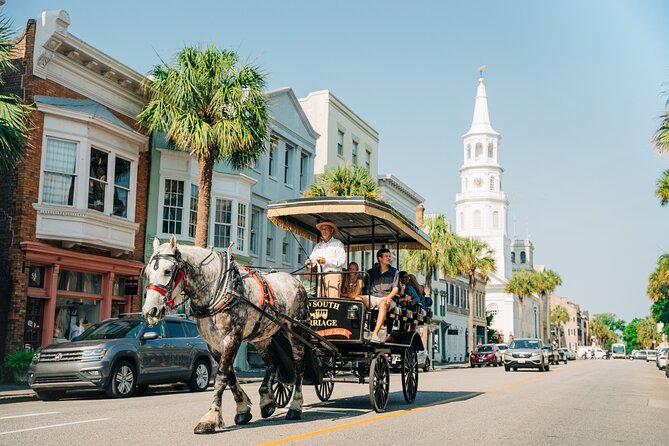
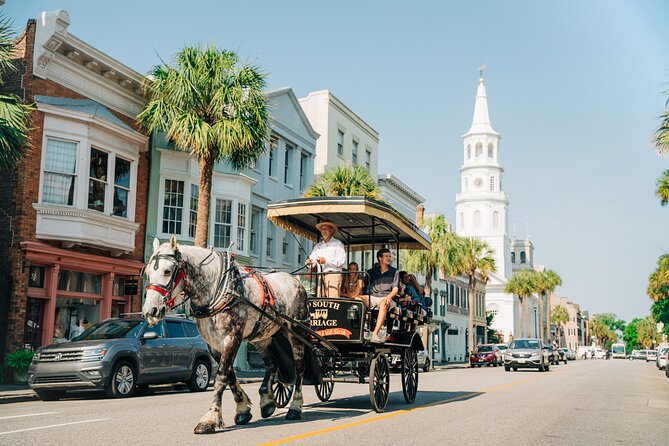
Charleston’s grandest streets look their best from a slow-moving carriage. Behind a Belgian or Percheron draft horse, you pass piazzas, church steeples, iron gates, and old homes while your guide connects them to more than 300 years of Charleston history. It is an easy way to cover roughly 2.5 miles without wearing out your feet.
I like the city-assigned route system, even if it takes away some control. The route changes by zone, so you may see a side of downtown you would have skipped, and the carriage gives you a calm first look at the city. I also like the guides’ mix of facts and personality. Carol, Wendy, Ro, and other certified guides have earned praise for clear storytelling, humor, and handling questions from both adults and children.
The main catch is simple: you cannot choose your sights. You might pass Rainbow Row and the Battery, or you might not. Weather matters too. The covered carriage gives shade and some rain protection, but a cold or wet hour can feel long without a jacket.
Key points to know before you book
- The route is assigned by Charleston’s tourism division: A random zone determines which 30 blocks you see.
- The ride covers about 2.5 miles in one hour: It is a broad introduction, not a stop-and-explore tour.
- The horses are Belgian or Percheron draft horses: Their size and calm pace are part of the experience.
- Guides bring the city to life: Expect stories about homes, churches, former residents, and Charleston’s role in the Civil War.
- The stable is at 14 Anson Street: You check in there, use the restroom, buy water, and board from an easy-loading ramp.
- The carriage holds up to 16 people: Smaller wagonette carriages may hold up to eight, so the exact setup can vary.
Why a carriage is a smart first look at Charleston
Charleston rewards slow travel. Downtown streets are compact, but the city’s important details sit behind gates, above piazzas, and on plaques you might miss while walking. A carriage lets you cover a fair amount of ground while keeping your eyes up.
The pace also fits the setting. You are not rushing from one address to another. You hear the clip-clop of the horse, watch old façades pass by, and get a sense of how the historic center fits together. If you are visiting Charleston for the first time, this can help you decide which streets deserve a closer walk later.
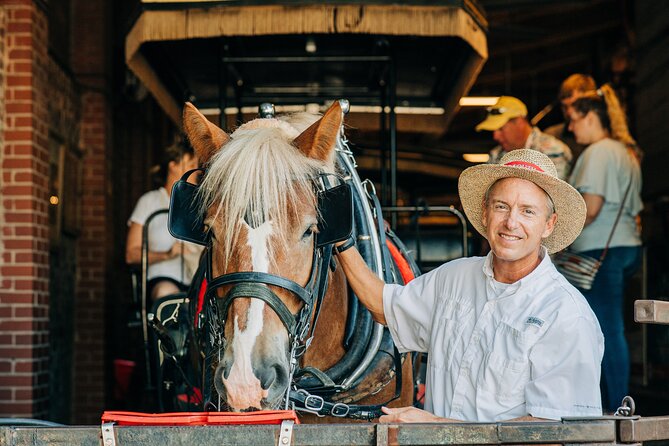
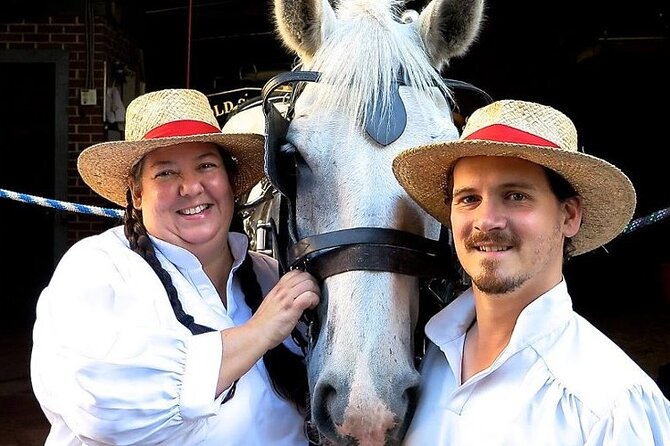
The tour is narrated throughout by a certified driver-guide. The company says its historic guides belong to the Palmetto Guild, which requires a broad examination on Charleston’s past. In practical terms, that means you should expect more than a list of building names. The guide may explain former residents, the city’s colonial beginnings, church traditions, antebellum life, and the part Charleston played in the Civil War.
The strongest part of the experience is often the guide’s delivery. A dry recitation would make an hour feel slow, but guides such as Wendy and Ro have been praised for humor and storytelling. Carol has been singled out for pairing solid historical detail with an engaging personality. That personal touch matters on a group ride.
More Horse Riding in Charleston:
- Charleston Horse-Drawn Carriage Tour: Explore Historic Charleston
★ 5.0 · 3,561 reviews - Charleston: Historical Downtown Tour by Horse-drawn Carriage
★ 4.8 · 1,009 reviews - Charleston’s Historic Residential Horse and Carriage Tour
★ 4.5 · 668 reviews
Starting at the Old South stable on Anson Street
Your tour begins and ends at Old South Carriage Company, 14 Anson Street. The stable is one block north of the City Market, so it is close to a part of downtown you may already be visiting.
Arrive at least 15 minutes before departure. This is not a casual suggestion. Missing the check-in time can lead to cancellation without a refund. The stable gives you a sheltered place to wait, and you can use the restroom, buy bottled water, and watch an educational video before boarding.
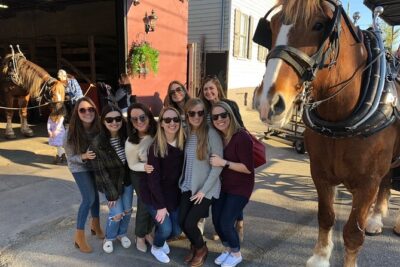
You may also have time to see the draft horses. Several horse names appear in the company’s daily operation, including Aiken, Jordan, Arthur, Bob, Curtis, Cooper, and Jesse. The horse is not just transportation here. Its size, steady pace, and gentle behavior are a large part of the charm.
The boarding platform is inclined for easier loading. That helps passengers who do not want to climb into a high carriage, though you should still expect normal movement and limited space once seated. Strollers cannot go aboard, but they can be left at the stable. Service animals are allowed, and well-behaved dogs of any size are welcome. Smaller dogs can sit on your lap, while larger dogs can ride in the front row.
Food is not allowed on the carriage. Drinks are allowed, and bottled water is available at the stable. These small rules are worth knowing before you arrive, especially if you are touring with children.
The city gate and the route lottery
After boarding, the carriage heads toward the City gate near the Market. This is where the assigned route comes into play. Charleston divides carriage traffic into zones, and each carriage receives one zone for its hour. Guides have described the process as a random draw, sometimes using a bingo ball.
That system can surprise you. You may expect a fixed path that includes every famous address, but no one can promise that. One ride might pass the Battery or Rainbow Row, while another explores a quieter residential section. The company cannot simply change the route on request.
I see both sides of this arrangement. On one hand, it limits your control and can leave you disappointed if you have a short list of must-see sights. On the other hand, it spreads carriage traffic around the historic district and keeps every ride from becoming the same scripted loop. If you return to Charleston, you may receive a completely different route.
Treat the tour as an orientation to Charleston, not a guaranteed checklist. If seeing the Battery or Rainbow Row is essential, plan a separate walk or drive. The carriage tour gives you context and coverage, while walking lets you linger.
Thirty blocks of mansions, churches, and gardens
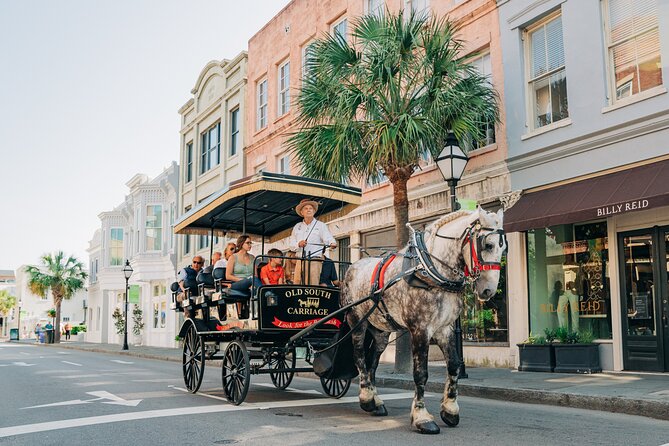
The ride covers about 30 blocks and more than 2.5 miles. That is enough distance to show you several faces of the old city, but not enough time to stop at each one.
Expect to pass historic homes with broad piazzas, carefully kept gardens, and custom wrought iron gates. These details are part of Charleston’s visual identity. The carriage’s slow pace gives you time to photograph them, though you should keep your camera ready because the view keeps moving.
Church steeples appear across the city, which explains Charleston’s long-standing nickname, the Holy City. Your guide uses these buildings and streets as entry points into the city’s story. You may hear about colonial Charleston, the antebellum period, local families, and the Civil War. The best moments often come when a guide links a plain-looking house to the person who lived there or explains why a church mattered to the surrounding neighborhood.
A notable stop is the area outside the Gov. William Aiken House. The home belonged to South Carolina Governor William Aiken Jr. and was placed on the National Register of Historic Places in 1977. The carriage does not turn the outing into a house visit, but seeing it from the street gives you a useful glimpse of the scale and polish of Charleston’s elite homes.
Remember that this is a moving tour. You may pause outside some sites, but you do not get a long interior visit. If a particular house catches your eye, write down its name and return on foot.
More History Tours in Charleston:
- Historic Charleston Guided Sightseeing Walking Tour
★ 5.0 · 6,216 reviews - Charleston Harbor History Day-Time or Sunset Boat Cruise
★ 4.5 · 2,788 reviews - Hidden Alleyways and Historic Sites Small-Group Walking Tour
★ 5.0 · 2,335 reviews - Charleston: Daytime or Sunset Historic Harbor Cruise
★ 4.5 · 1,352 reviews
What the horse adds to the hour
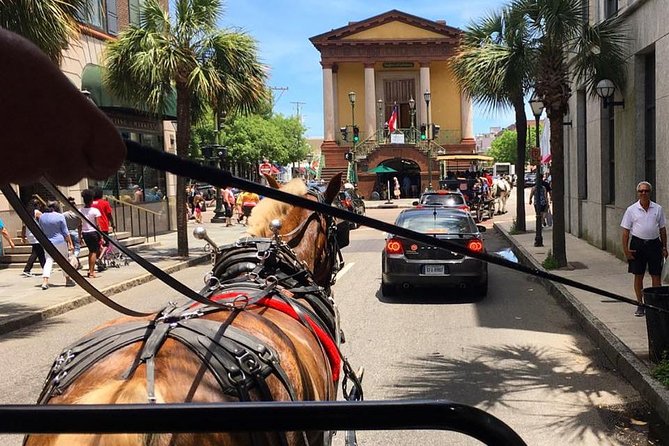
The Belgian and Percheron horses are working draft breeds, the same general type once used on American farms in the early 1800s. They are large, powerful animals, yet the tour moves at a measured pace.
The horses also give the outing a stronger sense of place than a standard vehicle tour. You hear the carriage roll over the streets, and the animal’s presence makes the old district feel less like a museum and more like a living city with an older rhythm.
If horse care is important to you, use your time at the stable to ask staff about the animals. Information shared there has included horses coming from Amish farms after their working years and spending time on a farm when they are not pulling carriages. The horses are also limited in the number of routes they work. Policies and schedules can change, so ask directly rather than assuming every horse follows the same routine.
Children often enjoy this part most. The horse gives them something concrete to watch while the guide discusses dates and politics. One family found that the staff explained things in a way that held a five-year-old’s attention, which is a good sign for parents deciding between a walking history talk and a carriage ride.
Group size, comfort, and weather
The largest carriage can carry up to 16 people, while a wagonette can hold up to eight. That is a small enough group for the guide’s voice to carry, but it is still a shared ride. If you want a private experience or complete control over the route, this is not the right format.
The carriage has a roof, giving you shade in bright weather and some cover in light rain. Heavy rain can still reach you, and thunderstorms stop operations. Bring a light jacket in cooler weather. One chilly ride left passengers wishing for blankets, so do not assume the covered carriage will feel warm.
The tour runs for about 50 to 60 minutes. That length works well at the start of a Charleston visit. It is long enough to provide context, but short enough to leave room for lunch, a museum, or a walking route afterward.
You should also prepare for the possibility of an uneven ride. Historic streets and carriage movement are not as smooth as a bus. One isolated complaint described a rough horse start, while most comments focused on calm horses and an enjoyable ride. If you have motion or back concerns, ask staff about boarding and seating before departure.
Is $50 a fair price?
At $50 per person, this is not the cheapest way to see downtown Charleston. You can walk many of the same streets for free, and self-guided routes cost little beyond your time.
The value comes from three things: the horse-drawn setting, the guide, and the amount of ground covered. In one hour, you see about 30 blocks while hearing stories that help explain what you are looking at. You also avoid planning a route, checking maps, or trying to read building plaques while walking.
I think the price makes sense for a first visit, especially if you want a gentle introduction before exploring on foot. It is also useful for families, solo visitors, and anyone who cannot comfortably walk several miles in the heat. For repeat visitors who already know downtown, the price is harder to justify unless you enjoy the carriage itself or hope to see a different zone.
The overall rating is 4.8 from more than 10,000 ratings, with 95 percent recommending the experience. That high level of approval matches the tour’s strongest features: personable guides, attractive streets, and the novelty of traveling behind a draft horse. Still, the route lottery keeps this from being a precise sightseeing product.
Who will enjoy this tour most
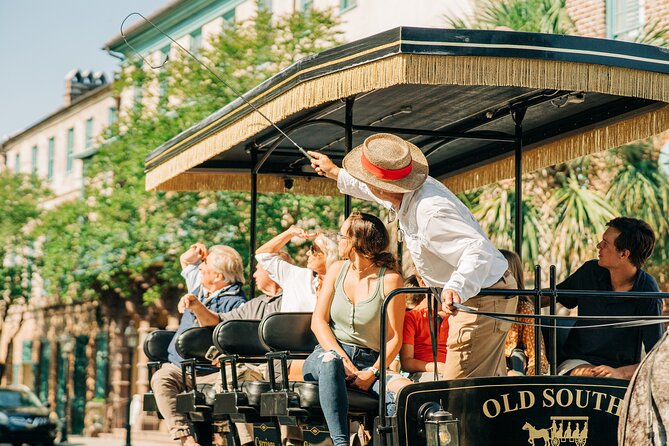
I would choose this ride for a first-time visit, a family with children, or a solo visitor who wants an easy way to get oriented. It is also a good choice for couples who want a relaxed hour with plenty of photo opportunities.
The format works well if you enjoy stories more than a strict list of stops. Guides have been praised for answering questions, adjusting explanations for different ages, and adding humor. A five-year-old can focus on the horse, while an adult listens for details about Charleston’s politics and architecture.
You may want something else if you need to see a specific landmark. The assigned zone means you might not pass the Battery, Rainbow Row, or another address on your list. Pair the ride with a self-guided walk if those places matter.
Book early if your schedule is tight. The experience is often reserved about two weeks ahead, and departure times can fill. You receive confirmation when booking, and free cancellation is available until 24 hours before the start time. Changes or cancellations inside that window are not refunded. If severe weather or an insufficient number of bookings forces cancellation, you are offered another date or a full refund.
My take: book it for the stories, not a checklist
I recommend Old South Carriage Company’s historic carriage tour if you want a friendly introduction to Charleston with a strong sense of place. The combination of a slow horse-drawn ride, certified guide, grand homes, gardens, and church steeples gives you a useful first picture of the old city.
Go in knowing that the route is assigned, not chosen. Arrive 15 minutes early, bring a layer, and keep a walking plan for any sights the carriage misses. If you can accept that small gamble, the $50 fare buys a pleasant hour of history, views, and a memorable horse-led ride.
FAQ
Where does the Charleston carriage tour depart from?
The tour departs from Old South Carriage Company at 14 Anson Street, one block north of the City Market. The activity ends back at the same location.
How early should I arrive?
You must check in 15 minutes before your scheduled departure. Missing check-in may result in cancellation without a refund.
How long does the carriage ride last?
The ride lasts about one hour, usually between 50 and 60 minutes.
Can I choose the route?
No. Charleston’s tourism division assigns each carriage a zone. The route can change from one ride to another, and specific sights are not guaranteed.
How many people can ride in one carriage?
The largest surrey-style carriage seats up to 16 people. Wagonette carriages seat up to eight.
Can young children ride for free?
Children age three and under ride free when seated on a parent or guardian’s lap. If you want the child to have a separate seat, you must purchase a child ticket.
What happens if the weather is bad?
The tour can operate in rain, but not during thunderstorms. The carriage roof gives shade and some rain cover, though you may get wet in heavy rain. If the company cancels because of poor weather, you can choose another date or receive a full refund.
Newest history tours we have reviewed in Charleston
- Private Morning Sail, Dolphin and History Tour on Mystique★ 5.0 · 84 reviews
- Private Photo Session in Historic Charleston★ 5.0 · 123 reviews
- Private Historic Horse & Carriage Tour of Charleston★ 5.0 · 103 reviews
- Semi-private SMALL group Historic Walking Tours w/certified guide★ 5.0 · 224 reviews
- Charleston’s Best Highlights: History, Culture & Architecture★ 5.0 · 422 reviews
- Charleston Horse & Carriage Historic Sightseeing Tour★ 4.5 · 460 reviews
- Charleston’s Historic Residential Horse and Carriage Tour★ 4.5 · 668 reviews
- Charleston: Old Walled City Historical Walking Tour★ 4.7 · 705 reviews
Horses, compared.
Charleston Horse-Drawn Carriage Tour: Explore Historic Charleston
Read our review →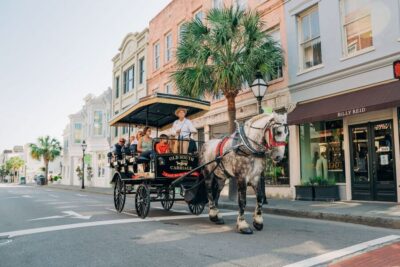
Historical Downtown Tour by Horse-drawn Carriage
Read our review →
Charleston’s Historic Residential Horse and Carriage Tour
Read our review →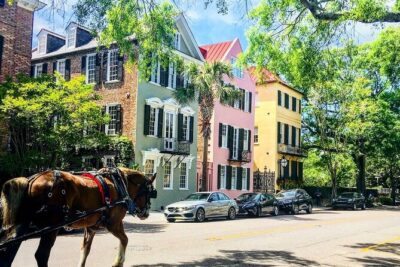
Charleston Horse & Carriage Historic Sightseeing Tour
Read our review →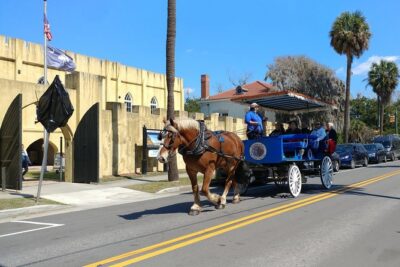
Private Historic Horse & Carriage Tour of Charleston
Read our review →Browse the lists this tour appears in