
Review · CHARLESTON HISTORY TOURS
Charleston Horse & Carriage Historic Sightseeing Tour
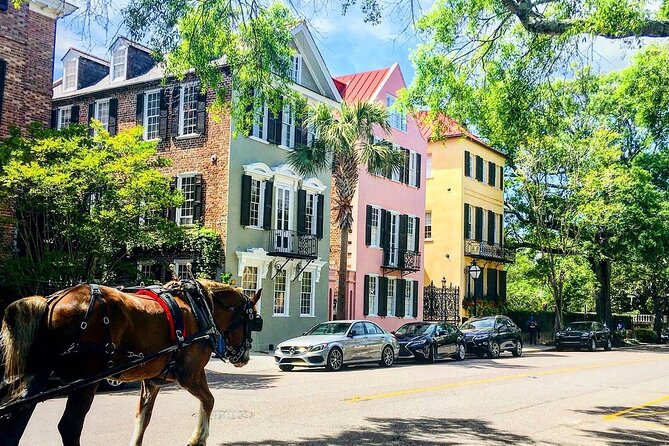
A horse-drawn carriage is a fine way to meet Charleston. You move slowly past grand homes, old churches, gardens, and harbor-side defenses while your guide connects the buildings to the people and events that shaped the city. It is sightseeing with a little theater: clip-clopping horses, shaded streets, and a guide telling stories from the seat.
I like two things in particular. First, the one-hour ride gives you a useful sense of downtown without asking you to walk through Charleston’s heat. Second, the horses are part of the experience, not just transportation. You may have a chance to meet the horse before or after the ride and take photos. The main catch is that the city assigns the route, so you cannot choose every landmark in advance.
Key points to know before you ride
- The route is decided by Charleston officials: Several routes are possible, and the operator does not control the assignment.
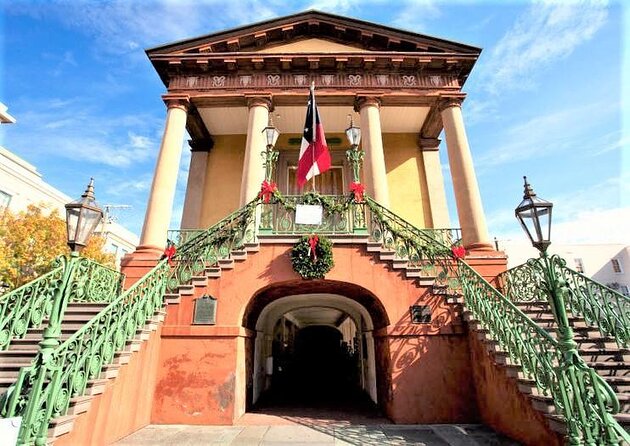
- The ride begins and ends at City Market: The meeting point is 45 Pinckney Street, making it easy to continue sightseeing afterward.
- Guides shape the experience: Caroline, Daniel, and Ricky are among the guides praised for humor, local stories, and easy conversation.
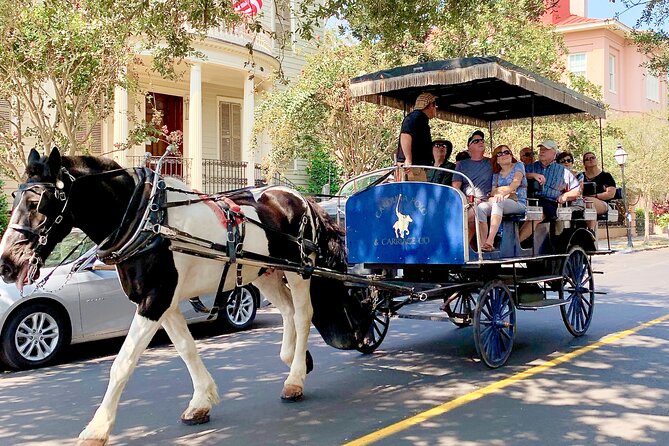
- The carriage holds up to 16 people: This is a shared ride, not a private carriage for your party.
- Departure times are assigned at check-in: Carriages leave about every 30 minutes, beginning at 9:30 a.m.
- Sound can be an issue: Hooves, traffic, construction, bells, and other city noise may make a soft-spoken guide difficult to hear.
Why a carriage is a smart first look at Charleston
Charleston rewards slow travel. Its streets are filled with details that are easy to miss on foot: ironwork, narrow side gardens, painted facades, church steeples, and rows of historic houses. A carriage gives you time to look up while someone else handles the route.
The pace also suits the city. You are not racing from one stop to another or checking off museums. Instead, you get a moving introduction to the old district, with pauses in front of notable buildings and parks as the carriage rolls through the assigned route.
I especially like this as a first activity. You get the broad picture before deciding which places deserve a return visit on foot. If your guide is as engaging as Caroline, Daniel, or Ricky, you will also pick up restaurant ideas and suggestions for the rest of your stay.
This is not a hop-on, hop-off vehicle. You remain on the carriage for the ride, and the listed sights are viewing points rather than formal admissions. That matters if you want to enter the Nathaniel Russell House or explore the churches and gardens at length. The carriage gives you orientation and context, not an inside tour.
More Horse Riding in Charleston:
- Charleston’s Old South Carriage Historic Horse & Carriage Tour
★ 5.0 · 10,023 reviews - Charleston Horse-Drawn Carriage Tour: Explore Historic Charleston
★ 5.0 · 3,561 reviews - Charleston: Historical Downtown Tour by Horse-drawn Carriage
★ 4.8 · 1,009 reviews
Starting at City Market on Pinckney Street
The tour begins at 45 Pinckney Street, in the Historic City Market area. The same location is used at the end, which is handy because you do not need to arrange a return transfer or find a distant pickup point.
City Market is a useful launch point for a day in Charleston. After the ride, you can continue exploring from the same general area rather than losing time getting back to your hotel. Hotel pickup and drop-off are not included, so plan to reach the meeting point on your own.
Check-in is important because the carriages depart on a first come first served basis, with departures about every 30 minutes from 9:30 a.m. You receive a specific departure time when you check in. The listed operating window is 9:30 a.m. to 4 p.m., while the final departure is 4 p.m. during the non-daylight-saving period and 5 p.m. during daylight-saving time.
Do not treat the closing time as flexible. One party arrived shortly after the company had closed and had to return the next day, although the ticket was honored. The practical lesson is simple: arrive early enough to check in without turning your sightseeing schedule into a scramble.
The route changes, and that is part of the deal
Charleston assigns the route before departure. A city tourism official decides which path each carriage takes, and the operator cannot select the route for you. Several routes are possible, so two rides on different days may not show precisely the same streets.
This arrangement has a clear benefit. It helps spread carriages through the historic district and allows the city to manage where the vehicles travel. The tradeoff is less control for you. If Rainbow Row is the one sight you most want to see, this tour cannot promise that it will appear on your route.
I would book this for a broad look at Charleston, not for a fixed list of five guaranteed stops. The itinerary highlights City Market, White Point Gardens, Rainbow Row, the Nathaniel Russell House, and St. Philip’s Church, but these are examples of possible sights. Your actual route may include some of them and other notable streets, houses, parks, and churches.
That uncertainty is worth accepting if you value the ride itself and the guide’s storytelling. It is less suitable if you need a precise schedule or want to visit a specific building inside.
White Point Gardens and The Battery
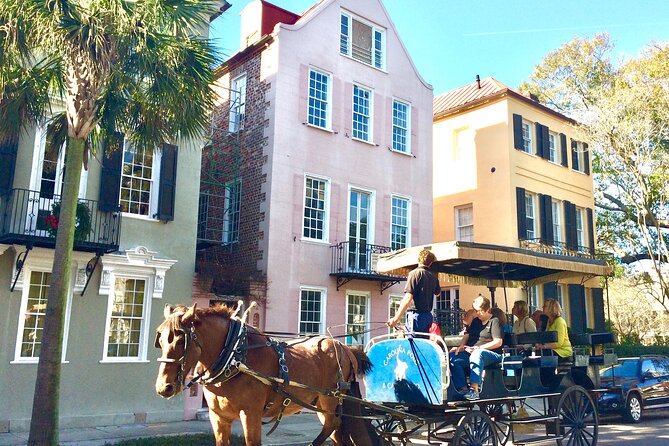
One possible highlight is White Point Gardens, commonly called The Battery. This is one of Charleston’s best-known public spaces, and it gives the carriage tour a change of pace from the city’s tightly packed streets.
You may see broad lawns, large trees, historic defenses, and grand homes in the surrounding area, depending on the route. The carriage lets you take in the setting without stopping for a formal visit. Your guide may add the human stories that make the location more than a pretty view.
The limitation is time. The itinerary allows only a short look at this area, and there is no admission or guided walk through the gardens. If The Battery catches your interest, save it for a separate walk when you can slow down, take photographs, and explore at your own speed.
Still, seeing it from a carriage is useful. You get a sense of how the waterfront edge fits into Charleston’s historic district, and you can decide later if you want to return.
More History Tours in Charleston:
- Historic Charleston Guided Sightseeing Walking Tour
★ 5.0 · 6,216 reviews - Charleston Harbor History Day-Time or Sunset Boat Cruise
★ 4.5 · 2,788 reviews - Hidden Alleyways and Historic Sites Small-Group Walking Tour
★ 5.0 · 2,335 reviews - Charleston: Daytime or Sunset Historic Harbor Cruise
★ 4.5 · 1,352 reviews
Rainbow Row and the city’s colorful facades
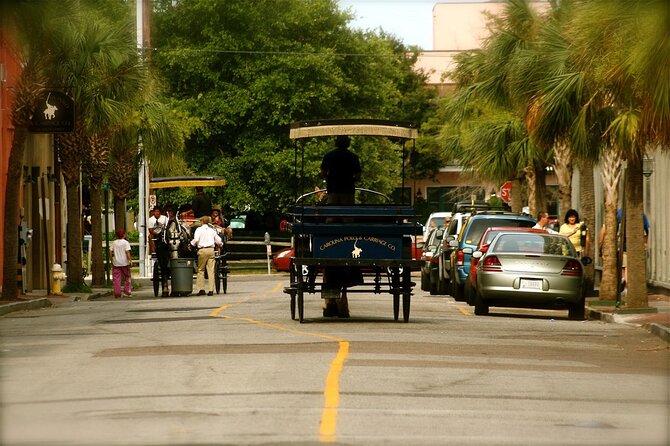
Rainbow Row is another possible sight. Its line of colorful historic houses is one of Charleston’s most recognizable photo subjects. From the carriage, you can appreciate the row as part of the wider street pattern rather than as an isolated picture stop.
The carriage may not pause long enough for an extended photography session. If you want a careful set of photos, ask your guide where the carriage is heading and return on foot afterward if the route includes it.
This is a good example of what the tour does best. It introduces you to the visual character of Charleston while giving you enough background to understand why the buildings matter. You see the architecture, hear the story, and then choose what deserves more of your time.
Nathaniel Russell House and the church district
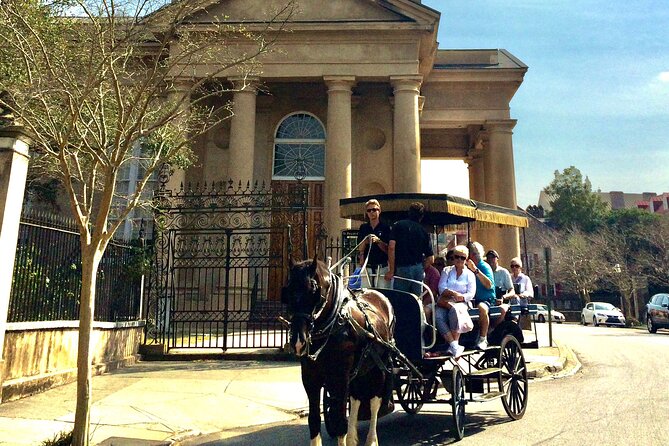
The Nathaniel Russell House may also appear along the route. Its exterior helps show the scale and polish of Charleston’s historic residential architecture. The tour does not include entry, so think of this as an architectural glimpse rather than a house museum visit.
St. Philip’s Church is another possible landmark. Its presence adds to the city’s famous collection of historic churches and steeples. Charleston is sometimes called the Holy City because of the number of churches in its historic core, and a carriage route gives you a pleasant way to see how those buildings shape the skyline.
The guide’s narration matters most here. An exterior can look like just another old building if nobody explains its place in the city’s story. A strong guide adds names, dates, personalities, and connections to daily life. That is why the most praised guides are described as both funny and well informed, rather than simply as drivers.
The guide can make or break the hour
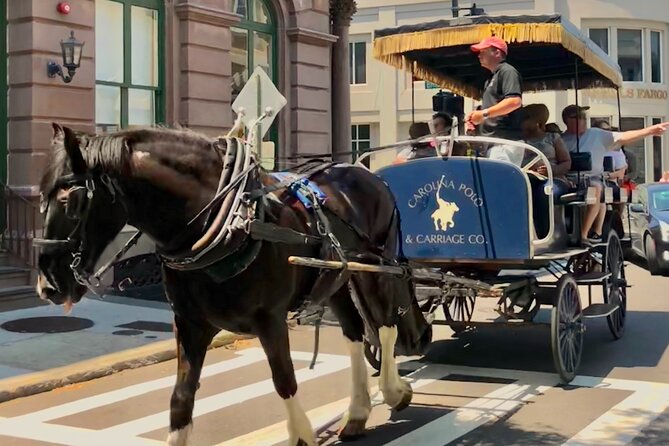
The best part of this tour is often the person holding the reins. Guides such as Caroline, Daniel, and Ricky received particular praise for mixing historical detail with humor and conversation. One guide offered restaurant and sightseeing suggestions that helped shape the rest of a family’s visit.
The tone can vary. Some guides stick to a clear path through the city’s past. Others wander into side stories and personal observations. That relaxed style can feel warm and natural, but it may also seem scattered if you prefer a tightly organized lecture.
There is one practical concern: sound. One rider had difficulty hearing because the guide did not speak loudly and there was no microphone. Add hoofbeats, traffic, construction, airplanes, and church bells, and a soft voice can disappear quickly.
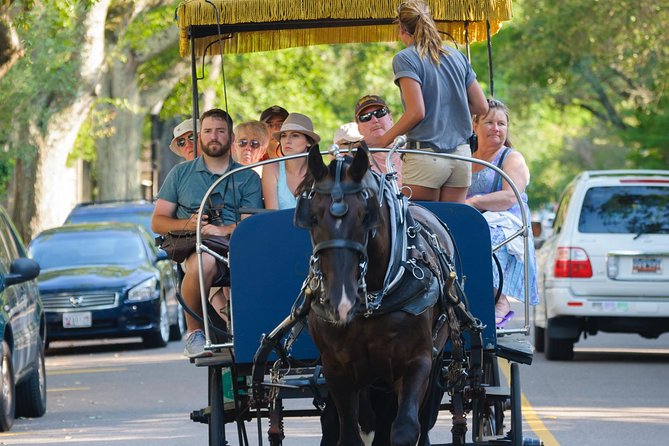
If hearing every word matters to you, sit as near the front as possible. A front seat also tends to give you a better view of the horse and the guide. The ride is limited to 16 people, which keeps it smaller than a large bus tour, but it does not remove normal city noise.
Meeting the horses and judging the carriage
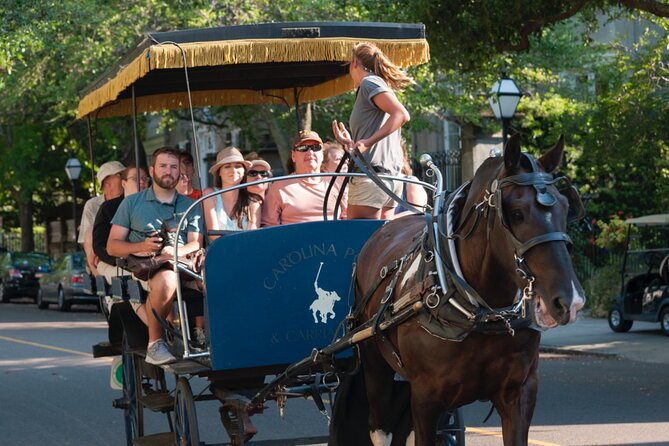
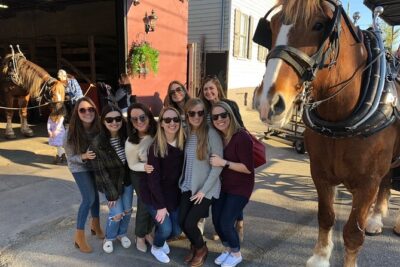
The horses are a central part of the appeal. You may be able to approach the horse before or after the ride, and the experience includes opportunities for photographs. Named horses such as Amigo, Grayman, Chico, and Ironsides became memorable parts of individual rides.
The company explains that the horses are well cared for, and the chance to meet them gives you a better feel for how the operation works. If you have concerns about animal welfare, use the pre- or post-ride opportunity to ask questions and observe the staff’s handling.
The carriage itself drew one mild complaint about upkeep. That does not erase the value of the ride, but it is fair to set expectations. This is an operating city carriage, exposed to weather and daily use, not a polished private coach reserved for special occasions.
Comfort also depends on the weather. A hot day can make the hour feel longer, especially for children, although families have completed the ride successfully in warm conditions. If you are visiting during a hot spell, a morning departure is the sensible choice.
Is $45 a fair price?
At $45 per person, this is not the cheapest way to see Charleston, but the price is reasonable if you value three things: a live guide, a horse-drawn ride, and an hour of sightseeing without doing the walking yourself.
You are paying for more than transport. The guide provides the historical framework, answers questions, points out architecture, and may help you plan the rest of your visit. The horse and carriage add atmosphere that a standard vehicle tour cannot match.
The value drops if you expect entry to historic houses, a guaranteed route, or a private ride. None of those is included. You remain on board, admission tickets are not part of the experience, and the city decides the route.
For a family, the price can still make sense because the ride entertains children while giving adults useful context. Solo visitors and couples may like the manageable one-hour length. I would compare it with your day’s walking plans rather than with a museum ticket. In Charleston’s heat, an hour of seated sightseeing can be money well spent.
Who should book this ride?
I would recommend it to first-time visitors, families, couples, and anyone who wants a gentle introduction to the historic district. It is also a good choice for people who prefer a slower pace or who want to reduce walking during a hot afternoon.
It suits you particularly well if you enjoy stories about buildings, local characters, churches, gardens, and city life. You will get the most from it if you treat the tour as an orientation, then return on foot to the places that catch your eye.
You may want another kind of tour if you need a fixed route, guaranteed access to a specific landmark, or a fully amplified narration. It is also worth reconsidering if you dislike animal-drawn transport or would rather spend the hour inside a museum.
The tour is available in English, service animals are allowed, and most people can participate. It is near public transportation, though hotel transfers are not included. Free cancellation is available up to 24 hours before the start time. Inside that window, changes and refunds are not accepted.
My call: book it for the overview, not the checklist
I would book this horse and carriage tour early in a Charleston visit, especially for the first morning. The one-hour format is easy to fit into a day, the City Market start and finish are convenient, and the ride gives you a useful map of the historic district.
Go in with the right expectation. You are not guaranteed every named landmark, you will not leave the carriage for lengthy visits, and the guide’s volume and style may vary. But with a lively guide, a good route, and a friendly horse, this can be one of the most enjoyable ways to begin understanding Charleston.
FAQ
Where does the Charleston horse and carriage tour begin?
The tour begins at 45 Pinckney Street in Charleston, South Carolina, near the Historic City Market.
Where does the tour finish?
The carriage returns to the same meeting point at 45 Pinckney Street.
How long is the horse and carriage ride?
The ride lasts approximately one hour.
Can I choose which Charleston landmarks I see?
No. Routes are selected before departure by a City of Charleston tourism official. Several routes are possible, and the local operator cannot control the assigned route.
What time do the carriages depart?
Tours depart approximately every 30 minutes beginning at 9:30 a.m. You receive a specific departure time when you check in. The last departure is listed as 4 p.m. during the non-daylight-saving period and 5 p.m. during daylight-saving time.
Can I cancel for a refund?
Yes. You can cancel at least 24 hours before the experience start time for a full refund. Cancellations and changes made less than 24 hours before the start time are not accepted, and no refund is provided.
Newest history tours we have reviewed in Charleston
- Private Morning Sail, Dolphin and History Tour on Mystique★ 5.0 · 84 reviews
- Private Photo Session in Historic Charleston★ 5.0 · 123 reviews
- Private Historic Horse & Carriage Tour of Charleston★ 5.0 · 103 reviews
- Semi-private SMALL group Historic Walking Tours w/certified guide★ 5.0 · 224 reviews
- Charleston’s Best Highlights: History, Culture & Architecture★ 5.0 · 422 reviews
- Charleston’s Historic Residential Horse and Carriage Tour★ 4.5 · 668 reviews
- Charleston: Old Walled City Historical Walking Tour★ 4.7 · 705 reviews
- Historic Charleston Walking Tour: Rainbow Row, Churches, and More★ 5.0 · 691 reviews
Horses, compared.
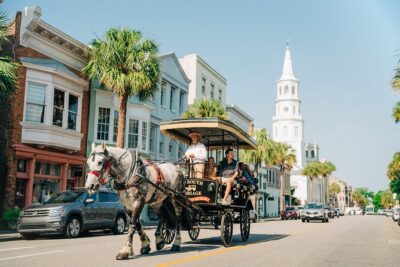
Charleston’s Old South Carriage Historic Horse & Carriage Tour
Read our review →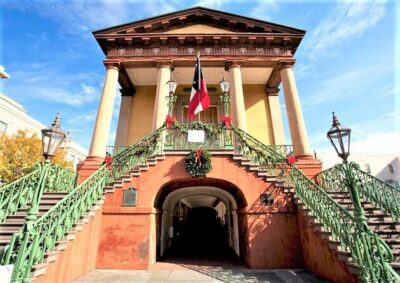
Charleston Horse-Drawn Carriage Tour: Explore Historic Charleston
Read our review →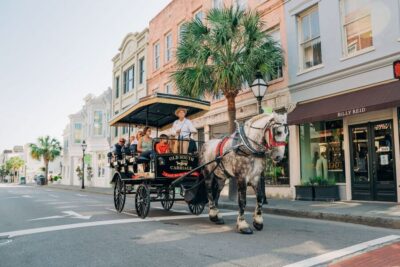
Historical Downtown Tour by Horse-drawn Carriage
Read our review →
Charleston’s Historic Residential Horse and Carriage Tour
Read our review →

Private Historic Horse & Carriage Tour of Charleston
Read our review →Browse the lists this tour appears in