

Review · BOSTON HISTORY TOURS
Boston: Freedom Trail History Tour and Brewery Taste
Boston’s Revolution-era story comes together nicely on this 2.5-hour walking tour, which links 11 of the 16 official Freedom Trail sites with a final meal and drink at Democracy Brewing. You move from Faneuil Hall and the Boston Massacre site to Old South Meeting House, Granary Burying Ground, and Boston Common, with the guide filling in the political battles between the landmarks.
I like the small-group feel, with a maximum of 25 people and some departures reported at 16 or fewer. I also like the finish: a worker-owned brewery, a tasting, and lunch in a private dining room. The main caution is physical. You will stand and walk for much of the tour, and the experience requires moderate fitness.
Key points to know before booking
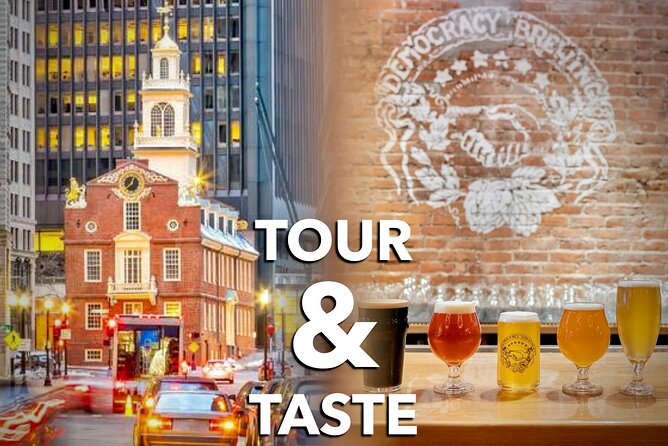
- Eleven official Freedom Trail sites: You cover a large portion of central Boston without trying to follow the red brick line on your own.
- Guides with distinct local knowledge: Gianna, Nick, and Jon are named guides, and Jon is also a local historian and archivist.
- The cemeteries are a highlight: Granary Burying Ground gives the tour some of its most powerful and personal moments.
- Lunch is part of the price: Your final stop includes an all-inclusive New England lunch plus a beer, seltzer, or mocktail tasting.
- The route skips two major areas: North End and Charlestown are not included, so you will need separate time for Paul Revere’s house, the Old North Church, and the Bunker Hill area.
- Plan for outdoor walking: The tour is not recommended if standing for long periods is difficult, and it requires good weather.
Why this tour works for first-time Boston visits
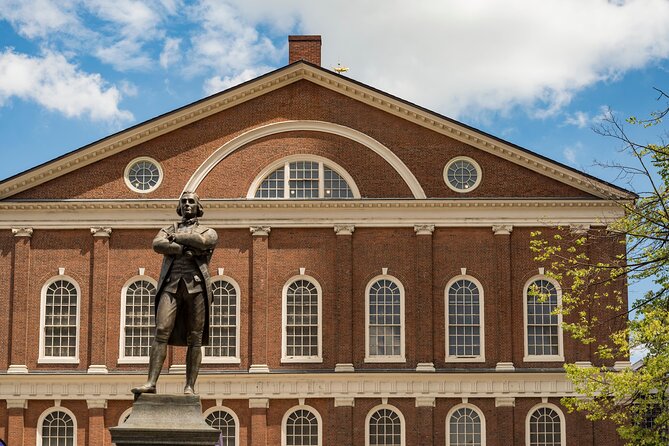
The Freedom Trail can look simple on a map, but Boston’s colonial center is packed with overlapping stories. A short walk can take you from a marketplace to a massacre site, then to the meeting hall where resistance to British rule gained force. Without a guide, it is easy to see the buildings without understanding how one event led to another.
This tour gives you that chain of events. You begin in the city’s commercial and political center, follow the conflict through several key sites, and finish at Boston Common, where the city’s oldest public land brings the walk back to everyday colonial life.
I especially like the way the route puts politics beside ordinary life. Faneuil Hall was a meeting place. The Granary Burying Ground contains the graves of people connected with the Revolution. Boston Common began as communal grazing land. Together, these stops show a city shaped by trade, public debate, religion, protest, and burial customs.
The tour also avoids the problem of an overlong day. At about two and a half hours, it gives you a solid introduction without taking over your entire Boston schedule. You still have time afterward for the North End, museums, the waterfront, or Charlestown.
More History Tours in Boston:
- Boston: Freedom Trail History Small Group Walking Tour
★ 5.0 · 6,450 reviews - Tour of Historic Fenway Park, America’s Most Beloved Ballpark
★ 4.5 · 3,013 reviews - Boston Food & History: Pizza, North End & Freedom Trail
★ 5.0 · 1,772 reviews
Faneuil Hall Marketplace sets the tone
Meet your guide at 11 a.m. at 121 South Market Street in Faneuil Hall Marketplace. Look for the black-and-white Coach banners opposite Quincy Market. This is a practical meeting point, but the setting also begins the story.
The marketplace dates to 1826 and is now one of Boston’s main tourism hubs. The older Faneuil Hall nearby dates to 1742 and became known as the Cradle of Liberty because of its role in town meetings and public debate.
Your time here is brief, about 10 minutes, so do not expect a full interior tour or a long shopping break. Instead, use the stop to understand why this part of Boston became a place where commerce and politics met.
This is also where a good guide can help you get your bearings. The tour stays in central Boston, and local recommendations are part of the experience. Guides such as Gianna, Nick, and Jon have different styles, but the small group makes it easier to ask questions than on a large coach tour.
The Boston Massacre site makes the conflict personal
The next major stop is the Boston Massacre site, where British soldiers killed five Bostonians in 1770. You spend about 15 minutes here.
This is one of the most useful stops for understanding how tension became propaganda and political fuel. The event was not the Revolution itself, but it became a powerful symbol for colonists angry about British troops, taxation, and military authority in the city.
The stop also includes the former colonial capitol of Massachusetts Bay Colony, dating to 1713, and Boston’s oldest public building. These details help you see that the area was not simply a tourist route. It was the center of government and public argument.
I would pay close attention to how your guide explains the competing sides of the event. The value of this tour depends heavily on the narration. A guide who gives only dates will make the stop feel flat. A guide who explains the pressure on soldiers, residents, and colonial leaders can turn 15 minutes into a clear lesson about why the event mattered.
Old South Meeting House connects protest with religion
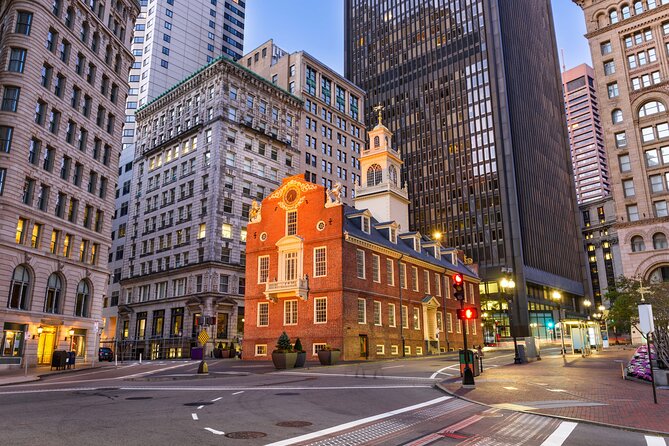
At Old South Meeting House, you get another 15-minute stop. The building dates to 1729 and was a Congregationalist meeting house. It is best known as the place where colonists gathered before the Boston Tea Party in 1773.
This stop shows how religious buildings also served as civic spaces. Public meetings, political argument, and religious life were closely linked in colonial Boston. The building’s role in the Tea Party story gives the Revolution a direct connection to a real gathering place, not just a name in a textbook.
The surrounding area adds more layers. You may hear about a former publishing house connected with Ticknor & Fields, along with a site that served as a center of Boston politics for more than a century. Since the tour moves through a compact district, the guide can point out how Boston’s identity changed over time without sending you far from the Freedom Trail.
The stop is short, so you should not expect a long independent visit inside. This tour is built around the guide’s explanation and the sequence of places. If you want extensive time inside historic buildings, you may need to return on your own.
Same streets, a different century:
- Boston: Freedom Trail History Small Group Walking Tour
★ 4.9 · 1,590 reviews - City Cruises Boston Historic Sightseeing Harbor Cruise
★ 4.5 · 1,388 reviews - Boston Pizza Lovers Food and History Walking Food Tour
★ 4.5 · 1,082 reviews - Boston Freedom Trail History Pub Crawl Small-Group Tour
★ 5.0 · 996 reviews
Franklin, Boston Latin School, and early Boston
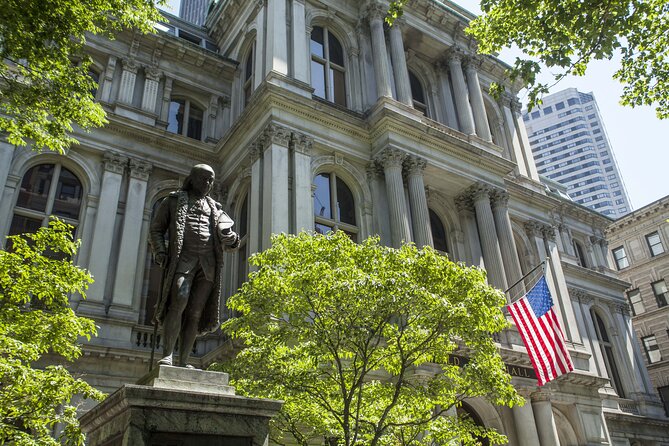
The statue of Benjamin Franklin receives about five minutes. The statue marks the site of Boston Latin School, founded in 1635 and recognized as the oldest public school in the Americas.
That short stop carries a lot of weight. Franklin was born in Boston, and the school site lets the guide connect one famous founder with the city’s early education system. It also reminds you that Boston’s public institutions were developing long before the Revolution.
Nearby sites add religious and civic context. You may learn about the first Church of England in Puritan Boston, dating from 1686 and later rebuilt in 1754. You will also pass Boston’s first burying space, established in 1630 and described as the oldest Freedom Trail landmark.
This is a good example of why a guided walk helps. A statue by itself can be easy to pass. With the school, church, and burial ground placed around it, the area becomes a compact record of Boston’s early public life.
Granary Burying Ground is the emotional center
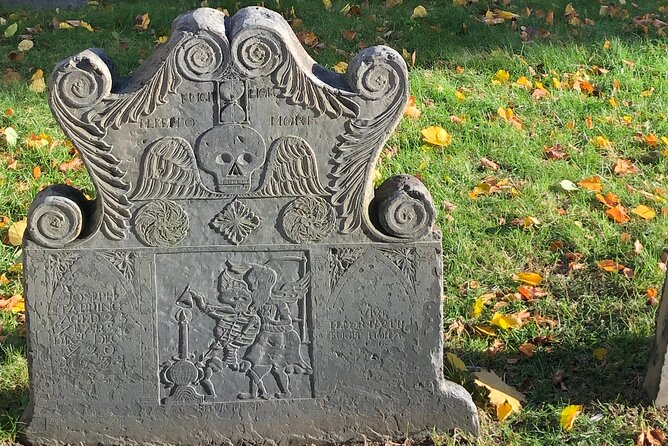
Granary Burying Ground receives about 15 minutes, and it may be the most memorable part of the walk. It is Boston’s third-oldest burying ground, established in 1660, and is associated with major figures from Revolutionary Boston.
Cemeteries can be quiet history books. Headstones put names and dates in front of you, making the period feel less abstract. The tour’s cemetery stop also helps balance the grand political stories with the people who lived and died in the city.
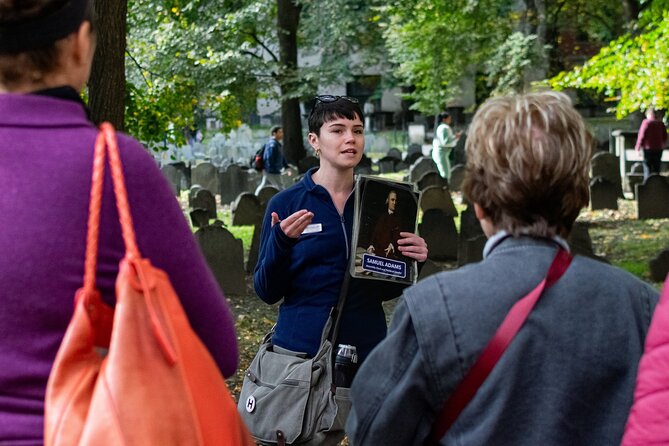
The guide can point out the importance of the burial ground and explain its place in the story of Boston. One named guide, Jon, is a local historian and archivist, and that background suits this kind of stop particularly well. Nick has also been praised for pointing out details that do not usually appear in a standard American history lesson.
You should expect uneven ground and a standing stop rather than a long seated visit. If cemeteries are not your main interest, the time here is still useful because it breaks up the buildings and speeches with something tangible and quiet.
Boston Common closes the walking route
The tour spends about 15 minutes at Boston Common, the oldest public land in the Americas. It began as Boston’s communal grazing pasture in 1634 and remains one of the city’s defining open spaces.
This is a fitting final landmark before lunch. Faneuil Hall showed public debate. The Massacre site and Old South Meeting House showed conflict and protest. Granary Burying Ground brought the story down to individual lives. Boston Common returns you to shared civic space.
Because the tour covers only 11 of the 16 official Freedom Trail landmarks, you should not view Boston Common as the end of Boston’s Revolutionary story. North End and Charlestown are excluded. That means the tour does not cover the Old North Church, Paul Revere’s house, Copp’s Hill Burying Ground, the USS Constitution, or Bunker Hill Monument.
This is not a flaw if you want a focused central route. It is an important planning detail if you want to complete the entire trail in one day.
Democracy Brewing turns the tour into a lunch outing
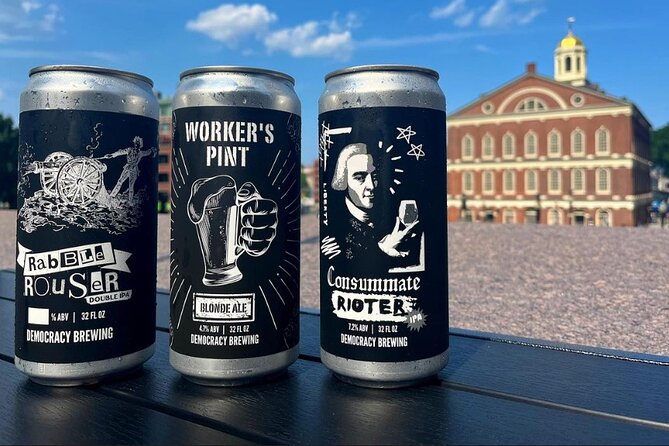
The walking portion ends at Democracy Brewing, at 35 Temple Place, Boston, where the group spends about an hour. This worker-owned local brewery has a full restaurant menu and serves as more than a quick drink stop.
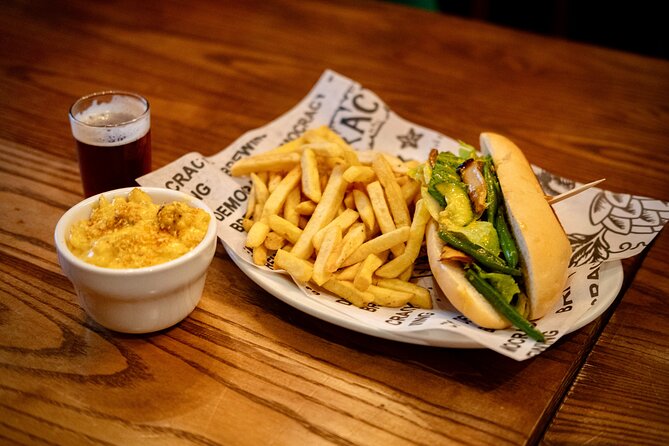
The included tasting gives you a choice of beer, seltzer, or mocktail. Lunch is also included, described as an all-inclusive New England lunch, and the meal takes place in a private dining room. That makes the final hour feel like part of the tour rather than an awkward handoff to a separate restaurant visit.
I like this format because it gives you a proper pause after the walking route. You can sit, eat, and continue talking about the sites while the morning is still fresh. It also makes the $79 price easier to assess. You are paying for a guided historical walk, a tasting, and lunch, not just access to free public landmarks.
Still, the value depends on how much you want the meal. If you prefer exploring Boston independently and choosing your own restaurant, a self-guided Freedom Trail walk will cost less. If you want a structured morning with food already arranged, the package is more practical.
Guides and group size shape the experience
The maximum group size is 25, though the tour may run with 16 or fewer people. That matters on a city walk. A smaller group can gather around a guide without blocking as much sidewalk space, and you have a better chance to ask questions.
Gianna is described as warm and attentive, with an effort to keep people comfortable during the walk. Nick is noted for an easy pace and historical details beyond standard textbook material. Jon is identified as a local historian and archivist, which may appeal to you if you enjoy archival details and less familiar pieces of Boston’s past.
You cannot select a particular guide from the information provided, so treat the names as examples of the people who may lead the experience, not a guarantee for your date. The main takeaway is that the guide matters. This is not a tour built around audio devices or a printed route. The explanation and conversation are central.
Price, pace, and practical details
At $79 per person, the tour is a reasonable package if you want lunch and a drink included. The Freedom Trail landmarks themselves are public sites, so the price is not paying for a series of admission tickets. It pays for the guide, the organization of the route, the historical commentary, the tasting, and the meal.
The tour is offered in English and uses a mobile ticket. Confirmation arrives at booking. You meet at Faneuil Hall Marketplace and finish at Democracy Brewing, so you should plan your next activity from Temple Place rather than from the original meeting point.
Wear comfortable shoes and expect to stand for extended periods. The tour requires moderate physical fitness and is not recommended if prolonged standing is difficult. Service animals are allowed, and the start point is near public transportation.
Weather matters. The experience requires good weather, and if poor conditions force a cancellation, you are offered another date or a full refund. You can cancel for a full refund up to 24 hours before the start time, but late cancellations and late changes are not accepted.
Who should book this Freedom Trail experience?
I would choose this tour for a first Boston visit, especially if you want a clear introduction before exploring on your own. It suits people who enjoy political history, old cemeteries, compact city walks, and a planned lunch.
It also works well for locals who want a refresher or a way to see familiar streets through a guide’s eyes. The comments about details beyond a standard history textbook are important here. This is not only a checklist of famous buildings.
I would hesitate if your main goal is to visit every Freedom Trail site, spend long periods inside historic buildings, or explore the North End and Charlestown. I would also think twice if you dislike group pacing, long periods on your feet, or a fixed lunch arrangement.
Should you book it?
Book this tour if you want Boston’s Revolutionary story explained in a logical order, with an easy pace, a small group, and lunch already handled. The strongest features are the guide-led storytelling, the cemetery stop, and the relaxed finish at Democracy Brewing.
Skip it if you prefer a completely self-guided route or need a seated, indoor experience. For most people who want an efficient introduction to central Boston, $79 is fair value, particularly because the tasting and all-inclusive lunch are included.
FAQ
How long does the Boston Freedom Trail tour last?
The experience lasts approximately 2 hours and 30 minutes, including the walking route and the hour at Democracy Brewing.
Where does the tour begin?
It begins at 121 South Market Street in Boston’s Faneuil Hall Marketplace. Look for the black-and-white Coach banners opposite Quincy Market.
What time does the tour start?
The scheduled start time is 11 a.m.
Where does the tour end?
The tour ends at Democracy Brewing, 35 Temple Place, Boston, in the private dining room.
How many Freedom Trail landmarks are included?
The tour visits 11 of Boston’s 16 official Freedom Trail landmarks.
Are North End and Charlestown included?
No. North End and Charlestown are specifically not included in this experience.
Is lunch included?
Yes. An all-inclusive New England lunch is included at Democracy Brewing.
What drink is included?
You receive a beer, seltzer, or mocktail tasting.
Can I cancel for a full refund?
Yes. You can cancel at least 24 hours before the start time for a full refund. If poor weather cancels the tour, you are offered another date or a full refund.
Newest history tours we have reviewed in Boston
- Freedom Trail Guided Walking Tour (SMALL GROUP)★ 4.5 · 98 reviews
- Boston’s Architecture, History + Photo Walking Tour (SMALL Group)★ 5.0 · 91 reviews
- Boston’s North End History + Photo Walking Tour (SMALL Group)★ 5.0 · 27 reviews
- North End Food Tour: Taste Boston’s Italian Heritage★ 5.0 · 20 reviews
- Boston: Underground Railroad History Tour of Beacon Hill★ 5.0 · 141 reviews
- Boston Freedom Trail History and Food Tour★ 4.5 · 22 reviews
- Haunted Boston’s Historic Streets Walking Guided Tour★ 4.5 · 184 reviews
- Beacon Hill + Back Bay History + Photo Walking Tour(SMALL Group)★ 5.0 · 60 reviews
Boston History Tours, compared.
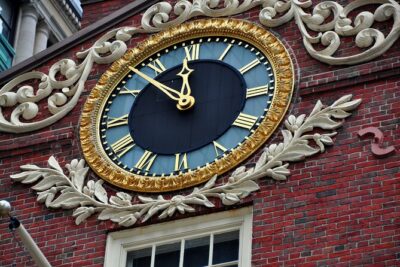
Freedom Trail History Small Group Walking Tour
Read our review →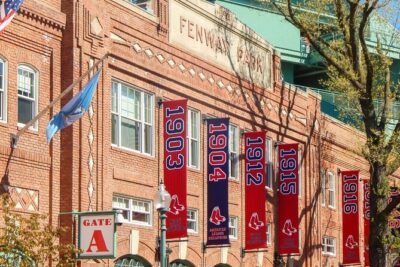
Tour of Historic Fenway Park, America’s Most Beloved Ballpark
Read our review →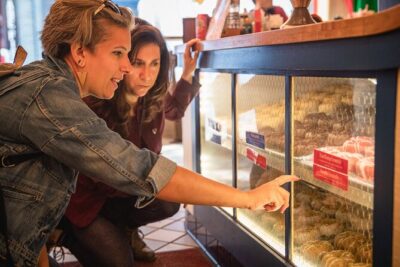
Boston Food & History: Pizza, North End & Freedom Trail
Read our review →Freedom Trail History Small Group Walking Tour
Read our review →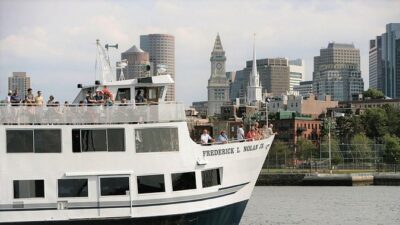
City Cruises Boston Historic Sightseeing Harbor Cruise
Read our review →
Boston Pizza Lovers Food and History Walking Food Tour
Read our review →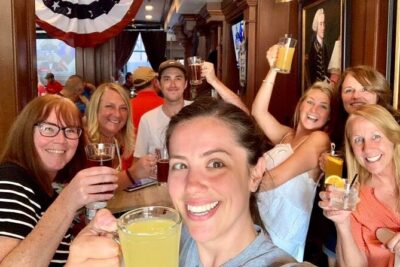
Boston Freedom Trail History Pub Crawl Small-Group Tour
Read our review →
Boston City View Bicycle Tour: History and Landmarks
Read our review →Browse the lists this tour appears in