
Review · ATHENS HISTORY TOURS
Athens: Combo Ticket for Acropolis & 6 ancient sites
The smartest feature of this Athens pass is its flexible five-day window. You reserve a date and time for the Acropolis, then use the same ticket at six other archaeological sites whenever you like during their opening hours. That lets you see the headline monument without squeezing every ruin into one exhausting morning.
I like the chance to visit the Ancient Agora and Kerameikos at a slower pace, and I like that the ticket covers sites spread across the city rather than just the Acropolis. The main caution is ticket handling: several people had trouble with QR codes or site acceptance, and the optional audio system was not always reliable.
Key points at a glance
- Acropolis entry is timed: Your selected time applies only to the Acropolis, not the other six sites.
- Five days of ancient Athens: The pass activates at the Acropolis and remains usable at the other monuments for five days.
- Seven major archaeological sites: The package includes the Acropolis, Ancient Agora, Roman Agora, Temple of Olympian Zeus, Aristotle’s Lyceum, Hadrian’s Library, and Kerameikos.
- Audio is optional: Acropolis, Ancient Agora, and Monastiraki to Kerameikos audio tours may be included, but earphones are not.
- The Acropolis Museum is not included: You need a separate ticket if you want to visit it.
- Best for independent sightseers: No guide, escort, hotel transfer, or group itinerary is provided.
One ticket for Athens’ biggest ancient sights
Athens can feel like one long archaeological walk. The Acropolis rises above the city, the Ancient Agora spreads beneath it, and smaller sites appear between cafés, busy streets, and modern apartment blocks. This pass gives you a practical way to connect those places without buying separate admission at every stop.
The package includes seven sites. The Acropolis is the centerpiece, but the supporting monuments give you a fuller sense of how Athens worked. You see temples, public meeting spaces, a library, a potters’ quarter, a Roman-era marketplace, and the remains of Aristotle’s Lyceum.
That variety matters. The Parthenon shows the city at its most monumental. The Agora shows ordinary civic life. Kerameikos gives you a look at craft production and burial grounds. Hadrian’s Library explains how Roman Athens added its own layer to the older Greek city.
The listed price is shown as $0.00 in the supplied booking information, so check the current price carefully before paying. The real value depends on how many sites you visit. If you see only the Acropolis, a single-site ticket may make more sense. If you visit four or more of the included monuments, the combined pass becomes easier to justify, especially if it helps you avoid separate ticket queues.
More Ancient History Tours in Athens
- Athens: Ancient Greek Theater Performance
★ 4.7 · 2,481 reviews - Historical Delphi One Day Tour with Arachova Stop & Expert Guide
★ 4.5 · 1,247 reviews - From Athens: Ancient Corinth Day Trip with Canal & VR Guide
★ 4.6 · 1,073 reviews
Reserve the Acropolis, then pace yourself
Your chosen time slot applies only to the Acropolis. Once you activate the pass there, you can visit the other six locations within five days and during their normal opening hours.
That setup is much better than a rigid half-day circuit. You can visit the Acropolis in the morning, rest during the hottest part of the day, and return to the Ancient Agora later. You can also spread the sites across several days if your schedule allows.
Plan the Acropolis visit carefully. The hill is reached on foot, and the site involves uneven ground and an uphill approach. The reward is a wide view over Athens, with the Parthenon at the center of the experience and the city extending in every direction.
Allow about three hours for the Acropolis if you want time for the main monuments and the views. The site can be crowded, so a timed reservation is useful, but it does not make the hill quiet or private. You still need patience around the most famous viewpoints.
Keep your QR code available on your phone before you arrive. One useful practical tip is to download it in advance, since you may not have a reliable internet connection at the entrance. Printed tickets caused problems for some people, and several ticket holders had trouble when only part of a group’s codes were accepted. That does not mean every ticket will fail, but it does mean you should check the details before setting out and keep the booking information handy.
The Acropolis and the Parthenon
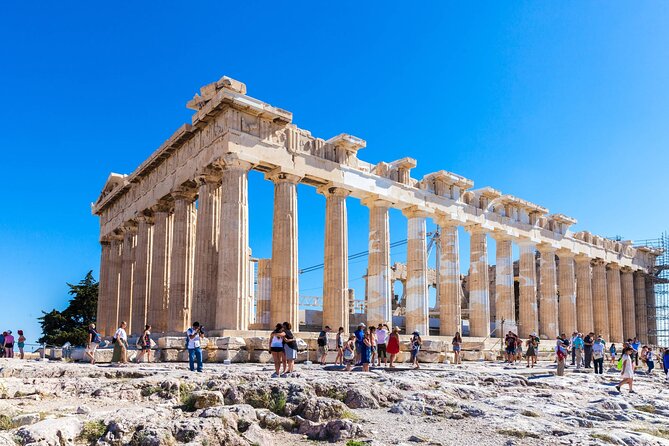
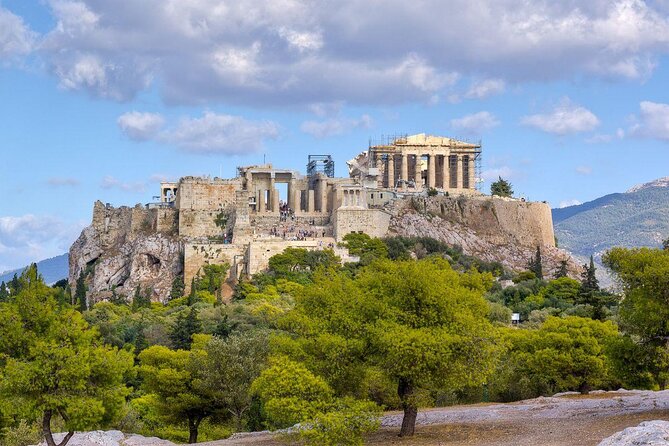
The Acropolis is the one stop you should not rush. The hill rises about 150 meters above the city, and its monuments represent roughly 2,500 years of political, religious, and architectural change.
The Parthenon is the obvious focus, but do not treat it as the only reason to go up. The rocky setting, the surrounding temples, and the views over Athens help explain why this hill mattered. The monument is powerful partly because you see it in relation to the city below.
Give yourself time to look outward. From the Acropolis, you can make sense of Athens as a living city rather than a collection of isolated ruins. The experience is physical, too. Expect a climb and uneven surfaces, even though most people can participate according to the supplied information.
An audio tour may be included if you select that option. It is self-guided, not a live tour, so you control the pace. Bring your own earphones, since they are not provided. The audio worked well for some people but was unreliable for others, so do not make it your only source of information.
The Ancient Agora, where Athens felt human
The Ancient Agora is my favorite kind of archaeological site because it connects grand ideas with everyday public life. This was not simply a collection of temples. It was a place for civic activity, discussion, commerce, and religious life.
The Temple of Hephaistos is the star here. It is described as the best-preserved ancient Greek Doric temple in the world, and its condition makes it easier to understand the basic shape and order of a Greek temple. Compared with the damaged Parthenon, it gives you a clearer sense of what a complete classical building could look like.
The Church of the Holy Apostles adds another layer. St. Paul is associated with visiting and preaching here, so the site links ancient Greek Athens with early Christian history.
Allow about two hours for the Agora. It is large enough to reward a calm visit, especially after the crowds and height of the Acropolis. An optional self-guided audio tour can help you follow the site without hiring a guide, though the same audio reliability concern applies.
More Ancient History Tours in Greece
- Acropolis, Parthenon & Athens Old City Heritage Walking Tour
★ 4.5 · 876 reviews - Private Biblical Tour Ancient Corinth & Isthmus Canal from Athens
★ 5.0 · 762 reviews - Athens: Ancient Corinth & Nafplio Full Day Trip with Swim
★ 4.8 · 531 reviews - Athens Skip the Line: Open Air Ancient Greek Theatre Performance
★ 4.5 · 520 reviews
The Roman Agora and Hadrian’s Library
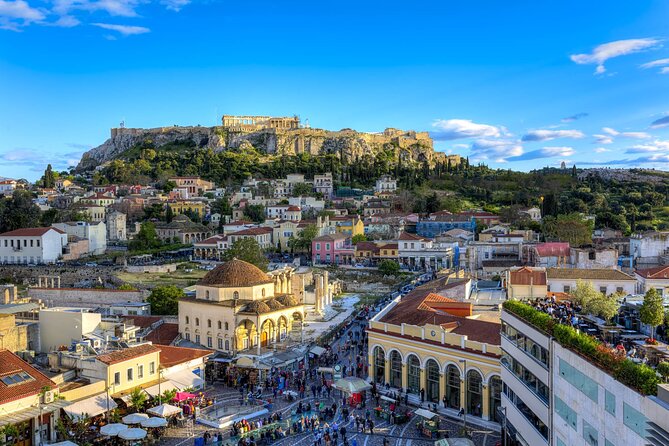
The Roman Agora sits north of the Acropolis and once served as a focus of public life during the Roman period. It is smaller than the Ancient Agora, so you may need only about an hour, but its location makes it easy to add while walking through the old center.
The contrast between the two Agoras is useful. The Ancient Agora helps you picture classical Athens, while the Roman Agora shows how the city’s public center developed under Roman rule. You will not get the same spacious visit here, but the stop fits naturally into a day around the Acropolis and Monastiraki.
Nearby, Hadrian’s Library offers another reminder that Athens continued to matter long after the classical period. The complex was known for its large gallery with one hundred columns, which explains its nickname, the One Hundred Column Library.
Today, the remains are more suggestive than complete. You should come for the scale and the setting rather than expect a preserved library interior. Allow about an hour, and consider pairing it with the Roman Agora on the same day.
The Temple of Olympian Zeus and Aristotle’s Lyceum
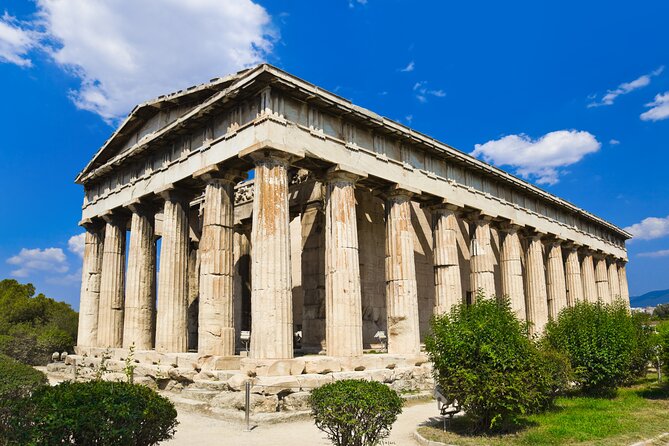
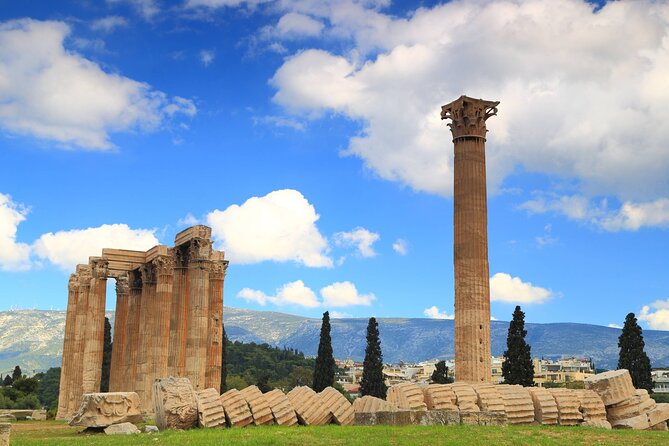
The Temple of Olympian Zeus is close to the Acropolis and within easy reach of Syntagma Square and the Parliament building. Its size is the main story. Before the second century AD, it was the largest temple in Greece, with 104 columns.
The site does not require a long visit for most people. The supplied timing lists only two minutes, which is clearly too brief for anything more than a quick glance. In practical terms, allow enough time to walk around, take in the scale, and read the basic information. It is an efficient stop because of its central location, not because it lacks importance.
The columns help you understand the ambition of the project. The Parthenon is more famous, but the Temple of Olympian Zeus was larger. That comparison can sharpen your sense of how ancient rulers used architecture to display power.
The Archaeological Site of the Lyceum of Aristotle is a quieter and more unusual addition. The Lyceum was associated with Aristotle’s school, making this stop valuable for anyone interested in philosophy, education, and the intellectual life of ancient Athens.
Allow about an hour. Do not expect the same monumental remains found on the Acropolis. The appeal is the idea of the place and its role in ancient learning. It gives your archaeological day a different subject, moving from temples and civic buildings to teaching and thought.
Kerameikos, pottery, walls, and the edge of the city
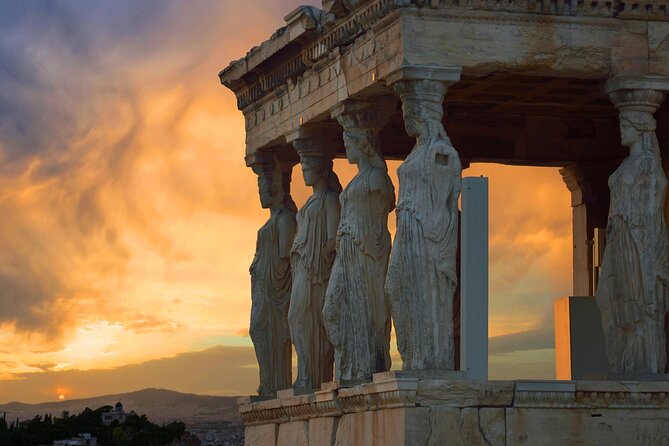
Kerameikos lies on the northwest side of Athens and was known as a settlement of potters and vase painters. It became the main production center for famous Attic vases, so this site adds an important craft and working-life angle to the pass.
The name is linked to ceramics, and the remains help you picture a district shaped by production rather than royal display. It is also an archaeological site with a strong sense of the city’s edge, making it different from the central monuments around the Acropolis.
Allow about an hour. This is a good place to visit when you want a break from the most crowded landmarks. The optional Monastiraki to Kerameikos self-guided audio tour may help you connect the surrounding streets with the archaeological remains.
Kerameikos can also be a strong final stop because it rounds out the story. You have seen Athens as a religious center, a civic center, a Roman city, a place of philosophy, and a production district. That is far more satisfying than collecting only the most famous photographs.
What the audio tours add, and where they fall short
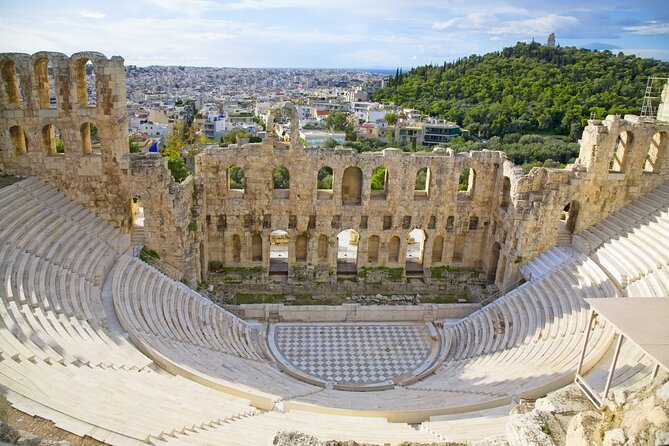
The optional audio package can cover the Acropolis, Ancient Agora, and the route from Monastiraki to Kerameikos. This is useful if you want basic context without hiring a private guide or joining a group.
The format also gives you control. You can pause, skip sections, and move at your own speed. That works well for the five-day structure, since you do not need to keep up with a guide or a fixed group.
The drawback is consistency. The audio did not work reliably for everyone, and some people received no usable audio component. You should treat it as a helpful extra rather than the main reason to buy the pass.
Bring earphones. They are not included. Also download any available material before reaching the sites, since a weak connection can make setup frustrating. If you prefer firm explanations and the chance to ask questions, this product may feel thin because no live guide or escort is included.
A separate experience associated with Athens included guides named Andreas and Michael, but they are not part of this ticket. Do not book this pass expecting a guide to meet you, lead you between sites, or explain the monuments in person.
Walking, timing, and practical planning
The sites are close enough to combine in sensible clusters, but you should not assume the entire experience is one short walk. The Acropolis, Ancient Agora, Roman Agora, Hadrian’s Library, and Kerameikos can fit into a broad old-city plan, while the Temple of Olympian Zeus and Lyceum work well as separate stops.
Public transportation is nearby, and most people can participate. Still, the Acropolis requires the most physical effort. Wear practical shoes and leave enough time between your scheduled entry and any other reservation.
A sensible plan could look like this:
- Day one: Acropolis, Roman Agora, and Hadrian’s Library.
- Day two: Ancient Agora and Kerameikos.
- Day three: Temple of Olympian Zeus and Aristotle’s Lyceum.
You do not need to follow that plan. The point is to avoid turning seven sites into a single race. The pass remains valid for five days after activation at the Acropolis, giving you room to adjust for heat, tired legs, or a change in plans.
The ticket is for people over 25. Reduced-price tickets are not available online through this product, so younger visitors should check the appropriate fare before booking.
What the pass does not include
The Acropolis Museum is not part of this ticket. That is important because many people assume an Acropolis pass includes the museum automatically. It does not, so budget separately if you want to see the sculptures and museum displays.
There is no hotel pickup or drop-off, and no guide or escort. You make your own way to each site and manage your own schedule. For independent visitors, that is a strength. For anyone hoping for door-to-door help, it is a limitation.
The ticket is non-refundable and cannot be changed after purchase. Confirm your date, age category, Acropolis time, and audio option before completing the booking. A little care at that stage can prevent a costly mistake.
Who should book this Athens pass?
I would choose this pass if you want to see several ancient sites and prefer setting your own pace. It suits independent visitors, museum and history fans, and anyone staying in Athens long enough to use the five-day window.
It is also useful if you dislike buying tickets repeatedly at different entrances. The ability to handle the Acropolis at a reserved time and save the other sites for later is the strongest feature.
I would hesitate if you want a guided experience, if you plan to visit only the Acropolis, or if you need a fully dependable audio tour. I would also be careful if you are booking reduced-price admission, since this product is for visitors over 25 and does not offer online reduced fares.
Final verdict: a flexible pass with one important caution
This is a good value when you visit several included monuments rather than treating it as a single Acropolis ticket. The five-day validity gives you breathing room, and the range of sites lets you see more than Athens’s headline ruin.
The main weakness is ticket reliability. Download your QR code, check every booking detail, keep your confirmation available, and contact the provider quickly if an entrance problem appears. With that preparation, this pass can make a self-guided archaeological tour of Athens easier and less rushed.
FAQ
Does the selected time apply to all seven archaeological sites?
No. The selected time applies only to your visit to the Acropolis. You can visit the other six sites during their opening hours within five days after activating the pass at the Acropolis.
Which archaeological sites are included?
The ticket includes the Acropolis, Ancient Agora of Athens, Roman Agora, Temple of Olympian Zeus, Archaeological Site of the Lyceum of Aristotle, Hadrian’s Library, and Kerameikos Archaeological Site.
Is the Acropolis Museum included?
No. The Acropolis Museum is not included in this combined ticket.
Is a guide or escort included?
No. The ticket does not include a guide, escort, hotel pickup, or hotel drop-off. Optional self-guided audio tours may be included if you select that option.
Do I need to bring earphones for the audio tour?
Yes. Earphones are not included. The optional audio tours cover the Acropolis, Ancient Agora, and the Monastiraki to Kerameikos route.
Who can use this ticket?
This ticket is for visitors over 25. Reduced-price tickets are not available online through this product.
Newest history tours we have reviewed in Athens
- The original Christian tour on Paul’s footsteps in Athens and ancient Corinth★ 4.5 · 25 reviews
- Ancient Sparta & Mystras Private Day Tour from Athens★ 5.0 · 52 reviews
- Small-Group Women History in Ancient Greece Walking Tour★ 5.0 · 38 reviews
- Ancient Corinth, Sanctuary of Hera, Blue Lake & Canal from Athens★ 5.0 · 26 reviews
- Half Day Historical Athens City Private Taxi Service Tour★ 5.0 · 79 reviews
- Private Luxury Tour: Marathon – Battle & Run That Changed History★ 5.0 · 30 reviews
- Ancient Olympia & Ancient Corinth Private LuxuryTour from Athens★ 5.0 · 25 reviews
- Ancient Agora & Temple of Hephaestus Entrance Ticket★ 3.5 · 22 reviews
Ancient History Tours, compared.
Colosseum: Underground and Ancient Rome Tour
Read our review →
Colosseum & Ancient Rome with Arena Floor Option I Max 6 People
Read our review →
Colosseum, Ancient Rome Tour or AudioGuided Tour
Read our review →
Colosseum Underground & Ancient Rome Guided Tour
Read our review →

Taormina: Ancient Theater Skip-the-Line Ticket & Audio Guide
Read our review →
Discover the Ancient Ruins of Pompeii: Day Trip from Rome
Read our review →
Discover Matera, the ancient city – English tour
Read our review →Browse the lists this tour appears in