
Review · ATHENS HISTORY TOURS
Biblical Corinth: St. Paul and His Letters to the Corinthians
The most meaningful part of this private day trip is the way it connects St. Paul’s actual ministry with the places around Corinth. You stand at Areopagus Hill in Athens, see the port of Kechries where Paul sailed for Syria, and visit the Bema in Ancient Corinth, where he faced the Roman governor Gallio.
I like the flexible private format, which lets you linger at Akrokorinthos, skip places you have already seen, or adjust the pace. I also like the drivers, including Alex, George, Panos, and Stefanos, who are often praised for clear English, careful driving, useful historical context, and thoughtful touches such as finding good lunch stops and bathroom breaks.
The main thing to understand is simple: this is a private driver-led tour, not a standard guided walking tour. Your driver will explain the sites before you enter, but drivers are not licensed guides and normally do not accompany you inside the archaeological areas. Arrange a licensed guide in advance if that distinction matters to you.
Key points at a glance
- Paul’s Athens sermon: Begin at Areopagus Hill, the rocky outcrop linked with Paul’s address to the Athenians and the Unknown God.
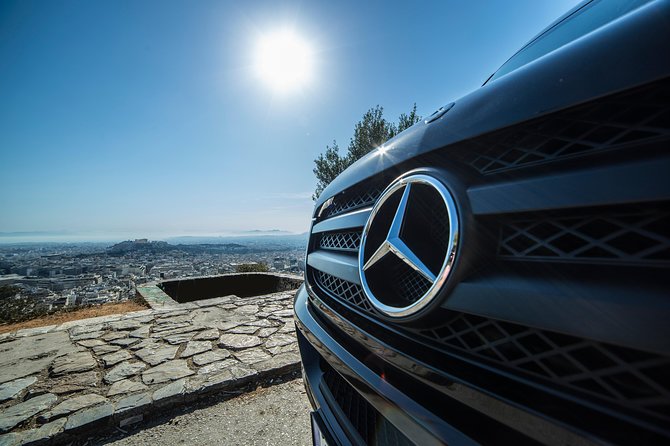
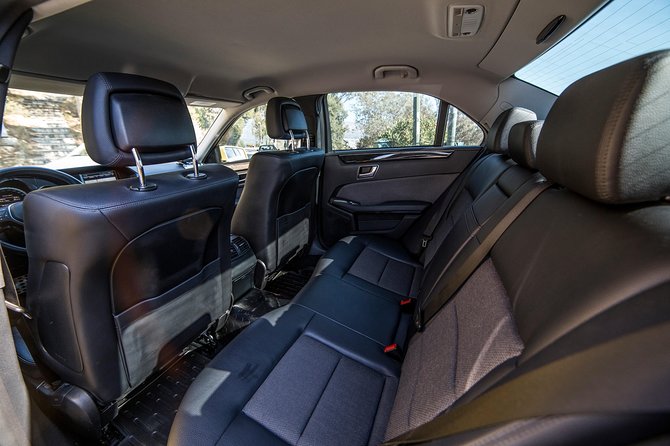
- Private vehicle and flexible timing: Your group travels alone, with hotel or port pickup, bottled water, air conditioning, and onboard Wi-Fi.
- A full Corinth circuit: See the Corinth Canal, Diolkos, Isthmia, Ancient Corinth, Kechries, Apostolou Pavlou Church, and Akrokorinthos.
- Self-guided archaeological visits: The driver gives background and practical pointers, but a licensed guide costs extra and is not included.
- Traditional Greek lunch option: Choose the package with Greek food if you want lunch included, or select your own meal during the day.
- Strong value for faith-focused visitors: At $218.43 per person, the price makes the most sense for a private group that wants a full day centered on Paul.
This is not just a drive to a famous ruin. It is a long, carefully packed day that follows Paul’s route through a part of Greece where trade, pagan worship, Roman authority, athletics, and early Christianity all met.
The drive from Athens takes you across the narrow Isthmus of Corinth and into the Peloponnese. Corinth’s position made it a natural crossroads. Ships and goods moved between the Ionian and Aegean seas, merchants passed through, and people from many backgrounds gathered there. That setting helps explain why Paul spent about 18 months in Corinth around AD 51 to 52 and why his letters addressed such a complicated community.
The tour is best for someone who wants context, not just photographs. You will see famous monuments, but you will also visit less familiar places tied to Paul’s work, including the ancient port at Kechries and the remains of the Diolkos.
Starting at Areopagus Hill in Athens
The day begins at Areopagus Hill, also called Mars Hill, near the Acropolis. The stop is short, about 20 minutes, but it gives the tour an important opening chapter.
According to Acts, Paul addressed the council of Athens here and spoke about the altar dedicated to the Unknown God. From the rock, you can reflect on the unusual setting: a Jewish teacher speaking about Christianity in the intellectual center of the ancient Greek world.
The footing around Areopagus can be uneven, and the area is exposed. Wear shoes with a firm sole, especially if you plan to climb onto the rock itself. This is a brief stop rather than a full Acropolis visit, so do not expect time to explore the Parthenon or the wider Acropolis grounds as part of this experience.
More Ancient History Tours in Athens
- Athens: Ancient Greek Theater Performance
★ 4.7 · 2,481 reviews - Historical Delphi One Day Tour with Arachova Stop & Expert Guide
★ 4.5 · 1,247 reviews - From Athens: Ancient Corinth Day Trip with Canal & VR Guide
★ 4.6 · 1,073 reviews
Looking into the Corinth Canal

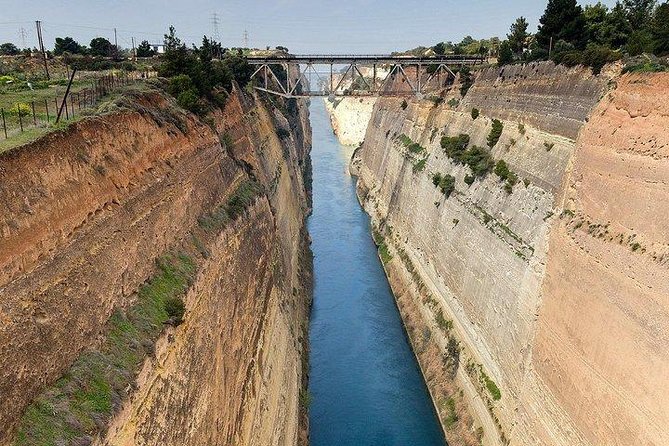
The Corinth Canal is one of the clearest visual moments of the day. From a high viewpoint, you look down into the narrow waterway, with steep limestone walls dropping toward the canal floor.
The canal is about 6.4 kilometers long and only around 21.4 meters wide at its base. It has no locks because it was cut at sea level. Modern ships can find it too narrow, but smaller vessels still make the passage, giving you something to watch during the half-hour stop.
This visit also helps you understand why Corinth mattered. The canal is modern, but the same narrow isthmus has long controlled movement between central Greece and the Peloponnese. You can see in an instant why this strip of land shaped trade, military planning, and travel.
Seeing the ancient Diolkos
Before the canal, the Diolkos offered a different solution to the same geographic problem. This ancient roadway helped move ships or cargo across the isthmus between the two seas.
The remains are not as visually grand as the Corinth Canal, and the stop lasts only about 20 minutes. Still, I think it earns its place because it makes the ancient economy easier to picture. Merchants, sailors, and port workers were dealing with this same geographic bottleneck long before Paul arrived.
The Diolkos is also a good reminder that Corinth was not an isolated religious site. It was connected to a wide Mediterranean trading network, and Paul’s message spread through precisely these busy routes.
Connecting Isthmia with the Isthmian Games
Isthmia adds the athletic and religious side of the story. The sanctuary was dedicated to Poseidon and hosted the Isthmian Games, one of the major athletic festivals of the Greek world.
Paul often used athletic images in his letters, so standing near the stadium gives extra weight to passages about running a race, discipline, and competing for a prize. The connection between Paul and the games is presented as a likely one rather than a documented scene in which we can place him with certainty. He worked as a tentmaker, and the games brought athletes, officials, merchants, and spectators into the area.
The larger site includes the Temple of Poseidon, the stadium, and the Sanctuary of Palaimon, a deity associated with sailors. The variety of worship here shows the religious world Paul encountered. You are not looking at one neat belief system, but at a crowded mix of gods, rituals, athletic contests, and commercial activity.
More Ancient History Tours in Greece
- Acropolis, Parthenon & Athens Old City Heritage Walking Tour
★ 4.5 · 876 reviews - Private Biblical Tour Ancient Corinth & Isthmus Canal from Athens
★ 5.0 · 762 reviews - Athens: Ancient Corinth & Nafplio Full Day Trip with Swim
★ 4.8 · 531 reviews - Athens Skip the Line: Open Air Ancient Greek Theatre Performance
★ 4.5 · 520 reviews
Exploring the Museum of Isthmia

The Archaeological Museum of Isthmia helps fill in details that are hard to see in open ruins. Allow about 30 minutes.
The collection includes objects from the Sanctuary of Poseidon, along with statues, offerings, and burial finds. One especially interesting group is the glasswork from Kenchreai, the port connected with Paul’s departure for Syria.
The museum entrance is not included in the basic price. Ancient Corinth and the Archaeological Museum of Isthmia together cost €15 per person according to the tour information. Carry some flexibility in your budget for these fees.
Because your driver does not normally enter the museum with you, ask for a short orientation before going in. A driver such as Alex, George, or Stefanos can point out what to watch for, but you will be viewing the displays independently unless you have arranged a licensed guide.
Visiting the Archaeological Site of Isthmia
The open-air archaeological site usually receives about 40 minutes. It gives you a closer look at the sanctuary, stadium, and surrounding religious complex than the museum alone can provide.
Parts of the site are spread out, so the visit involves walking. The remains may not have the instant impact of Ancient Corinth, but they reward anyone interested in the setting behind Paul’s athletic metaphors.
The ancient theater is another worthwhile part of the Isthmia visit. It was first built for musical contests connected with the games and later reflected Roman tastes, including mosaics with sea creatures and Dionysian scenes. That contrast is useful: Paul preached in a world where religious festivals, theater, politics, and public entertainment were closely linked.
Isthmia also served as a meeting place for political and military decisions. Its importance was not only spiritual. Leaders and city-states gathered here because the location controlled movement through Greece. Paul’s work therefore took place in an area where religious and political ideas already traveled quickly.
Ancient Corinth and the Bema
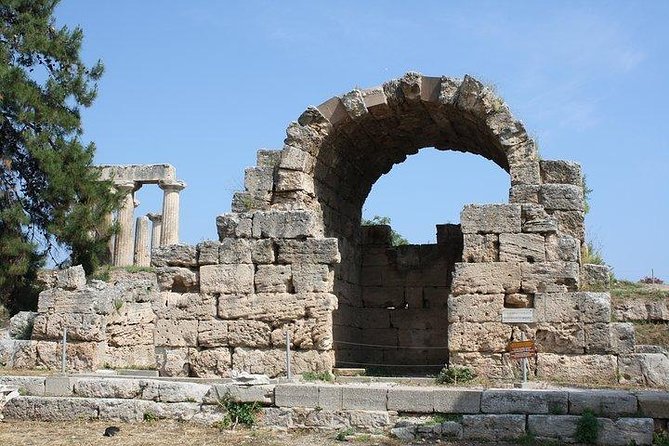
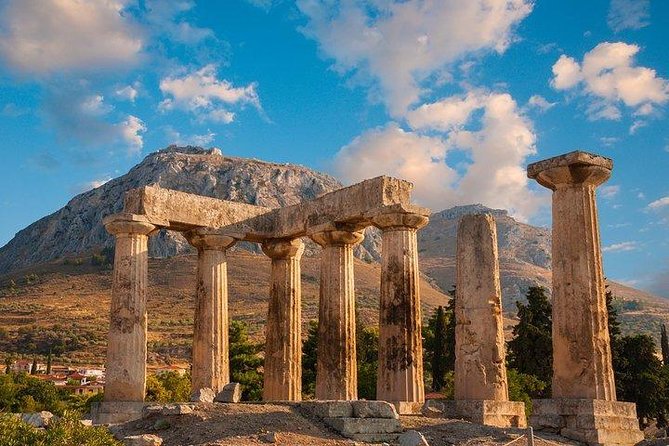
Ancient Corinth is the main archaeological stop, and you should allow at least an hour. The site is larger and more substantial than many first-time visitors expect.
The Temple of Apollo is the most recognizable feature. Its massive stone columns date to the sixth century BC and would have dominated the city when Paul arrived. The temple gives you a strong visual sense of the pagan setting he confronted.
The Roman Forum is equally important for the Pauline story. At its edge is the Bema, a raised stone platform associated with the hearing before Proconsul Gallio described in Acts 18. Paul was accused of promoting an unlawful religion, but Gallio treated the case as an internal religious dispute and declined to judge it.
The Bema is not simply a biblical photo stop. It shows how Roman civic authority could affect the survival of a new religious movement. Gallio’s decision allowed Paul to continue his work in Corinth without a formal Roman ruling against him.
You will normally enter Ancient Corinth on your own. This is the part of the experience that can cause disappointment if you expect a guide to walk beside you through the ruins. Your driver can give a useful briefing and answer questions outside, but a licensed guide must be requested separately and depends on availability.
Kechries, Paul’s eastern port
Kechries, the site of ancient Cenchreae, is a quieter stop on the coast. Allow about 30 minutes.
Acts 18:18 connects Paul with this port during his second missionary journey. Before sailing for Syria with Priscilla and Aquila, Paul cut his hair after making a vow. The exact nature of that vow is discussed by biblical scholars, but the location itself is clear and gives the story a strong geographic anchor.
Paul’s letter to the Romans also mentions Phoebe, a servant or minister of the church at Cenchreae. That detail makes this stop more than a place where Paul happened to board a ship. It points to an early Christian community and to the important role of women in the first churches.
Kechries is less monumental than Ancient Corinth. Its value comes from atmosphere and connection. You can look toward the sea and understand how Paul’s message moved from Corinth into the wider Mediterranean world.
Apostolou Pavlou Church
The Apostolou Pavlou Church is a short stop of about 20 minutes. It honors Paul’s time in Corinth and the Christian community associated with his preaching there.
This is a living place of worship, not an archaeological ruin. The visit offers a change of pace after the open-air sites and gives you a modern expression of the continuing religious importance of Corinth.
Exact church access can depend on local conditions, so treat this as a meaningful exterior or brief devotional stop rather than the centerpiece of the day.
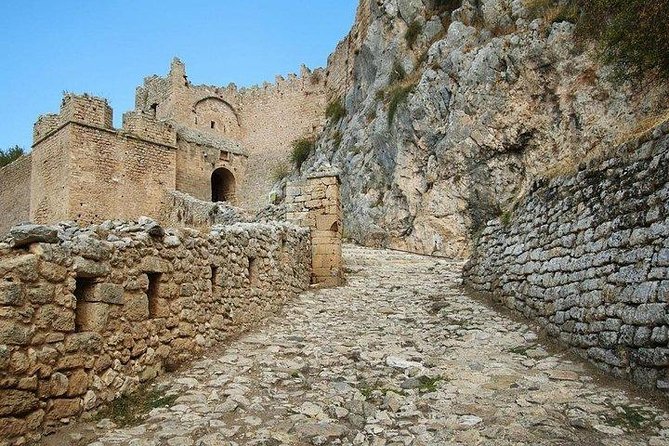
Climbing Akrokorinthos
Akrokorinthos is the most demanding stop physically and one of the most rewarding visually. The fortress rises above Ancient Corinth, and the climb can take about an hour depending on how far you go and how long you pause.
The old paths and walls lead toward broad views over Corinth and the surrounding countryside. The remains associated with the summit, including the area of Aphrodite’s temple, help explain why this site mattered for defense and worship.
This is not a gentle stroll. The climb can be harder than the schedule suggests, and uneven stone surfaces require sensible shoes. If anyone in your group has limited mobility, discuss the stop with the driver before committing to the full ascent.
I like the flexibility here. Several drivers, including Stephanos and George, have been praised for allowing groups to take their time instead of rushing them back to the vehicle. If the view matters more to you than checking off every site, Akrokorinthos is the place to use that freedom.
Lunch with a Greek view
Lunch usually comes in Corinth at a traditional seaside or local taverna. If you choose the package with Greek traditional food, lunch is included. If you choose another option, the meal is not included, but the schedule still allows time to eat.
Past groups have enjoyed generous Greek meals and scenic settings, and one driver helped with menu choices. That kind of help is useful if you are unsure about portions or local dishes.
The lunch stop also gives you a needed break after the ruins and the climb. This is a long day, so do not treat the meal as a minor detail. A slow Greek lunch can make the afternoon feel much more manageable.
What the $218.43 price gets you
At $218.43 per person, this is not the cheapest way to reach Corinth. It becomes more reasonable when you divide the cost among a private group and value door-to-door transport, flexible timing, and a route that covers far more than Ancient Corinth alone.
Included are hotel or port pickup and drop-off, private air-conditioned transportation, Wi-Fi, bottled water, and a professional driver with strong historical knowledge. Lunch is included only with the traditional Greek food option.
The two main extra costs are the €15 entrance fee for Ancient Corinth and the Archaeological Museum of Isthmia, plus any licensed guide you request. That guide fee is worth considering if you want detailed explanations inside the ruins. Without it, you get a well-informed driver and a self-guided site visit.
For a cruise passenger, port pickup and a private return can add real value. One driver even helped a group recover from a mistaken return-time calculation by tracking their timing and communicating with the ship. Still, you should give the company your exact ship departure requirements before the day begins.
Who should book this Corinth day trip?
I would choose this tour if you want a Paul-centered route and prefer a private car over a large coach. It suits couples, families, church groups, and small groups that want to set their own pace.
It is also a good choice if you have already seen central Athens and want a full day beyond the capital. The route includes enough variety to keep the day moving: engineering at the canal, ancient transport at the Diolkos, athletics at Isthmia, Roman civic life at Corinth, a seaside port, and a mountain fortress.
I would think twice if you want a licensed guide inside every archaeological site or if you prefer a slow visit to only one or two places. The schedule covers a lot, and the self-guided format requires you to take responsibility for exploring the ruins.
Free cancellation is available up to 24 hours before the start time. Pickup time can be adjusted, and the driver can collect you from a hotel, apartment entrance, or port gate.
Should you book it?
Book this tour if you want to connect Paul’s letters with the actual roads, ports, sanctuaries, and civic spaces of Corinth. The strongest parts are the flexibility, the broad route, and the drivers, especially people such as Alex, George, Panos, and Stefanos, who are praised for patient pacing and helpful explanations.
Before paying, decide if you need a licensed guide. If yes, request one in advance and confirm the added cost. If you are comfortable exploring the ruins independently after a detailed briefing, this is a practical and thoughtful way to follow Paul from Athens to Corinth in one very full day.
FAQ
How long does the tour last?
The experience lasts approximately 8 to 9 hours.
Is this a private tour?
Yes. Only your group participates, and the pickup time can be adjusted upon request.
Where can pickup take place?
Pickup is available from hotels, apartment entrances, and ports. At a port, the driver waits at the gate with a sign showing your name.
Is a licensed tour guide included?
No. The driver provides historical commentary but is not a licensed guide and normally does not enter the archaeological sites with you. A licensed guide can be requested separately, depending on availability.
Are entrance fees included?
No. Entrance to Ancient Corinth and the Archaeological Museum of Isthmia costs €15 per person and can be paid on site.
Is lunch included?
Lunch is included only if you choose the With Greek Traditional Food option. Otherwise, you can purchase lunch during the scheduled stop.
Is the tour offered in English?
Yes. The tour is offered in English, and the drivers provide commentary in fluent English.
What does the tour include besides transportation?
The tour includes hotel or port pickup and drop-off, private air-conditioned transportation, onboard Wi-Fi, bottled water, and a professional driver with historical knowledge.
Newest history tours we have reviewed in Athens
- The original Christian tour on Paul’s footsteps in Athens and ancient Corinth★ 4.5 · 25 reviews
- Ancient Sparta & Mystras Private Day Tour from Athens★ 5.0 · 52 reviews
- Athens: Combo Ticket for Acropolis & 6 ancient sites★ 3.0 · 21 reviews
- Small-Group Women History in Ancient Greece Walking Tour★ 5.0 · 38 reviews
- Ancient Corinth, Sanctuary of Hera, Blue Lake & Canal from Athens★ 5.0 · 26 reviews
- Half Day Historical Athens City Private Taxi Service Tour★ 5.0 · 79 reviews
- Ancient Agora & Temple of Hephaestus Entrance Ticket★ 3.5 · 22 reviews
- Private Luxury Tour: Marathon – Battle & Run That Changed History★ 5.0 · 30 reviews
Ancient History Tours, compared.
Colosseum: Underground and Ancient Rome Tour
Read our review →
Colosseum & Ancient Rome with Arena Floor Option I Max 6 People
Read our review →
Colosseum, Ancient Rome Tour or AudioGuided Tour
Read our review →
Colosseum Underground & Ancient Rome Guided Tour
Read our review →
Taormina: Ancient Theater Skip-the-Line Ticket & Audio Guide
Read our review →
Discover the Ancient Ruins of Pompeii: Day Trip from Rome
Read our review →
Discover Matera, the ancient city – English tour
Read our review →Browse the lists this tour appears in