
Review · ATHENS HISTORY TOURS
Athens Full Day Tour: Acropolis, Parthenon & Historic Sights
Athens packs thousands of years into a compact city, and this private tour gives you a useful overview without making you wrestle with taxis, traffic, or a large group. You’ll see the Acropolis, Parthenon, Temple of Olympian Zeus, Panathenaic Stadium, Parliament, Lycabettus Hill, and more in about 5 to 7 hours.
I like the private vehicle, especially for a first day in Athens, and I like the freedom to add the Ancient Agora, Temple of Hephaestus, or Acropolis Museum. Drivers such as Panagiotis and Steve have helped guests with practical details, including how to manage the Acropolis hill and where an elevator is available.
The main catch is that the drivers are not licensed guides inside the archaeological sites. You’ll explore the Acropolis and museums on your own, and entrance tickets cost extra, so the final price can rise well above the advertised $270.34 per person.
Key points before you book
- Private transport makes a packed Athens day easier, with hotel pickup, air-conditioning, WiFi, water, and a fully electric vehicle.
- The Acropolis is the main event, but the tour adds modern Athens, royal Athens, ancient temples, Olympic landmarks, and city views.
- You can shape the day, choosing an Ancient Agora visit, the Acropolis Museum, or the core route.
- The driver provides historical context but does not escort you inside sites, so this is best for independent sightseeing.
- Admission tickets are extra, including €30 for the Acropolis, €20 for the Acropolis Museum, and €20 for the Ancient Agora.
- The tour suits a private group, with no other participants joining your vehicle.
Why private transport helps in Athens
Athens is not a difficult city to visit, but its major sights are spread across busy streets, broad avenues, hills, and pedestrian zones. A private vehicle lets you move between the Acropolis, Syntagma Square, the Panathenaic Stadium, Lycabettus Hill, and the Stavros Niarchos Foundation Cultural Centre without piecing together several rides.
You receive pickup, bottled water, air-conditioning, and onboard WiFi. The vehicle is fully electric, a nice touch in a dense city where a quiet ride feels welcome. This matters most during hot months, when a short transfer in a cool car gives you a break between outdoor stops.
The tour is offered in English. The listed drivers are professional drivers with strong knowledge of Athens and Greek history, but they are not licensed guides who accompany you through each monument. Think of the service as private transport with historical help, not as a full guided archaeological tour.
That distinction shapes the day. At the Acropolis, for example, your driver can get you there, explain the setting, and help with practical matters, but you will enter and explore independently. If you want a guide beside you among the ruins, you would need to arrange that separately.
More Ancient History Tours in Athens
- Athens: Ancient Greek Theater Performance
★ 4.7 · 2,481 reviews - Historical Delphi One Day Tour with Arachova Stop & Expert Guide
★ 4.5 · 1,247 reviews - From Athens: Ancient Corinth Day Trip with Canal & VR Guide
★ 4.6 · 1,073 reviews
The Acropolis and Parthenon: the day’s essential stop
The Acropolis is the reason most people come to Athens, and this tour gives it a central place. The one-hour visit covers the citadel crowned by the Parthenon, the Doric temple dedicated to Athena and one of the world’s most recognizable ancient buildings.
You’ll also see the wider collection of monuments on the rock, along with broad views over Athens. The site is not simply a single temple. It is a hilltop complex where architecture, religious life, civic identity, and the later story of Western culture meet.
The listed visit lasts about one hour, which is enough for a first look but not a leisurely archaeological study. Since admission is not included, plan on an additional €30 per person for the Acropolis. Ticket instructions are sent through the booking information, so read those directions carefully before the day begins.
The hill can be demanding, particularly in warm weather or for anyone who dislikes uneven ground and steep approaches. Steve was able to help one group manage the Acropolis visit by pointing out an elevator, a useful practical detail. Ask about access arrangements ahead of time rather than waiting until arrival.
Because the driver does not enter as your licensed guide, it helps to decide how much explanation you want. You can read ahead, use your own guidebook, or treat the site as a visual experience. The tour’s strength is getting you there smoothly and leaving you free to set your own pace within the allotted time.
Temple of Olympian Zeus and the scale of ancient Athens

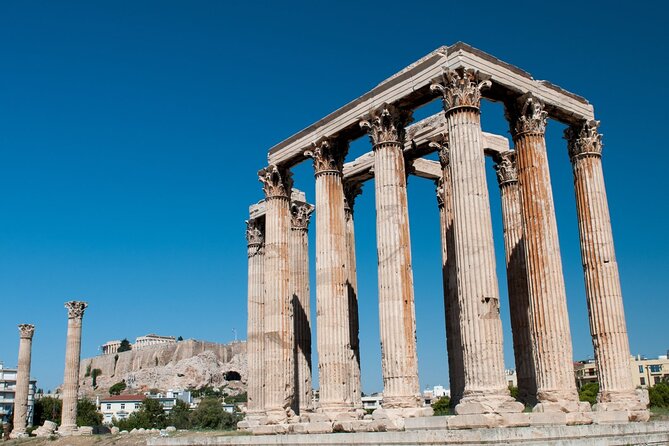
The Temple of Olympian Zeus gives you a quick lesson in ancient ambition. This was once a colossal temple, built over several centuries and dedicated to Zeus, king of the Greek gods. Its remaining Corinthian columns still make the original scale easy to picture.
The stop lasts about 30 minutes, and admission is not included. That is enough time to see the ruins, take in the columns, and understand how close the temple is to the Acropolis area. It works well as a first stop because it introduces the monumental size of ancient Athens before you head up to the Acropolis.
This is a brief visit, not a long archaeological session. If you care most about detailed ruins and inscriptions, the optional Ancient Agora may give you more time among civic buildings and temples. If you want the broadest possible city tour, the Zeus Temple is a sensible use of half an hour.
Panathenaic Stadium and the Olympic story
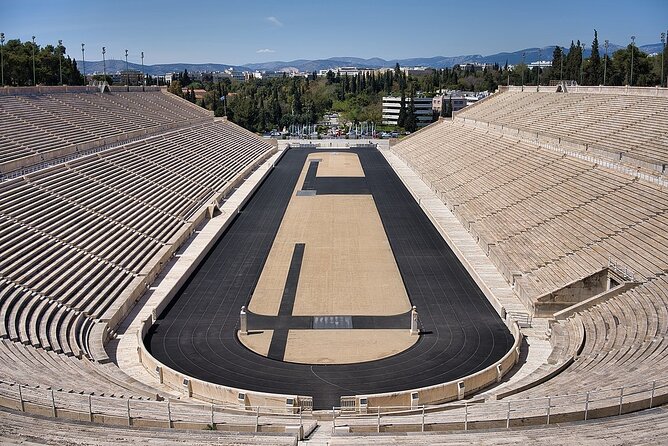
The Panathenaic Stadium is one of the easiest places in Athens to picture in use. Built in white marble on ancient foundations, it hosted the first modern Olympic Games in 1896. Its horseshoe shape and steep seating make the link between ancient athletics and the modern Olympic movement plain.
You get about 20 minutes here, and admission is free according to the tour details. That short stop is enough for a view, photographs, and a quick sense of the structure. It is not designed as a long museum visit.
I like this stop because it changes the focus from gods and temples to sport and public spectacle. It also gives the day a clear connection between ancient Greece and modern Athens.
More Ancient History Tours in Greece
- Acropolis, Parthenon & Athens Old City Heritage Walking Tour
★ 4.5 · 876 reviews - Private Biblical Tour Ancient Corinth & Isthmus Canal from Athens
★ 5.0 · 762 reviews - Athens: Ancient Corinth & Nafplio Full Day Trip with Swim
★ 4.8 · 531 reviews - Athens Skip the Line: Open Air Ancient Greek Theatre Performance
★ 4.5 · 520 reviews
Parliament, the Unknown Soldier, and Syntagma Square
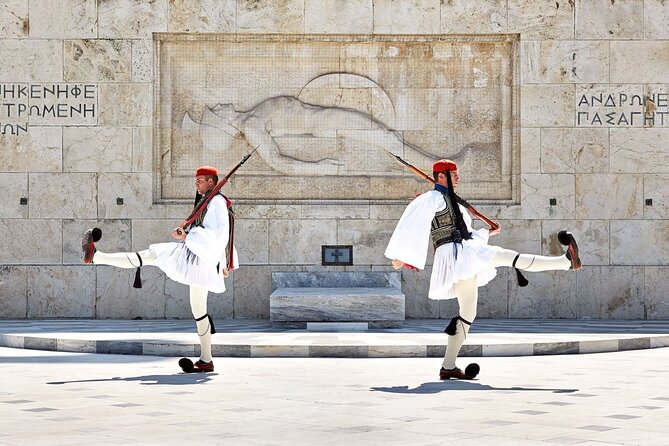
The Hellenic Parliament occupies the neoclassical Old Royal Palace at Syntagma Square. The building connects present-day government with the country’s royal and political past, while the Evzones, Greece’s traditional presidential guards, add a strong ceremonial element.
The tour allows about 15 minutes at Parliament and another 15 minutes at the Monument to the Unknown Soldier. The memorial is a cenotaph for Greek soldiers killed in war, positioned in front of the former palace. It was sculpted between 1930 and 1932 by Fokion Rok.
These are short exterior stops, not extended visits inside government buildings. Their value comes from seeing Athens as a living capital rather than only as an ancient site. You get a quick look at civic Athens, national ceremony, and the formal center of the city.
Lycabettus Hill for the broadest city view
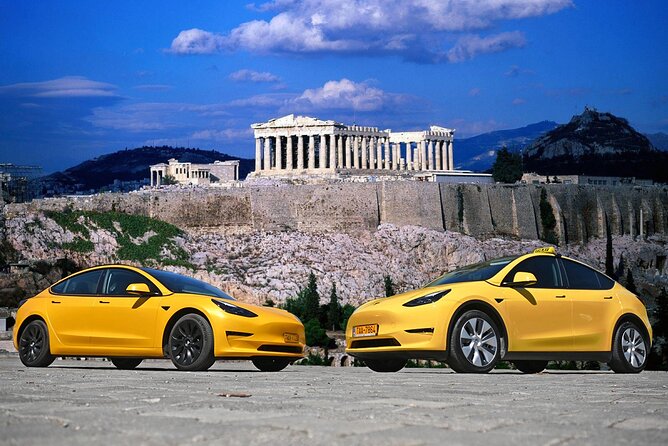
Lycabettus Hill rises about 300 meters above Athens, with the Chapel of St. George at its summit. The stop lasts around 20 minutes and is free.
The appeal is the view. From this high point, you can look across Athens toward the Aegean Sea and better understand the city’s size and position. After the close views of columns and marble on the Acropolis, Lycabettus gives you room to take in the whole urban setting.
Twenty minutes is enough for a quick viewpoint visit, but not for an extended hill walk. Ask your driver how much time is practical on the day, especially if you want to linger. The stop is most useful for people who value city views and photographs as much as ancient monuments.
The neoclassical trio: University, National Library, and Academy
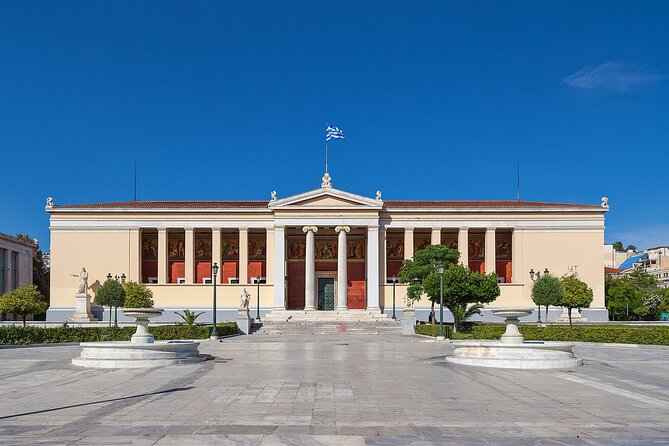
The route also passes the University of Athens, the National Library of Athens, and the Academy of Athens. These buildings form one of the city’s most important neoclassical architectural groups.
The University of Athens was founded in 1837 and is Greece’s oldest and largest university. The National Library, founded in 1832, holds books, manuscripts, and historical documents. The Academy of Athens, founded in 1926, supports work in science, the humanities, and the arts.
The information provided does not assign a separate duration or admission arrangement for these stops, so expect them to function as brief exterior views or drive-by landmarks within the wider route. They are worthwhile because they show the Athens of education, scholarship, and national institutions, not only the Athens of ancient stone.
Stavros Niarchos Foundation Cultural Centre
The Stavros Niarchos Foundation Cultural Centre adds a sharp change of mood. Designed by Renzo Piano, it houses the National Library of Greece and the Greek National Opera in a 21-hectare park.
You’ll see modern design, gardens, walking paths, and views toward the sea. The sloping green roof and energy-saving technology give the site a strong environmental focus, while concerts, exhibitions, and open-air events keep it in use as a cultural center.
The visit lasts about 30 minutes and admission is free. That makes it an easy addition for a group that wants to see present-day Athens alongside its ancient monuments. It also breaks up a day that could otherwise feel like one long sequence of ruins and neoclassical facades.
You should not expect a full performance or museum visit during this short stop. The point is to see the building, park, and setting. If modern architecture and public spaces interest you, this is one of the tour’s most distinctive additions.
Choosing the Ancient Agora and Temple of Hephaestus
The Ancient Agora and Temple of Hephaestus are optional. You can select the Best of plus Ancient Agora five-hour option, which adds about 30 minutes at each site and brings the total duration to roughly five hours.
The Ancient Agora was the civic and commercial heart of Athens from the sixth century BCE. It was a place for trade, politics, public meetings, and philosophical discussion. That makes it especially useful if you want to understand how ordinary civic life worked beyond the ceremonial buildings on the Acropolis.
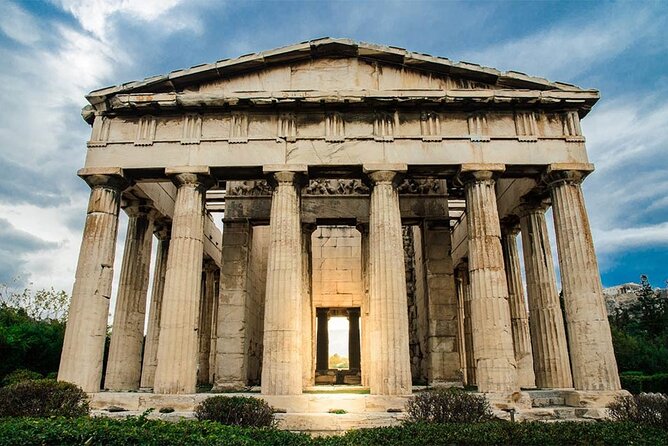
The Temple of Hephaestus is one of the best-preserved ancient Greek temples. Built around 450 BCE, it honors Hephaestus, the god of metalworking and craftsmanship, and displays carefully made Doric columns and friezes.
Admission to both sites costs extra. The Ancient Agora is listed at €20 per person, while the tour details also identify entrance tickets as not included for the Temple of Hephaestus. Confirm the exact ticket arrangement before booking.
I would choose this option if ancient Athens is your main reason for visiting. The Agora gives you context for democracy and daily public life, while the Acropolis gives you the monumental high point. Together, they make a stronger ancient-history day than the core route alone.
Choosing the Acropolis Museum instead
The Acropolis Museum is another optional version, with about one hour set aside for the visit. It focuses on artifacts found on the Acropolis and its slopes, ranging from the Greek Bronze Age through Roman and Byzantine Greece.
Admission costs €20 per person and is not included. The museum is a strong choice if you want objects, sculpture, and archaeological explanation to support what you see on the hill. It can also help when heat, sun, or uneven ground makes a long outdoor visit less appealing.
You cannot fully maximize every option in a short private tour. Adding the museum means less time for other stops, so choose based on your interests. Pick the Agora for civic life and preserved ancient structures. Pick the museum for artifacts and a more sheltered cultural visit.
What the $270.34 price really covers
The advertised price is $270.34 per person. That is a serious price for a five to seven-hour outing, but it pays for private transport rather than a standard group bus. Your group has the vehicle to itself, and the route can be adjusted by adding or removing stops.
The price includes the professional driver, private transportation, air-conditioning, WiFi, bottled water, and the fully electric vehicle. It does not include the Acropolis, Ancient Agora, or Acropolis Museum tickets, and lunch is also separate.
For a small group, the value improves because the private rate buys flexibility and door-to-door movement. For one person or a couple, the cost is harder to justify if you are comfortable using public transport and arranging site visits yourself.
Airport pickup costs an additional €45 per vehicle for up to four people. That can be useful if you are arriving directly in Athens, but it is not part of the standard price.
Timing, booking, and who should choose it
The tour is often reserved about 29 days ahead, so I would not leave it until the last minute if your Athens dates are fixed. Confirmation arrives at booking, and pickup is offered. The activity is private, so only your group participates.
Most people can take part, and the route is near public transportation, but the Acropolis itself remains a hilltop archaeological site. Ask practical access questions before confirming if anyone in your group has mobility concerns.
The cancellation policy is forgiving up to 24 hours before the start time, with a full refund. Cancellations or changes inside that 24-hour window are not refunded or accepted.
This tour suits you best if you want:
- A private vehicle and a flexible route
- A first look at many major Athens sights in one day
- Help with transport and practical site decisions
- An English-speaking driver rather than a formal guide inside every monument
- The option to focus on the Agora or Acropolis Museum
It is less suitable if you want a detailed, fully guided explanation at every site. In that case, budget for a licensed guide in addition to the vehicle.
Should you book this Athens tour?
Book it if you value comfort, privacy, and a broad first look at Athens. The combination of Acropolis, Zeus Temple, Stadium, Syntagma Square, Lycabettus Hill, and the modern cultural center gives you a better sense of the city than an Acropolis-only visit.
Choose the Ancient Agora option if ancient civic life matters most. Choose the Acropolis Museum if you want artifacts and more indoor cultural time. Bring your own reading or audio guide for the Acropolis, since the driver does not accompany you inside as a licensed site guide.
The strongest reason to book is the flexible private transport. The main reason to hesitate is the cost once entrance fees are added. For a small group that wants convenience, the price may be fair. For independent visitors on a tight budget, Athens can be explored more cheaply with public transport and separate tickets.
FAQ
How long does the Athens private tour last?
The main experience lasts approximately 5 to 7 hours. The Ancient Agora option is listed as about 5 hours, with visits to the Ancient Agora and Temple of Hephaestus.
Is the tour private?
Yes. Only your group participates in the private activity.
Is hotel pickup available?
Pickup is offered. Airport pickup from Athens International Airport costs an additional €45 per vehicle for up to four people.
Are entrance tickets included?
No. Entrance tickets are separate. The listed prices are €30 per person for the Acropolis, €20 per person for the Acropolis Museum, and €20 per person for the Ancient Agora.
Does the driver guide you inside the Acropolis?
The drivers provide historical knowledge and transportation, but they are not licensed to accompany you inside the sites. You explore the Acropolis independently.
Can I choose different stops?
Yes. The private tour can be adjusted by adding or removing stops according to your group’s needs. Optional versions include the Ancient Agora with the Temple of Hephaestus or the Acropolis Museum.
Is lunch included?
No. Lunch is not included in the tour price.
What is included in the vehicle service?
The service includes private transportation in a luxurious air-conditioned vehicle, a fully electric vehicle, onboard WiFi, bottled water, and professional drivers.
More Full-Day Tours in Athens
- Ancient Corinth, Epidaurus, Nafplio full day private tour from Athens
★ 5.0 · 206 reviews - Ancient Corinth, Mycenae, Epidaurus, Nafplio full day private tour from Athens
★ 5.0 · 130 reviews - Ancient Olympia full day private tour from Athens
★ 5.0 · 83 reviews - Athens Highlights & Ancient Corinth Full Day Private Tour
★ 5.0 · 54 reviews
Newest history tours we have reviewed in Athens
- The original Christian tour on Paul’s footsteps in Athens and ancient Corinth★ 4.5 · 25 reviews
- Ancient Sparta & Mystras Private Day Tour from Athens★ 5.0 · 52 reviews
- Athens: Combo Ticket for Acropolis & 6 ancient sites★ 3.0 · 21 reviews
- Small-Group Women History in Ancient Greece Walking Tour★ 5.0 · 38 reviews
- Ancient Corinth, Sanctuary of Hera, Blue Lake & Canal from Athens★ 5.0 · 26 reviews
- Half Day Historical Athens City Private Taxi Service Tour★ 5.0 · 79 reviews
- Private Luxury Tour: Marathon – Battle & Run That Changed History★ 5.0 · 30 reviews
- Ancient Olympia & Ancient Corinth Private LuxuryTour from Athens★ 5.0 · 25 reviews
Ancient History Tours, compared.
Colosseum: Underground and Ancient Rome Tour
Read our review →
Colosseum & Ancient Rome with Arena Floor Option I Max 6 People
Read our review →
Colosseum, Ancient Rome Tour or AudioGuided Tour
Read our review →
Colosseum Underground & Ancient Rome Guided Tour
Read our review →

Taormina: Ancient Theater Skip-the-Line Ticket & Audio Guide
Read our review →
Discover the Ancient Ruins of Pompeii: Day Trip from Rome
Read our review →
Discover Matera, the ancient city – English tour
Read our review →Browse the lists this tour appears in