
Review · ATHENS HISTORY TOURS
Acropolis, Parthenon and Ancient Agora Guided Tour with entrances
The best thing about this tour is the way it links Athens’ great ancient sites in one walk. You move from the Acropolis and Parthenon to the theaters below, then finish in the Ancient Agora, where daily Athenian life comes into sharper focus.
I like the licensed guide and headset, which make a real difference in a busy outdoor site. I also like the morning start and the included admission to both major areas. The tradeoff is simple: this is a hilly, sunny walking tour, and the three-and-a-half-hour route may feel demanding in hot weather or if you have mobility limits.
Key points at a glance
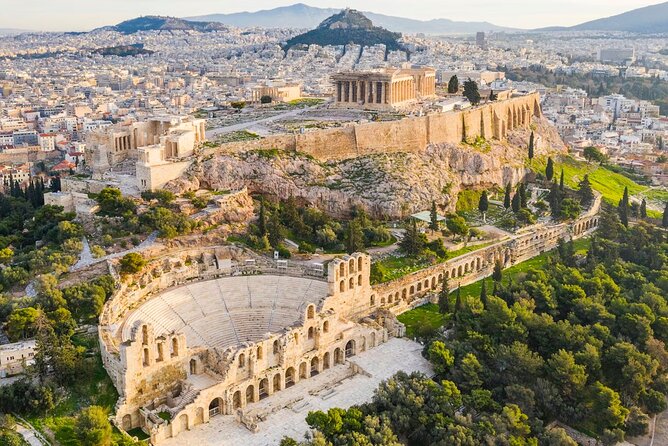
- See Athens’ essential ancient sites in one route: The Acropolis, Parthenon, Odeon of Herodes Atticus, Theatre of Dionysus, Temple of Hephaestus, Stoa of Attalos, and Ancient Agora are all included.
- Start early at 9:00 a.m.: The morning timing can help you avoid the worst heat and may mean fewer people at the monuments.
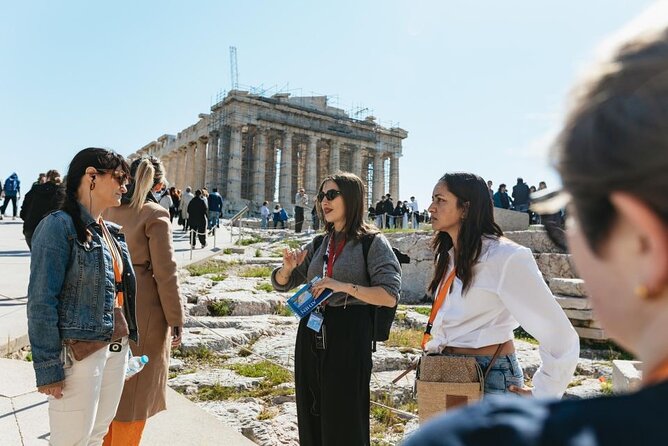
- Learn from a live guide: English-speaking guides use microphones connected to hearing devices, so you can follow explanations while standing in open archaeological areas.
- Allow for uphill walking: The Acropolis climb is real, with uneven ground and exposed areas. Guides have used rest stops and a steady pace for slower walkers.
- Finish at the Ancient Agora: The tour ends among the political, commercial, and social spaces of ancient Athens rather than returning you to the starting point.
- Small, but not private: The group can include up to 20 people, a manageable size for a guided walk but still large enough to require staying close to the guide.
Why this Athens route works so well
Athens can feel like a pile of ancient stones until someone explains what you are seeing and why it mattered. This tour gives you that framework. It moves through the religious center on the Acropolis, the theaters on its southern slope, and the Agora below, where Athenians met, traded, debated, and handled public business.
That order makes sense. You begin with the monumental side of Athens, then see the places where ordinary public life took place. I find that contrast more useful than visiting the Parthenon alone and treating it as an isolated photo stop.
The experience lasts about three hours and 30 minutes. The stated time at the sites adds up to a little over three hours, with the remaining time used for walking between areas, gathering the group, and moving through the archaeological grounds. You should treat the schedule as approximate, not as a series of perfectly timed stops.
The group is limited to 20 people. That is not a private tour, but it is more workable than a large coach group. The supplied hearing devices connect to the guide’s microphone, an important detail when wind, crowds, or distance make normal conversation hard to follow.
More Ancient History Tours in Athens
- Athens: Ancient Greek Theater Performance
★ 4.7 · 2,481 reviews - Historical Delphi One Day Tour with Arachova Stop & Expert Guide
★ 4.5 · 1,247 reviews - From Athens: Ancient Corinth Day Trip with Canal & VR Guide
★ 4.6 · 1,073 reviews
Starting near the Acropolis at 9:00 a.m.
The meeting point is on Porinou Street, in the 117 42 area of Athens, near the Acropolis. You need to make your own way there because hotel pickup and drop-off are not included. The location is near public transportation, which helps if you are staying outside the central tourist area.
The nine o’clock start is one of the tour’s practical strengths. Athens can become very hot on exposed stone, and the Acropolis offers limited shade. An early start gives you a better chance of doing the steepest part before the day reaches its hottest point. It can also help you get ahead of some of the later crowds, though no morning tour can promise an empty hill.
Arrive ready to walk. Wear secure shoes, carry water, and bring sun protection. One useful criticism of the experience is that water is not supplied, so you should take care of that before meeting the group.
The Acropolis and its sweeping city views
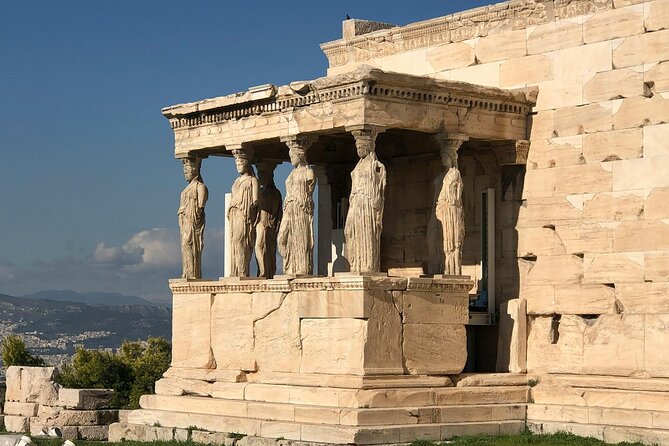
The first major stop is the Acropolis itself, with about 30 minutes allocated to the citadel. This rocky hill is the symbolic center of Athens, and its position gives you wide views over the modern city as well as the surrounding ancient sites.
The climb is the part you need to take seriously. One guide reportedly gave several rest stops, and the route is handled at a pace that can work for slower walkers, but the hill remains a hill. The stone can be uneven, and the open setting means heat and wind may affect your comfort.
Your guide adds value here by explaining the remains rather than leaving you to read short signs and guess at the original layout. The tour is conducted in English, and the headsets help you hear without standing shoulder to shoulder with the guide.
The Acropolis stop is brief compared with the importance of the site. That is a point in its favor if you want a broad introduction to Athens in half a day, but it may feel short if you want to study every structure closely. You are getting an overview with interpretation, not a slow architectural survey.
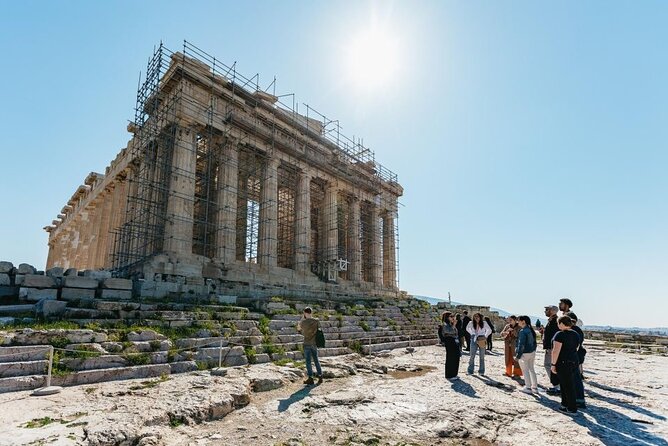
The Parthenon, Athens’ central symbol
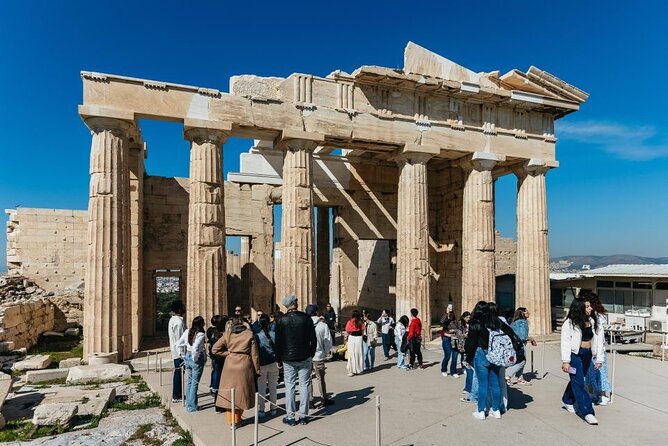
The Parthenon receives its own 30-minute stop. Dedicated to Athena, it is the structure most people picture when they think of ancient Athens. Its sculptures are among the high points of Classical Greek art, and the building has become a symbol of ancient Greece, democracy, and Western civilization.
A guide is especially useful here because the Parthenon is easy to reduce to a famous facade. The explanation can put its design, purpose, and place on the Acropolis into a larger story. You also have time to pause for photographs and take in the views, rather than being marched past the monument.
Do not expect to enter the Parthenon itself. The supplied information describes admission to the Acropolis monuments, but the tour experience centers on viewing the ancient structures and learning about them from the surrounding archaeological area. Conditions at the site can change, so your guide’s instructions matter.
This is likely the emotional high point of the morning, but it should not be the only reason to book. The later Agora visit gives you a different and, in some ways, more human picture of Athens.
More Ancient History Tours in Greece
- Acropolis, Parthenon & Athens Old City Heritage Walking Tour
★ 4.5 · 876 reviews - Private Biblical Tour Ancient Corinth & Isthmus Canal from Athens
★ 5.0 · 762 reviews - Athens: Ancient Corinth & Nafplio Full Day Trip with Swim
★ 4.8 · 531 reviews - Athens Skip the Line: Open Air Ancient Greek Theatre Performance
★ 4.5 · 520 reviews
Two ancient theaters on the southern slope
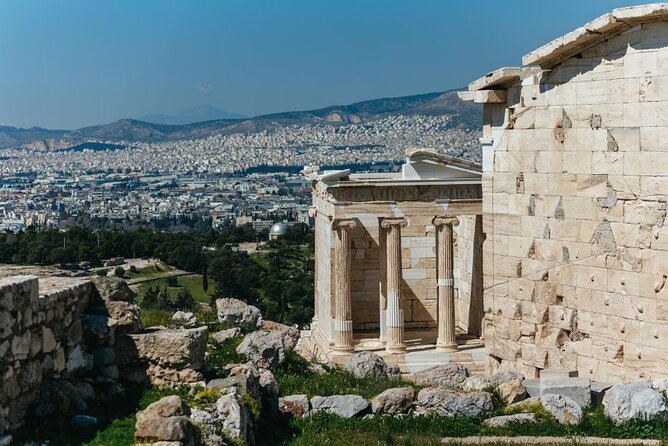
The route continues to the Odeon of Herodes Atticus, with about 10 minutes allotted. This stone theater was built in 161 AD by the Roman senator Herodes Atticus in memory of his wife. It originally had a wooden roof and held around 5,000 spectators.
The Odeon is still used for performances, which gives the ancient structure a rare connection to present-day Athens. You will likely view it from outside rather than spend long inside. Ten minutes is enough to hear its story and take in the scale, but not enough for a detailed study.
The Theatre of Dionysus receives about 15 minutes. Built on the southern slope of the Acropolis as part of the sanctuary of Dionysus Eleuthereus, it is tied to the origins of ancient Greek theater. This stop helps explain that Athens was not only a city of temples and politics. Drama, public performance, and religious festivals were part of civic life.
These two theaters are easy to skip on a self-guided visit because the Parthenon draws attention away from everything below it. Including them makes the walk more complete. The drawback is that both stops are short, so you should listen closely and ask questions while the group is gathered.
The walk to the Ancient Agora
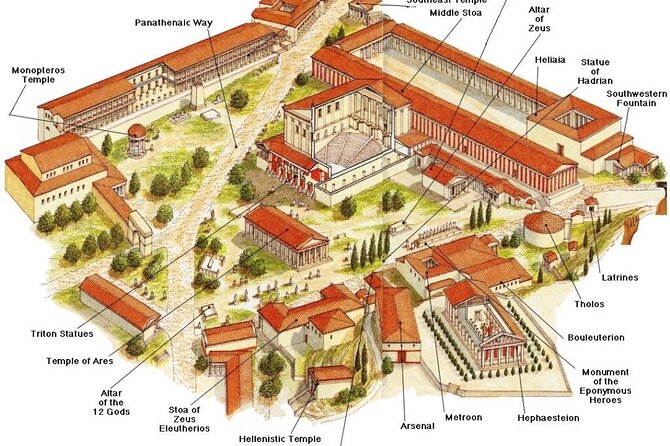
After the Acropolis area, the route continues to the Ancient Agora. This is where the tour changes character. The Acropolis shows you the ceremonial and religious face of Athens. The Agora shows you a working city.
The Agora was used for commerce, assemblies, residences, and public gatherings. It was bounded by the Areopagus to the south and the Agoraios Kolonos, also called Market Hill, to the west. Its position northwest of the Acropolis makes it a natural next stop, although you should expect more walking between the main monuments.
The complete tour involves enough uphill and outdoor walking that moderate physical fitness is recommended. The route is not described as a strenuous hike, but heat, stone surfaces, and the length of the morning can add up. If you have mobility issues, tell the guide at the start. The pacing has been adjusted for slower walkers, but the site itself cannot be made flat or smooth.
The Temple of Hephaestus and the working city
The itinerary calls this stop the Temple of Aries, but the description identifies it as the Temple of Hephaestus. Hephaestus was the god of fire and craftsmanship, and the temple was built around 449 BC during the height of the Athenian Empire.
This is one of the most rewarding stops for anyone who wants to see a Greek temple that remains unusually well preserved. Its Doric design gives you a clearer sense of what a classical temple looked like than the more damaged Parthenon can provide.
The stop lasts about 15 minutes. That is enough to understand the temple’s dedication, date, and architectural style, but you will not have a long period for independent inspection. The guide’s explanation helps you use the limited time well.
The Stoa of Attalos and its museum
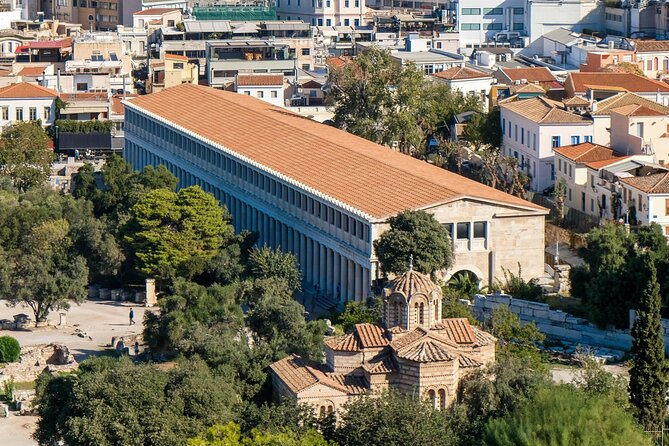
The Stoa of Attalos receives another 15 minutes. Originally built in the second century BC by King Attalos II of Pergamon, it was a two-story colonnaded building used as a covered walkway and shopping area.
The restored structure now houses the Museum of the Ancient Agora. Its long rows of columns make the scale of Hellenistic public architecture easy to grasp. More important, the stoa gives you a sense of how the Agora functioned as a place for movement, commerce, and social contact, not simply as a field of ruins.
The time here is limited, so do not expect an extended museum visit. Still, including the stoa and museum gives the final section of the tour more substance. You are not just seeing foundations. You are seeing a reconstructed public building that helps explain the ancient setting around it.
Seventy-five minutes in the Ancient Agora
The tour allows about one hour and 15 minutes for the Ancient Agora, the longest single portion of the route. I consider that a good choice. The Agora covers more ground than a quick photo stop suggests, and it needs time for the pieces to connect.
You can use this period to look at the remains, hear how the space served commercial and civic purposes, and understand its relationship to the Acropolis. The guide can also answer questions here, when the group has moved away from the most crowded monument.
The Agora is a strong finish because it adds context to the grander monuments. The Parthenon tells you about Athena and the power of Athens. The Agora helps you picture the public life of the city, including meetings, trade, and everyday movement through shared spaces.
The tour ends at the Ancient Agora in the 105 55 area of Athens. There is no return transfer to the starting point, so plan the rest of your day from this location.
What the $129.75 price gives you
At $129.75 per person, this is not a bargain-priced walk. The value comes from what is bundled together: admission to the Acropolis monuments, admission to the Ancient Agora, a licensed guide, and hearing devices.
Buying the two major entries separately would still leave you needing to organize the route and interpret what you see. This tour also connects the sites in a sensible order and gives you access to a guide who can answer questions. For a first visit to Athens, that combination can justify the price.
The value is weaker for an experienced ancient-history reader who prefers to move slowly and study each site alone. The schedule is broad rather than deeply detailed, and the group size can reach 20 people. You are paying for structure, context, and convenience, not a private archaeological seminar.
The very high recommendation rate and 4.9 rating from 29 ratings fit the tour’s strongest features: clear explanations, humor, a steady pace, and guides who make the material accessible. Individual guides named in the feedback include Laura, Angeliki, Hermes, Demos, Elena, Elaina, and Stevie. The key point is not any one name, since guide assignment can vary, but the repeated emphasis on personable delivery and careful pacing.
Who should book this tour
I would choose this for a first-time Athens visitor who wants the essential ancient sites explained in one morning. It suits history fans, couples, families with older children, and anyone who would rather hear the story than decode archaeological signs alone.
It is also a sensible choice if you want to avoid spending your first day working out entry arrangements and walking connections. The 9:00 a.m. start suits people who want to beat some heat and make room for lunch or another Athens activity later.
I would hesitate if you dislike group tours, want a private guide, or need a slow, fully accessible route. The group can contain up to 20 people, the route is uphill, and the weather can make the exposed sites tiring. A four-hour morning with water, good shoes, and realistic expectations should be manageable for most people with moderate fitness.
Should you book the Acropolis and Agora tour?
Book it if you want a well-organized introduction to Athens that goes beyond the Parthenon photo. The combination of the Acropolis, two theaters, Temple of Hephaestus, Stoa of Attalos, and Ancient Agora gives you a solid picture of both monumental and civic Athens.
The strongest reasons to go are the included entry fees, the licensed English-speaking guide, the microphone system, and the thoughtful route between the city’s major ancient sites. Go early, carry water, and allow for hills and heat.
Skip it if you want to linger at one monument for hours or prefer complete independence. For most first visits, though, the tour offers a useful balance of famous sights, lesser-noticed ruins, and clear historical explanation.
FAQ
How much does the tour cost?
The price is $129.75 per person.
How long does the experience last?
The tour lasts approximately three hours and 30 minutes.
What time does the tour begin?
The tour starts at 9:00 a.m.
Where does the tour meet?
The meeting point is on Porinou Street in Athens, postal area 117 42, near the Acropolis.
Where does the tour end?
The tour ends at the Ancient Agora of Athens in the 105 55 area.
Is transportation included?
No. Hotel pickup and drop-off are not included. The meeting point is near public transportation.
What admissions are included?
Entrance fees to the Acropolis monuments and the Ancient Agora are included.
Is the tour offered in English?
Yes. The experience is offered in English.
How many people can join the tour?
The maximum group size is 20 people. A licensed guide and hearing devices connected to the guide’s microphone are included.
Newest history tours we have reviewed in Athens
- The original Christian tour on Paul’s footsteps in Athens and ancient Corinth★ 4.5 · 25 reviews
- Ancient Sparta & Mystras Private Day Tour from Athens★ 5.0 · 52 reviews
- Athens: Combo Ticket for Acropolis & 6 ancient sites★ 3.0 · 21 reviews
- Small-Group Women History in Ancient Greece Walking Tour★ 5.0 · 38 reviews
- Ancient Corinth, Sanctuary of Hera, Blue Lake & Canal from Athens★ 5.0 · 26 reviews
- Half Day Historical Athens City Private Taxi Service Tour★ 5.0 · 79 reviews
- Private Luxury Tour: Marathon – Battle & Run That Changed History★ 5.0 · 30 reviews
- Ancient Olympia & Ancient Corinth Private LuxuryTour from Athens★ 5.0 · 25 reviews
Ancient History Tours, compared.
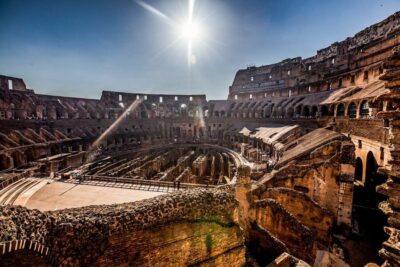
Colosseum: Underground and Ancient Rome Tour
Read our review →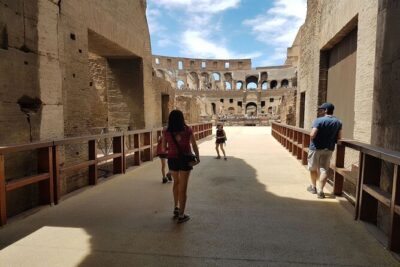
Colosseum & Ancient Rome with Arena Floor Option I Max 6 People
Read our review →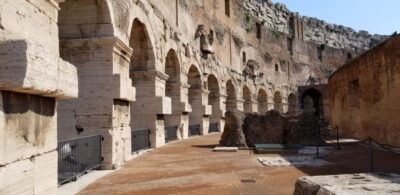
Colosseum, Ancient Rome Tour or AudioGuided Tour
Read our review →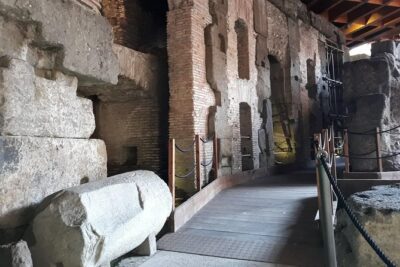
Colosseum Underground & Ancient Rome Guided Tour
Read our review →

Taormina: Ancient Theater Skip-the-Line Ticket & Audio Guide
Read our review →
Discover the Ancient Ruins of Pompeii: Day Trip from Rome
Read our review →
Discover Matera, the ancient city – English tour
Read our review →Browse the lists this tour appears in