
Review · ATHENS HISTORY TOURS
Acropolis of Athens Historical Tour For History Enthusiasts
The clever idea behind this Acropolis tour is that it begins before the marble temples. Your guide first places Athens within the long story of human civilization, then shows how theatre, democracy, philosophy, religion, and engineering took shape on this hill. Harris, also called Haralampos, is the guide most often singled out for turning dates and ruins into a lively lesson.
I like the historian-led storytelling and the practical use of personal headsets, which help you follow the guide even when the Acropolis is crowded. I also like the route itself: the Theatre of Dionysus, Propylaea, Erechtheion, and Parthenon build a clear story as you climb. The main consideration is pace. At nearly three hours, with uphill walking and stops for discussion, this is not a quick photo visit.
Key points to know before booking
- History begins before the Acropolis: The opening lesson connects ancient Athens with the development of human civilization.
- Harris brings the site to life: His approach mixes mythology, politics, engineering, humour, questions, and lessons for modern society.
- Theatre of Dionysus comes first: You see the place linked with the birth of drama and the works of Sophocles, Euripides, and Aeschylus.
- Headsets keep the commentary clear: You can listen while moving through busy parts of the hill.
- The tour ends beside the Parthenon: You finish at the top of the Acropolis, with Athens spread below.
- Check the ticket option carefully: The $36.14 price is per person, but admission is included only with the option that includes entry fees.
Why this Acropolis tour feels different
Many visits to the Acropolis give you the big view, a few temple names, and a short explanation of Pericles or Athena. This experience aims at something larger. It asks you to see the hill not just as a collection of damaged buildings, but as a place where ideas about theatre, civic life, religion, art, and public debate took physical form.
That approach suits me. Ancient stones are easier to understand when you know what they meant to the people who built and used them. The Theatre of Dionysus is not simply a semicircle of seats. It becomes the setting for tragedy, comedy, public emotion, and the work of writers whose names still shape drama.
The same goes for the Parthenon. Its columns and sculptures are impressive on their own, but the experience becomes more rewarding when your guide explains its political and religious purpose, its technical precision, and its place in the democratic city-state.
The guide style seems central here. Harris is described as a historian, teacher, philosopher, comedian, photographer, and enthusiastic interpreter of the past. That does not mean the tour is a lecture with jokes added at random. It means you can expect discussion, questions, visual aids, mythology, engineering details, and connections to modern life.
He also adjusts the conversation to the group. If you are especially interested in theatre or mythology, those subjects can receive more attention. References to other places in Greece may also help connect the Acropolis with the rest of your trip.
More Ancient History Tours in Athens
- Athens: Ancient Greek Theater Performance
★ 4.7 · 2,481 reviews - Historical Delphi One Day Tour with Arachova Stop & Expert Guide
★ 4.5 · 1,247 reviews - From Athens: Ancient Corinth Day Trip with Canal & VR Guide
★ 4.6 · 1,073 reviews
Starting on the South Slope, from civilization to Athens
The meeting point is Dionysiou Areopagitou 17, near the Acropolis pedestrian zone. From there, the route begins on the South Slope. The first 40 minutes are devoted to setting the scene.
This opening is one of the tour’s strongest features. Instead of dropping you straight into a list of monuments, the guide explains how human civilization developed and then places ancient Greece within that wider story. Athens becomes part of a long sequence of change, rather than an isolated miracle.
For a history enthusiast, this framing matters. You are better prepared to understand why Athens became important, how its public institutions developed, and why its ideas still appear in conversations about politics, education, theatre, and philosophy.
The opening also gives your guide room to explain the difference between myth, historical evidence, and later interpretation. The supplied details do not promise a formal academic seminar, but the tour clearly aims to go beyond simple sightseeing.
You should expect to listen closely from the start. The headsets are supplied for each participant, so you do not need to crowd around the guide to catch every point. That is especially useful on a busy hill, where people may be moving in different directions and ambient noise can interrupt a normal conversation.
Theatre of Dionysus, where drama began
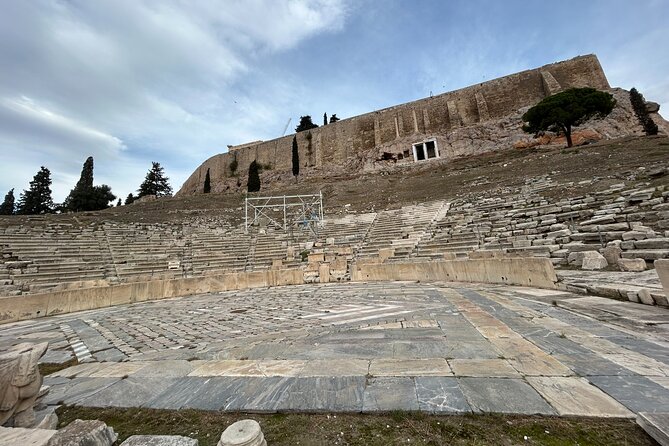
The first major monument is the Theatre of Dionysus, with about 20 minutes devoted to it. This is the place to understand the beginnings of Greek drama and the public role of theatre in Athens.
The guide introduces tragedy and comedy, along with writers such as Sophocles, Euripides, and Aeschylus. Their plays were not private entertainment in a small room. They were performed before the Athenian public, in a setting tied to religion, civic identity, and public life.
I find this a smart first monument because it makes the Acropolis feel human. Before you reach the famous temples, you encounter storytelling, performance, argument, and emotion. The ancient city becomes a place where people gathered to think about power, family, justice, pride, and the gods.
Families may appreciate this stop too. The guide has used quizzes, stories, and small rewards such as candy to keep younger participants involved. That does not guarantee that every child will enjoy a nearly three-hour history walk, but it suggests an effort to make the material active rather than dry.
Odeon of Herodes Atticus and the living memory of Athens
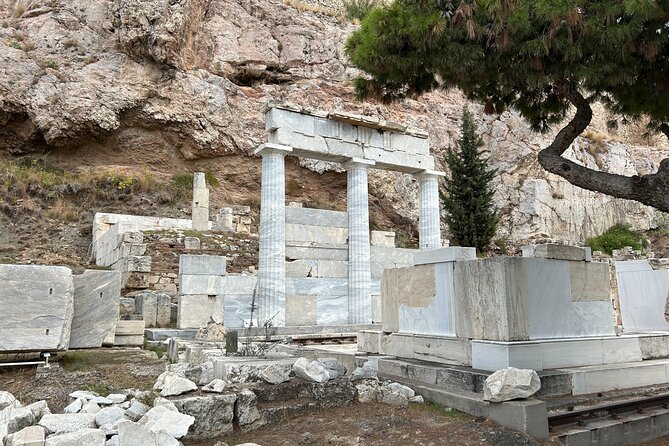
The next stop is the Odeon of Herodes Atticus. The supplied route gives no separate timing for this stop, so treat it as part of the movement up toward the main Acropolis entrance rather than a long standalone visit.
The building was created by Herodes Atticus, a major benefactor and philosopher of the second century AD, in memory of his wife. That detail adds another layer to the hill. The Acropolis was not important only in the fifth century BC. Later generations continued to build near it, honour it, and use it as a symbol.
This is where a good guide can help you read the site across different periods. Athens was invaded, rebuilt, altered, and reused over many centuries. The tour connects ancient Greek, Byzantine, Ottoman, medieval, and later chapters rather than pretending that the Classical period is the whole story.
That wider view is valuable, but it also explains why this tour may feel fuller than a standard monument walk. You are being asked to follow changes across time, not memorize a few famous names.
More Ancient History Tours in Greece
- Acropolis, Parthenon & Athens Old City Heritage Walking Tour
★ 4.5 · 876 reviews - Private Biblical Tour Ancient Corinth & Isthmus Canal from Athens
★ 5.0 · 762 reviews - Athens: Ancient Corinth & Nafplio Full Day Trip with Swim
★ 4.8 · 531 reviews - Athens Skip the Line: Open Air Ancient Greek Theatre Performance
★ 4.5 · 520 reviews
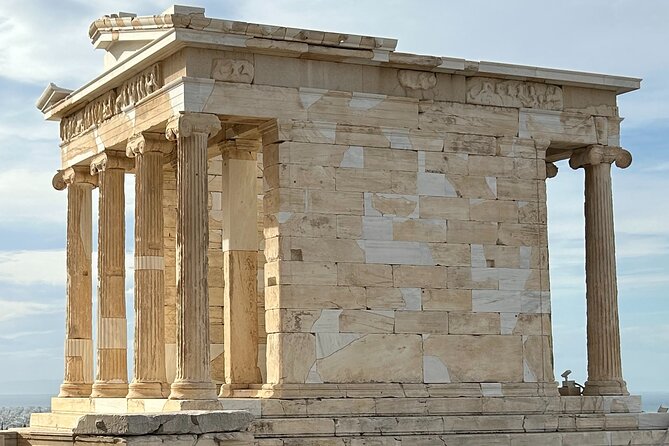
Temple of Athena Nike and the entrance to the sanctuary
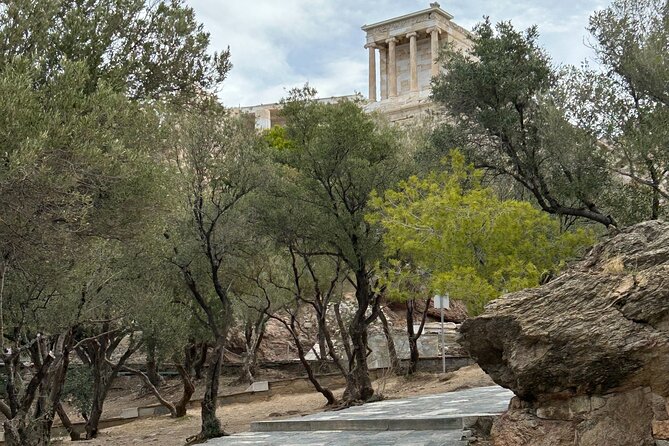
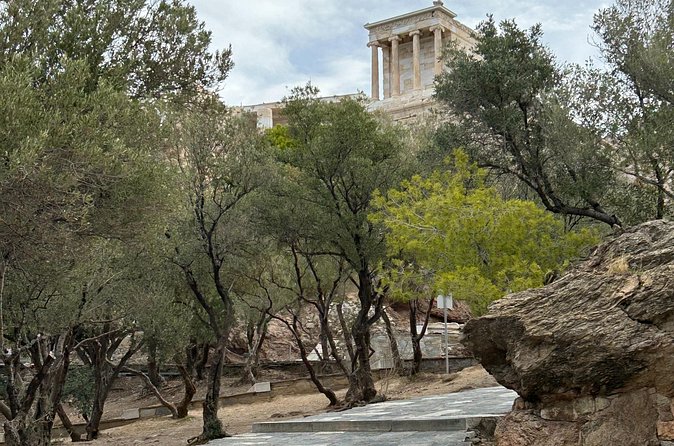
At the main entrance, the route pauses at the Temple of Athena Nike for around 20 minutes. The temple honours Athena Nike, the goddess of victory.
Its position near the entrance is meaningful. You encounter the small temple as you approach the sanctuary, before passing through the monumental gateway. The guide can use this moment to explain how architecture, religion, and civic pride worked together.
The word Nike means victory, but the visit is not presented as a quick vocabulary lesson. The larger point is how the Athenians placed divine protection and public identity into the design of the Acropolis.
This stop also helps you slow down before the main climb through the Propylaea. You will want sturdy shoes and water, since the route includes stairs and uphill walking. Food and drinks are not included, so plan those needs before or after the tour.
Propylaea, the dramatic gateway uphill
The Propylaea receives about 20 minutes. This is the monumental gateway of the Acropolis, and the route takes you up the main stairway toward the inner sanctuary.
The climb is part of the experience. You are not simply arriving at a temple on level ground. The approach creates a change in scale and expectation, with the surrounding hills and Athens opening up as you rise.
The guide uses the view to point out historically important hills and nearby features. This helps you understand the Acropolis as a commanding point within the city, not just a monument isolated behind ticket barriers.
The stairs and uneven surfaces deserve attention. The general information says most participants can take part, and service animals are allowed. One group also had a family member using a wheelchair, with the guide checking the elevator situation and weather to help the visit run smoothly. Still, accessibility can depend on current conditions and the status of the elevator, so anyone with mobility concerns should confirm details before booking.
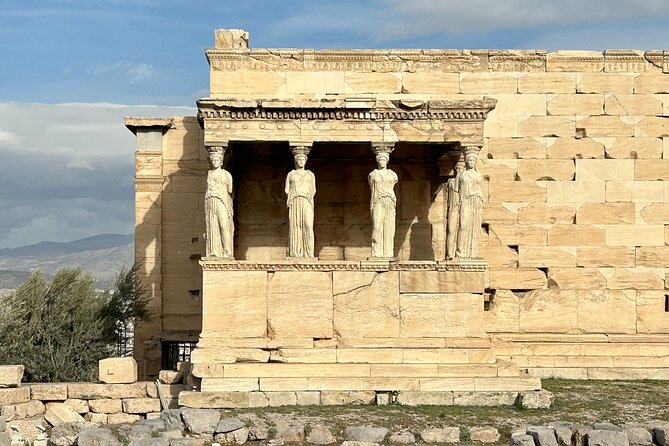
Erechtheion, myths in marble
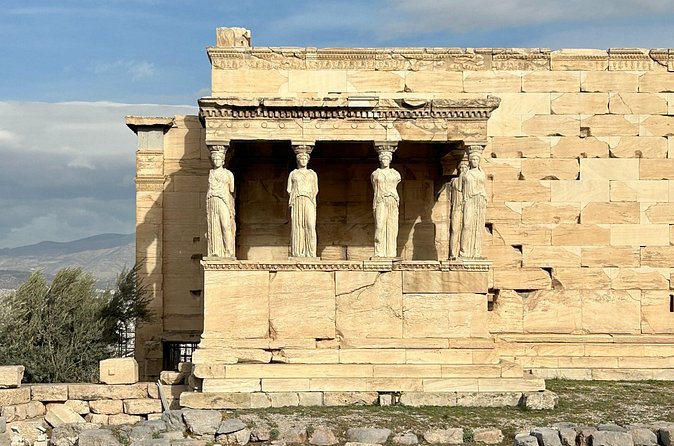
The Erechtheion is the penultimate stop, with about 20 minutes. It is known for its unusual design, its myths and legends, and its famous sculpted figures.
This is a good place for the guide’s storytelling style. The monument is not as instantly recognizable as the Parthenon, but its irregular form invites questions. Why does it look different? Which sacred stories are linked to the site? Why were the sculptures and architectural details handled in this particular way?
The tour brings in mythology without leaving history behind. That balance matters. Greek myths are entertaining, but they also reveal what the Athenians valued, feared, and hoped to explain about their city and its gods.
Engineering is another strength here. The guide has explained how marble pieces were joined and why some lines appear curved even though they look straight from a distance. Such details give you something specific to look for, instead of asking you to admire the building in general terms.
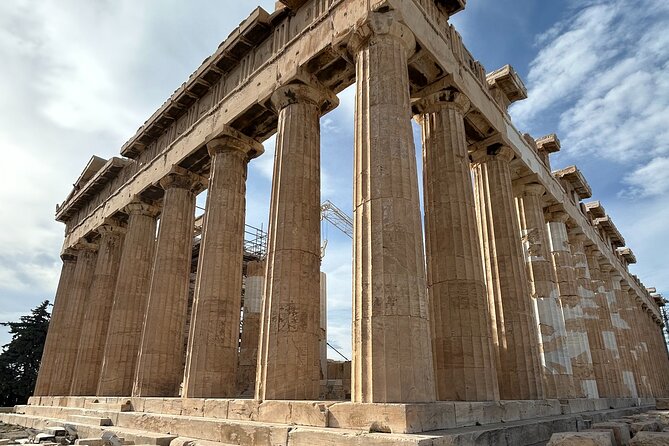
The Parthenon, the final lesson
The final 30 minutes belong to the Parthenon. You finish in front of the temple at the top of the Acropolis hill, at Parthenon, Athens 105 58.
This is the natural climax, but the tour does not treat the Parthenon as a single-symbol photo stop. It presents the building as a gift to Athena, the patron goddess of Athens, and as a major achievement of Classical Greek architecture.
The guide also connects it with the political life of Athens and the idea of the democratic state. You will hear about design, proportion, construction, purpose, and the way the building became a symbol far beyond Greece.
The location gives you the famous views across modern Athens. The contrast is part of the pleasure. You are looking at a contemporary capital from a hill shaped by ancient religion, politics, art, and war.
The tour ends here rather than returning you to the starting point. That is convenient if you want to continue exploring the Acropolis on your own, visit a nearby museum, or walk downhill through the historic center. It also means you should not expect hotel pickup, drop-off, or transport back to your accommodation.
Guide style, group size, and the value of the headsets
The tour is offered in English and uses a licensed local guide who is always a historian or archaeologist. The group can reach 25 people, so this is not a private visit. A maximum of 25 is still manageable, especially with personal earset receivers, but you should not expect constant one-to-one conversation.
Harris is the guide most clearly associated with the experience. His approach combines historical detail with humour, questions, philosophical discussion, and practical help. He has also been praised for pausing to take photos and finding good places for group pictures.
The headsets are more important than they may sound. The Acropolis can be crowded, and you may be several steps away from the guide while looking at a monument. A receiver lets you keep listening without pressing close to the group.
At $36.14 per person, the price is reasonable if admission is included in the option you select. It buys more than entry alone: nearly three hours with a specialist guide, a structured route, and interpretation that can change how you see every monument. Check the booking choice carefully, because admission fees are not included in the option without entry.
Who should book this experience
I would choose this tour if you want context, not just photographs. It is especially suited to people interested in ancient Greece, theatre, mythology, democracy, philosophy, architecture, or the way old ideas continue to shape modern life.
It also works well for families with older children and teenagers who respond to stories, quizzes, and questions. The guide’s energy may help keep the group involved, but the length and uphill route still require patience.
You may prefer a shorter visit if you have limited time, dislike extended commentary, or mainly want to see the Parthenon and move on. The tour is designed for attention and conversation. It is not the fastest way up the hill.
Book ahead if your dates are fixed. The experience is often reserved about 50 days in advance, which signals that popular times may fill early. You receive confirmation at booking, and free cancellation is available up to 24 hours before the start time. If poor weather cancels the experience, you are offered another date or a full refund.
Should you book the Acropolis Historical Tour?
Book it if you want the Acropolis explained by a historian or archaeologist rather than left as a set of impressive ruins. The strongest reasons are the wide opening lesson, the well-ordered route, the Theatre of Dionysus, the engineering details, and Harris’s ability to connect ancient Athens with questions that still matter.
Skip it if you want a brief, quiet, self-guided look or if uphill walking for nearly three hours does not suit you. For history enthusiasts, though, the $36.14 cost is good value when admission is included. You leave with more than photographs of the Parthenon. You leave with a clearer idea of why Athens mattered, and why its arguments about society, art, and public life still follow us.
FAQ
Where does the tour start?
It starts at Dionysiou Areopagitou 17, Athina 117 42, Greece.
Where does the tour end?
The tour ends in front of the Parthenon at the top of the Acropolis hill.
How long does the tour last?
The tour lasts approximately 2 hours and 40 minutes.
What language is the tour offered in?
The tour is offered in English.
Is admission to the Acropolis included?
Admission is included only if you choose the option that includes entry fees. The option without admission does not include the entry cost.
What is included besides the guide?
A licensed English-speaking local guide and personal earset receivers are included. The experience also notes some surprises.
Are food and drinks included?
No. Food and drinks are not included.
Is hotel pickup available?
No. Hotel pickup and drop-off are not included.
How large can the group be?
The maximum group size is 25 participants.
Can I cancel for a full refund?
Yes, if you cancel at least 24 hours before the experience start time. Cancellations made less than 24 hours in advance are not refunded, and changes during that period are not accepted. The tour may also be moved or refunded if poor weather causes cancellation.
Newest history tours we have reviewed in Athens
- The original Christian tour on Paul’s footsteps in Athens and ancient Corinth★ 4.5 · 25 reviews
- Ancient Sparta & Mystras Private Day Tour from Athens★ 5.0 · 52 reviews
- Athens: Combo Ticket for Acropolis & 6 ancient sites★ 3.0 · 21 reviews
- Small-Group Women History in Ancient Greece Walking Tour★ 5.0 · 38 reviews
- Ancient Corinth, Sanctuary of Hera, Blue Lake & Canal from Athens★ 5.0 · 26 reviews
- Half Day Historical Athens City Private Taxi Service Tour★ 5.0 · 79 reviews
- Ancient Agora & Temple of Hephaestus Entrance Ticket★ 3.5 · 22 reviews
- Private Luxury Tour: Marathon – Battle & Run That Changed History★ 5.0 · 30 reviews
Ancient History Tours, compared.
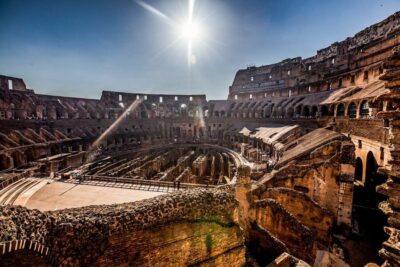
Colosseum: Underground and Ancient Rome Tour
Read our review →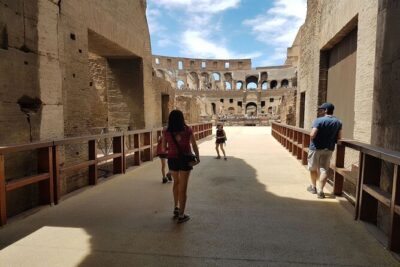
Colosseum & Ancient Rome with Arena Floor Option I Max 6 People
Read our review →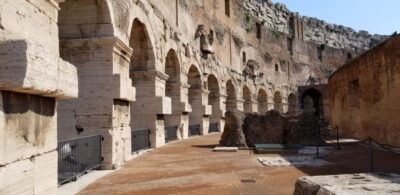
Colosseum, Ancient Rome Tour or AudioGuided Tour
Read our review →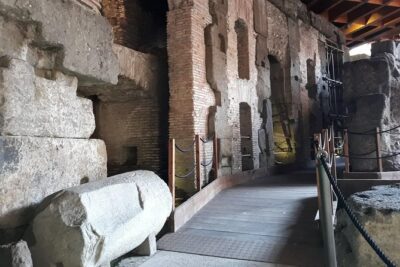
Colosseum Underground & Ancient Rome Guided Tour
Read our review →

Taormina: Ancient Theater Skip-the-Line Ticket & Audio Guide
Read our review →
Discover the Ancient Ruins of Pompeii: Day Trip from Rome
Read our review →
Discover Matera, the ancient city – English tour
Read our review →Browse the lists this tour appears in