
Review · HISTORY TOURS
Baku: Gobustan & Absheron with Mud Volcanoes & Fire
Azerbaijan’s strangest sights sit just beyond Baku: prehistoric carvings, smoking mud cones, a fire temple, and a hillside where flames burn from the ground. This 8-hour outing packs them into one day, giving you a quick but useful introduction to the country’s geology, archaeology, and old fire-worship traditions.
I like the way the route joins two very different parts of Azerbaijan. Gobustan’s rock art gives the day real historical weight, while the mud volcanoes provide the oddball fun. I also like that guides such as Javid, Qaya, Gaya, and Berkay have earned strong praise for their history knowledge, patience, and humor.
The main caution is reliability. Two customers reported being left at the meeting point after a cancellation or no-show, so confirm the departure details before you go. The very low advertised price also does not include the required entrance charges, especially the 30 AZN cash fee for the mud volcanoes.
Key points to know before booking
- Gobustan’s carvings are more than 40,000 years old: You will see images cut into rock, with a guide to explain their place in Azerbaijan’s early human story.
- The mud volcano visit requires a separate 4×4 transfer: A jeep or SUV takes you across rough ground for about 15 minutes.
- Mandatory extra fees change the real cost: Gobustan costs 10 AZN, mud volcanoes cost 30 AZN in cash, and Ateshgah plus Yanar Dag cost 15 AZN.
- The route covers both sides of Baku: You visit the southern coastal area near Bibiheybat, then Gobustan, then the Absheron Peninsula.
- English and Russian guides are available: Guides named Javid, Qaya, Gaya, and Berkay have received especially warm praise for clear explanations and a friendly manner.
- Uneven ground is part of the day: This tour is not suitable for wheelchair users or people with mobility impairments.
Why this day trip works for a first visit to Azerbaijan
I like this tour because it answers a basic question many first-time visitors have: what is Azerbaijan actually like outside Baku? In one day, you see bare rock, soft volcanic mud, ancient carvings, sacred fire, and a natural flame. It is a broad sample rather than a slow study of one place.
The route also gives you useful contrast. Gobustan belongs to the distant human past, while the Absheron stops connect with the religious and industrial identity of modern Azerbaijan. You are not simply moving from one monument to another. You are following the forces that shaped the region: stone, gas, mud, and fire.
The tradeoff is pace. You have about an hour at Bibiheybat, an hour at Gobustan, 25 minutes at the mud volcanoes, an hour for lunch in Baku, 25 minutes at Yanar Dag, and 20 minutes at Ateshgah. That is enough for an introduction and photographs, but not enough for long independent walks or a detailed museum visit.
Other history walks and heritage tours readers book in the world:
- New York City: American Museum of Natural History Ticket
★ 4.5 · 15,447 reviews - History and Hauntings of Salem Guided Walking Tour
★ 5.0 · 14,564 reviews - Colosseum: Underground and Ancient Rome Tour
★ 4.7 · 12,691 reviews
Starting near Baku’s old walls and Bibiheybat
The stated meeting point is Gosha Gala Gapysy, one of the gates near Baku’s Old City. The morning begins with about 20 minutes by bus or coach before the Bibiheybat stop.
Bibiheybat is used as a photo stop, with about an hour assigned to it. The schedule does not promise a full guided visit inside a specific building, so think of this as a scenic and cultural pause rather than a major tour stop. It helps break up the drive and gives you an early look at the setting around Baku.
This first section may be particularly useful if you are staying in the city and want to see more than the central streets. At the same time, the tour is not primarily an Old City tour. The separate Old City walking experience praised for guides such as Javid and Qaya is a different activity, so do not book this excursion expecting a full tour of the Maiden Tower or Shirvanshahs’ Palace.
Reading the ancient carvings at Gobustan
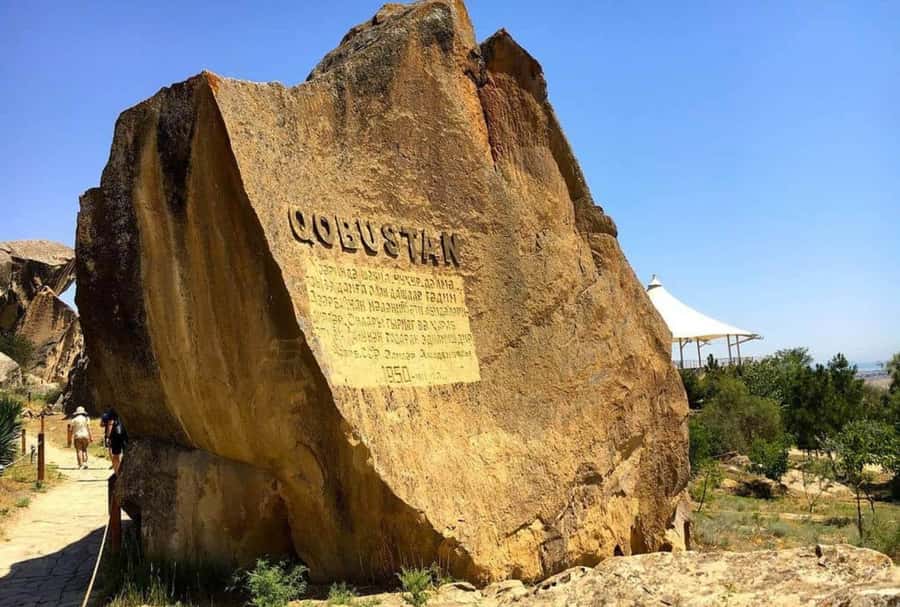
After roughly 40 minutes on the road, you reach the Gobustan Rock Art Cultural Landscape. About an hour is set aside for a visit, guided tour, and photographs.
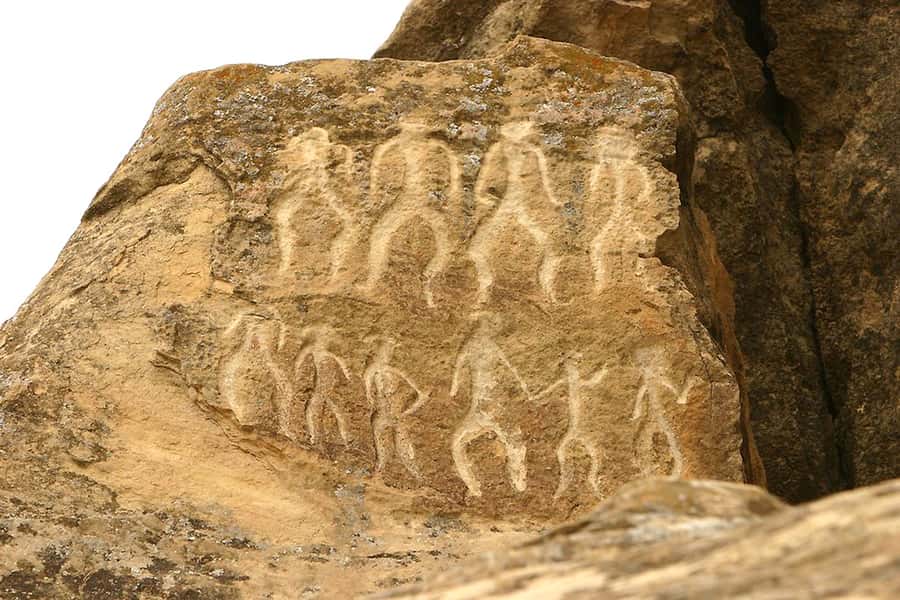
Gobustan is the historical heart of the day. The petroglyphs date back more than 40,000 years, and their simple images offer a direct connection to people who lived in this region long before written records. You will see carvings cut into exposed rock, with scenes and symbols that help show how early communities viewed animals, hunting, movement, and daily life.
I value this stop because it gives context to the rest of the excursion. The mud volcanoes can feel like a curious natural sideshow, but Gobustan explains why this dry terrain matters. The stone is not just scenery. It holds evidence of human activity across an enormous span of time.
One hour is useful but limited. You should have time to walk around the main viewing area and listen to the guide, but you will need to keep moving with the group. Wear shoes with a firm sole. The surface can be uneven, and comfortable footwear matters more here than stylish footwear.
If the guide is as strong as the best reported examples, this is where you will gain the most from joining a group. A good explanation turns a series of weathered marks into something you can understand. Without that context, the carvings may look small or hard to read.
Taking the rough road to the mud volcanoes
A 15-minute jeep or SUV transfer follows the Gobustan visit. This is one of the most distinctive parts of the route, since Azerbaijan is known for having an unusually high concentration of mud volcanoes.
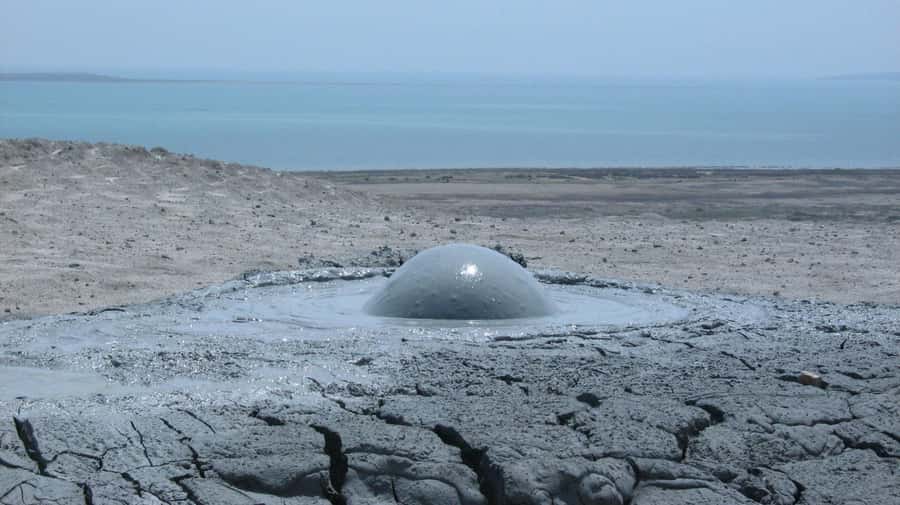
Do not expect a tall mountain built of red-hot lava. Mud volcanoes are low, raw-looking formations where gas and wet sediment push up through the ground. You may see bubbling mud and small cones, creating a scene that feels more like a science experiment than a standard sightseeing stop.
The visit lasts about 25 minutes. That sounds brief, but it suits the setting. There are no long indoor exhibits or formal paths to occupy you. You are there to look closely, take photographs, and listen to the guide explain what is happening under the surface.
Bring an empty bottle if you want to collect a little mud as a souvenir. That tip is unusually practical, although you should make sure collecting it is permitted at the exact spot you visit. The required mud volcano fee is 30 AZN in cash, and it remains due even in rain if the tour goes to the Mud Volcanoes Complex.
Rain changes the plan. Instead of the usual outdoor area, the group is redirected to the complex, but the fee stays the same. This is worth understanding before you book, since wet weather does not make this part free or optional.
Same streets, a different century:
- Lisbon: History, Stories and Lifestyle Walking Tour
★ 4.8 · 10,902 reviews - London Small Group Tour of Historical Pubs
★ 5.0 · 10,422 reviews - Prague: Oldtown, Medieval Underground & Dungeon History Tour
★ 4.3 · 10,277 reviews - Charleston’s Old South Carriage Historic Horse & Carriage Tour
★ 5.0 · 10,023 reviews
Lunch and a reset in Baku
The schedule returns to Baku for a one-hour break and lunch. Food is not listed as included, so plan to pay for your own meal.
This pause is practical. The morning includes a fair amount of driving and outdoor walking, while the afternoon continues to the Absheron Peninsula. Use the hour to eat, refill your water, and prepare for the final fire-themed stops.
One bottle of water is included, but you may want more for a full day outside. The tour begins at a city meeting point and includes several transfers, so carrying a small day bag is sensible. Keep cash accessible for the mud volcano charge and other entry fees.
Seeing the flames at Yanar Dag
After lunch, the bus travels for about 30 minutes to Yanar Dag, or Burning Mountain. The stop includes a guided visit, photographs, and about 25 minutes on site.
Yanar Dag is a natural gas fire that burns at the ground. It is one of those places where the explanation matters as much as the sight itself. The flames are not a staged performance. They reflect the gas beneath this part of the Absheron Peninsula, a region long associated with fire.
The short visit is enough to see the flames and hear the story behind them. You should not expect a long mountain walk. The appeal is concentrated: arrive, look closely, take photographs, and understand why natural fire became such a powerful part of local belief and identity.
The entrance fee is 15 AZN for Ateshgah and Yanar Dag together, according to the stated pricing. Confirm the exact collection method with your guide, since the general instructions say standard entry fees are paid on site unless you select an option that includes them.
Understanding fire worship at Ateshgah
The final major stop is Ateshgah of Baku, reached after another 30-minute bus ride. You have about 20 minutes for a guided visit and photographs.
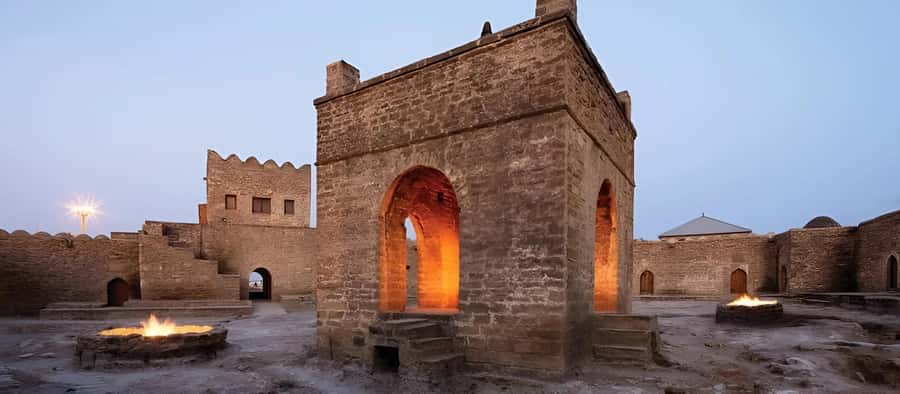
Ateshgah is an ancient fire temple associated with Zoroastrian traditions and other fire-worship practices. Its stone courtyard and central fire setting help explain why people traveled to this peninsula, where natural gas once made flames appear almost miraculous.
Twenty minutes is not long. You will get the basic story and a look at the structure, but you may not have much time for quiet examination. This is another stop where the guide’s ability to explain history matters. The best guides turn a compact visit into a clear lesson rather than rushing through names and dates.
The pairing of Ateshgah and Yanar Dag is the strongest cultural idea in the itinerary. At Yanar Dag, you see nature producing fire. At Ateshgah, you see how people built beliefs and places of worship around that phenomenon. The two stops make more sense together than they would separately.
What the guide can add to the day
The guide is the most important variable in a tour like this. The route itself is fixed, but the quality of the explanations can determine whether the day feels informative or like a long bus ride with quick stops.
Several guides have drawn especially strong praise. Javid is described as offering detailed explanations of Baku’s past. Qaya is noted for patience, care, humor, and a broad grasp of Azerbaijan’s history and government. Gaya has been praised for making a solo booking feel like a private outing, while Berkay is remembered for showing visitors impressive sites.
Those names do not guarantee who will lead your departure. Still, they show the kind of guide you should hope for: someone who can connect prehistoric rock art, underground gas, fire worship, and present-day Azerbaijan without turning the day into a lecture.
English and Russian are the stated guide languages. If you need a particular language or want a private guide, ask about availability before booking.
The real price and what you receive
The advertised price is $2.50 per person, which looks almost too low for an 8-hour outing with transport and a professional guide. The reason is that entry fees are separate.
Your required additional charges are:
- Gobustan: 10 AZN
- Mud Volcanoes: 30 AZN cash
- Ateshgah and Yanar Dag: 15 AZN
That totals 55 AZN in entrance charges per person, before lunch and personal spending. The mud volcano fee is the largest surprise, especially because it is mandatory and remains payable in rainy conditions when the route changes to the complex.
Even after adding those costs, the excursion can offer good value if you want to see all four major sites in one day. Transport between far-flung locations would otherwise take time and planning, and the guide provides historical and geological context. The value is weaker if you prefer slow sightseeing, dislike fixed schedules, or want to spend a full day at Gobustan alone.
An option with entrance fees included is available. It may cost more at booking, but it simplifies the day and reduces the need to carry exact cash. That option also includes a free Baku Old City tour, which could improve the overall value if you want both the city and the surrounding sites.
Who should book this excursion
I would choose this tour if you have limited time in Baku and want a broad first look at Azerbaijan. It suits curious adults, first-time visitors, and anyone interested in archaeology, geology, religion, or unusual natural sights.
It is also a good fit if you prefer having transport arranged. Gobustan, the mud volcanoes, Yanar Dag, and Ateshgah are spread across different areas, and the day would take more effort by public transport or separate taxis.
I would hesitate if you have mobility limits. The tour is specifically not suitable for wheelchair users or people with mobility impairments, and Gobustan and the mud volcano area involve uneven ground. I would also hesitate if you want an intimate private experience, unless you request a private guide.
Finally, confirm your pickup and meeting instructions. Two customers reported serious communication problems involving cancellations or a guide who did not arrive. Those reports are not proof that every departure will have trouble, but they are enough reason to check your messages and contact the provider before setting aside the day.
Should you book the Gobustan and Absheron tour?
Book it if you want the greatest variety in one day: prehistoric carvings in the morning, strange mud formations, then natural flames and a fire temple. I especially like the way Yanar Dag and Ateshgah explain each other, while Gobustan gives the excursion a strong historical anchor.
Do not book it for a slow, detailed visit. The schedule is tight, the main stops are brief, and the real price is much higher than the headline fare once entry charges are added. Bring sturdy shoes, cash, water, and an empty bottle for mud, then confirm the departure details before you go. With those points understood, this is an efficient and unusual introduction to the world beyond Baku.
FAQ
How long does the tour last?
The tour lasts 8 hours.
Where does the tour start?
The stated starting location is Gosha Gala Gapysy in Baku.
Is hotel pickup included?
The experience is described as including hotel pickup from Baku, although the listed starting location is Gosha Gala Gapysy. Confirm the exact pickup arrangement when booking.
Which languages are available?
Live guides are available in English and Russian.
Are entrance fees included?
Standard entrance fees are not included. You can select an option with entrance fees included for added convenience.
How much are the listed entrance fees?
Gobustan costs 10 AZN, the mud volcanoes cost 30 AZN in cash, and Ateshgah plus Yanar Dag cost 15 AZN.
Is the mud volcano fee required in rainy weather?
Yes. The 30 AZN fee remains required when rain redirects the visit to the Mud Volcanoes Complex.
Is lunch included?
No. Lunch is taken during a one-hour break in Baku and is not listed as included.
What should I wear?
Wear comfortable, sturdy shoes because the tour includes uneven ground.
Is the tour suitable for wheelchair users?
No. The experience is not suitable for wheelchair users or people with mobility impairments.
Newest history tours we have reviewed in the world
- Bilbao Historical Tour in small group★ 4.7 · 52 reviews
- Bologna: Street Food Tour in the Historic Center★ 4.8 · 125 reviews
- CEBU: Cebu City Heritage and Uphill Guided Tour★ 4.2 · 31 reviews
- Bishkek : City Tour (History, Architects, Statues & Culture)★ 4.9 · 54 reviews
- Blenheim: Omaka Aviation Heritage Centre Admission Ticket★ 4.9 · 31 reviews
- Berlin: Nazi History Walking Tour★ 4.8 · 33 reviews
- Best of Baku: 4-Hour City Tour Historic and Modern Landmarks★ 4.7 · 63 reviews
- Belfast: Best of Belfast History, Culture & Art Walking Tour★ 4.9 · 158 reviews