
Review · NETHERLANDS HISTORY TOURS
Rotterdam: Highlights, Gems, Architecture & History Walk
Rotterdam makes its strongest impression through contrast: old harbor basins beside daring new buildings, wartime loss beside ambitious rebuilding, and quiet streets leading to some of Europe’s most unusual architecture. This walk connects those pieces with a local guide, usually Yoreh or Elmer, rather than leaving you to figure out the city’s story one building at a time.
I especially like the use of large photo cards showing Rotterdam before, during, and after its destruction. I also like that the tour ends inside Markthal, where you can eat and keep exploring. The main catch is physical: five kilometers, about 11,000 steps, stairs, and long periods on your feet make good shoes essential.
Key points at a glance
- A local view of a rebuilt city: Learn how Rotterdam grew from a settlement by the Rotte River into a major port, then rebuilt after WWII.
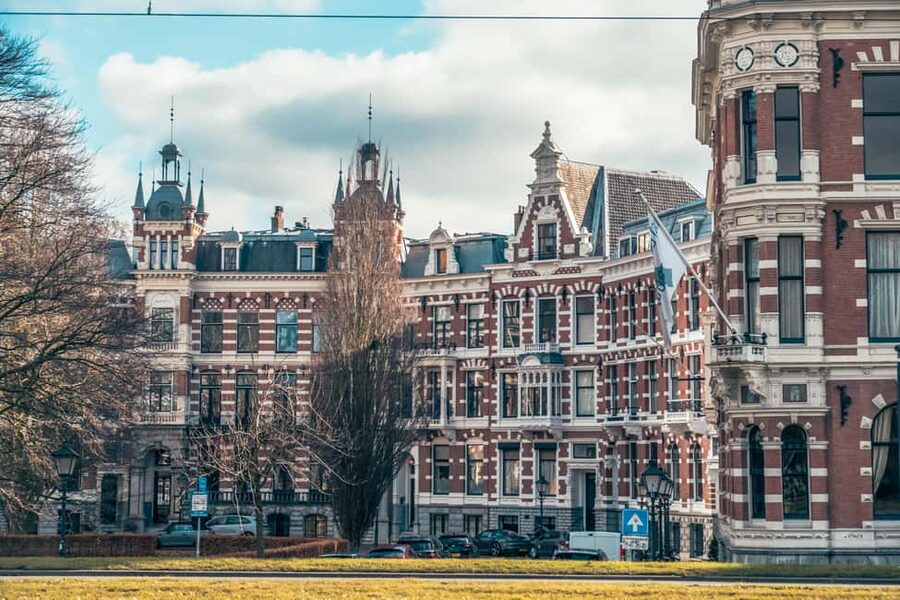
- Architecture across three eras: Compare older harbor buildings with current projects and plans for Rotterdam’s future.
- Big sights plus quieter corners: See the Cube Houses, Markthal, Erasmus Bridge area, Museum Quarter, and lesser-known city spots.
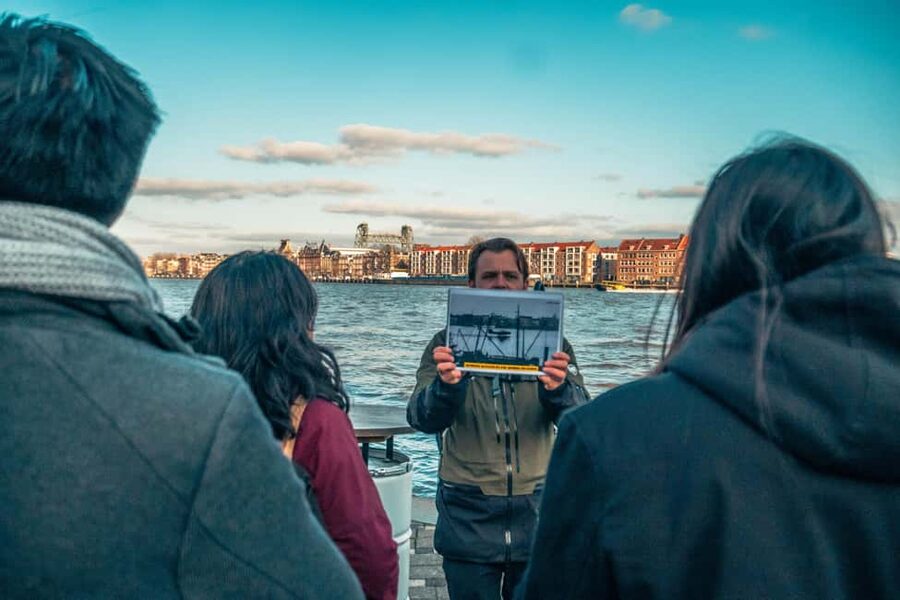
- Useful visual storytelling: Yoreh’s A3 images help you picture streets and buildings that no longer exist.
- A practical first-day tour: Get photo locations, restaurant ideas, museum suggestions, and help understanding the city’s layout.
- A brisk but flexible walk: The two-hour route gives a broad introduction; the three-hour version adds more stops and fuller explanations.
Why Rotterdam makes sense on foot
Rotterdam is not a city that reveals itself in one postcard view. Its center was heavily damaged during WWII, and much of what you see today came from a long process of rebuilding and reinvention. That can make the city exciting, but it can also leave first-time visitors wondering how the pieces fit together.
This tour gives you that framework. You begin with Rotterdam’s origins in the 13th century, when a settlement developed near the Rotte River. From there, the story moves toward shipping, trade, harbor expansion, wartime destruction, and the modern city’s taste for experimental design.
I like this approach because the architecture is not treated as a parade of odd-looking buildings. You learn why Rotterdam has such a modern center, how its port shaped daily life, and how planners used the postwar period to try ideas that older Dutch cities could not easily fit into their historic cores.
The guide also brings personal knowledge. Yoreh grew up in Rotterdam and shares local memories alongside dates and facts. Elmer also leads the walk and has been praised for answering questions and keeping the route moving at a comfortable pace. The result is less like a formal lecture and more like an informed conversation while you cross the city.
More History Walking Tours in the Netherlands
- Amsterdam: Haunted History and Ghost Walking Tour
★ 4.5 · 488 reviews - Amsterdam: Historical Highlights Walking Tour with Tasting
★ 4.6 · 381 reviews - Amsterdam History Walking Tour
★ 5.0 · 281 reviews
The route from the Museum Quarter to the harbor
The exact meeting point depends on the option you book, with the listed starting choices connected to the Vaimoo deelfietsstation at Melkkoppad. Check your confirmation carefully before setting out, since the start is not presented as one fixed place for every departure.
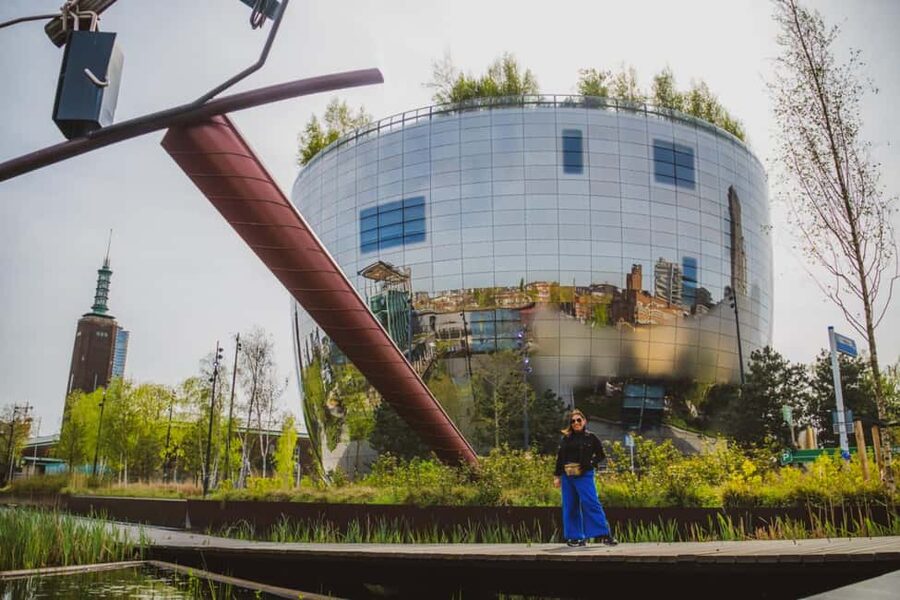
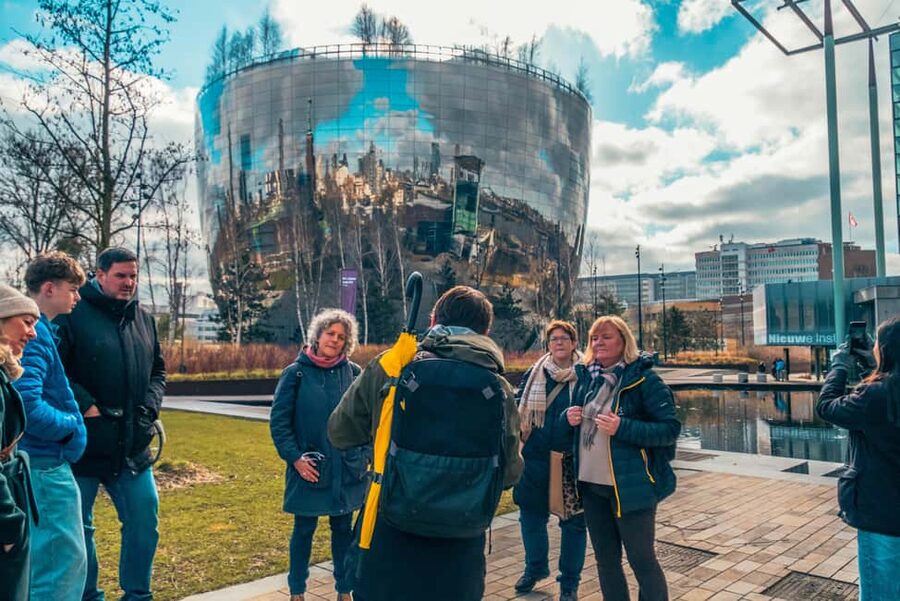
One early landmark is Depot Boijmans Van Beuningen, the striking art storage building near Rotterdam’s Museumpark. The tour passes by rather than taking you inside. Its mirrored exterior and unusual shape fit the city’s modern character, while the surrounding Museum Quarter gives you a sense of Rotterdam as a center for art, design, and culture.
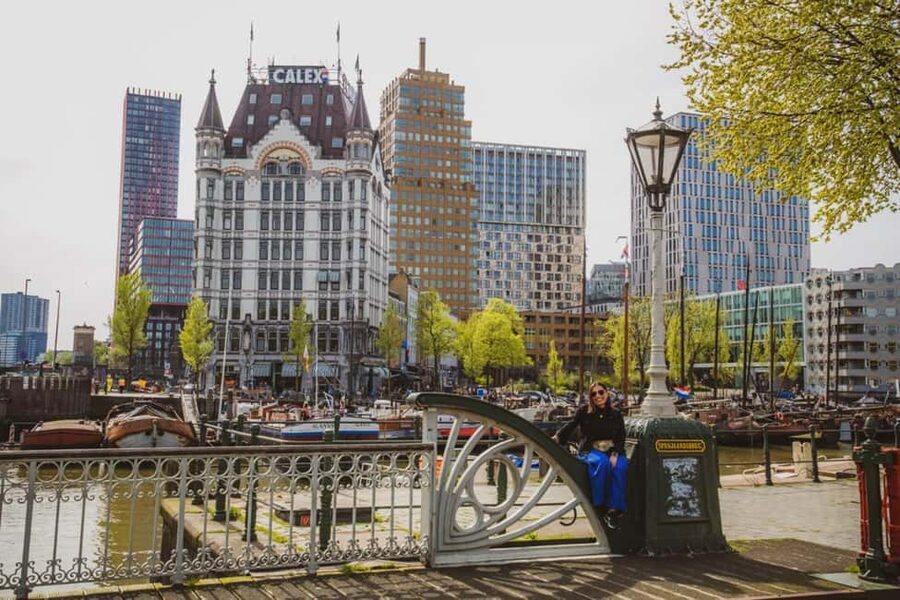
You then move toward Veerhaven. This is a useful contrast with the sharper modern forms elsewhere on the route. The harbor setting helps explain Rotterdam’s maritime identity, and it gives you a quieter visual pause before the route turns toward larger urban spaces.
The walk continues past the Erasmus Bridge, one of Rotterdam’s best-known symbols. You do not spend the tour crossing every major landmark at length, so think of this as an orientation route rather than a series of interior visits. The bridge provides strong skyline views and a clear reminder that Rotterdam’s architecture is tied to movement, water, engineering, and trade.
At Leuvehaven, the maritime story comes into focus. The route allows about ten minutes here, and the district helps connect the city’s past as a port with its current public spaces. You will hear more about the Maritime District and the Shipping Quarter, areas where waterfront history and new construction sit close together.
From maritime Rotterdam to the Cube Houses
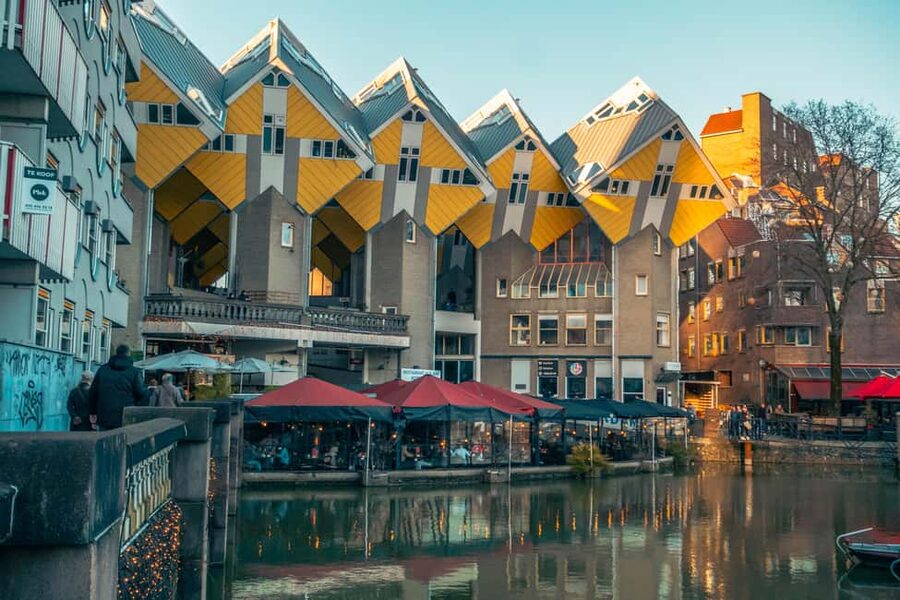
The walk through the Maritime District leads toward Oude Haven, or Old Harbor. This is one of the most useful stops for understanding Rotterdam’s layers. Historic harbor surroundings sit near some of the city’s boldest modern buildings, so you can see the old and new without needing a museum display to explain the contrast.
The Cube Houses are the route’s most obvious architecture stop. Their tilted yellow forms are playful, but the guide also explains the ideas behind them and what it is like to use buildings designed around such unusual angles. The tour walks through the Overblaak area, while entry inside a cube can be done afterward, about a one-minute walk away.
That distinction matters. You should not expect this experience to include an interior visit to the Cube House. If you want to see the inside, plan a little extra time after the tour and check the separate admission details yourself.
The Overblaak area is also a good place for photographs. The guide points out useful angles and can help with pictures, a small service that is especially handy for solo visitors or couples who want a photo together. One solo participant specifically appreciated the guide waiting while photos were taken, so the pace is brisk but not meant to be a forced march.
Markthal is more than the finish line
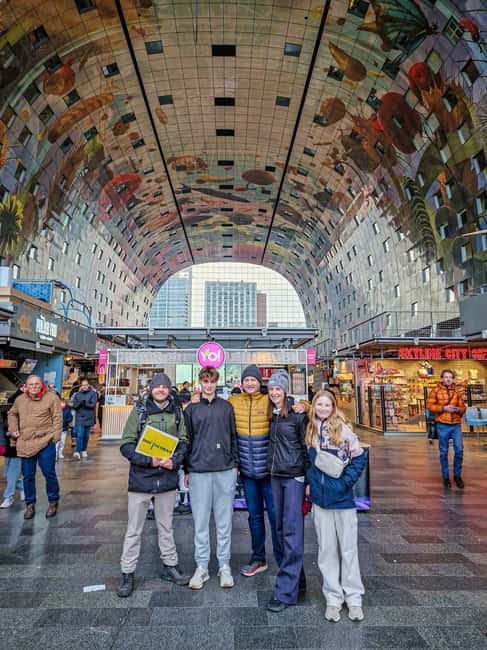
The final stop is Markthal, the large covered market near the Cube Houses. Its colorful interior artwork has led many people to compare it with a modern version of the Sistine Chapel, though the comparison is best understood as a quick way to describe its scale and visual impact.
The tour visits Markthal rather than simply stopping outside. Your guide offers suggestions about where to eat inside, making the finish useful as well as scenic. After several hours on foot, having food options at the end is a practical touch, not just a grand finale.
I would save your appetite for this point. The tour includes a Dutch stroopwafel partway through, and some guides have also added local treats such as an oliebol in seasonal settings. That snack helps, but it does not replace lunch. The tour ends in a place where you can choose your next meal without needing another transfer.
Markthal is also a good launch point for the rest of your day. You can return to the Cube Houses, continue exploring the surrounding center, or use the guide’s suggestions for museums, restaurants, shopping, and photo locations.
More Architecture and Landmark Tours in the Netherlands:
- Venice: St. Mark’s Basilica Guided Tour & VR History Intro
★ 3.9 · 4,880 reviews - Venice’s Best: Basilica, Doge’s Palace, Gondola & History Gallery
★ 4.5 · 2,478 reviews - Córdoba: Skip-the-Line Great Mosque-Cathedral History Tour
★ 4.7 · 1,690 reviews - Pantheon Elite Guided Tour – Rome’s Iconic Ancient Temple
★ 5.0 · 1,447 reviews
The history is strongest when it reaches WWII
Rotterdam’s wartime story is a major reason to choose this walk over a simple architecture outing. The bombing and German invasion changed the city so completely that the modern center cannot be understood without discussing what was lost and how residents had to rebuild.
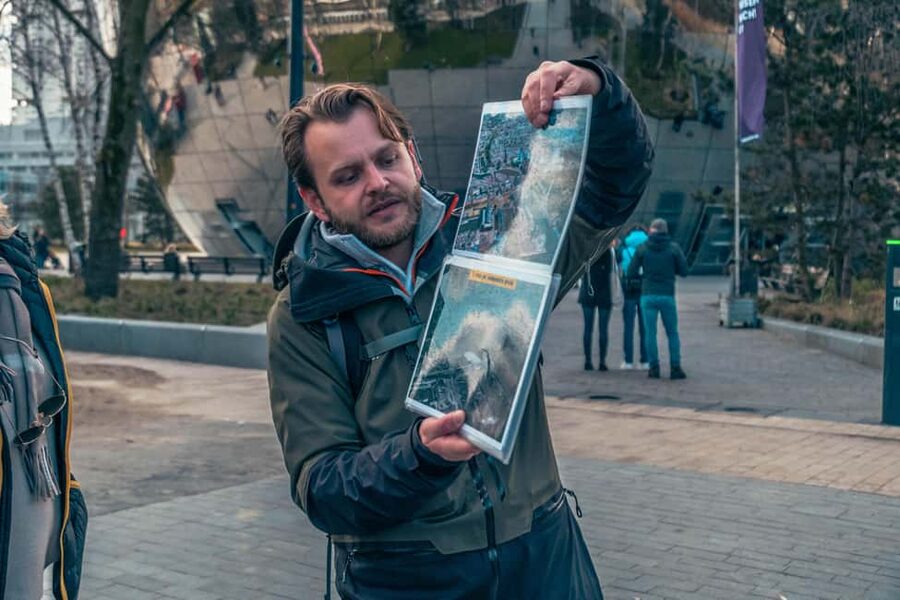
The tour does not treat WWII as a brief date in a timeline. Guides explain the human difficulty of the period and show visual material that helps you picture Rotterdam before the bombing. The A3 sheets are especially useful here, since they let you compare past and present while standing in the city itself.
This part may be serious, but it gives the later architecture more meaning. The glass towers, wide streets, experimental housing, and future plans are not random signs of a city trying to look modern. They are also the result of a city forced to make new choices after enormous destruction.
Yoreh’s storytelling style is one of the strongest features of the experience. He mixes historical facts with personal memories, local quirks, and humor, while still explaining the difficult parts plainly. The information is supported by photographs, maps, and other visual material rather than relying only on spoken description.
Two hours or three hours?
The two-hour version works well if you want a clear introduction before exploring on your own. You will get the main idea of Rotterdam’s origins, wartime change, architecture, harbor districts, Cube Houses, and Markthal, but the route and explanations are necessarily tighter.
Choose three hours if you want Rotterdam to make more sense as a whole. The longer option goes farther into the core of the city, gives the guide more time for stories and visual comparisons, and leaves room for questions. It is the better choice if you care about architecture, urban planning, or WWII history.
The longer route is not simply three hours of standing at famous buildings. You cover about five kilometers and keep moving between districts. There are sitting opportunities at selected locations, plus a restroom break around the middle, but you should still expect a steady pace.
This is not the right pick if you have foot, hip, or back problems, or if you are highly pregnant. The route is wheelchair accessible, and stairs or steps can be avoided, with an accessible restroom available. Still, the general note about standing and walking matters. Accessibility here means the route can be adapted, not that it is an effortless ride.
What the guide adds that a map cannot
A map can show you where Markthal, Oude Haven, and the Erasmus Bridge are. It cannot explain why they are together in the same story. That is where the local guide earns the $48 price.
The strongest part of Yoreh’s method is the mix of past, present, and future. You hear about the city’s origins and wartime damage, see the buildings that define Rotterdam now, and learn about planned developments. That forward-looking angle suits Rotterdam, a city still testing new ideas in architecture and urban planning.
The guide also gives practical help that has value beyond the walk:
- Suggestions for museums to visit later
- Food and drink ideas for the rest of your stay
- Photo locations and useful angles
- Links or location tips that help you return to places afterward
- Answers about Rotterdam’s history, buildings, culture, and daily life
This makes the tour especially helpful early in a visit. You finish with a mental map, a list of possible follow-up stops, and a clearer sense of which districts deserve more of your time.
Small group size adds to that benefit. It allows questions and some adjustment around your interests. One booking may even run with a single person during a quiet period, though you should not assume every departure will be private.
Is $48 fair for the experience?
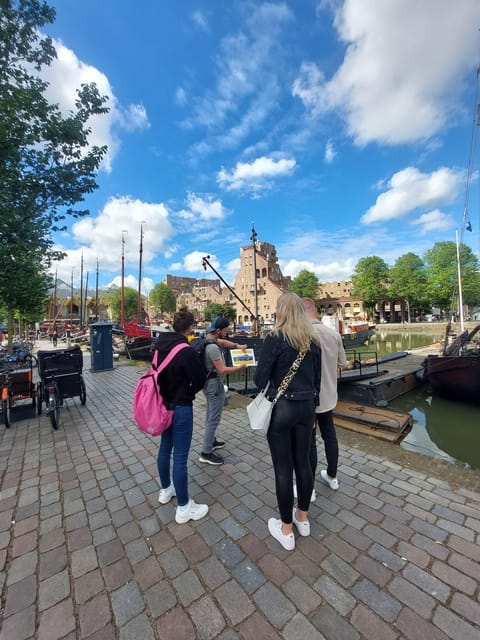
At $48 per person, this costs more than a casual free walking tour, but the comparison is not quite even. You are paying for a small-group format, a local guide, prepared visual material, a snack, a long route through several districts, and advice that can shape the rest of your visit.
The value is strongest if you are interested in architecture or want a full city orientation in one morning or afternoon. A separate architecture walk, history tour, and restaurant consultation could easily take more time and cost more.
The value is weaker if you only want quick photos of the Cube Houses and Markthal. You will spend up to three hours walking and listening, with limited time for entering attractions. If your priority is indoor art, a museum visit may suit you better.
Free cancellation up to 24 hours before the start and reserve-now, pay-later booking make the price easier to manage when your plans are still shifting. Still, the most important investment is your energy. Wear proper walking shoes and dress for Rotterdam weather.
Who will enjoy this Rotterdam walk most?

I would recommend it to first-time visitors who want context before choosing their own museums and neighborhoods. It is also a strong fit for architecture fans, history readers, photographers, couples, solo visitors, and families with older children.
The route can hold the attention of teenagers and older children when the guide keeps the stories moving. A family with children aged 12 and 16 found the three-hour format engaging, but younger children may find the distance and standing harder.
English and Dutch are offered. The guides are comfortable answering questions in English, and Yoreh’s English has been praised as clear and fluent. If you prefer a slow, stop-heavy walk with frequent café breaks, this may feel too active.
Should you book it?
Book this tour if you want Rotterdam explained as a living city, not just photographed as a collection of famous buildings. The strongest reasons are the WWII context, the visual before-and-after material, the local stories from Yoreh or Elmer, and the useful food and sightseeing advice at the end.
Choose the three-hour option if you have the energy and want the fullest picture. Choose two hours if your schedule is tight or you mainly need orientation. Either way, go early in your stay, wear good shoes, and leave space afterward for food at Markthal or a return visit to one of the places you have just learned to see differently.
FAQ
Where does the Rotterdam walking tour start?
The meeting point can vary by the option booked. The listed starting choices are connected with the Vaimoo deelfietsstation at Melkkoppad, so check your booking details for the exact meeting point.
How long does the tour last?
You can choose a two-hour or three-hour version. The two-hour tour gives a broad overview, while the three-hour route offers more detailed stories and additional exploration.
Which languages are available?
The tour is offered in Dutch and English.
Who guides the tour?
The listed local guides include Yoreh and Elmer. Yoreh is a Rotterdam native who shares local stories, historical context, and practical advice about the city.
What landmarks are included?
The route passes Depot Boijmans Van Beuningen, Veerhaven, Erasmus Bridge, Leuvehaven, the Maritime District, Oude Haven, and the Cube Houses. It visits Markthal.
Does the tour go inside a Cube House?
The tour walks through the Cube Houses area at Overblaak. Visiting inside a Cube House is possible after the tour, about a one-minute walk away, but it is not part of the walking route itself.
How much walking is involved?
Expect about five kilometers and roughly 11,000 steps. The tour includes some stairs and longer periods of standing, with sitting opportunities at selected locations and a restroom break halfway.
Is the tour wheelchair accessible?
Yes. The route is wheelchair accessible, and stairs or steps can be avoided. A wheelchair-accessible restroom is available.
What is included in the price?
The price includes the local guide, small-group format, visual photo material, a Dutch stroopwafel halfway through, restroom access during the route, photo tips, and suggestions for eating at Markthal.
Newest history tours we have reviewed in the Netherlands
- Private Guided Walking Tour Historical Dordrecht★ 5.0 · 19 reviews
- Amsterdam: Luxury Canal Cruise with Historic VR Experience★ 5.0 · 305 reviews
- Amsterdam Walking Tour: Urban Legends & History with local guide★ 5.0 · 39 reviews
- Guided Walking Tour Amsterdam – Legends, History & Ghost Stories★ 5.0 · 28 reviews
- LGBTQI+ History Tour of Amsterdam★ 5.0 · 123 reviews
- Historical Walking Tour, private with local Dutch guide★ 5.0 · 23 reviews
- Anne Frank’s Amsterdam Jewish History WWII Exclusive Guided Tour★ 5.0 · 18 reviews
- Amsterdam Haunted History and Ghost Walking Tour★ 5.0 · 47 reviews
Architecture & Landmark Tours, compared.
St. Mark’s Basilica Guided Tour & VR History Intro
Read our review →
Venice’s Best: Basilica, Doge’s Palace, Gondola & History Gallery
Read our review →
Córdoba: Skip-the-Line Great Mosque-Cathedral History Tour
Read our review →
Pantheon Elite Guided Tour – Rome’s Iconic Ancient Temple
Read our review →
Abu Dhabi Grand Mosque, Palace, and Heritage Village
Read our review →
Chicago in a Day: Food, History & Architecture Walking Tour
Read our review →

Colosseum Special Access Tour, with Ancient Temples & Tombs
Read our review →Browse the lists this tour appears in