
Review · ITALY HISTORY TOURS
Historic Shops in Genoa: Tour Through Tradition and Flavours
Genoa’s old shops are the real attraction here. You stroll through the historic center, pausing at botteghe storiche, shops and workshops that have operated for at least 70 years, with some carrying on for more than two centuries. The stories connect food, craft, family businesses, and the monuments around them.
I like the way this tour joins local food with Genoa’s streets, rather than treating the Old Town as a parade of famous buildings. I also like the included product from one of the shops, which gives you a small taste of the city instead of only a lecture about it.
The main caution is that many shops are viewed from outside, and opening hours can affect the route. One recent experience found several businesses closed and felt the guide lacked preparation, while other feedback praised a friendly, well-informed guide. Go for the setting and subject, but allow for some variation.
Key points to know before booking
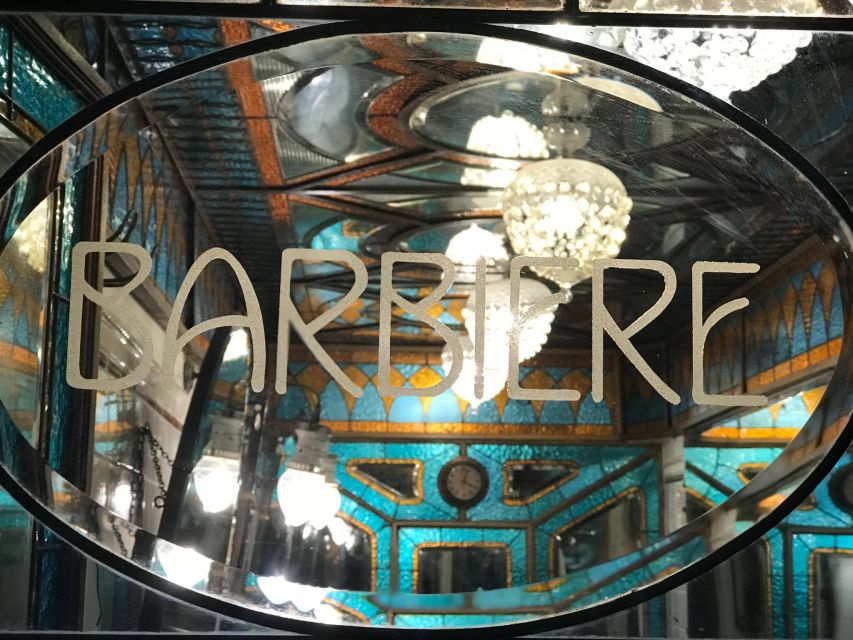
- Historic shops with at least 70 years of activity: See the old businesses and artisan workshops that give Genoa’s center much of its character.
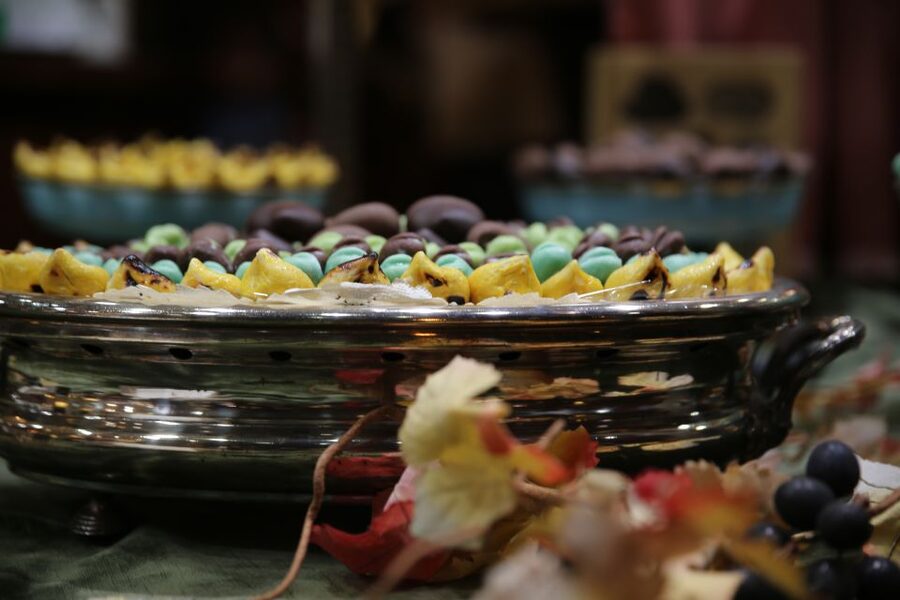
- A food taste is included: One participating shop provides a product during the walk.
- Monuments provide the backdrop: The tour makes quick stops at important Old Town sights while explaining nearby shops and stories.
- Two languages are used together: The guide leads in both English and Italian.
- Some visits are exterior only: You may admire several businesses from the street rather than go inside.
- The route takes 2 to 2.5 hours: It is a compact way to add local traditions to a day in Genoa.
Why Genoa’s old shops make a better walk than a standard sightseeing loop

Genoa is easy to reduce to grand palaces, harbor views, and narrow lanes. This walk adds the human scale. Instead of looking only at stone facades, you learn how shops and workshops kept working in the same urban setting for decades.
The term botteghe storiche refers to historic shops and artisan workshops active for at least 70 years. In Genoa, some have lasted for more than 200 years. That time span matters because these places show continuity in a practical way: a food business still serving local tastes, a craft shop still linked to a trade, or a family-run storefront still occupying a familiar corner.
I like that the tour does not treat the businesses as isolated curiosities. The guide links them with nearby monuments and streets, so the walk has two layers. You see the grand public face of Genoa, then hear how ordinary commerce grew around it.
You should also keep your expectations in the right place. This is not a long series of private shop visits. The description makes clear that a selection of historic businesses can be admired from the outside. The value comes from the explanations, anecdotes, and local flavor, not from guaranteed access to every interior.
More History Tours in Italy:
- Colosseum: Underground and Ancient Rome Tour
★ 4.7 · 12,691 reviews - Rome: Colosseum with Arena, Roman Forum and Palatine Guided Tour
★ 4.0 · 5,598 reviews - Venice: St. Mark’s Basilica Guided Tour & VR History Intro
★ 3.9 · 4,880 reviews
Starting at Via Garibaldi 12red
The meeting point is the Tourist Information Centre at Via Garibaldi 12red, 16124 Genova. Starting here places you in the historic center, close to one of the city’s best-known streets and its important buildings.
The walk then moves through the Old Town and other areas of Genoa. Exact stops are not fixed in the information provided, so you should not book this expecting a published, door-by-door itinerary. The selection of shops can depend on the day, the route, and which businesses are open.
That flexibility is useful in a living city, but it has a tradeoff. You may pass an especially interesting storefront without entering. A recent experience found several shops closed, so opening hours are worth keeping in mind when you decide how much of your day to devote to this activity.
The meeting point is central enough to pair with other sightseeing. Since the tour lasts 2 to 2.5 hours, it can fit into a morning or afternoon, though you should avoid scheduling something with a tight departure immediately afterward.
From monuments to working storefronts
The tour includes quick stops at important monuments in the Old Town. These are not presented as a full monument-by-monument sightseeing tour. Instead, they help explain the setting around the historic businesses.
That approach suits Genoa. The city’s old center is best understood by moving through it, not by viewing each attraction in isolation. A monument can explain the status of a neighborhood, while a nearby shop shows how that neighborhood functioned in daily life.
You can expect the guide to point out curious stories and anecdotes connected with both the monuments and the shops. Those details are likely to be the most useful part of the walk if you have already seen the main sights and want a better sense of how the city worked.
The stops also give the route variety. You are not listening to a food talk in one place for two hours. You move between streets, historic facades, business traditions, and small pieces of local culture.
The food and craft stops that give the walk its flavor
The most specific feedback about the route points to a specialist in fried food at the port and a maker of marine clothing. Those examples show the range of the experience. It is not limited to one kind of gourmet shop or a simple tasting crawl.
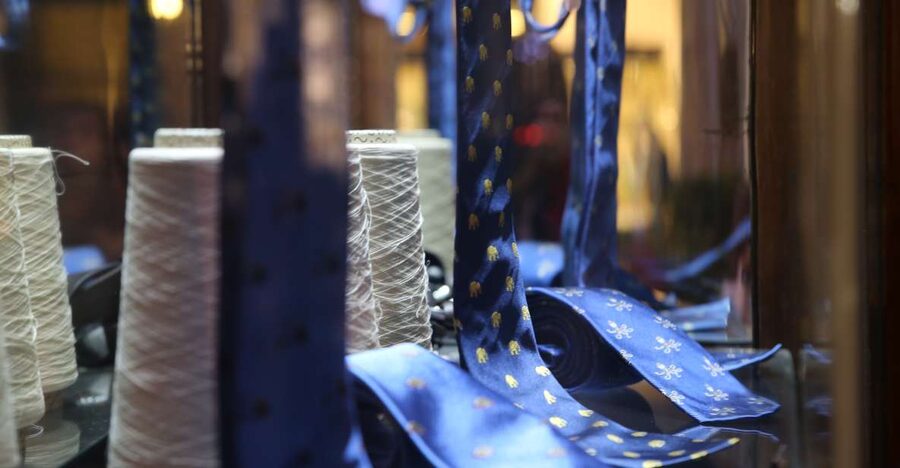
A fried-food specialist connects the walk to Genoa’s port culture and everyday eating. A marine clothing workshop points toward the city’s long relationship with the sea. If these businesses are part of your route, they add a useful sense of place because they relate to work as well as taste.
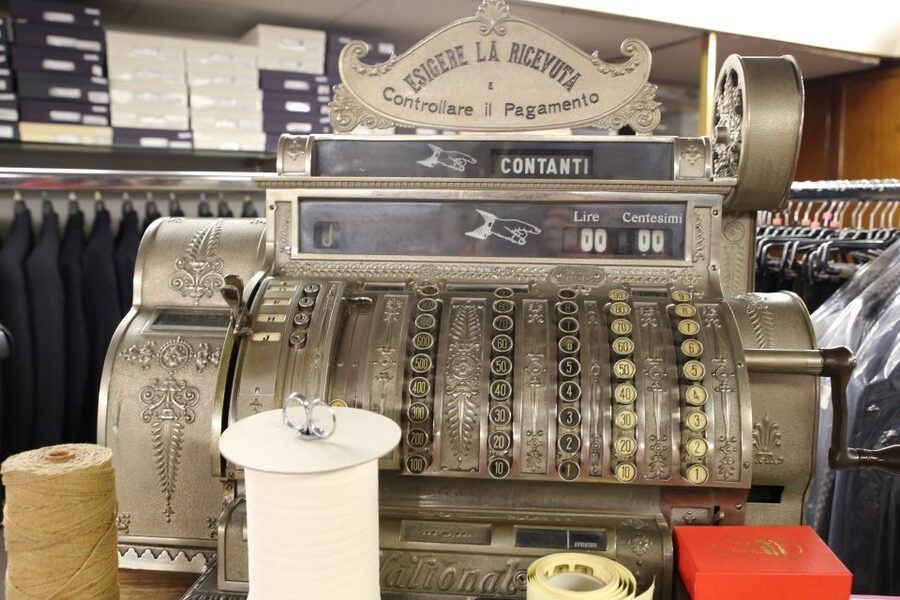
Another historic business mentioned in connection with the route is a butcher shop with carved heads of Renaissance figures on its counter. That is the sort of odd, memorable detail that makes a walking tour worthwhile. It also illustrates why you should look closely at the storefronts instead of treating them as background scenery.
There is an important limitation here. A shop may be closed, or staff may not allow entry. One experience found the butcher shop closed to visitors and described the welcome there as poor. You should see the outside access as a possibility, not a promise.
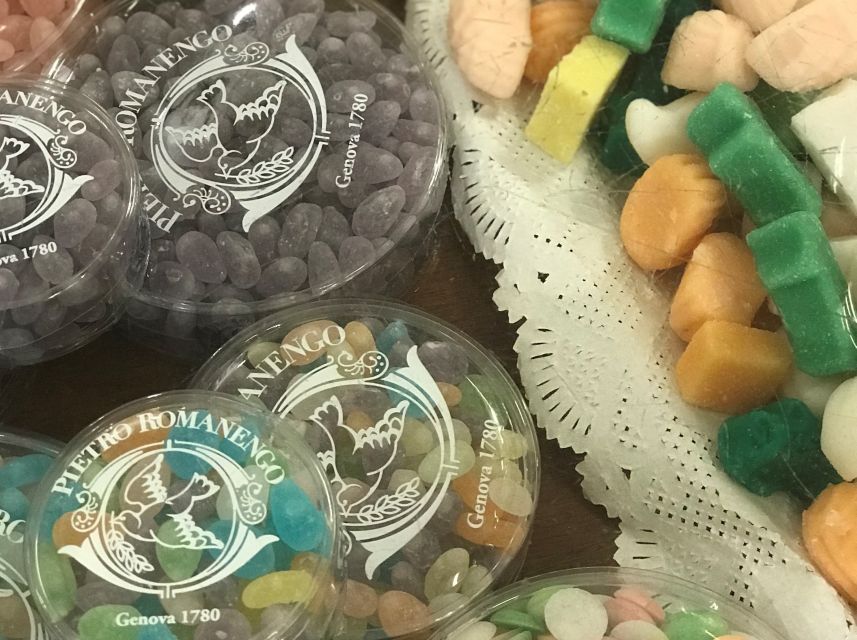
The included product helps balance that uncertainty. One of the participating shops provides a product during the tour, so you receive a direct taste of a traditional flavor. The exact item is not specified, and it may vary with the business included on your route. Think of it as a small sample rather than a meal.
Same streets, a different century:
- Colosseum with Arena, Roman Forum and Palatine Hill Guided Tour
★ 4.5 · 3,526 reviews - Colosseum & Ancient Rome with Arena Floor Option I Max 6 People
★ 5.0 · 3,306 reviews - Rome: Colosseum, Ancient Rome Tour or AudioGuided Tour
★ 4.4 · 2,879 reviews - Colosseum Underground & Ancient Rome Guided Tour
★ 4.5 · 2,590 reviews
What the guide adds to the experience
A good guide is especially important on this tour because the shops are not famous monuments with large signs explaining their importance. You need someone to point out what you are seeing and explain why it matters.
The tour is led in English and Italian at the same time by a bilingual guide. That format can make the group move a little more slowly than a single-language walk, but it allows English and Italian speakers to share the same route.
Feedback about the guiding is mixed. Some experiences describe the guide as friendly, open, and very well prepared, with plenty of information. Another found the guide pleasant but insufficiently prepared and felt the walk was too general. Since no guide names are provided, you cannot choose a particular leader in advance.
I would treat the guide as a key variable. If your leader brings the shop histories to life, the route can feel unusually personal. If the explanations stay broad, you may feel that the walk spends too much time near shops without getting deeply into their stories.
The safest way to approach it is to ask questions. Ask how long a business has operated, what trade it represents, and how it connects with the monument or street nearby. Those questions encourage the tour to focus on the subject you paid to explore.
What you actually receive for $16
At $16 per person, this is priced as a modest walking tour rather than a full food excursion. The cost includes the guide, the walk, the monument commentary, and a product from one participating shop.
The value is strongest for you if you want context. A snack alone would not justify much time, but the combination of a bilingual guide, old-town orientation, shop stories, and a taste makes the price reasonable.
It is less compelling if you want a full meal, several tastings, or guaranteed interior access. The activity does not promise a set number of food samples or a series of seated tastings. Its purpose is to explain Genoa’s historic shops and traditions while you walk.
Compared with exploring the same streets without a guide, the fee buys interpretation. You might pass a historic storefront on your own and never know why it matters. The tour gives you a chance to notice details such as the unusual carved counter in the butcher shop or the connection between marine clothing and the port.
The rating attached to the activity is 4.4 out of 5 from 47 ratings. That suggests a generally positive experience, but the mixed comments are useful: the quality depends on shop availability and the guide’s preparation on the day.
How to plan your two hours in Genoa
The duration is listed as 2 to 2.5 hours, with starting times checked when you book. That is long enough for a real walking route but short enough to fit beside other Genoa plans.
Wear comfortable shoes. The activity takes place on foot through the Old Town and other parts of Genoa, and the main benefit comes from seeing the streets as you move between stops. The provided information does not give a precise accessibility profile, so contact the operator if you need details about the surface, steps, or pace.
Try to arrive ready to listen and look upward, sideways, and into shop windows. The route is about small signs of continuity, not just major sights. A storefront, counter, workshop display, or old trade may be the point of the stop.
You should also leave room in your schedule. Since some shops can be closed, the route may not unfold exactly as you imagine. Do not plan a nonrefundable activity immediately afterward if a delay would cause trouble.
The tour begins at the Tourist Information Centre, so it can work well as an early introduction to Genoa’s center. Afterward, you will have a better sense of which streets and businesses deserve a return visit on your own.
Who will enjoy this walk most
I would recommend it most to people who like food culture, old businesses, and local stories more than a checklist of major sights. It suits a first visit because the monument stops help you get oriented, but it also adds something for anyone who has already seen Genoa’s main buildings.
It is a good match for visitors who enjoy walking and do not need every stop to be polished for tourism. Historic shops are working businesses, and that means access may be limited or the atmosphere may vary from one stop to the next.
Families with older children may like the unusual visual details, especially distinctive storefronts and craft traditions. The 2 to 2.5 hour length is manageable, though the bilingual format may make the commentary feel slower.
Food-focused visitors should book only if they want history and context alongside the tasting. If your main goal is to eat several specialties, a dedicated food tour would likely suit you better, but that kind of alternative is not part of this activity.
Booking details that matter
The tour costs $16 per person. It offers free cancellation up to 24 hours before the start for a full refund, and you can reserve now and pay later, which is useful if your Genoa schedule is still shifting.
The languages are English and Italian, delivered together by a bilingual guide. Check the available start times before booking because the activity does not list one fixed daily departure.
The route starts at the Tourist Information Centre, Via Garibaldi, 12red, 16124 Genova GE, Italy. The exact shop selection is not given, so book for the broader theme rather than one guaranteed business.
Should you book Historic Shops in Genoa?
Book this tour if you want a short, affordable walk that explains how Genoa’s old center still connects food, craft, trade, and public monuments. The included product is a welcome extra, and the examples of fried food, marine clothing, and unusual historic interiors show the route’s potential.
Skip it if you need guaranteed shop openings, extensive tastings, or a detailed itinerary with every stop named in advance. The experience can be affected by closures, and guide quality may vary.
For most curious visitors, I think the $16 price is fair. Go with flexible expectations, pay attention to the storefront details, and treat the walk as an introduction to Genoa’s working traditions rather than a full culinary tour.
FAQ
Where does the tour start?
It starts at the Tourist Information Centre, Via Garibaldi, 12red, 16124 Genova GE, Italy.
How long does the tour last?
The tour lasts approximately 2 to 2.5 hours.
How much does the tour cost?
The listed price is $16 per person.
Which languages are available?
The tour is conducted in English and Italian by a bilingual guide.
Does the tour include food?
Yes. A product is provided by one of the shops included in the tour.
Is this a food tour or a sightseeing tour?
It combines both. You learn about historic shops and traditional flavors while making quick stops at important Old Town monuments.
Can I enter every historic shop?
No. Several shops may be admired from the outside, and entry is not guaranteed.
What are historic shops in Genoa?
They are shops and artisan workshops that have operated for at least 70 years. Some have been active for more than 200 years.
Can I cancel for a full refund?
Yes. You can cancel up to 24 hours in advance for a full refund.
Do I have to pay when I reserve?
No. The reserve now and pay later option lets you book without paying immediately.
Newest history tours we have reviewed in Italy
- Guided Cultural Tour of the Godfather Film in Messina★ 5.0 · 31 reviews
- SU NURAXI BARUMINI Unesco World Heritage Site★ 5.0 · 129 reviews
- Picnic aperitif in the vineyard of an ancient trullo in Martina Franca★ 5.0 · 21 reviews
- Brescia the Unexpected: History, Local Stories & a drink★ 5.0 · 31 reviews
- Bologna historical art walking tour with hidden gems and tastings★ 5.0 · 108 reviews
- Bolognese Cooking Class with Margherita in the Historic Center★ 5.0 · 26 reviews
- Best of Bologna in one day : Food, architecture, art and history★ 5.0 · 27 reviews
- Private or semi-private tour of the historic center of Bologna★ 5.0 · 34 reviews
Italy History Tours, compared.
Colosseum: Underground and Ancient Rome Tour
Read our review →
Colosseum with Arena, Roman Forum and Palatine Guided Tour
Read our review →
St. Mark’s Basilica Guided Tour & VR History Intro
Read our review →
Colosseum with Arena, Roman Forum and Palatine Hill Guided Tour
Read our review →
Colosseum & Ancient Rome with Arena Floor Option I Max 6 People
Read our review →
Colosseum, Ancient Rome Tour or AudioGuided Tour
Read our review →
Colosseum Underground & Ancient Rome Guided Tour
Read our review →
Venice’s Best: Basilica, Doge’s Palace, Gondola & History Gallery
Read our review →Browse the lists this tour appears in