
Review · FRANCE HISTORY TOURS
Toulouse Food & History Tour with a Chef (in English)
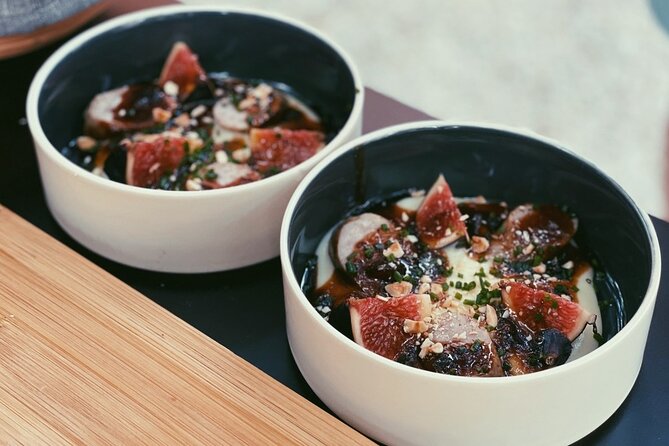
Toulouse is a city best understood with something good to eat in your hand. This tour pairs each stop with a local bite, and chef-guide Alejandro does more than lead you from monument to monument. He cooks some dishes on his bike, explains why they matter, and ties food to stories from Roman Toulouse through the age of Airbus.
I especially like the way the tour links history and food rather than treating them as two separate subjects. I also like the generous portions and serious regional focus, from Porc Noir de Bigorre charcuterie to artisanal cheese and the local Toulouse sausage. The main drawback is that the experience costs $129 and takes place outside, so it may feel expensive if you want a sit-down restaurant meal or if the weather is poor.
Key points to know before booking
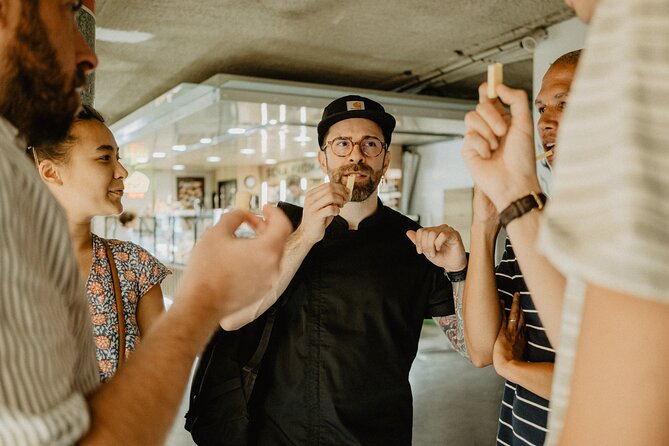
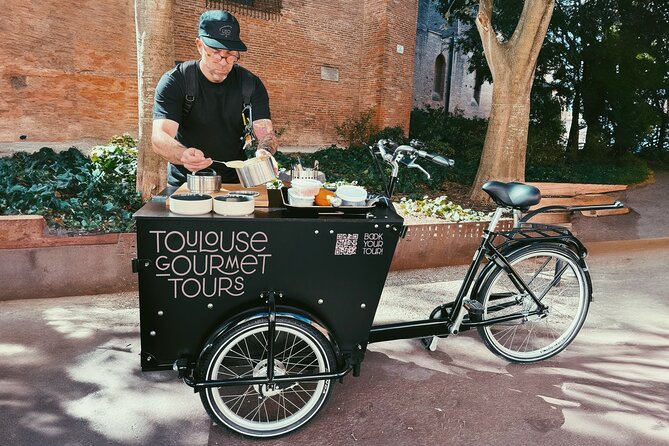
- Chef Alejandro cooks during the walk: This is not only a market crawl. Some regional dishes are prepared and plated from his bicycle.
- Toulouse history comes with every tasting: Fires, medieval buildings, aviation, religion, and politics all connect to the food.
- The route covers major sights: You visit Hôtel d’Assézat, the Garonne waterfront, Place du Capitole, Victor Hugo Market, and Saint-Sernin.
- The meal is substantial: Charcuterie, sausage, pastries, cheese, wine, and other samples add up quickly over four hours.
- Weather matters: The tour does not operate in rainy conditions, and the walk has no indoor substitute.
- It suits adults who can walk comfortably: Children under 12 and people with mobility impairments cannot take part.
Why this Toulouse food walk feels different
Many food tours take you from shop to shop while a guide explains what you are eating. This one works the other way around. Alejandro uses the city’s buildings and stories to explain why particular foods belong in Toulouse.
That makes the route feel like a meal with chapters. At one stop, the subject may be the wealthy families who built grand private houses. At another, it may be the great fire that changed Toulouse’s architecture. Later, you move from religious conflict to aviation, then finish with cheese and wine at the Victor Hugo Market.
The guide’s role matters here. Alejandro is a trained chef, and the strongest part of the experience is the combination of personal storytelling and hands-on food preparation. He is described as friendly, funny, and passionate, with a style that works for both food lovers and people who came mainly to see the city.
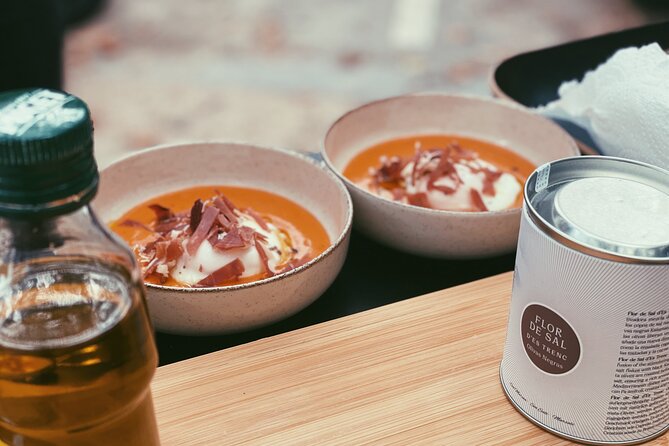
You should also expect the food service to change with the season. In warmer months, more cooking may happen on the bike. In colder or windy weather, some items may come from specialist shops, bakeries, or restaurants. That is not a flaw, but it is worth knowing if the bicycle cooking is your main reason for booking.
More History Tours in France:
- Paris: Louvre Museum Entry with History of Mona Lisa
★ 3.9 · 2,823 reviews - Paris: Dark History and Ghostly Guided Walking Tour
★ 4.7 · 1,000 reviews - Vieux Lyon Cultural & Historical Walking Guided Tour (English)
★ 5.0 · 942 reviews
Starting at Hôtel d’Assézat
The tour begins in front of Hôtel d’Assézat, home to the Georges Bemberg Foundation. This is a strong meeting point because it places you in the old center, surrounded by the grand private mansions built by Toulouse’s wealthy merchants.
The building gives Alejandro a natural opening: who could afford these houses, how fortunes were made in the sixteenth century, and why the architecture looks so different from ordinary homes. Your first food sample is tied to this setting and includes one of Toulouse’s best-known baked specialties.
The Foundation itself is listed as a stop, with about 30 minutes for the visit, sightseeing, and tasting. You should not assume that this means a full museum visit with time to explore every gallery. The focus is the building, its place in city life, and the food connection.
This opening works well for first-time visitors because it gives you the basic map of Toulouse: old wealth, trade, local ingredients, and the unusual brick-and-stone look that makes the center easy to recognize.
The Garonne waterfront and the city fire
From Hôtel d’Assézat, the route heads toward Quai de la Daurade. The riverfront offers a pause from the narrow old streets, with views over the Garonne and a chance to hear about the great fire that destroyed much of Toulouse in the fifteenth century.
The fire burned roughly 85 percent of the city and changed the way Toulouse was built. This is the sort of story that makes the streets around you easier to read. The building materials, the spacing of houses, and later architectural choices were not random. They came partly from the need to prevent another disaster.
Here, you receive a sweet item associated with the town’s oldest pâtisserie. The food is not simply a snack placed beside a scenic view. It gives the history a local flavor and shows how old culinary traditions can survive alongside major urban change.
The itinerary allows about 30 minutes at the waterfront. Bring an umbrella even though the tour does not run in rain. The riverfront can be exposed to wind, and one participant noted that colder, windy conditions reduced the amount of cooking done outdoors.
Medieval streets, timber frames, and the Jacobins stop
The route then continues through the historic center, including the Church of the Jacobins. A separate point of interest is the Tour de Serta, described as the city’s oldest timber-frame house, built in 1533 for Capitoul Pierre de Serta.
The schedule varies by opening hours, day of the week, and season, so you might not see every stop in exactly the same order. Some delightful detours can replace a planned location, but the food element remains part of the experience.
At the Jacobins stop, you get another layer of Toulouse’s religious and architectural story. The tour does not treat the church as a quick photo stop. Alejandro uses the setting to explain the forces that shaped the city and pairs the site with a food tasting.
Expect about 30 minutes for this part of the walk. The old center is best explored at a relaxed pace, but you will still be on your feet for most of the tour. Comfortable shoes matter more than stylish ones.
Same streets, a different century:
- Bordeaux: Historic Center & Chartrons District Bike Tour
★ 4.8 · 709 reviews - From Strasbourg: Best Of Alsace Historical Day Trip
★ 4.7 · 633 reviews - Toulouse Food & History Tour with a Chef (in English)
★ 5.0 · 503 reviews - Notre Dame Cathedral: Exterior Guided Tour & Unscheduled Access
★ 4.5 · 409 reviews
Place du Capitole and Toulouse’s aerospace story
Place du Capitole is Toulouse’s grand civic square and one of the clearest landmarks on the route. Here, the tour shifts from medieval and early modern Toulouse to the city’s modern identity as a European aerospace center and the headquarters of Airbus.
That change of subject is one of the tour’s strengths. Toulouse is not only old brick buildings and regional cooking. Its present-day economy and international profile are tied to aviation, and Alejandro explains how that developed.
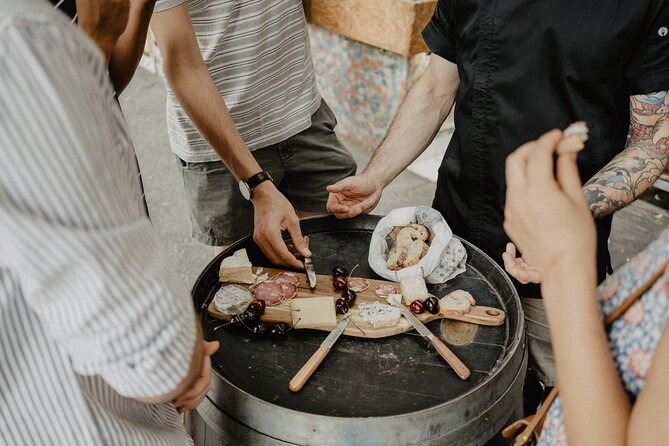
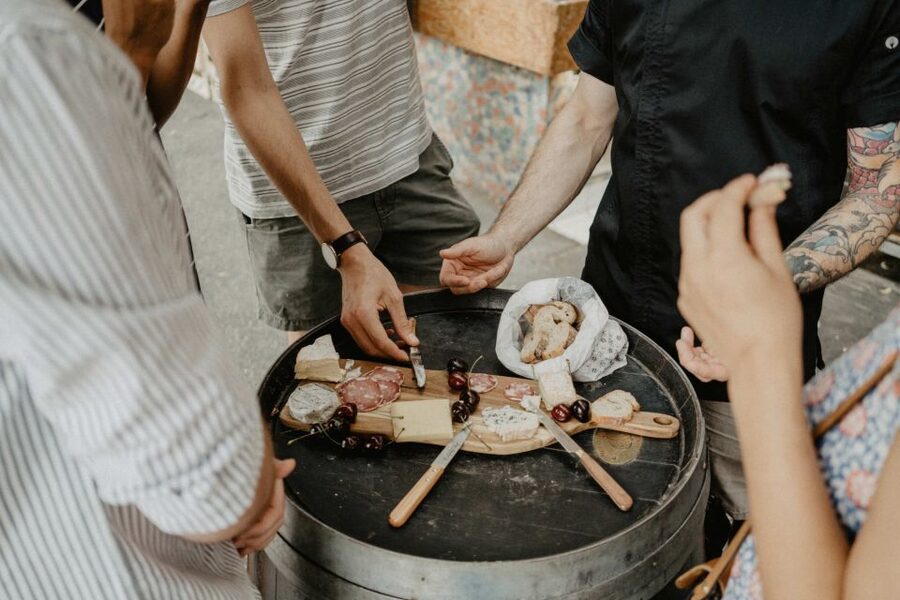
The food at this stop is a typical local charcuterie product. The wider experience highlights charcuterie made with Porc Noir de Bigorre AOP, a prized southwestern French pork with protected status. This gives you a useful introduction to the region’s cured meats rather than a generic platter assembled without much local thought.
The Capitole stop lasts about 30 minutes. You can expect sightseeing, a story, and a tasting rather than a long indoor visit. It is a good point in the walk to take stock of the city’s two personalities: historic capital and aerospace center.
Place Saint-Georges and the true Toulouse sausage
At Place Saint-Georges, Alejandro tells the story of a wrongful execution in the eighteenth century and explains how it affected the country’s political future after the Revolution.
This stop shows how the experience reaches beyond safe, familiar anecdotes. The history is political and at times grim, but it gives the square a stronger sense of place. You are not just looking at a pleasant plaza. You are learning how public punishment, political change, and city life once met in the same space.
The tasting here centers on la véritable saucisse de Toulouse, the region’s signature sausage. It is served as a main course, making this one of the more filling parts of the walk.
That detail matters at $129. This is not a tour built around tiny decorative bites. The samples are intended to add up to a satisfying meal, especially when combined with the pastries, charcuterie, cheese, and wine.
Victor Hugo Market, cheese, wine, and a changing city

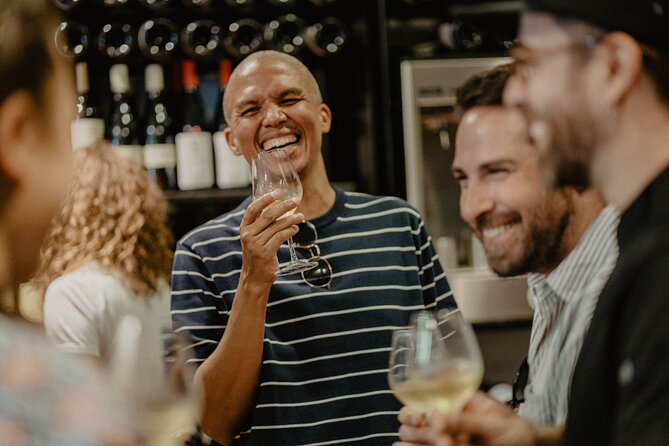
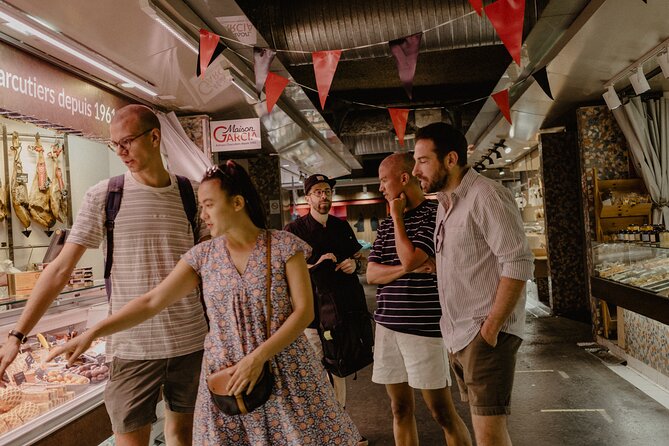
The longest stop is Marché Couvert Victor Hugo, Toulouse’s main covered market. Plan on about an hour here, including the market visit, sightseeing, wine tasting, cheese tasting, and food.
This is likely the most useful stop for your own eating plans. Alejandro helps explain the French cheese world through a pairing of artisanal, highly local cheeses and wine. If French cheese labels, textures, and regional styles usually leave you guessing, this is the point where the subject becomes more manageable.
The market itself also carries a surprising architectural story. The site began as a medieval rampart, later became an Art Nouveau market, and eventually turned into a concrete brutalist car park before taking its current market form. That sequence gives you a quick lesson in how Toulouse has repeatedly rebuilt and reimagined public space.
I would pay close attention here and make notes about the products you like. The tour includes samples, but the market is also a practical place to find ideas for later meals or edible gifts.
The one limitation is that the market can be active and crowded, especially at busy times. You will be walking, tasting, and listening rather than sitting down for a leisurely meal. One participant specifically wished for a restaurant stop and a chance to rest. If you prefer long table service, keep that in mind.
Saint-Sernin and the ancient final pastry
The tour ends at the Basilica of Saint-Sernin, one of Toulouse’s major landmarks. The story here concerns the city’s first Christian, who opposed the Roman Empire.
The final tasting is the city’s most famous dessert, made from a recipe said to be more than 2,000 years old. Ending with this pastry gives the tour a clear link between ancient Toulouse and the food still associated with the city today.
The basilica stop lasts about 30 minutes and includes sightseeing and food. Since Saint-Sernin is the finishing point, you can continue exploring the area afterward without needing to return to the starting location.
The route therefore works well as a first introduction to Toulouse. It begins near the old merchant quarter and ends by one of the city’s great religious monuments, covering the central sights in between.
What the $129 price really buys you
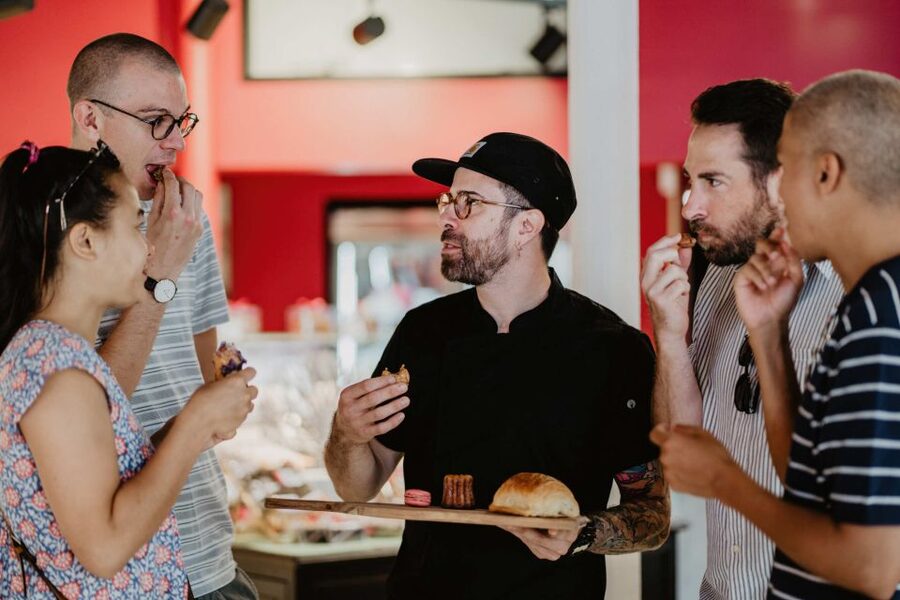
At $129 per person, this is not a budget snack walk. The value depends on how much you want from the guide and how you count the food.
You are paying for four hours with a trained chef, an English-language historical tour, multiple tastings, wine, cheese, local charcuterie, a sausage-based main course, pastries, and some dishes prepared during the walk. You are also paying for the connections between the food and the city, which are the most distinctive part of the experience.
The food portions appear generous enough that many people find the tour filling. That improves the value, especially if it replaces lunch. The cost is harder to justify if you mainly want a quick introduction to Toulouse or expect a full sit-down restaurant meal with table service.
Season affects the experience. In warm weather, you may see more of Alejandro’s cooking from the bicycle. In the low season, wind and shop hours can mean more prepared items and fewer dishes cooked on the spot. The samples should still be substantial, but the presentation can vary.
Who should book this tour
I would recommend it for adults who enjoy food but also want context. You do not need to be a serious cook. The tour works for people who want to understand why Toulouse sausage matters, how regional pork is used, and how French cheese fits into local eating.
It is also a strong choice for a first full day in Toulouse. The route covers major central sights, and Alejandro provides restaurant suggestions you can use afterward. Booking it early in your stay can help you decide where to eat and which parts of the center deserve a second look.
The tour is less suitable for young children, since children under 12 cannot participate. It is also not suitable for people with mobility impairments. You will walk between stops and spend most of the four hours outdoors.
Solo booking requires a little care. The tour needs at least two participants to run. If you are the only person booked for your date, the provider may contact you about another date or a larger group.
Weather, timing, and practical details
The advertised duration is four hours, while the outdoor information describes the journey as about three and a half hours. Either way, set aside a half-day and avoid scheduling a museum or train immediately afterward.
The tour is conducted in English and begins in front of Hôtel d’Assézat, Georges Bemberg’s Foundation. It ends at Basilique Saint-Sernin, so you finish in a different part of the center.
Wear comfortable clothes and shoes. Bring an umbrella, along with a passport or identity card. The tour does not operate in rainy conditions. If the forecast turns wet, you may be offered a new date or a full refund.
Food allergies and dietary restrictions are not covered in the supplied details, so ask before booking rather than assuming substitutions are available. Shop hours and the season can also change the exact food stops, but the provider states that the tasting element will continue.
Free cancellation is available up to 24 hours before the tour, and you can reserve now and pay later. Those terms are useful if your Toulouse plans are still shifting.
My verdict: a strong choice for food-focused first visits
I would book this tour if I wanted one experience that combined Toulouse’s major central sights with a proper introduction to southwestern French food. Alejandro’s strongest asset is the way he connects each tasting to a place and a story. The route feels purposeful, not like a string of unrelated samples.
Book it early if you want restaurant advice, a city overview, and a filling half-day activity. Skip it if you want a quiet restaurant lunch, dislike walking outdoors, or consider $129 too much for a tasting-based tour.
For most food-curious adults, the combination of chef-led cooking, local sausage, Porc Noir charcuterie, French cheese, wine, and the ancient Toulouse pastry makes the price reasonable. Just allow for seasonal changes, bring good shoes, and remember that the bicycle cooking is part of the experience, not a guarantee that every dish will be prepared in front of you.
FAQ
How long is the Toulouse Food and History Tour?
The experience is advertised as four hours. The outdoor information describes the walking journey as about three and a half hours, so you should reserve roughly half a day.
Who leads the tour?
The tour is led in English by Alejandro, a trained chef who also guides the historical and architectural portions of the walk.
Where does the tour start?
It starts in front of Hôtel d’Assézat, home to the Georges Bemberg Foundation.
Where does the tour finish?
The tour finishes at Basilique Saint-Sernin de Toulouse.
What food and drink are included?
Samples include local pastries, Porc Noir de Bigorre AOP charcuterie, Toulouse sausage, artisanal and local cheese, wine, and other regional dishes. Some food may be prepared by Alejandro on his bicycle.
Does the tour operate in rainy weather?
No. The tour does not operate in rainy conditions. If rain is forecast, you may be contacted about rescheduling or cancellation with a full refund.
Is the tour suitable for children?
Children under 12 cannot take part.
Can a solo participant book the tour?
Yes, but at least two participants are needed for the tour to operate. If you are the only person booked for your date, you may be offered another date with a larger group.
Newest history tours we have reviewed in France
- Small-Group Full-Day Tour of Côte de Nuits, Côte de Beaune Vineyards and Beaune Historical District★ 5.0 · 364 reviews
- Private Bordeaux History Tour with a glass of Bordeaux wine.★ 5.0 · 28 reviews
- Bordeaux Historic and Gourmet Food Walking Tour★ 4.5 · 82 reviews
- Bordeaux’ Best Boulangeries & History Tour★ 5.0 · 126 reviews
- Historical Center, Bordeaux Food Tour★ 5.0 · 33 reviews
- 2-Hour Walking Tour of the City’s Iconic Sights and History★ 4.0 · 207 reviews
- Private Walking Guided Tour of Historic Bayeux English or French★ 5.0 · 36 reviews
- Historic Bayeux Daily Group City Tour In English 2 hrs (Apr-Sept)★ 5.0 · 220 reviews
France History Tours, compared.
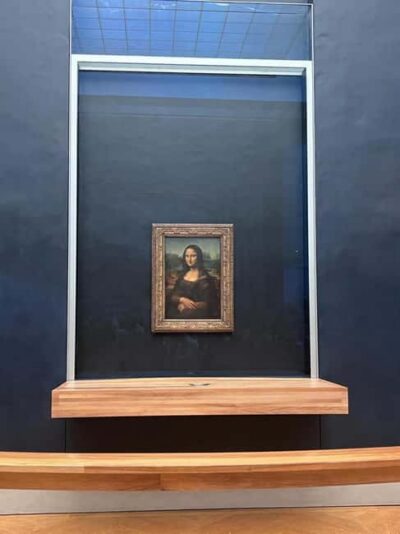
Louvre Museum Entry with History of Mona Lisa
Read our review →

Vieux Lyon Cultural & Historical Walking Guided Tour (English)
Read our review →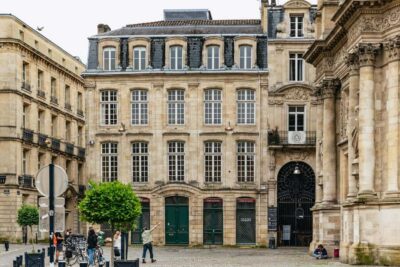
Bordeaux: Historic Center & Chartrons District Bike Tour
Read our review →
From Strasbourg: Best Of Alsace Historical Day Trip
Read our review →
Toulouse Food & History Tour with a Chef (in English)
Read our review →
Notre Dame Cathedral: Exterior Guided Tour & Unscheduled Access
Read our review →
Small-Group Full-Day Tour of Côte de Nuits, Côte de Beaune Vineyards and Beaune Historical District
Read our review →Browse the lists this tour appears in