
Review · NETHERLANDS HISTORY TOURS
The Hague: Hop-on Hop-off Heritage Tram Tour
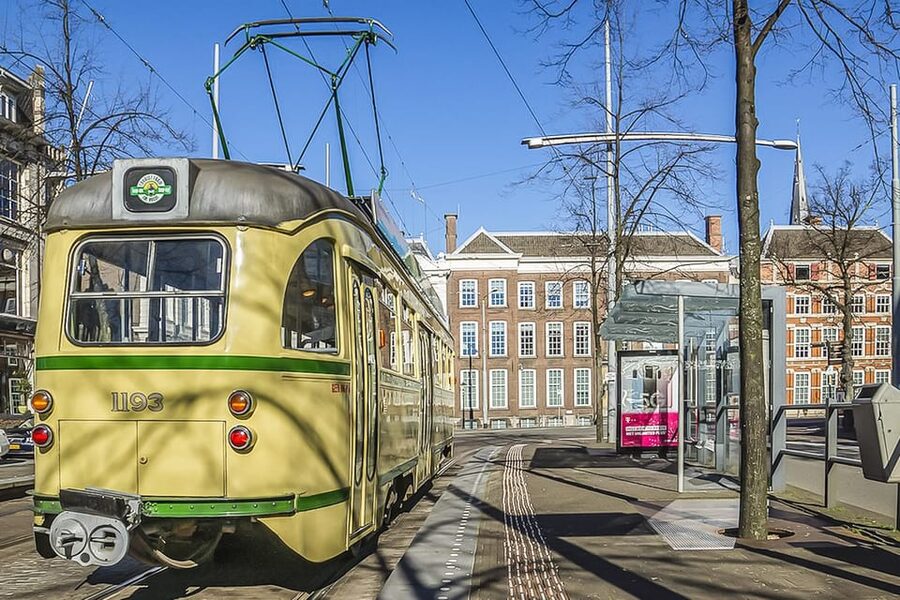
The best thing about this tour is its old-fashioned ride through a modern city. A 65-year-old Dutch tram carries you from The Hague’s parliamentary center to the North Sea beach, so you get both the grand civic sights and the seaside resort in one ticket. I like the unlimited rides and the chance to use the tram as a practical sightseeing link, not just a one-time circuit.
I also like the 16 stops, including Central Station, the Peace Palace, Madurodam, the Kurhaus, and Zwarte Pad. The main drawback is the timetable: with departures only every 30 minutes and service ending in the late afternoon, you need to watch the clock. Finding some stops can also take patience, since signs are not always obvious.
Key points to know before you board
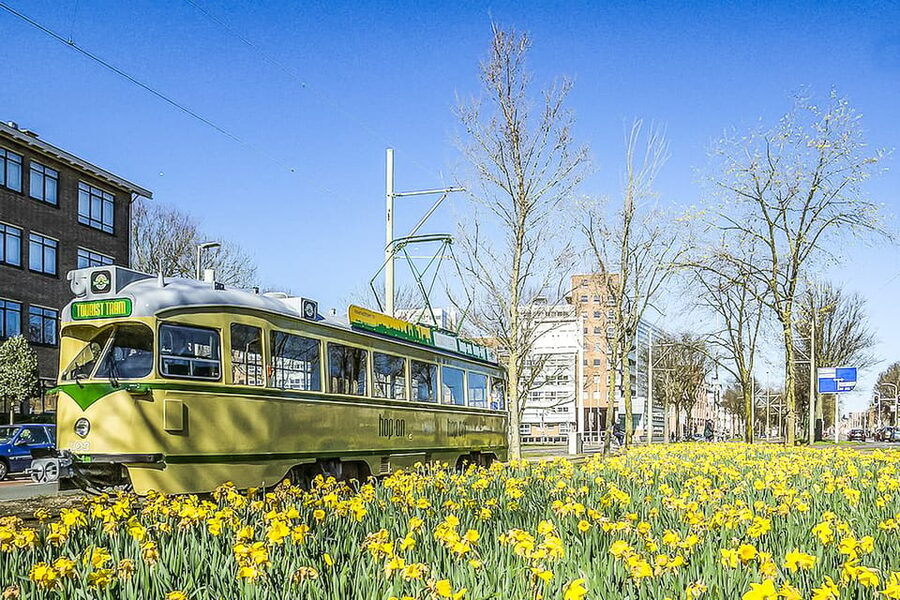
- Historic transport: You ride a genuine heritage tram rather than a modern sightseeing bus.
- Full-day access: The ticket allows unlimited hop-on hop-off use for one day.
- Sixteen useful stops: The route links the center, major sights, diplomatic quarter, and Scheveningen.
- Beach access: You can reach the Kurhaus, Zwarte Pad, and Keizerstraat without arranging separate transport.
- Audio in many languages: Commentary is available in Dutch, English, German, French, Spanish, Italian, Japanese, Chinese, and The Hague dialect.
- Plan around the timetable: Trams run every 30 minutes from 10:15 AM until 4:45 PM, with the last full round leaving Stop 1 at 4:45 PM.
Why this historic tram works so well in The Hague
The Hague is not a city you want to see only from a car window. Its sights are spread across several distinct areas: the old center, the royal and government quarter, broad avenues, museums, international institutions, and Scheveningen on the coast.
This tram gives you a simple way to connect those areas. You can make the full circuit first, listening to the audio and getting your bearings, then choose a few stops for a closer look. That first loop is especially useful if you have only one day in town or are unsure how the city’s districts fit together.
The tram itself adds character. You are riding in a piece of local transport history, with the charm and limitations that come with an older vehicle. The doors are narrow, and there is no step-free access from the platform into the tram, but the old tram is a far more memorable way to cross town than a generic sightseeing vehicle.
The tour has earned a 4.5 rating from 1,311 bookings, and the strongest praise centers on the same practical strengths: clear audio, friendly staff, easy sightseeing, and the pleasure of riding a beautiful historic tram. That pattern makes sense. This is not the most detailed way to study every monument, but it is an enjoyable way to understand The Hague’s shape.
More History Tours in the Netherlands:
- Amsterdam Food and Cultural Tour with Tastings
★ 5.0 · 4,315 reviews - Rotterdam: Kinderdijk UNESCO World Heritage Entry Ticket
★ 4.6 · 1,477 reviews - Rotterdam: Harbor Cruise on a Historic Ship
★ 4.2 · 812 reviews
Start at Gravenstraat, or board anywhere along the route
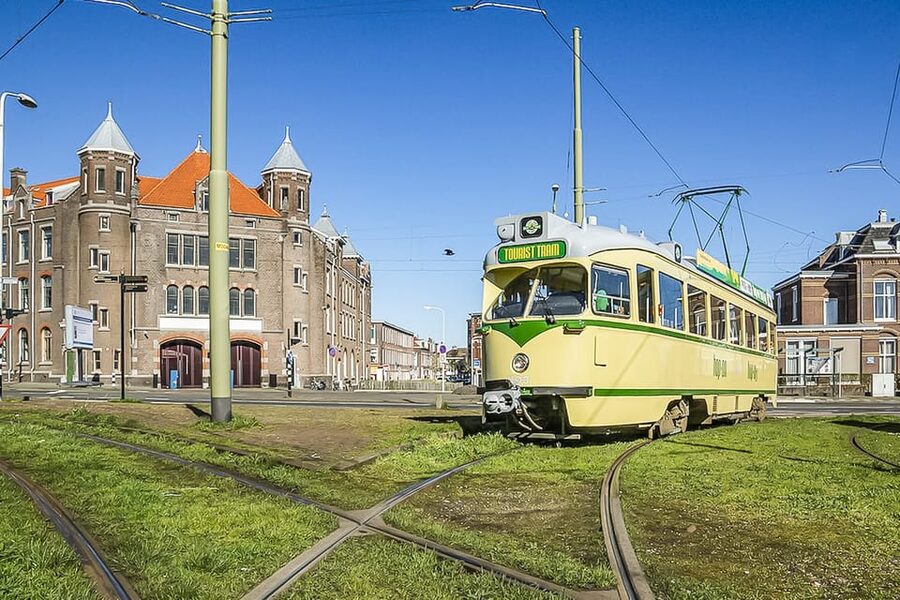
Stop 1 is at Gravenstraat in the city center, but you do not have to begin there. You may board at any of the 16 stops, which is handy if you arrive at Central Station or are already near Scheveningen.
The central meeting point can be tricky to identify. Look for the Tourist Tram sticker on the stop post, and use the route map or the listed plus codes in Google Maps if needed. Some passengers have found the signs too small or hard to spot, and people nearby may not know where the heritage tram stops. I would allow extra time for your first boarding, especially at Gravenstraat, and avoid assuming that an ordinary city tram stop is automatically the right one.
You receive earphones when you board. The audio guide is available in Dutch, English, German, French, Spanish, Italian, Japanese, Chinese, and The Hague dialect. That last option gives the tour a local touch. The audio is generally clear and easy to follow, though one passenger found parts of the recording too loud or affected by odd sounds, particularly between Central Station and Madurodam.
The route is usually easy to understand once you are aboard. Still, there is no clear onboard announcement identifying every stop, so keep your own list or route map ready. This is one of the few areas where the experience could be smoother.
Stops 1 to 4: Gravenstraat, Centrum, Central Station, and Malieveld
Gravenstraat puts you in the heart of central The Hague. This is a sensible place to begin if you want shops, cafés, and the old center close at hand.
At Centrum, you are well placed for the city’s main central sights. This stop is useful for getting off early in the day, walking through the center, and returning to the tram later. If you prefer to see the city in short sections rather than sit through the full circuit, this is one of the most practical stops.
Central Station is the route’s easiest arrival point for people coming by train. It also makes the tram useful beyond sightseeing. You can arrive in The Hague, board without crossing the whole city, and begin your tour from there.
At Malieveld, the route reaches a broad open area near the center. The stop helps show how quickly The Hague changes from tight historic streets to wide urban spaces. If you are building a first circuit, stay aboard here and let the audio explain the city rather than getting off without a particular nearby destination.
Stops 5 to 9: Madurodam, Nieuwe Duinweg, the Kurhaus, and the coast
Madurodam is the route’s stop for the miniature park that presents famous Dutch buildings and scenes in small scale. The attraction is not included in the tram ticket, but the stop makes it easy to add if you want a separate visit. Families may find this a useful break from the larger city sights.
At Nieuwe Duinweg, you are moving toward the coastal side of The Hague. The value of this section is the change in setting. The route connects the formal city with the resort district, making the tram feel like transportation between two different experiences rather than a short central loop.
Kurhaus is one of the key stops in Scheveningen. It places you near the famous seaside hotel and the main beach area. This is a good place to get off for a walk along the shore, though the ticket does not include food, attractions, or any beach activity.
Zwarte Pad takes you farther along the beach area. It can be useful if you want a different stretch of the coast from the main Kurhaus zone. Because the trams arrive only every 30 minutes, check the return time before leaving the stop.
Keizerstraat offers another Scheveningen access point. You can use it as an alternative to the Kurhaus if your plans are focused on the local street area rather than the main resort frontage. The route gives you flexibility, but only if you keep track of where you got off.
Scheveningen is one of the tour’s biggest advantages. A standard city sightseeing circuit might focus on government buildings and museums, while this route also gets you to the sea. The tram makes it possible to combine both without paying for a separate taxi or trying to understand a new transport system.
Same streets, a different century:
- Amsterdam: Historic City Centre Canal Cruise
★ 4.3 · 659 reviews - Amsterdam: Haunted History and Ghost Walking Tour
★ 4.5 · 488 reviews - Amsterdam High-End Dutch Food & History Tour – Up to 8 guests
★ 5.0 · 482 reviews - Leiden: Cruise through the Historic City Center with Guide
★ 4.6 · 445 reviews
Stops 10 to 13: Statenlaan, Frederik Hendriklaan, World Forum, and the Peace Palace
Statenlaan and Frederik Hendriklaan take you through the residential and shopping side of The Hague. These stops are less about one famous monument and more about seeing how the city works beyond its postcard sights.
Frederik Hendriklaan is a useful place to pause if you want a local shopping street atmosphere rather than another major institution. If your time is short, you may prefer to remain aboard and save your stops for the Peace Palace or Scheveningen.
World Forum and Johan de Wittlaan brings you into the international quarter. This part of The Hague is tied to the city’s role as a center for international organizations and diplomacy. The wide streets and institutional buildings contrast with the older center and the seaside resort.
The highlight for many people is Vredespaleis, or the Peace Palace. You can see the building from the route, but this ticket does not promise interior admission. If you want to visit inside, check separate opening and entry arrangements rather than assuming the tram ticket covers it.
The audio adds value here. The buildings can look impressive but may not explain themselves, especially if you are seeing them from a moving tram. Commentary gives you a reason to notice what you are passing and helps turn a ride into a city introduction. Several passengers found the information clear, entertaining, and easy to understand, though one person wanted more detail.
Stops 14 to 16: Mauritskade, Kneuterdijk, and Kerkplein
Mauritskade returns you toward the central government district. This is a good section for seeing the formal side of The Hague after the coastal portion of the ride.
At Kneuterdijk, you are close to some of the city’s grand civic and historic buildings. The exact sights you choose to visit will depend on your own schedule, but the stop is useful for returning to central streets after time at the beach.
Kerkplein completes the route near the center. It is a convenient final stop if you began at Gravenstraat or Centrum, and it gives you another chance to end the circuit close to central sights.
The route is most useful when you treat it as a flexible framework. You do not need to get off at every stop. A full first loop, followed by two or three carefully chosen stops, will usually give you a better day than jumping off randomly and waiting half an hour each time.
The timetable matters more than you might expect
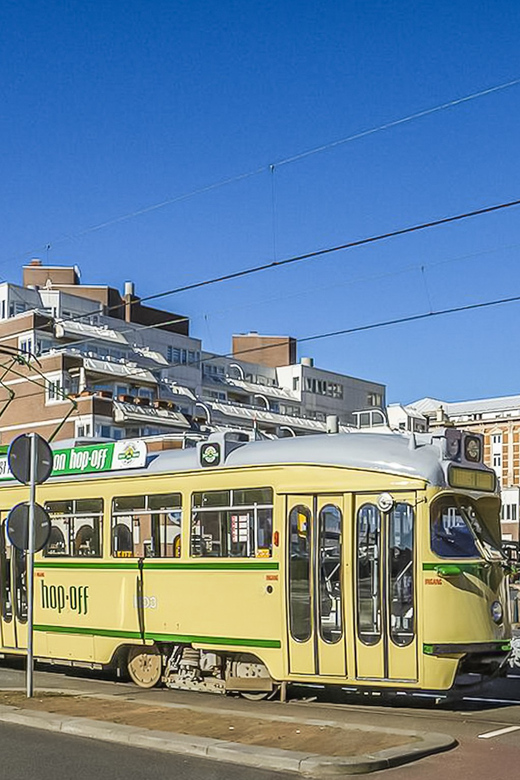
The tram runs every 30 minutes from 10:15 AM to 4:45 PM. The first departure from Stop 1 is at 10:15 AM, and the last full round leaves Stop 1 at 4:45 PM.
That service window is reasonable for daytime sightseeing, but it is not an all-day evening pass. If you get off at Scheveningen in the afternoon, you need to check the return options before settling into a long beach visit. A missed tram could mean a 30-minute wait, and the final full round limits how late you can stay out on the route.
I would use the tram early, when you have the most flexibility. Take a complete circuit first if possible. Then get off at the Peace Palace, Madurodam, or the coast and plan your return with the timetable in mind.
Is $21 a fair price?
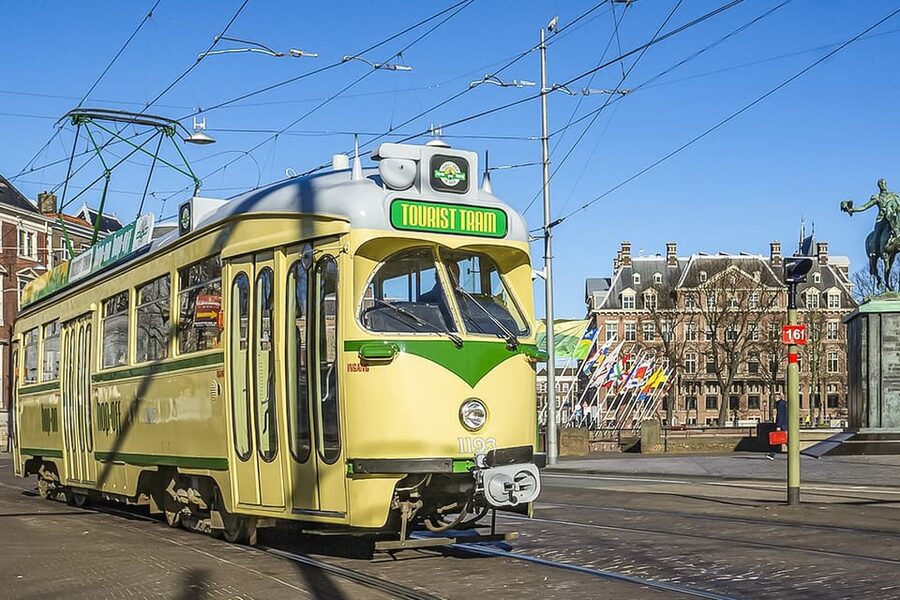
At $21 per person, the ticket is good value if you use it for both sightseeing and transport. You get unlimited rides for one day, access to 16 stops, and an audio guide with earphones. A full circuit alone may not justify the price for everyone, but two or three rides can make it worthwhile.
The strongest value comes from the distance covered. You can link central The Hague with the international quarter and Scheveningen without arranging several separate trips. If you are traveling with children, have limited time, or want a gentle introduction before walking, the tram earns its keep quickly.
The value is weaker if you only want one short ride or plan to stay within the compact city center. In that case, walking may be enough, and the tram’s 30-minute frequency may feel slow. It also is not the right choice if you need step-free access.
Who should book this tram tour?
I would recommend it to first-time visitors who want a quick sense of The Hague before choosing where to spend more time. It also suits anyone who enjoys old transport, people who want to reach Scheveningen without fuss, and families who need a flexible way to cover several districts.
It is especially helpful for travelers arriving by train because Central Station is on the route. The multilingual audio makes it accessible to a wide range of international visitors, and staff speak Dutch, English, or German.
I would think twice if you have a wheelchair or a stroller that cannot be folded. The tram has narrow doors, no step-free access, and limited room for bulky equipment. People with mobility impairments may find boarding difficult.
Also consider your appetite for waiting. Thirty-minute service is perfectly manageable with planning, but it can test your patience if you miss a tram. Keep the route map and timetable close at hand.
Practical tips for a smoother ride
- Start at Gravenstraat, Central Station, or the stop closest to your hotel, but confirm the exact location first.
- Look for the Tourist Tram sticker on the stop post.
- Use the supplied earphones, and bring your own route notes so you know when to get off.
- Take the full circuit early if you want an overview.
- Save the Peace Palace and Scheveningen for stops you can fit into the timetable.
- Do not bring food, alcohol, or drugs onto the tram.
- Fold or disassemble strollers and wheelchairs before boarding if they are permitted for your needs.
- Leave time between attractions because the tram comes every 30 minutes, not continuously.
Should you book the Hague Heritage Tram?
Book it if you want one pleasant ride to connect the old center, government quarter, Peace Palace, and Scheveningen beach. The historic vehicle, friendly staff, useful audio, and unlimited daily access make it a solid introduction to The Hague at $21.
Skip it if you plan to walk only in the center, need step-free boarding, or want a late-evening sightseeing option. For most first visits, though, the tram is a practical and enjoyable way to get your bearings, with enough flexibility to turn a simple circuit into a full day around the city.
FAQ
How long is the Hague Hop-on Hop-off Heritage Tram ticket valid?
The ticket is valid for one day and allows unlimited use of the hop-on hop-off tram during that day.
How often does the heritage tram run?
The tram operates every 30 minutes from 10:15 AM to 4:45 PM.
What time is the first departure?
The first departure from Stop 1, Gravenstraat, is at 10:15 AM.
What time does the last full round leave?
The last full round departs from Stop 1 at 4:45 PM.
Can I board at any stop?
Yes. You can begin your trip at any of the 16 hop-on hop-off stops.
Where is Stop 1?
Stop 1 is at Gravenstraat in the center of The Hague. Look for the Tourist Tram sticker on the stop post and use the route map or plus code to confirm the location.
Does the tram stop near Scheveningen beach?
Yes. The route includes stops at Nieuwe Duinweg, Kurhaus, Zwarte Pad, and Keizerstraat in the Scheveningen area.
Is an audio guide included?
Yes. Earphones and a multilingual audio guide are included with the ticket.
Which languages are available for the audio guide?
The audio guide is available in Dutch, English, German, French, Spanish, Italian, Japanese, Chinese, and The Hague dialect.
Can I bring a wheelchair or baby stroller?
Only wheelchairs and baby strollers that can be easily disassembled or collapsed may fit. The historic tram has narrow doors, and there is no step-free access between the platform and the tram.
Newest history tours we have reviewed in the Netherlands
- Amsterdam: Jewish Quarter and History Guided Tour★ 4.7 · 210 reviews
- Skipping Lines & Sipping Beers: A History Tour of Amsterdam★ 5.0 · 22 reviews
- Amsterdam: Iconic Canals & Historic Sights Walking Tour★ 4.5 · 90 reviews
- Amsterdam: Private Pedicab Historical Sightseeing Tour★ 5.0 · 41 reviews
- Amsterdam Walking Tour:Anne Frank, History & Liberal Culture★ 5.0 · 18 reviews
- Amsterdam: Walking Tour of Historic Center★ 4.6 · 24 reviews
- Amsterdam: Luxury Canal Cruise with Historic VR Experience★ 4.7 · 31 reviews
- Amsterdam: Historical Highlights Walking Tour with Tasting★ 4.6 · 381 reviews
Netherlands History Tours, compared.

Amsterdam Food and Cultural Tour with Tastings
Read our review →
Rotterdam: Kinderdijk UNESCO World Heritage Entry Ticket
Read our review →

Amsterdam High-End Dutch Food & History Tour – Up to 8 guests
Read our review →
Leiden: Cruise through the Historic City Center with Guide
Read our review →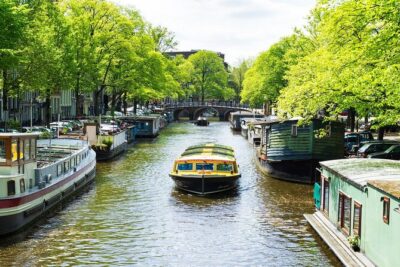
Browse the lists this tour appears in