
Review · FRANCE HISTORY TOURS
Champagne Cellar Experience: Explore our historic cellars
At Champagne Harlin Père & Fils, the most interesting part is the close look at a working family producer rather than a grand Champagne house built for crowds. You tour the winery and historic cellar, then taste three champagnes and a Ratafia Champenois tied to the terroirs of Mareuil-le-Port, Épernay, and Tours-sur-Marne.
I like the small-producer setting and the clear focus on biodiversity. I also like that the tasting is explained rather than treated as a quick drink at the end. The main point to check is timing: the activity is advertised as one hour, while the detailed schedule lists one hour for the visit and another 30 minutes for tasting.
Key points to know
- Three champagnes, one Ratafia: The tasting gives you a useful range rather than a single glass.
- A working winery and cellar: You see where the Champagne is made before tasting it.
- Terroir is part of the lesson: The cuvées reflect Mareuil-le-Port, Épernay, and Tours-sur-Marne.
- Biodiversity matters here: The producer explains efforts to protect nature through sustainable viticulture.
- French and English guidance: You can follow the tour in either language.
- Family-friendly attendance: Children may join for free and receive fruit juice, though they cannot drink alcohol.
A small Champagne house at 8 Rue de la Fontaine
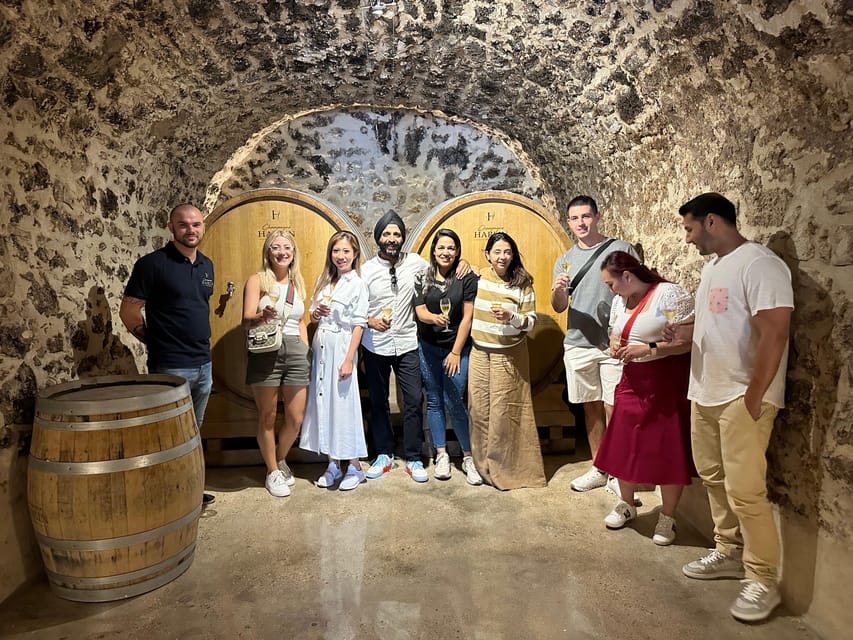
The visit begins in the courtyard of Champagne Harlin, where your guide meets you. If the guide is not already waiting, the instructions say they will greet you shortly, so allow a moment to get settled rather than wandering off in search of the entrance.
This meeting point gives the visit a personal feel from the start. You are not entering a huge visitor center with a long line and a polished sales pitch. You are arriving at a producer’s own address, ready to see how the wine is made and why the house works as it does.
Champagne Harlin Père & Fils is in the Grand Est region, less than two hours from Paris, about 20 minutes from Épernay, and about 30 minutes from Reims. Those distances make it a useful stop if you are touring the Champagne area by car or building a day around Épernay.
The activity does not include a vineyard tour. That distinction matters. You will visit the winery and cellar, and you will hear about the vineyards, soil, climate, and biodiversity, but you should not book this expecting a walk among the vines.
More History Tours in France:
- Paris: Louvre Museum Entry with History of Mona Lisa
★ 3.9 · 2,823 reviews - Paris: Dark History and Ghostly Guided Walking Tour
★ 4.7 · 1,000 reviews - Vieux Lyon Cultural & Historical Walking Guided Tour (English)
★ 5.0 · 942 reviews
Inside the winery and historic cellar
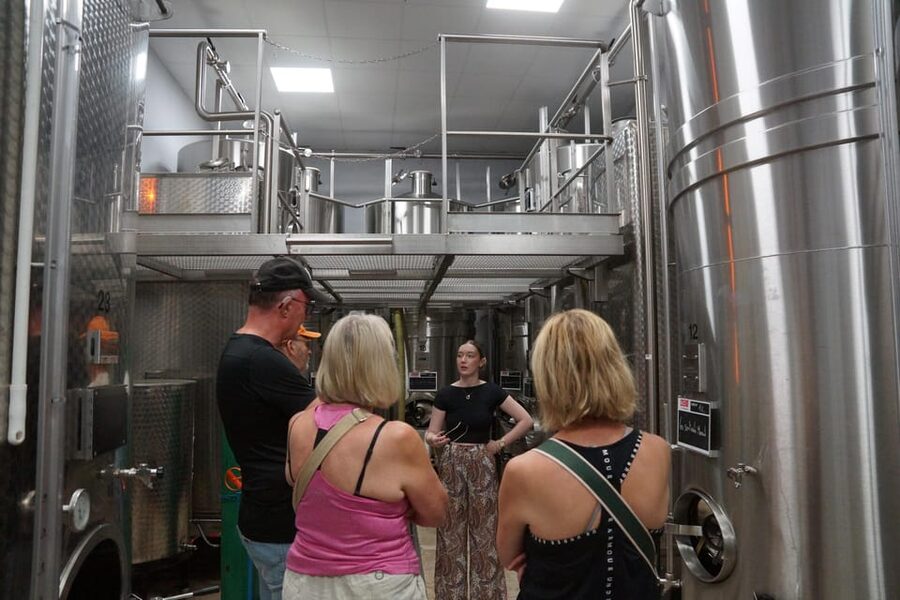
The first hour focuses on the winery and cellar. The tour explains the Champagne-making process and the particular approach used at this house. One of the strongest parts of the visit is the chance to connect the finished bottle with the place where it is produced.
You can expect the guide to discuss how soil and climate shape each cuvée. The three champagnes are linked to Mareuil-le-Port, Épernay, and Tours-sur-Marne, so the tasting is not simply a lineup of unrelated bottles. It gives you a way to think about how different growing areas can influence Champagne’s character.
That terroir lesson is useful even if you already know the basics. Champagne is often sold as a famous name rather than as an agricultural product. Here, the focus returns to soil, climate, grapes, and production choices. I would listen closely to the explanations before tasting, because they give you a better framework for comparing the wines later.
The tour also covers the producer’s commitment to biodiversity preservation and sustainable viticulture. The information provided does not list specific vineyard methods, so you should not expect a technical inventory of every practice. Still, this part adds value because it places Champagne production in the wider setting of soil health and environmental care.
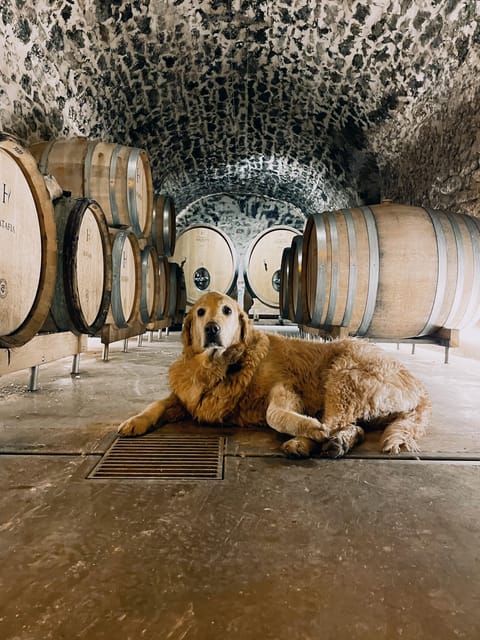
The cellar itself is the other draw. A cellar visit gives you a sense of the patient side of Champagne production, where the wine needs time before it reaches the glass. The available details do not specify the cellar’s age, temperature, or exact storage method, so I would treat the word historic as a reason to look around carefully, not as a promise of a grand underground monument.
Learning to taste three champagnes
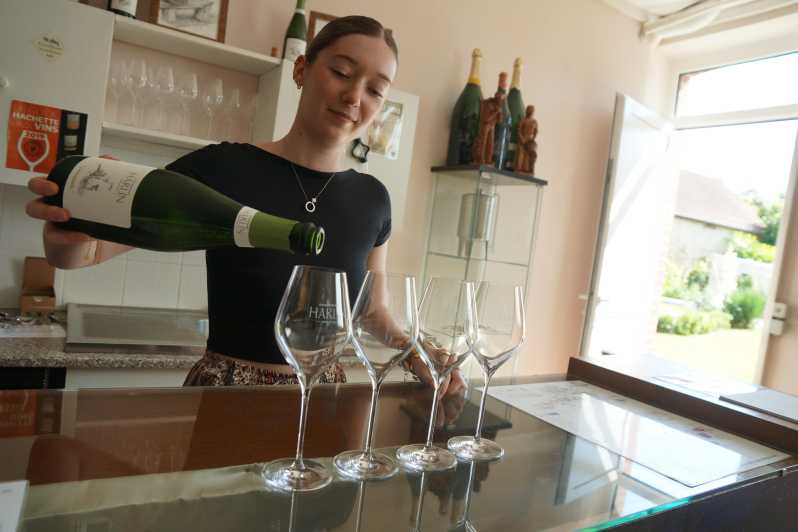
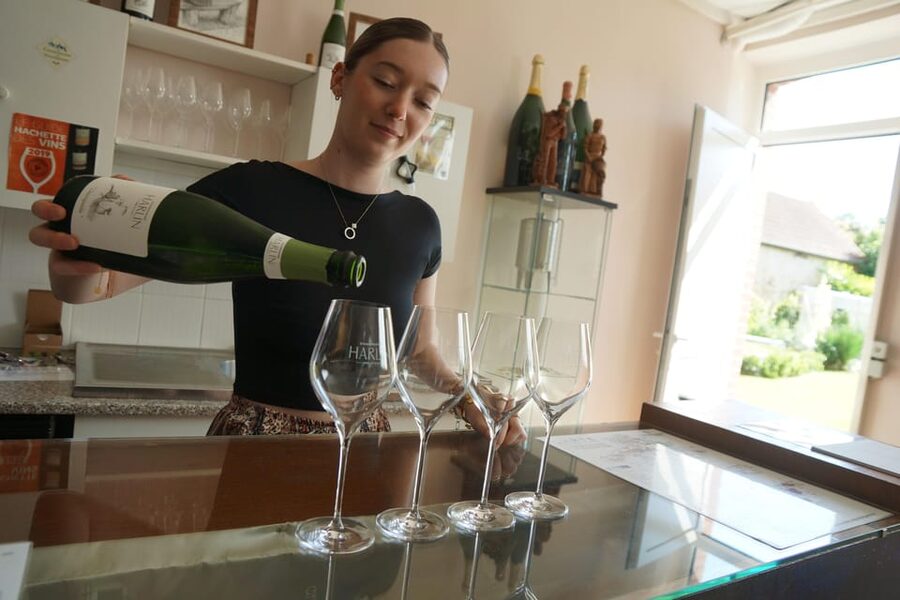
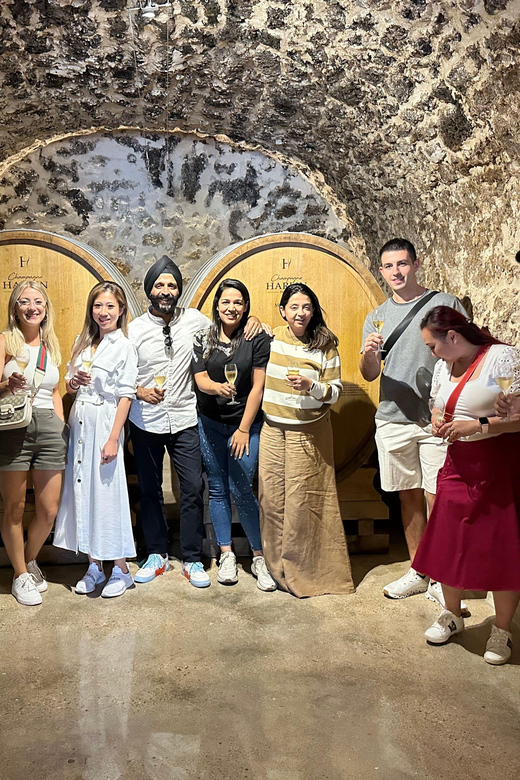
After the winery and cellar visit, the group moves to a guided tasting. The detailed schedule gives this part 30 minutes, enough time for a clear introduction to each pour without turning the session into a long seminar.
You taste three champagnes. The most useful way to approach them is as a comparison. Notice how the wines differ in aroma, texture, freshness, and finish. Your guide explains the tasting process and helps you connect those impressions with the places and production choices discussed during the tour.
I appreciate that the tasting is not an afterthought. Many winery visits rush through the explanation and leave you with a glass in hand but little idea what to look for. Here, the tasting is described as commented and educational, so you can expect guidance on the art of tasting rather than simply a series of samples.
The three wines reflect Mareuil-le-Port, Épernay, and Tours-sur-Marne. The information does not identify the grape varieties, vintages, dosage levels, or cuvée names, so you should not book this expecting a detailed technical flight built around those facts. The strength is the broader comparison between terroirs and house styles.
A practical tip: pay attention to the order in which the champagnes are served and take mental notes as you go. You may find it helpful to compare one wine with the next instead of trying to judge each glass in isolation.
The Ratafia Champenois adds a different note
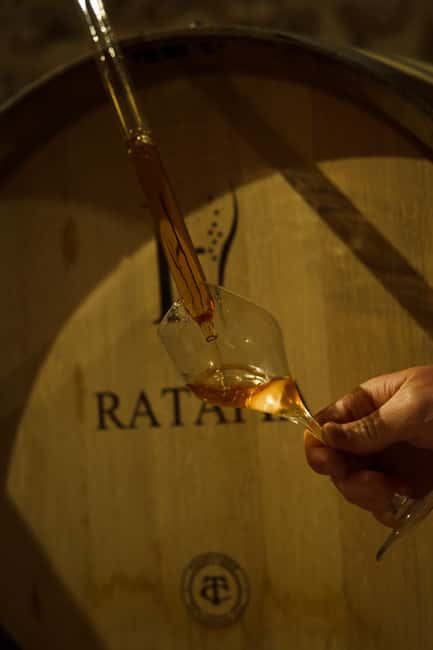
The final drink is one Ratafia Champenois. This is a useful addition because it shows another part of the region’s drinks tradition. Ratafia is not Champagne, so it gives the tasting a change of pace after the sparkling wines.
The supplied details describe it as delicate. That suggests a gentler finish to the tasting, but the exact sweetness, color, and production method are not provided. Your guide can explain how it differs from the champagnes and why it belongs to the Champagne region’s wider wine culture.
I like this part of the lineup because it keeps the tasting from being too narrow. Three champagnes let you compare sparkling wines, while the Ratafia gives you a fourth point of reference. If you are new to wine tasting, that contrast can make the session easier to follow.
Children under 18 may attend, but French law prevents them from drinking alcohol. Fruit juice is provided for them. The published information also marks the activity as unsuitable for children under 18, so families should confirm the current booking conditions before reserving. Pregnant women are also listed as not suitable for this activity.
Same streets, a different century:
- Bordeaux: Historic Center & Chartrons District Bike Tour
★ 4.8 · 709 reviews - From Strasbourg: Best Of Alsace Historical Day Trip
★ 4.7 · 633 reviews - Toulouse Food & History Tour with a Chef (in English)
★ 5.0 · 503 reviews - Notre Dame Cathedral: Exterior Guided Tour & Unscheduled Access
★ 4.5 · 409 reviews
Why the biodiversity message matters
A visit to a Champagne producer can easily focus only on prestige, bottles, and famous names. Champagne Harlin adds another subject: how viticulture affects the natural world around the vines.
The producer’s stated commitment is to biodiversity preservation and sustainable viticulture. That gives the tour a practical environmental angle. You can ask how the house protects biodiversity, what changes have been made in the vineyards, and how those choices affect day-to-day work.
The available information does not promise a separate sustainability workshop or a guided vineyard walk. The subject is part of the producer’s story and the cellar experience. I would see it as a meaningful thread in the visit rather than the entire focus.
This is also where the small-house setting can help. A family producer has a more direct connection between the people, the vineyards, the cellar, and the bottles. You are likely to get a clearer sense of the house’s own decisions than you would from a standard brand presentation, although the exact group size and staff structure are not given.
How long the visit really takes
The headline duration is one hour. The detailed schedule lists a one-hour winery and cellar visit followed by a 30-minute wine tasting, making the full program closer to 90 minutes.
That difference is worth planning around. If you have a train, restaurant reservation, or another cellar visit afterward, do not build your schedule around only 60 minutes. Allow at least the longer period suggested by the itinerary, plus time to arrive in the courtyard at 8 Rue de la Fontaine.
The timing works well for a day in the Champagne region. It is long enough to cover the cellar and tasting without taking half a day. You get the main elements that matter: production, cellar, terroir, environmental choices, and several wines.
The tour is offered with a live guide in French or English. That is important because the value depends heavily on the explanations. If you want to understand the differences between the three cuvées, choose the language in which you can ask questions comfortably.
Is $23 a fair price?
At $23 per person, the experience offers good value if you want both a cellar visit and a guided tasting. You receive entry to the Champagne Harlin cellar tour, plus three champagnes and one Ratafia Champenois. You are paying for explanation and access, not just four drinks.
The price is especially reasonable for visitors who prefer a producer-led visit over a large commercial house. You can learn how this particular winery works, hear about biodiversity, and taste wines connected to several Champagne areas.
There are limits. A vineyard tour is not included, and the tasting does not promise rare bottles, older vintages, or an extensive flight. If your main goal is to walk through the vines, this is not the right package. If you want a compact introduction to a small producer, the price makes more sense.
The value also depends on how much you use the guide. Ask questions about the terroirs, the production process, and the Ratafia. A quiet tasting without questions will still include the planned pours, but an engaged conversation can make the visit far more useful.
What the strong praise tells you
The most consistent praise centers on the guide’s explanations and the quality of the learning. The French comments describe the visit as interesting, clear, and especially helpful for understanding how Champagne is made at this particular cellar.
One recent visitor called the guide excellent and said the explanations made the process easy to understand. Another highlighted the commented tasting as especially informative. That tells me this is a good choice for a first visit to a Champagne producer, particularly if you want more than a photo stop and a glass.
The small-house character also receives strong approval. The experience is repeatedly valued as a more personal alternative to the large, heavily visited Champagne houses. That does not mean it offers the same scale or display rooms as a major brand. It means the focus is likely to remain on the producer, the cellar, and the wine in your glass.
The overall rating is 4.7 out of 5 from 46 ratings. That is a strong result, though the written comments available are mostly brief and positive. They give solid support for the guide quality and educational side, but less information about group size, cellar layout, accessibility, or the exact wines served on a particular date.
Who should book this cellar experience?
I would recommend it to you if you want a personal introduction to Champagne production near Épernay or Reims. It suits curious drinkers, first-time visitors, couples, and anyone who wants to understand why different Champagne areas can taste different.
It also works for families traveling with older children, since children may attend and receive fruit juice. Keep in mind the conflicting wording about children: the practical information says they are welcome but cannot drink, while another section lists children under 18 as unsuitable. Confirm that point before booking if it affects your plans.
You should choose another activity if the vineyard itself is your priority. The vineyard tour is not included. You should also look elsewhere if you want a large, theatrical house visit, an extensive technical tasting, or a tour built around specific vintages and grape varieties.
The short format is a benefit for many people, but check the timing carefully. Plan for up to 90 minutes, even though the headline duration says one hour.
Should you book Champagne Harlin?
Book this experience if you want a reasonably priced, producer-focused visit with three champagnes, a Ratafia Champenois, and a clear explanation of terroir and sustainable viticulture. The strongest reasons to go are the personal cellar setting, the educational tasting, and the chance to hear directly about biodiversity.
Skip it if you need a vineyard walk or a large-scale Champagne spectacle. For everyone else, $23 buys a useful look at how a smaller Champagne house connects place, production, and taste. Just allow the longer time suggested by the schedule and confirm the policy for anyone under 18.
FAQ
Where does the Champagne Harlin experience begin?
The meeting point is the courtyard of Champagne Harlin Père & Fils at 8 Rue de la Fontaine. Your guide will meet you there.
How long does the experience last?
The advertised duration is one hour. The detailed schedule gives one hour for the winery and cellar visit plus 30 minutes for the tasting, so you should allow about 90 minutes.
What drinks are included?
The tasting includes three champagnes and one Ratafia Champenois.
Is a vineyard tour included?
No. The cellar tour and tasting are included, but entry to the Champagne Harlin vineyard tour is not included.
Which languages are available?
The live tour guide speaks French or English.
Can children attend?
Children under 18 may accompany adults and receive fruit juice, but they are not allowed to drink alcohol under French law. The activity information also lists children under 18 as unsuitable, so confirm the current policy before booking.
Is the activity suitable during pregnancy?
Pregnant women are listed as not suitable for this activity.
How much does the experience cost?
The listed price is $23 per person.
Newest history tours we have reviewed in France
- Small-Group Full-Day Tour of Côte de Nuits, Côte de Beaune Vineyards and Beaune Historical District★ 5.0 · 364 reviews
- Private Bordeaux History Tour with a glass of Bordeaux wine.★ 5.0 · 28 reviews
- Bordeaux Historic and Gourmet Food Walking Tour★ 4.5 · 82 reviews
- Bordeaux’ Best Boulangeries & History Tour★ 5.0 · 126 reviews
- Historical Center, Bordeaux Food Tour★ 5.0 · 33 reviews
- 2-Hour Walking Tour of the City’s Iconic Sights and History★ 4.0 · 207 reviews
- Private Walking Guided Tour of Historic Bayeux English or French★ 5.0 · 36 reviews
- Historic Bayeux Daily Group City Tour In English 2 hrs (Apr-Sept)★ 5.0 · 220 reviews
France History Tours, compared.
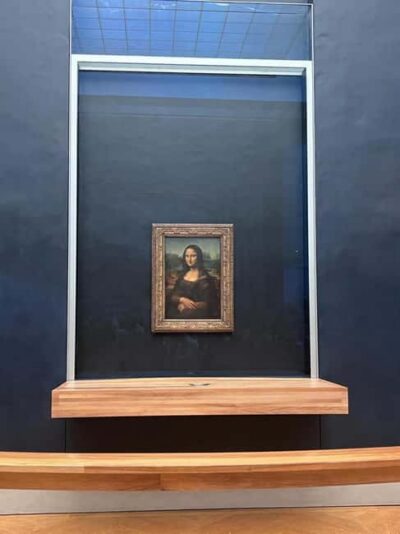
Louvre Museum Entry with History of Mona Lisa
Read our review →
Vieux Lyon Cultural & Historical Walking Guided Tour (English)
Read our review →
Bordeaux: Historic Center & Chartrons District Bike Tour
Read our review →
From Strasbourg: Best Of Alsace Historical Day Trip
Read our review →
Toulouse Food & History Tour with a Chef (in English)
Read our review →
Notre Dame Cathedral: Exterior Guided Tour & Unscheduled Access
Read our review →
Small-Group Full-Day Tour of Côte de Nuits, Côte de Beaune Vineyards and Beaune Historical District
Read our review →Browse the lists this tour appears in