
Review · FRANCE HISTORY TOURS
Discover Caen like never before: Guided tours between history & secrets!
Caen’s story comes in layers: William the Conqueror, medieval churches, wartime destruction, and a careful postwar rebuild. This walking tour connects those layers through the Abbaye aux Hommes, Place Saint-Sauveur, old streets, and the Château de Caen, rather than treating each sight as a separate photo stop.
I like the small group limit of six, which gives you room to ask questions and lets the route adjust to your interests. I also like the personal touch from Thomas, a Caen native with a master’s degree in history who often follows up with restaurant, café, and Normandy suggestions.
The main consideration is the pace and footing. This is a long city walk over cobbled streets, and the tour is not suitable for wheelchair users, people with mobility or visual impairments, or anyone who finds extended walking difficult.
Key points to know before booking
- Thomas brings local roots and formal history training: He grew up in Caen and links major events with small details that are easy to miss alone.
- The route covers medieval and modern Caen: You move from William the Conqueror and Romanesque architecture to World War II and postwar rebuilding.
- A two-hour walk gives you a useful first look: It is long enough to cover the city center without taking up an entire day.
- Groups are limited to six people: This makes questions and personal recommendations much easier.
- You meet at Place Courtonne: The guide contacts you by phone with the exact time and meeting point details, and wears a Caen-colored sweater.
- Comfortable shoes matter: The walk includes cobbled streets and enough distance that sandals or stiff city shoes may become tiresome.
Why Caen makes a good guided walking tour

Caen can be easy to underestimate. Many people use it as a base for Normandy’s D-Day sites, Bayeux, or the coast, then give the city only a quick look. That misses the point. Caen has a strong story of its own, and its past is unusually visible in both surviving monuments and rebuilt streets.
A guide helps you read the city in the right order. You are not simply looking at a church, castle, or old house. You are learning why Caen mattered, how its rulers shaped it, and how the city recovered after much of it was damaged during World War II.
I especially like the way this tour joins medieval grandeur with modern resilience. William the Conqueror’s building projects explain Caen’s importance in the Middle Ages. The wartime story explains why some parts of the center look old while other sections feel more planned and modern.
The tour lasts about two hours, a useful length for your first morning or afternoon in town. You get enough time to form a picture of Caen, then you can return to the places that interest you most.
More Guided Tours in France:
- Paris: Dark History and Ghostly Guided Walking Tour
★ 4.7 · 1,000 reviews - Vieux Lyon Cultural & Historical Walking Guided Tour (English)
★ 5.0 · 942 reviews - Notre Dame Cathedral: Exterior Guided Tour & Unscheduled Access
★ 4.5 · 409 reviews
Starting at Place Courtonne
Your meeting point is Place Courtonne. The guide contacts you by phone to confirm the time and exact meeting details, so keep an eye on your messages before the walk. The guide is easy to identify by a Caen-colored sweater.
The meeting arrangement is practical, but it does mean you should not arrive assuming the exact starting point will be obvious without checking your phone. Give yourself a little extra time, especially if you are arriving by train, bus, or car and still learning the center.
From here, the tour moves into central Caen. Since the group is capped at six, the experience should feel more like a conversation than a large city march. You can ask about a building, pause over a detail, or explain what kind of history interests you most.
That flexibility matters. One family had the route adjusted around a parent’s memories of living in Caen as a student. For another visitor, the guide’s suggestions for local bars and restaurants became part of the value of the tour. You should feel free to tell Thomas what you want from the walk at the start.
The Abbaye aux Hommes and William the Conqueror

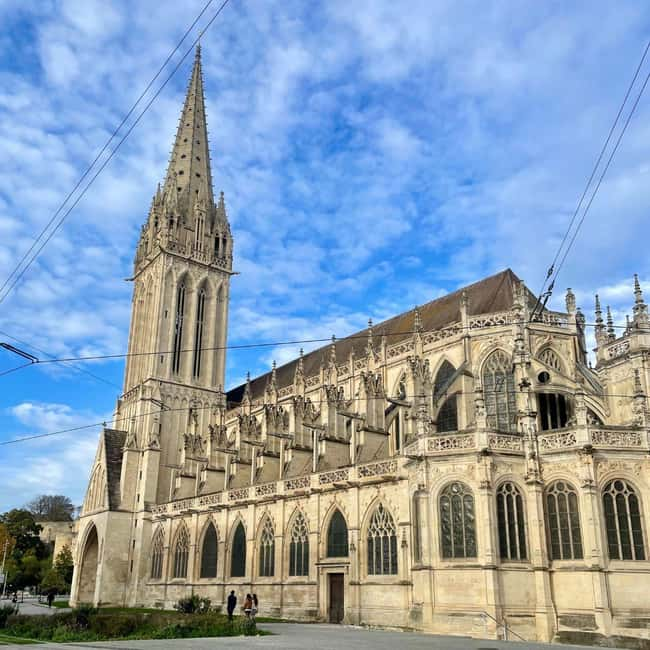
The Abbaye aux Hommes is one of the central sights on the route. Founded by William the Conqueror, this Romanesque masterpiece gives you a direct connection to Caen’s medieval power.
You do not need to be an architecture specialist to enjoy this stop. The important thing is seeing how one building can explain the ambitions of a ruler and the importance of the city he helped shape. Thomas can provide the background that turns stonework and church design into a story about authority, faith, and Norman politics.
William the Conqueror left a lasting mark on Caen, and the tour treats him as more than a name from an English history textbook. His links with Normandy and England are part of the city’s identity. The route also brings in figures such as Matilda, helping you see the personal and political forces behind Caen’s monumental buildings.
The abbey is also a useful reminder that Caen was not simply a stop on the way to somewhere else. It was a major medieval center with the wealth and influence to support large religious foundations and major construction.
Medieval streets and half-timbered details
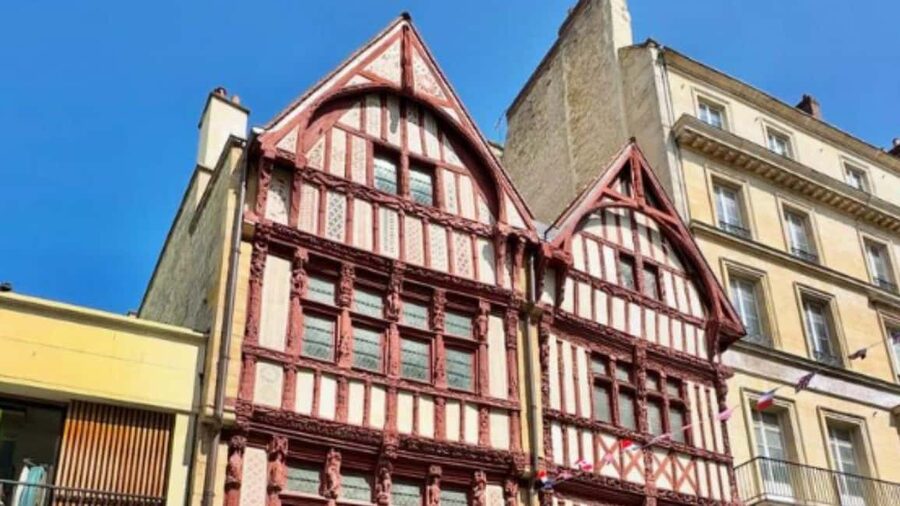
The walk continues through cobbled streets and areas with half-timbered houses. These streets reward slow looking. The carved details on a facade, the shape of an upper floor, or the layout of an old building can reveal something about the tradespeople and merchants who once used the city.
This is one place where a local guide makes a real difference. You might walk past an old facade alone and notice only that it looks attractive. Thomas can point out the details that help you understand how the street developed and how people lived and worked there.
Do not expect every part of Caen to look untouched. The city’s story includes destruction and reconstruction, so old and new sections sit close together. That contrast is not a flaw in the experience. It is one of the main things the tour helps you understand.
Wear shoes with good support. The supplied advice includes comfortable shoes, hiking shoes, and sports shoes, and that is sensible. Even if the route is not a hike in the countryside, cobbles and a continuous two-hour walk can be hard on your feet.
More History Tours in France:
- Paris: Louvre Museum Entry with History of Mona Lisa
★ 3.9 · 2,823 reviews - Bordeaux: Historic Center & Chartrons District Bike Tour
★ 4.8 · 709 reviews - From Strasbourg: Best Of Alsace Historical Day Trip
★ 4.7 · 633 reviews - Toulouse Food & History Tour with a Chef (in English)
★ 5.0 · 503 reviews
Place Saint-Sauveur, cafés, and everyday Caen
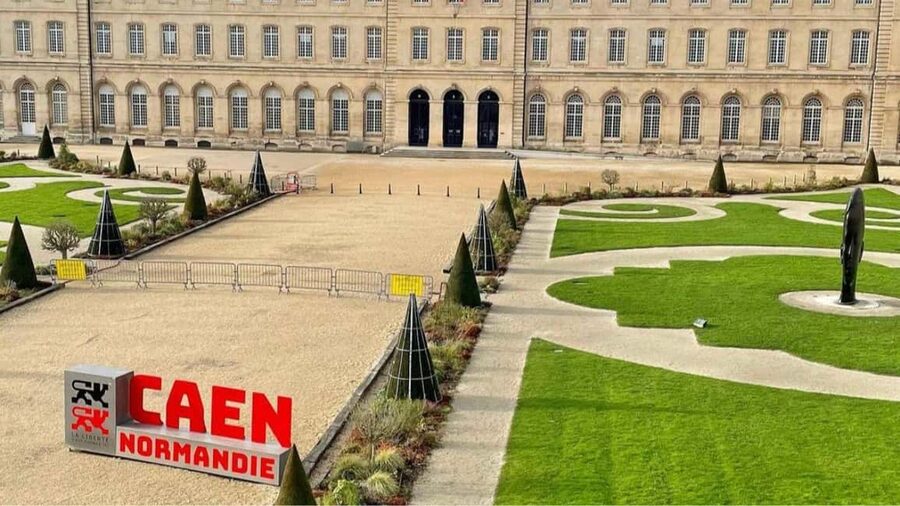
Place Saint-Sauveur brings a more everyday side of the city into the tour. The square is associated with a market and picturesque cafés, so it offers a change from grand monuments and military history.
This is a useful stop because it shows Caen as a living city, not just an open-air history lesson. You can look at the buildings, hear about the area’s past, and notice where local life continues today. If you are planning meals or drinks during your stay, this is also a good moment to ask Thomas for suggestions.
His recommendations are one of the practical strengths of the experience. Several visitors received specific restaurant and café ideas, including places they would not have found on their own. Those suggestions are especially helpful if you want to try local food rather than choose the first place near your hotel.
The guide’s local connection also gives the tour a friendly tone. Thomas is described as warm, humorous, and attentive, with interests ranging from rugby and aviation to good whiskey. Those details may sound small, but they help keep a history walk relaxed and human.
Château de Caen and the military story
The Château de Caen offers another major viewpoint on the city. This imposing fortress is tied to military history and gives the tour a strong sense of scale.
From the castle area, you can look across Caen and see how the city fits together. A stop here also helps connect William the Conqueror’s medieval power with the later military importance of the region. The castle is not just a dramatic wall or elevated photo spot. It helps explain why Caen mattered as a place to control and defend.
The route may feel like a long walk by the time you reach this part. One visitor specifically described the tour as a long walk, while also saying that the distance made it possible to see and learn a great deal. I agree with that tradeoff. If you want a quick introduction with minimal walking, this may not be the right choice. If you want to see the central sights in one connected outing, the distance is worthwhile.
A castle view can also make the city’s rebuilding easier to grasp. You get a broader look at the streets below instead of considering each monument in isolation.
Caen after World War II

The World War II section is essential. Caen was almost completely rebuilt after the war, and that fact changes the way you should read the city.
Without context, you might wonder why a historic center includes such a mix of old stone, reconstructed facades, and newer streets. The tour explains the damage and the work that followed, showing how Caen preserved its identity while adapting to a new urban reality.
This is where the experience moves beyond a standard medieval city tour. You hear about the Vikings, William the Conqueror, and England, but you also learn how ordinary streets and landmarks were affected by twentieth-century conflict. The result is a more honest picture of Caen, one that includes loss as well as heritage.
Thomas uses old photographs and maps to show how the city once looked. That kind of visual aid is valuable because it lets you compare the present layout with the prewar city. You can better understand which areas survived, which were rebuilt, and why the current city looks the way it does.
I also appreciate that the tour does not treat reconstruction as an afterthought. Caen’s recovery is one of its defining stories, and it gives the city a modern character that medieval monuments alone cannot explain.
Thomas as your guide
The guide can make or break a city walk. Here, Thomas is the clear center of the experience. He grew up in Caen, has a master’s degree in history, speaks French and English, and takes obvious pride in the city.
His strength is not just the amount of information he can provide. He links events and places in a way that keeps the walk moving. You might begin with a monument, shift to a local legend, then hear how the same area changed after the war.
He also takes questions seriously. Several visitors described him as friendly, clear in English, and willing to provide help before and after the tour. Communication through WhatsApp can include confirmation before the meeting and follow-up information about food, nearby towns, or other Normandy sights.
In one case, Thomas extended the walk well beyond the planned two hours. That sounds generous, but I would not book on the assumption that every tour will run longer. Treat the stated two hours as the planning figure. Any extra time should be considered an unexpected bonus, not part of the promised schedule.
What the $46 price gets you

At $46 per person, this is not the cheapest way to walk around Caen. You can see public streets and many exterior sights without paying anything. The question is what you want from the visit.
The price pays for a small, personal walking experience with a local guide, rather than entry to a single monument. You are paying for context, interpretation, questions, and practical advice. If history is important to you, that can be good value, especially on a first visit.
The group limit of six improves the value. A guide can speak to each person more easily, and you are less likely to spend the whole walk standing at the back of a crowd. Solo visitors, couples, and families can all benefit from that setup.
It is also useful for a short Normandy stay. If you have limited time in Caen, two hours with a clear route can help you decide how to spend the rest of your day. You might return to the abbey, spend more time around the castle, or use Thomas’s food suggestions for the evening.
The value is weaker if you prefer to wander independently, dislike scheduled meeting arrangements, or plan to spend most of your time at D-Day museums outside the city. This tour focuses on Caen itself.
Who should book this Caen tour
I would recommend it to first-time visitors who want a clear introduction to the city, especially people interested in medieval Normandy, William the Conqueror, architecture, or World War II.
Families can also do well here. The small group format allows the guide to adjust his explanations, and one family found that even a 16-year-old enjoyed the stories and humor. Children who need constant movement may still find two hours of city walking tiring, so bring comfortable shoes and set expectations before you start.
History fans will get the most from the tour, but you do not need prior knowledge. Thomas explains the larger story while adding the kind of local details that make a street or building easier to remember.
The tour is less suitable for anyone with mobility limits. The route involves a long walk and cobbled streets, and the activity is specifically not suitable for wheelchair users, people with mobility impairments, people with visual impairments, or people over 95. If that applies to you, ask before booking rather than assuming the route can be adapted.
French and English are available. Some content may be shown in its original language, so ask the guide when you need clarification.
My call: book it if you want context, not just sights
Book this tour if you want Caen to make sense. The strongest reasons are Thomas’s local background, his history training, the tiny group size, and the way the walk connects medieval monuments with wartime rebuilding.
I would schedule it early in your stay. That gives you a useful orientation and leaves time to follow up on the guide’s suggestions for restaurants, cafés, or nearby places. Keep the rest of the day flexible enough for a long walk and perhaps a second look at the sites that catch your attention.
Skip it if you want a short, self-guided stroll or cannot comfortably walk over cobbled streets for two hours. For most able walkers who want more than a quick photo of the abbey or castle, the $46 fee buys a thoughtful introduction to a city with far more to say than its nickname suggests.
FAQ
How long does the Caen guided tour last?
The tour lasts about two hours. One past tour was extended by the guide, but you should plan around the stated two-hour duration.
What is the price?
The cost is $46 per person.
Where does the tour meet?
The meeting point is Place Courtonne in Caen. The guide contacts you by phone to confirm the exact time and meeting details.
How will I recognize the guide?
The guide wears a Caen-colored sweater.
Is the tour offered in English?
Yes. The live tour is available in English or French.
How many people are in the group?
The group is limited to six participants.
Which sights are covered?
The walk includes central Caen, the Abbaye aux Hommes, medieval streets with half-timbered houses, Place Saint-Sauveur, and the Château de Caen.
Does the tour discuss World War II?
Yes. The tour explains that Caen was almost completely rebuilt after World War II and places that rebuilding within the city’s wider story.
What should I wear or bring?
Bring comfortable walking shoes. Hiking shoes or sports shoes are also listed as suitable because the route is a long walk and includes cobbled streets.
Is the tour accessible to wheelchair users?
No. The activity is not suitable for wheelchair users or people with mobility impairments. It is also not suitable for people with visual impairments or people over 95.
Can I cancel the booking?
You can cancel up to 24 hours in advance for a full refund.
Do I have to pay when I book?
The activity offers reserve now and pay later, so you can book your place without paying immediately.
Newest history tours we have reviewed in France
- Small-Group Full-Day Tour of Côte de Nuits, Côte de Beaune Vineyards and Beaune Historical District★ 5.0 · 364 reviews
- Private Bordeaux History Tour with a glass of Bordeaux wine.★ 5.0 · 28 reviews
- Bordeaux Historic and Gourmet Food Walking Tour★ 4.5 · 82 reviews
- Bordeaux’ Best Boulangeries & History Tour★ 5.0 · 126 reviews
- Historical Center, Bordeaux Food Tour★ 5.0 · 33 reviews
- 2-Hour Walking Tour of the City’s Iconic Sights and History★ 4.0 · 207 reviews
- Private Walking Guided Tour of Historic Bayeux English or French★ 5.0 · 36 reviews
- Historic Bayeux Daily Group City Tour In English 2 hrs (Apr-Sept)★ 5.0 · 220 reviews
France History Tours, compared.

Louvre Museum Entry with History of Mona Lisa
Read our review →
Vieux Lyon Cultural & Historical Walking Guided Tour (English)
Read our review →
Bordeaux: Historic Center & Chartrons District Bike Tour
Read our review →
From Strasbourg: Best Of Alsace Historical Day Trip
Read our review →
Toulouse Food & History Tour with a Chef (in English)
Read our review →
Notre Dame Cathedral: Exterior Guided Tour & Unscheduled Access
Read our review →
Small-Group Full-Day Tour of Côte de Nuits, Côte de Beaune Vineyards and Beaune Historical District
Read our review →Browse the lists this tour appears in