
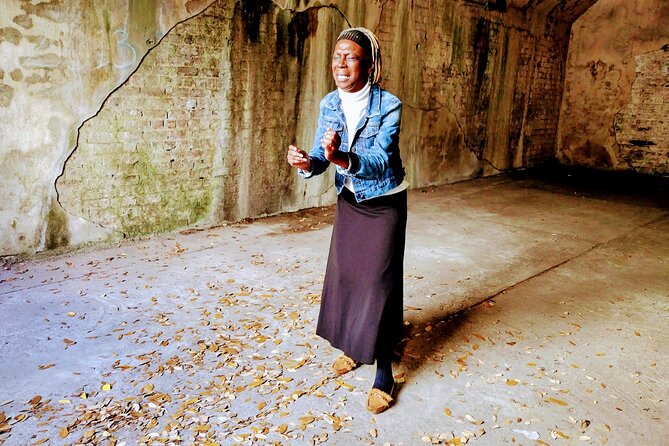
Review · SAVANNAH HISTORY TOURS
Savannah Slavery to Freedom Guided History Tour
Savannah’s grand squares and old warehouses look different once you understand who built them. This tour connects the city’s streets to the West African people forced into slavery here, then follows the long road toward freedom with a Gullah Geechee truth-teller at the helm.
I like the tour’s focus on the economics and lasting effects of slavery, rather than treating the subject as a brief footnote. I also like the guides’ lively delivery. Sistah Patt, along with guides such as Ms. Rosalyn, brings humor, personal connection, and clear storytelling to difficult material. The main drawback is that much of the tour takes place aboard a bus, with limited time outside, so it may not satisfy you if you want a walking tour with many photo stops.
Key points to know before you book

- Sistah Patt leads with truth, humor, and personal perspective: Her delivery keeps serious history clear and engaging for adults and older children.
- River Street gains a new meaning: You learn how enslaved West Africans helped build the warehouses and commercial district.
- Johnson Square carries painful history: The tour explains its connection to slave auctions and Savannah’s early development.
- The format is mostly by vehicle: Expect a narrated bus ride with some walking, not a full three-hour stroll through downtown.
- Laurel Grove Cemetery adds a lasting human dimension: The stop helps connect Savannah’s Black communities to memory, family, and place.
- The price is $54.78 per person: That is fair if you want a focused history lesson, but less compelling if you mainly want sightseeing and photographs.
Savannah’s polished streets, seen from another angle
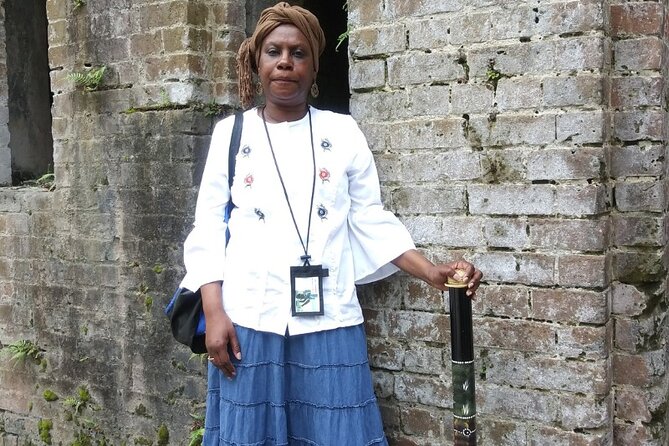
Savannah is easy to admire at street level. Mossy squares, grand homes, and River Street make a pleasant first impression. Yet the usual city tour can leave out the people whose labor created much of that beauty.
This experience puts African American history at the center. You are not simply shown an old building and given its construction date. You learn about the West African groups brought to Savannah, the forced labor that shaped the city, the money behind slavery, and the systems that continued to affect Black life.
That focus gives the tour a clear purpose. It also makes it a better choice for you if you want more than architecture and ghost stories. The subject is painful, but the presentation is not designed to shame you. The strongest parts explain how slavery worked, who benefited from it, and how enslaved people and their descendants preserved skill, faith, family, and culture.
The tour is offered in English and normally runs in the morning or afternoon. The advertised duration is about three hours, while the narrated portion is described as roughly two to two and a half hours. Plan your schedule around the longer estimate.
More Guided Tours in Savannah:
- Historic Savannah Guided Walking Tour
★ 5.0 · 2,918 reviews - 60-Minute Guided Segway History Tour of Savannah
★ 5.0 · 1,163 reviews - Guided Savannah Civil War History Walking Tour
★ 5.0 · 492 reviews
A bus tour with a few important stops
The vehicle matters here. You board at 223 Martin Luther King Jr Boulevard, and the tour ends back at the same meeting point. The group can reach up to 32 people, giving the experience the feel of a small sightseeing coach rather than a private tour.
You will hear much of the history while seated. One person described getting off only once, while another described the outing as a mix of bus travel and walking. That tells you what to expect: this is not a stop-every-five-minutes walking route. You will see several important places, but the guide does much of the teaching from the vehicle.
That format has two sides. On a hot, humid, or rainy day, air-conditioned transport and a seat can be a real advantage. You can cover more ground than you would on foot, and the narration continues as you pass through the city.
The tradeoff is photography. If you like to linger, frame buildings, and read every marker, you may want a separate walking tour afterward. You can take photos from the bus, but the experience is built around listening, not collecting a long series of stops.
River Street and the labor behind the warehouses
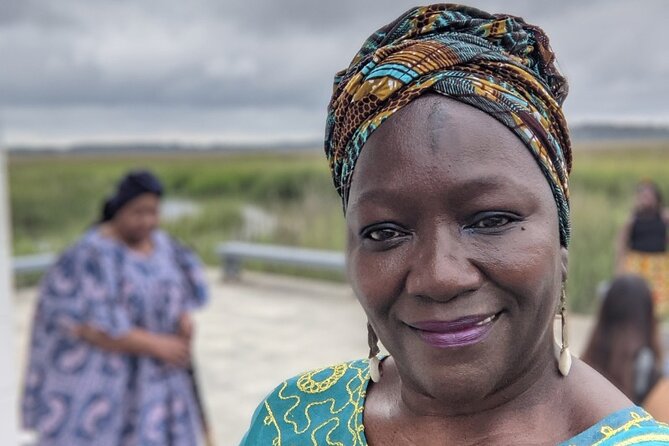
River Street is one of Savannah’s most recognizable areas. Its warehouses, raised walkways, and river views are now part of the city’s visitor center. This tour asks you to look past the attractive setting and consider the labor that made the district possible.
You learn about West African tribes and communities routed to Savannah and forced into slave labor. Their work helped build the warehouses along the river, linking the city’s commercial growth directly to slavery.
That connection is important because it moves the subject from an abstract lesson to a physical place. You are looking at the structures and streets while hearing how forced labor supported trade and wealth. The point is not simply that slavery existed in Savannah. The point is that it helped build the Savannah you can still see.
The guide also places emphasis on the abilities brought by African people, including building skill, agricultural knowledge, medicinal knowledge, and folkloric traditions. That balance matters. Enslaved people are not presented only as victims of a system. You also learn about their expertise, endurance, and influence on American life.
Johnson Square and the city’s hardest truths
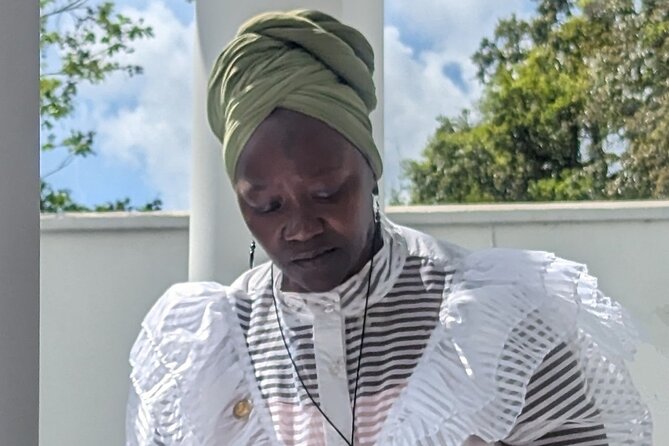
Johnson Square is another familiar Savannah landmark, but its connection to slavery gives the setting a darker meaning. Here, the tour explains where enslaved people were auctioned.
This stop can be emotionally heavy, especially for children. One family found the subject too intense for children aged seven and eleven, while another family said children aged eight and thirteen learned a great deal from the guide. Your own group’s age and maturity should shape the decision.
The guide’s approach helps. Sistah Patt is praised for combining humor with serious history, keeping the tour from becoming a long recitation of dates. Her style is direct and interactive. You may find yourself thinking about how an ordinary public square could serve both daily civic life and the buying and selling of human beings.
I would not book this outing expecting a light introduction to Savannah. It is designed to make the city’s past harder to ignore. That is its strength, but also the reason you should prepare younger children before you go.
More History Tours in Savannah:
- Savannah History and Haunts Candlelit Ghost Walking Tour
★ 5.0 · 3,235 reviews - Narrated Historic Savannah Sightseeing Trolley Tour
★ 4.5 · 2,375 reviews - Southern Flavors Food, Pub Crawl, and History Walking Tour
★ 4.5 · 1,623 reviews - Genteel and Bard’s Savannah Dark History and Ghost Encounter Walking Tour
★ 5.0 · 1,546 reviews
The African American Monument and Laurel Grove Cemetery
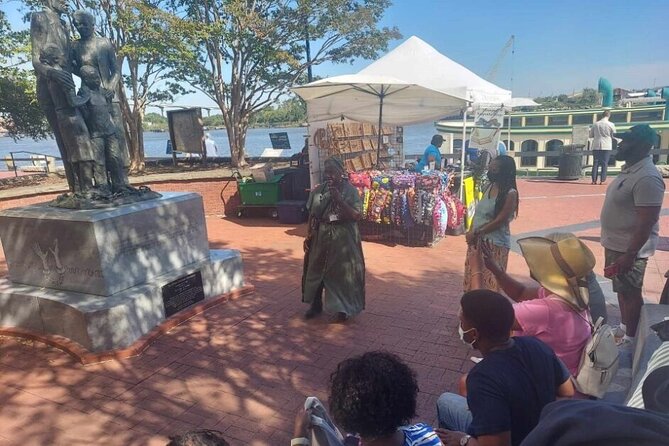
The African American Monument is included in the experience and gives the tour a place to discuss memory and public recognition. Monuments can never tell the whole story, but they can show what a community chooses to honor. This stop helps move the tour beyond the era of slavery and toward the continuing presence of African American life in Savannah.
Laurel Grove Cemetery adds another layer. A cemetery can make history feel personal without relying on a long list of names and dates. It connects the broad story of slavery and freedom to families, faith, loss, and remembrance.
The supplied details do not specify how long you spend at each location, so do not plan on extended independent exploration. Think of these as guided stops woven into a larger route. The guide provides the context, and you use the short time on site to look, listen, and take in the setting.
Second African Baptist Church and the road to freedom
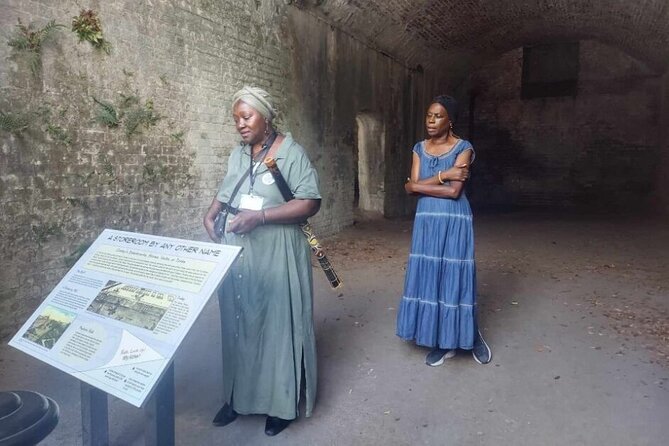
The tour passes Second African Baptist Church while explaining the journey from slavery toward freedom. Churches played a central role in African American community life, and this stop gives the narrative a spiritual and civic dimension.
The route does not treat freedom as a single event with a neat ending. Instead, the guide connects the past to the people and institutions that carried communities forward. The shift from auction blocks and forced labor to churches, monuments, cemeteries, and organized memory gives the tour its full arc.
That wider story is one of the experience’s best features. You are not left with only scenes of suffering. You also hear about persistence, faith, leadership, culture, and the effort required to keep Black history visible in a city whose tourist image has often focused elsewhere.
Why the guide makes such a difference
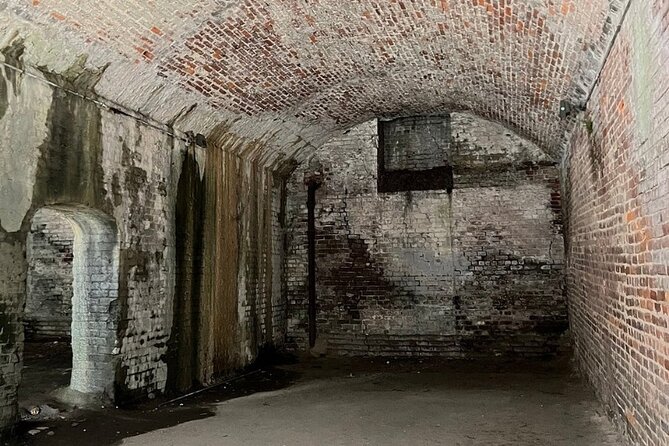
The guide is the heart of this tour. Sistah Patt is described as a Master Gullah Geechee Truth-Teller, and her work goes beyond reciting prepared facts. Her style is energetic, personal, and occasionally funny without making light of slavery.
She also brings years of advocacy for Savannah’s history. That background gives her a personal connection to the city’s preservation and public storytelling. Her presentation can feel more like a conversation with a forceful local educator than a standard bus commentary.
Ms. Rosalyn, also called Sister Rozz in some tour descriptions, has earned praise for her clear communication and strong command of Savannah’s Black and Gullah Geechee history. Since the guide may vary, you should not assume Sistah Patt will lead every departure. Both names are associated with highly praised versions of the experience, but the tone may differ slightly from one guide to another.
People who enjoyed the tour often describe taking notes, discussing it with family afterward, and wanting to bring relatives back. That makes sense. The information comes quickly, and the tour covers architecture, economics, religion, family, culture, and history in a short period. Bring a notes app if you want to remember details.
Is $54.78 a fair price?
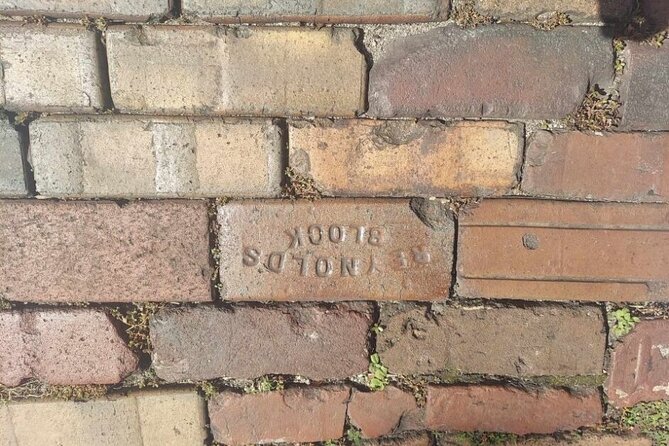
At $54.78 per person, this is not the cheapest way to see Savannah. You are paying for a focused subject, a live guide, transportation, and access to several locations within a roughly three-hour outing.
The value depends on your goal. If you want the standard overview of squares and buildings, you may find a general city tour more suitable. If you want a dedicated examination of slavery, African American life, and the road to freedom, the price is reasonable, particularly because the guide adds interpretation you cannot get from simply visiting River Street or Johnson Square on your own.
The cost does not include gratuities, bottled water, or parking. Bring water, especially in warm weather, and allow extra time and money if you need to park near the meeting point. A tip for the guide is also separate.
The tour is highly recommended overall, with a 4.9 rating from 407 reviews and 98 percent of people recommending it. Those numbers suggest a strong experience, but they do not erase the practical limitation: you may spend most of the time on the bus.
Who should take this tour?
I would recommend it to adults interested in American history, families with older children, educators, and anyone who feels that a Savannah visit should include more than beautiful buildings. It is also useful early in your stay. One person wished they had taken it before seeing other Savannah sights because the information changed how they understood those places.
Older children and teenagers may respond especially well to the guide’s energy. The subject is serious, and you should use your judgment with young children. The experience can be thought provoking and even heartbreaking, but it also includes humor and uplifting stories of survival and achievement.
This is less suitable for you if you want a slow walking tour, many chances to leave the vehicle, or a relaxed sightseeing ride with only light historical commentary. The bus format limits independent exploration, and the amount of information can feel dense.
You should also allow for the possibility that the tour runs close to three hours. One person felt the material could have been covered more quickly. For most people, the length is part of the value, but it may be tiring if you have a packed day.
Practical details that affect your day
You receive confirmation when you book. The tour is offered in English, and service animals are allowed. Most people can participate, but you need to request an accessible vehicle at least 24 hours ahead of time.
The experience requires good weather and a minimum number of participants. If poor weather or low enrollment cancels it, you can choose another date or experience, or receive a full refund.
You can cancel for a full refund up to 24 hours before the start time. Cancellations or changes within 24 hours are not accepted for a refund. Since cut-off times use Savannah local time, check the exact start time before making changes.
Should you book the Savannah Slavery to Freedom tour?
Book it if you want Savannah’s African American story placed at the center of your visit. The combination of River Street, Johnson Square, the African American Monument, Laurel Grove Cemetery, and Second African Baptist Church gives the subject a strong sense of place.
The best reason to go is the guide. Sistah Patt and Ms. Rosalyn bring energy and clarity to a difficult subject, and the strongest departures appear to leave people thinking about Savannah long after the bus returns.
Skip it if you mainly want a walking tour or if your group is very young and not ready for frank discussion of slavery and slave auctions. For everyone else, especially history-minded visitors, this is a worthwhile use of three hours. Pair it with your own walk through Savannah afterward, and the city’s famous sights will carry much more meaning.
FAQ
How long does the Savannah Slavery to Freedom Guided History Tour last?
The experience lasts approximately three hours. The narrated portion is described as lasting about two to two and a half hours.
Where does the tour begin?
The meeting point is 223 Martin Luther King Jr Boulevard, Savannah, Georgia 31401.
Where does the tour end?
The activity ends back at the meeting point.
Who guides the tour?
The experience features Sistah Patt, described as a Master Gullah Geechee Truth-Teller. Ms. Rosalyn, also referred to as Sister Rozz, may lead some departures.
What places are included?
The tour includes River Street, Johnson Square, the African American Monument, Laurel Grove Cemetery, and a pass by Second African Baptist Church.
Is the tour entirely on foot?
No. The experience uses a vehicle and includes some walking. The amount of time spent outside can vary, so it is not a full walking tour.
How many people can join the tour?
The maximum group size is 32 people.
Is the tour wheelchair accessible?
You must give at least 24 hours of advance notice to request an ADA accessible vehicle.
Can I cancel for a refund?
Yes. You can cancel at least 24 hours before the start time for a full refund. Cancellations or changes made within 24 hours are not refunded.
Newest history tours we have reviewed in Savannah
- Savannah Historic District Walking Tour★ 5.0 · 223 reviews
- Historic Downtown Savannah: Guided Segway Tour★ 4.9 · 276 reviews
- 90-Minute Segway History Tour of Savannah★ 5.0 · 365 reviews
- Historical Bike Tour of Savannah and Keep Bikes After Tour★ 5.0 · 345 reviews
- Private Tour of Savannah’s Historic/Victorian Districts & Bonaventure Cemetery★ 5.0 · 418 reviews
- Guided Savannah Civil War History Walking Tour★ 5.0 · 492 reviews
- Savannah: Historic District Foodie Walking Tour★ 4.8 · 613 reviews
- Genteel and Bard’s Savannah History Walking Tour★ 5.0 · 684 reviews
Savannah History Tours, compared.
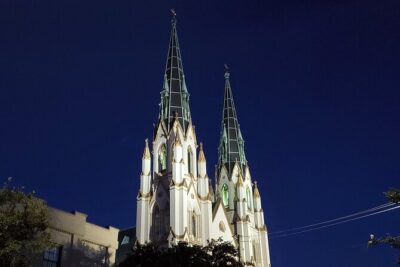
Savannah History and Haunts Candlelit Ghost Walking Tour
Read our review →
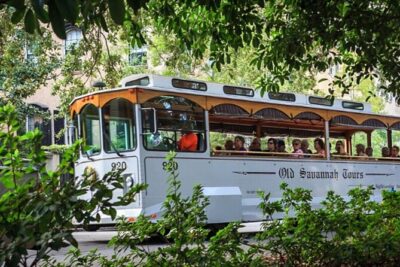
Narrated Historic Savannah Sightseeing Trolley Tour
Read our review →
Southern Flavors Food, Pub Crawl, and History Walking Tour
Read our review →
Genteel and Bard’s Savannah Dark History and Ghost Encounter Walking Tour
Read our review →
60-Minute Guided Segway History Tour of Savannah
Read our review →
Browse the lists this tour appears in