
Review · KOREA HISTORY TOURS
Gyeongju UNESCO World Heritage Guided Day Tour from Busan
Gyeongju is the place to go when you want Korea’s ancient Silla kingdom brought into focus. This long day from Busan links Bulguksa Temple, Yangdong Folk Village, royal tombs, and Wolji Pond without making you arrange several buses and entrance tickets yourself. The UNESCO route gives you the fullest historical picture, while the museum option suits anyone who prefers artifacts and a little less outdoor walking.
I like the air-conditioned round-trip coach and the way the guides keep a large group moving. Guides including Sol, Vincent, Irene, Bobby Kim, and Lucy have been praised for clear explanations, helpful photos, and good timing. The catch is simple: this is a very full day, often 10 to 12 hours, with long stretches outdoors and plenty of time on the road.
Key points to know before booking
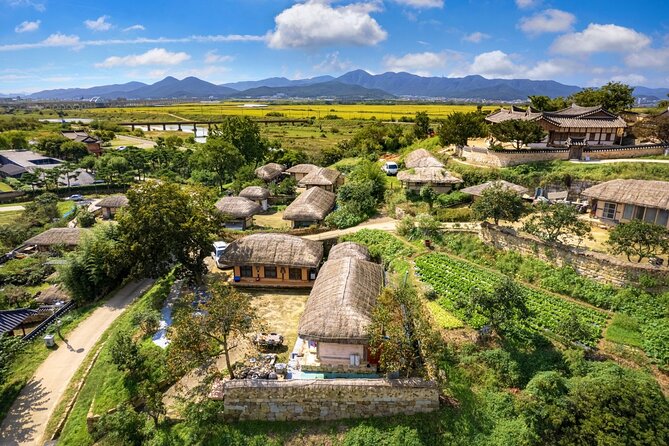
- Yangdong Village gives you a real rural view of old Korea, with traditional homes, hills, and quiet lanes.
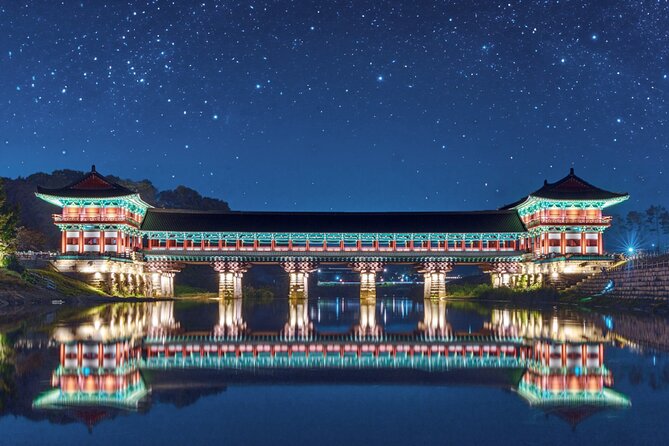
- The UNESCO route includes evening scenery at Wolji Pond and Woljeonggyo Bridge, two of the most memorable photo stops.
- You can choose between two styles of day: outdoor heritage sites or Bulguksa plus Hwangnidan-gil and the Gyeongju National Museum.
- Lunch and dinner are not included, so bring cash and plan around the available food stops.
- The schedule is packed, and some travelers found major stops too short for a relaxed visit.
- The maximum group size is 43, though the coach is described as clean and comfortable.
Why Gyeongju makes a better day trip than a quick city stop
Gyeongju was the center of the Silla dynasty, which ruled much of the Korean Peninsula for centuries. You feel that age not in one single monument, but in the way temples, tombs, villages, bridges, and palace grounds sit across the city.
From Busan, the practical problem is distance. You can visit on your own, but several separate stops require planning, transfers, tickets, and careful timing. This tour handles the long ride and connects the major sights in one day. That convenience is the main reason to book it.
At $57.14 per person, the price is fair for round-trip transport, a guide, and the included admissions on the UNESCO route. It is especially useful if your time in Busan is limited. You are paying for access and organization, not for a leisurely pace. If you prefer lingering for an hour over every stone pagoda or taking a slow lunch, a private tour or overnight stay in Gyeongju may suit you better.
More UNESCO World Heritage Tours in the world:
- World Heritage Shirakawa-go and Experience Tours from Kanazawa
★ 5.0 · 4,049 reviews - From Tirana: Berat UNESCO Heritage & Belshi Lake Tour
★ 4.9 · 3,863 reviews - Bali: Tanah Lot UNESCO World Heritage Sites Full-Day Tour
★ 4.7 · 1,947 reviews
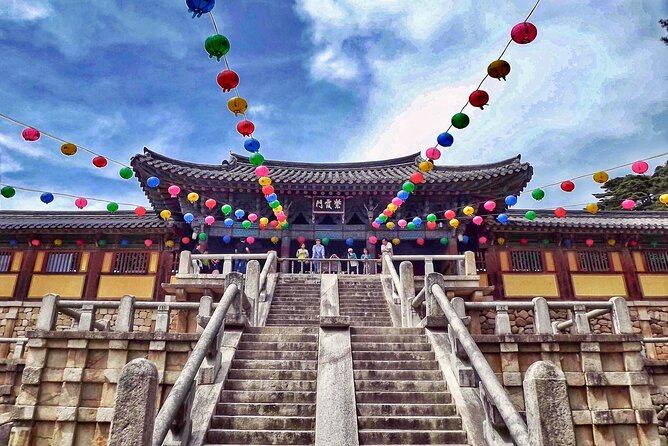
Bulguksa Temple, the day’s essential first chapter
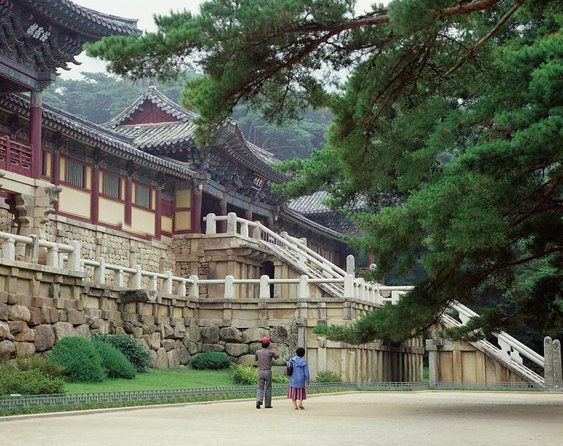
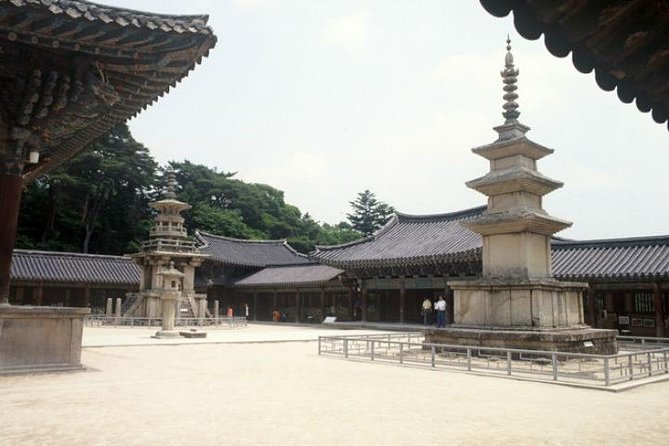
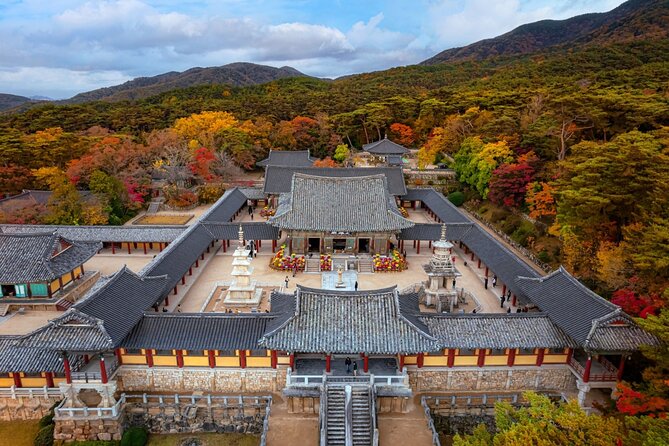
Bulguksa is a Silla-era Buddhist temple complex and a UNESCO World Heritage site. The visit lasts about 1 hour and 10 minutes, with admission included.
This is the stop where a good guide matters most. The stone stairways, courtyards, pagodas, and timber buildings make more sense when you understand how Buddhist ideas shaped Silla architecture. Guides such as Bobby Kim, Vincent, Sol, and Juna have been praised for giving useful historical and cultural context rather than simply pointing out buildings.
You should expect stairs, uneven ground, and outdoor walking. One visitor found the time at Bulguksa a little rushed, which is a fair concern. The temple deserves more than a quick photograph, but the schedule has many more stops ahead. Stay close during the guided portion, then use your free time for the details that interest you most.
This is also a good place for photos, though the tour moves as a group. If you want a quiet temple visit, arrive in Korea with a separate morning for Bulguksa. If you want a broad introduction to Gyeongju, the allotted time gives you the main experience.
Yangdong Folk Village and the feel of old Korea
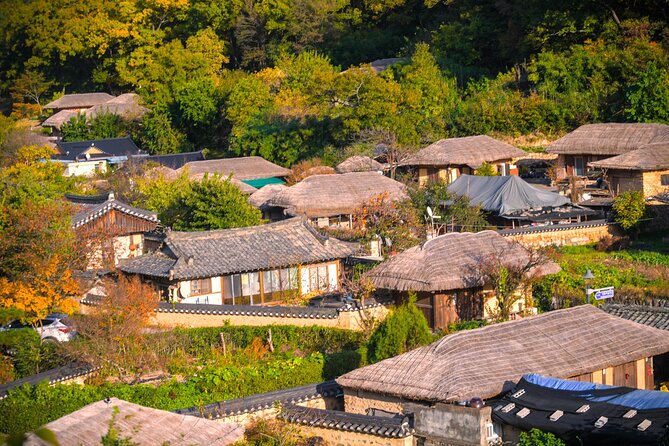
On the UNESCO route, Yangdong Folk Village receives about 2 hours and 15 minutes, including admission. This is Korea’s largest and best-preserved traditional village, set among hills and open countryside.
For me, this is one of the strongest reasons to choose the UNESCO option. The village is not just a collection of reconstructed buildings. Its traditional homes, lanes, slopes, and surrounding scenery help you picture how people lived before modern Korea. You get a sense of place that a museum cannot provide.
The trade-off is that the village is spread out. You will walk uphill and over uneven paths, and the stop can feel tiring after the morning temple visit. One review praised the traditional meal here, while another described the lunch as small and not worth the cost. The safest advice is to treat lunch as your own decision, not as a feature included in the tour price.
Food choices may be limited at the village. A vegetarian visitor may want to bring something along, since the available cafe has chicken, seafood, and pork meal options. Cash is also useful. There is no meal included, and personal food expenses are your responsibility.
Give yourself time to look beyond the first cluster of houses. The best part of Yangdong is the combination of architecture and countryside, not a single object inside a building.
Daereungwon and Gyeongju’s royal tombs
Daereungwon Tomb Complex, also called the Park of Royal Tombs, includes 23 Silla-era tombs. The UNESCO route allows about 45 minutes, including the Cheonmachong Tomb ticket.
These enormous grassy mounds can look simple at first. Your guide helps explain why they matter and how the tombs connect to Silla rulers and burial customs. Cheonmachong adds a more tangible element because you can enter the tomb area and see how the burial chamber was arranged.
Forty-five minutes is enough for a guided look and a walk through part of the grounds, but not for a slow exploration. Wear shoes that you can walk in comfortably. This is another open-air stop, so sun, rain, wind, and temperature changes can shape your experience.
The tombs also sit beside Hwangnidan-gil, making the two stops easy to combine. That location gives the day a useful change of pace.
More Guided Tours in the world:
- History and Hauntings of Salem Guided Walking Tour
★ 5.0 · 14,564 reviews - Edinburgh: Edinburgh Castle Guided History Tour with Tickets
★ 4.8 · 9,933 reviews - Historic Charleston Guided Sightseeing Walking Tour
★ 5.0 · 6,216 reviews - Rome: Colosseum with Arena, Roman Forum and Palatine Guided Tour
★ 4.0 · 5,598 reviews
Hwangnidan-gil, modern food beside ancient tombs
Hwangnidan-gil is a popular street beside Daereungwon. The stop lasts around 45 minutes and has no separate admission charge.
Here, old-style hanok buildings hold cafes, shops, and food counters. It is a lively contrast to the quiet village and temple grounds. You can have coffee, buy a snack, or simply walk the street and watch modern Gyeongju doing business beside Silla tombs.
This is also where the schedule may frustrate you. Some people find the late stop useful for food and a break. Others feel that 45 minutes to 1.5 hours is too much after a long day, especially when the group still has evening sights and the return drive ahead.
I would use this stop strategically. If you are hungry, eat here rather than waiting. If not, keep your walk short and save your energy for Wolji Pond. Dinner is not included or prearranged, and food choices can require some guesswork. Most establishments accept cards, but carrying some cash remains sensible.
Woljeonggyo Bridge at the changing light
The UNESCO route includes about 20 minutes at Woljeonggyo Bridge. There is no separate admission fee.
The bridge has stone arches and a long history connected to ancient Gyeongju. The short visit is designed more for seeing and photographing it than for a detailed historical tour. Its appearance changes as daylight fades, and the evening setting makes this one of the tour’s most attractive quick stops.
Twenty minutes goes fast. Listen to the guide’s explanation first, then take your photos. If you wander too far, you can lose valuable time getting back to the coach.
Donggung Palace and Wolji Pond after sunset
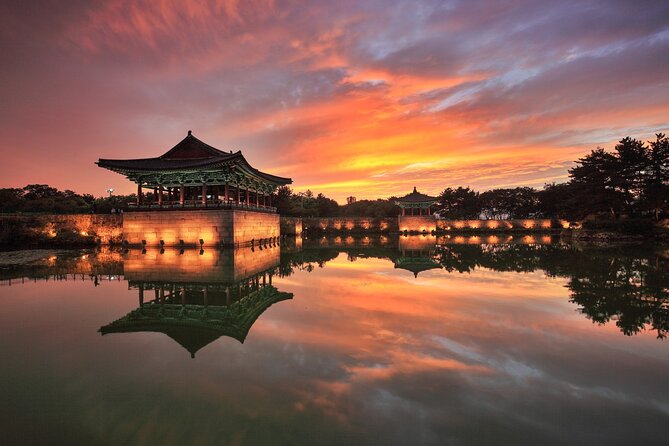
The final major UNESCO stop is Donggung Palace and Wolji Pond, with about one hour and admission included. The site was first built in 674 as an artificial pond connected with the Silla royal complex.
This is often the emotional high point of the day. Reflections, illuminated buildings, and dark water give the ruins a different mood from the bright temple and village visits. Several guides have been praised for pointing out good photo positions, and that help matters here because the best views can be easy to miss when you are tired.
The evening timing is useful, but it also makes the return late. The exact end time depends on traffic, weather, and the pickup location. One reported schedule left Busan around 9 a.m. and returned close to 9 p.m., while another described a 10 a.m. departure and 8 p.m. return. Plan your evening loosely and avoid booking a tight connection afterward.
The museum option for a more focused history day
The alternative route visits Bulguksa, Hwangnidan-gil, and the Gyeongju National Museum. The museum stop lasts about one hour, and admission is free.
This choice makes sense if you prefer objects, displays, and a more organized account of Silla culture. The museum holds important Buddhist pieces, royal items, and golden crowns connected to Gyeongju’s past. It also gives you a break from the weather and from constant outdoor walking.
You will miss Yangdong Village, Daereungwon, Woljeonggyo Bridge, and Donggung Palace and Wolji Pond on this option. That is a meaningful difference, not a minor variation. Choose the UNESCO route if this is your main chance to see Gyeongju’s famous outdoor sites. Choose the museum route if you have already seen some of the monuments, want more indoor time, or care most about artifacts.
Both options include Bulguksa and Hwangnidan-gil, so the choice comes down to what kind of history you want to see.
Guides, transport, and the rhythm of a large group
The tour uses an air-conditioned coach or minivan and can include up to 43 people. The bus ride takes time, but it also lets you see more of the Korean countryside without worrying about directions or transfers.
The strongest part of the guiding is practical organization. Guides including Tomy, Lan, Irene, Charles, Sol, Vincent, Roy, Brian, Juna, and Lucy have been praised for clear instructions, historical explanations, humor, photo help, and keeping people together. English, Chinese, and Korean language support is available, depending on the departure and guide team.
A large group has drawbacks. You may wait while people return to the coach, and free time can feel limited at the biggest sites. One person described the atmosphere on a 41-person bus as enjoyable, while another wanted more interaction between group members. Do not expect a private guide who can change the schedule around your interests.
The tour may use WhatsApp and a Google account for full participation, according to one detailed account. Workarounds are possible, but setting these up before departure could reduce stress.
What to bring for a 10 to 12 hour day
Dress for changing conditions. About 95 percent of the stops are outdoors, and the day can move from warm sunshine to a cool evening. Comfortable walking shoes are more important than smart clothing.
Bring:
- Water and a small snack
- Sun protection or rain gear, depending on the forecast
- Cash for food and small purchases
- A phone charger
- Clothing that works across several temperatures
- A camera or enough phone storage for evening photos
There is walking at Bulguksa, Yangdong Village, the tomb complex, and the palace grounds. Most people can participate, but the tour is not built around a slow or highly accessible pace.
The schedule can also be affected by traffic and weather. Keep your return plans flexible, especially if you need to catch a train or flight.
Who should book this Gyeongju day tour?
I would book it if you are staying in Busan and want a broad introduction to Silla history without arranging transport yourself. It is a strong choice for first-time visitors, families who value an organized day, and anyone who wants several major sites in one outing.
The UNESCO route is the better pick for outdoor heritage, village scenery, tombs, bridges, and evening palace views. The museum route is better for artifacts and a slightly more indoor-focused day.
I would hesitate if you dislike long bus rides, large groups, fixed schedules, or late returns. The lunch arrangements also deserve thought. You pay separately, and the quality and value can vary. Pack food if you have dietary needs or want to avoid spending time searching for a suitable meal.
Should you book it?
Yes, if your Busan visit does not include an overnight in Gyeongju and you want the most sights for a reasonable price. The guides add real value, especially at Bulguksa and the tombs, while the coach removes a lot of transport hassle.
Book the UNESCO option for the fullest first visit. Pick the museum option only if you specifically prefer indoor collections or have less interest in the village, bridge, and evening pond. Either way, go in expecting a long, active day rather than a relaxed excursion. That honest expectation is the key to enjoying it.
The experience allows free cancellation up to 24 hours before the start time for a full refund. Changes or cancellations made less than 24 hours ahead are not accepted.
FAQ
How long does the Gyeongju tour from Busan last?
The experience lasts approximately 10 to 12 hours. Traffic, weather, and the drop-off location can affect the final return time.
What are the two tour options?
You can choose the UNESCO Tour or the Museum Tour. The UNESCO Tour includes Bulguksa, Yangdong Folk Village, Daereungwon, Hwangnidan-gil, Woljeonggyo Bridge, and Donggung Palace and Wolji Pond. The Museum Tour includes Bulguksa, Hwangnidan-gil, and the Gyeongju National Museum.
Are entrance fees included?
Yes. The UNESCO option includes Yangdong Village, Donggung and Wolji, and the Cheonmachong Tomb ticket. Bulguksa admission is also included. The Gyeongju National Museum has no admission charge listed.
Are meals included?
No. Lunch, dinner, and personal food expenses are not included. You should plan to pay separately for meals and snacks.
Is transportation provided from Busan?
Yes. Round-trip transport from central Busan is provided by air-conditioned coach or minivan.
What happens if I need to cancel?
You can cancel at least 24 hours before the experience starts for a full refund. Cancellations or changes made less than 24 hours before the start time are not accepted.
Newest history tours we have reviewed in the world
- Bilbao Historical Tour in small group★ 4.7 · 52 reviews
- Bologna: Street Food Tour in the Historic Center★ 4.8 · 125 reviews
- Bishkek : City Tour (History, Architects, Statues & Culture)★ 4.9 · 54 reviews
- Blenheim: Omaka Aviation Heritage Centre Admission Ticket★ 4.9 · 31 reviews
- CEBU: Cebu City Heritage and Uphill Guided Tour★ 4.2 · 31 reviews
- Berlin: Nazi History Walking Tour★ 4.8 · 33 reviews
- Best of Baku: 4-Hour City Tour Historic and Modern Landmarks★ 4.7 · 63 reviews
- Belfast: Best of Belfast History, Culture & Art Walking Tour★ 4.9 · 158 reviews
UNESCO World Heritage Tours, compared.
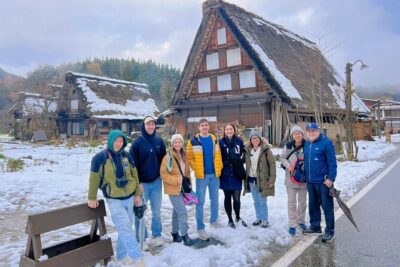
World Heritage Shirakawa-go and Experience Tours from Kanazawa
Read our review →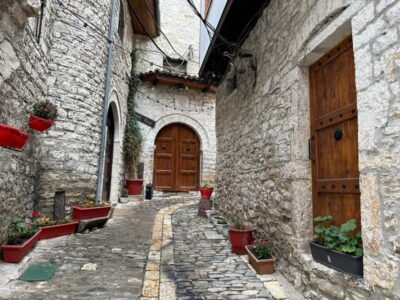
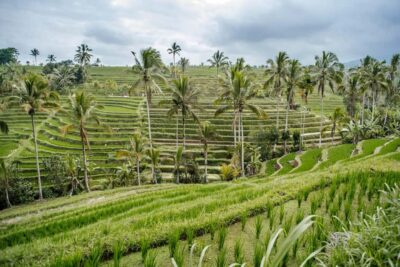
Bali: Tanah Lot UNESCO World Heritage Sites Full-Day Tour
Read our review →
World Heritage Kyoto & Nara Uji Authentic Matcha Experience
Read our review →
UNESCO’s Ayutthaya Historical Park: Full-Day Tour from Bangkok
Read our review →
Rotterdam: Kinderdijk UNESCO World Heritage Entry Ticket
Read our review →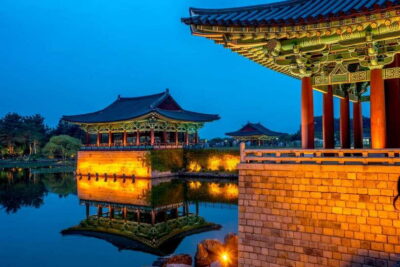
From Busan: Gyeongju UNESCO World Heritage Guided Day Tour
Read our review →Browse the lists this tour appears in