
Review · BARCELONA HISTORY TOURS
Barcelona: 2.5-Hour Bike or E-Bike Historical Tour
Barcelona’s Gaudí story makes far more sense from a bicycle seat. In 2.5 hours, you can connect the Arc de Triomf, El Born, Casa Batlló, La Pedrera, Casa Vicens, and Sagrada Familia without spending the day walking between them. I especially like the easy city riding and the chance to see major buildings from the street, where their odd shapes and details are easy to appreciate.
I also like the low $28 price, which includes the bike, helmet, water, insurance, and a guide. The main catch is that this is an outside viewing tour, not a ticketed visit inside Gaudí’s buildings. Traffic, stoplights, and a fairly full route can also limit how long you spend at each stop.
Key points to know
- Gaudí in one efficient route: See Casa Calvet, Casa Batlló, La Pedrera, Casa Vicens, and Sagrada Familia in a single outing.
- E-bike help on Barcelona streets: The electric option makes uphill sections and starts after traffic lights easier.
- A strong starting point: The office is only a few minutes from Arc de Triomf Metro station and Ciutadella Park.
- Small groups: Tours run with 2 to 15 people per guide, with private options also available.
- Good guide flexibility: Guides including Peter, Marina, Alex, Maria, Sergio, and Sergey have been praised for clear explanations, local suggestions, and adjusting the pace.
- Mostly an exterior tour: You see the façades and towers, but entry to Casa Batlló, La Pedrera, or Sagrada Familia is not included.
Why a bike is a smart way to see Gaudí
Gaudí’s Barcelona is spread across several parts of the city. Casa Batlló and La Pedrera sit along Passeig de Gràcia, Casa Vicens is farther north in Vila de Gràcia, and Sagrada Familia is still farther away. On foot, this route would take much of a day. By bike, the connections become part of the experience.
The route also gives you a better sense of Barcelona’s shape. You move from the Arc de Triomf and Ciutadella Park through the old quarters, then into the newer Eixample streets and Gràcia. I like this progression because Gaudí’s buildings do not appear in isolation. You see how his unusual work fits into a city of medieval lanes, broad avenues, apartment blocks, plazas, and neighborhood streets.
The e-bike option is especially useful for anyone who wants the reach of a bicycle without turning the outing into a workout. The route is described as mostly flat, with some uphill sections. Riders have found the electric bikes easy to handle, including when starting again after traffic lights. A regular bike can work for confident cyclists, but the e-bike costs less effort and lets you pay more attention to the city.
More History Bike, Segway and Tuk-Tuk Tours in Spain
- Barcelona Historical 3-Hour Bike Tour
★ 4.7 · 222 reviews - Madrid Historical Tour with Local Guide in Eco Tuk Tuk Private
★ 5.0 · 876 reviews - San Sebastian E-bike trour: Basque History and Cultural.
★ 5.0 · 367 reviews
Starting beside Arc de Triomf
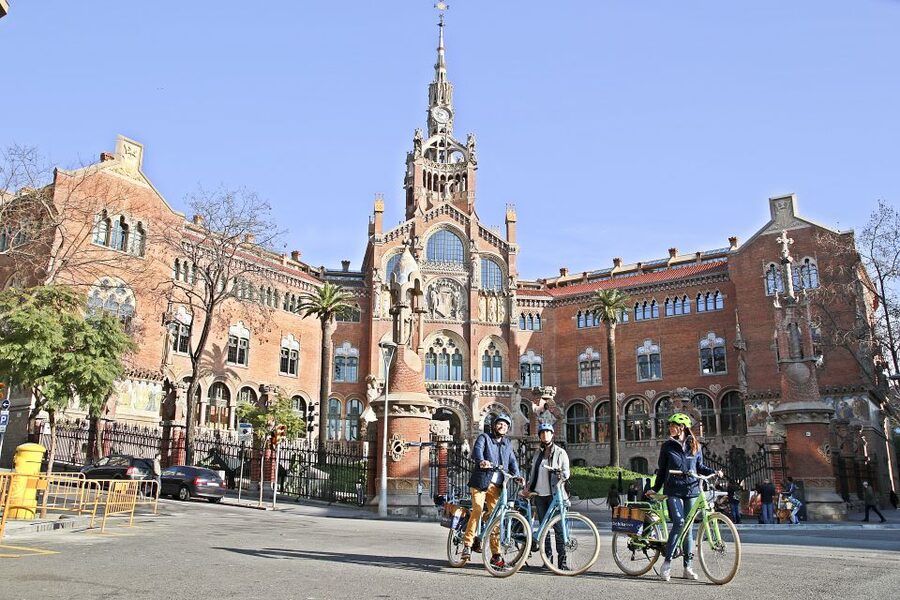
You meet at Passeig de Lluís Companys, 10, near the Arc de Triomf. The nearest Metro stop is Arc de Triomf on the red L1 line, followed by a walk of about three minutes along the broad promenade. Buses 39, 40, 51, and H14 also stop nearby.
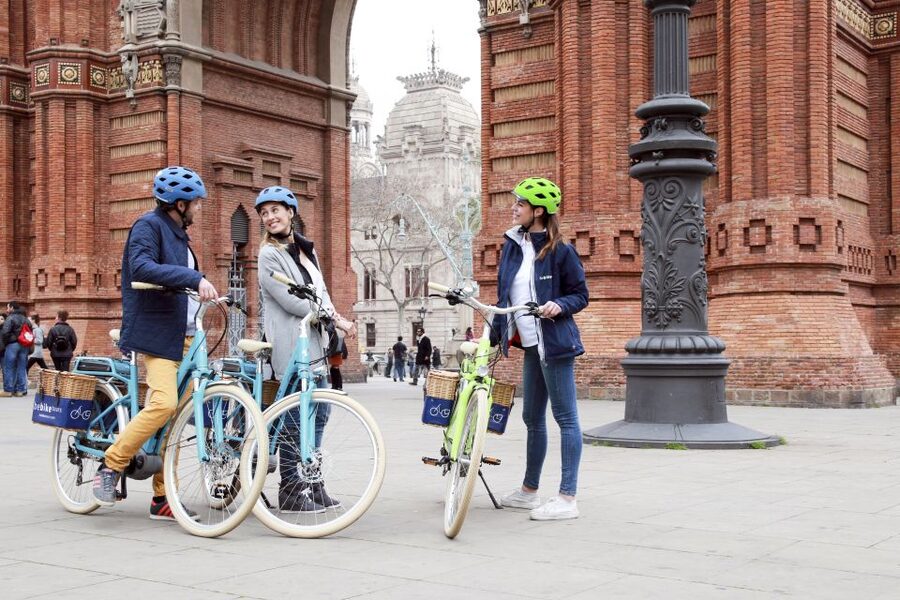
The Arc de Triomf is a useful first stop because it gives your guide a chance to explain the city before the riding begins. Unlike the better-known Roman arches in other European cities, Barcelona’s arch was built for the 1888 Universal Exposition and uses a neo-Mudéjar design. You get a photo stop and a short introduction before rolling toward the park.
This is also a practical meeting point. You are close to Ciutadella Park, and the office is easy to find if you arrive by Metro. I would get there early enough to handle check-in, helmet fitting, and bike adjustment without rushing.
Ciutadella Park and the old city edge
The first ride leads through Parc de la Ciutadella. The park’s grand fountain has Italian-inspired touches, and Antoni Gaudí may have contributed to its early work as a young student. That detail gives you an early hint of the architect’s path before you reach his famous buildings.
You get some free time and a guided look around the park, but this is not a long park visit. The tour has several major stops ahead, so expect a compact introduction rather than a slow wander through every path and monument.
From here, the route heads toward El Born. The old quarter once served as a seaside retreat for medieval aristocracy, and its streets feel very different from the straight avenues of the Eixample. Riding through this part of the city gives you a useful change of scale: narrow lanes and old stone buildings replace the open promenade and park.
El Born, Mercat del Born, and Santa Maria del Mar
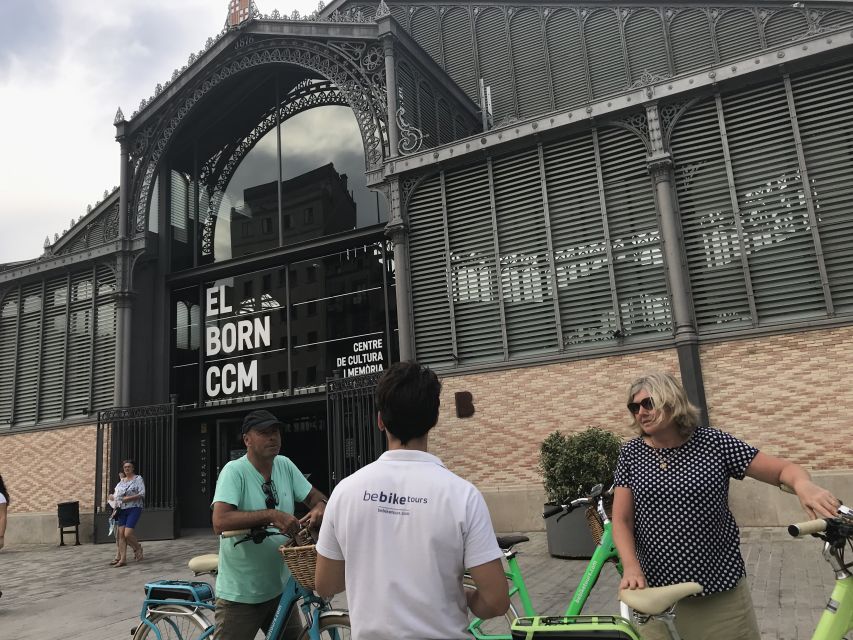
El Born is one of the more atmospheric parts of the route. You pass the Mercat del Born, a former market building with an important place in the neighborhood, and continue toward the Basilica of Santa Maria del Mar. The church is viewed from outside during the ride, so you should not expect an interior visit.
This section is valuable because it places Gaudí’s work within Barcelona’s older architectural story. The city is not only about Modernisme, and the tour does not pretend otherwise. The old quarter, market, church, and later Gaudí buildings create a clear contrast between medieval Barcelona and the city’s late nineteenth and early twentieth century expansion.
You also pass through Plaça Sant Jaume, the civic center of the old city. This is another sightseeing stop rather than a scheduled long visit. The route keeps moving, so your guide’s commentary matters. A strong guide can make these brief stops useful by explaining what you are seeing before the group gets back on the bikes.
More History Bike, Segway and Tuk-Tuk Tours in Barcelona:
- Historical Singapore Bike Tour on Full-Sized Bicycles
★ 5.0 · 1,421 reviews - Charlotte’s Ultimate Southern Charm Historical City Cart Tour
★ 5.0 · 1,347 reviews - Asheville Historic Downtown Guided Electric Bike Tour with Scenic Views
★ 5.0 · 1,234 reviews - Private Guided Historic Electric Cart Tour of St. Augustine
★ 5.0 · 1,194 reviews
Casa Calvet and the change to Modernisme
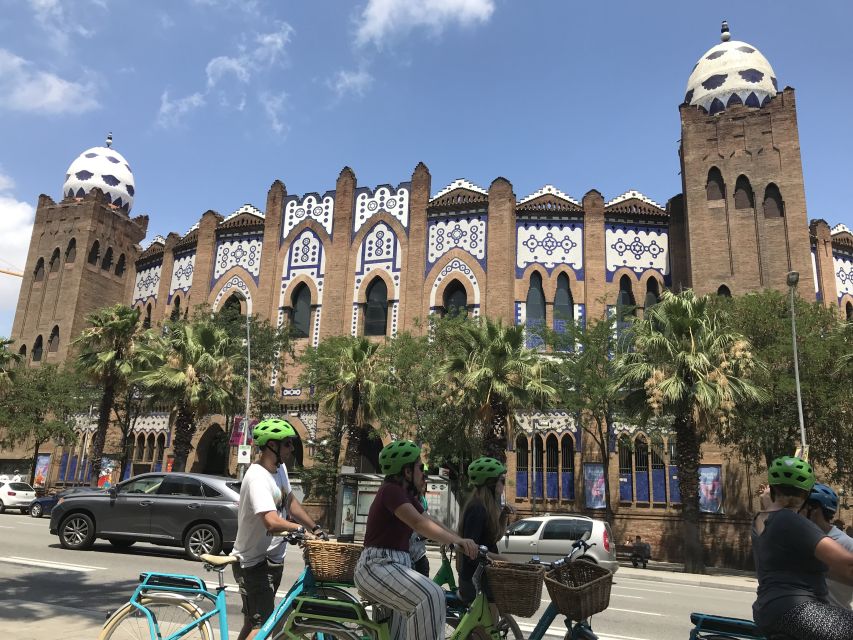
Casa Calvet is one of the less famous Gaudí buildings on this tour, which is part of its appeal. Gaudí designed it as a residential and commercial building, and it was declared a Place of Cultural Interest in 1969. You view it from outside rather than going in.
Casa Calvet helps you notice that Gaudí did not begin with the wild shapes most people associate with him. The building has a more restrained street presence than Casa Batlló or La Pedrera, though decorative details still reward a careful look. I would ask your guide to point out the parts that reveal Gaudí’s hand, since a quick pass can make the building seem ordinary beside his more dramatic work.
This stop also shows why a guided tour is useful. You get more than a list of names. The guide can link Casa Calvet to the buildings you see later, making the changes in Gaudí’s design easier to follow.
Casa Batlló and La Pedrera on Passeig de Gràcia
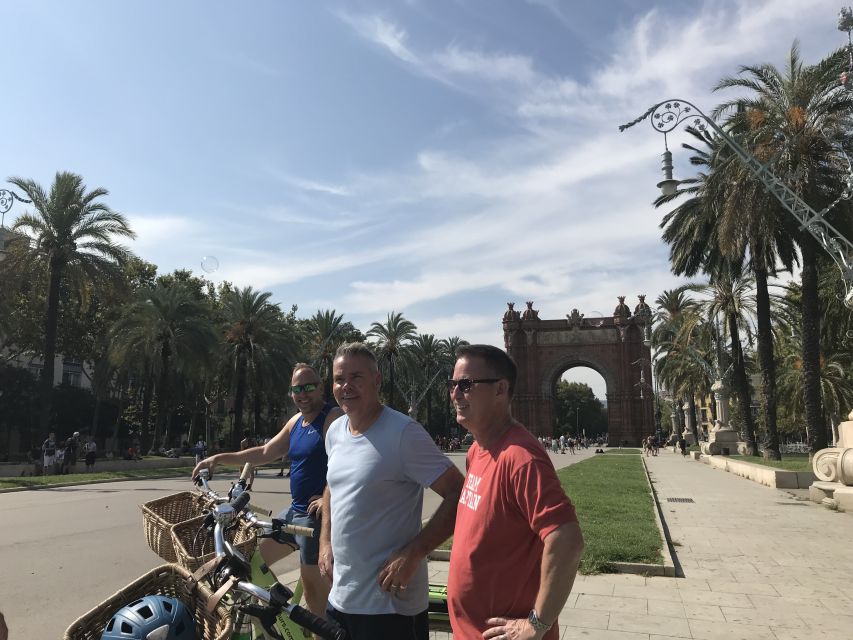
The route then reaches Passeig de Gràcia, Barcelona’s grand Modernisme avenue. Here you see two of Gaudí’s best-known works: Casa Batlló and Casa Milà, commonly called La Pedrera.
Casa Batlló has a façade that looks almost alive, with curved surfaces, unusual window shapes, and a roofline often compared to a dragon’s back. The bike stop gives you a chance to see the whole exterior, but the tour does not include admission. If you want to explore the rooms, stairways, or rooftop, plan a separate visit and ticket.
La Pedrera has a heavier, more sculptural appearance. Its rippling stone façade and twisting rooftop forms show a different side of Gaudí from the colorful Casa Batlló. The group sees the building from the street and receives a guided explanation, with views along the avenue.
Passeig de Gràcia can be busy, so do not expect to stand in the roadway for a long architectural lecture. The bike format works well here because you can cover the avenue efficiently and stop at selected viewpoints. It works less well if you want long, quiet periods to study every detail.
Vila de Gràcia and Casa Vicens
From Passeig de Gràcia, you continue into Vila de Gràcia. This former town now forms one of Barcelona’s best-known neighborhoods, with its own local center, shops, and plazas. The route describes it as the city’s coolest suburb, but the useful point is that it still feels like a district with a distinct identity rather than just another stretch of central Barcelona.
One of the sights here is the 33-meter bell tower crowned by the bell called Marieta. This gives the ride a local neighborhood focus, away from the headline Gaudí attractions.
Casa Vicens is a major reason to include this portion of the tour. It is considered one of the first buildings of the Art Nouveau movement and was Gaudí’s first house design. Its exterior is colorful and strongly patterned, with a look that differs sharply from both Casa Batlló and La Pedrera.
You receive brilliant views of Casa Vicens, but again, this is an exterior sightseeing stop. If you are choosing this tour for interiors, it will not replace a dedicated visit. If you want a broad introduction to Gaudí’s changing style, it does a good job.
Passeig de Sant Joan and Sagrada Familia
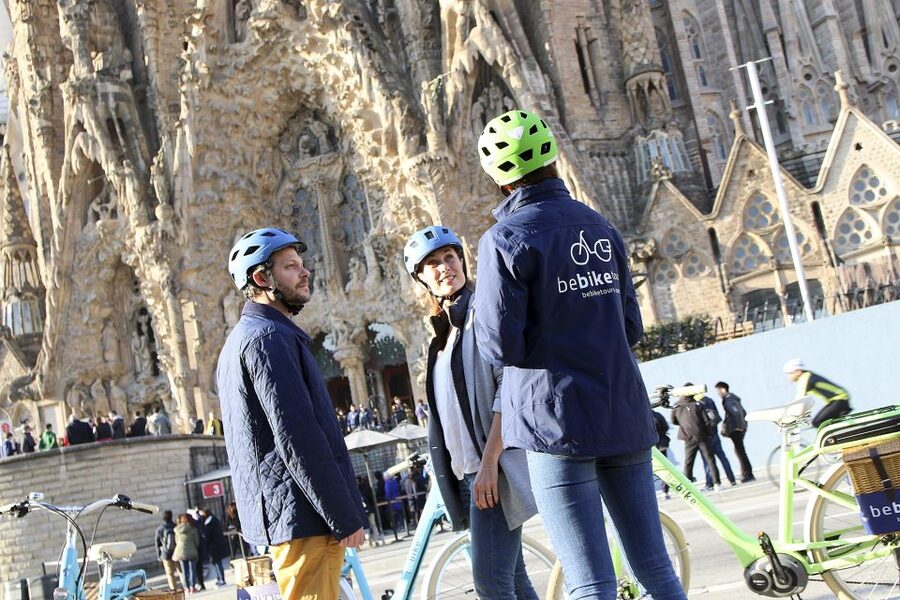
The final major ride follows Passeig de Sant Joan toward Sagrada Familia. This stretch helps connect the northern neighborhoods with Gaudí’s unfinished basilica and gives you a pleasant approach rather than dropping you immediately in front of the monument.
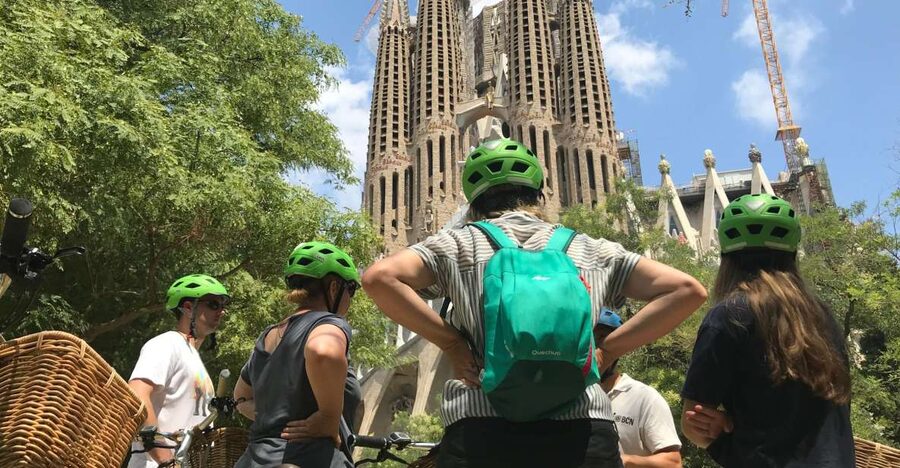
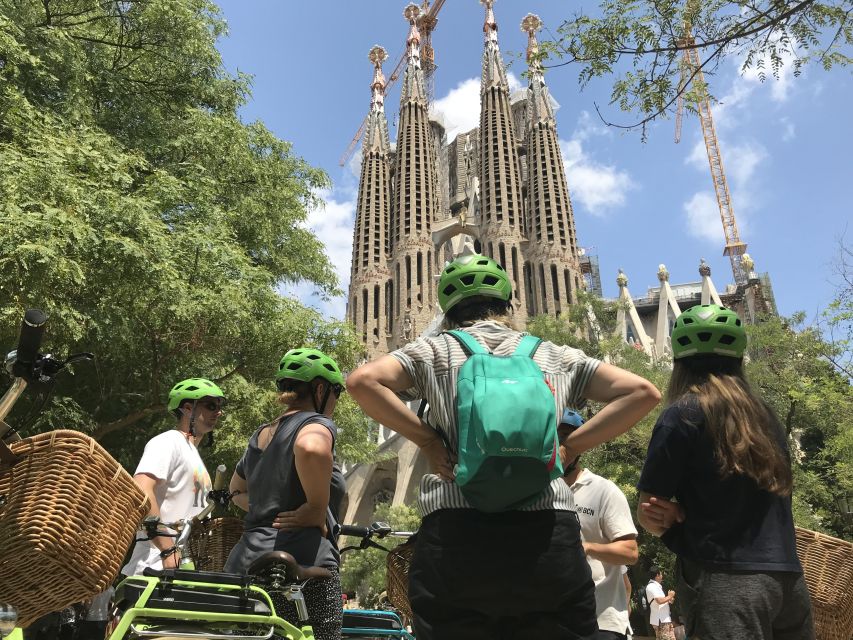
Sagrada Familia is the visual climax. Construction began in 1883 and continues today, and the basilica’s towers and façades are difficult to mistake for anything else in Barcelona. You get a photo stop, guided explanation, and some free time to take in the scale of the building.
The tour cannot give you the full interior experience in the time available. You will not climb the towers, study the interior light, or visit the museum as part of this outing. Still, arriving by bike has a practical benefit: you have already seen the city that surrounds Gaudí’s work, so the basilica feels like the final chapter of a wider route rather than an isolated attraction.
Leave room in your schedule if you want to enter Sagrada Familia later. The bike tour returns to the starting point, and the listed experience does not include entry tickets.
What the guides add to the ride
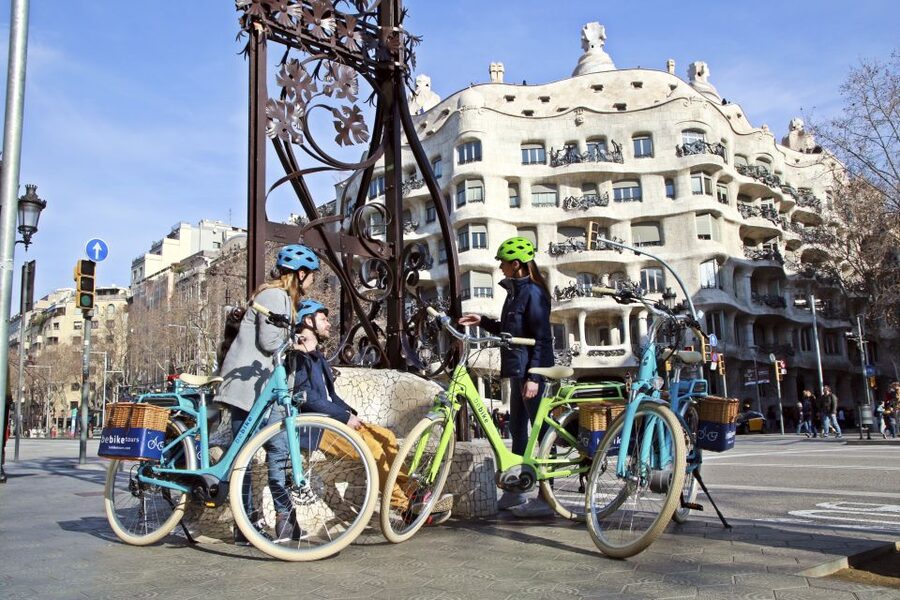
The guide can make or break a city bike tour, particularly when many stops are viewed from the street. The named guides praised in the supplied feedback include Sergio, Peter, Sergey, Liuba, Alex, Marina, and Maria. Their strengths include clear explanations, a relaxed manner, help with bike problems, and useful suggestions for places to eat or shop afterward.
Peter adjusted the outing for a solo rider and matched the pace to that person’s interests and cycling ability. That kind of flexibility is more likely in a private tour or a very small group than in a full group of 15. Alex was especially good at adding local dining and shopping suggestions, while Marina was noted for a friendly, easy-to-follow style.
You should not assume you will receive one particular guide. Staff assignments can change. The useful takeaway is that the company offers several languages, including Spanish, English, French, German, Italian, Russian, Dutch, and Portuguese, and the tour can be booked as a private or small-group experience.
Regular bike or e-bike?
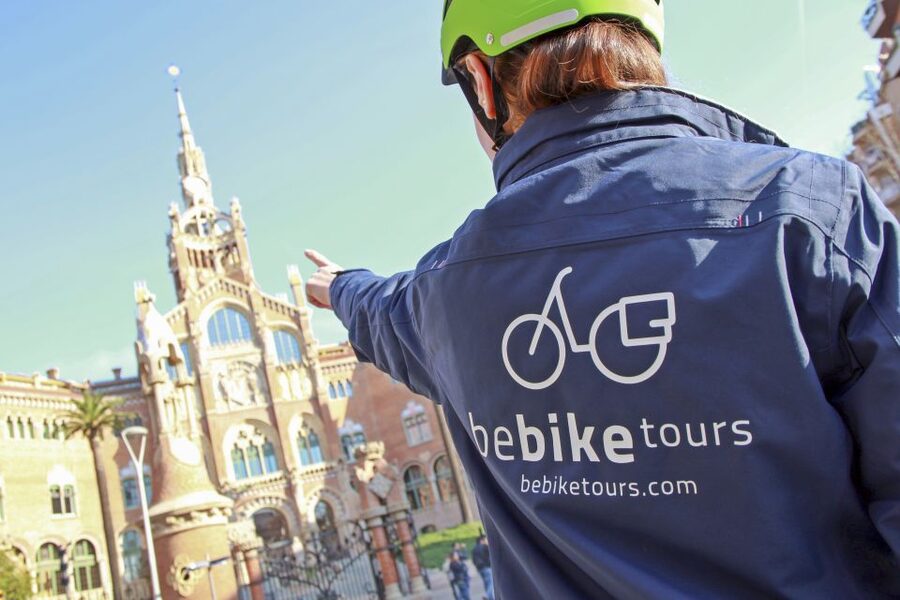
The regular bike is suitable if you are comfortable cycling in a city and handling a few uphill sections. One rider described the route as mostly flat and manageable on a normal bike. The e-bike is the safer choice for anyone who wants to conserve energy, dislikes hills, or simply wants to focus on buildings rather than exertion.
The electric assistance is also handy at stoplights. Barcelona riding involves repeated starts and stops, and the extra push can make those moments easier. Bikes have generally been described as well maintained and easy to use, though one group did experience a mechanical failure. The response was practical: a mechanic came out, and the group was able to wait at a nearby café before continuing.
That example also points to a small but real risk. Any bike tour can lose time to a flat tire or mechanical problem. The operator includes insurance, and the reported response was quick, but you should still avoid scheduling an important timed attraction immediately after the ride.
Cost, group size, and who should book
At $28 per person, this is a strong value for a 2.5-hour introduction to Barcelona. The price includes the bike or e-bike option you select, helmet, water, insurance, and a local guide. It also saves you the cost and planning effort of linking these neighborhoods together on your own.
The value is strongest if you want orientation. You see many major landmarks quickly, learn where they are, and can return later to the buildings that interest you most. It is less valuable if you already know Barcelona well or want long visits inside individual monuments.
Groups range from 2 to 15 people per guide, with private options available. A group of 15 may feel less personal at busy stops, while a tiny group gives the guide more room to answer questions and adjust the pace. Children under six can ride free in a safety seat on a parent’s bike. Children up to 20 kilograms and 130 centimeters can also join free in a child seat.
Children under two are not suitable for this activity, and it is not suitable for people with heart problems. You should also be comfortable riding a bike in an urban setting. The tour includes helmets, but the supplied information does not describe a separate beginner cycling class.
Free cancellation is available up to 24 hours before departure, and you can reserve now and pay later. Starting times vary, so check availability before planning the rest of your day.
My call: book it for orientation, not interiors
I would book this tour early in a Barcelona visit if I wanted a quick, active introduction to Gaudí and the city’s main districts. The route is broad, the e-bike keeps the effort reasonable, and $28 is a fair price for the distance covered.
Book it if you like seeing a city in motion, want guide commentary, and would rather connect several sights than spend one morning inside a single building. Choose the e-bike if you are unsure about hills or city cycling.
Skip it if your main goal is interior access to Sagrada Familia, Casa Batlló, or La Pedrera. In that case, buy separate admission and give each building more time. For most first-time visitors who want a useful overview, though, this ride offers a fun way to get your bearings fast and decide where to return.
FAQ
Where does the Barcelona bike tour begin?
The meeting point is the activity provider’s office at Passeig de Lluís Companys, 10, near Arc de Triomf.
How do I reach the meeting point by Metro?
Take the red L1 line to Arc de Triomf. From the station exit, walk about three minutes along Passeig de Lluís Companys toward Passeig de Sant Joan. The office is on the left.
How long does the tour last?
The tour lasts 2.5 hours and returns to Passeig de Lluís Companys, 10.
Which landmarks are included?
The route includes Arc de Triomf, Parc de la Ciutadella, El Born, Mercat del Born, Santa Maria del Mar, Plaça Sant Jaume, Casa Batlló, La Pedrera, and Sagrada Familia. It also includes views of Casa Calvet, Casa Vicens, and the Marieta bell tower in Vila de Gràcia.
Are regular bikes and e-bikes available?
Yes. You can select a regular bike or an electric bike when booking. The tour includes the bike option you choose, plus a helmet, insurance, and a bottle of water.
Does the tour enter Sagrada Familia or Gaudí’s other buildings?
No. The activity provides guided sightseeing and exterior views. Admission to Sagrada Familia, Casa Batlló, La Pedrera, and other buildings is not included in the provided tour details.
What languages are offered?
Live guides are available in Spanish, English, French, German, Italian, Russian, Dutch, and Portuguese.
Can children join the tour?
Children under six can join free in a child safety seat on a parent’s bike. Children up to 20 kilograms and 130 centimeters can also ride free in a parent’s child seat. Children under two are not suitable for the activity.
Newest history tours we have reviewed in Barcelona
- Barcelona Tapas Tour, Taverns, History & Local Culture★ 5.0 · 25 reviews
- Barcelona Historical 3-Hour Bike Tour★ 4.7 · 222 reviews
- Barcelona: Market, Tasty Tapas/Food and Gothic History Tour★ 4.7 · 48 reviews
- Barcelona: Cemetery Tour – Gothic Graves & Local History★ 4.9 · 33 reviews
- Barcelona & Chocolate Amatller History and Culture + Activity and Tasting★ 4.9 · 173 reviews
- Barcelona: The Spanish Civil War Historical Walking Tour★ 4.9 · 239 reviews
- Barcelona: 3-Hour Esoteric, Spiritual & Historical Tour★ 5.0 · 34 reviews
- Barcelona: 3-Hour Sips, Sites & Bites Food & History Tour★ 4.8 · 33 reviews
History Bike, Segway & Tuk-Tuk Tours, compared.
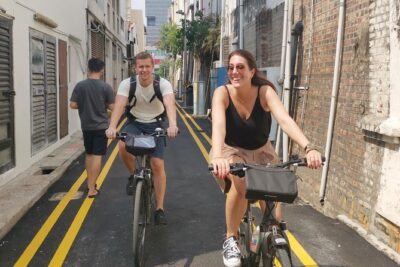
Historical Singapore Bike Tour on Full-Sized Bicycles
Read our review →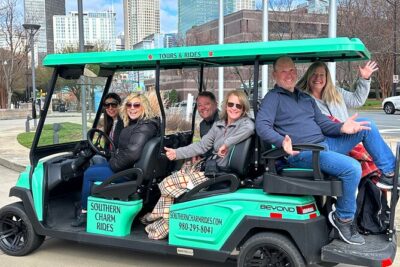
Charlotte’s Ultimate Southern Charm Historical City Cart Tour
Read our review →
Asheville Historic Downtown Guided Electric Bike Tour with Scenic Views
Read our review →
Private Guided Historic Electric Cart Tour of St. Augustine
Read our review →
60-Minute Guided Segway History Tour of Savannah
Read our review →
Historic Athens: Small Group Electric Bike Tour
Read our review →
90 Minute Historic Uptown Neighborhood Segway Tour of Charlotte
Read our review →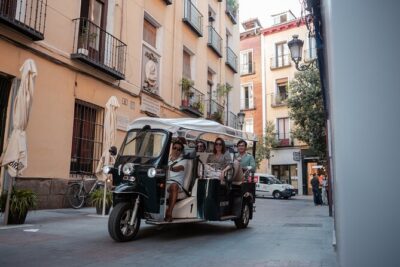
Madrid Historical Tour with Local Guide in Eco Tuk Tuk Private
Read our review →Browse the lists this tour appears in