
Review · AMSTERDAM HISTORY TOURS
LGBTQI+ History Tour of Amsterdam
Amsterdam’s LGBTQI+ History Tour is not simply a walk past rainbow flags and famous nightlife spots. It follows the story of LGBTQI+ life through memorials, canals, royal buildings, wartime Amsterdam, the Red Light District, and one of the city’s oldest gay bars. Guide Henk, who lived through the early years of Amsterdam’s gay movement, brings a personal voice to the past.
I like two things right away: the small maximum of 15 people, which gives you room to ask questions, and the way LGBTQI+ history is tied to Amsterdam’s wider story. Henk brings in politics, art, literature, poetry, war, AIDS, and civil rights rather than treating the subject as a side note. The main consideration is that this is a walking and storytelling tour, not a museum visit, so you’ll spend much of the two hours outdoors and moving between stops.
Key points to know before booking
- Henk’s personal connection: He lived through the beginning of Amsterdam’s gay movement and shares memories alongside historical facts.
- A meaningful starting point: The tour opens at the Homomonument, a memorial to LGBTQI+ people who suffered persecution in the past, present, and future.
- A city-center route: You walk from Westermarkt through Dam Square, the Red Light District, and Chinatown before finishing at Café ’t Mandje.
- A small English-language group: The tour is limited to 15 people, making conversation and questions easier.
- A serious subject with warmth: Henk discusses persecution, wartime history, AIDS, and civil rights while using humor and personal stories.
- Good value for a focused walk: At $42.33 per person, you pay for about two hours with a specialist guide, not entry to attractions.
Why this Amsterdam walk feels different
Amsterdam offers plenty of standard canal cruises and city-center walks. This tour gives you a different way to read the streets. The canals, old houses, squares, and nightlife districts become evidence in a story about how LGBTQI+ life has been controlled, hidden, defended, and celebrated.
That wider setting matters. You are not being taken to a single museum and handed a timeline. Instead, Henk points out how ordinary places connect to gay life in different periods. A royal building, a public square, a narrow street, a memorial, and a bar each carry part of the story.
I especially like the balance between public history and lived experience. Henk is not only presenting dates and political milestones. He speaks as a gay man who experienced the early gay movement in Amsterdam. That gives the tour a personal edge, while his references to Dutch poetry, literature, art, and politics add useful context.
The tone is warm, but the subject is not softened. You should expect discussion of persecution, the Second World War, the loss of loved ones to AIDS, and the long effort to secure civil rights. Henk also uses humor, which helps the walk feel human rather than solemn from beginning to end.
Straight allies are explicitly welcome. You do not need to identify as LGBTQI+ to appreciate the tour. You do need to arrive with an open mind and a willingness to listen.
More History Tours in Amsterdam:
- Amsterdam Food and Cultural Tour with Tastings
★ 5.0 · 4,315 reviews - Amsterdam: Historic City Centre Canal Cruise
★ 4.3 · 659 reviews - Amsterdam: Haunted History and Ghost Walking Tour
★ 4.5 · 488 reviews
Starting at the Homomonument
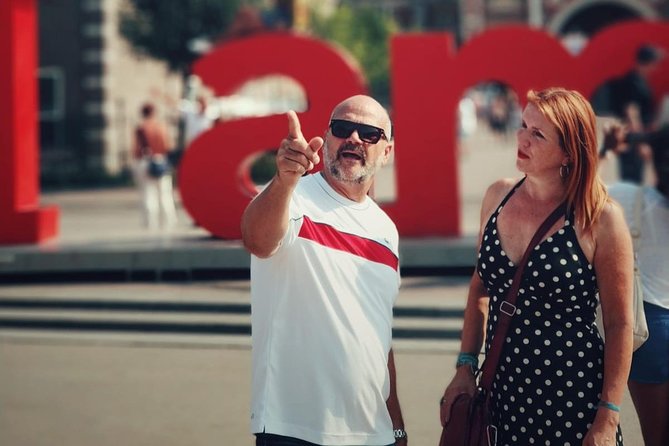
Meet Henk at Westermarkt 2L at 11:00 a.m. The first stop is the Homomonument, where the tour begins with a memorial to LGBTQI+ people who have faced persecution in the past, those facing it today, and those who may face it in the future.
This is a strong place to begin because it establishes the tour’s purpose. The monument is not treated as a quick photo stop. Henk explains how the Netherlands came to have the world’s first monument of this kind, and why remembrance matters in a city often associated with tolerance.
Plan for about 30 minutes here. That is a substantial share of a two-hour tour, and it signals that the experience is built around interpretation rather than rushing from one landmark to another.
You may find this opening emotional. The subject reaches into war, discrimination, community memory, and AIDS. That is part of the value, but it also means the tour is not a light sightseeing activity. If you want only cheerful nightlife recommendations, this is not the right fit. If you want to understand the cost of social change, the opening gives the rest of the walk a clear purpose.
Along the canals toward Dam Square
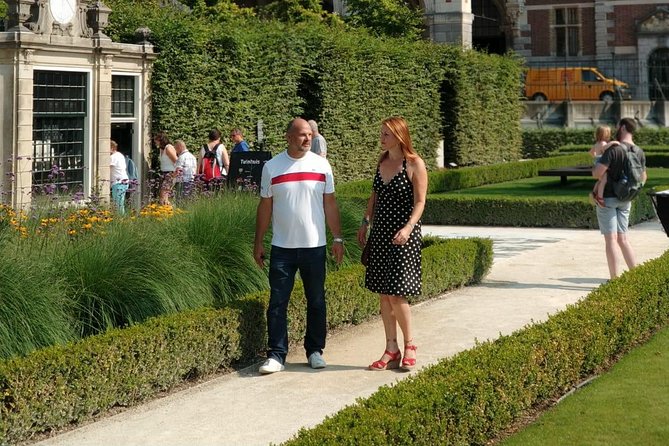
From Westermarkt, the group walks along Amsterdam’s canals toward Dam Square. The route includes views of 17th-century houses and an explanation of Amsterdam’s city planning.
This section does useful double duty. You get a taste of classic Amsterdam while learning how the city’s design shaped daily life. The canal belt is not just scenery behind the LGBTQI+ story. Its buildings and streets form the setting in which people worked, worshipped, socialized, hid relationships, and built communities.
The tour does not appear to spend a long time at every architectural detail. That is sensible. With only two hours, the focus stays on connections between the city and LGBTQI+ history. Still, this part gives you a better sense of place before the tour reaches the more concentrated history around Dam Square and the old center.
Wear comfortable walking shoes. Bring your own water, since neither refreshments nor food are included. The experience is outdoors, and the cancellation terms note that poor weather can lead to a different date or a full refund, so check the forecast before setting out.
The Royal Palace and the hidden stories of Dam Square

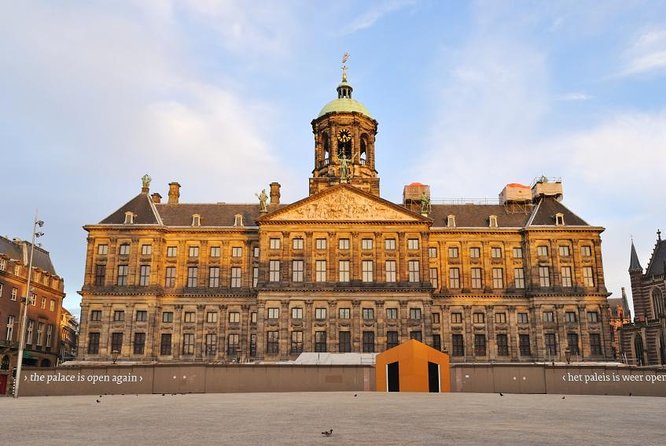
At the Royal Palace Amsterdam, Henk explains the building’s origins and its connection to gay life in the 17th century. The tour does not include admission inside the palace, so you view and discuss it from the outside.
That limitation is worth noting. If you want to tour the palace rooms, you’ll need a separate visit. On this walk, the building functions as a historical anchor. Its presence opens a discussion of how sexuality, public power, social rules, and urban life intersected in Amsterdam’s past.
The walk then reaches Dam Square, Amsterdam’s central public space. Henk covers its long history and the LGBTQI+ connections tied to it. The stop lasts about 10 minutes, so expect a focused explanation rather than a full tour of every monument and building around the square.
I like this part because it places LGBTQI+ history in a very public setting. The story is not confined to bars or specialist venues. It also belongs in the civic center of Amsterdam, beside institutions that shaped the city’s political and social life.
Same streets, a different century:
- Amsterdam High-End Dutch Food & History Tour – Up to 8 guests
★ 5.0 · 482 reviews - Amsterdam: Historic City Sightseeing Canal Cruise
★ 4.5 · 444 reviews - Anne Frank and the Jewish History of Amsterdam Private Tour
★ 5.0 · 307 reviews - Amsterdam: Luxury Canal Cruise with Historic VR Experience
★ 5.0 · 305 reviews
Through the Red Light District and Amsterdam’s leather street
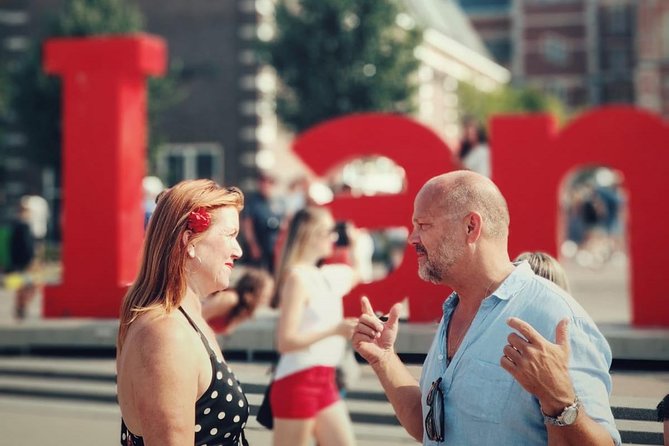
The route continues through the Red Light District. Henk explains the city’s leather street and can answer questions about the district if you are interested.
The supplied details do not promise a formal interior visit or a long stop at a particular venue here. Think of this stretch as an opportunity to understand how Amsterdam’s adult entertainment districts and LGBTQI+ spaces have overlapped, differed, or changed over time.
This is also a section where questions can make the experience better. The small group format helps because you can ask Henk for more detail instead of simply following a large crowd from one scripted point to another. If the subject interests you, bring questions about the leather scene, the Red Light District, or how these areas fit into Amsterdam’s wider LGBTQI+ story.
As with the rest of the walk, the value comes from the explanation. The streets themselves are easy to see on your own. Henk’s role is to provide the context that turns a familiar sightseeing area into part of a longer social history.
Chinatown, Zeedijk, and the story of Bet van Beeren
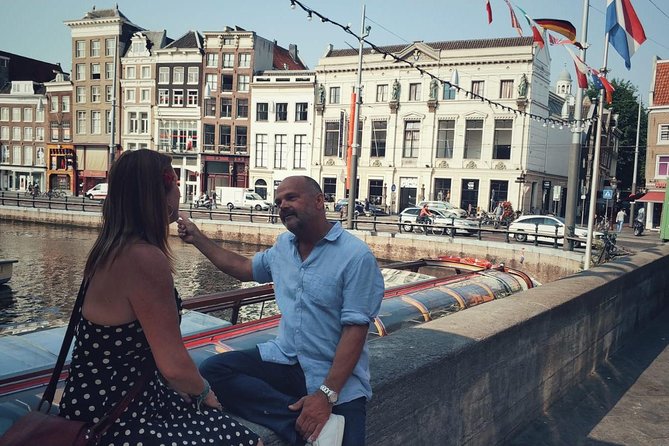
The final section takes you through Chinatown and the Zeedijk. This area was once considered one of the roughest streets in Amsterdam. Henk explains the oldest gay bar in Amsterdam and why German soldiers were not allowed into this part of the city during the Second World War.
Those details give the route a sharper historical turn. You are no longer hearing only about changing attitudes and public recognition. You are also hearing about wartime restrictions, danger, and the role of particular streets and businesses in protecting communities.
The walk ends at Café ’t Mandje, at Zeedijk 63. The bar is associated with Bet van Beeren, a major figure in Amsterdam’s LGBTQI+ story, and the tour highlights it as one of the oldest lesbian-owned bars in the city. One particularly appealing detail is the chance to see this historic venue and, as part of the experience described, meet its new owner.
The tour finishes within walking distance of Amsterdam Central Station. That makes the ending practical. You can continue sightseeing, catch a train, or use the location as a convenient base for the rest of your day. The tour ends at the bar, but admission or a drink is not listed as included, so plan to pay separately if you want refreshments.
Henk’s guiding style and what you’ll learn
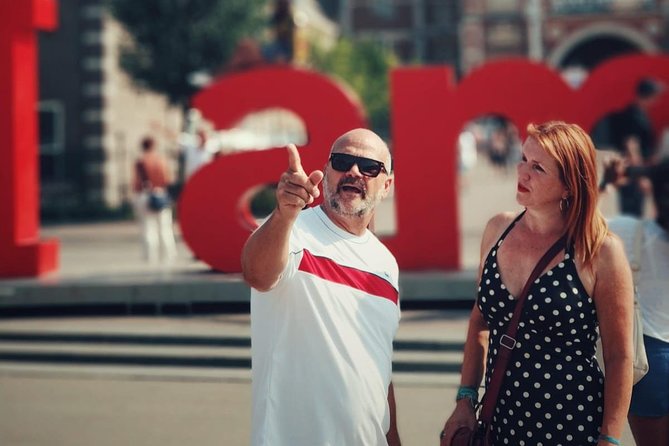
Henk’s strongest quality is his personal commitment to the subject. He combines historical explanation with memories from the early gay movement, and he does not avoid difficult material. That combination helps the tour feel like a conversation with someone who has a real stake in preserving community memory.
He also brings in subjects beyond formal politics. Expect connections to literature, art, Dutch poetry, and social change. This is useful because legal rights are only one part of LGBTQI+ history. Public attitudes, language, cultural expression, nightlife, and personal safety all shape the story.
The tour can also become emotional. Henk has shared the experience of remembering people lost to AIDS and discussing the work still needed to secure civil rights. That seriousness is balanced with warmth, humor, and practical recommendations for places to go after the walk.
The experience is offered in English. Because it is limited to 15 people, you should have a better chance to hear Henk clearly and ask follow-up questions than you would on a large city tour. The exact group size can vary, but the stated maximum keeps it from becoming a packed procession.
Is $42.33 a fair price?
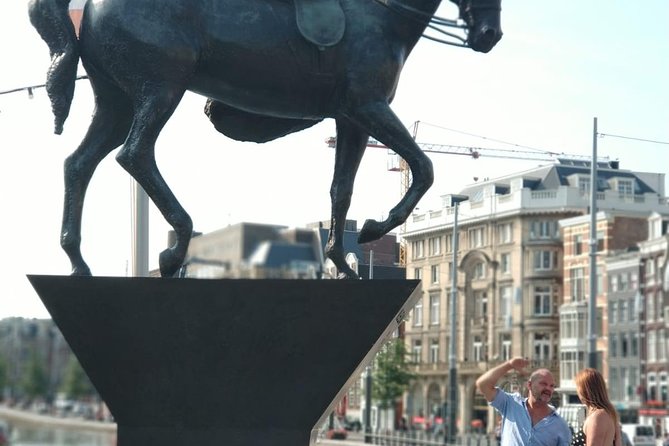
At $42.33 per person, this is not the cheapest way to spend two hours in Amsterdam. You are paying more than you would for a self-guided walk through the same central streets.
The value lies in the focus and the guide. The price includes Henk’s services, a carefully connected route, and access to a personal perspective that you cannot get from a map or plaque. It does not include palace admission, drinks, food, or transportation.
For me, the comparison is simple. If you want only landmarks, save your money and walk the center independently. If you want the LGBTQI+ meaning behind those landmarks, the price is reasonable for a small-group specialist tour, especially since Henk connects the city’s architecture and public spaces to personal and political history.
The tour also works well early in a visit. One person found that taking it near the start of a stay changed the way they understood Amsterdam afterward. That makes sense: once you know the stories attached to the streets, later walks through the center can feel more layered.
Practical details before you go
The meeting point is Westermarkt 2L, near the Homomonument, and the start time is 11:00 a.m. The tour lasts approximately two hours and ends at Café ’t Mandje, Zeedijk 63, within walking distance of Central Station.
Bring water and walking shoes. There is no food or drink included. The route uses public streets and canalside areas, and the activity is described as suitable for most people. Service animals are allowed, and the meeting area is near public transportation.
The tour is offered in English and uses a mobile ticket. Confirmation is provided when you book. You can cancel for a full refund up to 24 hours before the start time. Changes or cancellations inside that window are not accepted for a refund.
Weather matters. If poor weather forces cancellation, you’ll be offered another date or a full refund. The same applies if the minimum number of people is not met. Since the tour is outdoors, check the day’s forecast and keep some flexibility in your schedule.
Who should book this tour?
You should consider it if you want a focused LGBTQI+ view of Amsterdam rather than a general city orientation. It suits solo visitors, couples, friends, LGBTQI+ visitors, and straight allies who want to understand the city’s social history with care.
It is especially useful if you appreciate personal storytelling. Henk’s memories, humor, poetry, and emotional connection are central to the experience. You will get more from the walk if you are willing to ask questions and engage with the subject rather than simply collect photos.
You may want a different activity if you have limited mobility for a two-hour outdoor walk, prefer large sightseeing attractions, or want substantial interior time at the Royal Palace or other venues. The tour includes discussion of serious subjects, so it may not suit anyone seeking a purely lighthearted morning.
Should you book the LGBTQI+ History Tour of Amsterdam?
Yes, if you want to understand Amsterdam through the people who fought for LGBTQI+ rights, built safe spaces, and kept community memory alive. The route is compact, but the ideas are broad. You’ll see a memorial, canals, a palace, a public square, the Red Light District, Chinatown, and Café ’t Mandje while Henk connects them to a long and sometimes painful story.
The best reason to book is Henk himself. His personal experience gives the walk a voice that a standard audio guide cannot match. Just arrive prepared for real history, outdoor walking, and a tour that values remembrance as much as sightseeing.
FAQ
How long does the LGBTQI+ History Tour of Amsterdam last?
The tour lasts approximately two hours.
Where does the tour begin?
It begins at Westermarkt 2L, 1016 DW Amsterdam, near the Homomonument.
Where does the tour end?
The tour ends at Café ’t Mandje, Zeedijk 63, 1012 AS Amsterdam. The location is within walking distance of Amsterdam Central Station.
What language is the tour offered in?
The tour is offered in English.
Is palace admission included?
No. The Royal Palace is discussed from the outside, and admission to the palace is not included.
What happens if the weather is poor?
If the experience is canceled because of poor weather, you’ll be offered a different date or a full refund.
Newest history tours we have reviewed in Amsterdam
- Amsterdam: Luxury Canal Cruise with Historic VR Experience★ 5.0 · 305 reviews
- Amsterdam Walking Tour: Urban Legends & History with local guide★ 5.0 · 39 reviews
- Guided Walking Tour Amsterdam – Legends, History & Ghost Stories★ 5.0 · 28 reviews
- Historical Walking Tour, private with local Dutch guide★ 5.0 · 23 reviews
- Anne Frank’s Amsterdam Jewish History WWII Exclusive Guided Tour★ 5.0 · 18 reviews
- Amsterdam Haunted History and Ghost Walking Tour★ 5.0 · 47 reviews
- Private Guided Historic Amsterdam Canal Cruise in a Salon Boat★ 5.0 · 21 reviews
- Skipping Lines & Sipping Beers: A History Tour of Amsterdam★ 5.0 · 52 reviews
Amsterdam History Tours, compared.
Amsterdam Food and Cultural Tour with Tastings
Read our review →

Amsterdam High-End Dutch Food & History Tour – Up to 8 guests
Read our review →

Anne Frank and the Jewish History of Amsterdam Private Tour
Read our review →
Luxury Canal Cruise with Historic VR Experience
Read our review →
3-Course Meal in Historic 1st Class Waiting Rooms
Read our review →Browse the lists this tour appears in