
Review · GREECE HISTORY TOURS
Private Guided Tour of Ancient Olympia
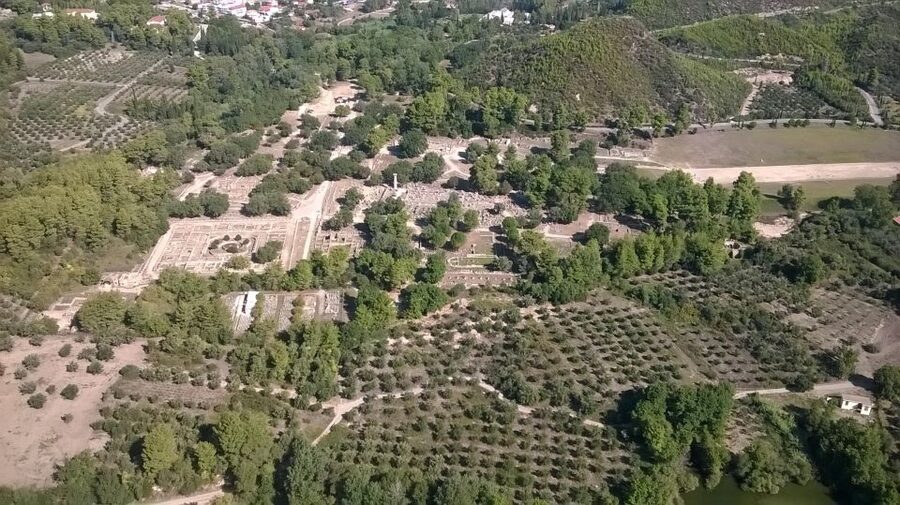
The most striking part of this tour is the chance to walk through the original Olympic stadium, not a modern recreation built for visitors. You follow the sacred grove of Zeus, see the remains of one of the ancient world’s great temples, and finish among original statues in the Site Museum. Guide Maria is especially strong at turning scattered stones and broken columns into a clear story.
I like the private group format, which gives your party room to ask questions and set a sensible pace. I also like the way the tour joins sport, religion, art, and Greek ideas about peace instead of treating Olympia as just an old stadium. The main drawback is that nearly 2.5 hours can feel short if you want a slow museum visit, especially when your schedule is tight, as it was for one cruise passenger.
Key points at a glance
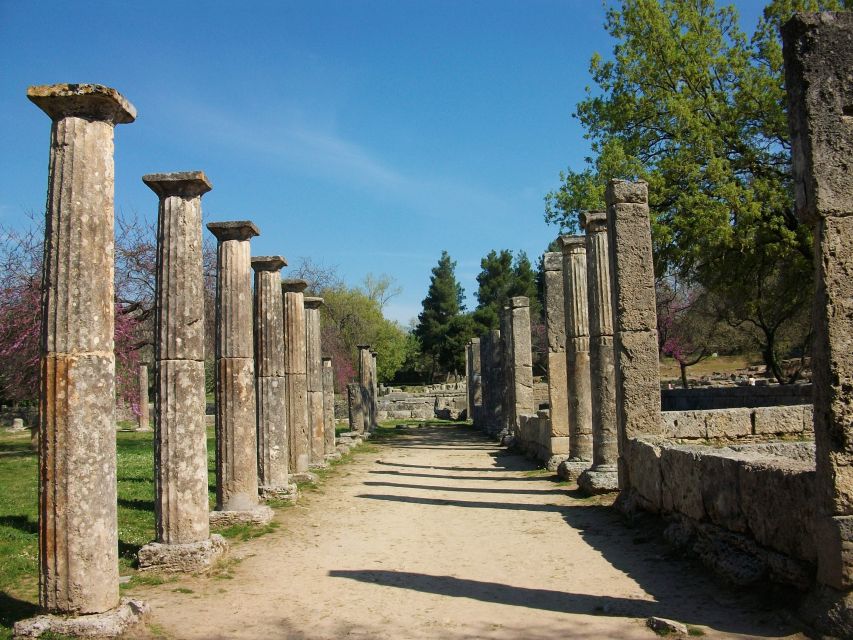
- Walk the ancient Olympic stadium: Enter the field where the Olympic Games were held, a far more direct experience than viewing the site from a distance.
- See the Temple of Zeus site: Learn about the temple once counted among the Seven Wonders of the ancient world.
- Visit the modern Olympic flame location: See where the fire for the modern Games is lit every four years.
- Tour the Site Museum: View original statues that once decorated the Temple of Zeus.
- Book a private group of up to seven: The $294 group price can make good sense for families and small parties.
- Choose from three tour languages: The guide can lead the visit in English, German, or Greek.
Walking into the sanctuary of Zeus
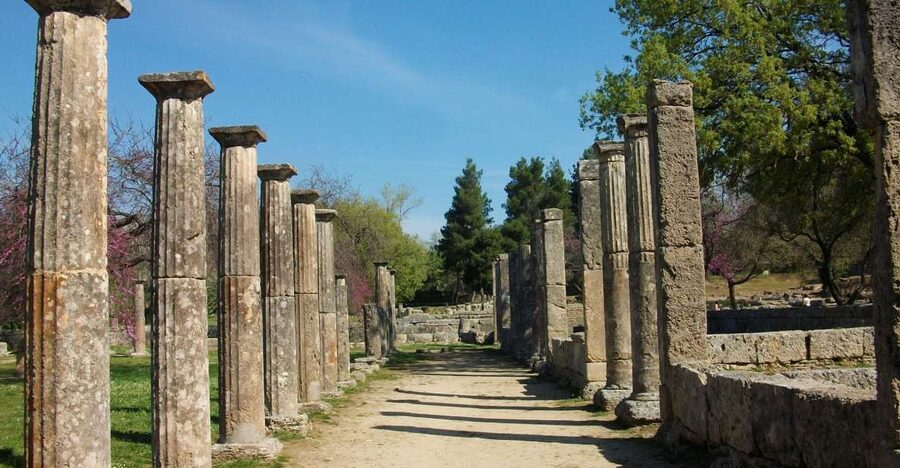
Ancient Olympia is not simply a stadium with a few ruins around it. It was a sanctuary, a place where Greek religious life, athletic contests, sculpture, myth, and public ceremony came together. Your guide leads you through the sacred grove of Zeus and its religious and support buildings, helping you see how the site functioned as a whole.
That context matters. Without it, the ruins can look like a pleasant scatter of marble and stone. With a guide, you can connect the athletic contests to the festivals, sacrifices, myths, and gatherings that gave Olympia its purpose.
The Olympic festival began as a local event and grew into a Panhellenic gathering for Greeks from across the wider Greek world. By the 5th century BC, during the Greek classical period, it had reached its peak. The idea of a shared festival helped bring people together around competition, religious worship, and a temporary peace.
I appreciate that this tour presents Olympia as more than a place where athletes ran. The ancient ideal joined the body and the mind, sport and philosophy, physical ability and artistic beauty. The statues and myths around the sanctuary helped express that ideal.
More Ancient History Tours in Greece
- Athens: Ancient Greek Theater Performance
★ 4.7 · 2,481 reviews - Historical Delphi One Day Tour with Arachova Stop & Expert Guide
★ 4.5 · 1,247 reviews - From Athens: Ancient Corinth Day Trip with Canal & VR Guide
★ 4.6 · 1,073 reviews
The stadium where the ancient Games were held
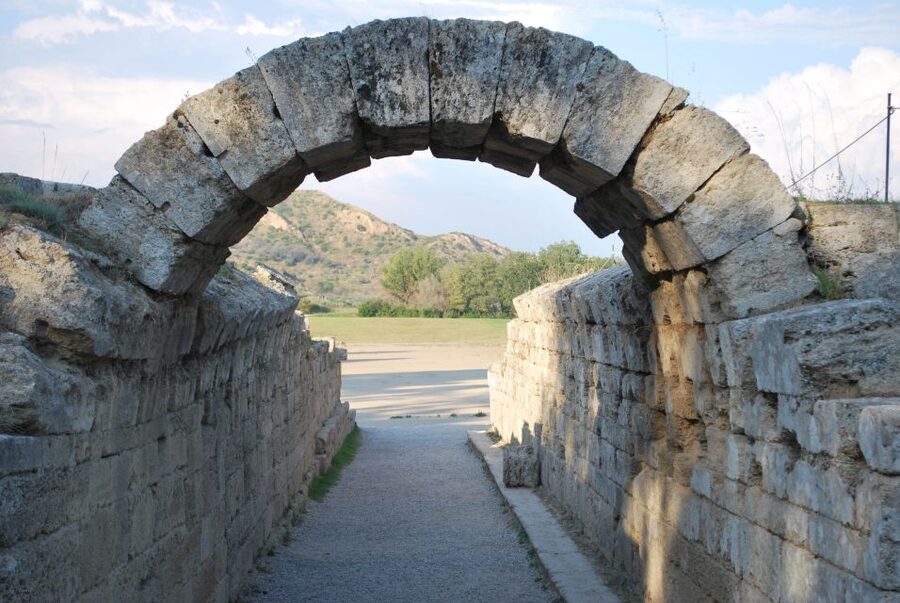
The stadium is the tour’s most immediate stop. You walk through the oldest Olympic stadium, the place associated with the ancient Games rather than a later modern sports venue. That physical setting gives the visit a sense of scale that photographs cannot provide.
The attraction here is simple: you can stand in the same type of open sporting space where athletic contests formed part of a major religious festival. The tour does not present the stadium as an isolated sports ground. Instead, it places the competition beside the sanctuary, showing how athletic events were tied to worship and public life.
Your guide can also help you picture the relationship between the stadium and the rest of Olympia. The sacred buildings were not background scenery. They formed the setting for an event that joined the religious world of Zeus with human competition.
If you are visiting with children, this may be the easiest section for them to grasp. A stadium has an obvious purpose, and walking through it can make the ancient Games feel less abstract. Adults who enjoy architecture, archaeology, or the history of sport will find the site equally useful.
The ground is part of a walking tour, so comfortable shoes are a sensible choice. The full tour lasts nearly 2.5 hours, and the stadium is only one portion of the visit. You should expect time on your feet rather than a quick photo stop.
The Temple of Zeus and the center of the sanctuary
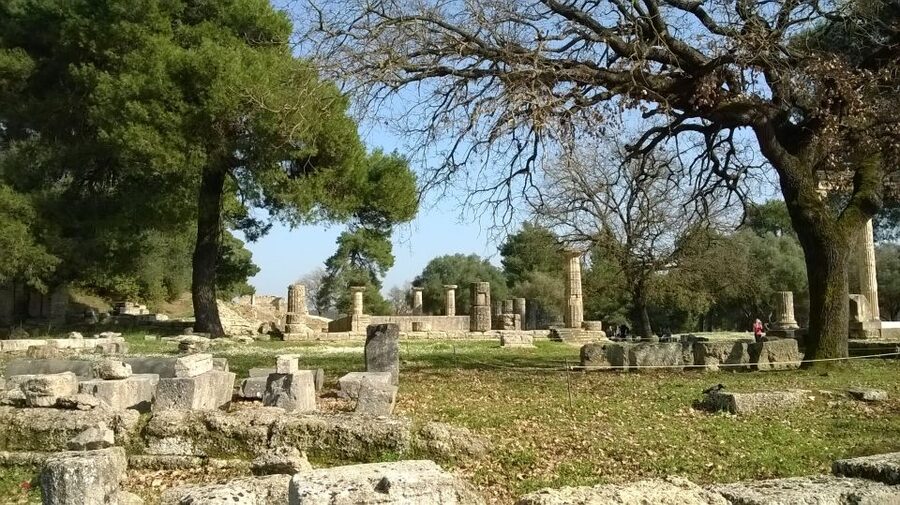
The location of the Temple of Zeus is one of Olympia’s major highlights. The temple was counted among the Seven Wonders of the ancient world, and its remains help explain why it held such importance.
You will not see the complete temple as it once appeared. Instead, the guide helps you read the surviving foundations, fallen architectural pieces, and the surrounding sanctuary. This is exactly where an individual visit can become confusing. Ancient sites rarely explain themselves in neat order, and a private guide can point out what each area meant.
The temple was tied to the religious heart of Olympia. Its importance also connects directly to the statues in the Site Museum, where original sculpture from the temple can be seen away from the weathered remains outdoors.
This pairing is one of the strongest parts of the experience. At the archaeological site, you encounter the temple’s location and setting. In the museum, you see original artworks associated with it. One stop explains the building, while the other gives you a better idea of the artistic world that once filled it.
Allow yourself to look beyond the famous label of Seven Wonders. The real value is seeing how architecture, sculpture, religious ceremony, and myth worked together. The guide can make those links easier to follow, especially if you are not already familiar with Greek archaeology.
The place where the modern Olympic flame begins
The tour also takes you to the location where the fire for the modern Olympic Games is lit every four years. This creates a direct link between ancient Olympia and the continuing Olympic tradition.
The connection is symbolic rather than a claim that the modern Games are identical to the ancient festival. The ancient event began as a local celebration and later became Panhellenic. The modern Olympic movement uses Olympia as a ceremonial source, keeping the ancient site part of the public imagination.
For you, this stop adds a modern layer to an otherwise ancient visit. The stadium and temple belong to the distant past, while the Olympic flame links Olympia to an event still held around the world. It is a useful reminder that the site has not been forgotten or treated only as an archaeological exhibit.
Do not expect a large ceremony during an ordinary tour. The important point is the location and its meaning. Your guide can explain why this place matters to the modern Olympic tradition and how it relates to the ancient sanctuary.
More Private History Tours in Greece
- Private Biblical Tour Ancient Corinth & Isthmus Canal from Athens
★ 5.0 · 762 reviews - Private Tour of Apostle Paul’s Footsteps in Ancient Corinth
★ 5.0 · 275 reviews - Ancient Corinth, Epidaurus, Nafplio full day private tour from Athens
★ 5.0 · 206 reviews - The History of Athens: Greek Mythology Private Tour
★ 5.0 · 138 reviews
Original sculpture inside the Site Museum
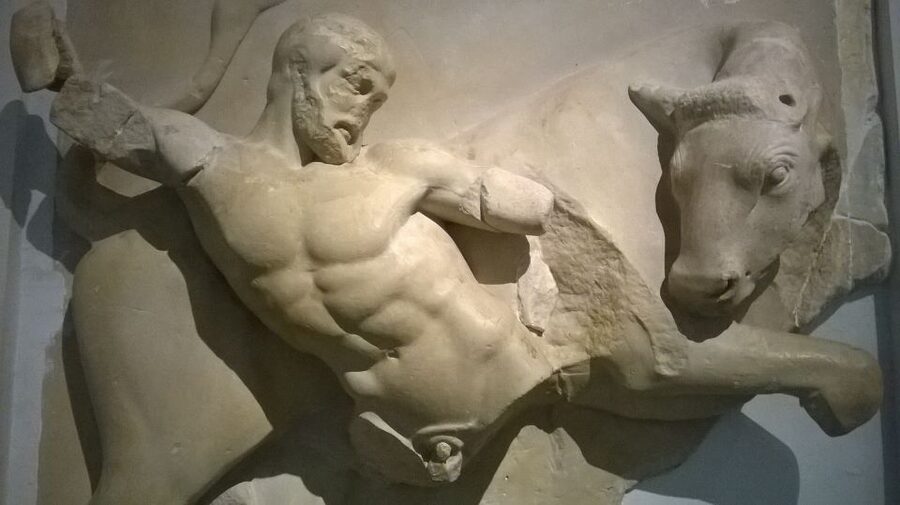
The Site Museum gives the tour its strongest artistic component. It contains original statues that decorated the Temple of Zeus, allowing you to see works connected to the sanctuary rather than only architectural fragments outdoors.
This is an important distinction. Outdoor ruins show you scale, layout, and the effects of time. Museum pieces show detail. You can study the form, expression, and craftsmanship of the statues in a setting where they are protected and easier to examine.
The museum also helps correct a common misunderstanding about ancient Greek sites. Many people picture plain white marble, but the art and religious spaces of the ancient world carried stories, gods, heroes, and myths. The tour’s focus on the harmony of body and mind becomes clearer here, where human form and religious meaning meet.
Museum entry tickets are not included in the tour price, so budget for them separately. The guide does conduct the museum portion, but you should confirm the ticket arrangements when booking because the meeting point is at the ticket booth of the archaeological site and the museum admission is listed as an extra cost.
The museum can also be the section most affected by a rushed schedule. One cruise passenger noted that limited time ashore made the visit feel too short, though the guide was not responsible for that constraint. If Olympia is only one stop on a ship itinerary, check your return time carefully and tell the supplier when you want the tour to begin.
What Maria adds to the visit
Guide Maria receives particularly strong praise for her command of the subject and her ability to add useful detail. A German-speaking guest also found her German clear and her explanations detailed and inspiring. The tour is offered in English, German, and Greek, so language choice can make a real difference to the quality of your visit.
The guide’s role is not just to name ruins. The best use of a private tour is asking questions as you go. You can ask how the stadium fitted into the sanctuary, why the Temple of Zeus mattered, or how the ancient festival developed from a local event into a gathering for Greeks from many regions.
The private setting should also help if your group has mixed interests. One person may care about sculpture, another about ancient sport, and another about the modern Olympic flame. A fixed group tour often has to keep moving. Here, your group can use the guide to connect the pieces that matter most to you.
The feedback is especially consistent on the guide’s subject knowledge and the added information she provides. That is important at Olympia, where the physical remains are impressive but not always self-explanatory.
Is $294 good value for up to seven people?
The price is $294 per private group of up to seven, not $294 per person. For seven people, that works out to about $42 per person before museum admission. For a smaller group, the per-person cost rises, but you are paying for a private guide rather than joining strangers.
That makes the tour most attractive for a family, a group of friends, or a small cruise party. If you are alone or traveling as a couple, you should weigh the private format against a cheaper shared option if one is available. The value here comes from personal attention, language choice, and the chance to ask questions rather than from transportation or included admission.
The cost does not cover museum tickets. The archaeological site and museum portions are both part of the guided experience, but the admission expense is separate. Factor that into your total before booking.
You also get some useful booking flexibility. You can reserve now and pay later, and cancellation is free up to 24 hours in advance for a full refund. The tour is valid for one day, with the actual start time based on availability and your requested time of day.
One practical point deserves attention: you need to tell the supplier which time of day you prefer, then watch your email, including the spam folder, for confirmation. That is not a problem, but it means the start time is not something to ignore after you book.
Who should book this Olympia tour?
I would choose this tour if you want the site explained rather than simply photographed. It suits first-time visitors, families, small groups, people with a strong interest in ancient sport, and anyone who wants a guide who can move between religion, sculpture, architecture, and Greek culture.
It is also a good fit for cruise passengers, provided you have enough time ashore. The tour itself lasts nearly 2.5 hours, so you need to allow time for getting to the meeting point and returning to your ship or onward transport. A short port call may force you to shorten the experience or skip parts of the museum.
The tour is wheelchair accessible, which makes it a practical choice for visitors who need that feature. Still, it remains a walking visit through an archaeological site, so ask the supplier for any details you need about the exact route and conditions before you go.
You should also choose it if language matters. English, German, and Greek are available, and Maria has been specifically praised for her German. A tour in the language you understand best can make a major difference when the guide is explaining myths, architecture, and historical change.
Small details that make the day easier
Meet at the ticket booth of the archaeological site. Since museum tickets are not included, have your admission plan clear before the tour begins.
Give yourself enough time for the full walking route. The experience covers the sacred grove, religious and support buildings, the stadium, the Temple of Zeus area, the Olympic flame location, and the Site Museum. That is a lot to cover in nearly 2.5 hours.
Wear shoes suitable for walking and plan around the time of day you request. Ancient Olympia is best appreciated when you are not watching the clock every few minutes.
The activity permits free cancellation up to 24 hours before the start and lets you reserve without paying immediately. Those terms are useful if your wider Greek itinerary is still shifting.
Should you book it?
Book this tour if you want meaning and context, not just access to ruins. The combination of a private guide, the original stadium, the Temple of Zeus site, the modern Olympic flame location, and the museum’s original sculpture gives you a well-rounded visit.
The strongest reason to choose it is the guiding. Maria is a particularly good option if you want English or German explanations with plenty of detail. The main reasons to hesitate are the separate museum ticket cost and the nearly 2.5-hour schedule, which may be difficult during a short cruise stop.
For a group of up to seven, the $294 price is reasonable for a private, language-specific visit. If you can spare the time and want to understand why Olympia mattered, this is a solid way to see the sanctuary.
FAQ
How long does the private Ancient Olympia tour last?
The guided walking tour lasts almost 2.5 hours.
What places are included in the tour?
The tour covers the sacred grove of Zeus, religious and auxiliary buildings, the ancient Olympic stadium, the location of the Temple of Zeus, the place where the modern Olympic flame is lit, and the Site Museum.
Are museum entrance tickets included?
No. Museum entry tickets are not included in the tour price.
Where is the meeting point?
Meet at the ticket booth of the archaeological site.
What languages are available?
The tour is available in English, German, and Greek.
How many people can join the private group?
The price covers a private group of up to seven people.
Newest history tours we have reviewed in Greece
- Delphi: Ancient Footpath Delphi Hiking★ 5.0 · 18 reviews
- Olous – Guided Snorkelling Excursion to Discover Olous Sunken Ancient City★ 4.5 · 31 reviews
- Chania’s Clash of Empires: A Self-Guided Audio Tour★ 4.5 · 28 reviews
- From Kolymbari: Ancient Diktyna & Hidden Beach Quad Safari★ 5.0 · 22 reviews
- Epidavros sea kayak at the Ancient sunken city tour, small ancient theater★ 5.0 · 96 reviews
- Sea Kayak Epidavros – Ancient Sunken City Tour★ 5.0 · 213 reviews
- Ancient Corinth Private Tour from Corinth★ 5.0 · 56 reviews
- Casa Parlante Historical Museum Tour in Corfu★ 4.5 · 19 reviews
Ancient History Tours, compared.
Colosseum: Underground and Ancient Rome Tour
Read our review →
Colosseum & Ancient Rome with Arena Floor Option I Max 6 People
Read our review →
Colosseum, Ancient Rome Tour or AudioGuided Tour
Read our review →
Colosseum Underground & Ancient Rome Guided Tour
Read our review →
Taormina: Ancient Theater Skip-the-Line Ticket & Audio Guide
Read our review →
Discover the Ancient Ruins of Pompeii: Day Trip from Rome
Read our review →
Discover Matera, the ancient city – English tour
Read our review →Browse the lists this tour appears in