
Review · KOREA HISTORY TOURS
Gyeongju: UNESCO Heritage Tour Including Bulguksa Temple
Gyeongju packs more than a thousand years of Korean history into one very manageable day. This tour links Bulguksa Temple and Seokguram Grotto with royal tombs, an ancient observatory, a traditional village, and a palace pond, so you spend less time sorting out transport and more time looking at the places that matter.
I like the easy hotel pickup from Busan or Gyeongju, and I like the human touch from guides such as Sue and Steve, who explain Silla history with stories and humor. Lunch, entrance fees, water, and an air-conditioned van also make the $189 price easier to judge.
The catch is the pace. Eight hours is enough for a strong introduction, not a slow study of every site. If you start late or visit during a major Korean holiday, traffic and crowds can trim your time, and one tour member reported missing the final stop after a delayed start.
Key points at a glance
- Bulguksa and Seokguram together: See two of Korea’s most important Buddhist sites in one outing.
- A practical Busan day trip: Hotel pickup and drop-off remove the need to connect trains, buses, and taxis.
- Guides who add personality: Sue and Steve have received special praise for clear explanations, humor, and attentive care.
- A useful mix of sights: Royal tombs, science, village life, Buddhist art, and palace gardens give you more than a temple visit.
- Small groups or private trips: The format suits couples, families, and anyone who wants help managing a packed day.
- Good inclusions: Lunch, water, transport, and all entrance fees are covered in the listed $189 price.
Why Gyeongju works so well in one day
Gyeongju was the capital of the Silla Dynasty for roughly a thousand years. That long period left behind royal burial mounds, Buddhist temples, palace grounds, stone monuments, and traces of daily life. The sites are spread across the city and nearby hills, which is why a vehicle and a well-planned route help so much.
You do not get a museum-heavy day here. Instead, you move between open spaces and historic buildings. You might walk through grass-covered tombs in the morning, examine carefully fitted stonework at Bulguksa before lunch, and finish beside a pond reflecting a palace pavilion.
That variety is the best reason to choose this outing. You get a broad picture of Silla culture rather than seeing one famous temple in isolation. The guide also gives the ruins a human frame, explaining royal power, Buddhist belief, science, architecture, and family life as the day unfolds.
The tour has earned a 4.8 rating from 104 bookings, with especially strong praise for the guides, comfortable transport, lunch, and the amount covered in one day. The English-language guiding is a major part of the value, since the meaning of many sites is not obvious from the stones alone.
More UNESCO World Heritage Tours in Korea:
- From Busan: Gyeongju UNESCO World Heritage Guided Day Tour
★ 4.8 · 1,250 reviews - Gyeongju UNESCO World Heritage Guided Day Tour from Busan
★ 5.0 · 660 reviews - Seoul: UNESCO Heritage Palace, Shrine, and More Tour
★ 4.8 · 18 reviews
Starting from Busan or Gyeongju
Pickup is available from your hotel or chosen location in Busan or Gyeongju. That makes this a particularly useful option if you are staying in Busan and want to visit Gyeongju without changing hotels.
From Busan, the tour functions as a full-day excursion. You will spend part of the day on the road, but the private or small-group van keeps the schedule far simpler than piecing together local transport. From Gyeongju, you should have less travel time and may find the day feels more relaxed.
The exact starting time depends on availability. That matters because a late start can affect the final stop. One person who began late said the group moved quickly and did not reach the last listed sight. I would confirm the start time carefully and avoid adding a separate appointment afterward.
The vehicle is air-conditioned, a real advantage in Gyeongju’s hot summer months. A guide named Sue also prepared iced water for one summer group, and water is included as part of the tour. Comfortable transport does not remove the need for walking, but it gives you welcome breaks between sites.
Gyochon Village and the old Choi family home
Gyochon Village offers a gentler beginning than a major temple or royal tomb. Its hanok buildings and quiet lanes show traditional Korean architecture and the setting once associated with noble families.
The House of the Gyeongju Choi Clan is the main point of interest. Your guide can help you notice the design and explain the family’s place in local history. This stop is less about a single dramatic monument and more about seeing how status, family, and home life were expressed through buildings.
When available, you may also try Gyeongju Gyodong Beopju, a traditional liquor connected with the area. Availability is not guaranteed, so treat it as a pleasant possibility rather than a promised part of the day.
I like this stop because it gives the itinerary a human scale. Afterward, the royal tombs and major temples make more sense as part of a society, not just as isolated attractions. The drawback is that the village may feel modest if you are seeking grand architecture right away.
Daereungwon Tomb Complex and Cheonmachong
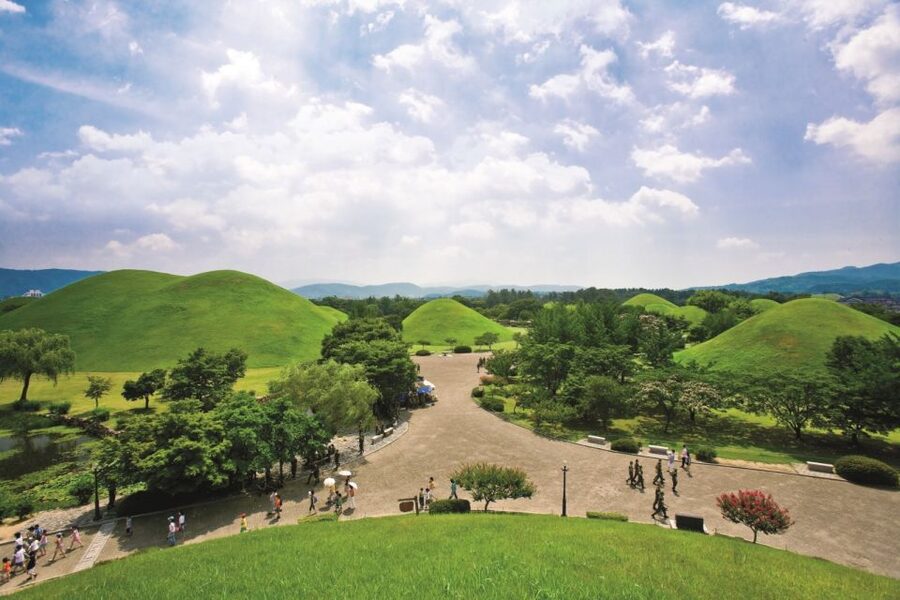
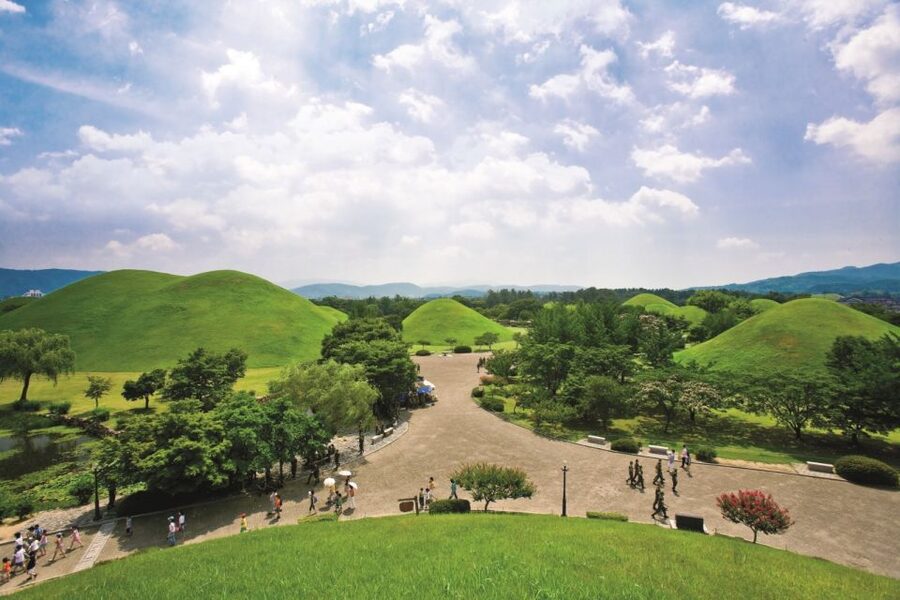
At Daereungwon, broad grassy burial mounds rise across the city in a setting that feels surprisingly open. These are the tombs of Silla kings and aristocrats, and their size gives you a direct sense of royal wealth and power.
The complex includes Cheonmachong, where the famous ancient horse painting was found. It also includes Hwangnamdaechong, one of the largest and most refined tombs from the period. The rounded mounds are easy to recognize, but the important detail is what they contain: the tombs reveal the ceremonial world and material wealth of Silla’s ruling class.
The planned hour here gives you time to walk, listen, and take photographs without treating the site as a quick roadside stop. Wear shoes you can walk in comfortably. The tour includes several one-hour visits, and the day involves repeated movement on foot.
This is one of the strongest stops for understanding Gyeongju. Unlike a temple, which can feel tied to religious practice and architecture, the tombs make royal history visible through the scale and placement of the burial mounds.
More Architecture and Landmark Tours in Korea:
- Venice: St. Mark’s Basilica Guided Tour & VR History Intro
★ 3.9 · 4,880 reviews - Venice’s Best: Basilica, Doge’s Palace, Gondola & History Gallery
★ 4.5 · 2,478 reviews - Córdoba: Skip-the-Line Great Mosque-Cathedral History Tour
★ 4.7 · 1,690 reviews - Pantheon Elite Guided Tour – Rome’s Iconic Ancient Temple
★ 5.0 · 1,447 reviews
Cheomseongdae, where Silla looked to the sky
Cheomseongdae is a compact stone tower with an outsized place in Korean history. Built during the reign of Queen Seondeok, it is described as the oldest existing astronomical observatory in Asia.
You will spend about 30 minutes here, so this is a shorter stop than Bulguksa or the tomb complex. The tower itself is the focus, but your guide’s explanation adds the necessary context. Without that background, it can be easy to see only a small stone structure and miss what it says about Silla science and government.
The stop also gives the day a useful change of subject. You move from kings and burial rituals to astronomy and technical skill. I especially like that the tour does not treat Gyeongju as only a religious destination.
Bulguksa Temple, the centerpiece
Bulguksa is likely to be the main reason many people choose this tour. The UNESCO-listed temple is known for its stone bridges, courtyards, pagodas, and carefully balanced design.
Give yourself time to look at Dabotap and Seokgatap, the two famous pagodas. Their difference is part of the appeal. The temple is not simply a collection of old structures. Its paths, platforms, stonework, and buildings work together to create a planned religious setting.
The one-hour guided visit is long enough for a useful introduction, but you should not expect to inspect every corner at leisure. Bulguksa can attract many people, and the route may feel busy during Korean holidays. One October visit took place during Korean Thanksgiving, when the guide had to manage larger crowds and changing traffic.
This is where the quality of the guide matters most. Sue has been praised for making the history easy to follow and for adding humor, while Steve has been praised for adapting to crowds and traffic. Guides vary, but the tour’s strongest reports consistently point to clear explanations and good care of the group.
Seokguram Grotto on Tohamsan Mountain
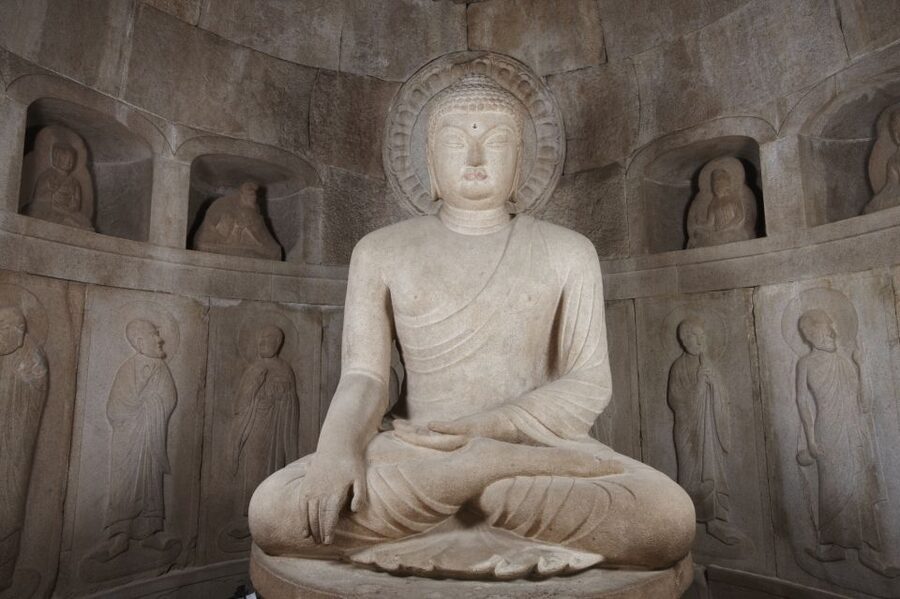
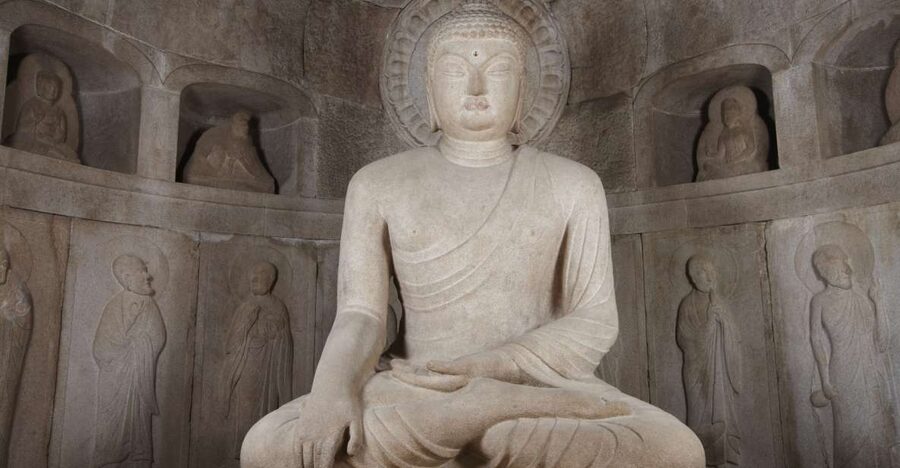
From Bulguksa, the tour continues up Tohamsan Mountain to Seokguram Grotto. The grotto contains a granite Buddha surrounded by carved guardian figures, creating one of Korea’s most important Buddhist art sites.
The setting gives this visit a different feel from Bulguksa. Here, the focus is the Buddha and the precision of the carving rather than a broad temple complex. The combination of sculpture, stone engineering, and mountain location explains why Seokguram carries such importance.
The tour allows about an hour. That is enough to visit with a guide and take in the main work, though the stop may feel short if you want extended quiet time. Some groups also tried local snacks sold outside the grotto, an informal detail that can make the visit feel less polished and more connected to the place.
You should also expect some walking around the temple and grotto stops. The supplied details do not specify accessibility arrangements, so anyone with mobility concerns should ask the provider before booking.
Lunch and the value of the inclusions
Lunch is included, and it has been one of the most praised parts of the day. The meal has been described as delicious, with bibimbap receiving special mention. One guide even joined the group for lunch, which added to the friendly atmosphere for a small private party.
The exact restaurant and menu are not specified, so do not book this expecting a particular dish or dining room. Still, including lunch is useful. It saves you from spending part of a tightly scheduled day choosing a restaurant, ordering, and paying separately.
At $189 per person, the price is not low for a day in South Korea. You are paying for more than admission. The package includes pickup and drop-off, an English-speaking guide, an air-conditioned van, lunch, water, and all entrance fees. For a private party or a small group coming from Busan, that can be fair value.
The calculation changes if you are already staying in Gyeongju and are comfortable using local transport. One person felt a similar Gyeongju departure cost far less elsewhere and considered this tour overpriced. That is a reasonable concern. The strongest value comes from convenience, guidance, and the ability to cover several spread-out sites in one day.
Wolji Pond and the palace site at dusk
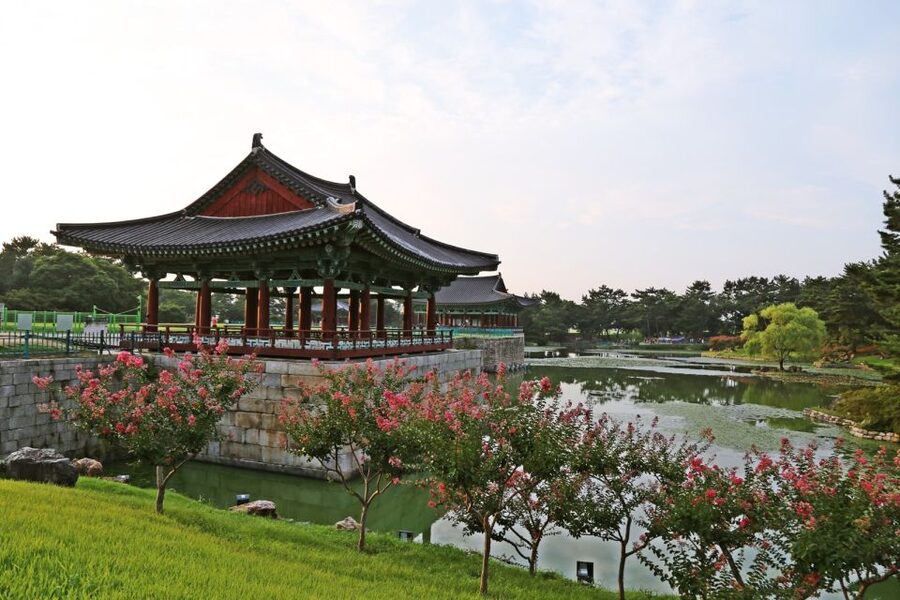
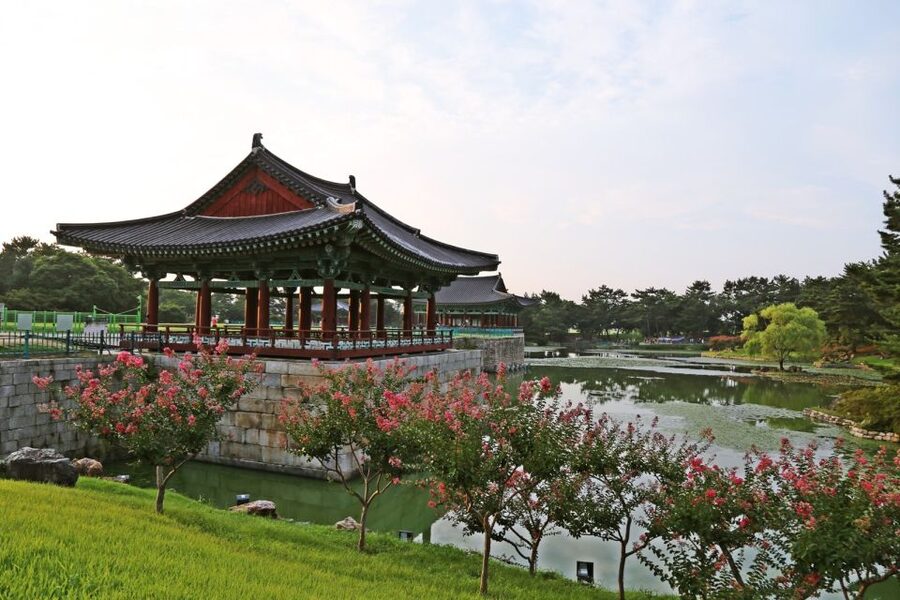
The final listed sight is Donggung Palace and Wolji Pond, a palace garden built during King Munmu’s reign. Its pavilions and trees reflect in the water, making this one of Gyeongju’s most attractive places for photographs.
Timing matters here. The pond is especially appealing toward dusk, when reflections become more pronounced. A late start or heavy traffic can put pressure on this stop, so ask at the beginning of the day how the guide expects to manage the schedule.
Wolji also provides a calm finish after the more demanding temple and mountain visits. You are looking at a royal garden rather than a burial site or religious monument, which rounds out the story of Silla court life.
The itinerary also mentions Gyochon Village and several groups enjoyed visiting a village during schedule changes, but the exact order can shift. Guides may adjust for traffic, crowds, or your group’s interests. That flexibility is helpful, though it means the printed sequence should not be treated as fixed.
How the guiding shapes the day
The guide is the part of this experience you cannot replace with a map. Sue appears often among the named guides, with praise for her warmth, humor, clear explanations, and attention to individual needs. Steve is also praised for making the history understandable and adjusting the route when conditions changed. Other guides, including Jina, Chris, and Jade, have led groups as well.
That range means you should not book solely on the assumption that one particular person will lead your date. Still, the repeated strength of the guiding matters. You will hear stories about the Silla Dynasty, learn how the sites fit together, and get help finding the right path through busy areas.
The driver also plays a useful role. Joe, or a similarly named driver depending on the group, has been praised for taking photographs, helping people stay together, and making the road portions comfortable. Do not assume photography is a formal service, but the team may help with group pictures.
Private and small-group formats are available. A family of five or a couple wanting a more personal day should find this format appealing. Small groups can also make lunch and walking stops more sociable without the slow movement of a large coach.
Who should book this Gyeongju tour?
I would choose this tour if you are based in Busan, have only one day for Gyeongju, and want the major sights explained in English. It is also a strong fit for first-time visitors who prefer a prepared route instead of managing several buses and admission counters.
Families may appreciate the comfortable vehicle and the guide’s help keeping the day moving. Couples can use the private option for a more personal experience. History fans will value the mix of architecture, royal burials, astronomy, Buddhist art, and palace gardens.
I would hesitate if you want long, quiet visits at each site, prefer independent travel, or are watching your budget closely. You should also think twice if a late finish would cause problems, since traffic and crowds can affect the pace.
The tour permits free cancellation up to 24 hours before departure and offers reserve-now, pay-later booking. Those terms help if your Busan plans are still shifting, but the main decision remains the price against the convenience.
Should you book it?
Book this Gyeongju heritage tour if you want to see Bulguksa, Seokguram, the royal tombs, Cheomseongdae, Gyochon, and Wolji Pond in one organized day. The guide, vehicle, lunch, and included admissions make it a practical choice from Busan.
Skip it if you already have several days in Gyeongju and can arrange transport yourself. In that case, the $189 cost may feel high for a basic sightseeing route. For a one-day introduction, though, the tour gives you a sensible sweep of Silla Korea and removes much of the day’s logistical work.
FAQ
How long does the Gyeongju heritage tour last?
The tour lasts 8 hours. Starting times depend on availability.
Can I join the tour from Busan?
Yes. Pickup and drop-off are available from locations in Busan or Gyeongju, including hotel or chosen-location pickup.
Which language is the tour conducted in?
The live tour guide speaks English.
Are lunch and entrance fees included?
Yes. Lunch, all entrance fees, a bottle of water, transportation, and the guide are included.
Is the tour private or shared?
Private and small-group options are available.
What is the cancellation policy?
You can cancel up to 24 hours in advance for a full refund. The tour also offers a reserve-now, pay-later option.
Newest history tours we have reviewed in Korea
- Gyeongju Historic Areas Day Tour with Sky Capsule from Busan★ 5.0 · 18 reviews
- Busan history and market food tour with local chef★ 5.0 · 58 reviews
- Seoul: Suwon Hwaseong & Waujeongsa & Starfield Heritage Tour★ 4.8 · 27 reviews
- Seoul: UNESCO Heritage Palace, Shrine, and More Tour★ 4.8 · 18 reviews
- Seoul: Street Photoshoot and Hidden Gem History Walking Tour★ 5.0 · 25 reviews
- From Busan: Echoes of Silla Gyeongju Historical Day Tour★ 4.8 · 55 reviews
- Seoul: City Highlights and Historical Experience No Shopping★ 5.0 · 74 reviews
- Hanbok Photoshoot and History Tour at Gyeongbokgung Palace★ 5.0 · 276 reviews
UNESCO World Heritage Tours, compared.
World Heritage Shirakawa-go and Experience Tours from Kanazawa
Read our review →
Bali: Tanah Lot UNESCO World Heritage Sites Full-Day Tour
Read our review →
World Heritage Kyoto & Nara Uji Authentic Matcha Experience
Read our review →
UNESCO’s Ayutthaya Historical Park: Full-Day Tour from Bangkok
Read our review →
Rotterdam: Kinderdijk UNESCO World Heritage Entry Ticket
Read our review →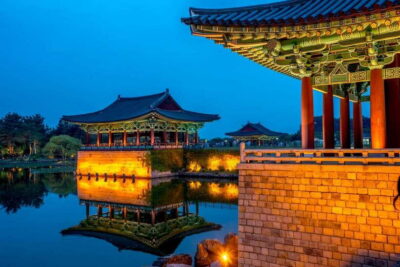
From Busan: Gyeongju UNESCO World Heritage Guided Day Tour
Read our review →Browse the lists this tour appears in